
Use the historical document(s) and the short readings in the left panel to answer the associated questions.
Use the historical document(s) and the short readings in the left panel to answer the associated questions.
In July 1914, Europe was divided into rival alliances. After the assassination of Archduke Franz Ferdinand, leaders feared that waiting to mobilize would be dangerous. National pride and competition for overseas influence increased tensions, making a diplomatic compromise harder to achieve.
Historical Document: Alliance Map (Europe, July 1914)
Study the map’s legend and shading. Use it with the reading to answer the questions.
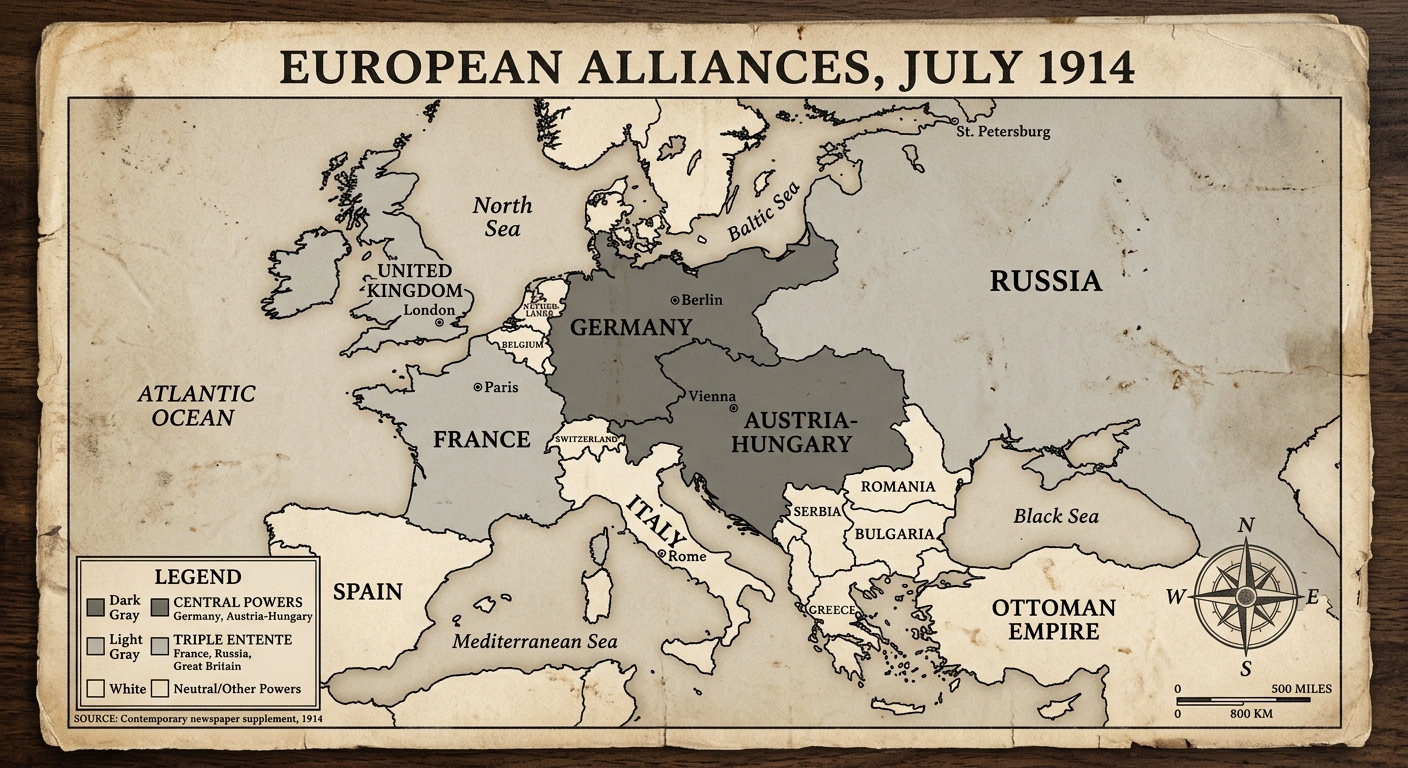
Using the map and reading, which statement best explains how the alliance system could turn a local crisis into a larger war in 1914?
Which option best connects the reading’s point about leaders fearing delay to the factor of militarism as a cause of World War I?
Based on the map and reading, which additional factor best helps explain why European alliances were tense before 1914?
Compare the role of alliances and militarism in increasing the likelihood of a wider war in 1914.
Use at least one detail from the map and one detail from the reading as evidence.
Using the map and reading, explain how conditions in Europe before the assassination in 1914 made diplomacy less likely to succeed.
Include two pieces of evidence from the stimuli.
Reading (49 words): By 1917, many Americans were debating whether the United States should enter World War I. Reports of submarine attacks and economic ties to the Allies shaped opinions. Supporters argued that buying war bonds helped supply Allied forces, while critics worried about costs and government pressure.
Historical Document: U.S. Liberty Bond Poster (1917)
Study the poster’s message and imagery. Use it with the reading to answer the questions.
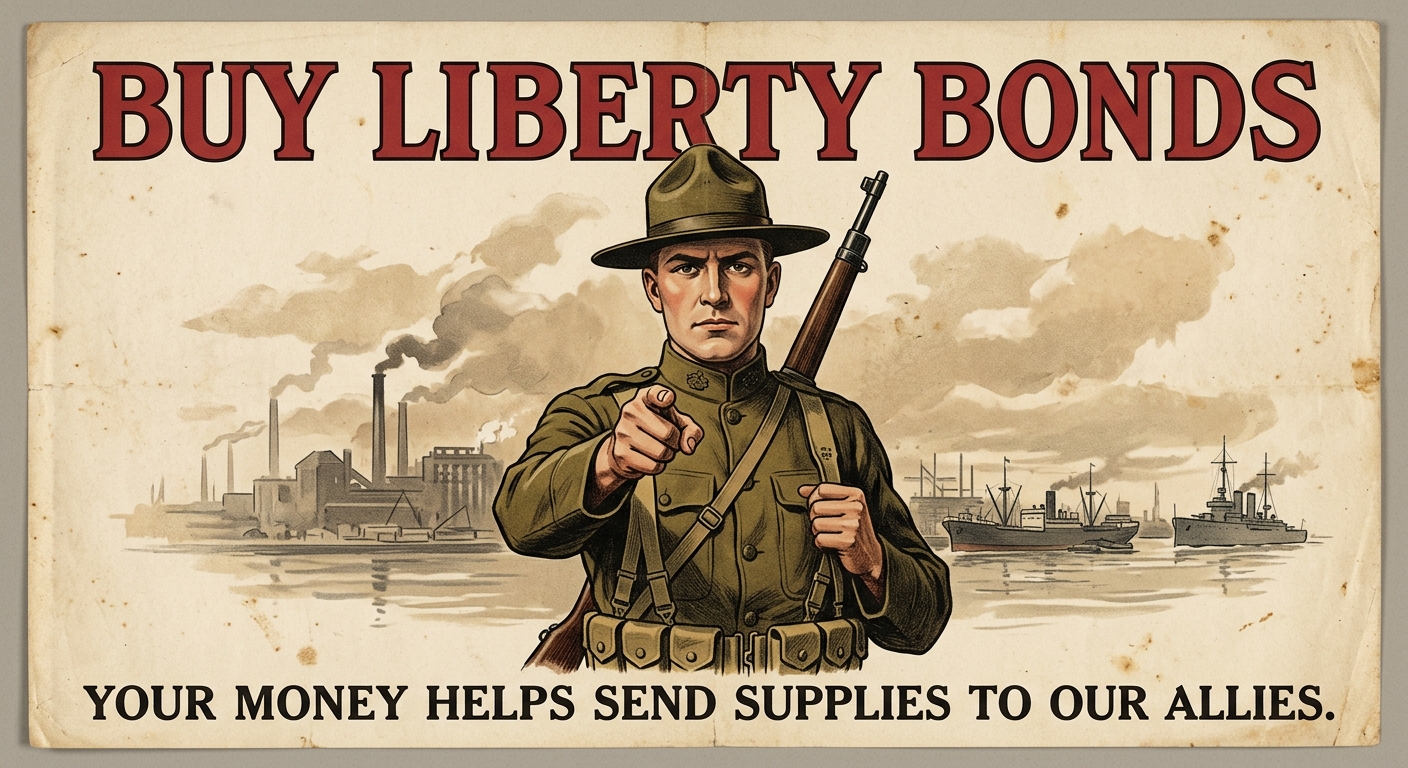
Using the poster and reading, which statement best explains how economic developments could sway U.S. opinion toward supporting the Allies?
Which option best compares the military factor mentioned in the reading to the economic message of the poster?
Which conclusion about domestic responses to World War I is best supported by the reading’s mention of “government pressure” and the poster’s message?
Compare how the poster and the reading describe reasons Americans might support the United States siding with the Allies in 1917.
Use one detail from each stimulus as evidence.
Using the poster and reading, explain how international developments and domestic responses could work together to shape public opinion during World War I.
Include two pieces of evidence from the stimuli.
World War I introduced weapons that changed how armies fought. Rapid-fire machine guns and artillery made open attacks costly. Poison gas forced soldiers to use protective gear. Tanks were developed to cross trenches and barbed wire. These technologies increased casualties and reshaped strategy on the Western Front.
Historical Document:
Technology Diagram—New Weapons on the Western Front (1916)
Study the labels and images. Use the diagram with the reading to answer the questions.
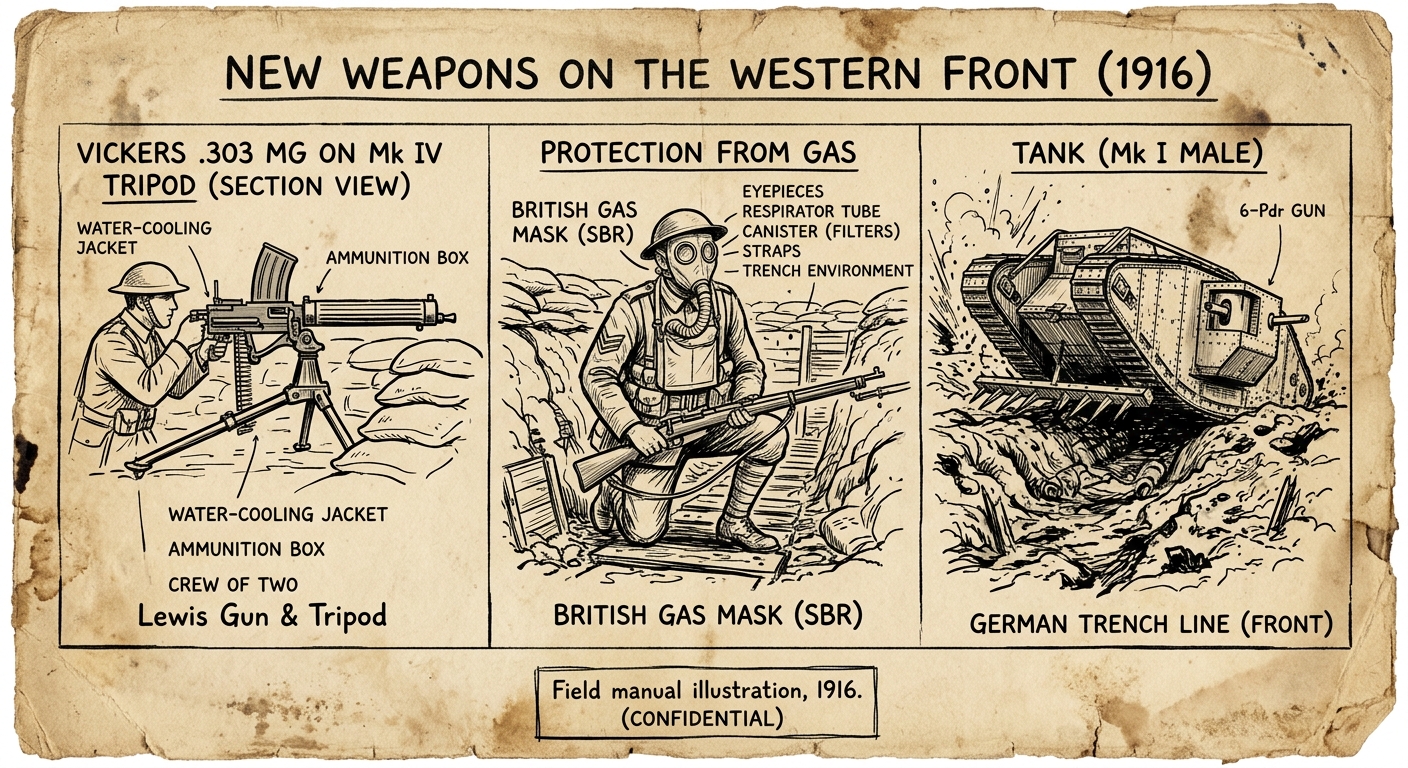
Using the diagram and reading, which statement best explains how new military technologies changed World War I fighting on the Western Front?
Which option best compares the purpose of gas masks to the purpose of tanks, based on the diagram and reading?
Which conclusion is best supported by the reading’s claim about casualties and the diagram’s examples of weapons?
Compare how machine guns and tanks could affect battlefield strategy.
Use one detail from the diagram and one detail from the reading as evidence.
Using the diagram and reading, explain why the introduction of new weapons made World War I different from earlier wars.
Include two pieces of evidence from the stimuli.
After World War I ended in 1918, the Treaty of Versailles proposed new borders and the League of Nations. In the United States, some leaders wanted the Senate to ratify the treaty to prevent future wars. Others argued it could pull the country into foreign conflicts and preferred focusing on domestic issues.
Historical Document: Political Cartoon—U.S. Senate Debate Over the Treaty (1919)
Study the cartoon’s symbols and captions. Use it with the reading to answer the questions.
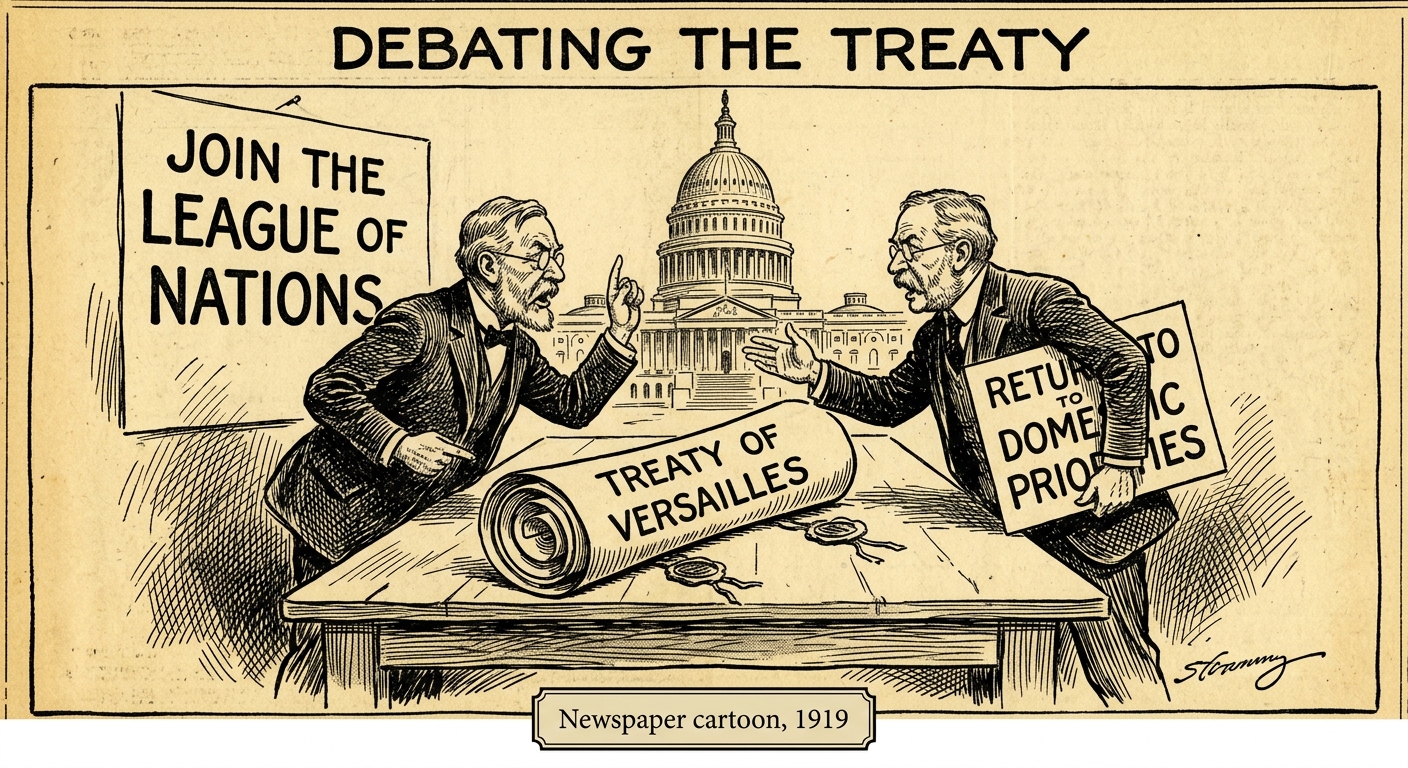
Using the cartoon and reading, which statement best explains a key reason some U.S. leaders opposed ratifying the Treaty of Versailles?
Which option best compares the two viewpoints shown in the cartoon about U.S. policy after World War I?
Which conclusion is best supported by the reading and the cartoon about the U.S. decision not to ratify the Treaty of Versailles?
Compare the arguments for and against ratifying the Treaty of Versailles shown in the cartoon.
Use one detail from the cartoon and one detail from the reading as evidence.
Using the reading and cartoon, explain how the debate over the Treaty of Versailles connects to the United States’ shift toward focusing on domestic rather than international matters after World War I.
Include two pieces of evidence from the stimuli.
After World War I, the United States experienced economic growth and cultural change known as the Roaring Twenties. New consumer goods, advertising, and mass entertainment spread quickly. Women gained new opportunities in work and public life, and African Americans promoted cultural pride through movements such as the Harlem Renaissance.
Historical Document
Magazine Advertisement—“The Modern Woman in the 1920s” (1926)
Study the imagery and captions. Use the ad with the reading to answer the questions.
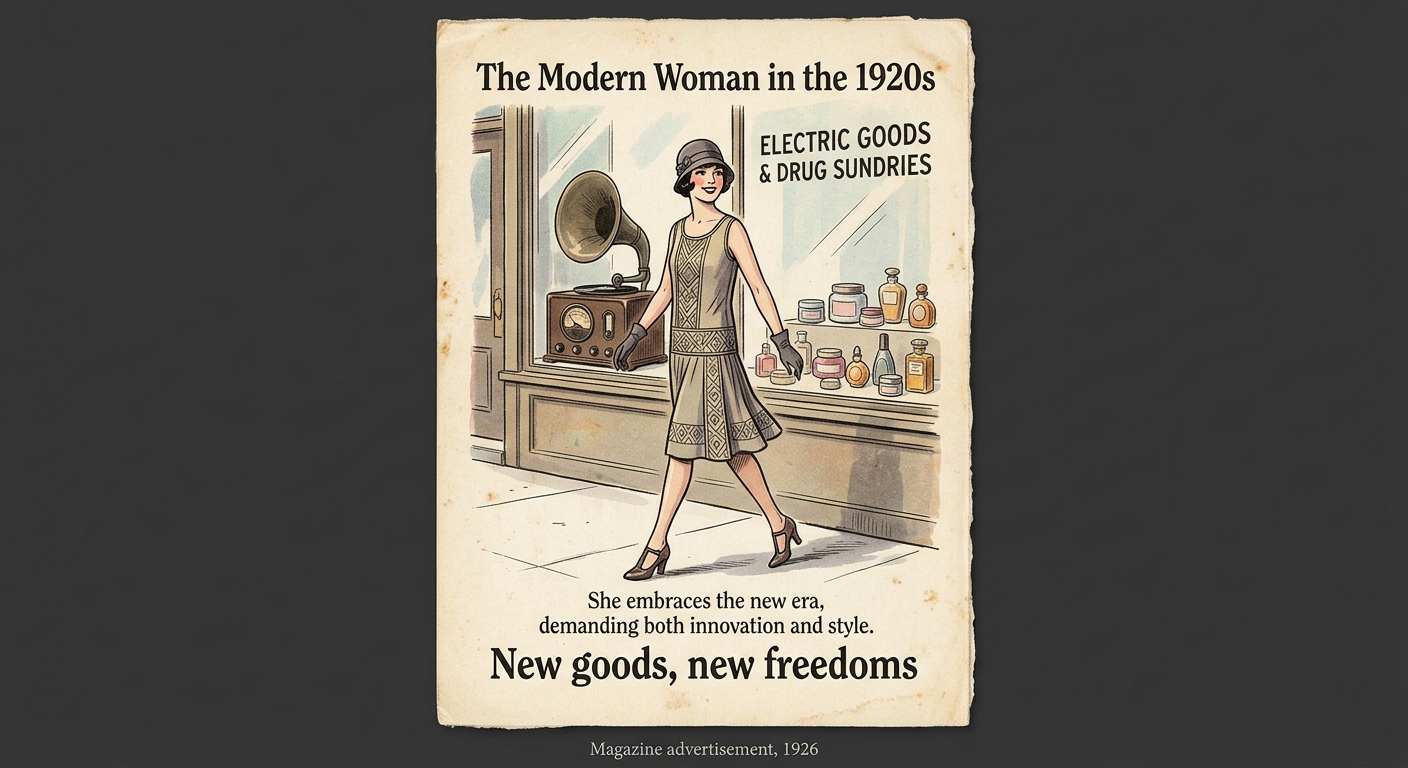
Using the advertisement and reading, which statement best explains how the Roaring Twenties reflected cultural change in the United States?
Which option best compares the opportunities for women suggested by the advertisement with the broader changes described in the reading?
Which conclusion about the economy and culture of the 1920s is best supported by both the reading and the advertisement?
Compare what the advertisement suggests about women’s roles in the 1920s with what the reading says about cultural change.
Use one detail from each stimulus as evidence.
Using the reading and advertisement, explain how economic prosperity in the 1920s helped create cultural change. Include two pieces of evidence from the stimuli.