Use the historical document(s) and the short readings in the left panel to answer the associated questions.
In the early 1930s, many banks faced runs as people rushed to withdraw savings. When banks closed or limited withdrawals, families and businesses struggled to get cash or credit. At the same time, farm prices and factory orders often fell, deepening the downturn.
Historical Document: Bank Notice and Market Report (1931)
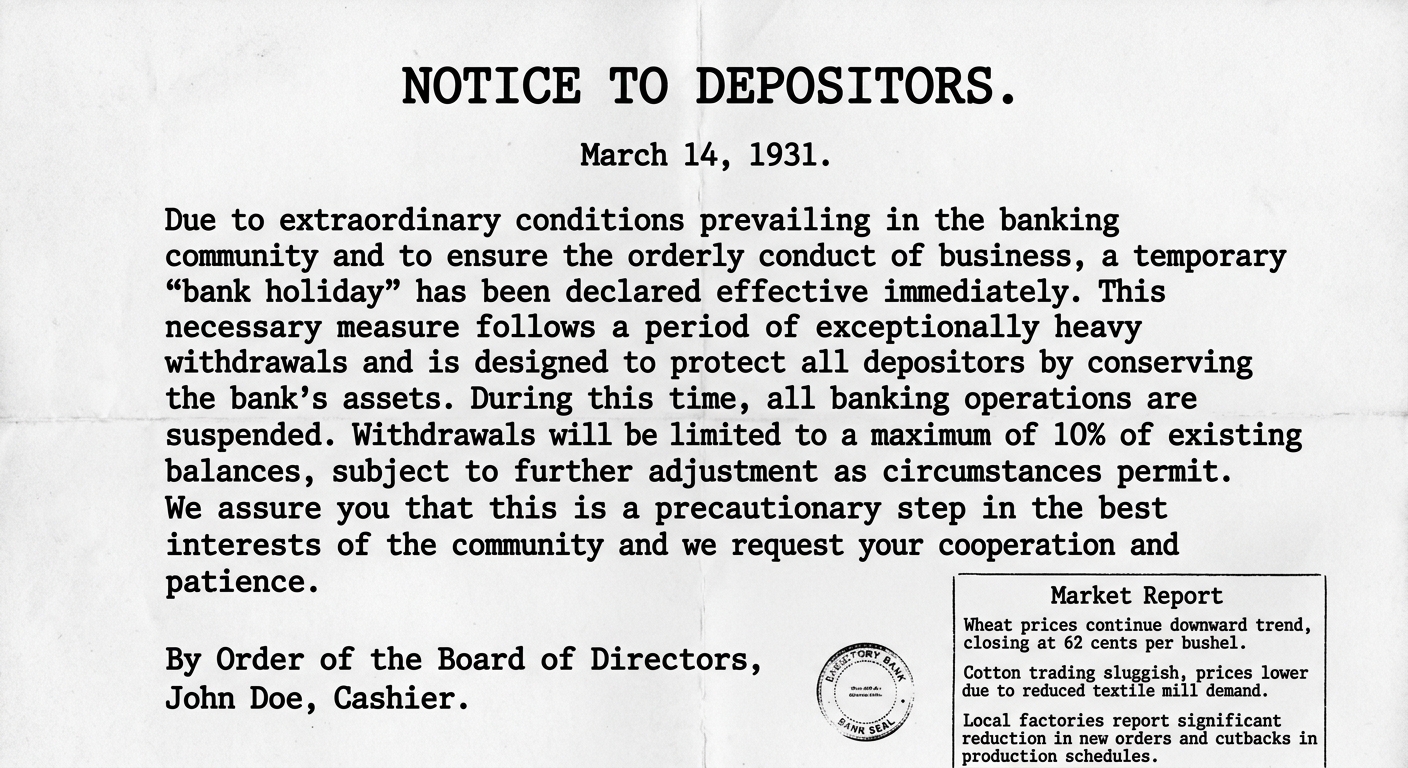
Based on the document’s bank notice and the market report, which comparison is most accurate?
Which pair of causes best connects to the problems shown in the document and helps explain the Great Depression?
Compare what the bank notice suggests about banking conditions with what the market report suggests about the broader economy.
Use evidence from both parts of the document.
Which broader historical development best contextualizes why a bank would limit withdrawals in 1931?
Contextualize the document by explaining how TWO causes (risky investing, protectionism, overproduction) could lead to the kinds of problems shown.
Use specific connections, not just a list.
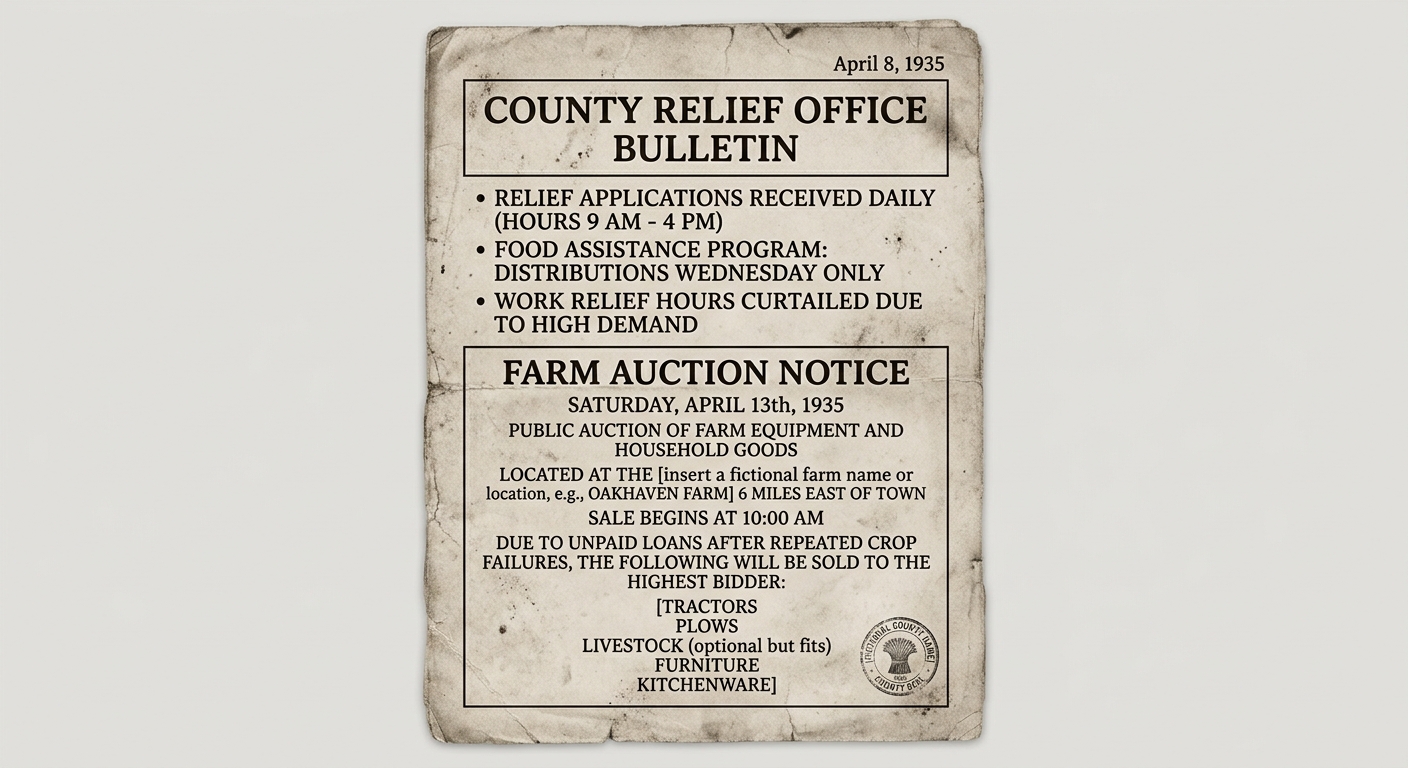
During the Great Depression, many families struggled as wages fell and jobs disappeared. In the Great Plains, drought and dust storms ruined crops and forced some farmers to leave their land. As incomes dropped, local businesses also lost customers and credit.
Historical Document: Relief Bulletin and Farm Auction Notice (1935)

Contextualize the historical document by explaining how Dust Bowl environmental conditions could contribute to the economic problems shown for families and businesses.
Use specific connections to the document or reading.
Compare one impact of the Great Depression and Dust Bowl on families with one impact on businesses.
Use evidence from TWO different parts of the document (bulletin vs. auction notice) or the reading.
Which comparison between families and local businesses is most supported by the document and reading?
Which detail from the historical document is the strongest evidence of direct impact on families?
Which broader historical context best explains why a relief bulletin and a farm auction notice would appear together in 1935?
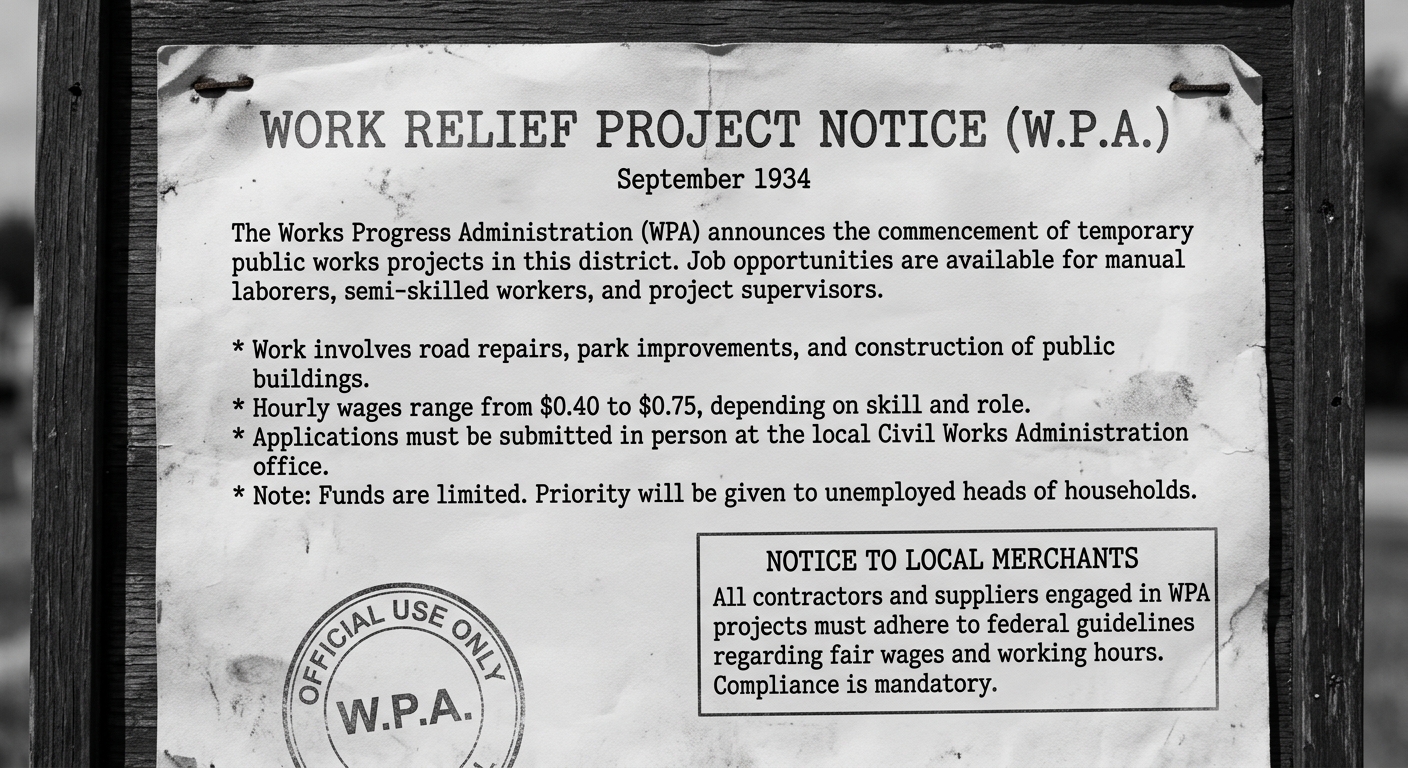
By 1933–1934, unemployment and business failures remained widespread. New Deal programs tried to provide relief through federally funded jobs and new rules for wages and hours. These actions expanded the federal government’s role, but limited funds and ongoing poverty meant many hardships continued.
Historical Document:
Work Relief Project Notice and Business Advisory (1934)

Based on the work-relief notice and the business advisory, which comparison is most accurate?
Which problem best contextualizes why a work-relief notice like this would be posted in 1934?
Compare how an unemployed worker and a small business owner might view the programs and rules suggested by this document.
Use evidence from BOTH parts of the document or the reading.
Which statement best describes a long-lasting effect of New Deal reforms suggested by this document?
Contextualize the document by explaining one way New Deal programs attempted to reduce hardship and one reason they did not resolve all hardships Americans faced.
Use specific connections to the document or reading.