Preskoči na glavni sadržaj
Prijava
Sign up for FREE
arrow_back
Biblioteka

8.6 - World War II: - Practice C

star
star
star
star
star
Posljednje ažuriranje 2 months ago
15
Napomena autora:

Use the historical document(s) and the short readings in the left panel to answer the associated questions.

Use the historical document(s) and the short readings in the left panel to answer the associated questions.

8.6.a
DOK.SS.2
8.6.b
DOK.SS.2
8.6.c
DOK.SS.2
Obavezno
2
8.6.a
DOK.SS.2
Obavezno
1
8.6.a
DOK.SS.2
Obavezno
1
8.6.a
DOK.SS.2
Obavezno
2
8.6.a
DOK.SS.2
Obavezno
1
8.6.a
DOK.SS.2
Obavezno
1
8.6.b
DOK.SS.2
Obavezno
1
8.6.b
DOK.SS.2
Obavezno
2
8.6.b
DOK.SS.2
Obavezno
1
8.6.b
DOK.SS.2
Obavezno
2
8.6.b
DOK.SS.2
Obavezno
1
8.6.c
DOK.SS.2
Obavezno
1
8.6.c
DOK.SS.2
Obavezno
2
8.6.c
DOK.SS.2
Obavezno
1
8.6.c
DOK.SS.2
Obavezno
2
8.6.c
DOK.SS.2

Reading (about 45 words): In the 1930s, several nations expanded by force, while many democracies struggled during a worldwide economic depression. The League of Nations discussed economic sanctions to stop aggression, but member states often hesitated to enforce them. This weakness encouraged further conflicts in Europe and Asia.

Historical Document: League of Nations memorandum (facsimile, 1936).
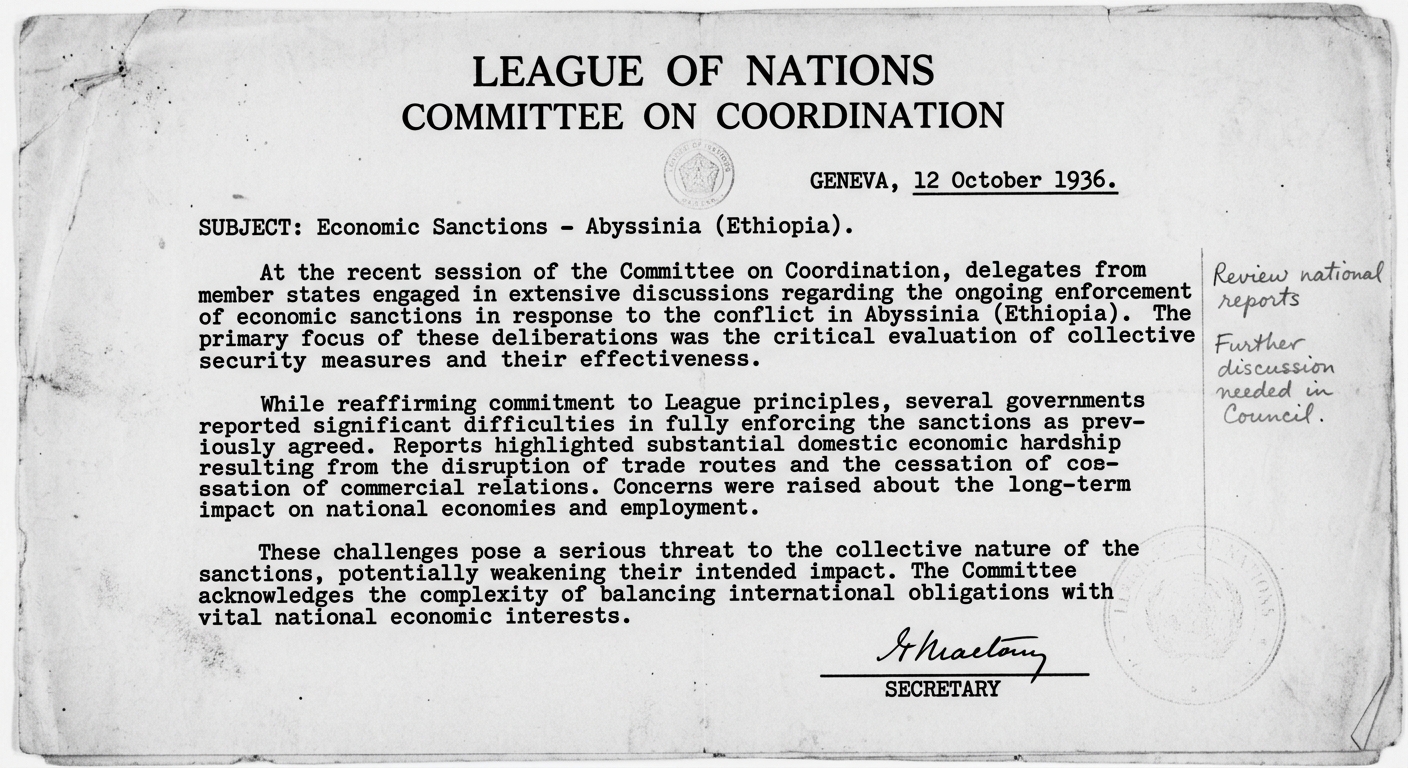
Facsimile League of Nations memorandum dated 1936 discussing economic sanctions and the difficulty of enforcing them.

Pitanje 1
1.

Explain how this memo helps contextualize the rise of conflict in Europe and Asia.

In your paragraph, connect the memo to at least two factors named in the standard (economic depression, militant nationalism, totalitarian rule, or League of Nations failures) and support your explanation with evidence from the document.

Pitanje 2
2.

Which comparison best contextualizes the League’s approach shown in the memo?

Pitanje 3
3.

Based on the reading and memo, which context best explains why some governments resisted enforcing sanctions?

Pitanje 4
4.

Compare the League’s limitations shown in the memo to one other 1930s crisis (for example, Japan in Manchuria, Italy in Ethiopia, or Germany in the Rhineland).

In your comparison, explain one similarity and one difference in how the international community responded, using evidence from the memo and relevant historical context.

Pitanje 5
5.

Which part of the memo most directly illustrates a factor that contributed to the outbreak of World War II, as described in the standard?

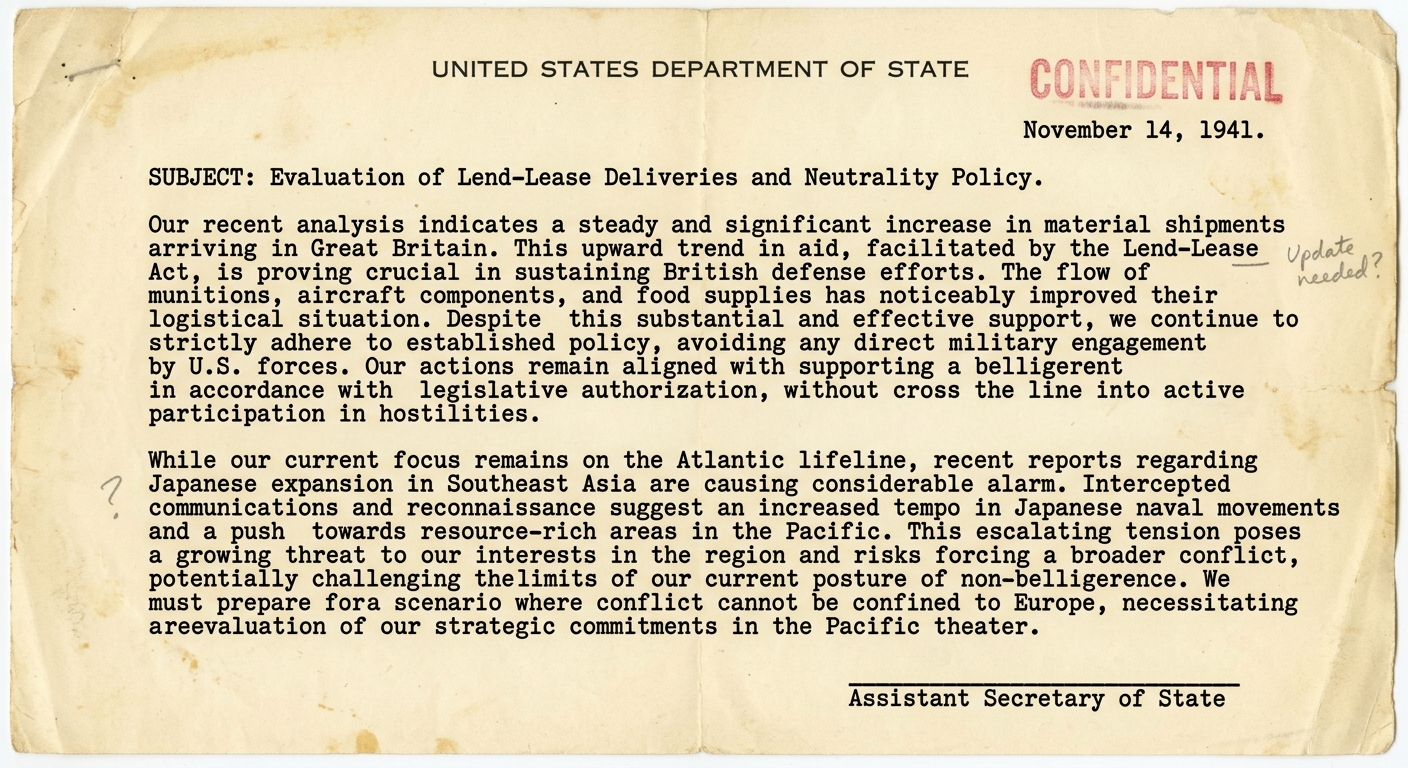
From 1939 to late 1941, the United States tried to remain neutral while increasing aid to Britain. Programs such as Lend-Lease sent supplies without declaring war. As fighting spread and tensions rose in the Pacific, debates grew over how long neutrality could last.

Historical Document:

U.S. government memorandum on neutrality and aid (facsimile, 1941).

Facsimile 1941 U.S. government memorandum about neutrality, aid to Britain, and growing war concerns.

Pitanje 6
6.

Which detail from the memo best supports the idea that the United States tried to remain neutral while still aiding Britain?

Pitanje 7
7.

Based on the reading and memo, which event most directly explains why U.S. neutrality ended soon after the memo’s date?

Pitanje 8
8.

Compare the situation described in the memo (neutrality with aid) to the United States after Pearl Harbor.

In your comparison, explain one similarity and one difference in U.S. government actions, using evidence from the memo and relevant historical context.

Pitanje 9
9.

Which comparison best contextualizes the policy described in the memo?

Pitanje 10
10.

Using the reading and memo, explain how U.S. neutrality policy and aid to Britain can be seen as part of a sequence that led to U.S. involvement in a multi-front war.

Support your explanation with evidence from the memo and at least one contextual detail from World War II.

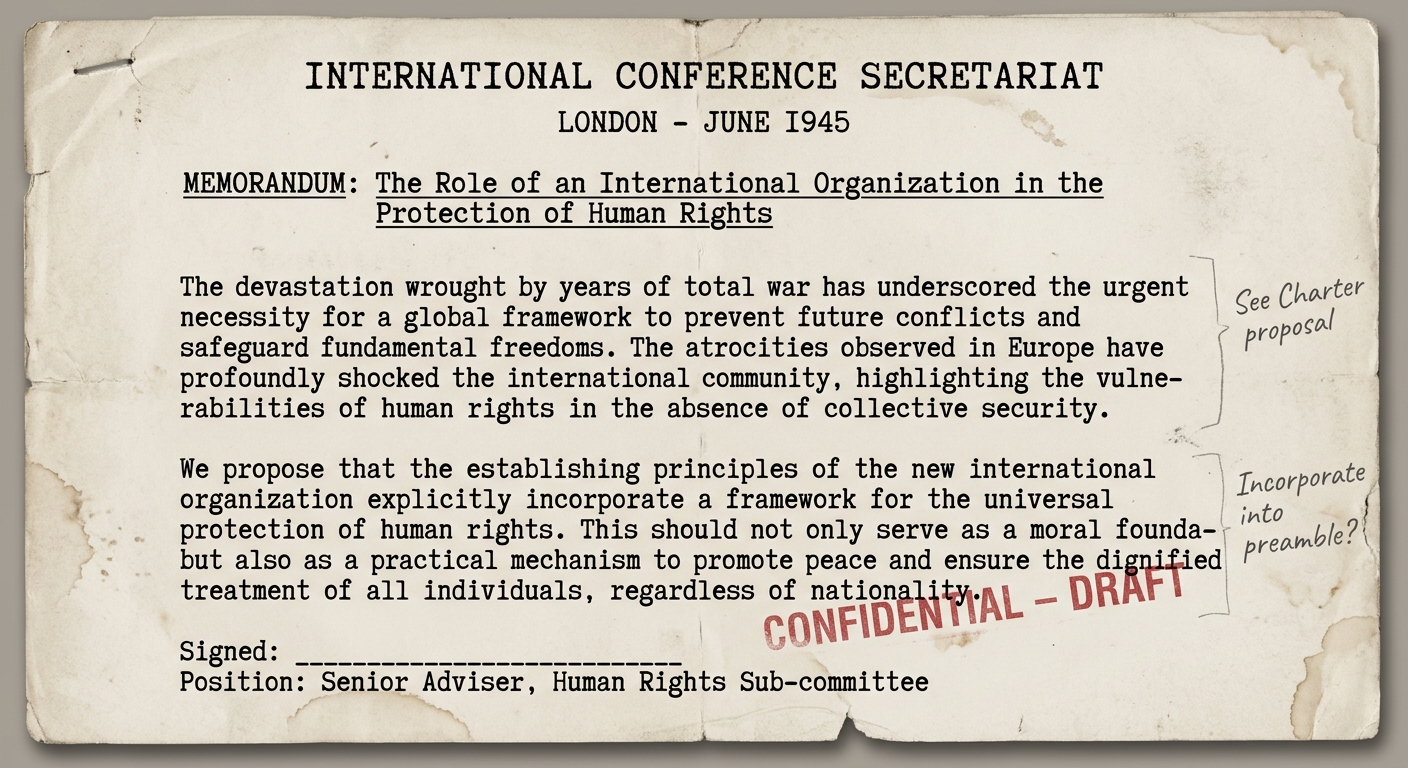
By 1945, World War II’s total warfare caused massive destruction, and reports of atrocities—especially the Holocaust—shocked the world. Many leaders argued that preventing future wars required a new international organization and stronger protection of human rights, beyond what earlier agreements had provided.

Historical Document:

Postwar briefing note on international organization and human rights (facsimile, 1945).

Facsimile 1945 briefing note calling for an international organization and protection of human rights after World War II atrocities.

Pitanje 11
11.

Which comparison best contextualizes the change in international priorities described in the reading and note?

Pitanje 12
12.

Which part of the briefing note most directly reflects a consequence of World War II described in the standard?

Pitanje 13
13.

Explain how World War II’s total warfare and human atrocities helped lead to calls for both an international organization and the protection of human rights.

In your paragraph, use evidence from the document and at least one contextual detail from World War II.

Pitanje 14
14.

Based on the reading and note, which development best explains why leaders argued for stronger human-rights protections after World War II?

Pitanje 15
15.

Compare the international goals described in the 1945 note to one pre–World War II attempt to preserve peace (such as the League of Nations).

Explain one similarity and one difference in the approach to preventing war, using evidence from the note and relevant historical context.