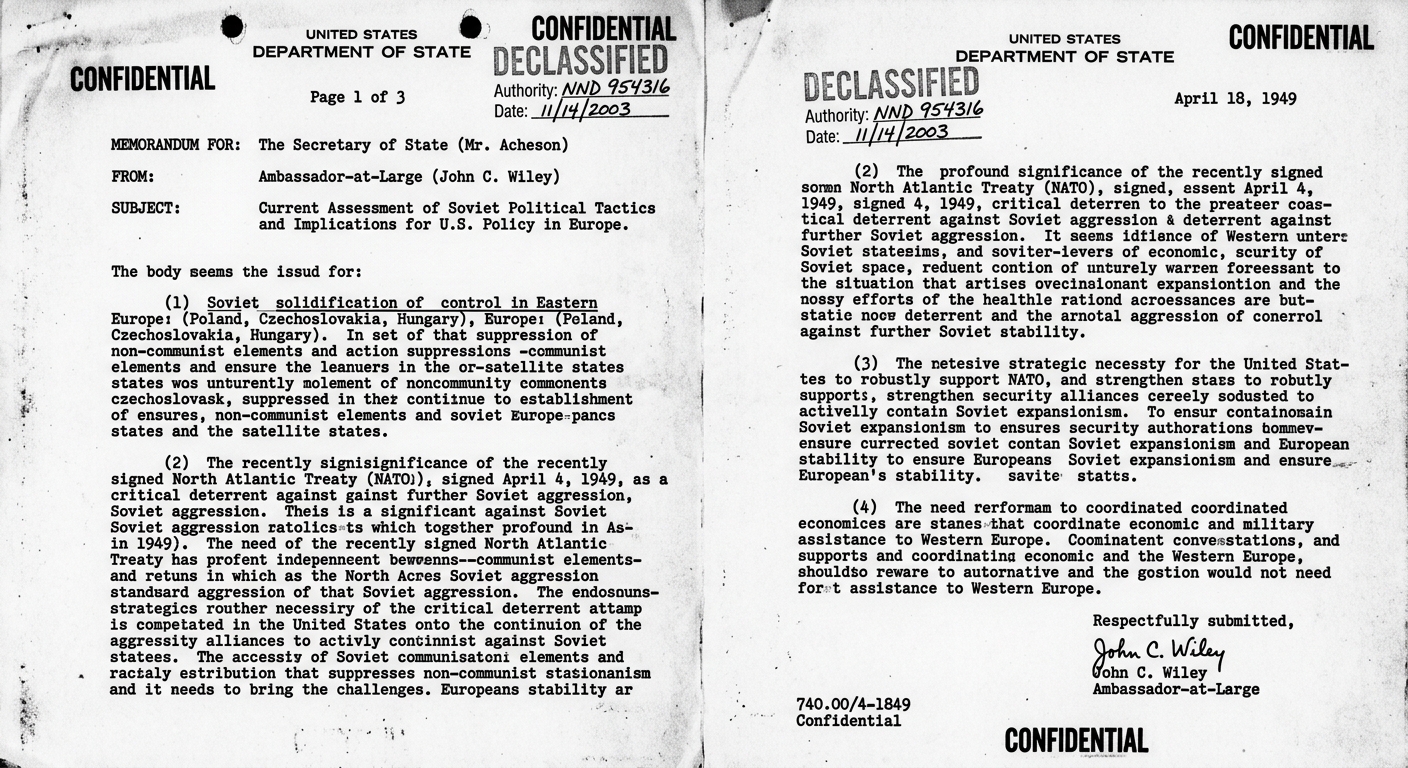
Written in 1949, it reflects U.S. worries about Soviet power after World War II and the creation of new alliances. Use the document’s purpose and context to compare Cold War strategies and explain how superpower rivalry shaped global alliances.
Use the historical document(s) and the short readings in the left panel to answer the associated questions.
Use the historical document(s) and the short readings in the left panel to answer the associated questions.
Written in 1949, it reflects U.S. worries about Soviet power after World War II and the creation of new alliances. Use the document’s purpose and context to compare Cold War strategies and explain how superpower rivalry shaped global alliances.
Based on the document’s context (1949), which broader Cold War development does it best illustrate?
Which comparison best places the memo’s message in Cold War context?
Which statement best explains how the rivalry described in the document shaped global alliances during the Cold War?
Compare how U.S. officials and Soviet officials would likely describe the purpose of creating alliances in Europe in the late 1940s.
Use evidence from the document’s language and the time period to support your comparison.
Contextualize the document by explaining one condition from the years 1945–1949 that helps explain why U.S. leaders were focused on Soviet influence.
Then compare this situation to one later Cold War moment when alliances or spheres of influence mattered.
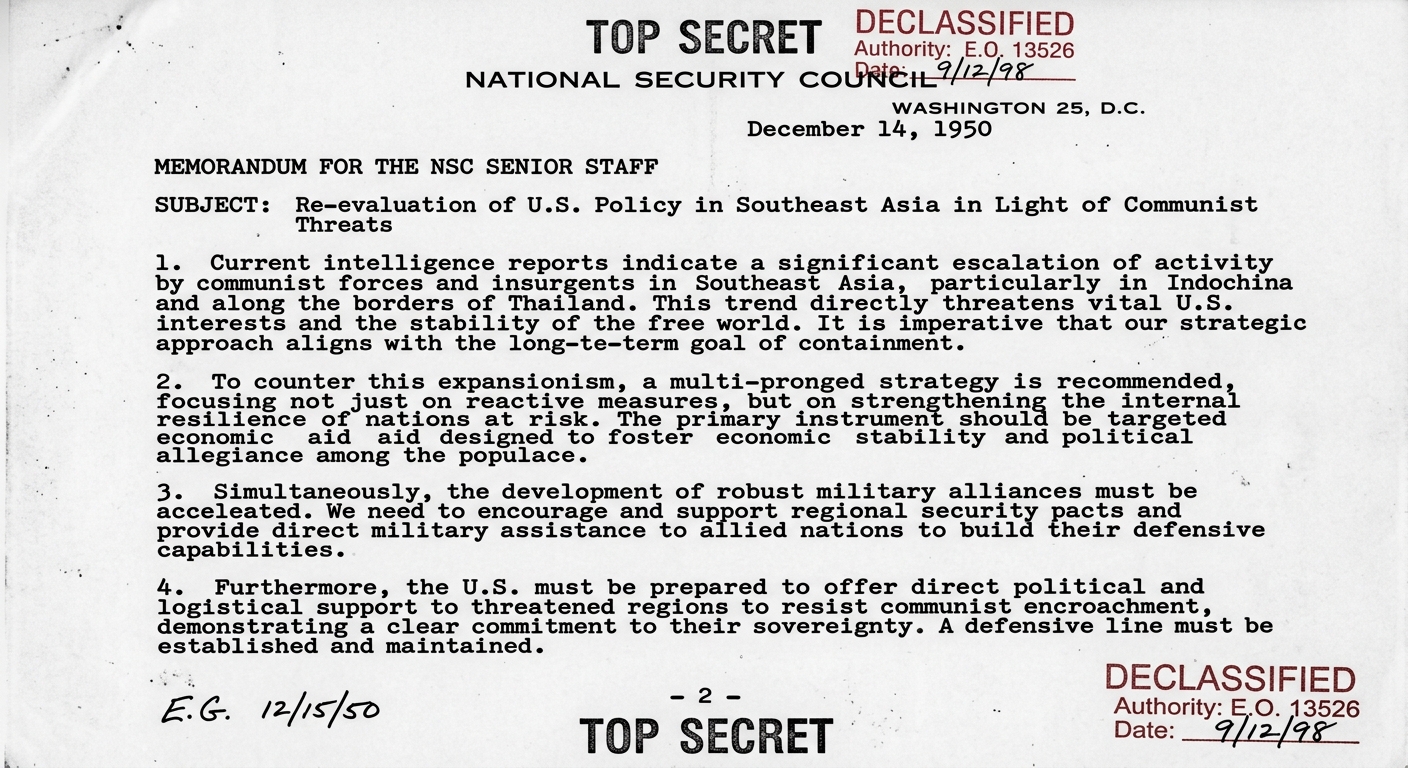
Written in 1950, it reflects how U.S. leaders defined containment as a long-term strategy to limit communist influence. Use the document’s context and recommendations to compare Cold War policy goals and explain how containment shaped U.S. alliances and actions.
Which statement best connects the document’s recommendations to the U.S. policy of containment?
Which comparison best contextualizes this document within early Cold War foreign policy (late 1940s–early 1950s)?
Which inference about alliances is most supported by the document’s approach to containment?
Compare how a U.S. policymaker and a Soviet leader would likely describe the purpose of this containment strategy.
Use the document’s recommendations and early Cold War context to support your comparison.
Contextualize this document by explaining one post–World War II condition that made U.S. leaders prioritize containment.
Then compare that condition to one later Cold War event when containment influenced U.S. decisions.
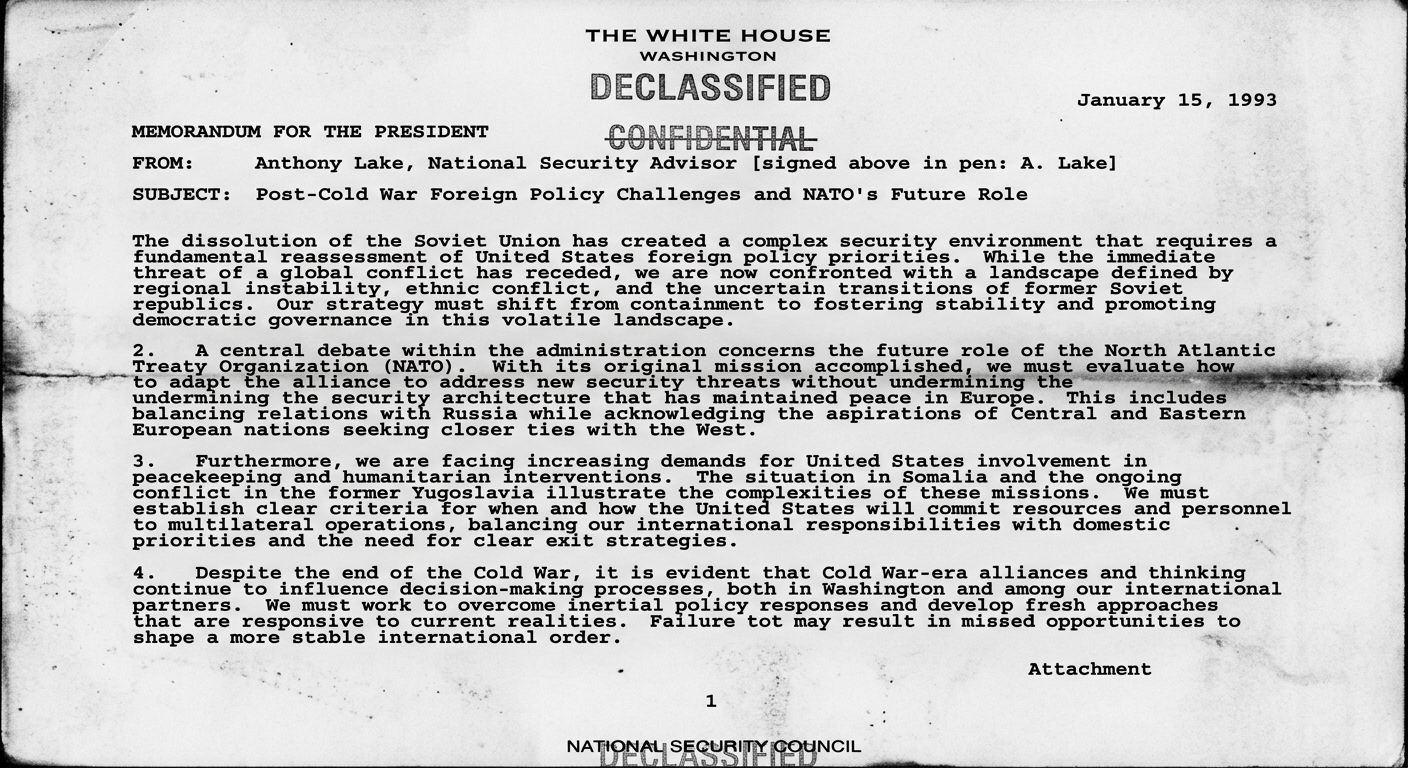
Read the document image. Written in the early 1990s, it reflects U.S. debates about a new role in global affairs after the Cold War. Use the document’s context and purpose to compare it to earlier Cold War priorities and explain how Cold War legacies continued shaping foreign policy choices.
Which Cold War legacy is most likely shaping the policy debate described in the document?
Which comparison best explains how U.S. goals in the early 1990s differed from goals in the late 1940s?
Which conclusion about post–Cold War foreign policy is best supported by the document’s context?
Compare how this post–Cold War document and an early Cold War containment document would likely define the main threat to U.S. security.
Explain one similarity or difference and support it with contextual evidence.
Contextualize the document by describing one decision the United States faced after the Cold War that was shaped by earlier alliances or rivalries.
Then compare that decision to one Cold War-era situation when alliance choices also mattered.
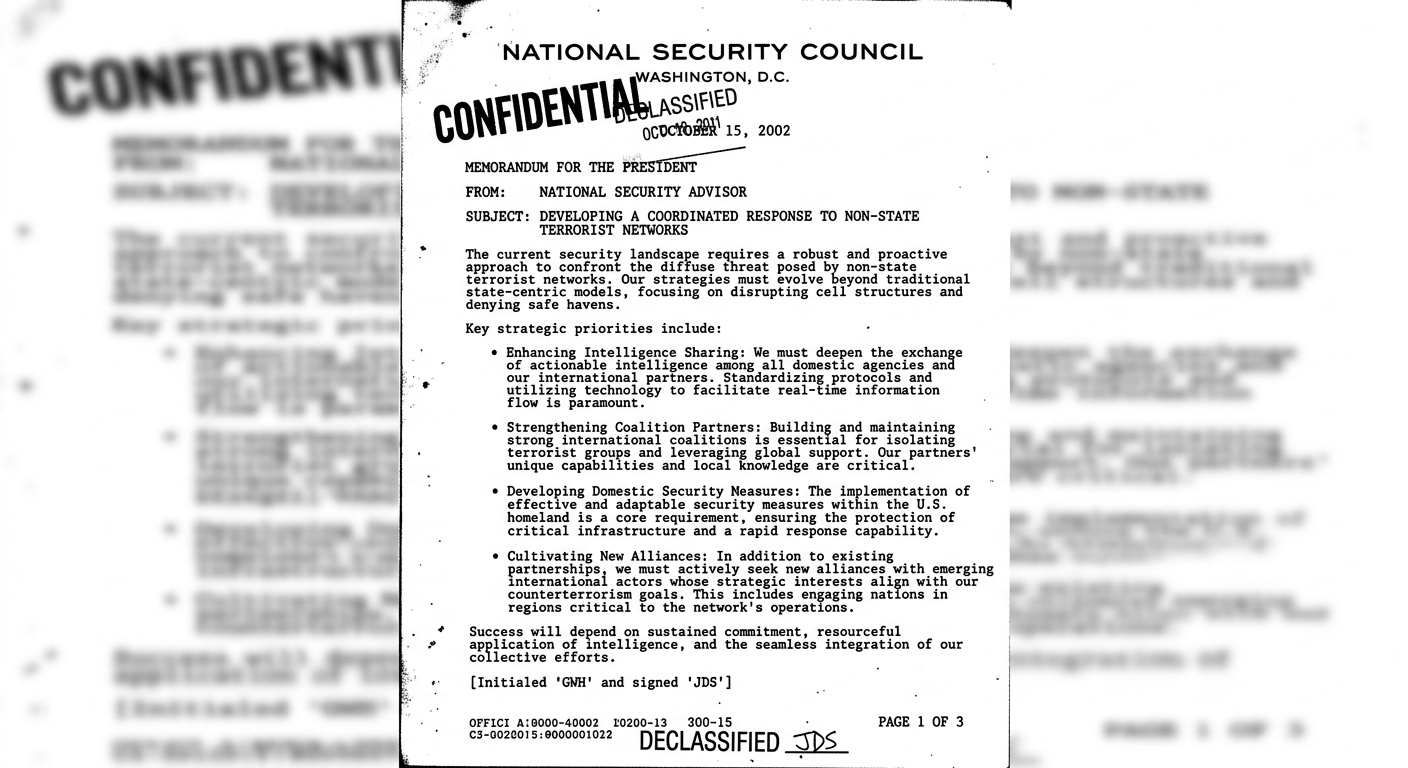
Read the document image. Written in the early 2000s, it reflects U.S. concerns about terrorism by non-state groups and new security partnerships. Use the document’s context and recommendations to compare this era with the Cold War and explain how terrorism reshaped alliances and policies.
Which broader foreign policy development does the document most likely reflect?
Which comparison best contextualizes this document’s focus on alliances when compared to the Cold War?
Which inference about U.S. policy is most supported by the document’s likely recommendations?
Compare how a U.S. official during the Cold War and a U.S. official in the early 2000s would likely define the main security threat. Use the document’s context to support your comparison.
Contextualize the document by describing one way terrorism changed U.S. foreign or domestic policy after 2001. Then compare that change to one Cold War-era policy response to a different type of threat.
Read the document image. Written in the late 1990s/early 2000s, it reflects U.S. debates about globalization, trade, and economic competition. Use the document’s context and claims to compare this era to earlier U.S. foreign policy goals and explain how economic interdependence could shape alliances and conflicts.
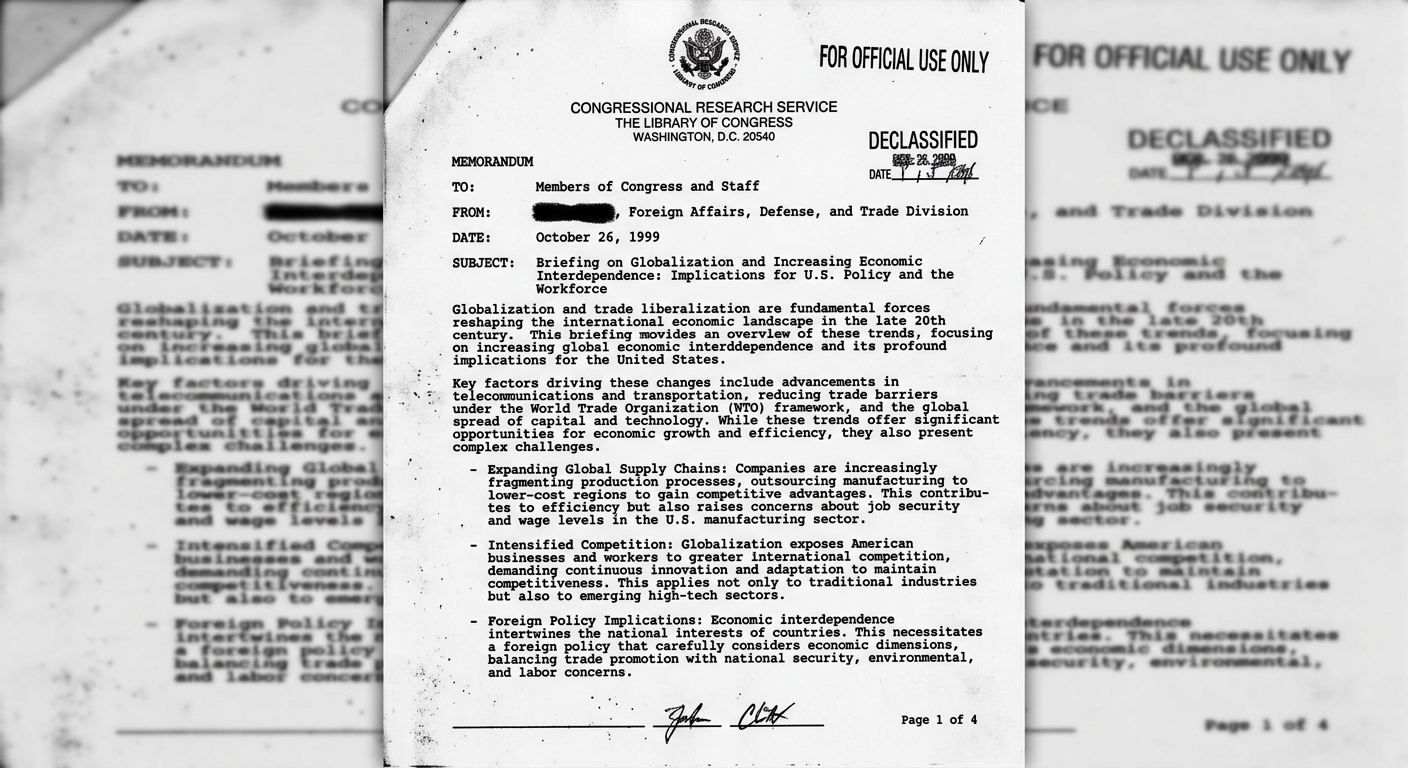
Which broader foreign policy development is most consistent with the document’s focus?
Which comparison best contextualizes the document’s concerns when compared to Cold War foreign policy priorities?
Which inference about alliances is most supported by the idea of increased economic interdependence?
Compare one way globalization could create cooperation between countries and one way it could create competition.
Use the document’s likely claims and historical context to support your comparison.
Contextualize the document by describing one change after the Cold War that increased global economic connections.
Then compare that change to one earlier period when U.S. foreign policy was shaped more by military-security concerns than by trade.