Use the historical document(s) and the short readings in the left panel to answer the associated questions.
Read the document below. It is a community flyer from October 1963 in Jackson, Mississippi, during the civil rights movement. Use its language and details to compare perspectives and to explain how protest and voting-rights activism aimed at legal equality while economic improvements often moved more slowly.
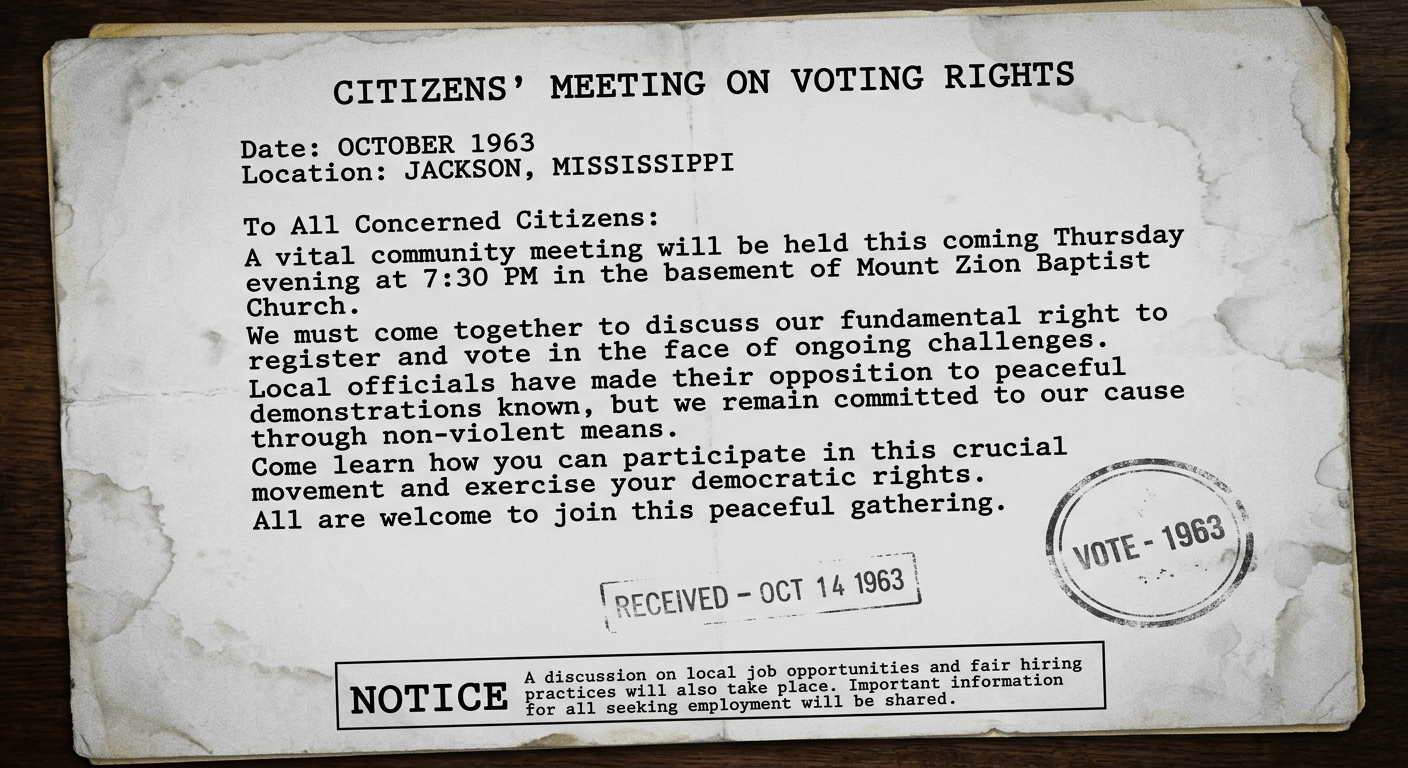
Which comparison is best supported by the flyer’s wording about “peaceful protest” and the mention that some local officials oppose demonstrations?
The flyer includes voting rights and a “Notice” about jobs and fair hiring. Which conclusion best connects this to the idea that the civil rights movement achieved legal change faster than economic change?
Which additional source would be MOST useful to compare with this flyer in order to contextualize how local conditions shaped civil rights activism in 1963?
Using evidence from the flyer, compare two goals of the civil rights movement—legal equality and economic improvement.
In a well-formed paragraph, explain how the document suggests both goals were connected, and why progress on one could be faster than the other.
Contextualize the flyer by comparing it to one other type of civil rights-era source (for example: a court decision, a local newspaper editorial, a police report, or a federal law).
In one paragraph, explain what each source type would help you understand about the movement and why historians compare them.
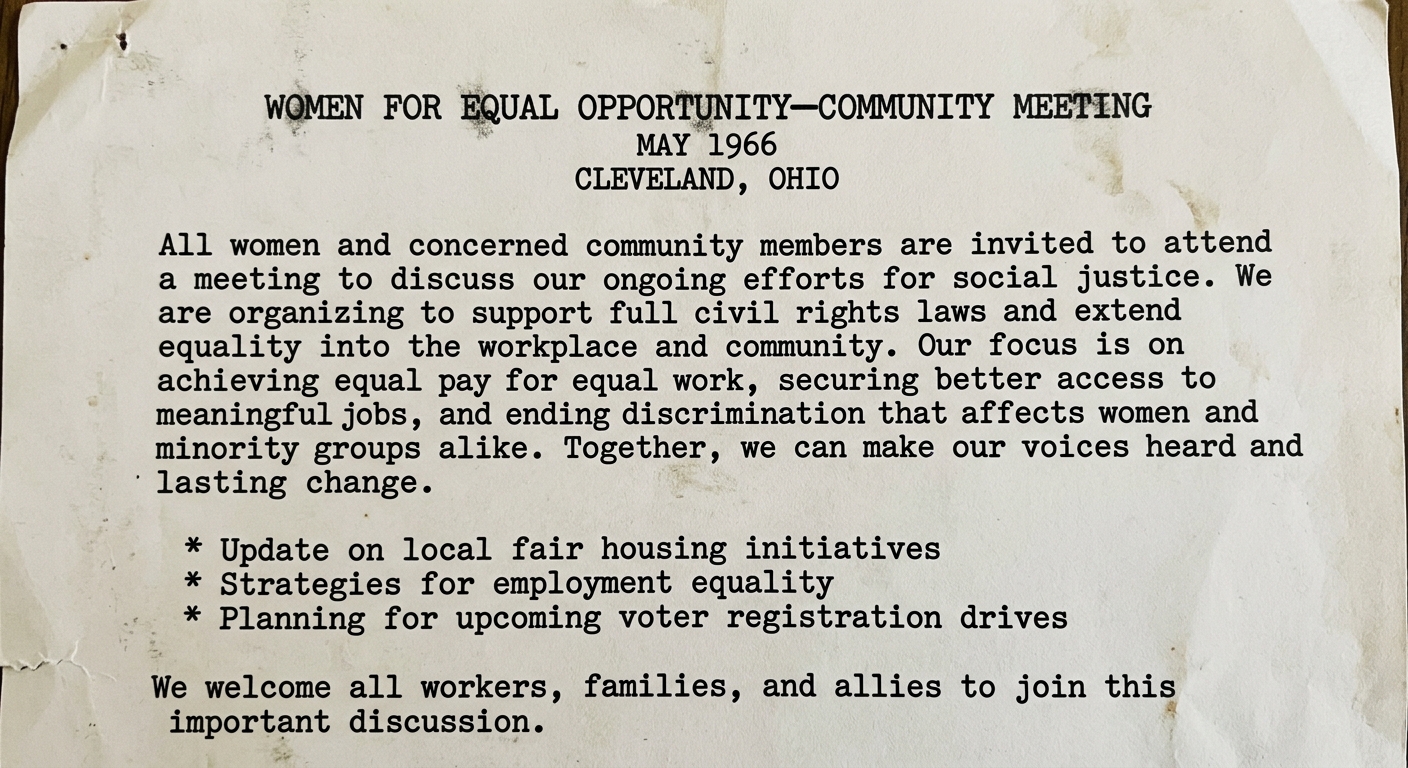
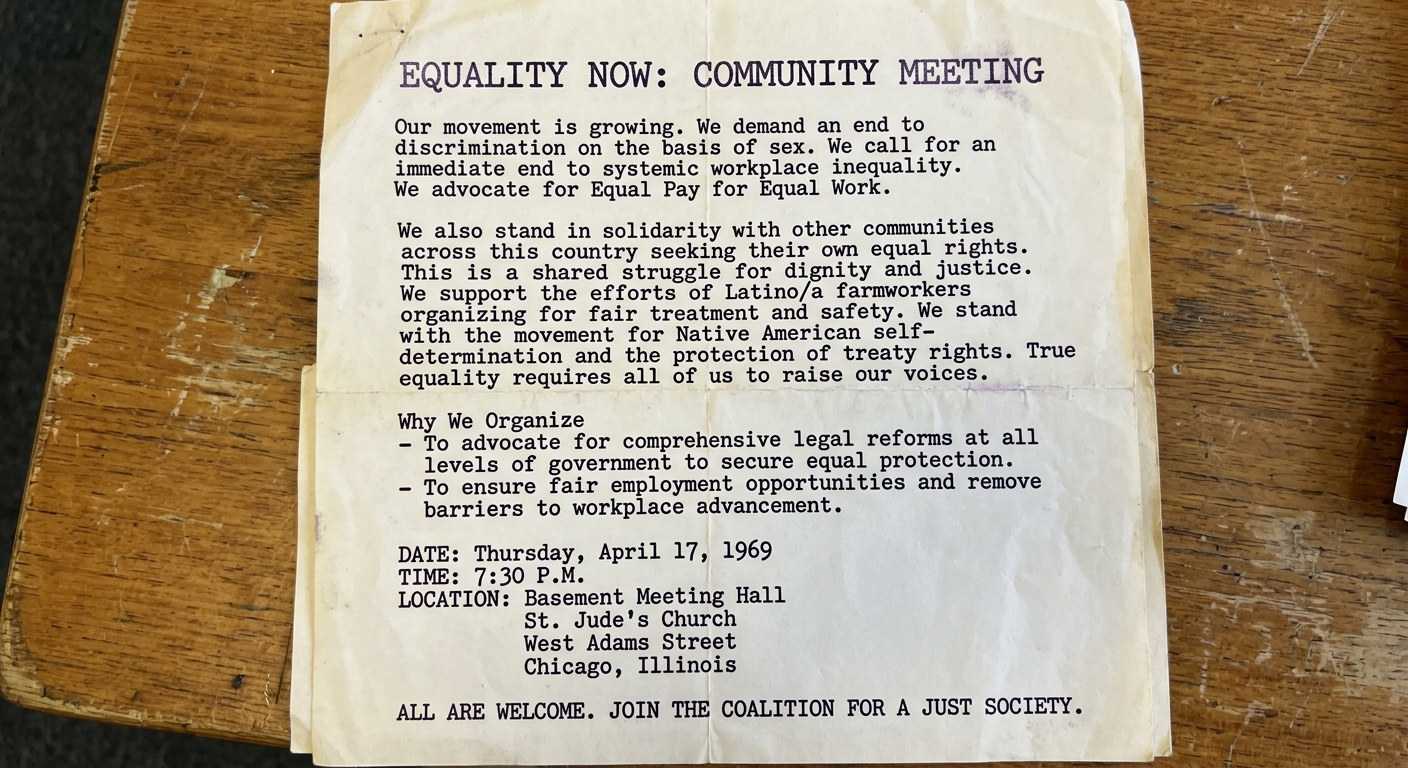
Read the document below. It is a community newsletter announcement from May 1966 in Cleveland, Ohio. Use its details to compare how women’s activism built on earlier civil rights efforts and to contextualize why multiple groups renewed demands for equality during the 1960s.

Which comparison is best supported by the flyer’s emphasis on women’s equality and its references to other equal-rights movements?
Which context best explains why a 1969 flyer might connect women’s equality to other group rights campaigns?
Which comparison would be MOST helpful for evaluating whether women’s equality activism faced challenges similar to other movements named or implied in the flyer?
Using evidence from the flyer, compare one goal of women’s equality activism with one goal of another equal-rights movement referenced or implied in the document.
In a well-formed paragraph, explain one similarity and one difference in what each movement was trying to change.
Contextualize this 1969 flyer by comparing it to one earlier civil rights-era source type (for example: a 1964 federal law, a court case, or a local newspaper editorial from the early 1960s).
In one paragraph, explain what each source would help you understand about renewed equality efforts by women and other groups.
Read the document below. It is a neighborhood bulletin from August 1966 in St. Louis, Missouri. Use its details to compare Great Society anti-poverty and health programs with competing national priorities, and to explain how the Vietnam War could limit resources and shape public debate.

Which comparison is best supported by the announcement’s focus on “equal pay” and “job access” when compared to earlier civil rights goals?
Which detail from the announcement is MOST useful for contextualizing why women and other groups renewed equality activism during the 1960s?
Which additional source would be MOST useful to compare with this announcement to evaluate how equality efforts expanded beyond race during the 1960s?
Using evidence from the announcement, compare women’s equality goals to one earlier civil rights goal from the 1950s–early 1960s.
In one well-formed paragraph, explain one similarity and one difference in what each movement emphasized.
Contextualize the announcement by explaining how a national development of the mid-1960s (such as a federal law, a court decision, or a major protest campaign) could have encouraged local groups to organize meetings like this one.
Write one paragraph using at least one detail from the document.
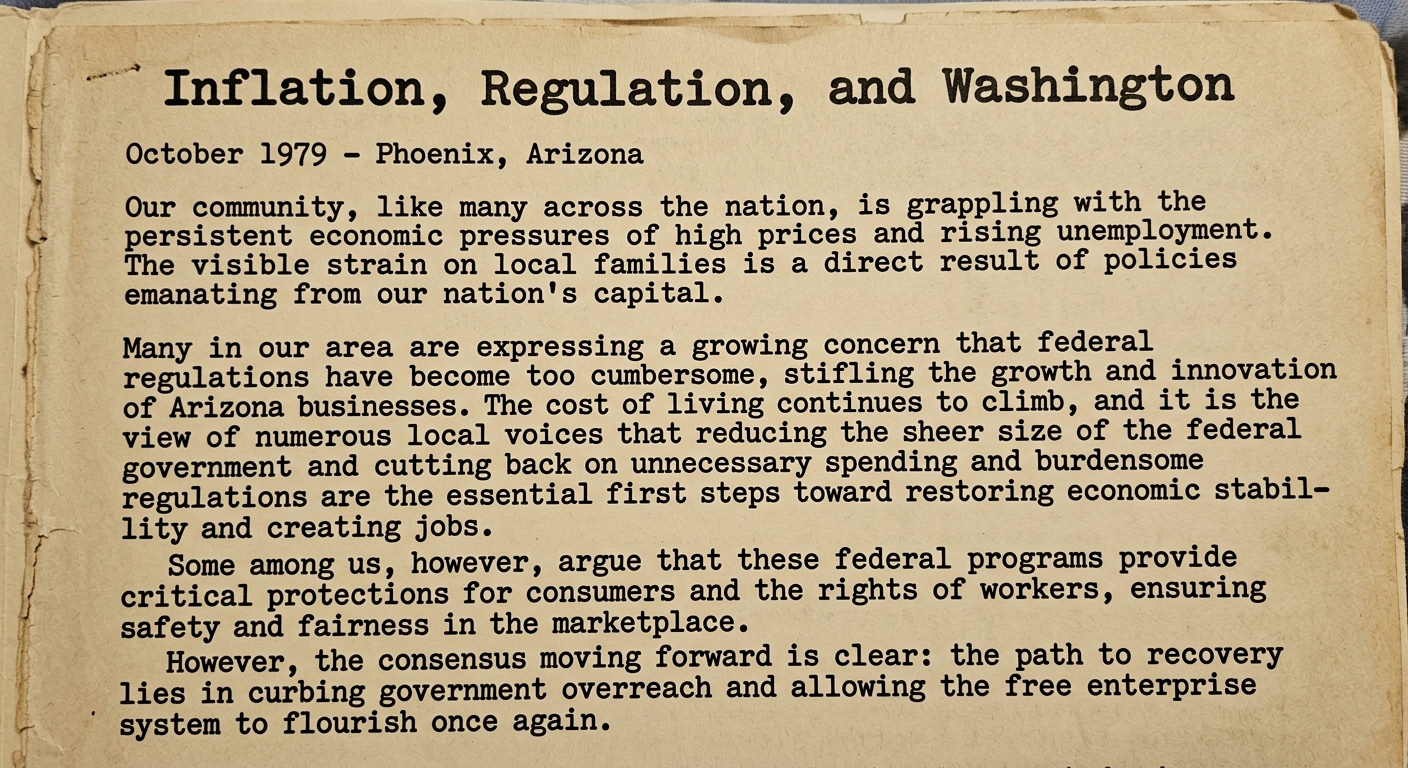
Read the document below. It is an opinion-style community notice from October 1979 in Phoenix, Arizona, during a period of inflation and recession. Use its claims to compare viewpoints about regulation and government size, and to contextualize why fiscal conservatives pushed for policy changes in the late 1970s.

Which comparison is best supported by the document’s criticism of federal regulation and its brief mention that some people support government programs?
Which context best explains why fiscal conservatives in the late 1970s used arguments like those in the document?
Which additional source would be MOST useful to compare with this document to contextualize public debate about government size in the late 1970s?
Using evidence from the document, compare the author’s likely viewpoint about regulation to an alternative viewpoint that emphasizes consumer or worker protections.
In one well-formed paragraph, explain one similarity and one difference in what each side prioritizes.
Contextualize this 1979 document by comparing it to one other late-1970s source type (for example: a presidential address, a congressional hearing excerpt, or a local newspaper editorial with a different viewpoint).
In one paragraph, explain what each source would help you understand about the push for policy changes.
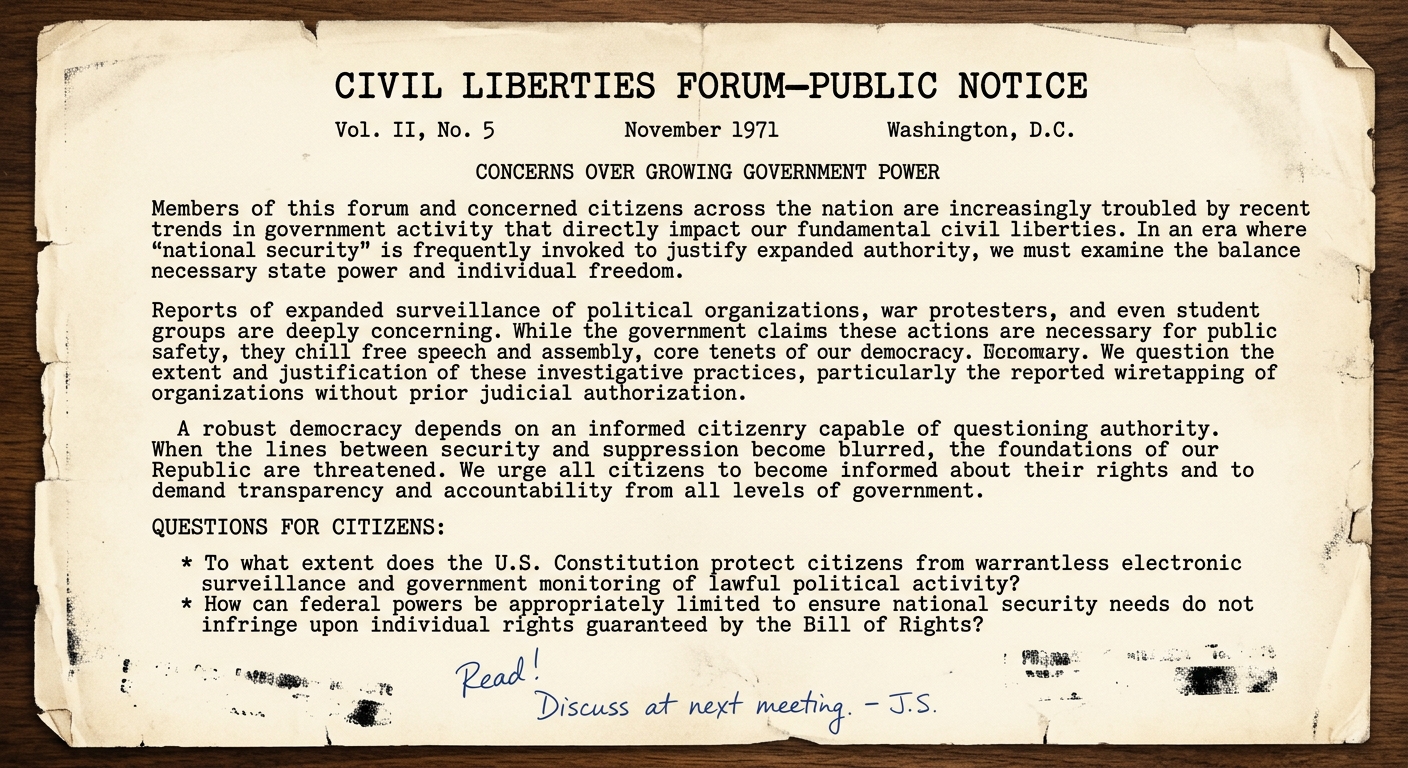
Read the document below. It is a public notice from November 1971 in Washington, D.C., during debates about civil liberties and federal power. Use its language to compare viewpoints about security and individual rights, and to contextualize why constitutional issues about government authority remained contested.

Which comparison is best supported by the notice’s concern about surveillance and its reference to national security?
Which additional source would be MOST useful to compare with this notice to contextualize the constitutional debate over civil liberties in the early 1970s?
Which detail in the notice is MOST useful for comparing early 1970s civil liberties debates to earlier Cold War-era debates?
Using evidence from the notice, compare one argument for stronger federal power in the name of security with one argument for stronger civil liberties protections. In one well-formed paragraph, explain how each side might use constitutional principles to support its position.
Contextualize this notice by comparing it to one other source type from the early 1970s (for example: a Supreme Court case summary, a presidential statement, or a newspaper editorial with a different viewpoint). In one paragraph, explain what each source would help you understand about debates over civil liberties and federal power.