Use the historical document(s) and the short readings in the left panel to answer the associated questions.
This 1867-style map shows administrative districts used to organize Reconstruction work across the former Confederacy. Notice how rivers and rail lines shape travel and supply routes. District boundaries could affect how quickly officials delivered aid, enforced policy, and coordinated reunification across different regions.
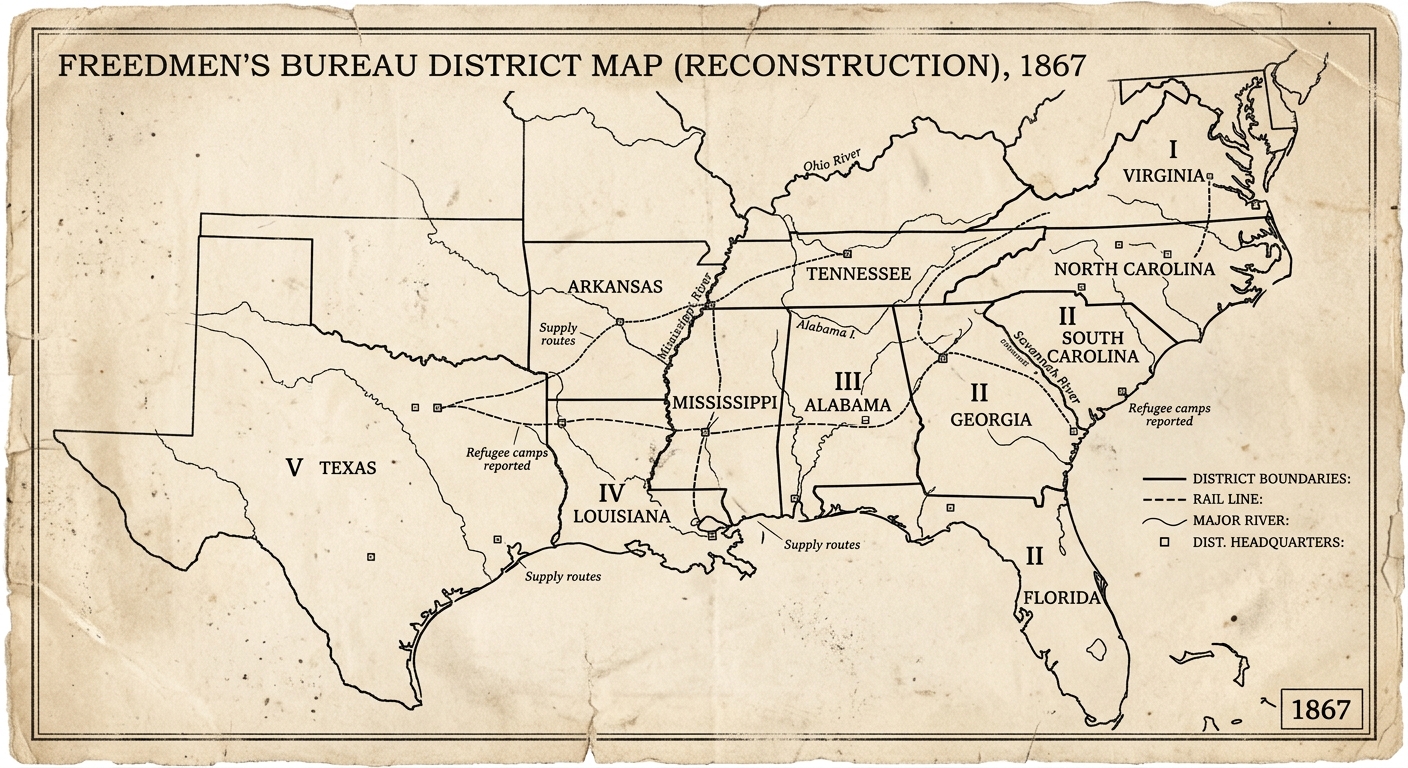
Based on the map, which geographic feature would most likely make it easier for Reconstruction officials to move supplies between districts?
If a Reconstruction district boundary follows a major river on the map, what is the most reasonable geographic explanation for using the river as a boundary?
Which location on the map would most likely face the greatest challenge receiving Reconstruction supplies quickly, based on transportation routes shown?
Using evidence from the map (districts, rivers, and/or rail lines), explain one way geography could affect how quickly Reconstruction policies were enforced in different parts of the South.
Choose one geographic barrier or limitation suggested by the map and describe one policy or administrative adjustment Reconstruction leaders could make to address it while reunifying the nation.
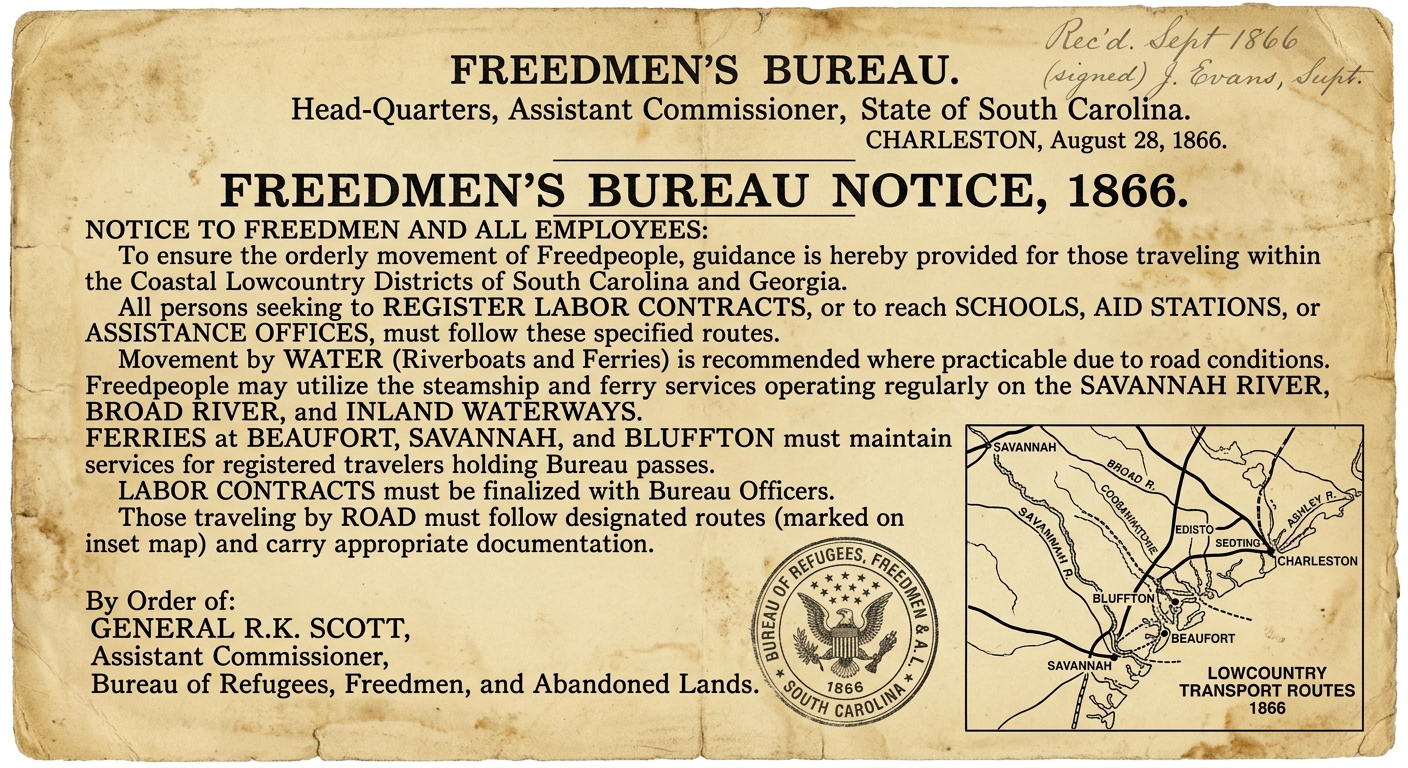
This August 1866 Freedmen’s Bureau notice includes a small coastal map showing rivers, ferry crossings, and roads near bureau offices. Travel routes shaped whether freedpeople could reach schools, register labor contracts, and seek protection. Geography could make access faster in some communities and harder in others.

Based on the notice’s inset map, which transportation feature would most likely help freedpeople reach a bureau office or school more quickly?
Which geographic factor best explains why the notice emphasizes rivers and ferries as travel routes?
Which community on the inset map would most likely face the greatest barrier to accessing bureau services, based on the transportation routes shown?
Using evidence from the notice and inset map, explain one way geography could shape freedpeople’s ability to build new lives (such as reaching schools, contracts, or protection) during Reconstruction.
Identify one geographic barrier suggested by the inset map and propose one practical change Reconstruction officials could make to improve access for freedpeople.
Support your answer with evidence from the document.
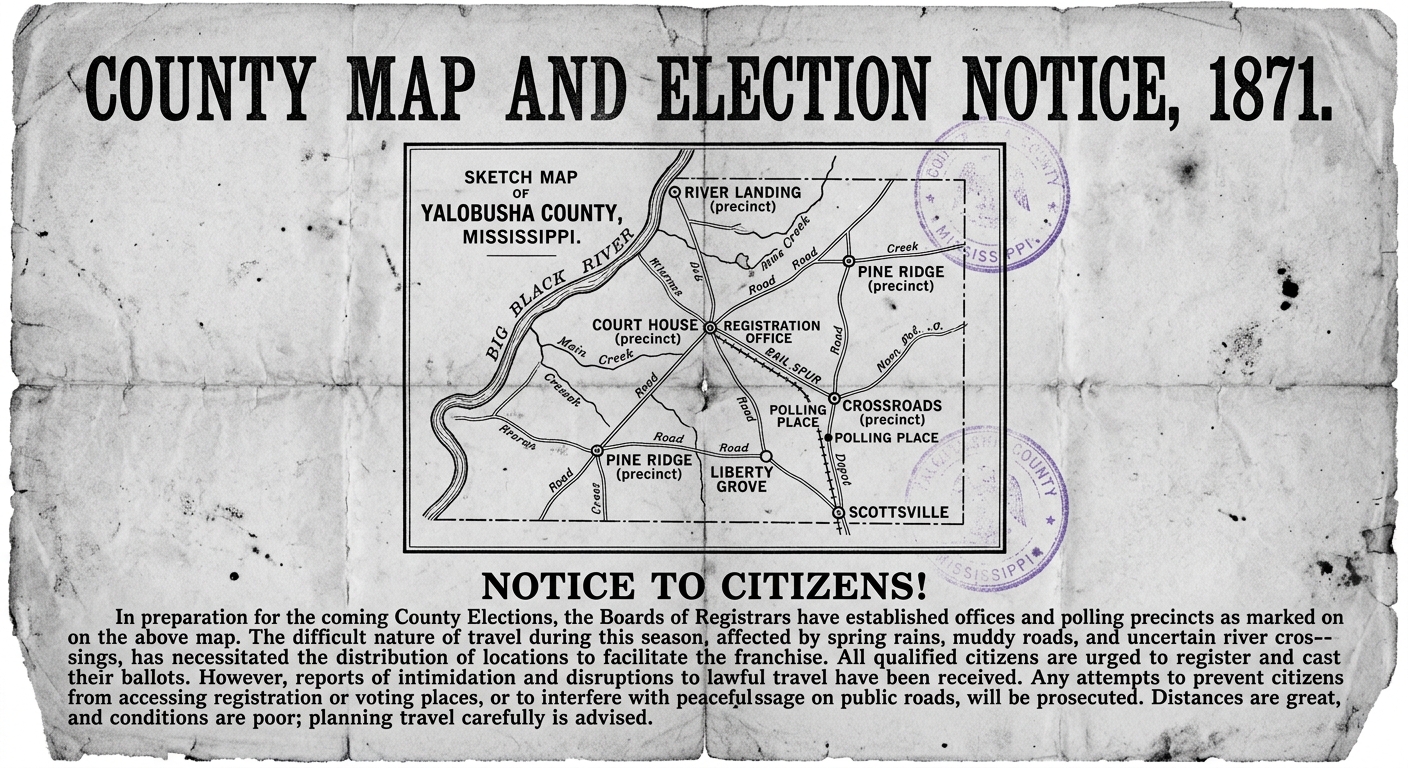
This 1871 county election notice includes an inset map marking roads, waterways, and locations for registration and voting. During Reconstruction, federal efforts to protect rights faced resistance, and geography could worsen the impact by making travel difficult or concentrating access in a few places.

Based on the inset map, which geographic feature would most likely make it harder for some residents to reach the registration office or polling place?
Which statement best explains how geography could increase the negative impact of resistance to federal Reconstruction initiatives in this county?
If officials wanted to reduce geographic barriers shown on the map, which change would most directly improve access to voting or registration?
Using evidence from the notice and inset map, explain one way geography could contribute to unequal access to voting or protection during Reconstruction in this county.
Identify one geographic limitation shown in the document and propose one realistic administrative response that could help counter challenges to federal Reconstruction initiatives.
Support your answer with evidence from the map.