Use the historical document(s) and the short readings in the left panel to answer the associated questions.
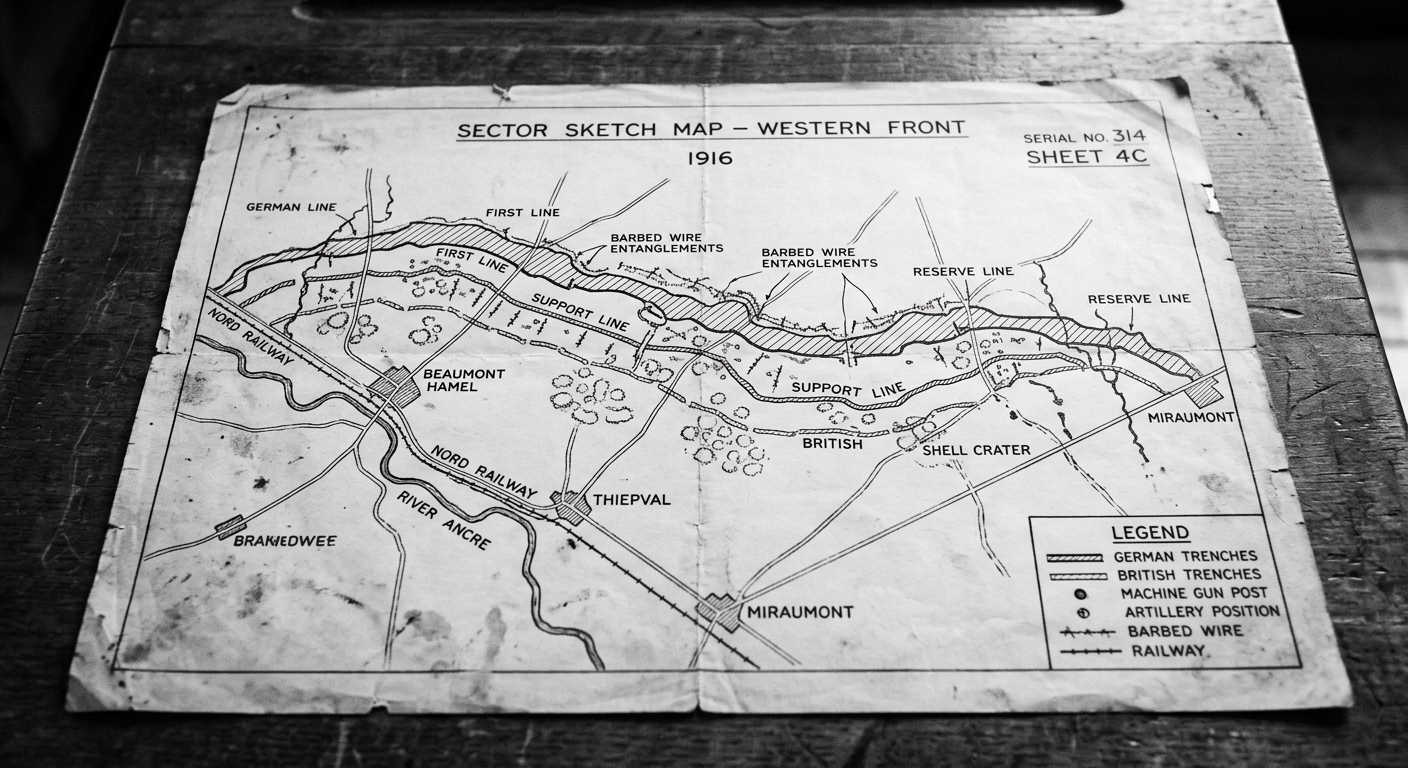
Use the historical document and the reading to answer the questions.
Military planners used sector maps to coordinate trench lines, rail transport, and river crossings. Control of bridges and rail junctions could speed reinforcement and protect supplies. On crowded fronts, small changes in terrain and distance shaped where armies could attack or defend.

Which inference about World War I is BEST supported by a map that shows dense trench networks, barbed wire zones, and shell-crater markings concentrated between opposing lines?
Using evidence from the map and the reading, explain how ONE physical feature (for example, a river or terrain) and ONE human-made feature (for example, a railway or road network) could affect a military plan in this sector.
Based on the map and reading, which geographic feature would MOST directly shape how each side moved troops and supplies along this sector?
Explain how geographic conditions shown on the map could contribute to ONE broader factor that helped start World War I (militarism, alliance system, imperialism, or nationalism). Use at least one specific map detail as evidence.
A historian claims the villages on the map would be likely targets during an artillery bombardment. Which map evidence BEST supports this claim?
Use the historical document and the reading to answer the questions.
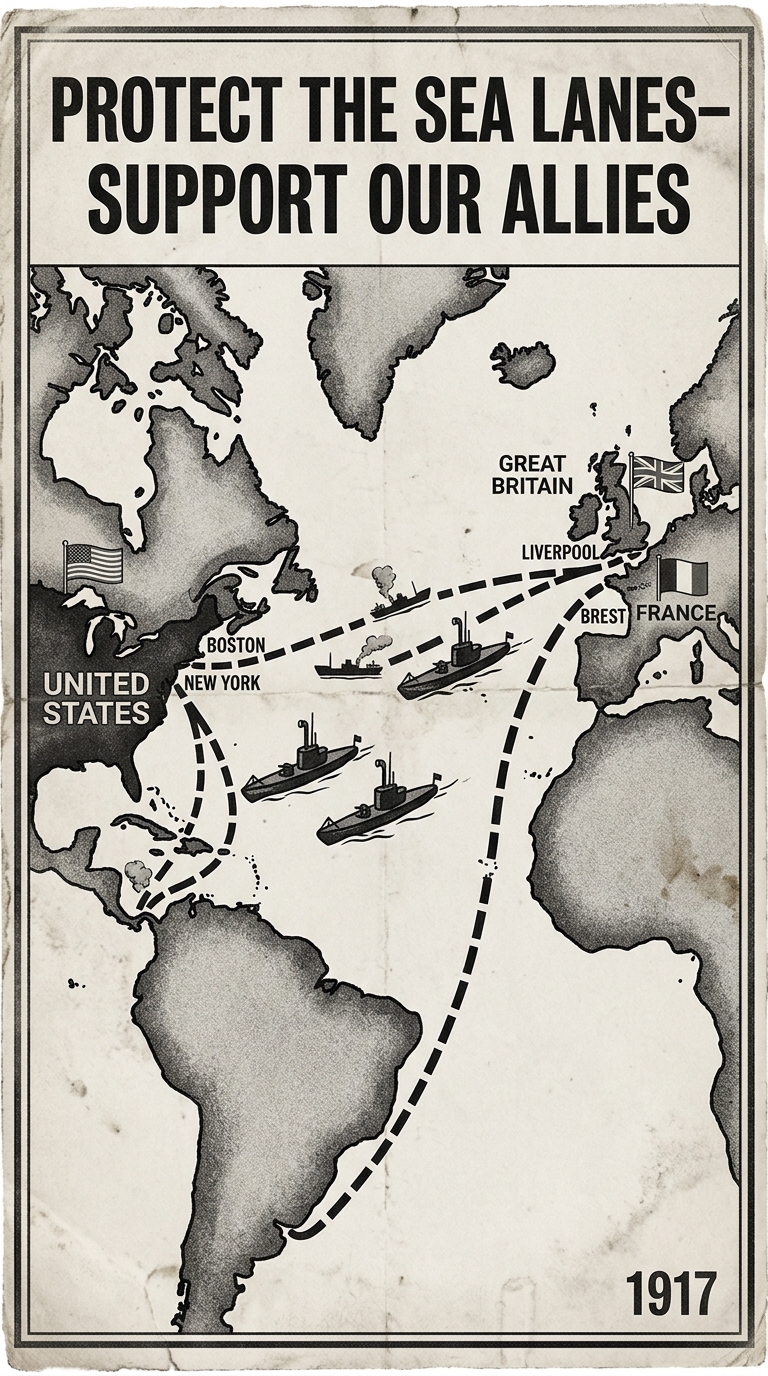
As the U.S. debated entering World War I, protecting Atlantic shipping became a major concern. German U-boats threatened supplies and passengers traveling to Britain and France. Supporters argued that controlling sea routes and coordinating with Allied navies were necessary to defend trade and national interests.

Which piece of evidence from the map BEST supports the idea that the U.S. could aid the Allies by helping protect transportation networks?
Based on the document’s map, which geographic factor MOST directly explains why German U-boats could influence U.S. decisions about entering the war?
Using evidence from the map and reading, explain how ONE geographic condition of the Atlantic (such as distance, routes, or chokepoints) could affect the movement of supplies and shape U.S. opinion about supporting the Allies.
Explain how the document’s depiction of sea routes and U-boat threats connects to ONE development that swayed opinion toward U.S. entry into World War I (international, economic, or military).
Use at least one specific geographic detail from the document as evidence.
Which conclusion about U.S. public opinion is MOST supported by the document’s geographic message and the reading?
Use the historical document and the reading to answer the questions.
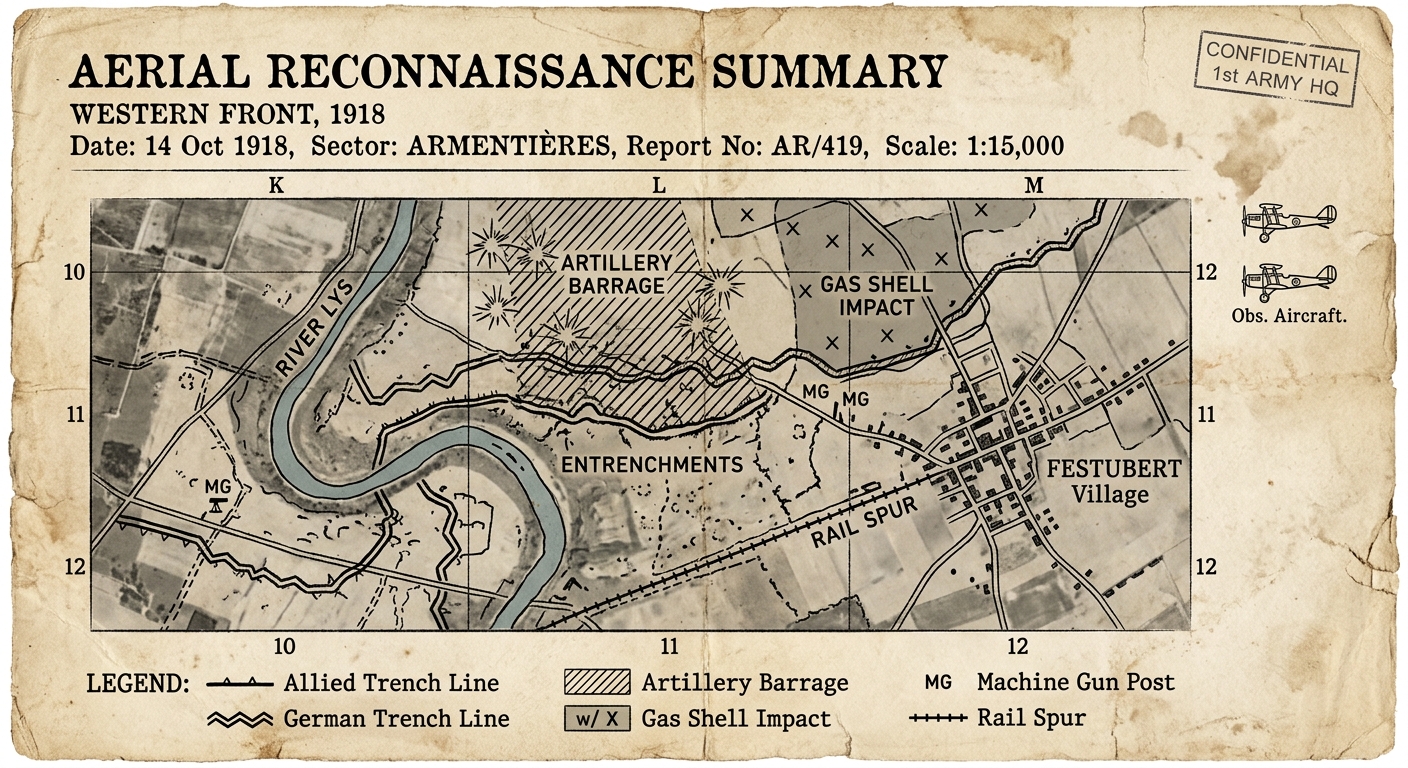
By 1918, commanders used aerial reconnaissance maps to locate trenches and plan barrages. New weapons, including gas shells, made even nearby villages and river crossings dangerous. Marked impact zones helped officers decide where to concentrate defenses, move supplies, and treat casualties.

Explain how the document’s depiction of gas shell impact zones and artillery areas helps show why World War I produced high casualties. Use at least one specific geographic detail from the document as evidence.
The document marks an area labeled "Gas shell impact" near trench lines and a village. Which inference is BEST supported about how military technology changed strategy?
Based on the document’s map, which geographic feature would MOST directly affect where gas shells could spread and concentrate in this sector?
Which map evidence BEST supports the conclusion that new military technology increased the danger to troops even in areas behind the front line?
Using evidence from the document and reading, explain how ONE physical feature (like a river bend or low-lying terrain) and ONE human-made feature (like a rail spur or road) could shape decisions about using or defending against gas or artillery.
Use the historical document and the reading to answer the questions.
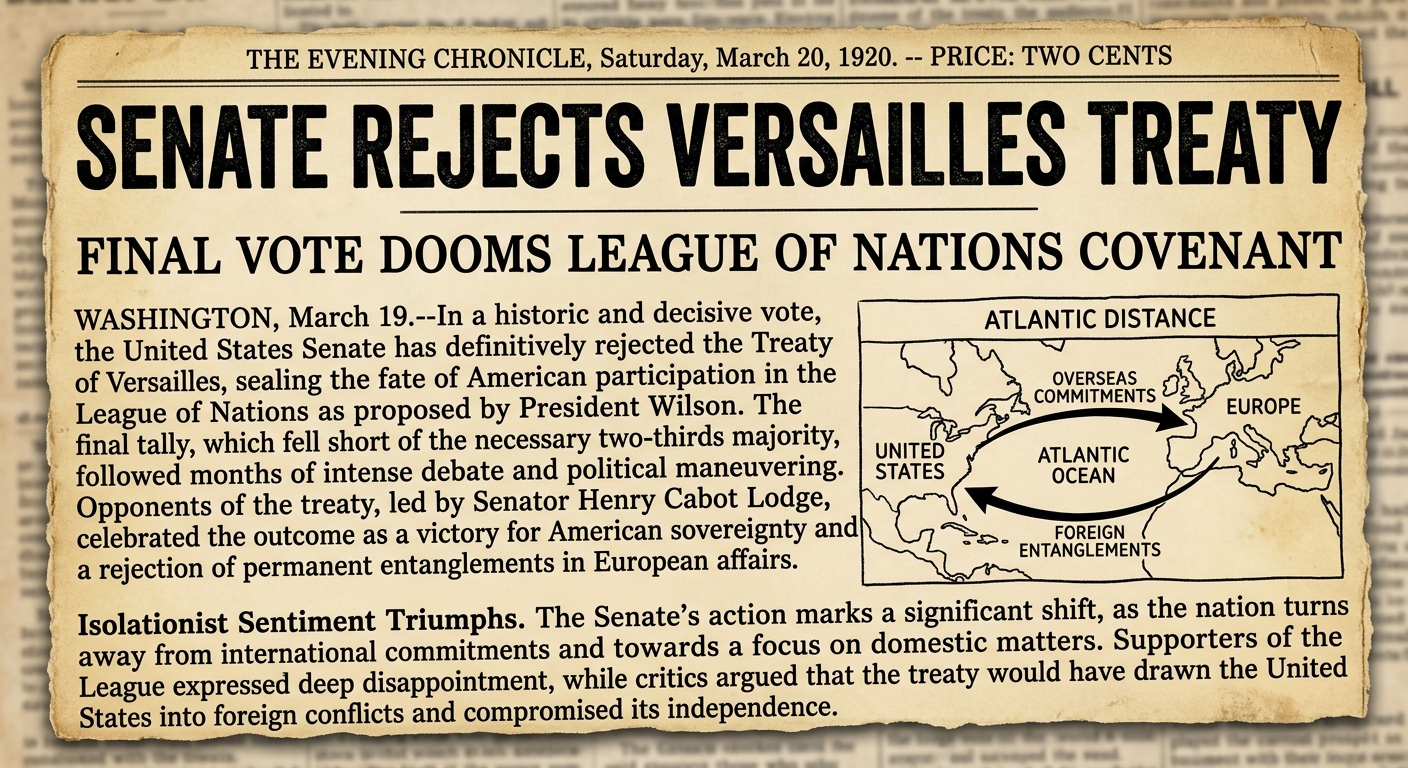
After World War I, the Treaty of Versailles proposed new international obligations, including participation in the League of Nations. Many U.S. senators argued the Atlantic distance and overseas commitments could pull the nation into future conflicts. The Senate refused to ratify the treaty and favored domestic priorities.

Based on the map and reading, which geographic idea is MOST directly used to argue for the United States focusing on domestic issues after the war?
Using evidence from the map and reading, explain how ONE geographic factor (distance, ocean barrier, or location of European decision-making centers) could influence U.S. debate over ratifying the Treaty of Versailles.
Explain how the document supports the idea that, after refusing to ratify the Treaty of Versailles, the United States shifted toward domestic rather than international priorities.
Use at least one geographic detail from the document as evidence.
Which map evidence BEST supports the claim that joining an international organization would require ongoing U.S. involvement overseas?
A historian argues that geographic distance made it easier for many Americans to support returning to prewar policies.
Which detail from the document MOST supports this argument?
Use the historical document and the reading to answer the questions.
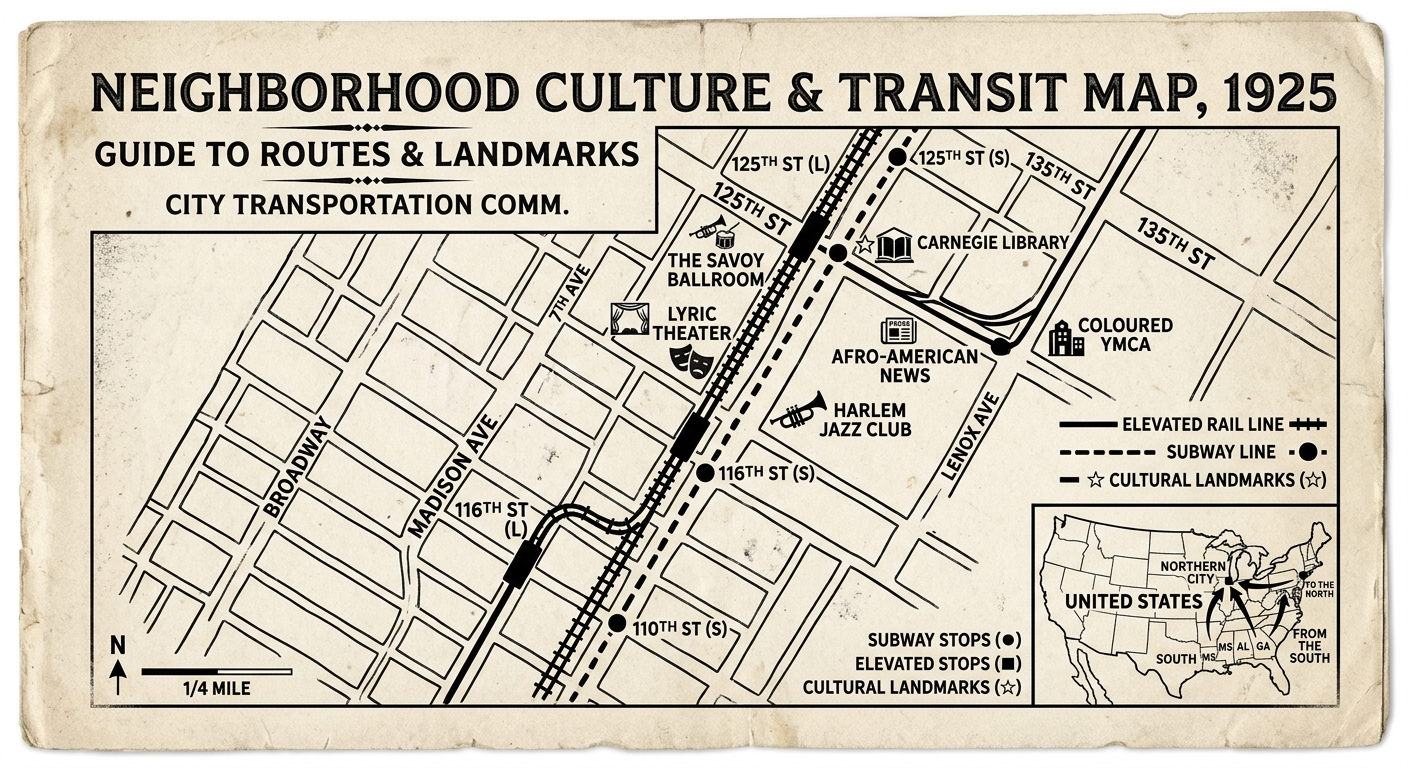
In the 1920s, many African Americans moved from the rural South to Northern cities. New neighborhoods formed near rail and subway lines, and clubs, newspapers, and theaters supported new cultural expression. These changes were part of the Roaring Twenties’ economic prosperity and cultural change.

Using evidence from the map and reading, explain how ONE human-made feature (such as transit lines or a street grid) could support cultural change in the Roaring Twenties for African Americans in Northern cities.
Which piece of map evidence BEST supports the idea that new transportation networks helped spread cultural change during the Roaring Twenties?
A historian claims the neighborhood shown became a center for African American cultural expression in the 1920s. Which inference is BEST supported by the document?
Based on the map and reading, which geographic factor would MOST directly help explain why cultural sites clustered in this neighborhood during the 1920s?
Explain how the document helps show ONE way the Roaring Twenties involved cultural change for African Americans. Use at least one geographic detail from the map as evidence.