Use the historical document(s) and the short readings in the left panel to answer the associated questions.
Document A is a mid-century U.S. population-change map (1940–1950). Arrows show where people moved after World War II, as factories and military bases expanded. Use the direction and size of arrows to infer major migration patterns and likely impacts on regions.
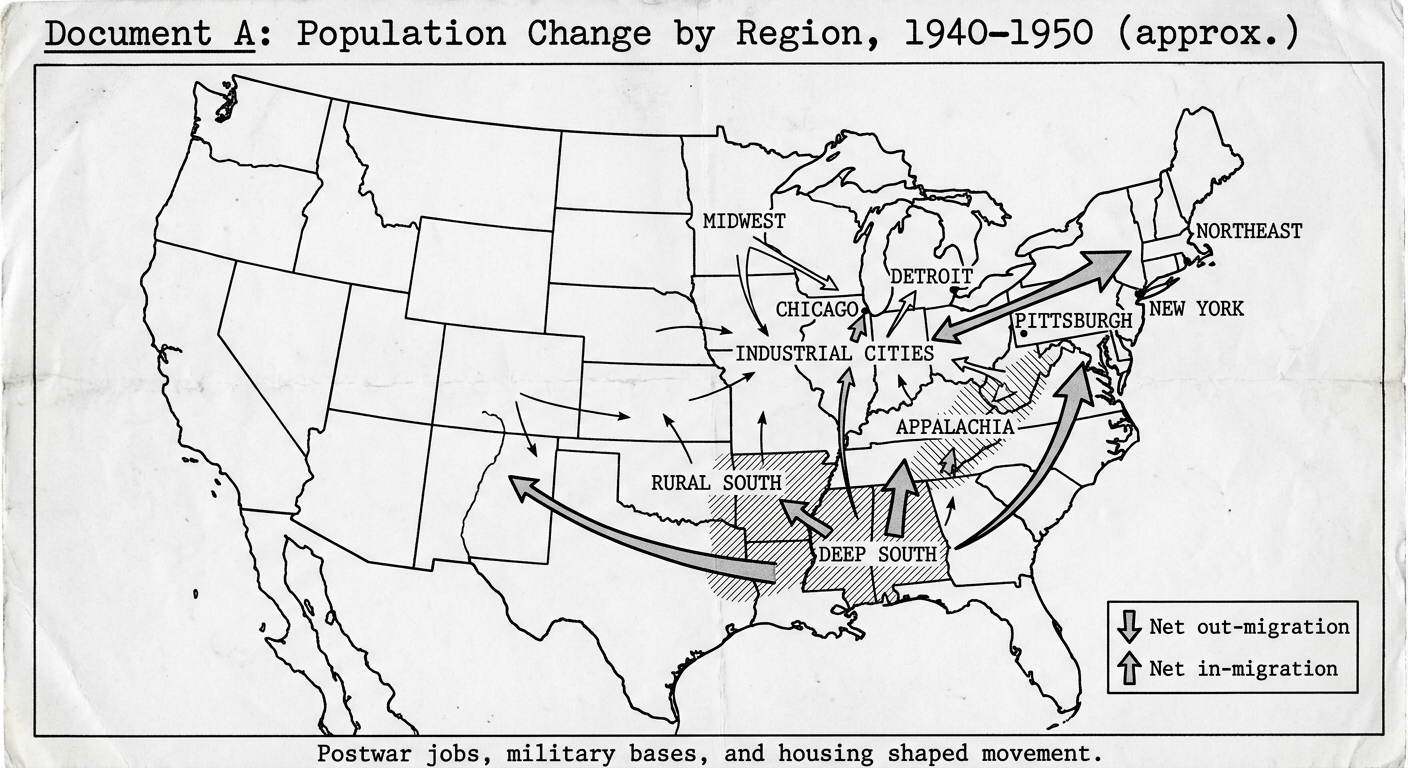
Using Document A, which migration pattern is best supported by the arrows on the map?
Which factor best helps explain why the destination areas on Document A gained population after World War II?
Based on Document A, which outcome is most likely in regions that received many migrants between 1940 and 1950?
Using evidence from Document A, explain one way this migration could change:
(1) political representation and
(2) the need for city services in destination areas.
Write one well-formed paragraph.
Document A shows people moving toward specific regions and cities.
Explain how geographic factors (such as access to transportation networks, proximity to industries, or location of military bases) could influence where migrants chose to settle after World War II.
Write one well-formed paragraph.
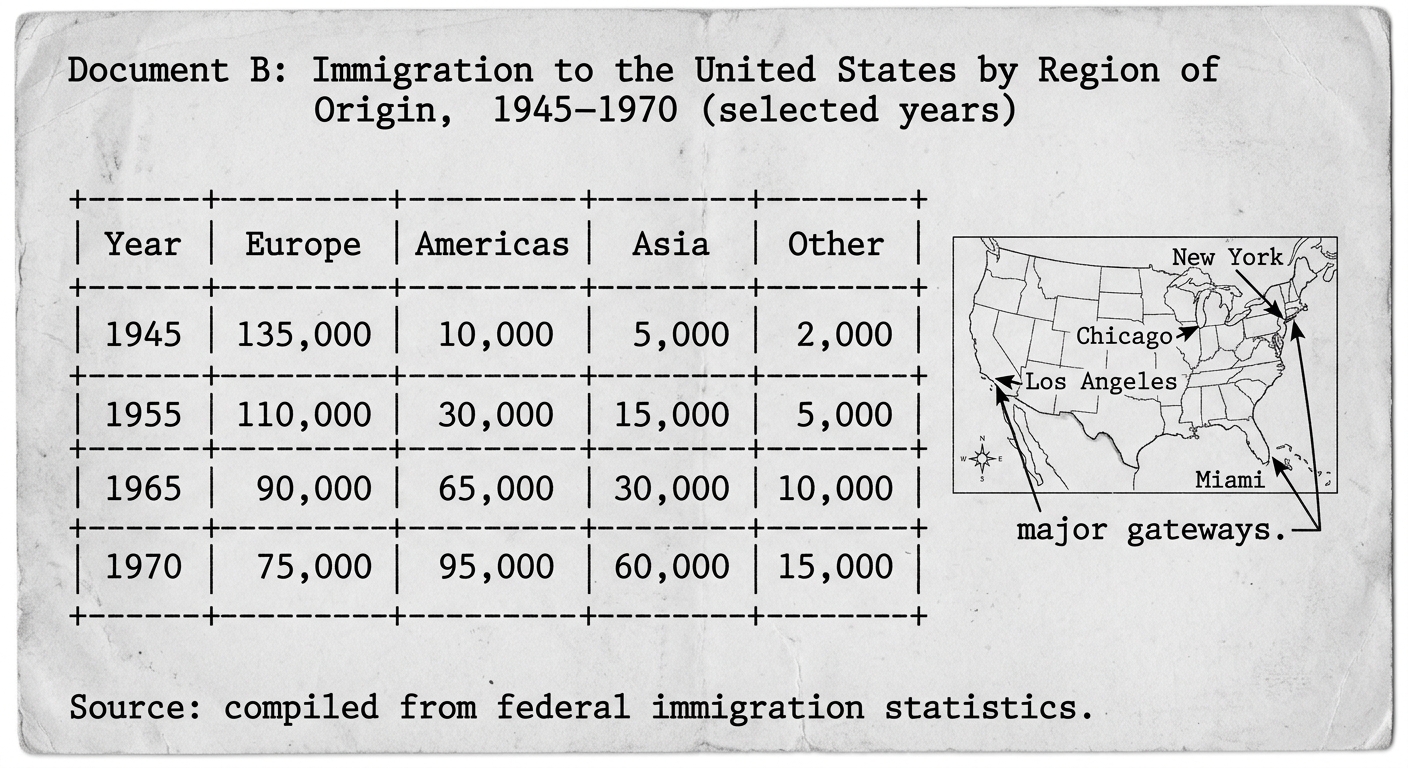
Document B is a historical-style infographic summarizing U.S. immigration by region of origin from 1945 to 1970. It also labels major “gateway” cities where many newcomers arrived. Use the table and map together to infer how immigration patterns and settlement locations changed over time.

Using Document B, which conclusion about postwar immigration and cultural diversity is best supported by the evidence in the document?
Document B labels several “gateway” cities. Which geographic factor best explains why these cities became major entry and settlement points for immigrants?
Based on Document B, which change would most likely increase cultural diversity in specific neighborhoods of gateway cities?
Using evidence from Document B, explain how changes in immigration sources could increase cultural diversity in the United States after World War II.
In your paragraph, connect the table to at least one gateway city shown on the map.
Document B highlights both origins of immigrants and where many arrived.
Explain one geographic reason gateway cities might attract immigrants and one way that settlement pattern could shape local debates about immigration policy.
Write one well-formed paragraph.
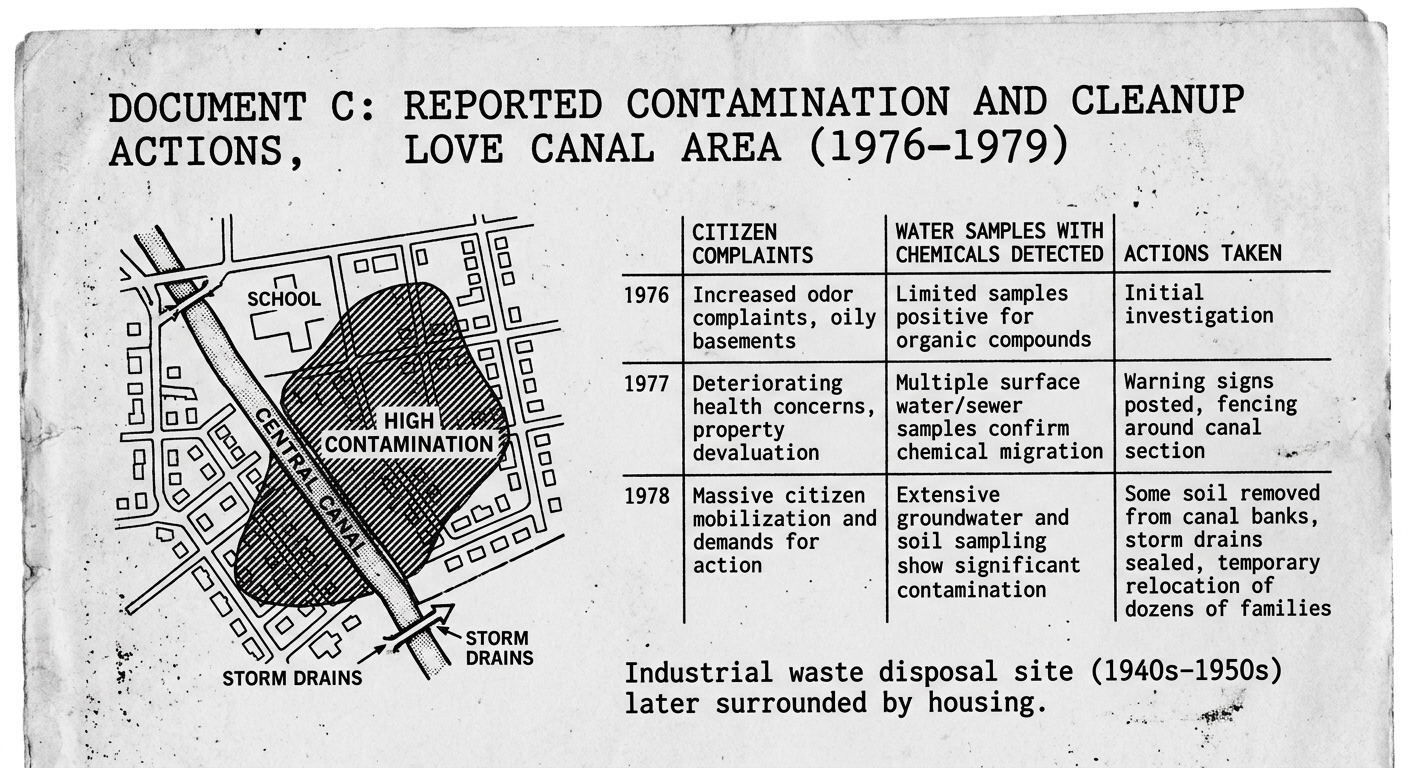
Document C is a report-style map and data table about the Love Canal area in the late 1970s. It shows where contamination was reported and what actions officials took. Use the map and table to explain how human-made features and location affected environmental impacts.

Using Document C, which conclusion about how human activity affected the environment is best supported by the evidence?
Document C shows contamination close to homes and a school. Which geographic detail best helps explain why the environmental impact on people could be severe?
Based on Document C, which action listed in the table is most directly aimed at limiting how contamination spreads through the local environment?
Using evidence from Document C, explain one way pollution or industrial waste disposal affected an urban area and one response communities or officials used to reduce the impact.
Write one well-formed paragraph.
Document C includes both a map of a neighborhood and a table of reported problems over time.
Explain how combining these two types of evidence helps you understand the relationship between human activities and the environment.
Write one well-formed paragraph.