Use the historical document(s) and the short readings in the left panel to answer the associated questions.
This educational facsimile map traces the 1961 Freedom Rides bus route from Washington, D.C., to New Orleans. Riders crossed multiple Southern states to test federal rulings against segregated travel. City stops and state borders show how geography shaped where confrontations occurred and where federal protection was demanded.
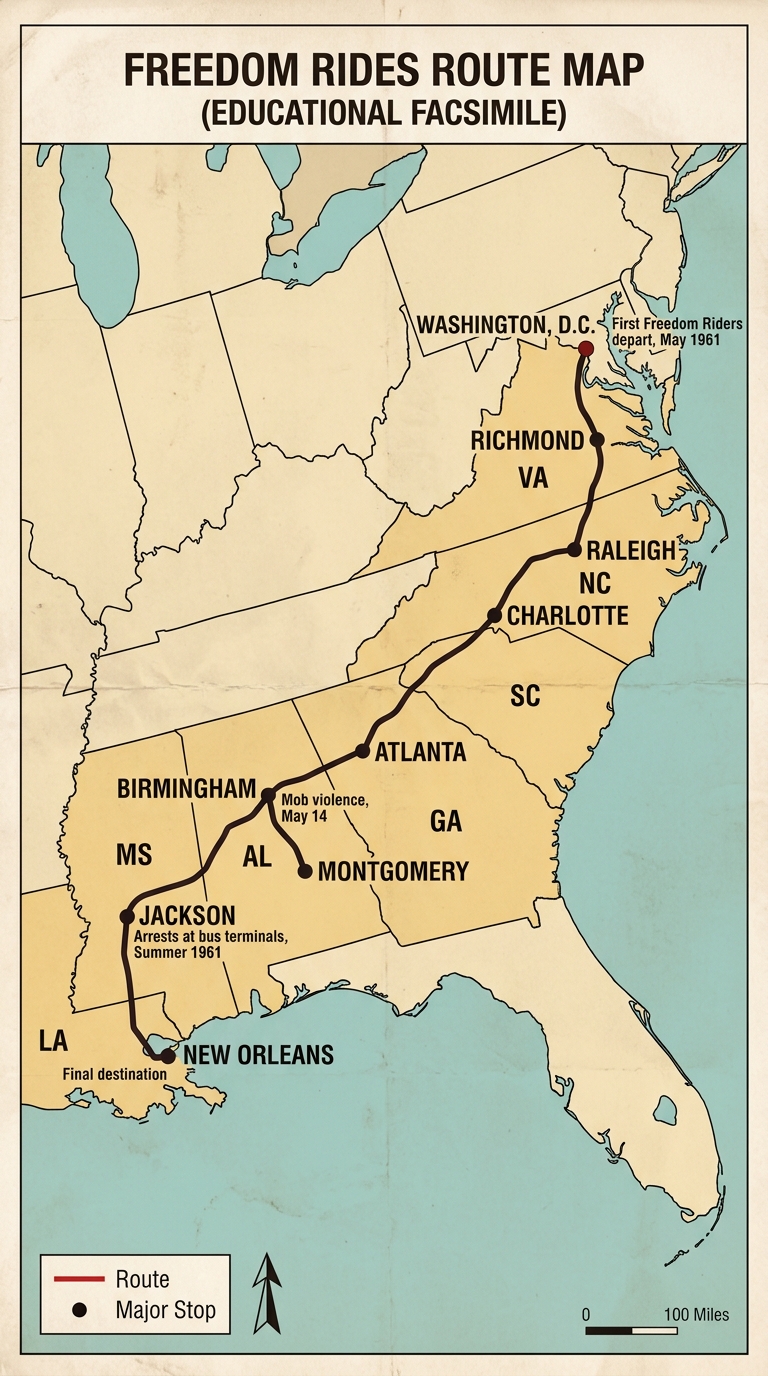
Based on the map, the Freedom Rides route traveled primarily through which U.S. region?
Which feature on the map best supports the inference that Freedom Riders would face different local laws or enforcement practices as they traveled?
Which conclusion about the Civil Rights Movement is best supported by the route shown on the map?
Using evidence from the map and the reading stimulus, explain how geography (routes, state borders, and city locations) could shape both the strategy and the risks of the Freedom Rides.
Explain how the map helps support the idea that the Civil Rights Movement sought equality under the law, while progress in other areas could be uneven.
Use at least one geographic detail from the route.
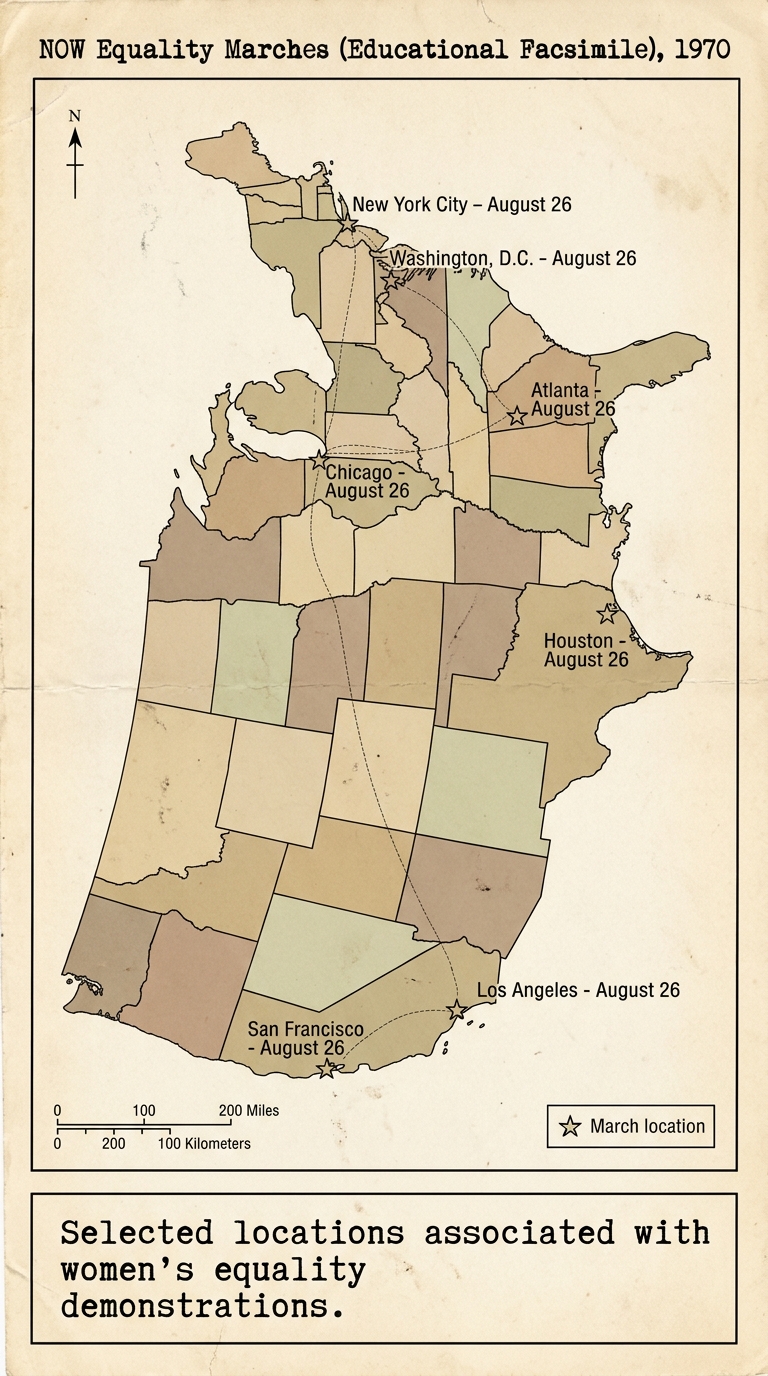
This educational facsimile map highlights selected 1970 women’s equality march locations tied to renewed civil rights efforts. City markers across regions suggest a coordinated national movement. Distances, travel routes, and regional differences help explain how activism spread and why goals and strategies sometimes varied by place.

Based on the map, which statement best describes the geographic pattern of the women’s equality marches shown?
Which map detail best supports the inference that organizers may have needed to coordinate across long distances?
Which conclusion about the women’s movement is best supported by the geographic distribution of march locations on the map?
Using evidence from the map and the reading stimulus, explain how geography (distance, regional distribution, and travel connections) could shape both the strategy and the challenges of women’s equality activism in 1970.
Explain how the map helps support the idea that the Civil Rights Movement prompted renewed efforts for equality by women and other groups.
Use at least one geographic detail from the march locations.
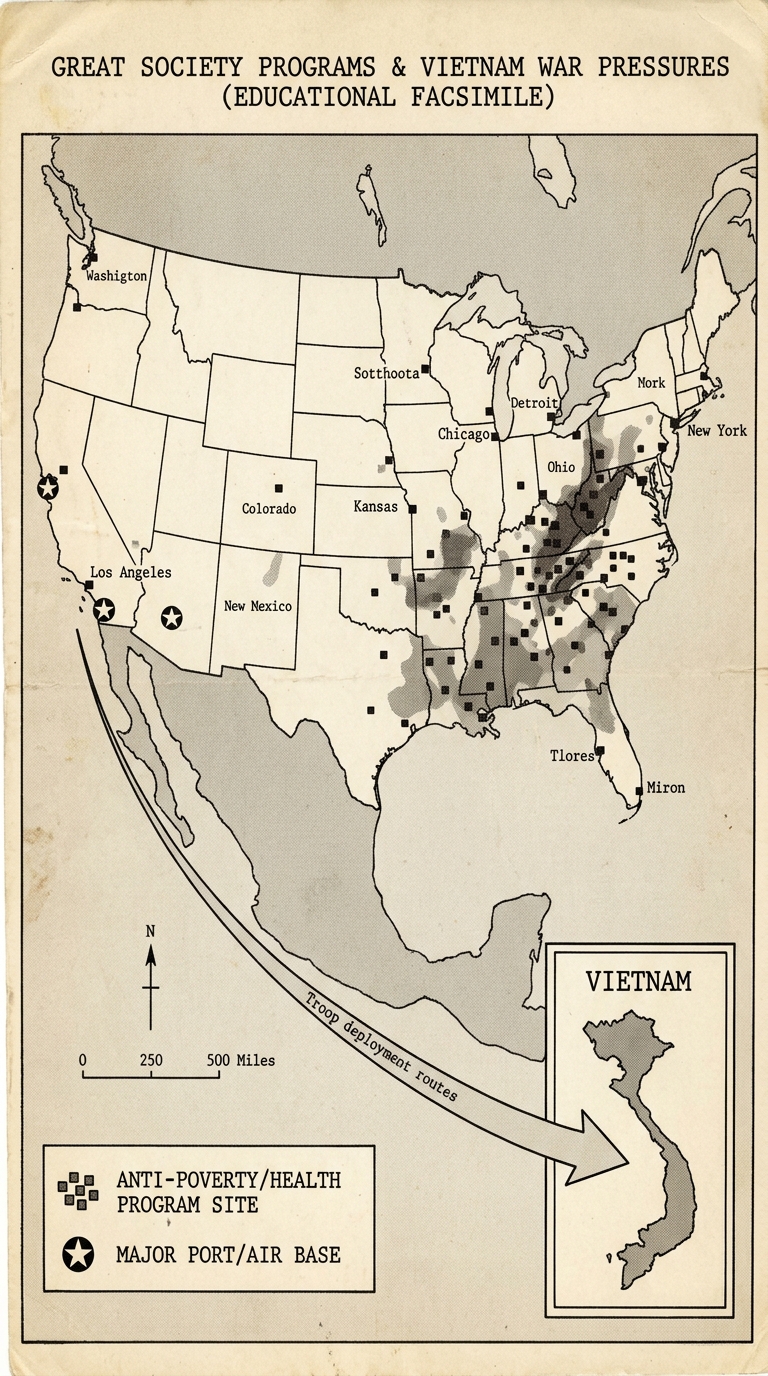
This educational facsimile map highlights where selected Great Society anti-poverty and elderly health programs operated in the 1960s and shows major U.S. ports tied to Vietnam War deployments. Regional needs, travel routes, and distance help explain why resources were debated and why impacts varied by place.

Based on the map, which U.S. region is most clearly shown as having many anti-poverty or health program sites?
Which map detail best supports the inference that the Vietnam War could pull federal attention and resources away from domestic programs?
Which conclusion is best supported by the map about why Great Society programs could have different impacts in different places?
Using evidence from the map and the reading stimulus, explain how geography (regional needs, transportation hubs, and distance to Vietnam) could shape both the successes and the limits of Great Society programs.
Explain how the map helps support the idea that Great Society programs strengthened efforts to reduce poverty and provide health care for the elderly, but the Vietnam War drained resources and divided society.
Use at least one geographic detail from the map.
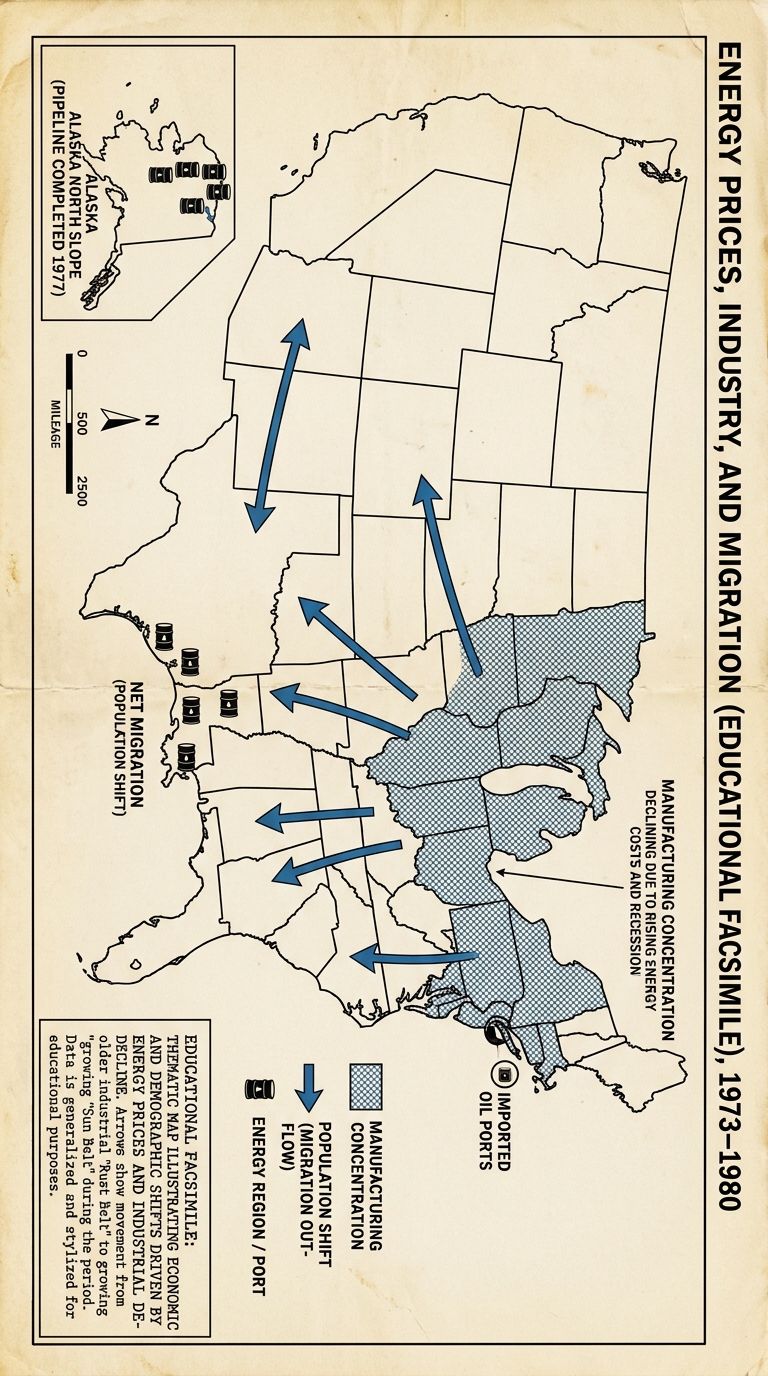
This educational facsimile map shows late-1970s economic change: manufacturing concentration in older industrial regions, rising energy pressures, and population shifts toward the Sun Belt. Regional patterns help explain why some Americans favored cutting regulations and limiting federal spending, while others wanted stronger government responses to recession.

Based on the map, which region is most strongly associated with manufacturing concentration in the late 1970s?
Which map detail best supports the inference that energy costs could affect different parts of the country in different ways?
Which conclusion about the 1970s recession and politics is best supported by the geographic patterns on the map?
Using evidence from the map and the reading stimulus, explain how regional economic conditions and movement between regions could influence political debates about regulation and the size of the federal government in the late 1970s.
Explain how the map helps support the idea that the 1970s recession and concerns about federal government growth encouraged fiscal conservatives to push for changes in regulation and policy.
Use at least one geographic detail from the map.
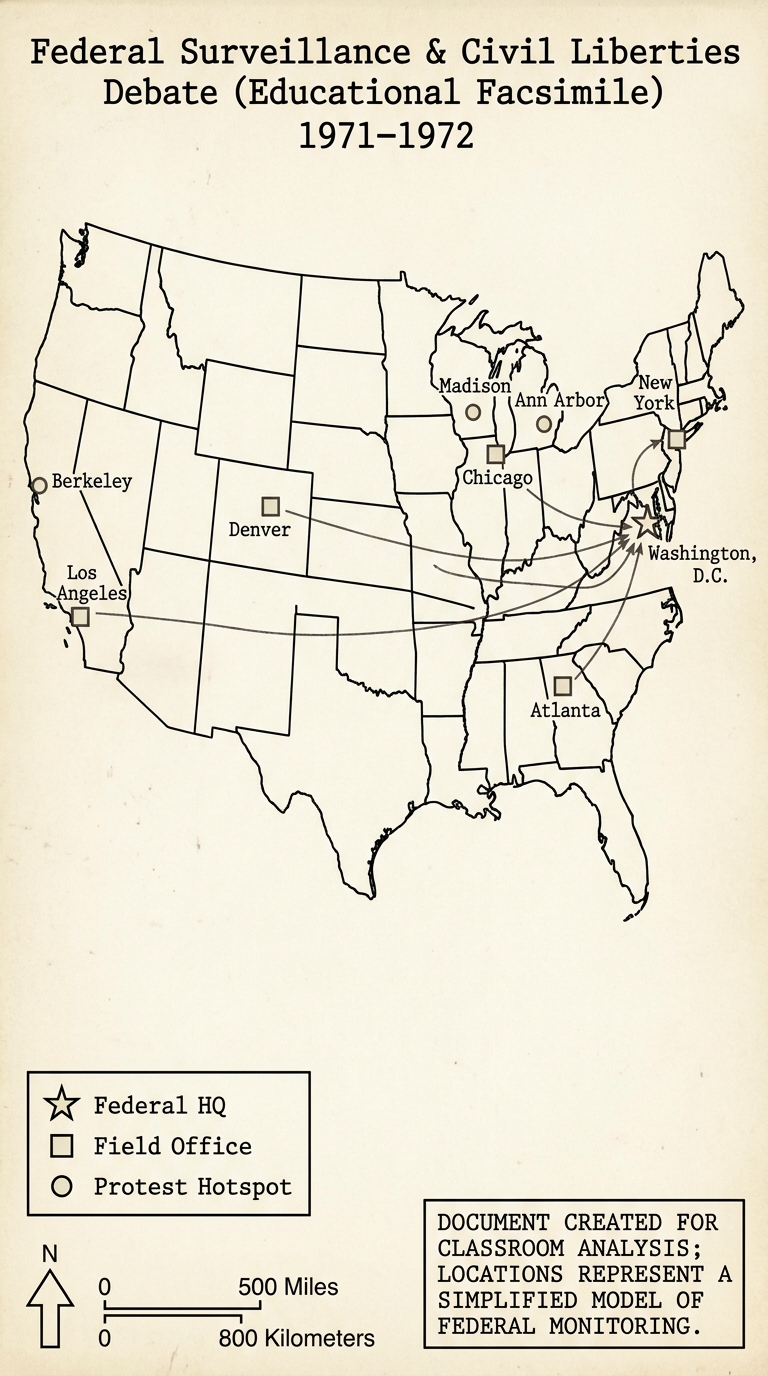
This educational facsimile map models how federal monitoring could operate through a headquarters in Washington, D.C., and regional field offices. Connections to protest hotspots show why some Americans debated civil liberties and federal power. Geography helps explain where information moved, where surveillance might concentrate, and why disputes varied by place.

Based on the map, which statement best describes the spatial organization of the monitoring system shown?
Which map detail best supports the inference that federal power could extend into many local communities?
Which conclusion is best supported by the geography on the map about why civil liberties debates could differ across the country?
Using evidence from the map and the reading stimulus, explain how distance and spatial organization (headquarters, regional offices, and hotspots) could shape both the reach of federal actions and concerns about civil liberties.
Explain how the map helps illustrate the constitutional debate about civil liberties and the role of the federal government.
Use at least one geographic detail from the map.