Use the historical document(s) and the short readings in the left panel to answer the associated questions.
This 1867 Freedman’s Savings Bank receipt shows a deposit, a running balance, and rules about withdrawals and identification. After the Civil War, new financial institutions aimed to encourage saving and economic independence for formerly enslaved people while rebuilding trust and stability in the Southern economy.
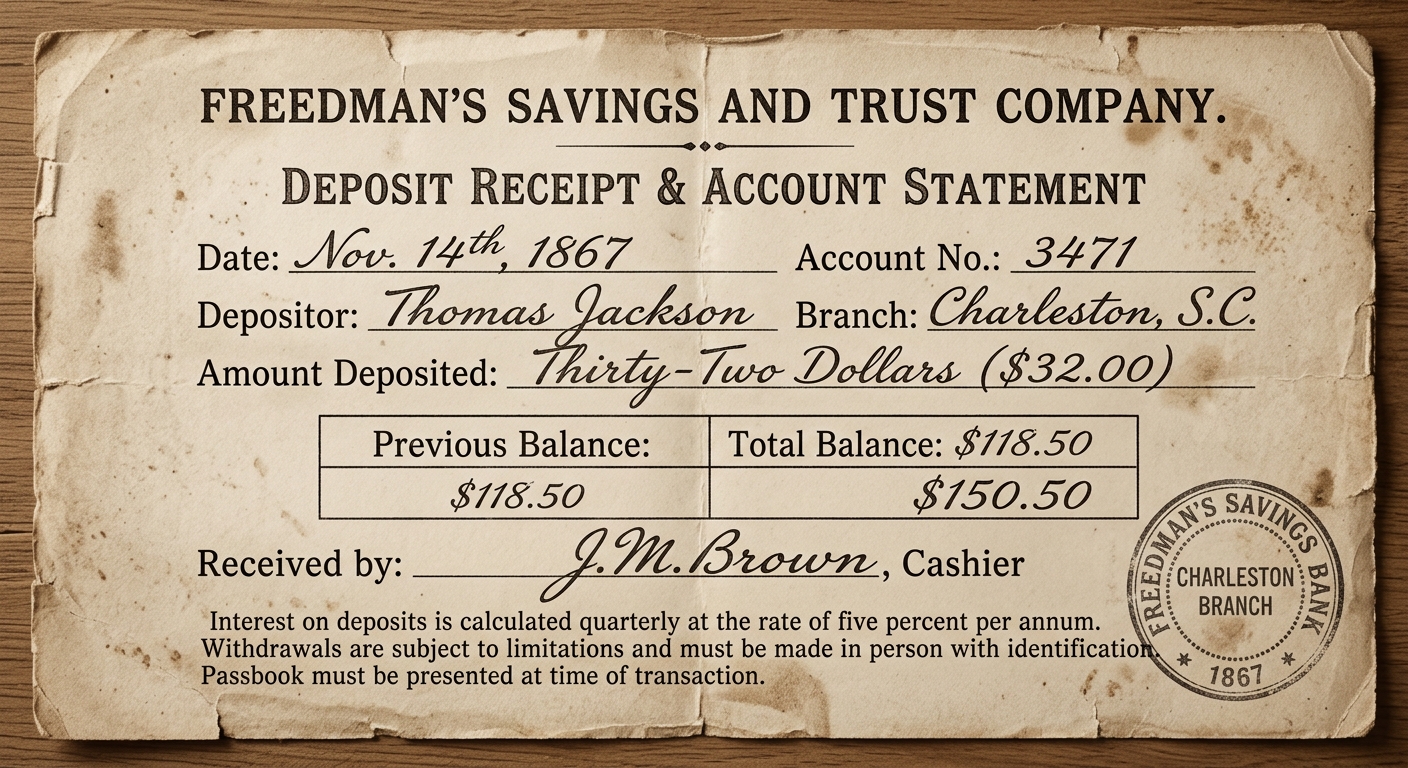
Which feature of the receipt best shows that this institution functioned as part of a financial market?
Based on the withdrawal/identification rules described on the document, what is the most likely reason the bank used these rules?
Which inference is best supported by the existence of this receipt during Reconstruction?
Use evidence from the receipt (deposit, balance, and rules) to explain how access to savings could affect the well-being of individuals and the rebuilding of the postwar economy.
Include one benefit and one potential limitation.
Explain how an institution like the Freedman’s Savings Bank could be seen as part of a broader Reconstruction approach to reunifying the nation.
In your answer, connect financial stability to at least one challenge of reunification.
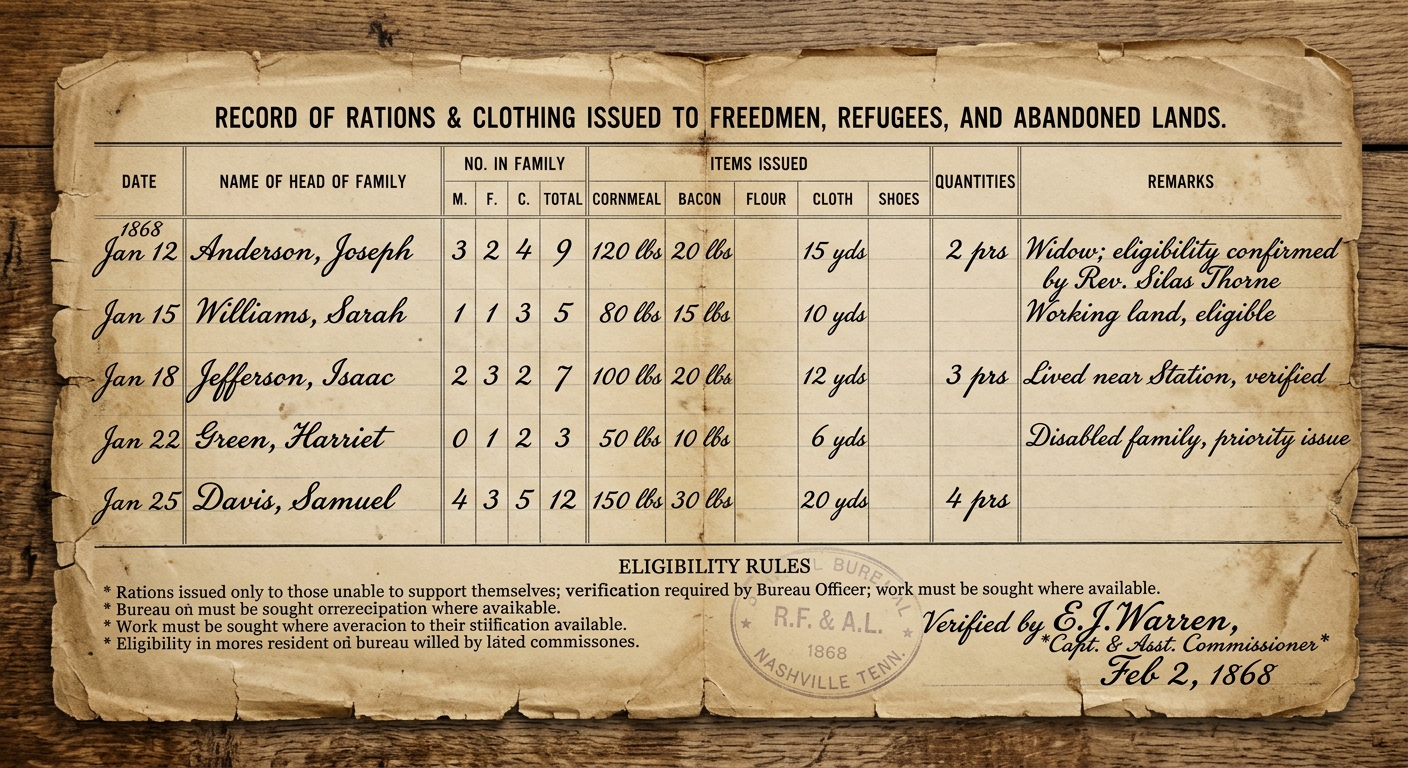
This 1868 Freedmen’s Bureau issue record lists food and clothing provided to freed families and the rules for receiving aid. It shows how federal relief tried to meet basic needs after emancipation while shaping labor decisions and economic independence during Reconstruction.

Which detail on the issue record is the best evidence that the Freedmen’s Bureau was acting like an economic institution (managing scarce resources) during Reconstruction?
If the record includes rules or eligibility requirements for receiving aid, what is the most likely purpose of those rules?
Which inference about economic conditions for freed families is best supported by the existence of an issue record like this?
Use evidence from the record (types of goods, quantities, and any rules) to explain how access to rations/clothing could affect freedpeople’s ability to make economic choices after emancipation.
Include one benefit and one potential drawback.
Explain how distributing rations and clothing could support freed African Americans in creating new lives during Reconstruction.
In your answer, connect the document to one specific economic challenge faced after slavery ended.
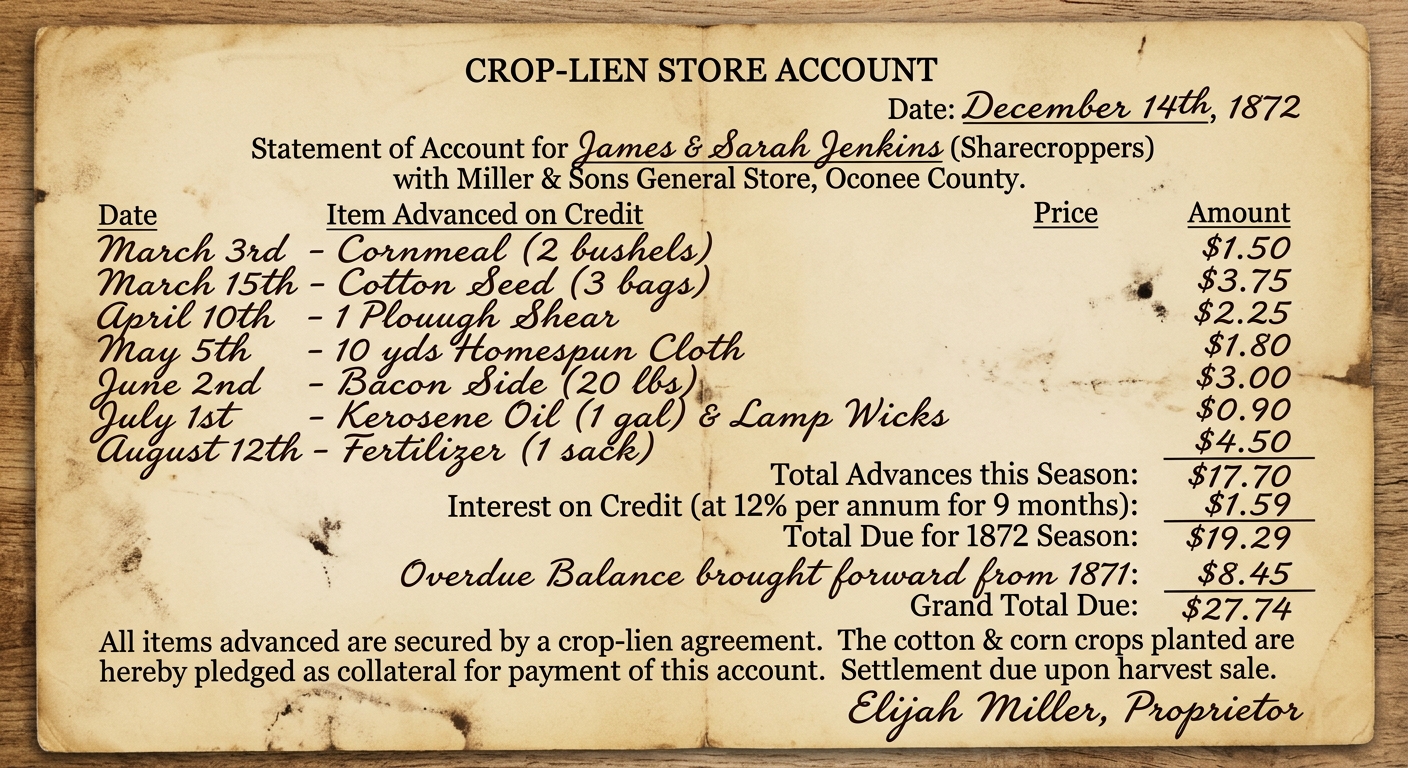
This 1872 crop-lien store account lists supplies advanced on credit, prices, interest, and an unpaid balance secured by a future cotton crop. It shows how debt and credit shaped labor and land use after Reconstruction policies weakened, limiting many freedpeople’s economic choices.

Which detail on the account statement is the best evidence that the store is functioning as a lender (part of a financial market)?
If the crop is pledged as collateral for the account, which outcome is most likely if the harvest is poor?
Which inference is best supported by an overdue balance and interest charges on this account?
Use evidence from the document (items advanced, interest, and balance) to explain how the crop-lien system could negatively impact freed African Americans’ economic independence.
Include one effect on choices about work or land use.
Explain how documents like this account statement show a challenge to federal Reconstruction initiatives. In your answer, connect the credit/debt system to one negative impact on the lives of African Americans.