Use the historical document(s) and the short readings in the left panel to answer the associated questions.
Examine the July 1914 finance bulletin. It reports rising naval budgets, increased steel output, and higher borrowing as European tensions grow. The document suggests that preparing for war can reshape markets and government spending choices even before fighting begins.
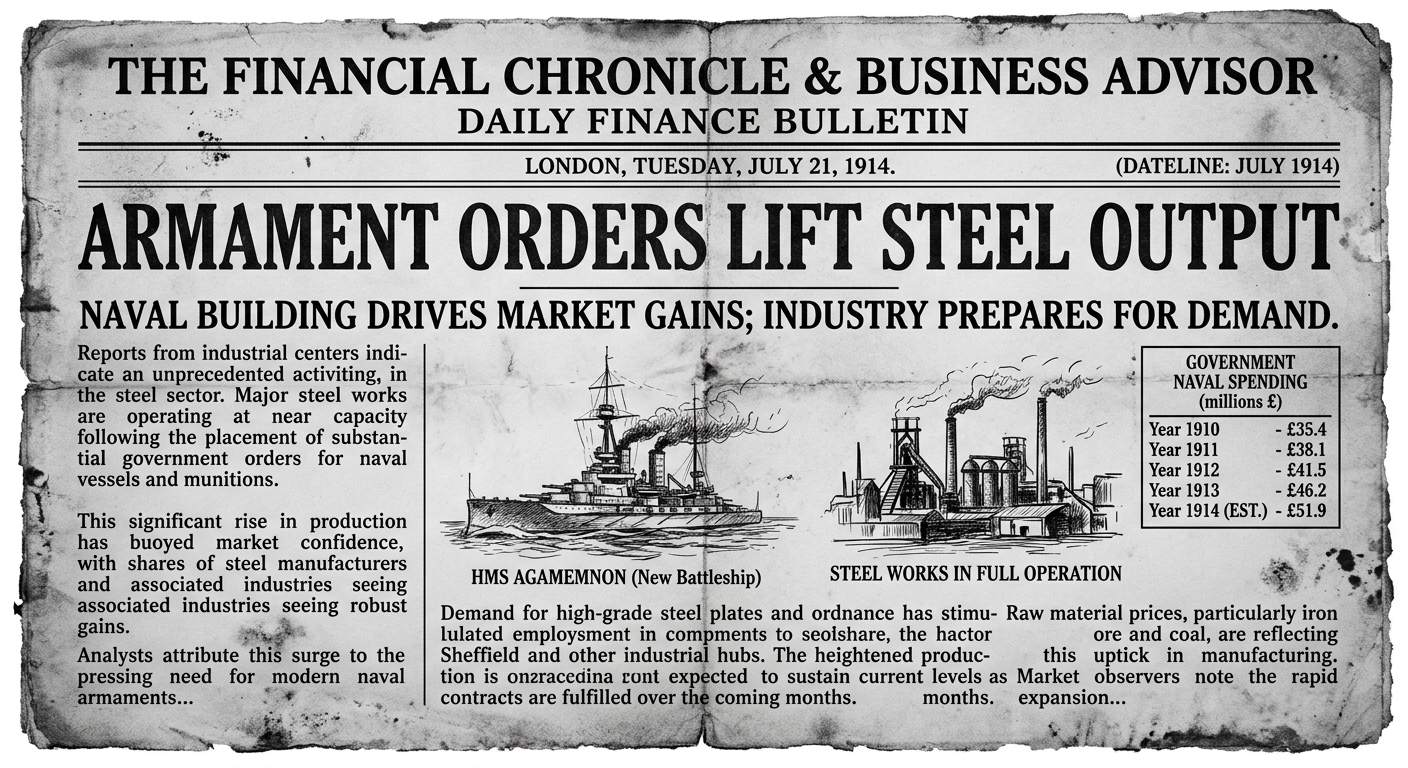
Based on the finance bulletin, which change is most directly connected to militarism as a cause of World War I?
Which statement BEST describes an opportunity cost suggested by the document’s rising military budgets?
How could the alliance system contribute to the economic patterns described in the bulletin?
Using evidence from the finance bulletin, explain how militarism and the alliance system could help set the stage for World War I.
Include at least two details from the document and describe one economic effect on citizens or businesses.
Imagine you are advising a European government in 1914 worried about rising military costs shown in the bulletin.
Propose one policy to reduce economic strain while addressing security concerns.
Explain one benefit and one cost for different groups (e.g., taxpayers, factory owners, workers, or the military).
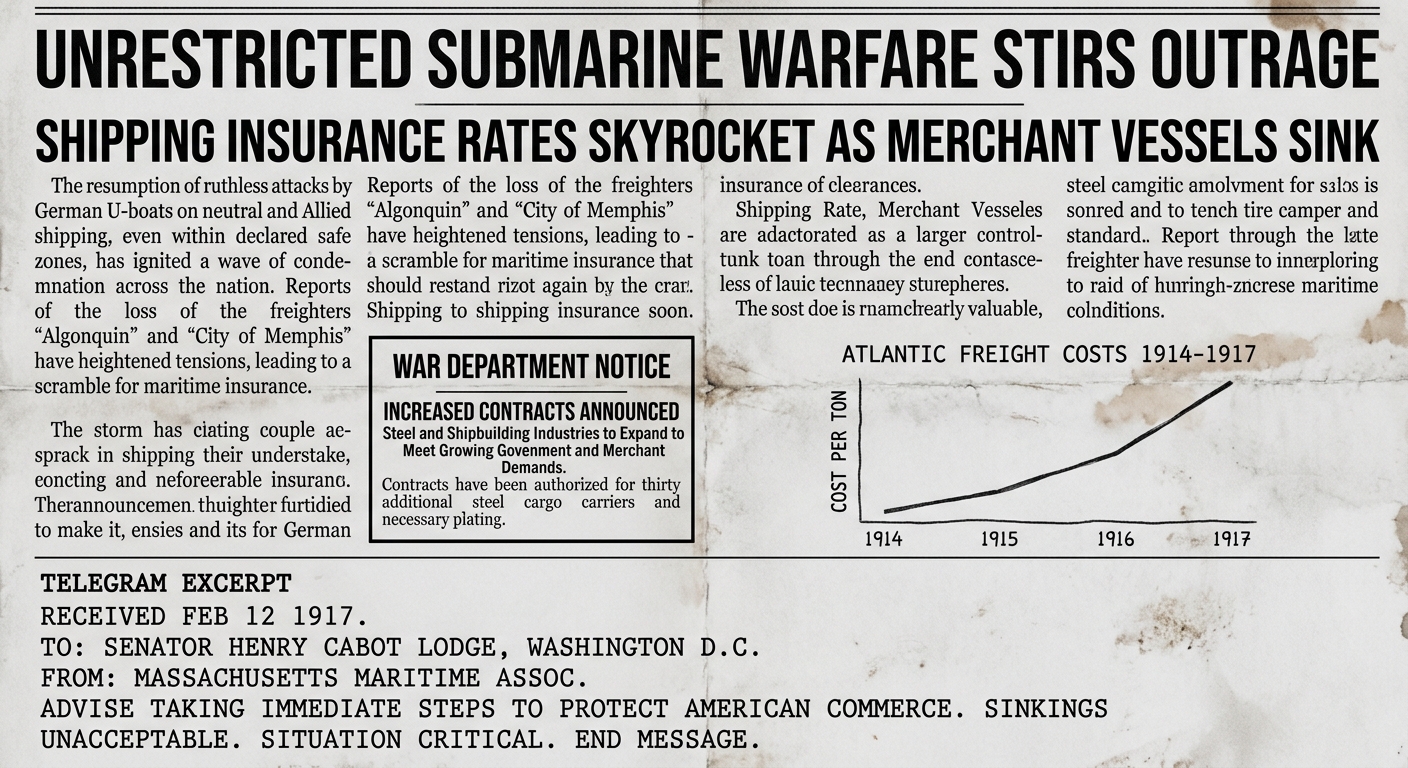
Examine the 1917 U.S. newspaper editorial and telegram excerpt. It describes unrestricted submarine warfare, rising freight and insurance costs, and calls for protecting Atlantic shipping. A notice reports new shipbuilding and steel contracts, showing how war pressures shaped U.S. economic decisions before entry.

Based on the document, which economic effect would MOST likely occur as freight and insurance costs rise?
The document mentions new shipbuilding and steel contracts. Which conclusion is BEST supported about the U.S. economy?
Which development described or implied by the document is MOST likely to sway U.S. opinion toward entering World War I on the side of the Allies?
Using evidence from the document, explain how international and economic developments could sway U.S. opinion toward entering World War I.
Include at least two details from the document and explain one effect on U.S. businesses or consumers.
Suppose the U.S. government wants to respond to the shipping and cost problems described in the document.
Propose one policy (economic or military) and explain one benefit and one cost for two different groups (e.g., consumers, shipping companies, factory workers, taxpayers).
Read the excerpt below and examine the document image.
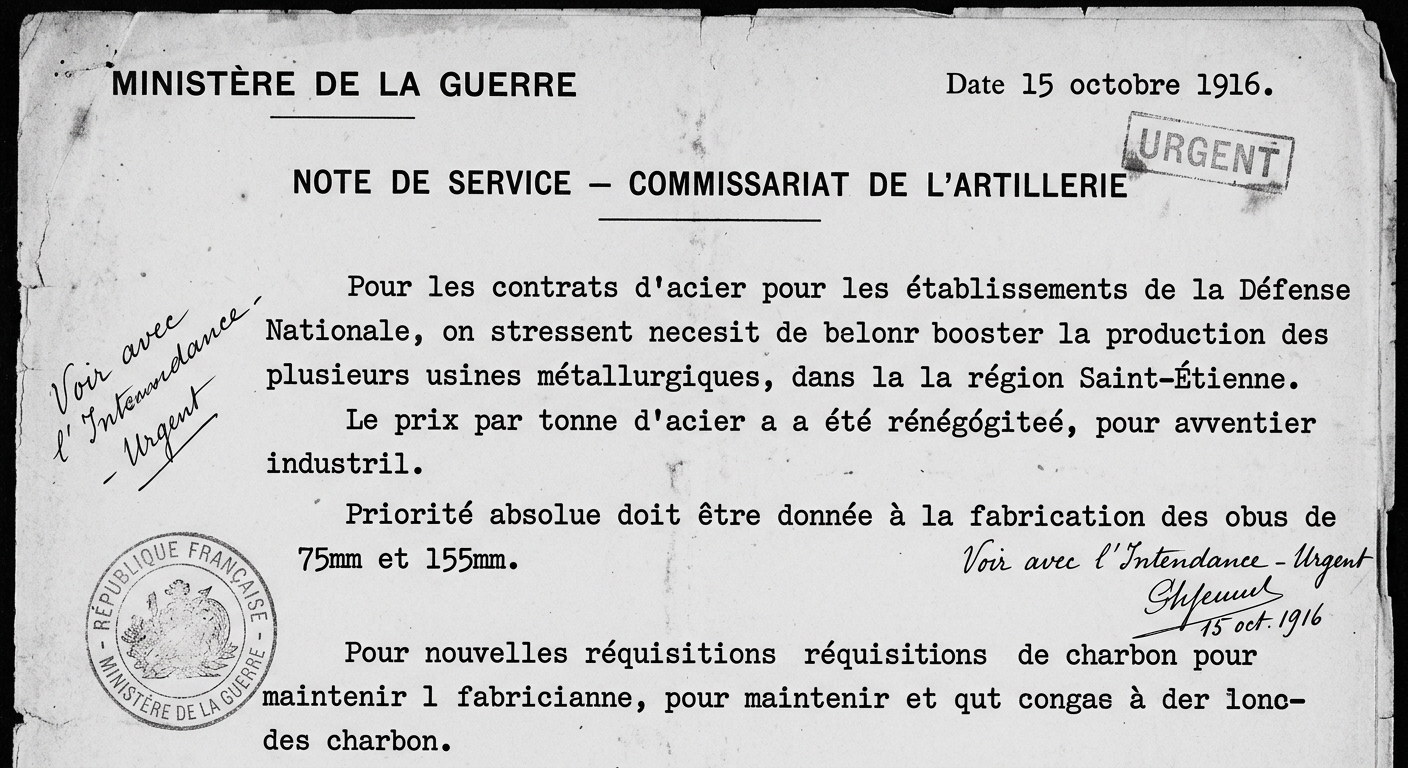
In October 1916, a French war ministry memo orders steel contracts to prioritize artillery shells. It warns coal requisitions and fixed prices may slow civilian production. Factory managers must report output weekly so the government can control supplies and borrowing for the war.

Based on the excerpt, which economic change is most directly caused by new military technologies in World War I?
Which statement BEST explains an opportunity cost shown in the excerpt?
Which inference about government policy is BEST supported by the excerpt and the document?
Using evidence from the excerpt and the document, explain how new military technologies in World War I could reshape a nation’s economy.
Include two specific economic actions mentioned and explain one effect on either consumers or civilian businesses.
Assume fixed prices and coal requisitions are causing shortages for civilian industries.
Propose one alternative policy the government could use while still meeting wartime shell demand.
Explain one benefit and one cost for two different groups (choose from: factory owners, workers, consumers, taxpayers, or the military).
Read the excerpt below and examine the document image.
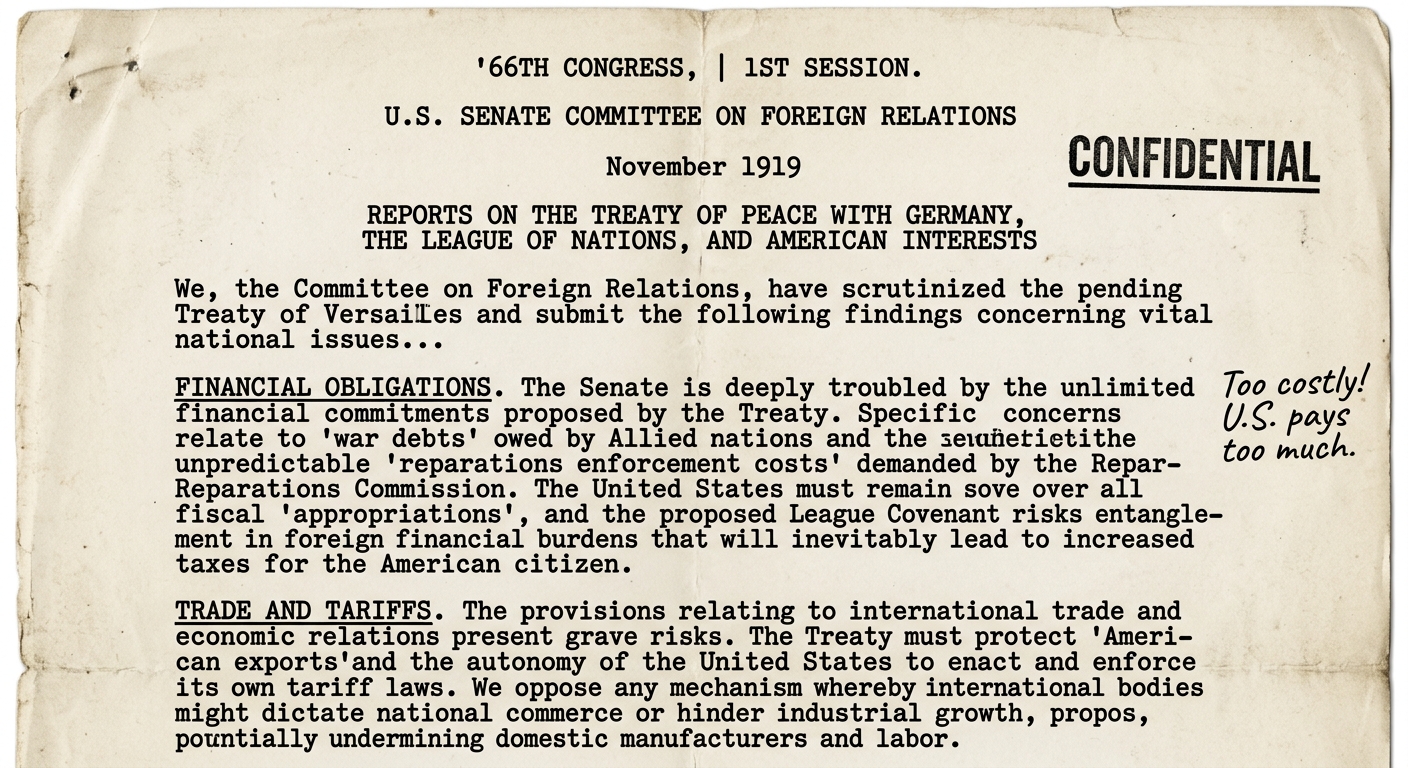
In November 1919, a Senate committee report warns that joining the Treaty of Versailles and League of Nations could require new appropriations to enforce peace terms. It questions how war debts, trade, and export markets might be affected if the United States accepts long-term obligations abroad.

Based on the excerpt, which concern is most directly tied to the U.S. debate over ratifying the Treaty of Versailles?
Which statement BEST describes an opportunity cost implied by the report’s concern about new appropriations?
If the United States chose not to ratify the treaty, which economic policy shift is most consistent with the report’s logic?
Using evidence from the excerpt and the document, explain how economic concerns could influence U.S. opposition to ratifying the Treaty of Versailles.
Include two specific economic issues mentioned and describe one possible effect on taxpayers, businesses, or consumers.
Suppose Congress is deciding between:
(1) ratifying the treaty with enforcement obligations or
(2) focusing on domestic economic priorities.
Propose one policy choice and explain one benefit and one cost for two different groups (choose from: taxpayers, exporters, industrial workers, or veterans).
Read the excerpt below and examine the document image.
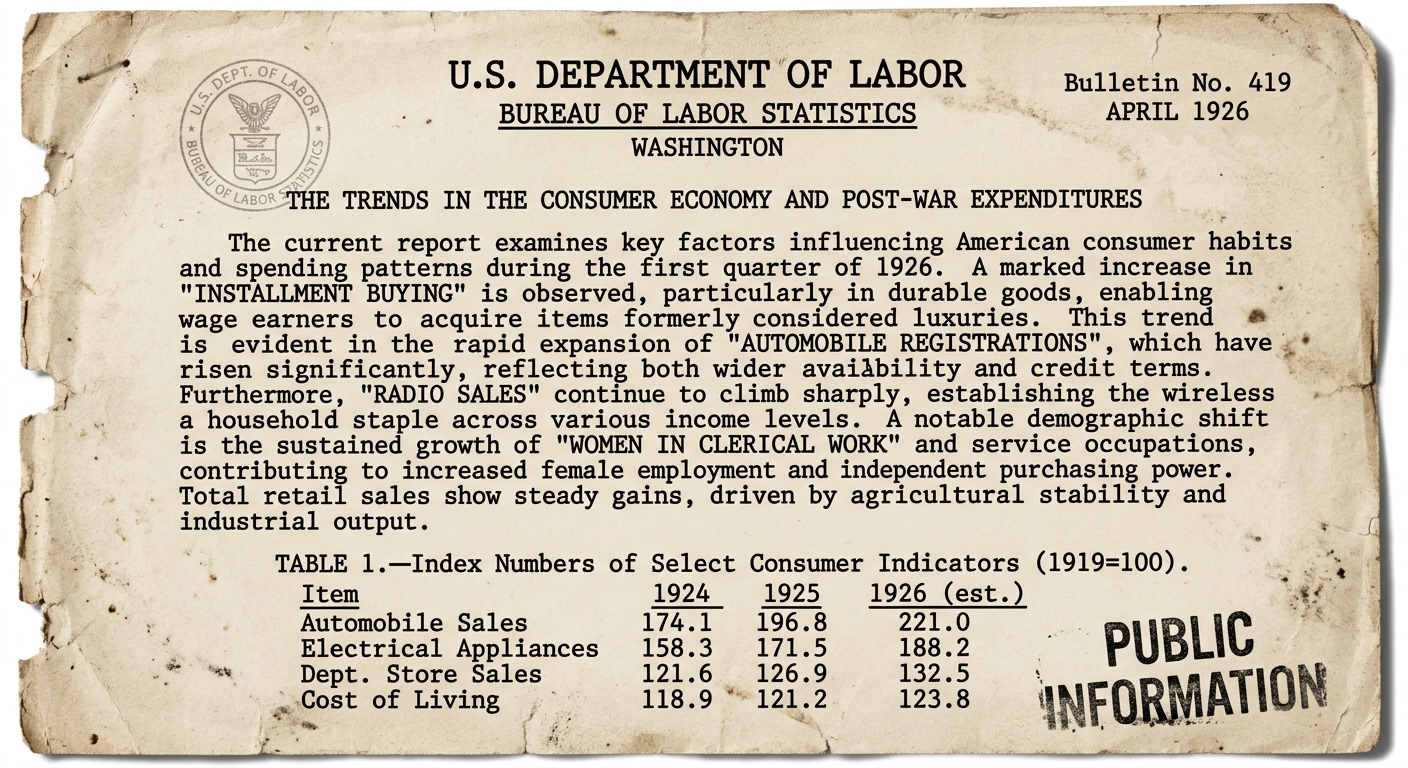
In April 1926, a Labor Department bulletin notes rising radio and automobile sales, often bought on installment credit. It reports expanding clerical jobs for women and higher factory output to meet consumer demand. The bulletin suggests prosperity encouraged new spending habits that reshaped daily life.

Based on the excerpt, which economic pattern is most clearly described?
Which statement BEST describes a likely tradeoff for a household that buys a radio or automobile using installment credit?
How does the bulletin BEST connect economic prosperity to social or cultural change in the 1920s?
Using evidence from the excerpt and the document, explain one way economic prosperity in the 1920s could lead to cultural change, and one way cultural change could affect the economy.
Include two specific details from the stimulus and describe one effect on either women or African Americans.
Suppose a city government in 1926 wants to support the growing consumer economy described in the bulletin.
Propose one policy choice (for example, roads, electrification, workplace training, or business regulation) and explain one benefit and one cost for two different groups (choose from: consumers, workers, small businesses, or taxpayers).