Use the historical document(s) and the short readings in the left panel to answer the associated questions.
Historical Document (circa April 1950):
This leaflet from the U.S. Economic Cooperation Administration promotes Marshall Plan aid. It argues that rebuilding factories and expanding trade would reduce shortages and strengthen “free institutions.” Use the table and claims to analyze how economic policy shaped Cold War alliances.
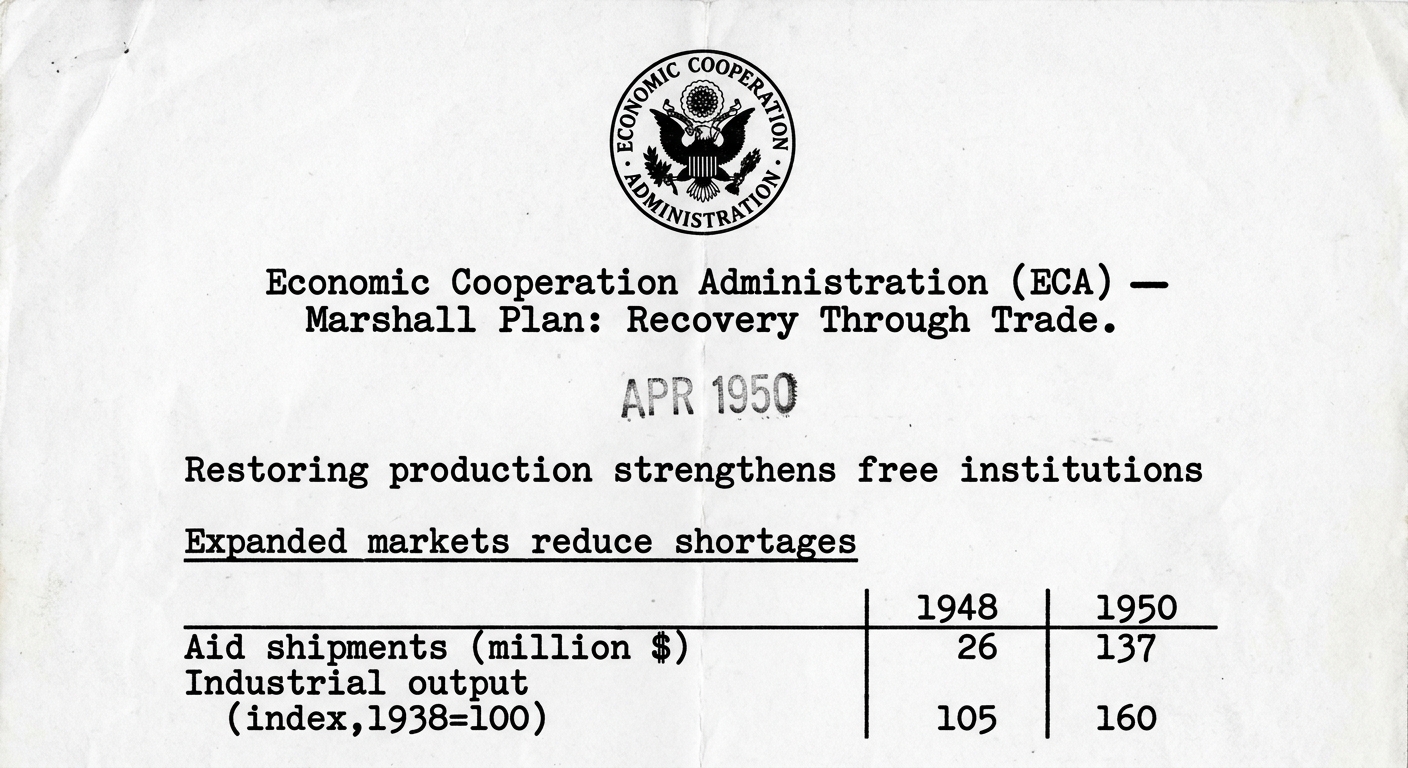
A Soviet official reading this leaflet would MOST likely criticize it as
Using evidence from the leaflet (its wording and/or table), explain how economic aid could shape political alliances during the Cold War.
Write a well-formed paragraph that includes at least two specific references to the document.
Explain how a market economy and a planned (command) economy might interpret the leaflet’s evidence differently.
Use at least one piece of evidence from the document to support your explanation in a well-formed paragraph.
Which statement describes an economic system MOST consistent with the leaflet’s emphasis on “expanded markets” and trade?
Based on the leaflet’s claims and table, which goal is the BEST explanation for why the United States highlighted economic recovery and trade in Western Europe?
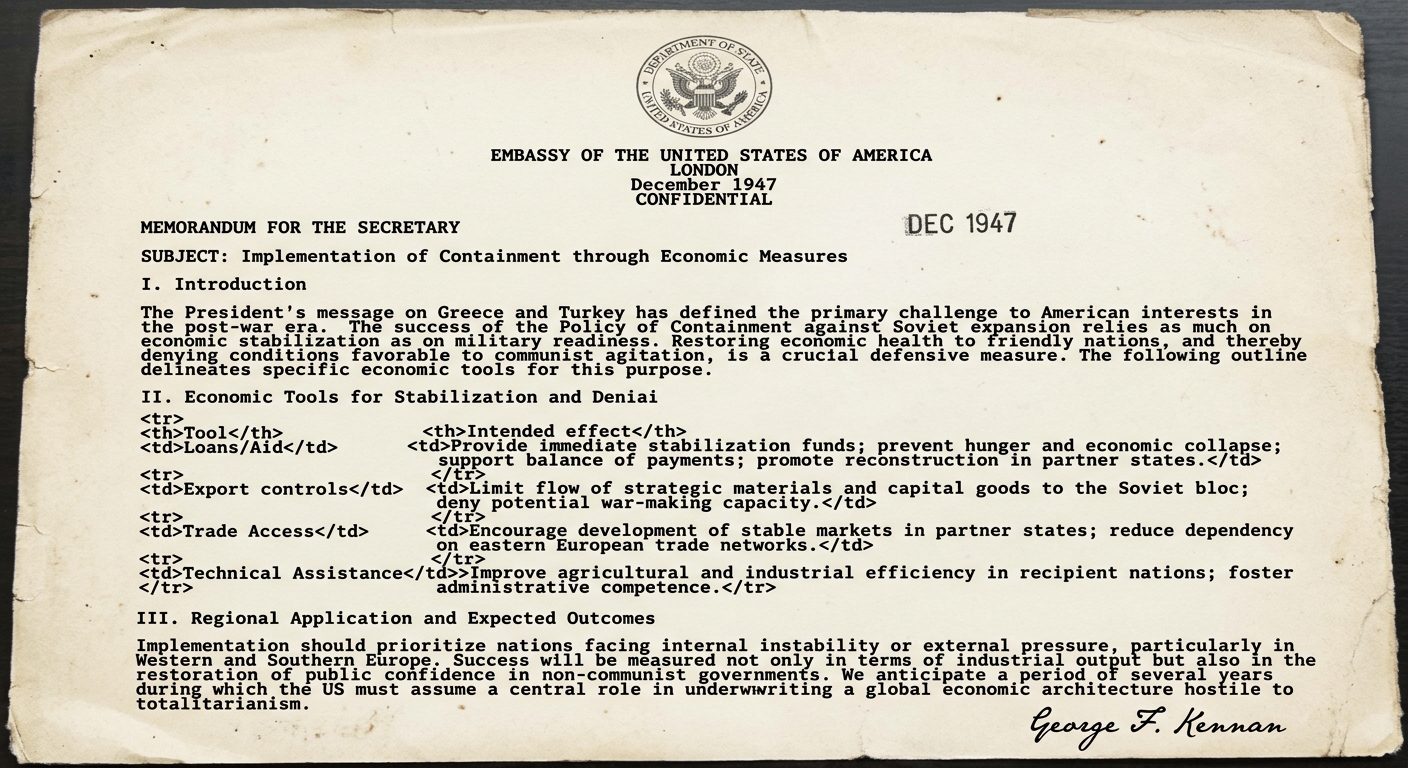
Historical Document (December 1947):
This excerpt from a U.S. policy memo outlines economic tools—such as export controls, loans, and access to trade—to limit Soviet influence. Read the table and wording to explain how containment used economic pressure and incentives to shape international choices.

Based on the table, which pairing is the BEST example of using an economic incentive (rather than a restriction) to influence another country’s choices?
Using evidence from the memo (its wording and/or table), explain how economic policies could be used to contain communism between 1945 and 1990. Write a well-formed paragraph with at least two specific references to the document.
Explain one way a market economy and a planned (command) economy might evaluate the memo’s approach differently. Use at least one piece of evidence from the document to support your explanation in a well-formed paragraph.
A critic of this memo might argue that these economic tools could also
Which statement BEST explains how the memo’s economic tools support a policy of containment?
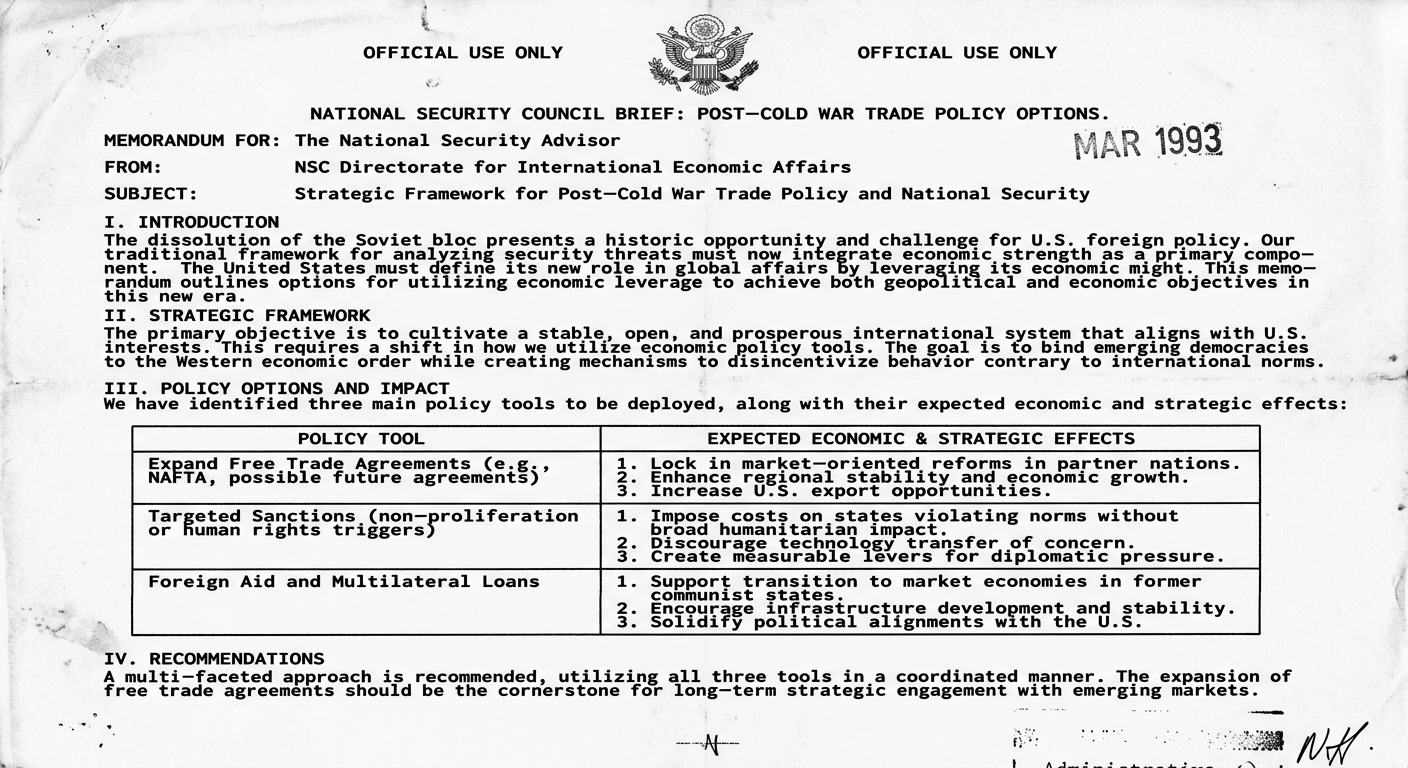
Historical Document (March 1993):
This excerpt from a U.S. policy brief discusses how trade agreements, aid, and sanctions could advance U.S. goals after the Cold War. It suggests economic tools could shape other countries’ choices even without direct military confrontation. Use the table and wording to evaluate post–Cold War foreign policy.

Based on the brief, which economic tool is MOST likely used to encourage other countries to adopt policies favored by the United States?
Which statement BEST connects the document to the idea that Cold War legacies continued to shape U.S. foreign policy after 1991?
Which option from the table is the BEST example of an economic restriction rather than an incentive?
Using evidence from the brief (its wording and/or table), explain how the United States could use economic policy to pursue foreign policy goals after the Cold War.
Write a well-formed paragraph with at least two specific references to the document.
Explain one way a market economy and a planned (command) economy might evaluate the brief’s approach differently.
Use at least one piece of evidence from the document to support your explanation in a well-formed paragraph.
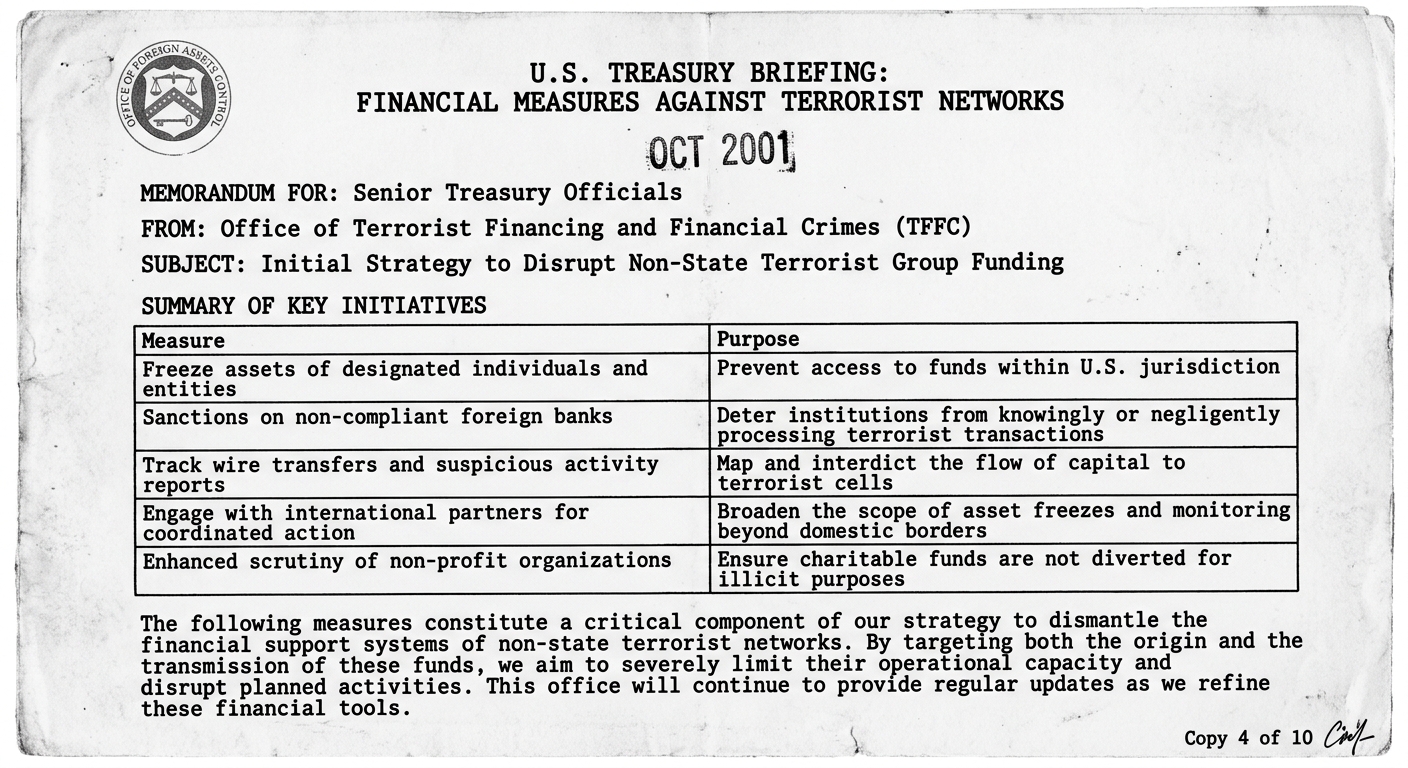
Historical Document (October 2001):
This excerpt from a U.S. Treasury briefing explains financial tools used against non-state terrorist groups, including asset freezes, sanctions, and monitoring money transfers. It argues that disrupting funding could weaken terrorist operations and influence international cooperation. Use the table and wording to analyze policy responses to terrorism.

Which statement BEST explains how the document connects economic policy to national security after the start of the War on Terror?
Using evidence from the briefing (its wording and/or table), explain how economic and financial policies could be used in response to non-state terrorist groups.
Write a well-formed paragraph with at least two specific references to the document.
A critic of these policies might argue that financial sanctions and monitoring could also
Explain one way a market economy and a planned (command) economy might evaluate the use of sanctions, asset freezes, and financial monitoring differently.
Use at least one piece of evidence from the document to support your explanation in a well-formed paragraph.
Based on the table, which option is the BEST example of using an economic restriction to reduce a terrorist group’s ability to operate?
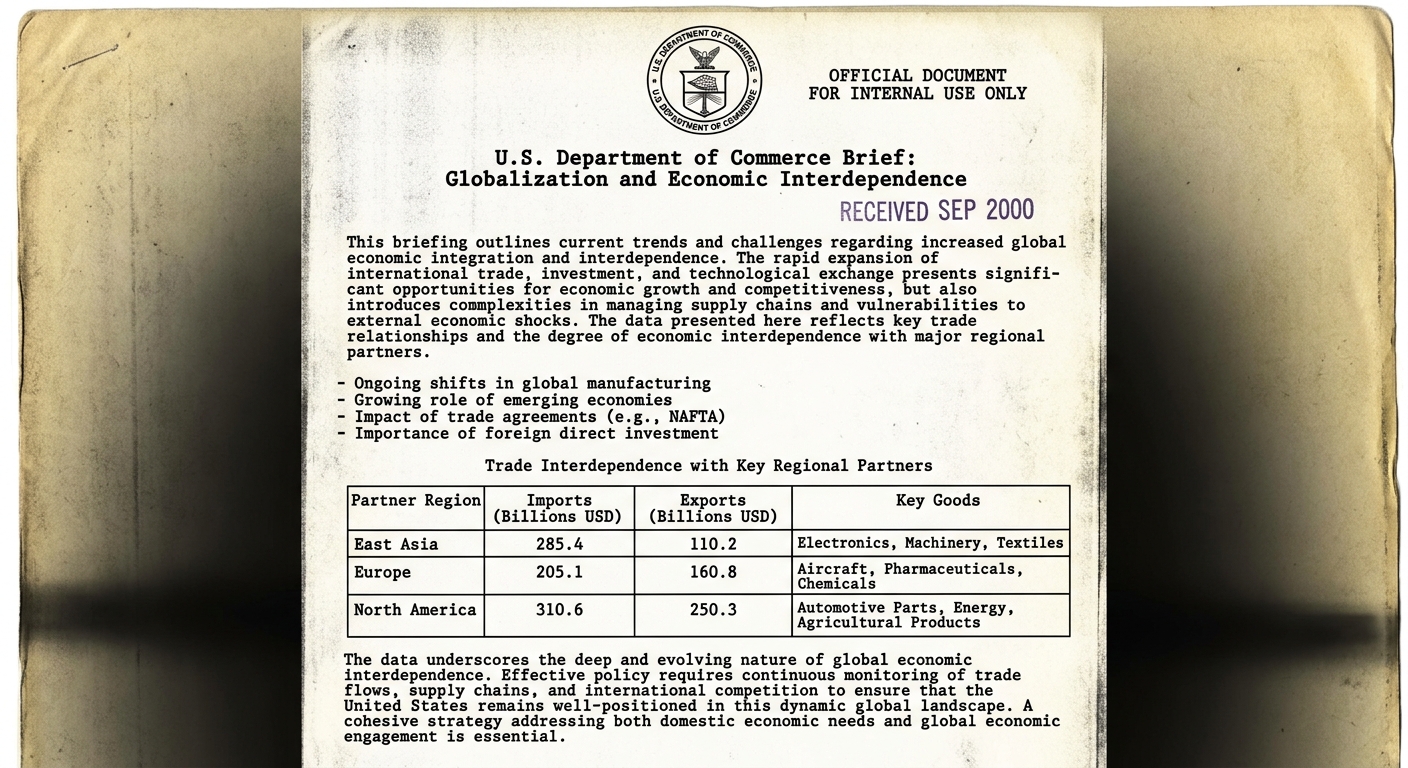
Historical Document (September 2000):
This excerpt from a U.S. commerce briefing describes how globalization increased trade links among regions. It highlights supply chains, foreign competition, and dependence on imports and exports. Use the table and wording to explain how economic interdependence shaped U.S. choices in a global economy.

Which detail from the document is the BEST evidence that globalization can increase competition for U.S. businesses?
Using evidence from the briefing (its wording and/or table), explain how increased globalization could lead to both economic interdependence and competition.
Write a well-formed paragraph with at least two specific references to the document.
A critic of globalization might argue that increased interdependence could also
Explain one way a market economy and a planned (command) economy might respond differently to globalization and interdependence shown in the document.
Use at least one piece of evidence from the document to support your explanation in a well-formed paragraph.
Based on the table and wording, which statement BEST describes “economic interdependence” in a globalized economy?