Twa kɔ nsɛm atitiriw so
Log in
Sign up for FREE
arrow_back
Laabri

8.1c - Reconstruction: - Practices A through E

star
star
star
star
star
Last updated about 1 month ago
25 Nsɛmmisa
Hyɛ no nsow a efi ɔkyerɛwfo no hɔ:

Use the historical document(s) and the short readings in the left panel to answer the associated questions.

Use the historical document(s) and the short readings in the left panel to answer the associated questions.
Fictional handwritten 1867 letter from a Freedmen’s Bureau worker describing setting up schools and facing intimidation with limited federal support.
8.1.c
DOK.SS.2
Ɛhia
1
8.1.c
DOK.SS.2
Ɛhia
1
8.1.c
DOK.SS.2
Ɛhia
1
8.1.c
DOK.SS.2
Ɛhia
1
8.1.c
DOK.SS.2
Ɛhia
1
8.1.c
DOK.SS.2
Ɛhia
1
8.1.c
DOK.SS.2
Ɛhia
1
8.1.c
DOK.SS.2
Ɛhia
1
8.1.c
DOK.SS.2
Ɛhia
1
8.1.c
DOK.SS.2
Ɛhia
1
8.1.c
DOK.SS.2
Ɛhia
1
8.1.c
DOK.SS.2
Ɛhia
1
8.1.c
DOK.SS.2
Ɛhia
1
8.1.c
DOK.SS.2
Ɛhia
1
8.1.c
DOK.SS.2
Ɛhia
1
8.1.c
DOK.SS.2
Ɛhia
1
8.1.c
DOK.SS.2
Ɛhia
1
8.1.c
DOK.SS.2
Ɛhia
1
8.1.c
DOK.SS.2
Ɛhia
1
8.1.c
DOK.SS.2
Ɛhia
1
8.1.c
DOK.SS.2
Ɛhia
1
8.1.c
DOK.SS.2
Ɛhia
1
8.1.c
DOK.SS.2
Ɛhia
1
8.1.c
DOK.SS.2
Ɛhia
1
8.1.c
DOK.SS.2
Ɛhia
1
8.1.c
DOK.SS.2

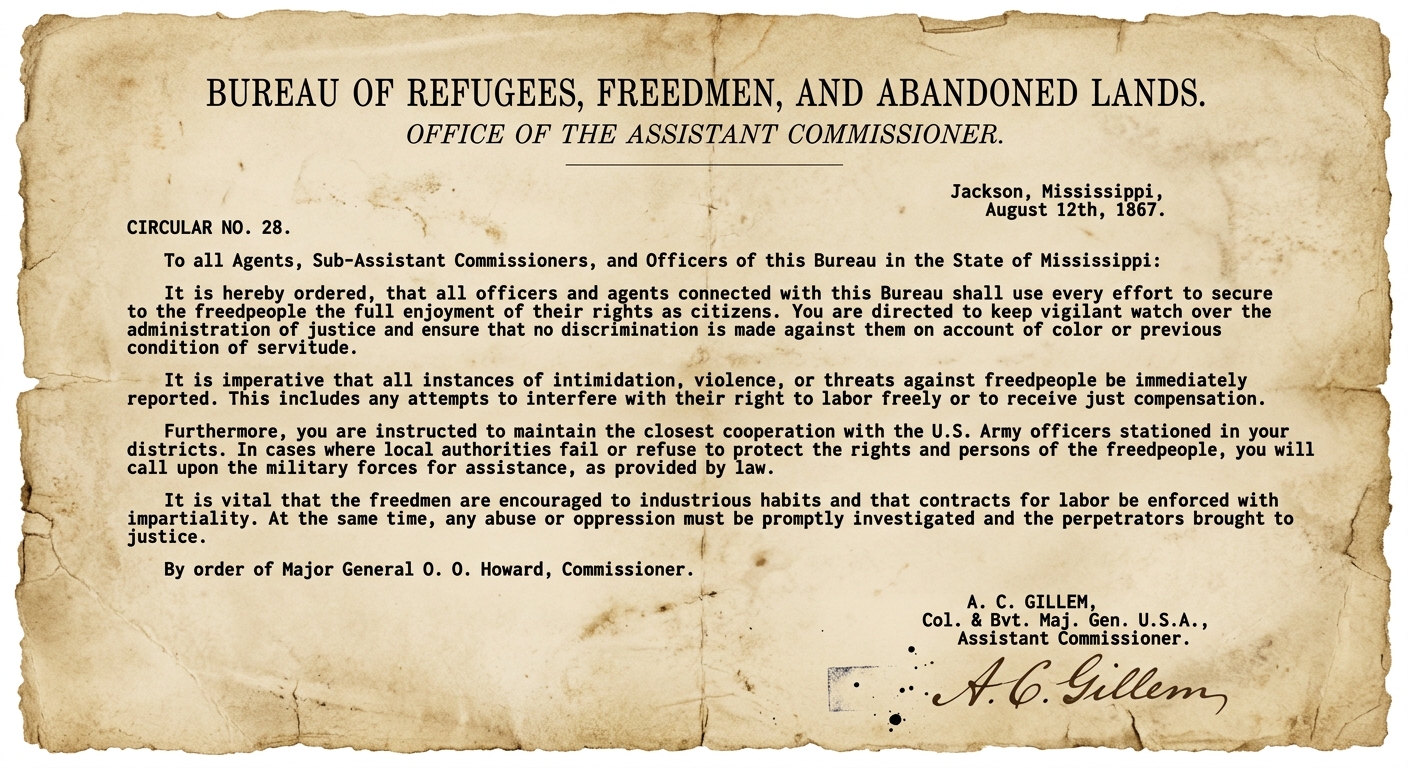
Read the short context below, then study the document image. Use evidence from specific words or phrases in the document.

In 1867, federal officials tried to protect the new rights of formerly enslaved people in the South. They relied on reports from local residents and sometimes worked with Army officers. Many Reconstruction policies faced resistance and weak enforcement.

Fictional Freedmen’s Bureau circular dated August 12, 1867, from Jackson, Mississippi, on aged paper, urging protection of freedpeople’s rights and reporting intimidation or violence.

Asemmisa {{asɛmmisaAhyɛnsode}}
1.

Evaluate the value and the limitation of this document for a historian studying Reconstruction challenges.

In your response, identify one thing the document helps you understand and one important question it does NOT answer.

Asemmisa {{asɛmmisaAhyɛnsode}}
2.

Explain how this document can be used as evidence that federal initiatives during Reconstruction had negative impacts on the lives of African Americans when they were challenged.

Use at least two specific phrases or details from the document and connect each to an impact.

Asemmisa {{asɛmmisaAhyɛnsode}}
3.

Based on the language of the circular, what is the most likely purpose of this document?

Asemmisa {{asɛmmisaAhyɛnsode}}
4.

The circular’s reference to cooperation with U.S. Army officers most strongly suggests which limitation of Reconstruction efforts?

Asemmisa {{asɛmmisaAhyɛnsode}}
5.

Which detail from the document would be the BEST evidence that federal initiatives during Reconstruction faced local challenges?

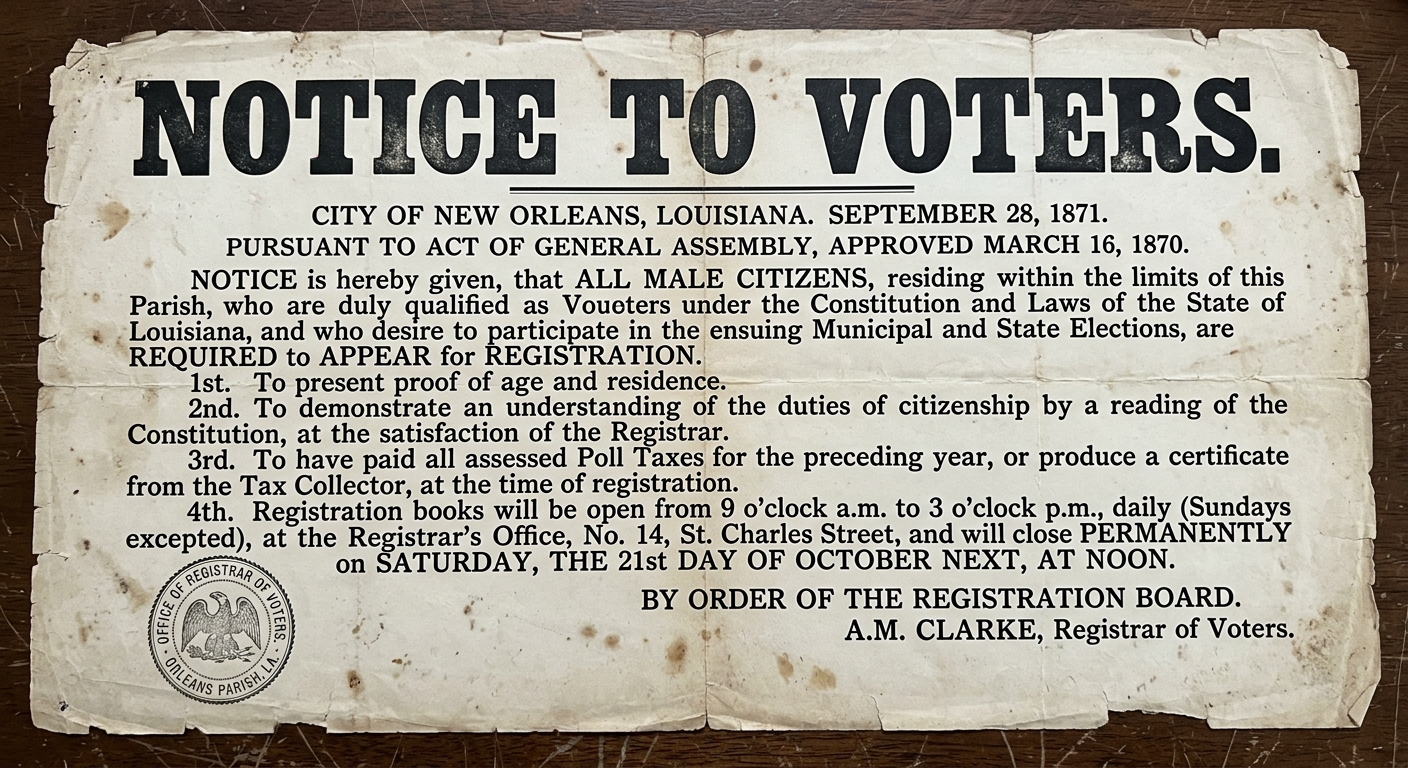
Read the short context below, then study the document image. Think about where this document fits in Reconstruction over time.

After the Civil War, new amendments expanded citizenship and voting rights. By the early 1870s, some Southern officials used new rules and deadlines to limit those rights. These changes helped weaken Reconstruction protections and shaped what happened in later years.

Fictional Reconstruction-era public notice dated 1871 announcing voter registration rules that could restrict voting, printed on aged paper with bold title and official stamp.

Asemmisa {{asɛmmisaAhyɛnsode}}
6.

Place this document in a short timeline (before–during–after).

In one paragraph, describe one Reconstruction action that likely came before it, what the notice shows happening at this moment, and one development that could follow if these rules spread.

Asemmisa {{asɛmmisaAhyɛnsode}}
7.

Based on the date and the registration requirements described, what is the most reasonable conclusion about the timing of resistance to Reconstruction?

Asemmisa {{asɛmmisaAhyɛnsode}}
8.

Explain how this 1871 notice could mark a turning point during Reconstruction. Use two specific details from the notice and connect each detail to:

(1) what it suggests was happening before 1871 and

(2) a likely effect in later years.

Asemmisa {{asɛmmisaAhyɛnsode}}
9.

Which earlier Reconstruction development best explains why this 1871 notice mattered politically?

Asemmisa {{asɛmmisaAhyɛnsode}}
10.

Which event is most likely to come AFTER documents like this became common in some Southern states?

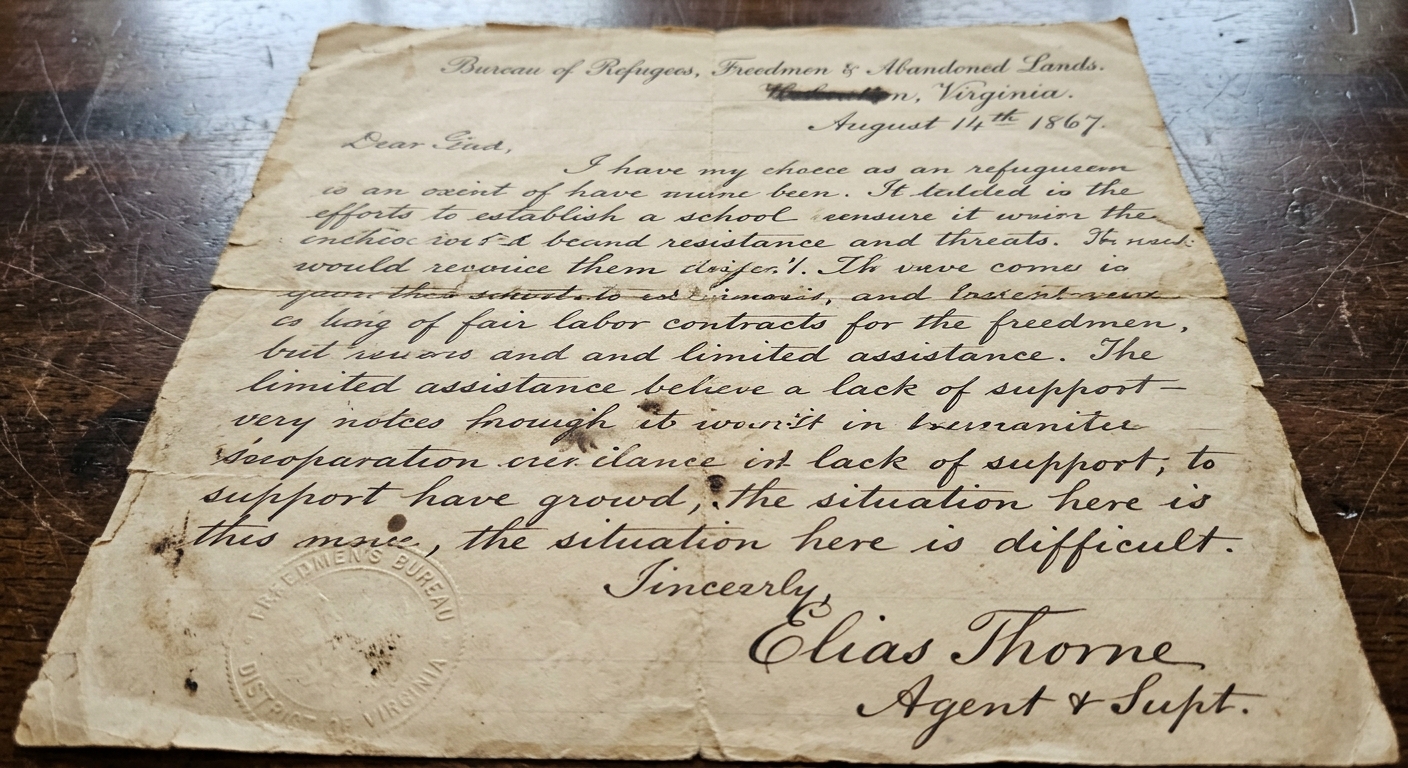
Read the short context below, then study the document image. Use the context to help interpret the writer’s meaning and situation.

Fictional 1867 handwritten letter on aged paper describing efforts to open a school for freedpeople and reporting intimidation with limited federal support.

After the Civil War, federal programs helped formerly enslaved people build new lives, including schooling and labor contracts. In many communities, local resistance and violence made these efforts difficult. Federal support existed, but resources and enforcement were often limited and uneven.

Asemmisa {{asɛmmisaAhyɛnsode}}
11.

Contextualize the letter by explaining how it fits into the larger story of Reconstruction (1865–1877).

In one paragraph, describe:

(1) what was changing for African Americans,

(2) what the letter suggests was resisting that change, and

(3) one likely impact on daily life if the challenges continued.

Asemmisa {{asɛmmisaAhyɛnsode}}
12.

Based on the context, why might the writer emphasize limited federal resources or enforcement?

Asemmisa {{asɛmmisaAhyɛnsode}}
13.

Compare two Reconstruction goals mentioned or implied in the context (for example, education and fair labor).

Then explain, using two details from the letter, how local conditions made those goals harder to achieve.

Asemmisa {{asɛmmisaAhyɛnsode}}
14.

Which statement best compares the federal goal described in the context with the challenge described in the letter?

Asemmisa {{asɛmmisaAhyɛnsode}}
15.

Which detail from the letter would be the BEST evidence that Reconstruction initiatives were challenged at the local level?

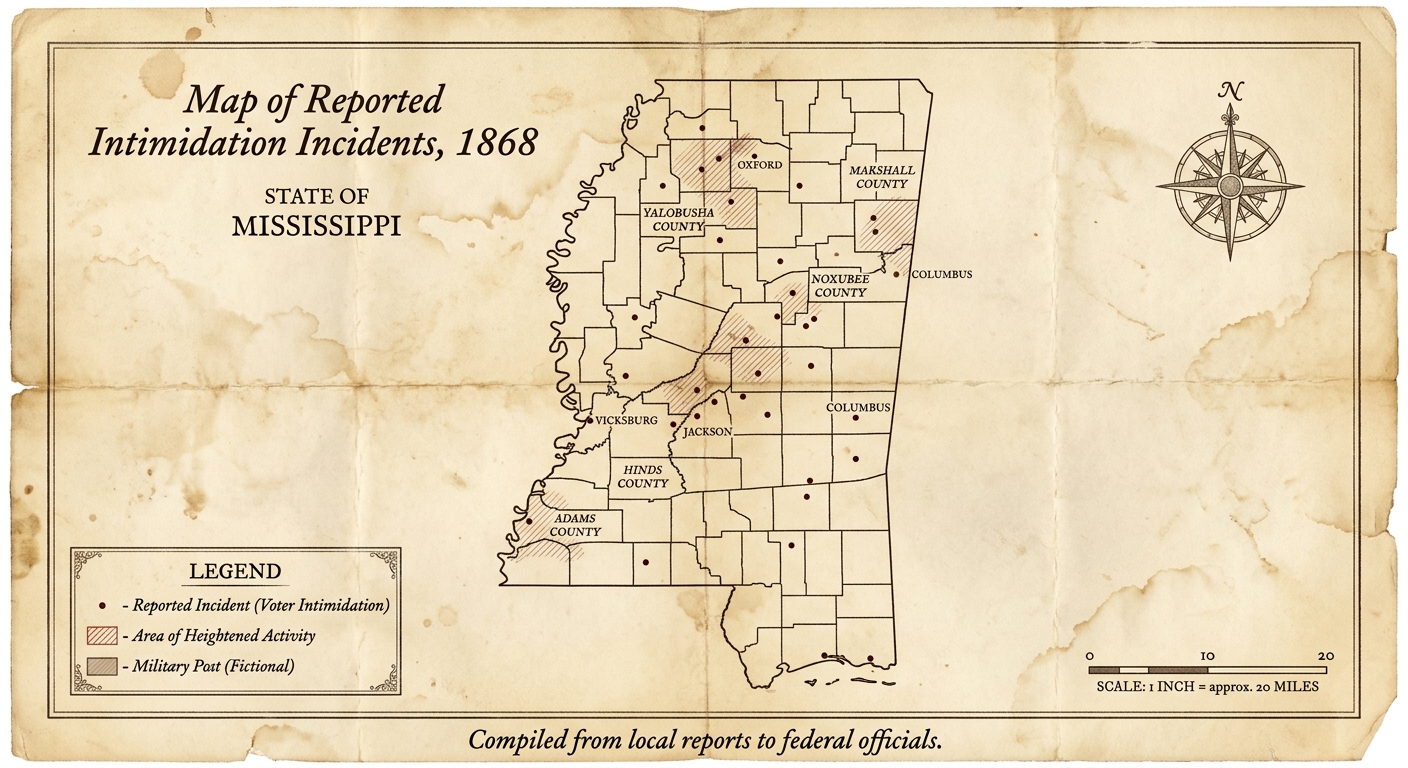
Read the short context below, then study the document image. Use the map’s patterns as evidence.

During Reconstruction, federal officials gathered reports about violence and intimidation aimed at limiting African Americans’ rights. These reports often differed by location and were shaped by local politics and enforcement. Historians use maps like this to compare places and infer how challenges varied across regions.

Fictional 1868 map of Mississippi on aged paper showing marked locations of reported intimidation incidents, with legend and compass rose.

Asemmisa {{asɛmmisaAhyɛnsode}}
16.

Based on the map’s pattern, which conclusion is most reasonable about how local conditions affected Reconstruction?

Asemmisa {{asɛmmisaAhyɛnsode}}
17.

If a historian wanted to compare regions within this state, which additional information would MOST improve the map’s usefulness?

Asemmisa {{asɛmmisaAhyɛnsode}}
18.

Use evidence from the map to make a comparison between two areas of the state (for example, a region with many reports and a region with few).

Then explain one possible impact on African Americans’ daily lives that might differ between those areas during Reconstruction.

Asemmisa {{asɛmmisaAhyɛnsode}}
19.

Describe one geographic pattern you notice on the map (for example, clustering, concentration in one region, or areas with few reports).

Then explain how that pattern could help a historian interpret why Reconstruction initiatives were challenged differently across the state.

Asemmisa {{asɛmmisaAhyɛnsode}}
20.

Which observation is the BEST example of geographic reasoning using this map as evidence?

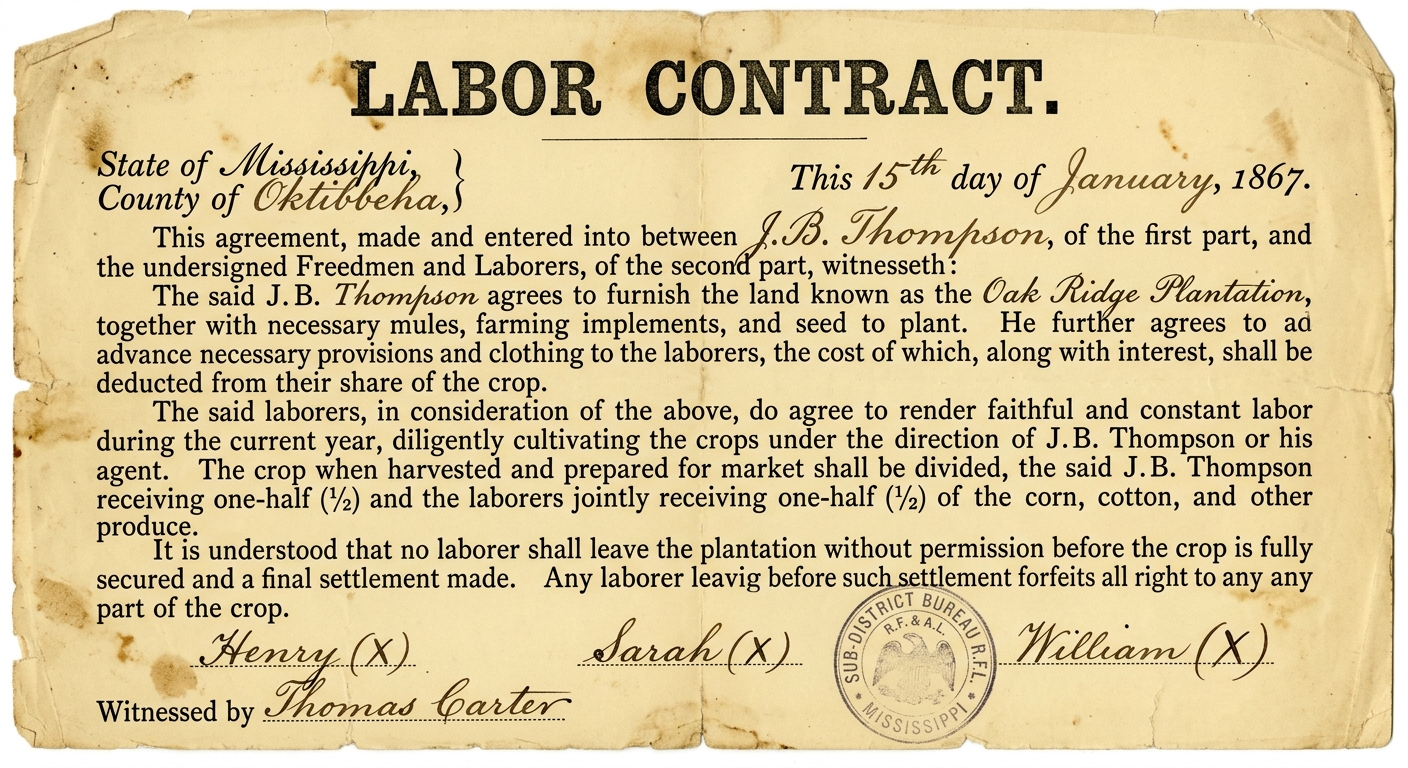
Read the short context below, then study the document image. Use the contract’s terms as evidence.

After the Civil War, many freedpeople lacked land, money, and tools. Landowners often offered sharecropping contracts that promised access to land and supplies but required repayment from the crop. When enforcement was weak, these economic arrangements could limit freedom and deepen poverty over time.

Fictional 1866 sharecropping labor contract on aged paper stating crop-share terms, supply debts, and signatures.

Asemmisa {{asɛmmisaAhyɛnsode}}
21.

Evaluate the value and limitation of this contract as evidence for an economist or historian studying Reconstruction-era labor systems.

In one paragraph, identify one insight the contract provides and one important economic question it does NOT answer.

Asemmisa {{asɛmmisaAhyɛnsode}}
22.

Which economic outcome is most likely if the contract allows the landowner to deduct debts and set prices for supplies?

Asemmisa {{asɛmmisaAhyɛnsode}}
23.

Explain how the economic system shown in this contract could have negative impacts on freedpeople’s lives when federal initiatives were challenged.

Use at least two specific contract details (terms, fees, deductions, restrictions) and connect each to an impact.

Asemmisa {{asɛmmisaAhyɛnsode}}
24.

Based on the contract, which comparison best describes the economic bargaining power of the landowner and the laborers?

Asemmisa {{asɛmmisaAhyɛnsode}}
25.

Which contract term most directly creates a cycle of debt for the laborers?