Twa kɔ nsɛm atitiriw so
Log in
Sign up for FREE
arrow_back
Laabri

8.2a - A Changing Society: - Practices A through E

star
star
star
star
star
Last updated about 1 month ago
25 Nsɛmmisa
Hyɛ no nsow a efi ɔkyerɛwfo no hɔ:

Use the historical document(s) and the short readings in the left panel to answer the associated questions.

Use the historical document(s) and the short readings in the left panel to answer the associated questions.

Ɛhia
1
8.2.a
DOK.SS.2
Ɛhia
1
8.2.a
DOK.SS.2
Ɛhia
1
8.2.a
DOK.SS.2
Ɛhia
2
8.2.a
DOK.SS.2
Ɛhia
2
8.2.a
DOK.SS.2
Ɛhia
1
8.2.a
DOK.SS.2
Ɛhia
1
8.2.a
DOK.SS.2
Ɛhia
1
8.2.a
DOK.SS.2
Ɛhia
2
8.2.a
DOK.SS.2
Ɛhia
2
8.2.a
DOK.SS.2
Ɛhia
1
8.2.a
DOK.SS.2
Ɛhia
1
8.2.a
DOK.SS.2
Ɛhia
1
8.2.a
DOK.SS.2
Ɛhia
2
8.2.a
DOK.SS.2
Ɛhia
2
8.2.a
DOK.SS.2
Ɛhia
1
8.2.a
DOK.SS.2
Ɛhia
1
8.2.a
DOK.SS.2
Ɛhia
1
8.2.a
DOK.SS.2
Ɛhia
2
8.2.a
DOK.SS.2
Ɛhia
2
8.2.a
DOK.SS.2
Ɛhia
1
8.2.a
DOK.SS.2
Ɛhia
1
8.2.a
DOK.SS.2
Ɛhia
1
8.2.a
DOK.SS.2
Ɛhia
2
8.2.a
DOK.SS.2
Ɛhia
2
8.2.a
DOK.SS.2

Historical Document:

In the garment rooms along the Lower East Side, many workers newly arrived from Europe labor ten to twelve hours daily. Pay is low, yet factories hire more hands as orders grow. Crowded streets and tenements surround these shops, drawing families from farms and from overseas.
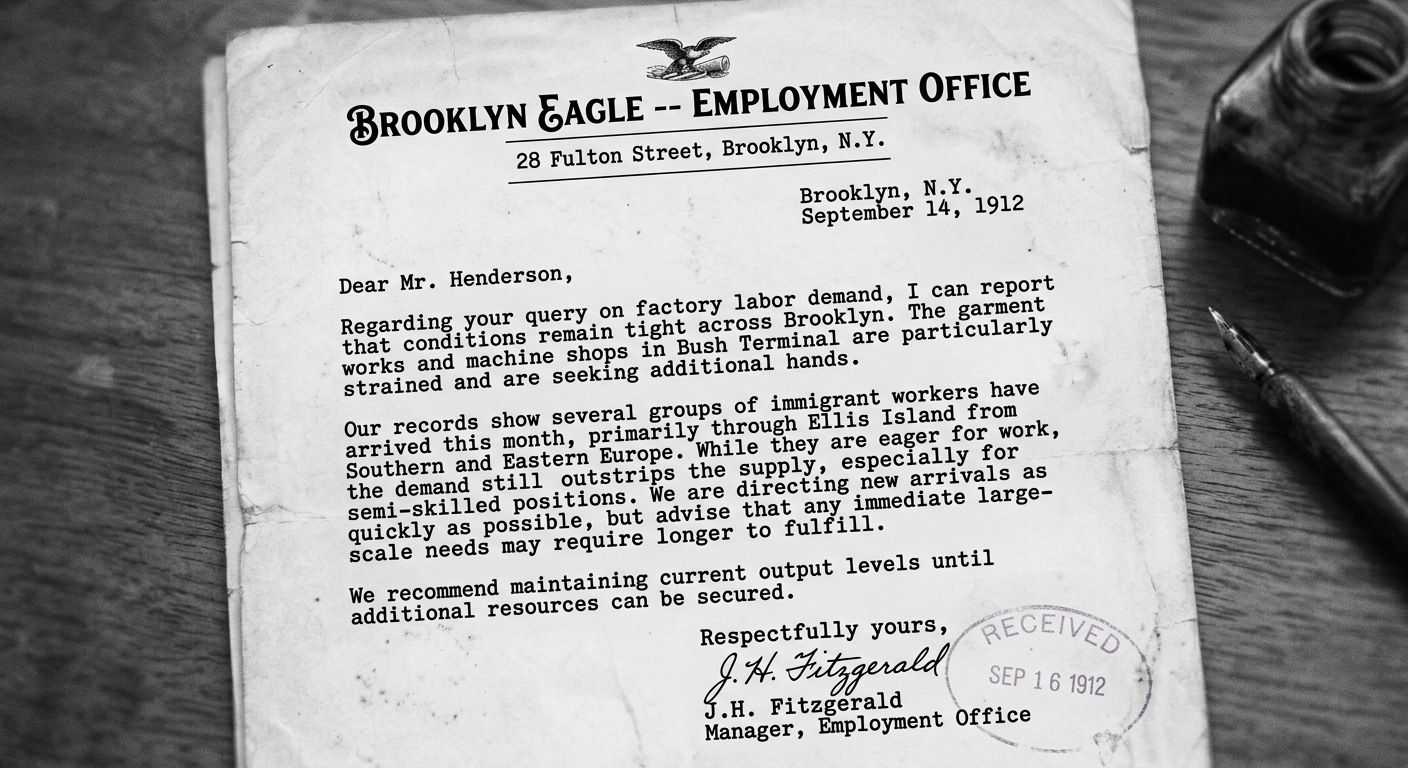
Black-and-white archival-style image of a typed 1910 employment office letter from Brooklyn, New York, about factory labor demand and immigrant workers.

Asemmisa {{asɛmmisaAhyɛnsode}}
1.

Use the historical document and the short reading in the left panel.

Which statement is best supported by the document and reading about why U.S. cities (including New York City) grew during industrialization?

Asemmisa {{asɛmmisaAhyɛnsode}}
2.

Based on the document and reading, which piece of evidence most directly supports the claim that access to jobs pulled people into urban industrial areas?

Asemmisa {{asɛmmisaAhyɛnsode}}
3.

A student says, “Industrialization only changed what was made, not where people lived.”

Which response best uses evidence from the document and reading to evaluate the student’s statement?

Asemmisa {{asɛmmisaAhyɛnsode}}
4.

Using evidence from the document and reading, explain one reason why immigration increased in New York’s urban areas during industrialization.

Asemmisa {{asɛmmisaAhyɛnsode}}
5.

Use evidence from the document and reading to explain one way technological or industrial changes affected where people lived or worked in New York State.

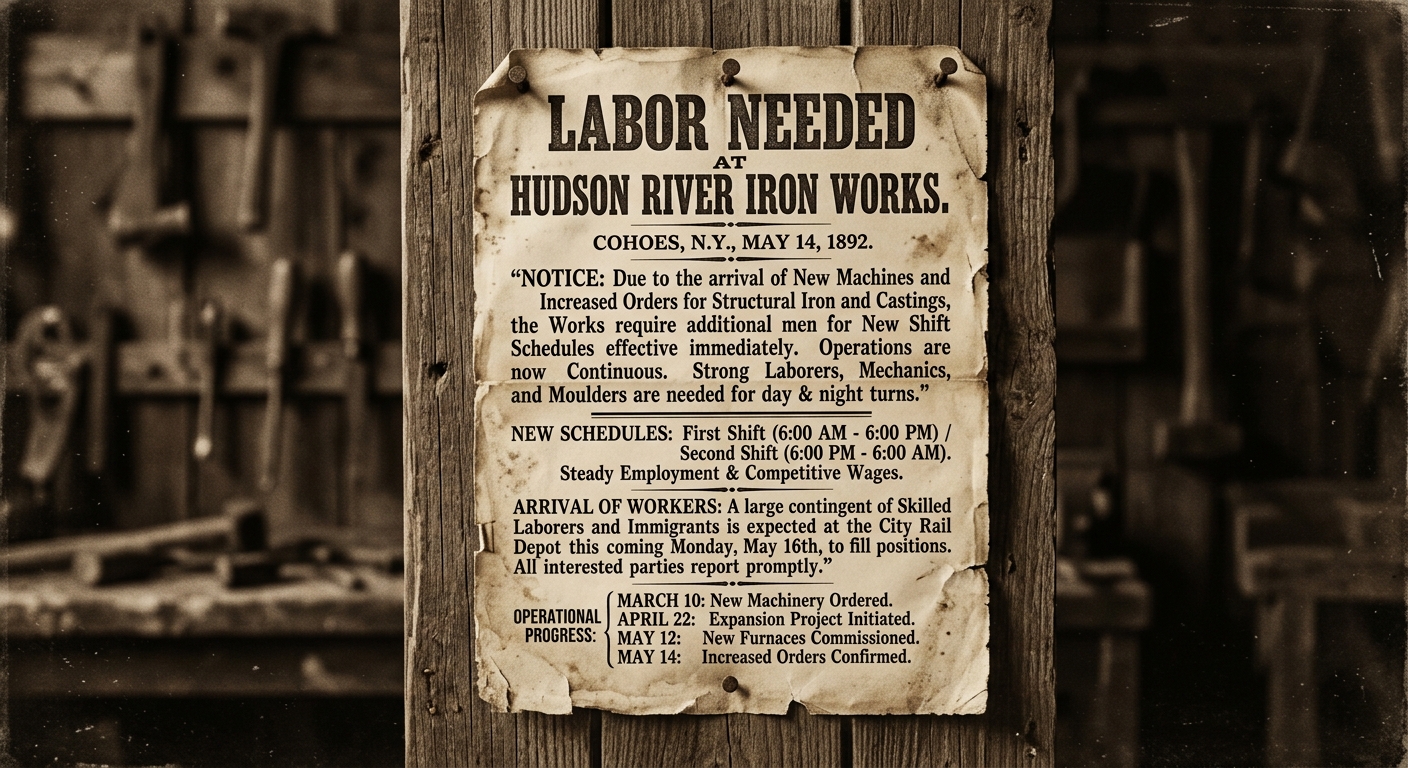
Historical Document (c. 1892, New York State)

In 1892, a riverside iron works posted notices of new machines and longer shifts as orders increased. Over the next months, more workers arrived by train from nearby farms and overseas. City officials recorded growing crowds near factories and expanding tenement streets.

Sepia-toned 1892 broadside titled 'Labor Needed at Hudson River Iron Works' describing increased factory shifts and worker arrivals, with several dates listed.

Asemmisa {{asɛmmisaAhyɛnsode}}
6.

Which sequence of events is best supported by the document and reading?

Asemmisa {{asɛmmisaAhyɛnsode}}
7.

According to the reading, which event happened AFTER the iron works introduced new machines and longer shifts?

Asemmisa {{asɛmmisaAhyɛnsode}}
8.

Which timeline best matches the order of changes described in the reading?

Asemmisa {{asɛmmisaAhyɛnsode}}
9.

Using chronological reasoning, explain how one change described earlier in the reading helped cause a later change.

Use one specific phrase from the reading as evidence.

Asemmisa {{asɛmmisaAhyɛnsode}}
10.

Place these events in order from earliest to latest, and briefly explain how the order you chose is supported by the reading:

(1) worker arrivals by train,

(2) expanding tenement streets,

(3) longer factory shifts.

Historical Document

(c. 1907, New York State)

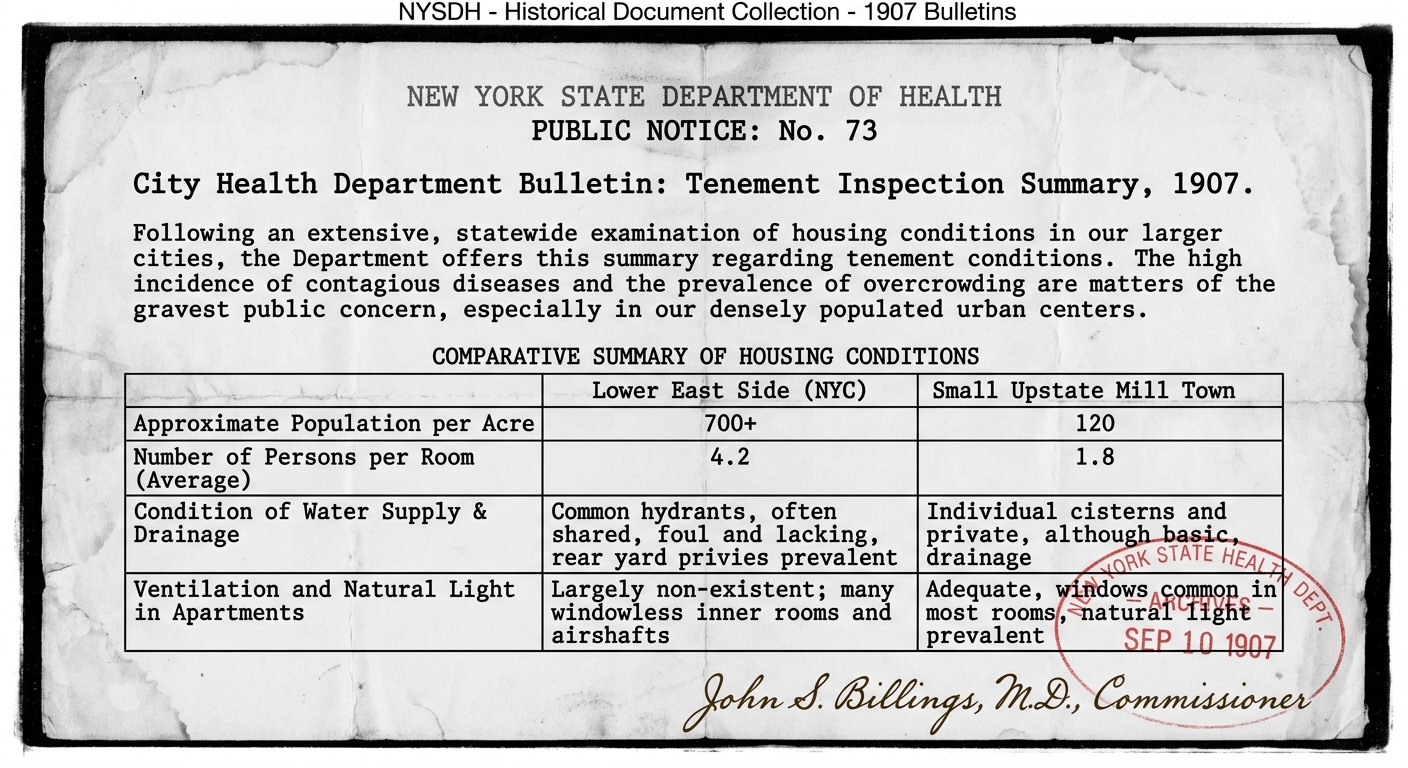
In 1907, inspectors compared housing near New York City factories with housing in a smaller upstate mill town. The bulletin reported heavier crowding and more shared rooms in the city, where more immigrant workers lived near jobs. Upstate housing was less crowded but still close to mills.

Black-and-white archival-style 1907 health department bulletin comparing tenement conditions in New York City and a small upstate mill town.

Asemmisa {{asɛmmisaAhyɛnsode}}
11.

Which comparison is best supported by the document’s description of housing conditions?

Asemmisa {{asɛmmisaAhyɛnsode}}
12.

Which statement best contextualizes why immigrant workers were more likely to live in crowded New York City neighborhoods than in the upstate mill town?

Asemmisa {{asɛmmisaAhyɛnsode}}
13.

A historian wants to use this bulletin as evidence about urbanization in New York State. Which use best fits what the document can support?

Asemmisa {{asɛmmisaAhyɛnsode}}
14.

Using evidence from the bulletin, compare ONE way living conditions differed between New York City and the upstate mill town.

Then explain how industrial labor demand helps explain that difference.

Asemmisa {{asɛmmisaAhyɛnsode}}
15.

Explain how this 1907 bulletin fits into the broader pattern (industrial growth and labor demand leading to migration and city growth).

Use two specific details from the reading as evidence.

Historical Document

(c. 1900, New York State)

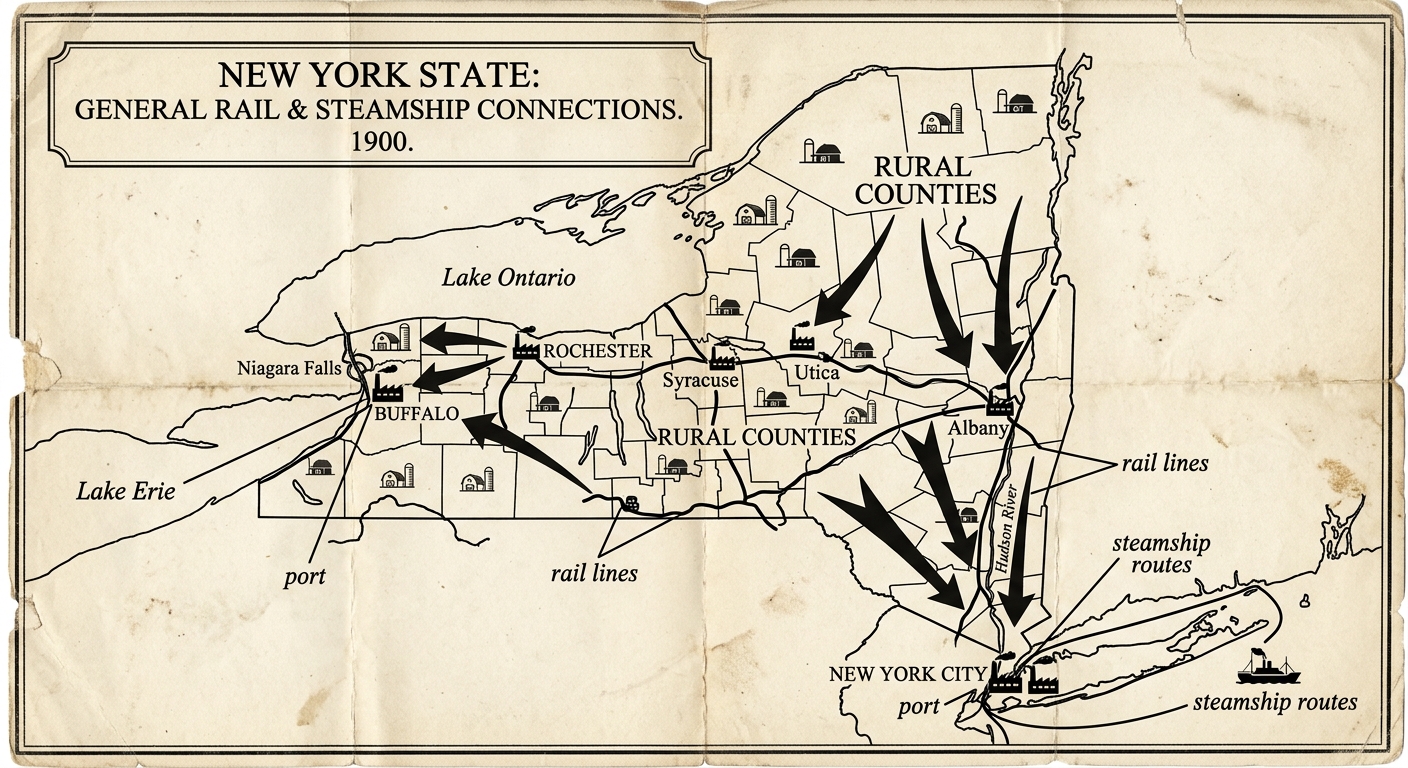
A 1900 pamphlet map shows rail and port routes connecting farms and small towns to New York City and upstate industrial cities. Arrows mark movement toward factory districts near rail hubs and harbor docks. The document suggests transportation networks shaped where migrants settled for work.

Asemmisa {{asɛmmisaAhyɛnsode}}
16.

Based on the map and reading, which geographic factor most likely influenced where migrants settled in New York State during industrialization?

Asemmisa {{asɛmmisaAhyɛnsode}}
17.

Which inference about migration is best supported by the arrows and routes shown on the document?

Asemmisa {{asɛmmisaAhyɛnsode}}
18.

A student claims, “Industrialization mattered, but transportation routes did not affect where people moved.”

Which response best evaluates the claim using evidence from the document?

Asemmisa {{asɛmmisaAhyɛnsode}}
19.

Using geographic reasoning, explain how ONE physical or human feature shown or described (rail hubs, ports, factory districts) could influence migration into New York’s cities during industrialization.

Use one detail from the reading or map as evidence.

Asemmisa {{asɛmmisaAhyɛnsode}}
20.

Compare how migration from rural New York counties and immigration from overseas might use different routes to reach industrial jobs, based on the document.

Explain your reasoning with two pieces of evidence from the map/reading.

Historical Document

(c. 1911, New York State)

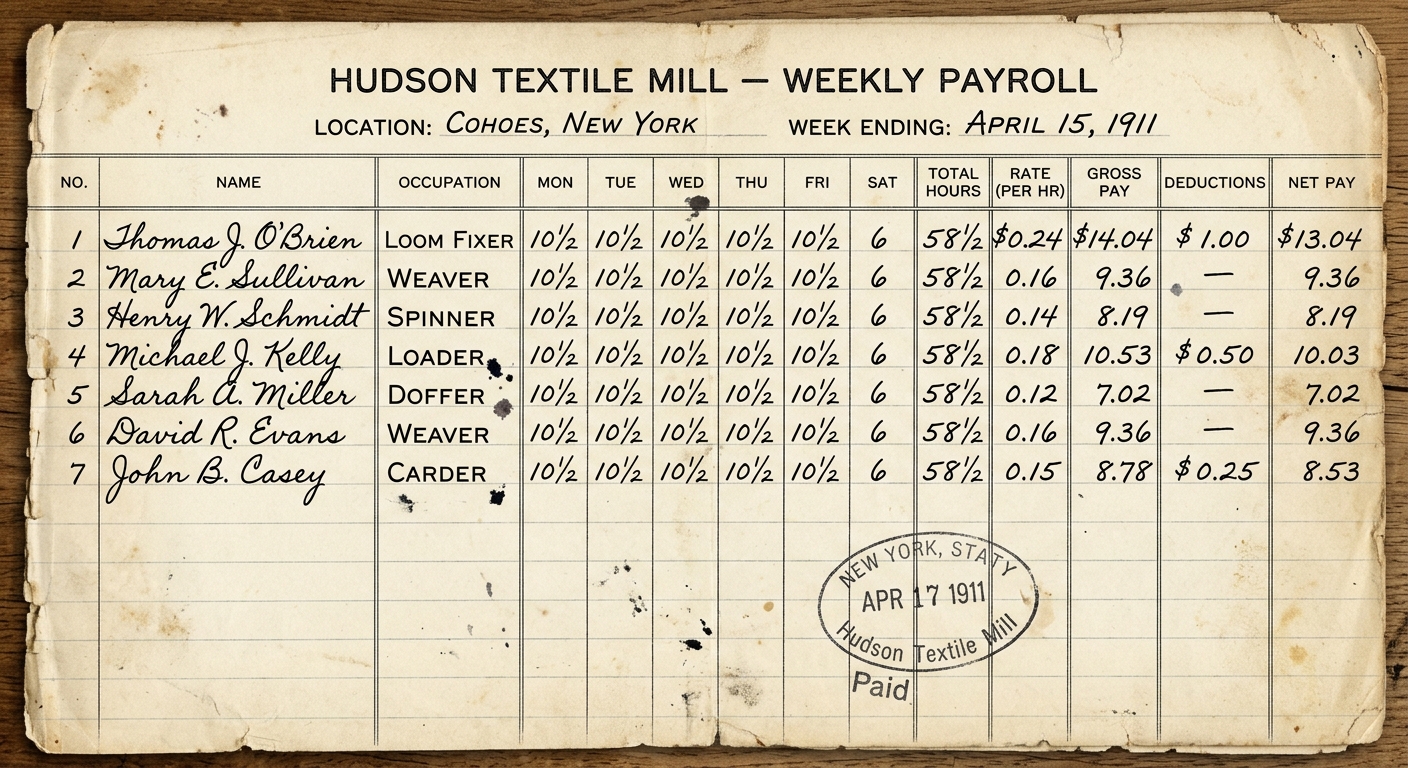
A 1911 payroll ledger from a New York textile mill lists job roles, weekly hours, and pay. The mill increased output after new machinery was installed, and managers recorded the cost of labor each week. Such wage jobs attracted workers from nearby farms and from overseas into urban industrial areas.

Asemmisa {{asɛmmisaAhyɛnsode}}
21.

Based on the reading and payroll ledger, which economic factor most directly explains why workers moved into New York’s industrial cities?

Asemmisa {{asɛmmisaAhyɛnsode}}
22.

Which statement best explains why factory managers would keep detailed payroll records like the one shown?

Asemmisa {{asɛmmisaAhyɛnsode}}
23.

Suppose the mill’s orders increased and managers needed more workers.

Which change would you most likely expect to see in the ledger over the next weeks?

Asemmisa {{asɛmmisaAhyɛnsode}}
24.

Using evidence from the reading and the payroll ledger, explain one way new machinery could affect BOTH production and the demand for labor.

Use at least one specific detail (hours, pay, or job roles) as evidence.

Asemmisa {{asɛmmisaAhyɛnsode}}
25.

Explain how the growth of wage jobs in mills and factories could change where people lived in New York State.

Use two pieces of evidence from the reading/document (for example, wages, job records, or movement into urban areas).