Twa kɔ nsɛm atitiriw so
Log in
Sign up for FREE
arrow_back
Laabri

8.2b - A Changing Society: - Practices A through E

star
star
star
star
star
Last updated about 1 month ago
25 Nsɛmmisa
Hyɛ no nsow a efi ɔkyerɛwfo no hɔ:

Use the historical document(s) and the short readings in the left panel to answer the associated questions.

Use the historical document(s) and the short readings in the left panel to answer the associated questions.

Ɛhia
1
8.2.b
DOK.SS.2
Ɛhia
1
8.2.b
DOK.SS.2
Ɛhia
1
8.2.b
DOK.SS.2
Ɛhia
2
8.2.b
DOK.SS.2
Ɛhia
2
8.2.b
DOK.SS.2
Ɛhia
1
8.2.b
DOK.SS.2
Ɛhia
1
8.2.b
DOK.SS.2
Ɛhia
1
8.2.b
DOK.SS.2
Ɛhia
2
8.2.b
DOK.SS.2
Ɛhia
2
8.2.b
DOK.SS.2
Ɛhia
1
8.2.b
DOK.SS.2
Ɛhia
1
8.2.b
DOK.SS.2
Ɛhia
1
8.2.b
DOK.SS.2
Ɛhia
2
8.2.b
DOK.SS.2
Ɛhia
2
8.2.b
DOK.SS.2
Ɛhia
1
8.2.b
DOK.SS.2
Ɛhia
1
8.2.b
DOK.SS.2
Ɛhia
1
8.2.b
DOK.SS.2
Ɛhia
2
8.2.b
DOK.SS.2
Ɛhia
2
8.2.b
DOK.SS.2
Ɛhia
1
8.2.b
DOK.SS.2
Ɛhia
1
8.2.b
DOK.SS.2
Ɛhia
1
8.2.b
DOK.SS.2
Ɛhia
2
8.2.b
DOK.SS.2
Ɛhia
2
8.2.b
DOK.SS.2

Read the historical document and the short excerpt in the left panel. Then answer the questions that follow using evidence from the document.

In the early 1900s, New York City grew quickly as factories attracted workers. Many families rented small tenement apartments. City officials worried that overcrowding and poor ventilation could spread disease. Reformers pushed for inspections and safer housing rules.
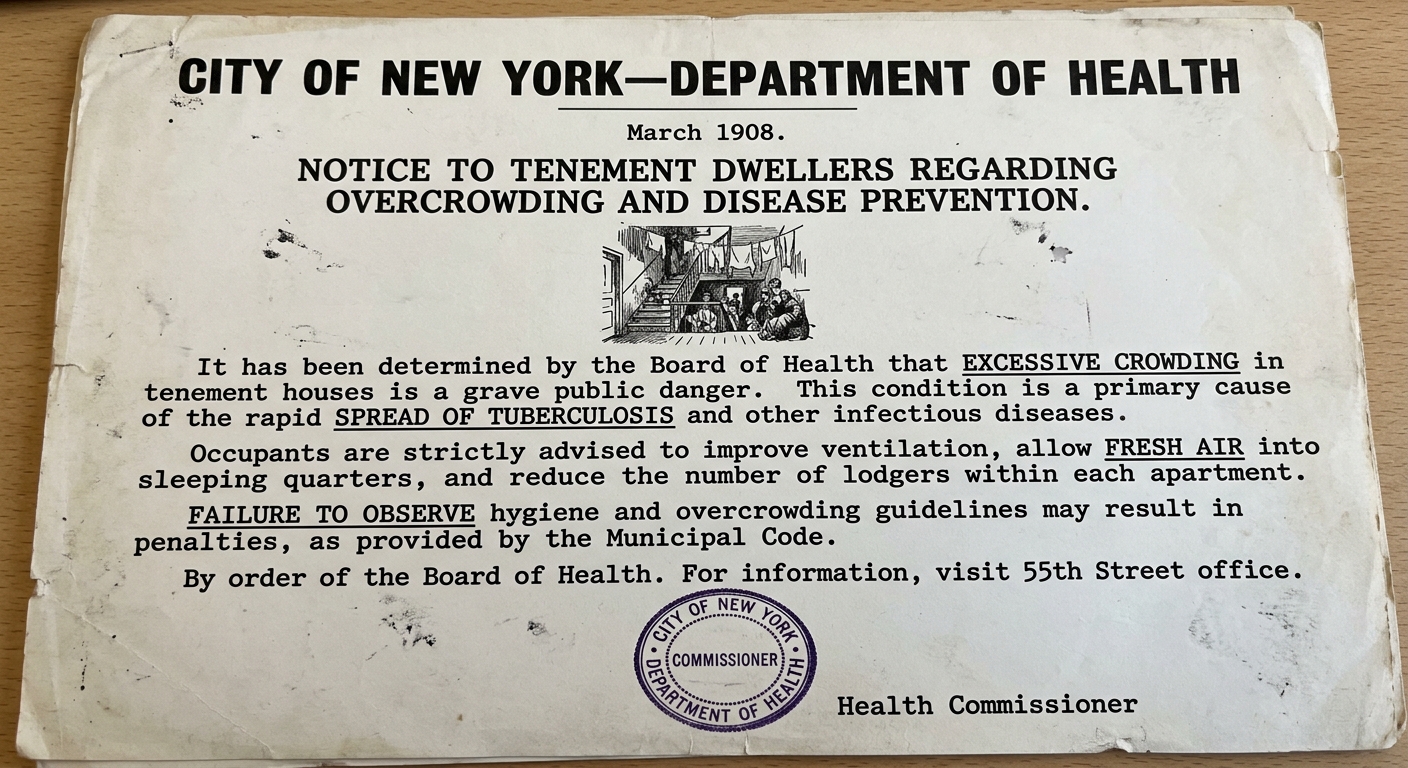
A scanned-looking 1908 New York City Department of Health notice about crowded tenements and preventing disease, with an official seal and a small sketch of a crowded stairwell.

Asemmisa {{asɛmmisaAhyɛnsode}}
1.

Based on evidence in the public health notice, which problem did city officials most likely connect to crowded tenement housing?

Asemmisa {{asɛmmisaAhyɛnsode}}
2.

Which option best describes the purpose of a city health notice like this one in an industrial-era city?

Asemmisa {{asɛmmisaAhyɛnsode}}
3.

Which claim is best supported by evidence from the notice and the reading stimulus together?

Asemmisa {{asɛmmisaAhyɛnsode}}
4.

Using evidence from the document, explain one way technology or industry contributed to urban problems in New York City, and one way city government or reformers tried to respond.

Use at least two specific details from the notice.

Asemmisa {{asɛmmisaAhyɛnsode}}
5.

What is one inference you can make about daily life for families living in crowded tenements, based on the notice?

Support your inference with two pieces of evidence (words, phrases, or features) from the document.

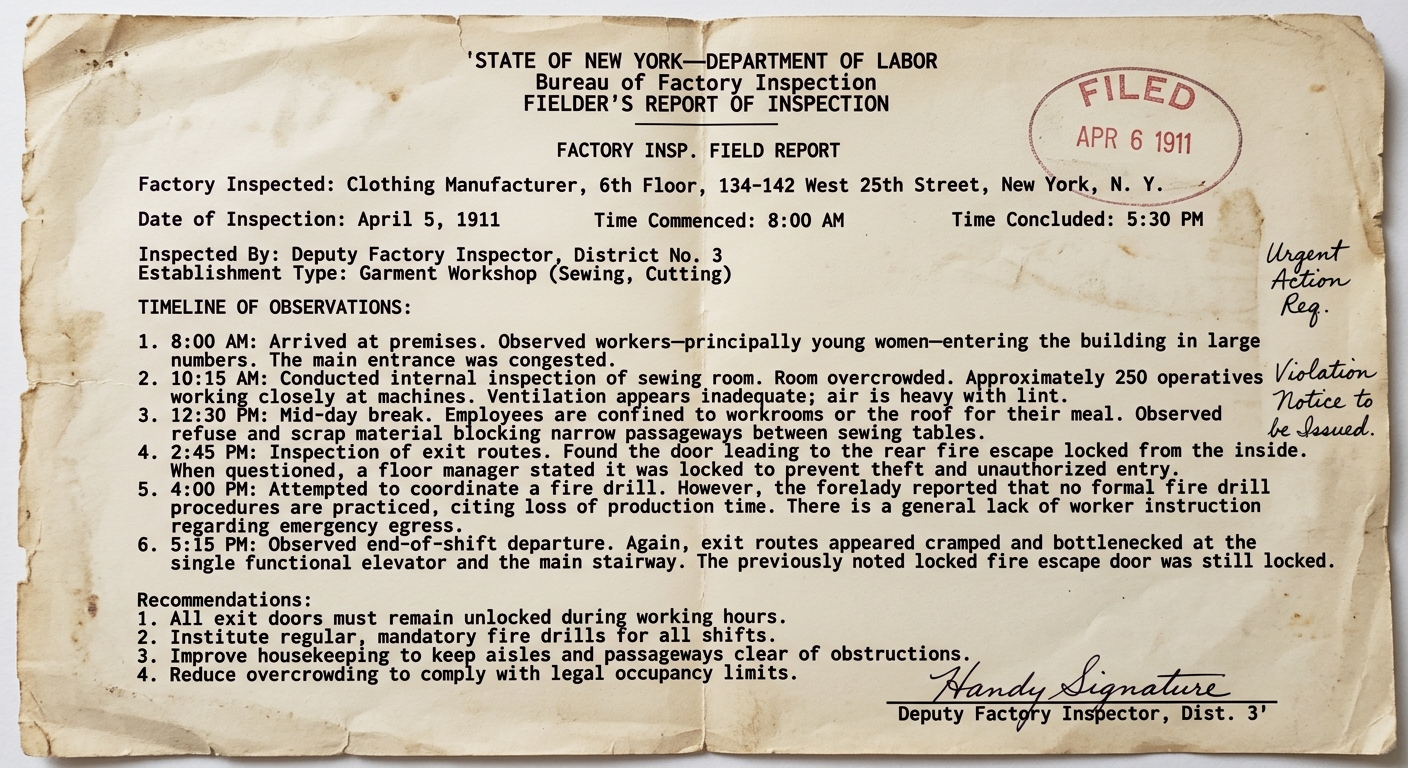
Read the historical document and the short excerpt in the left panel. Then answer the questions that follow using evidence from the document.

By the early 1910s, New York City’s garment industry employed thousands in crowded upper-floor workshops. After high-profile workplace disasters, state officials increased inspections. Reports often listed events in time order to show what happened during a workday and whether safety rules were followed.

A scanned-looking 1911 New York State Department of Labor factory inspector field report with time-stamped observations and a filed stamp.

Asemmisa {{asɛmmisaAhyɛnsode}}
6.

Which detail from the inspector’s report provides the clearest evidence that the document is describing events in chronological order?

Asemmisa {{asɛmmisaAhyɛnsode}}
7.

Based on the sequence of events in the report, which conclusion is best supported about how safety risks could build over the course of a workday?

Asemmisa {{asɛmmisaAhyɛnsode}}
8.

Which timeline best matches the order of events described in the inspector’s report?

Asemmisa {{asɛmmisaAhyɛnsode}}
9.

Using evidence from the time-stamped entries, explain how the order of observations helps you understand the working conditions in the factory.

Use at least two specific time references or details from the report.

Asemmisa {{asɛmmisaAhyɛnsode}}
10.

Make one inference about how city or state government might respond after receiving a report like this.

Explain your inference using two pieces of evidence from the report’s sequence (not just one detail).

Read the historical document and the short excerpt in the left panel. Then answer the questions that follow using evidence from the document.

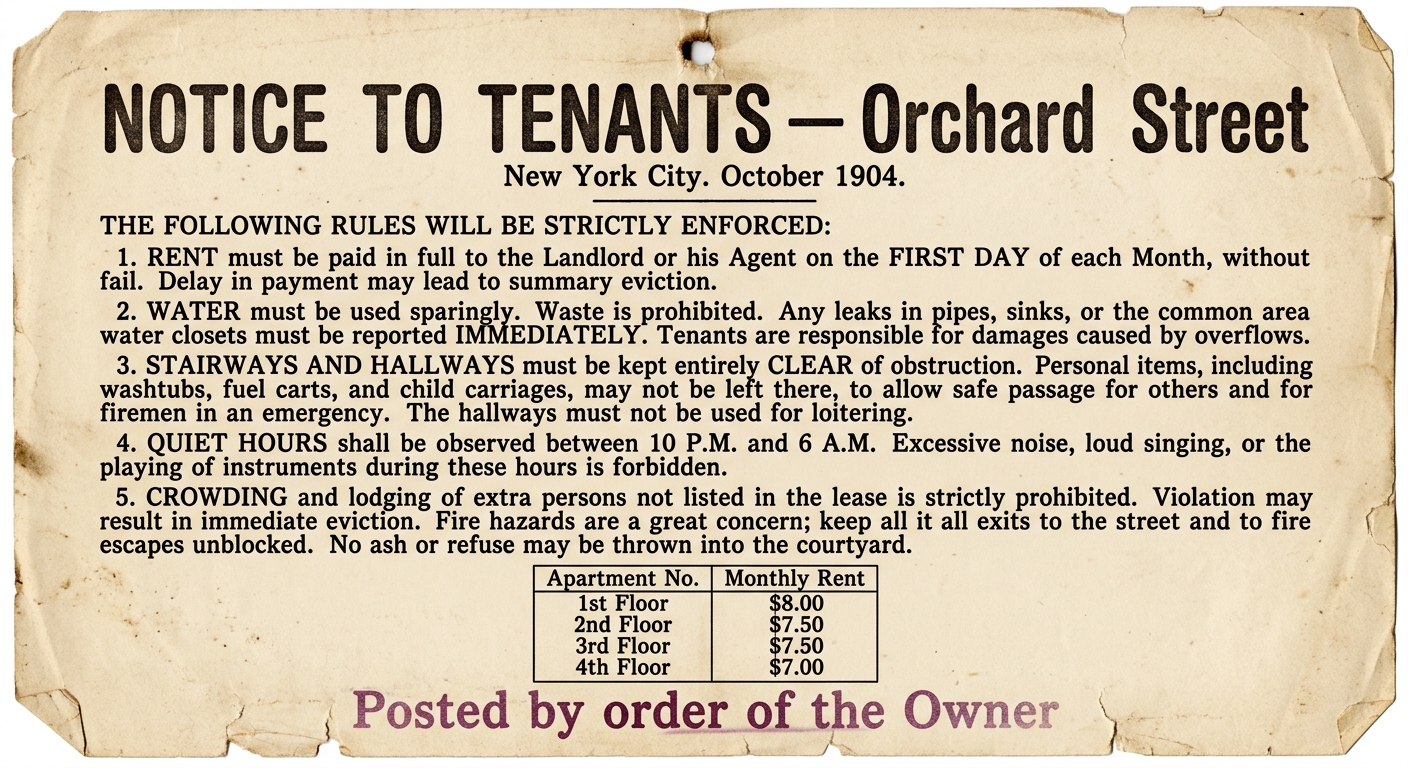
In the early 1900s, rapid industrial growth drew many workers into New York City. As tenements filled, landlords posted rules to manage shared spaces and limit hazards. Reformers argued that crowded buildings needed stricter safety standards, especially to prevent fires and disease.

A scanned-looking 1904 New York City tenement rent notice and house rules posting warning about overcrowding and fire hazards.

Asemmisa {{asɛmmisaAhyɛnsode}}
11.

Which statement best compares the landlord’s priorities in the notice with reformers’ concerns described in the reading stimulus?

Asemmisa {{asɛmmisaAhyɛnsode}}
12.

Which detail from the notice is the best evidence that population density shaped daily life in the building’s shared spaces?

Asemmisa {{asɛmmisaAhyɛnsode}}
13.

Which historical context from the reading stimulus best explains why a landlord would post detailed rules like these in 1904 New York City?

Asemmisa {{asɛmmisaAhyɛnsode}}
14.

Compare the perspective of the landlord in the notice to the perspective of reformers in the reading stimulus.

What problem do they agree exists, and how do their suggested solutions differ?

Use at least two pieces of evidence from the notice.

Asemmisa {{asɛmmisaAhyɛnsode}}
15.

Using the reading stimulus, explain why rules about shared spaces (such as hallways or water use) mattered more in a dense industrial city than in a small rural town.

Use one piece of evidence from the notice and one from the reading stimulus.

Read the historical document and the short excerpt in the left panel. Then answer the questions that follow using evidence from the document.

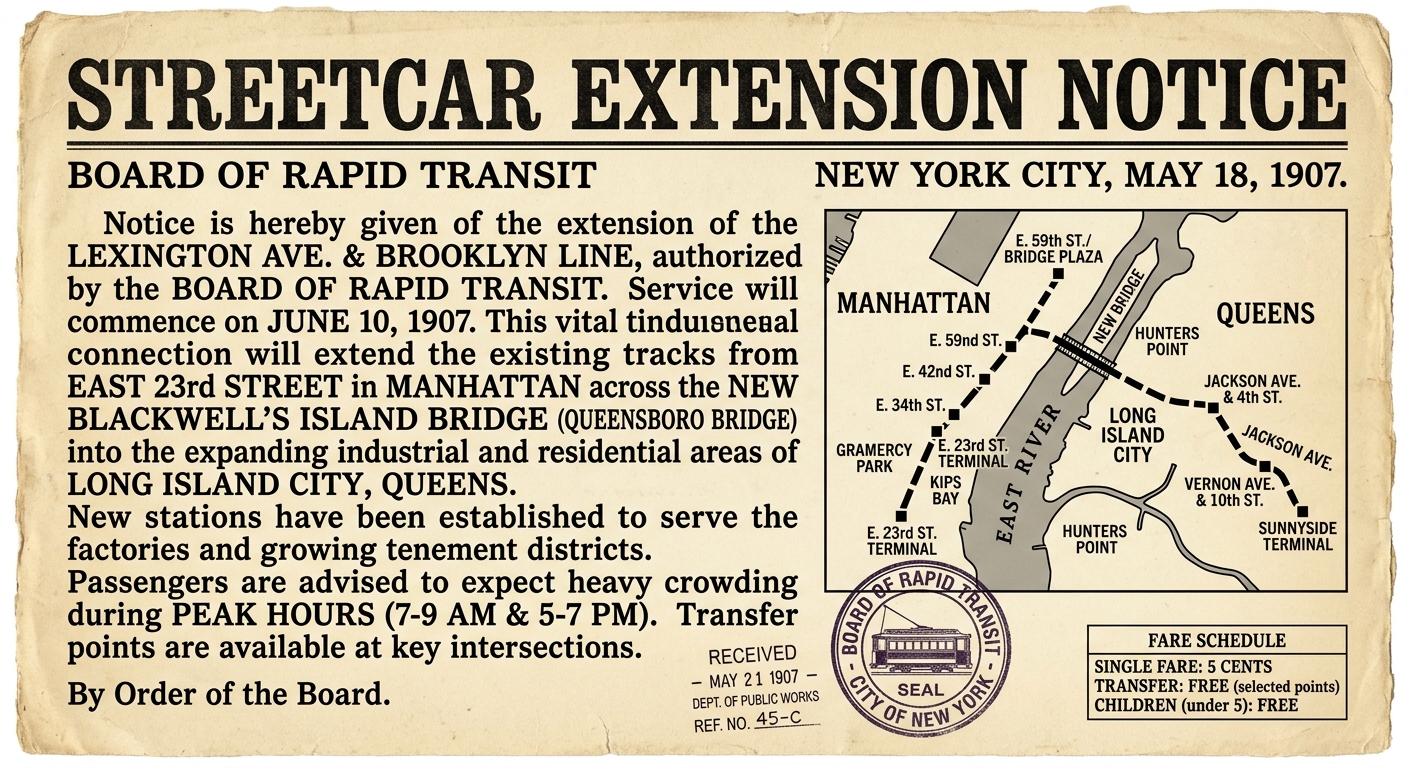
As New York City expanded in the early 1900s, new transit lines connected crowded tenement districts with factories and new housing areas. Faster travel changed where people lived and worked, and it helped neighborhoods grow around stations. City leaders debated how routes should serve dense communities.

Asemmisa {{asɛmmisaAhyɛnsode}}
16.

Based on the map inset and route description, what is the most likely geographic reason the notice highlights a river crossing or bridge?

Asemmisa {{asɛmmisaAhyɛnsode}}
17.

Which conclusion is best supported by the document about how transportation technology shaped where people lived and worked in New York City?

Asemmisa {{asɛmmisaAhyɛnsode}}
18.

Which piece of evidence from the notice best supports the idea that population density influenced planning for the route?

Asemmisa {{asɛmmisaAhyɛnsode}}
19.

Using the map and the reading stimulus, explain how the route could change the relationship between at least two neighborhoods (for example, a tenement district and a factory area).

Use two specific pieces of evidence from the document (map labels, stops, or route notes).

Asemmisa {{asɛmmisaAhyɛnsode}}
20.

Explain why adding transit stops near both housing and workplaces mattered in an industrial-era city like New York.

Use one piece of evidence from the reading stimulus and one from the notice (text or map).

Read the historical document and the short excerpt in the left panel. Then answer the questions that follow using evidence from the document.

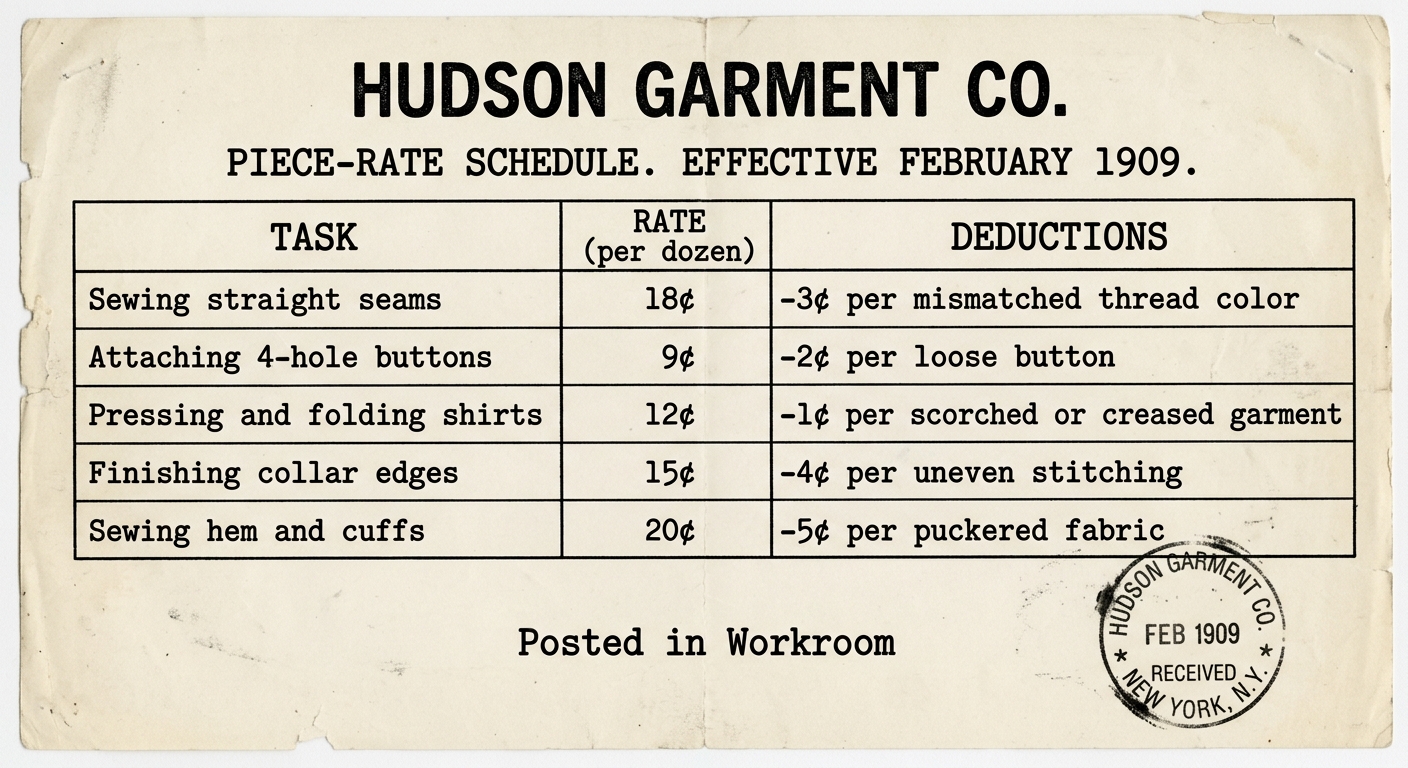
In the early 1900s, New York City factories hired large numbers of workers, including many recent migrants and immigrants. Some workshops paid by “piece rate,” meaning workers earned money for each unit completed. Pay schedules and deductions shaped family budgets and encouraged faster production.

A clear, high-contrast 1909 piece-rate schedule notice from a New York City garment workshop showing a table of tasks, pay rates per dozen, and deductions.

Asemmisa {{asɛmmisaAhyɛnsode}}
21.

Which statement best explains how the pay system described in the document could affect workers’ behavior during a busy week?

Asemmisa {{asɛmmisaAhyɛnsode}}
22.

Which piece of evidence from the document best supports the idea that employers used incentives and penalties to influence productivity and quality?

Asemmisa {{asɛmmisaAhyɛnsode}}
23.

Based on the reading stimulus and the document, which conclusion best connects industrial work to economic life in urban neighborhoods?

Asemmisa {{asɛmmisaAhyɛnsode}}
24.

Using evidence from the pay schedule, explain one benefit and one drawback of piece-rate pay for a worker in a crowded urban factory.

Use two specific details from the document (rates, tasks, or deductions).

Asemmisa {{asɛmmisaAhyɛnsode}}
25.

Make one inference about how a pay notice like this could affect the wider urban economy (for example, spending in neighborhood shops or rent payments).

Support your inference with two pieces of evidence from the document and/or reading stimulus.