Twa kɔ nsɛm atitiriw so
Log in
Sign up for FREE
arrow_back
Laabri

8.3a - Expansion and Imperialism: - Practices A through E

star
star
star
star
star
Last updated about 1 month ago
25 Nsɛmmisa
Hyɛ no nsow a efi ɔkyerɛwfo no hɔ:

Use the historical document(s) and the short readings in the left panel to answer the associated questions.

Use the historical document(s) and the short readings in the left panel to answer the associated questions.

Ɛhia
1
8.3.a
DOK.SS.2
Ɛhia
1
8.3.a
DOK.SS.2
Ɛhia
1
8.3.a
DOK.SS.2
Ɛhia
2
8.3.a
DOK.SS.2
Ɛhia
2
8.3.a
DOK.SS.2
Ɛhia
1
8.3.a
DOK.SS.2
Ɛhia
1
8.3.a
DOK.SS.2
Ɛhia
1
8.3.a
DOK.SS.2
Ɛhia
2
8.3.a
DOK.SS.2
Ɛhia
2
8.3.a
DOK.SS.2
Ɛhia
1
8.3.a
DOK.SS.2
Ɛhia
1
8.3.a
DOK.SS.2
Ɛhia
1
8.3.a
DOK.SS.2
Ɛhia
2
8.3.a
DOK.SS.2
Ɛhia
2
8.3.a
DOK.SS.2
Ɛhia
1
8.3.a
DOK.SS.2
Ɛhia
1
8.3.a
DOK.SS.2
Ɛhia
1
8.3.a
DOK.SS.2
Ɛhia
2
8.3.a
DOK.SS.2
Ɛhia
2
8.3.a
DOK.SS.2
Ɛhia
1
8.3.a
DOK.SS.2
Ɛhia
1
8.3.a
DOK.SS.2
Ɛhia
1
8.3.a
DOK.SS.2
Ɛhia
2
8.3.a
DOK.SS.2
Ɛhia
2
8.3.a
DOK.SS.2

Document A (Historical Document)

Read the document image. It is a report written by a U.S. Army officer in 1871 about protecting a railroad survey party. The officer describes rising tensions near a river crossing and warns that new travel routes may increase conflict over land and resources.
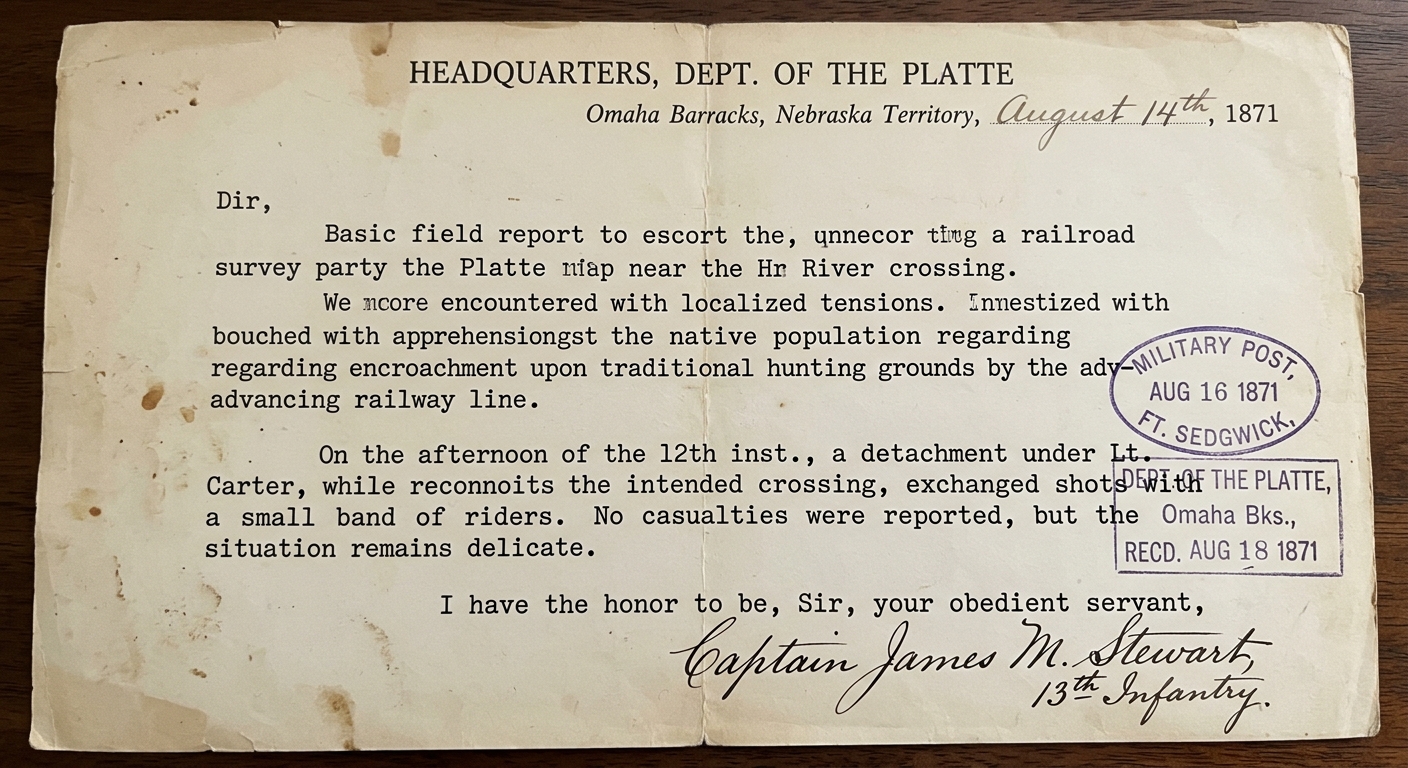
Sepia-toned 1871-style U.S. Army field report describing escorting a railroad survey party and rising conflict near a river crossing.

Asemmisa {{asɛmmisaAhyɛnsode}}
1.

Based on Document A, which claim is BEST supported about why conflicts increased during westward expansion?

Asemmisa {{asɛmmisaAhyɛnsode}}
2.

Which detail from Document A is the strongest evidence that westward expansion was connected to rising conflict?

Asemmisa {{asɛmmisaAhyɛnsode}}
3.

Which limitation of Document A makes it harder to fully understand the conflict described?

Asemmisa {{asɛmmisaAhyɛnsode}}
4.

Using Document A, explain how westward expansion contributed to increased conflict with Native Americans.

Use at least two specific pieces of evidence from the document.

Asemmisa {{asɛmmisaAhyɛnsode}}
5.

Document A is only one source. What important information does it NOT provide about the conflict, and what additional type of source would help a historian understand the event more fully?

Explain.

Document B (Historical Document)

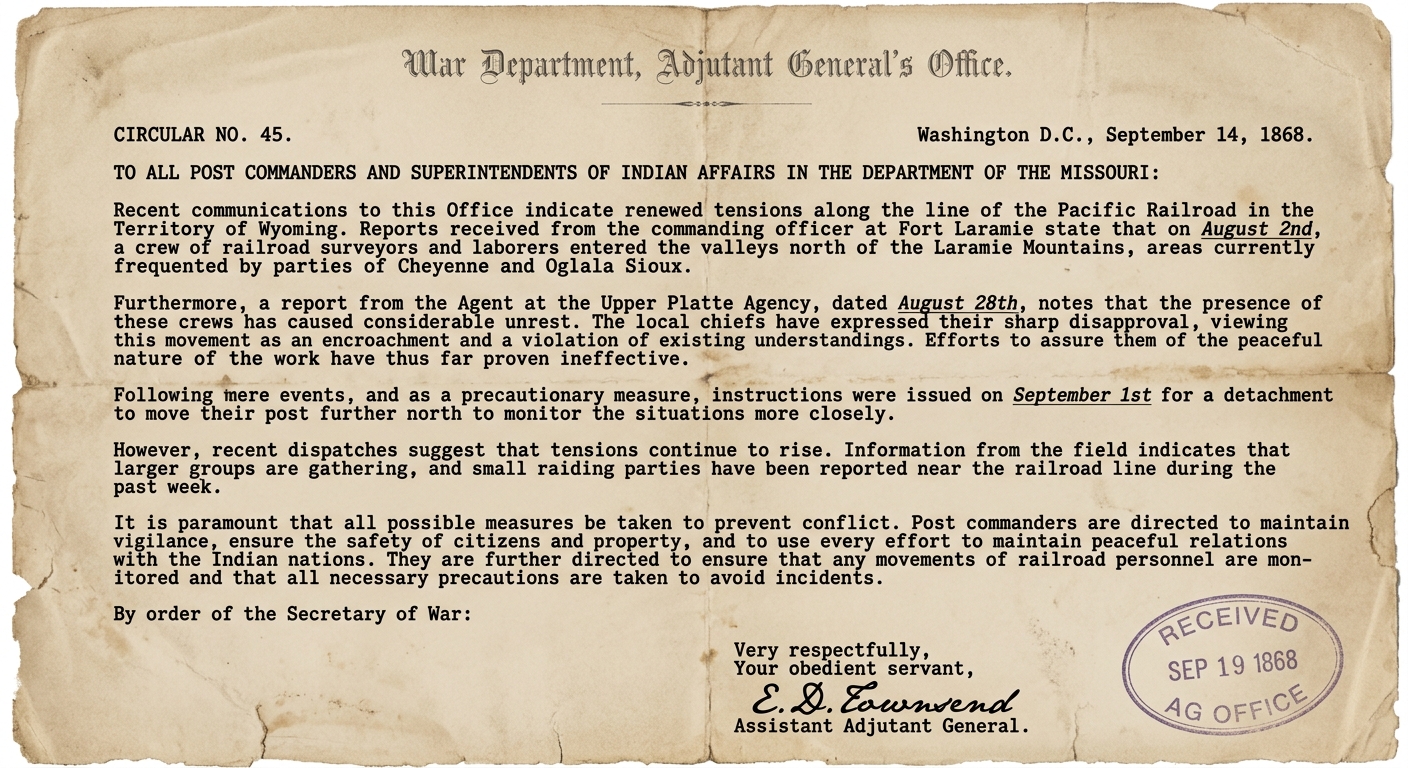
Read the document image. It is an 1868 government circular that lists dated reports about railroad work moving into a valley and orders for troops to relocate. The document’s sequence of dates shows how expansion-related activity built tension and led officials to anticipate violence over land and resources.

Sepia-toned scan of an 1868 U.S. government circular noting dates of events tied to westward expansion and rising conflict.

Asemmisa {{asɛmmisaAhyɛnsode}}
6.

Based on Document B’s sequence of dated entries, which event MOST likely happened first?

Asemmisa {{asɛmmisaAhyɛnsode}}
7.

Which choice best explains how the order of events in Document B supports the idea that westward expansion increased conflict?

Asemmisa {{asɛmmisaAhyɛnsode}}
8.

Which limitation makes it harder to use Document B alone to build an accurate timeline of the conflict?

Asemmisa {{asɛmmisaAhyɛnsode}}
9.

Using Document B, write a brief chronological narrative (in order) explaining how the events listed contributed to rising conflict.

Use at least two dated details as evidence.

Asemmisa {{asɛmmisaAhyɛnsode}}
10.

Document B suggests a sequence of events, but it may not show the full timeline.

Identify one missing piece of chronological information and name one additional source that could help confirm the order of events.

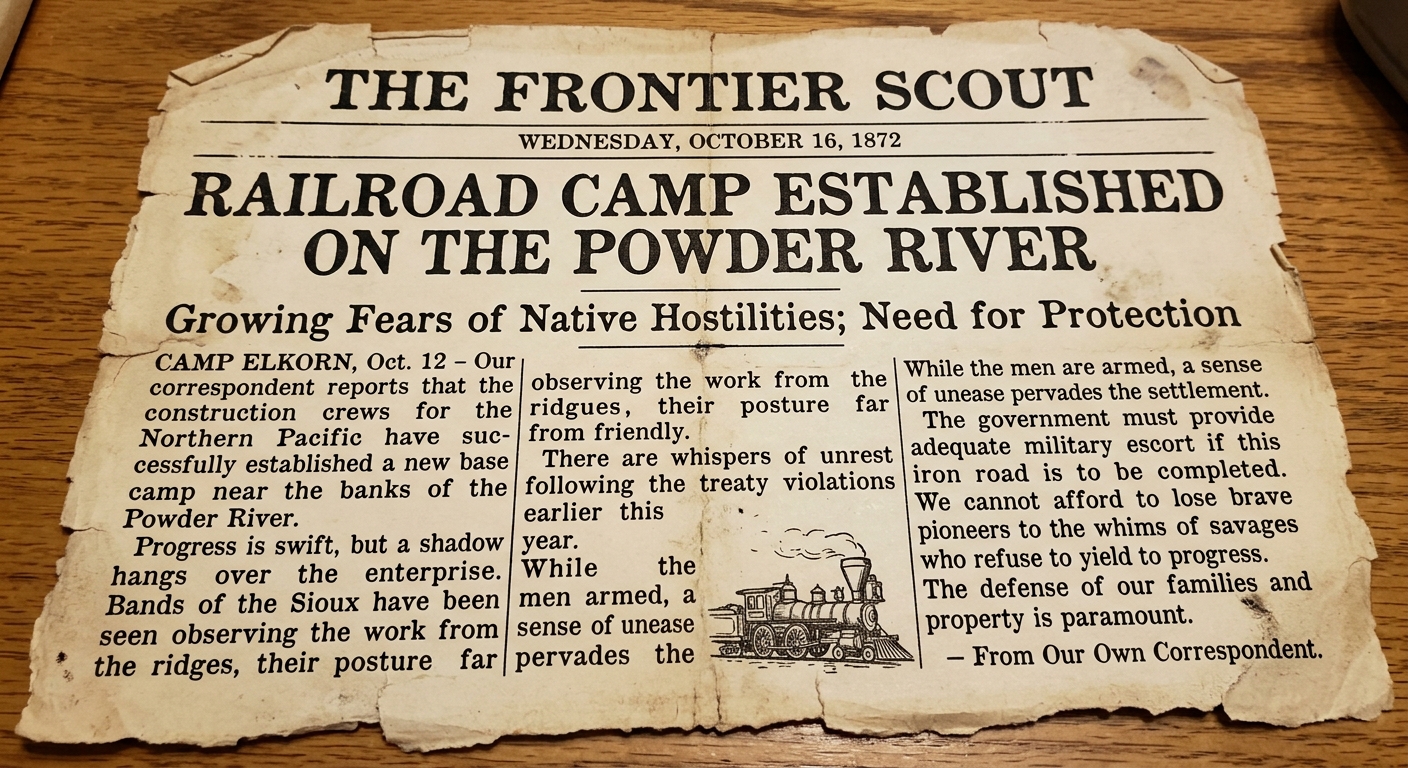
Document C (Historical Document)

Read the document image. It is an 1872 newspaper editorial reacting to new railroad work near a settlement. The author argues that the new route will bring growth but also describes rising fear of conflict. Remember the article reflects one community’s viewpoint and word choice.

Aged 1872 newspaper clipping about a railroad camp and rising tensions with a nearby Native community.

Asemmisa {{asɛmmisaAhyɛnsode}}
11.

Which comparison between Document C and an Army officer’s field report is MOST reasonable based on the type of source?

Asemmisa {{asɛmmisaAhyɛnsode}}
12.

Which detail from Document C would be MOST useful for contextualizing why conflict increased during westward expansion?

Asemmisa {{asɛmmisaAhyɛnsode}}
13.

Which statement is the BEST example of contextualization a historian could add when using Document C as evidence?

Asemmisa {{asɛmmisaAhyɛnsode}}
14.

Compare Document C with one of the government documents in this formative.

How do the author’s purpose and audience shape what each source emphasizes about expansion and conflict?

Use at least one specific example from each type of source.

Asemmisa {{asɛmmisaAhyɛnsode}}
15.

Contextualize Document C by explaining one broader development happening in the West at the time and how that development could help explain the concerns in the article.

Then identify one additional source that would help compare the article’s claims to another perspective.

Document D (Historical Document)

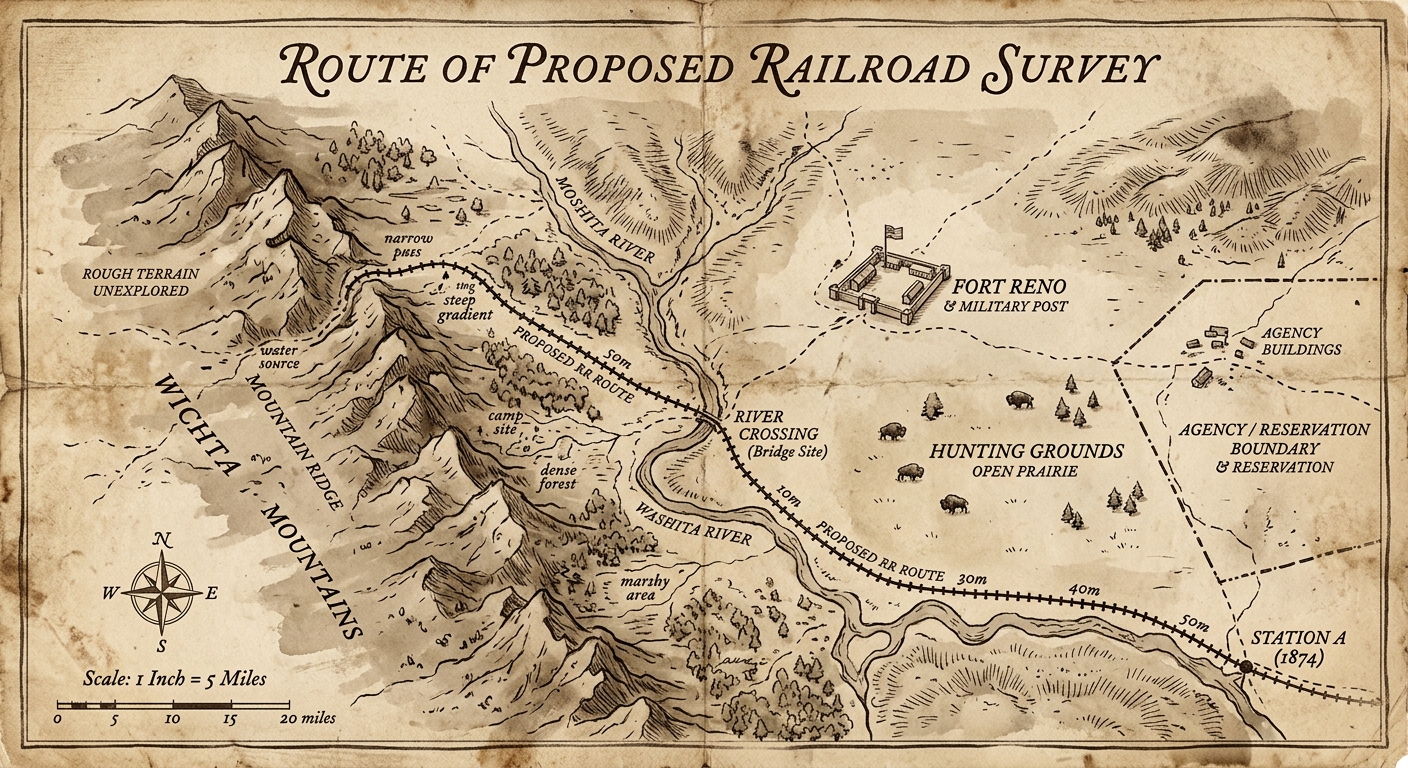
Read the document image. It is an 1870s map created to plan a railroad survey route. The map highlights a river crossing, nearby hunting grounds, and a boundary line. Use the map’s locations and labels to reason about why expansion in this region could increase conflict over land and resources.
Hand-drawn 1870s-style map showing a proposed railroad survey route, a river crossing, a fort, and nearby hunting grounds and boundary lines.

Asemmisa {{asɛmmisaAhyɛnsode}}
16.

Based on Document D, which geographic feature is MOST likely to become a point of conflict as travel and settlement increase?

Asemmisa {{asɛmmisaAhyɛnsode}}
17.

Which inference is BEST supported by the map’s placement of the survey route relative to the boundary line and hunting grounds?

Asemmisa {{asɛmmisaAhyɛnsode}}
18.

Which map detail would be MOST useful to a historian trying to explain why this location mattered strategically during westward expansion?

Asemmisa {{asɛmmisaAhyɛnsode}}
19.

Using Document D, explain how the geography shown on the map could contribute to conflict during westward expansion.

Use at least two specific map details as evidence.

Asemmisa {{asɛmmisaAhyɛnsode}}
20.

A map can show locations but may leave out key context.

Identify one important geographic or human factor missing from Document D that would help explain conflict, and name one additional type of source that could provide that information.

Document E (Historical Document)

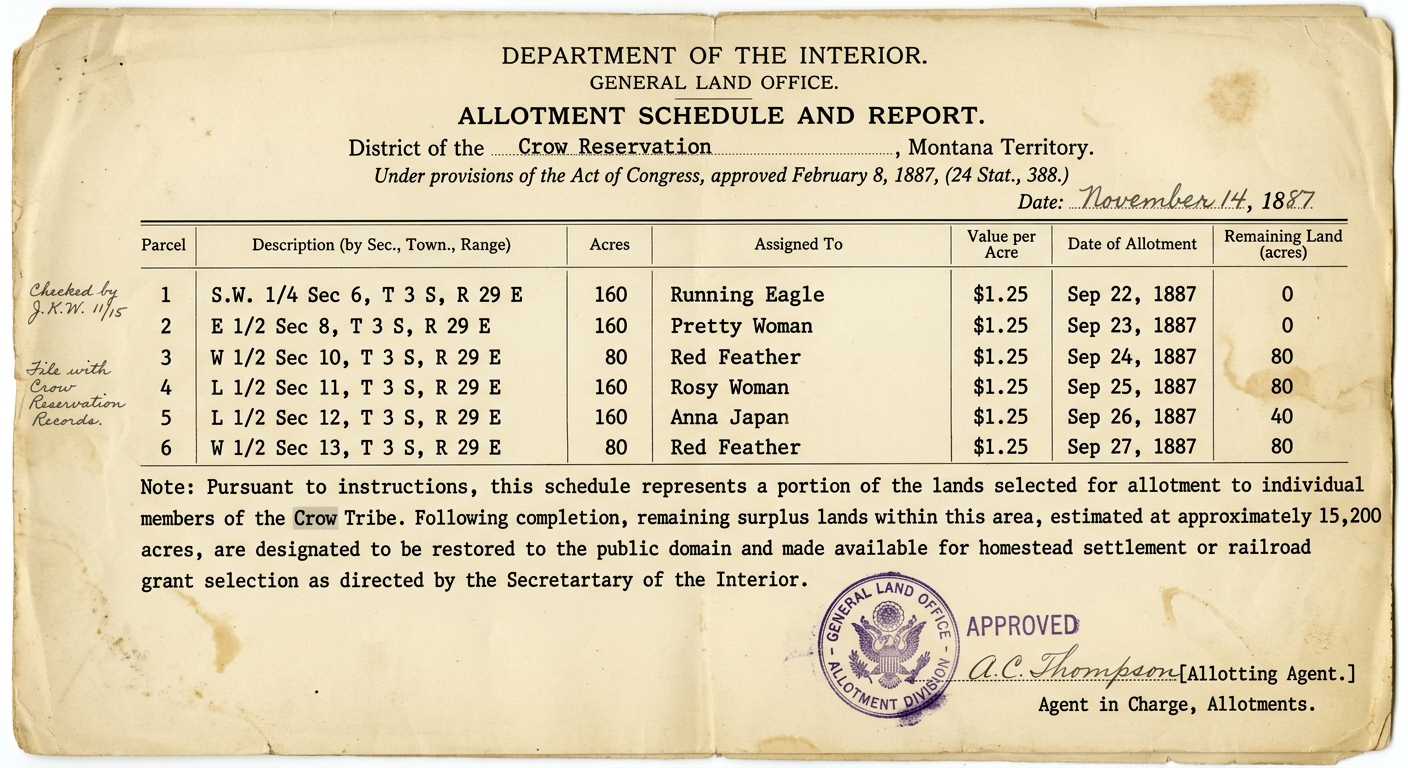
Read the document image. It is an 1887 allotment schedule connected to federal land policy. The table shows parcels assigned to individuals and the acres listed as “surplus” land. Use the document to reason about how land became an economic resource and how this could increase conflict during westward expansion.

1887-style U.S. allotment schedule showing land parcels, acres, and remaining surplus land slated for settlement.

Asemmisa {{asɛmmisaAhyɛnsode}}
21.

Which statement BEST explains how Document E shows land being treated as an economic resource during westward expansion?

Asemmisa {{asɛmmisaAhyɛnsode}}
22.

Which inference about incentives is MOST supported by Document E’s listing of “surplus” land?

Asemmisa {{asɛmmisaAhyɛnsode}}
23.

Which additional piece of information would be MOST helpful for evaluating the economic impact of the policy shown in Document E?

Asemmisa {{asɛmmisaAhyɛnsode}}
24.

Using Document E, explain how this land policy could change economic opportunities for settlers and Native Americans.

Use at least two specific details from the document as evidence.

Asemmisa {{asɛmmisaAhyɛnsode}}
25.

Document E provides economic data (acres and parcels) but not the full story.

Identify one economic outcome the document does NOT show and name one additional source that could help measure that outcome.