Twa kɔ nsɛm atitiriw so
Log in
Sign up for FREE
arrow_back
Laabri

8.3b - Expansion and Imperialism: - Practices A through E

star
star
star
star
star
Last updated about 1 month ago
25 Nsɛmmisa
Hyɛ no nsow a efi ɔkyerɛwfo no hɔ:

Use the historical document(s) and the short readings in the left panel to answer the associated questions.

Use the historical document(s) and the short readings in the left panel to answer the associated questions.

8.3.b
DOK.SS.2
8.3.b
DOK.SS.2
8.3.b
DOK.SS.2
8.3.b
DOK.SS.2
8.3.b
DOK.SS.2
Ɛhia
1
8.3.b
DOK.SS.2
Ɛhia
1
8.3.b
DOK.SS.2
Ɛhia
1
8.3.b
DOK.SS.2
Ɛhia
2
8.3.b
DOK.SS.2
Ɛhia
2
8.3.b
DOK.SS.2
Ɛhia
1
8.3.b
DOK.SS.2
Ɛhia
2
8.3.b
DOK.SS.2
Ɛhia
1
8.3.b
DOK.SS.2
Ɛhia
2
8.3.b
DOK.SS.2
Ɛhia
1
8.3.b
DOK.SS.2
Ɛhia
1
8.3.b
DOK.SS.2
Ɛhia
1
8.3.b
DOK.SS.2
Ɛhia
2
8.3.b
DOK.SS.2
Ɛhia
2
8.3.b
DOK.SS.2
Ɛhia
1
8.3.b
DOK.SS.2
Ɛhia
2
8.3.b
DOK.SS.2
Ɛhia
1
8.3.b
DOK.SS.2
Ɛhia
1
8.3.b
DOK.SS.2
Ɛhia
1
8.3.b
DOK.SS.2
Ɛhia
2
8.3.b
DOK.SS.2
Ɛhia
1
8.3.b
DOK.SS.2
Ɛhia
2
8.3.b
DOK.SS.2
Ɛhia
1
8.3.b
DOK.SS.2
Ɛhia
2
8.3.b
DOK.SS.2
Ɛhia
1
8.3.b
DOK.SS.2

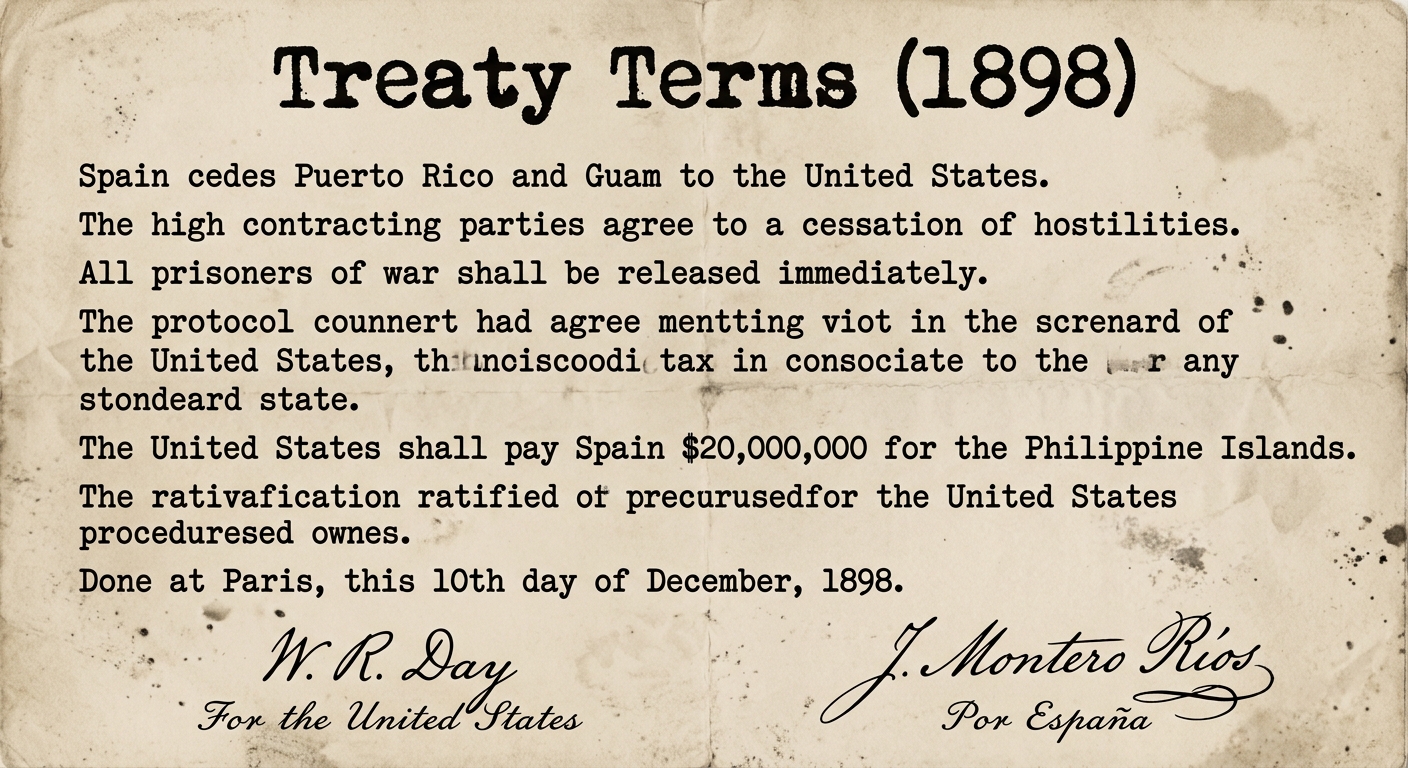
Sepia-toned treaty-style document excerpt dated 1898 stating Spain cedes Puerto Rico and Guam and the United States pays $20,000,000 for the Philippine Islands, with signature lines at the bottom.

After the Spanish-American War, peace terms required Spain to give the United States Puerto Rico and Guam. The agreement also required the United States to pay Spain $20 million for the Philippine Islands. These terms show the United States gaining overseas territory and influence.

Source: Treaty terms summary (modeled on the Treaty of Paris, 1898).
Asemmisa {{asɛmmisaAhyɛnsode}}
1.

Which inference is BEST supported by the evidence in the document?

Asemmisa {{asɛmmisaAhyɛnsode}}
2.

Which piece of evidence from the reading stimulus is the STRONGEST support for the claim that the United States increased its overseas influence after the war?

Asemmisa {{asɛmmisaAhyɛnsode}}
3.

Based on the document and reading stimulus, which outcome BEST supports the idea that the Spanish-American War contributed to the rise of the United States as an imperial power?

Asemmisa {{asɛmmisaAhyɛnsode}}
4.

Explain how the peace terms shown in the document support the idea that the Spanish-American War contributed to the rise of the United States as an imperial power.

Use at least TWO specific details as evidence.

Asemmisa {{asɛmmisaAhyɛnsode}}
5.

Using evidence from the document, describe ONE potential benefit and ONE potential criticism of the United States gaining overseas territories after the war.

Support each with a specific detail from the stimulus.

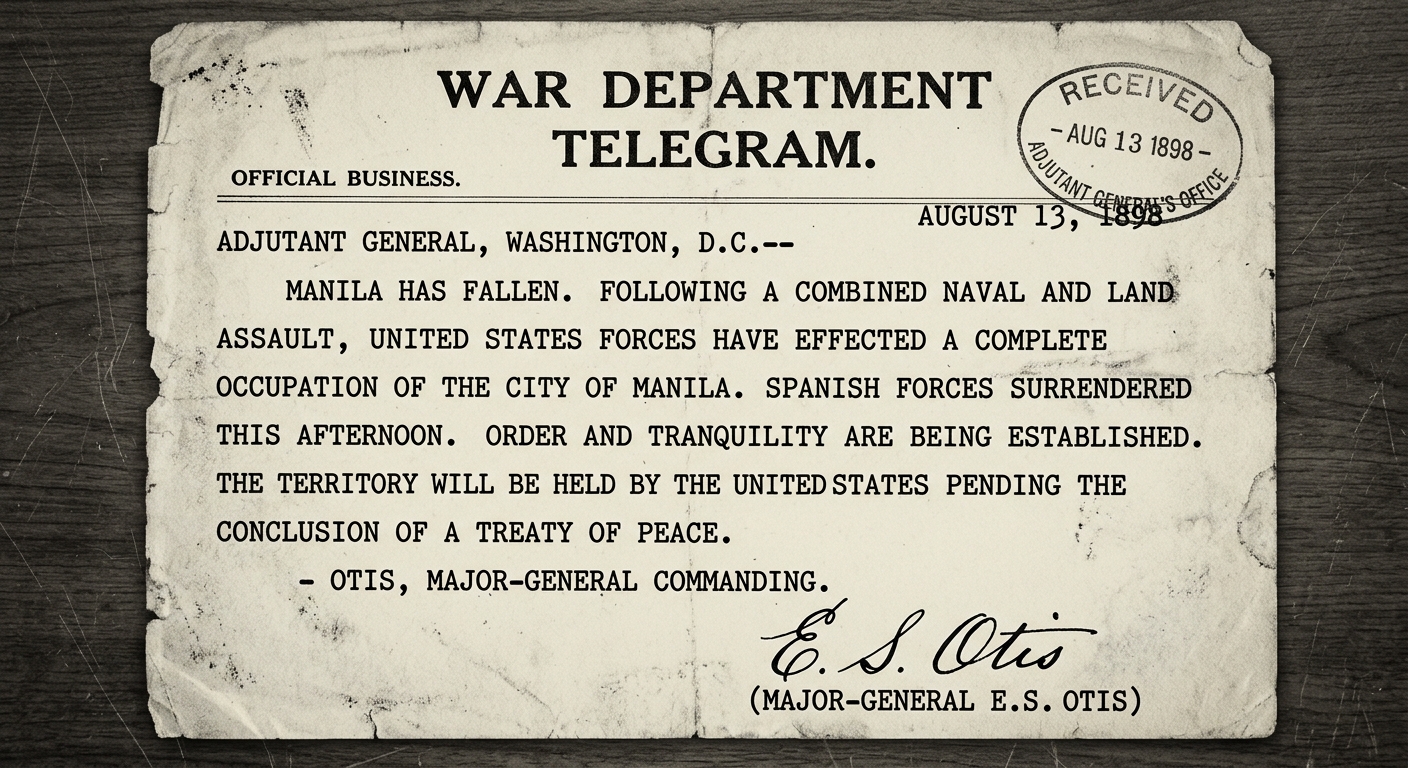
Black-and-white telegram-style document dated August 13, 1898 reporting U.S. control of Manila pending a peace treaty, with a received stamp and signature line.

In August 1898, U.S. officials reported that American forces had taken control of Manila during the Spanish-American War. The message states the city would be held until a peace treaty decided what would happen next. This suggests U.S. involvement continued after fighting ended.

Source: Military telegram summary (modeled on U.S. War Department communications, 1898).

Asemmisa {{asɛmmisaAhyɛnsode}}
6.

Which phrase from the reading stimulus is the STRONGEST evidence that the timeline of events was not finished when the message was written?

Asemmisa {{asɛmmisaAhyɛnsode}}
7.

Using chronological reasoning, describe ONE short-term result and ONE longer-term result that could follow from the event in the telegram.

Support each with evidence from the stimulus.

Asemmisa {{asɛmmisaAhyɛnsode}}
8.

Which inference about U.S. actions AFTER the fighting is BEST supported by the document?

Asemmisa {{asɛmmisaAhyɛnsode}}
9.

Explain how the date and wording of the telegram support the idea that the Spanish-American War led to ongoing U.S. overseas involvement.

Use at least TWO specific details from the stimulus as evidence.

Asemmisa {{asɛmmisaAhyɛnsode}}
10.

Which option places the document’s event in the MOST accurate sequence of events?

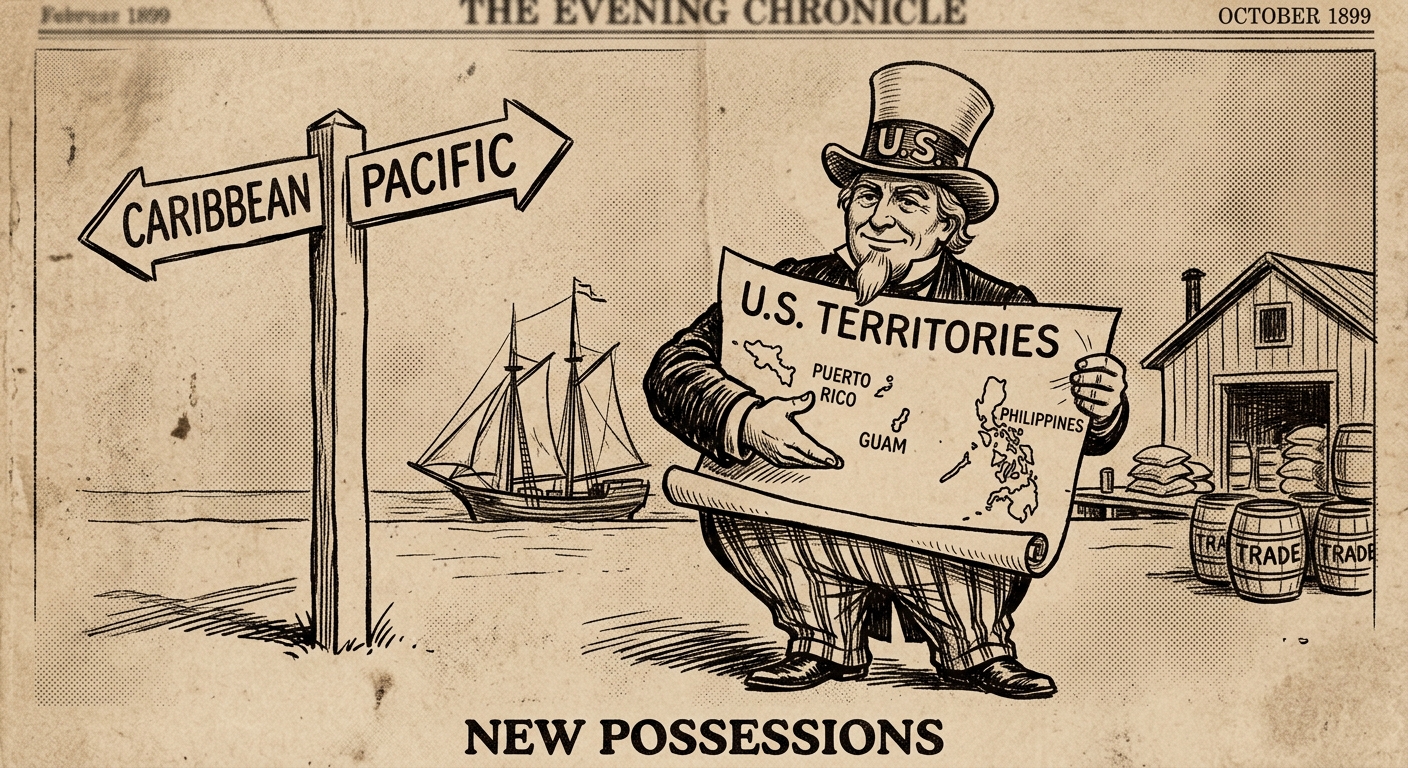
Sepia-toned 1899-style political cartoon labeled “New Possessions” showing the United States holding a map with Puerto Rico, Guam, and the Philippines, with signposts to the Caribbean and Pacific.

A political cartoon published after the Spanish-American War shows the United States holding a map that labels Puerto Rico, Guam, and the Philippines as “new possessions.” The cartoon points toward both the Caribbean and the Pacific, suggesting influence beyond the mainland and a shift toward overseas power.

Source: Political cartoon reconstruction (modeled on U.S. newspaper cartoons, 1899).

Asemmisa {{asɛmmisaAhyɛnsode}}
11.

Which comparison is BEST supported by the cartoon and reading stimulus?

Asemmisa {{asɛmmisaAhyɛnsode}}
12.

Which concept is BEST illustrated by labeling Puerto Rico, Guam, and the Philippines as “new possessions”?

Asemmisa {{asɛmmisaAhyɛnsode}}
13.

Explain how the cartoon’s message supports the claim that the Spanish-American War contributed to the rise of the United States as an imperial power.

Include ONE claim and support it with evidence from the cartoon or reading stimulus.

Asemmisa {{asɛmmisaAhyɛnsode}}
14.

Using evidence from the cartoon and reading stimulus, compare U.S. goals suggested in the cartoon with earlier U.S. expansion focused on the continent.

Use at least TWO specific details from the stimulus as evidence.

Asemmisa {{asɛmmisaAhyɛnsode}}
15.

Which detail from the stimulus BEST supports the idea that U.S. power extended to more than one region after the war?

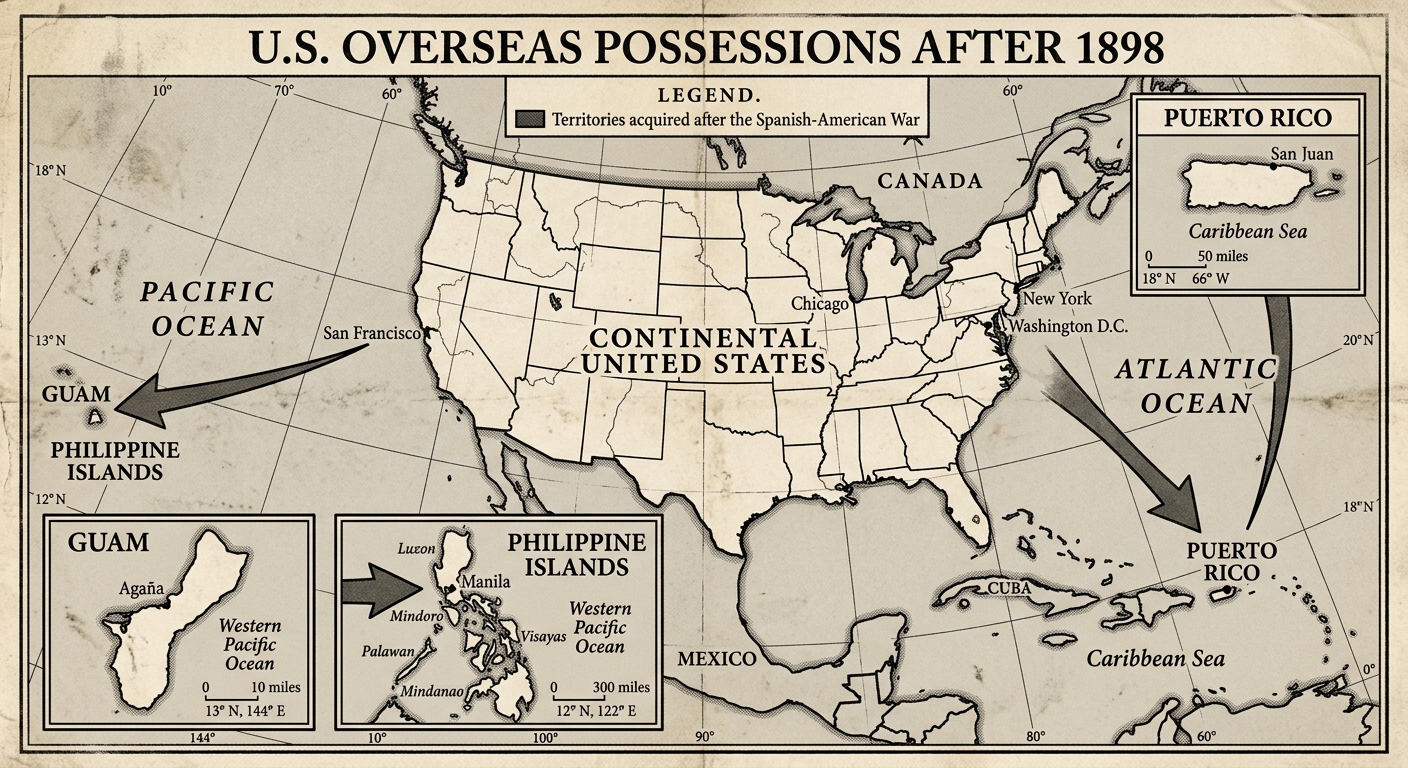
Black-and-white newspaper-style map titled “U.S. Overseas Possessions After 1898” showing insets of Puerto Rico, Guam, and the Philippines with arrows from the United States to the Caribbean and Pacific.

A map published soon after the Spanish-American War highlights U.S. territories outside the mainland. Insets label Puerto Rico in the Caribbean and Guam and the Philippines in the Pacific. Arrows connect these areas to the United States, suggesting the country’s influence stretched across more than one ocean after 1898.

Source: Newspaper map reconstruction (modeled on U.S. maps, early 1900s).

Asemmisa {{asɛmmisaAhyɛnsode}}
16.

Compare the geographic significance of Puerto Rico to the geographic significance of Guam or the Philippines for U.S. power after 1898.

Use evidence from the map or stimulus to support your comparison.

Asemmisa {{asɛmmisaAhyɛnsode}}
17.

Which geographic detail from the stimulus is the STRONGEST evidence that U.S. influence reached more than one region after 1898?

Asemmisa {{asɛmmisaAhyɛnsode}}
18.

Based on the map and reading stimulus, which conclusion BEST explains how the Spanish-American War contributed to the rise of the United States as an imperial power?

Asemmisa {{asɛmmisaAhyɛnsode}}
19.

Which inference about U.S. goals is BEST supported by the locations and arrows shown on the map?

Asemmisa {{asɛmmisaAhyɛnsode}}
20.

Using geographic reasoning, explain how the territories shown on the map could increase U.S. influence after the Spanish-American War.

Use at least TWO specific details from the map or reading stimulus as evidence.

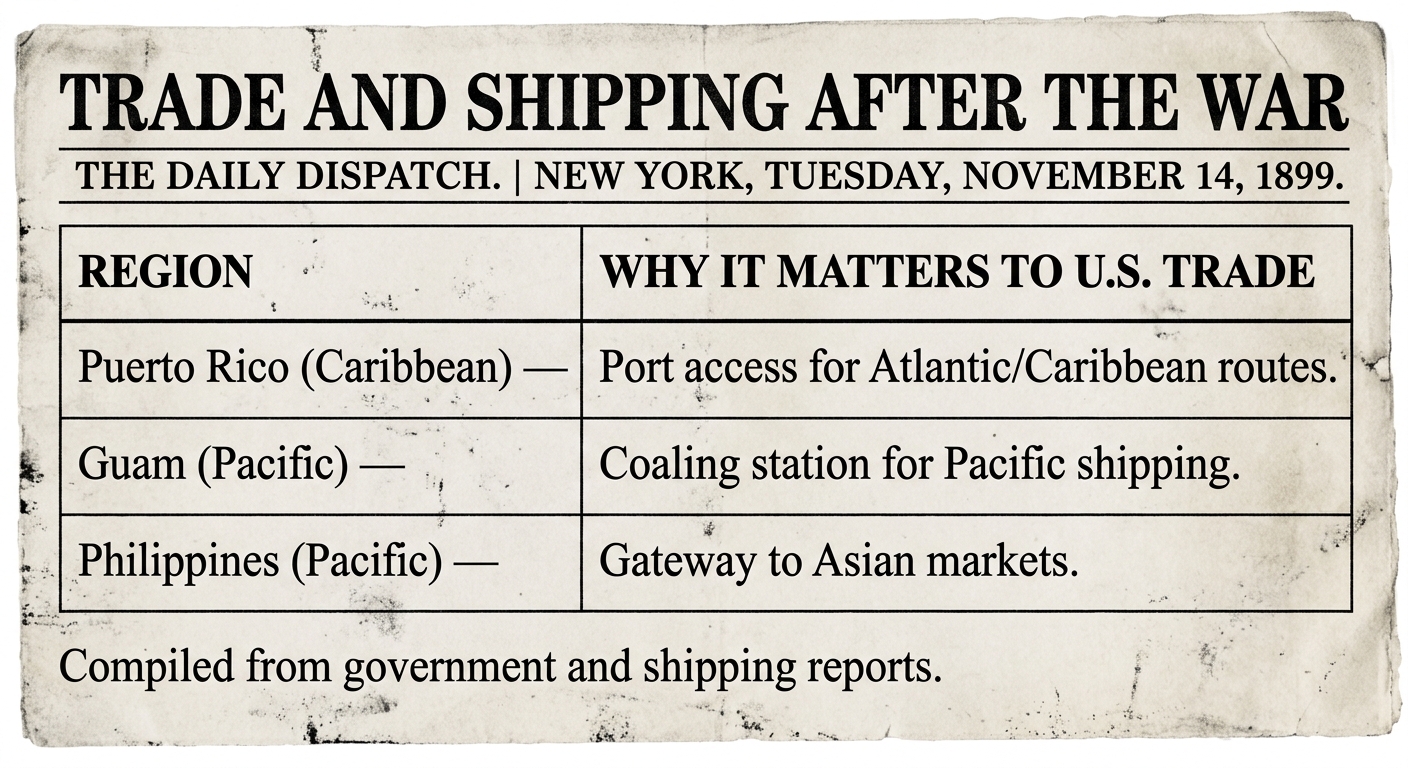
Black-and-white 1899-style newspaper table titled “Trade and Shipping After the War” listing Puerto Rico, Guam, and the Philippines and explaining their trade and shipping importance.

A newspaper-style table from 1899 links new U.S. territories to trade and shipping. It describes Puerto Rico as improving port access for Atlantic routes, Guam as a coaling station for Pacific ships, and the Philippines as a gateway to Asian markets. The document suggests overseas territories supported economic expansion.

Source: Trade table reconstruction (modeled on late-1800s newspaper infographics).

Asemmisa {{asɛmmisaAhyɛnsode}}
21.

Which piece of evidence from the document is the STRONGEST support for the idea that the Spanish-American War contributed to U.S. economic expansion overseas?

Asemmisa {{asɛmmisaAhyɛnsode}}
22.

Describe ONE potential economic benefit and ONE potential economic cost of the United States maintaining overseas territories after 1898.

Support each with a specific detail from the document.

Asemmisa {{asɛmmisaAhyɛnsode}}
23.

Which economic concept is BEST illustrated by Guam being described as a “coaling station for Pacific ships”?

Asemmisa {{asɛmmisaAhyɛnsode}}
24.

Using evidence from the document, explain how gaining overseas territories after the Spanish-American War could change U.S. economic activity.

Use at least TWO specific details from the document as evidence.

Asemmisa {{asɛmmisaAhyɛnsode}}
25.

Which conclusion about U.S. economic goals is BEST supported by the document?