Use the historical document(s) and the short readings in the left panel to answer the associated questions.
Historical Document (Text)
Message to Congress (excerpt), December 1904 (attributed to President Theodore Roosevelt)
“Chronic wrongdoing… in the Western Hemisphere may… require intervention… In such cases, the United States… may be forced… to the exercise of an international police power.”
In 1904, President Theodore Roosevelt argued that ongoing instability or unpaid debts in the Americas could invite European involvement. He claimed the United States might step in to restore order and protect stability, expanding earlier U.S. policy toward Latin America—an idea later called the Roosevelt Corollary.
Based on the excerpt, what is Roosevelt’s main justification for U.S. involvement in Latin America under the Roosevelt Corollary?
Which phrase from the excerpt is the best evidence that the Roosevelt Corollary expanded (went beyond) the Monroe Doctrine?
Which reaction best supports the standard’s idea that U.S. actions under the Roosevelt Corollary led to resentment in Latin America?
The Roosevelt Corollary expanded the earlier U.S. foreign policy known as the ________.
Using evidence from the excerpt and the reading stimulus, explain one way U.S. actions justified by the Roosevelt Corollary could create resentment in a Latin American nation.
Use at least two specific ideas or phrases from the sources as evidence.
Historical Document:
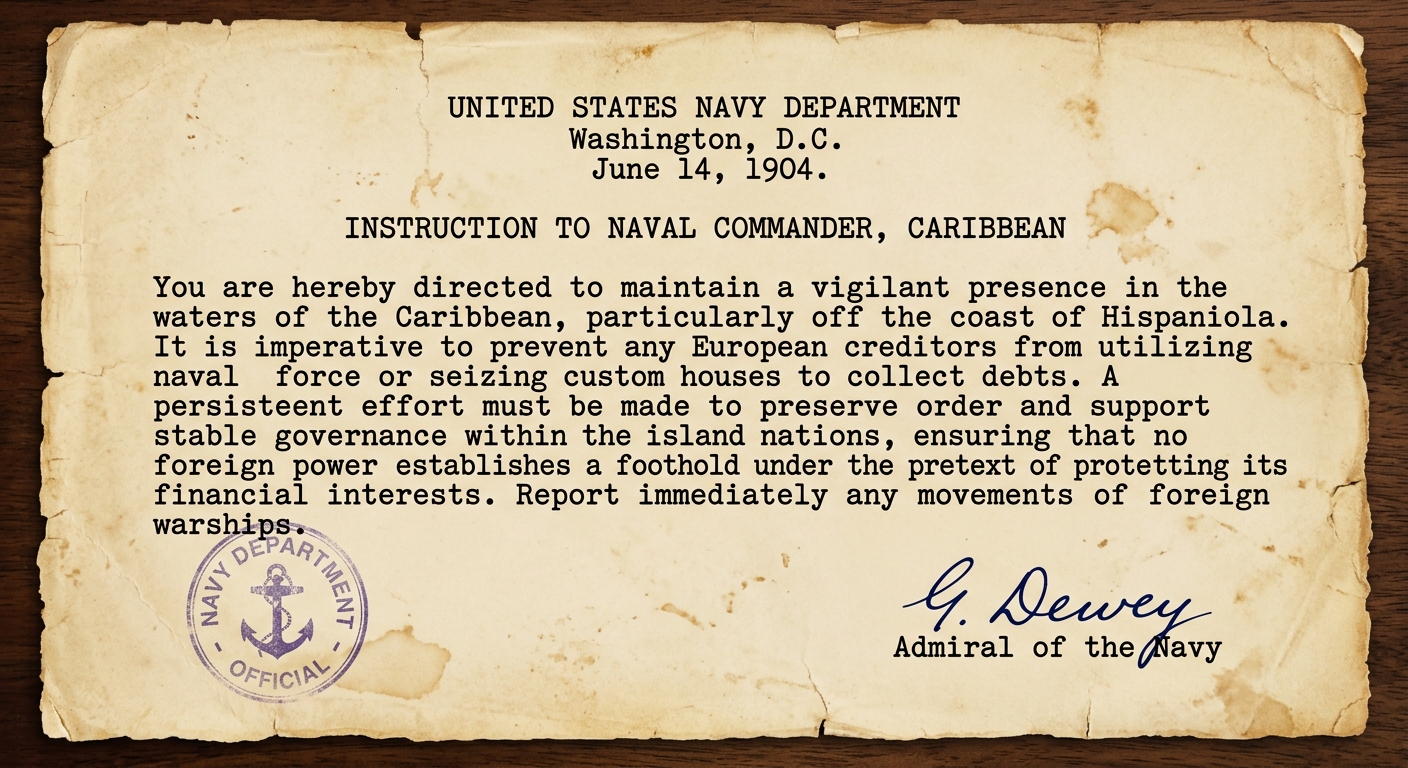
In June 1904, U.S. officials issued instructions in the Caribbean as Roosevelt’s new policy took shape. After the Monroe Doctrine (1823) warned Europe to stay out, the Roosevelt Corollary (1904) claimed the United States could intervene to keep order and block European action over debts.
Which event came FIRST in the timeline described in the reading stimulus?
According to the reading stimulus, which development happened AFTER the Roosevelt Corollary (1904) but still in 1904?
Which sequence best matches the chronology described in the reading stimulus?
In what year was the Monroe Doctrine announced, according to the reading stimulus?
Using evidence from the reading stimulus and the document image, explain how the timeline (1823 → 1904) shows a change in U.S. policy toward Latin America.
Include at least two time markers or dates from the sources as evidence.
Historical Document: Political Cartoon

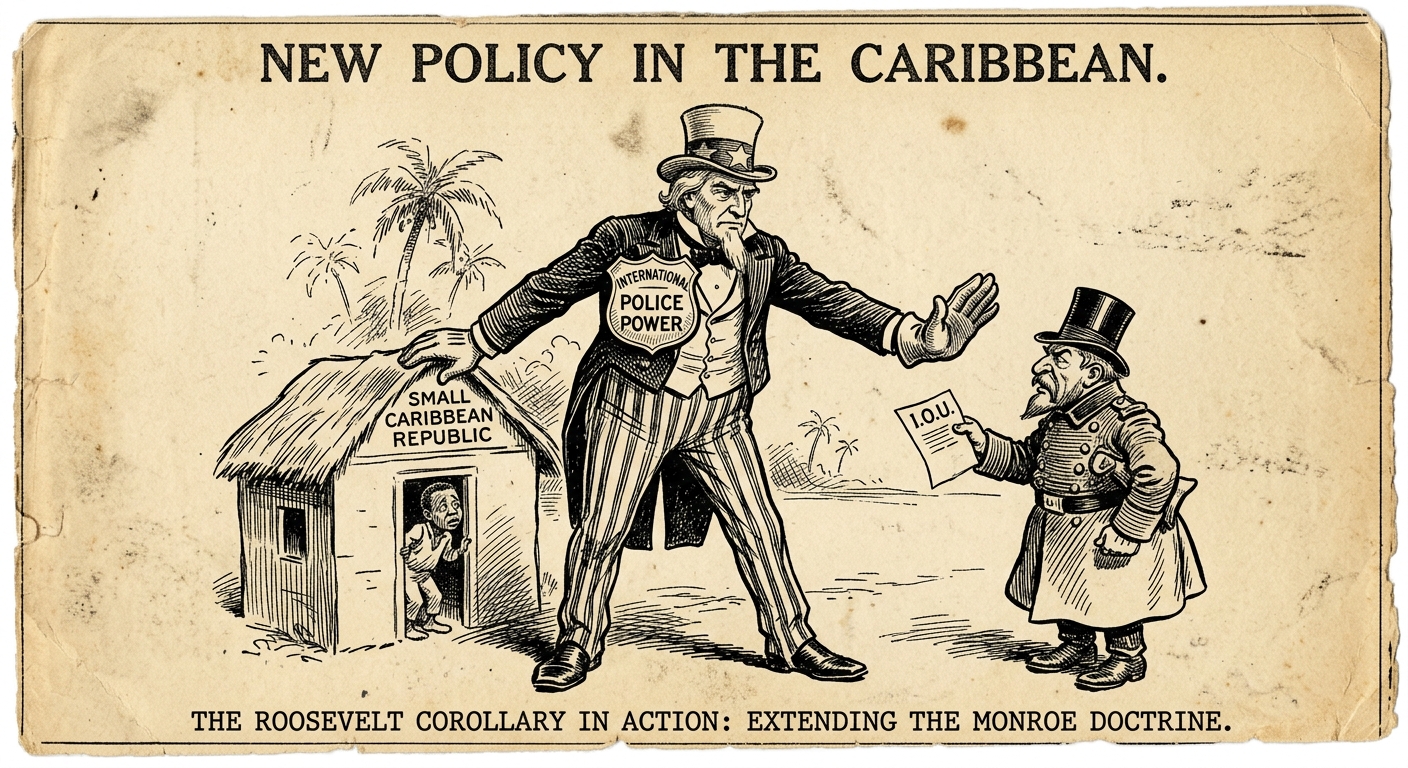
This 1904 political cartoon contrasts two U.S. policies toward Latin America. The Monroe Doctrine (1823) warned European powers not to interfere in the Americas. The Roosevelt Corollary (1904) added that the United States could intervene to keep order and prevent European debt collection by force.
Which statement best compares the Monroe Doctrine and the Roosevelt Corollary, based on the reading stimulus and the cartoon?
In the cartoon’s context, why might U.S. leaders have connected unpaid debts to European intervention in the Caribbean?
Which detail in the cartoon most strongly supports the idea that the Roosevelt Corollary increased U.S. involvement in Latin America?
According to the reading stimulus, which earlier policy did the Roosevelt Corollary build on?
Use the cartoon and the reading stimulus to explain how the Roosevelt Corollary changed the context of U.S.–Latin American relations compared with the Monroe Doctrine.
Include one similarity and one difference, supported by evidence from the sources.
Historical Document: Map

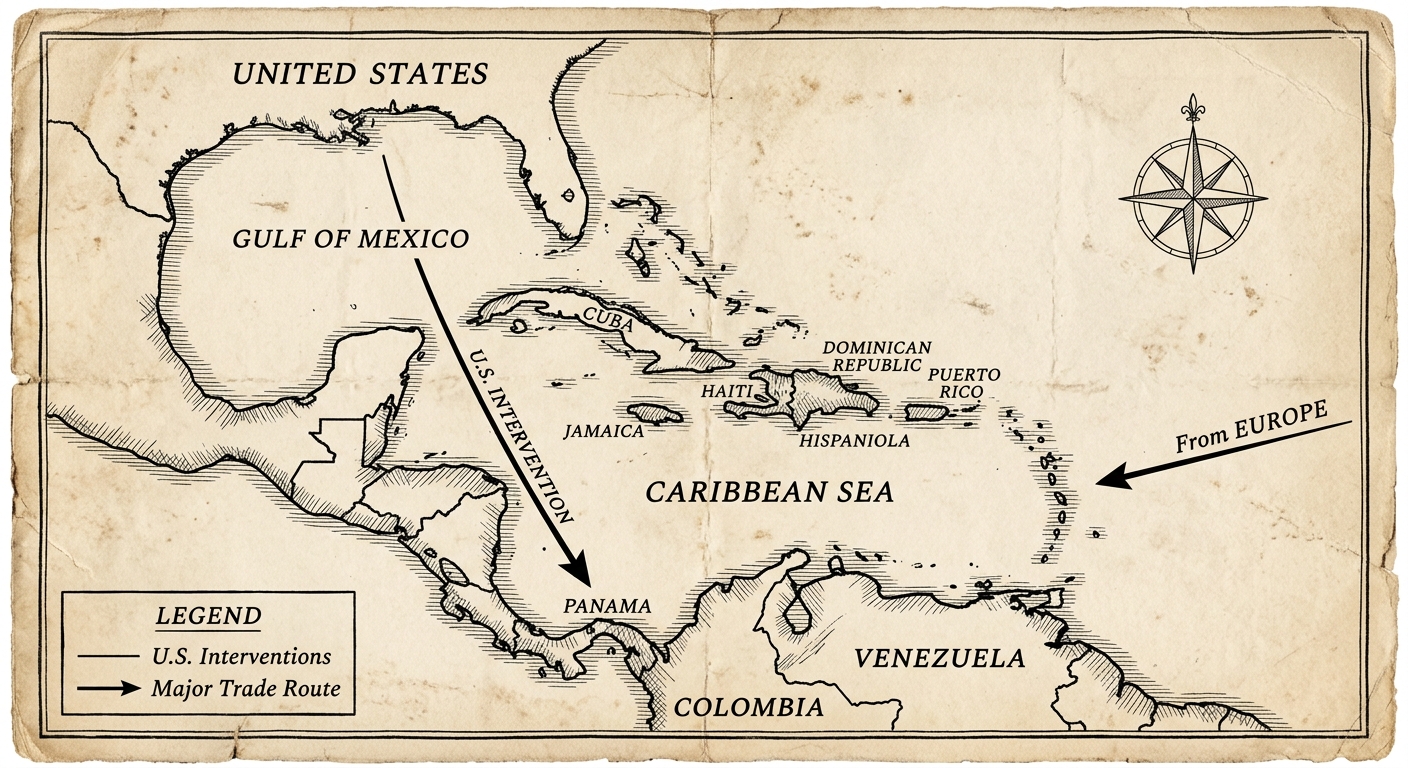
This map highlights the Caribbean and Central America in the early 1900s. U.S. leaders viewed European activity near the Caribbean sea-lanes as a threat to regional stability. Under the Roosevelt Corollary, the United States claimed it could intervene in nearby nations to prevent European involvement.
Based on the map and reading stimulus, which location is MOST directly connected to the standard’s example of U.S. actions under the Roosevelt Corollary (the building of the Panama Canal)?
Which geographic feature best helps explain why U.S. leaders focused on the Caribbean region in the reading stimulus?
Which inference about resentment in Latin America is best supported by the map’s arrows and the reading stimulus?
Name one region shown on the map where the United States claimed it might intervene under the Roosevelt Corollary.
Use evidence from the map and the reading stimulus to explain how geography shaped U.S. actions under the Roosevelt Corollary and why those actions could create resentment.
Include at least two specific place names or map features as evidence.
Historical Document: Financial Record

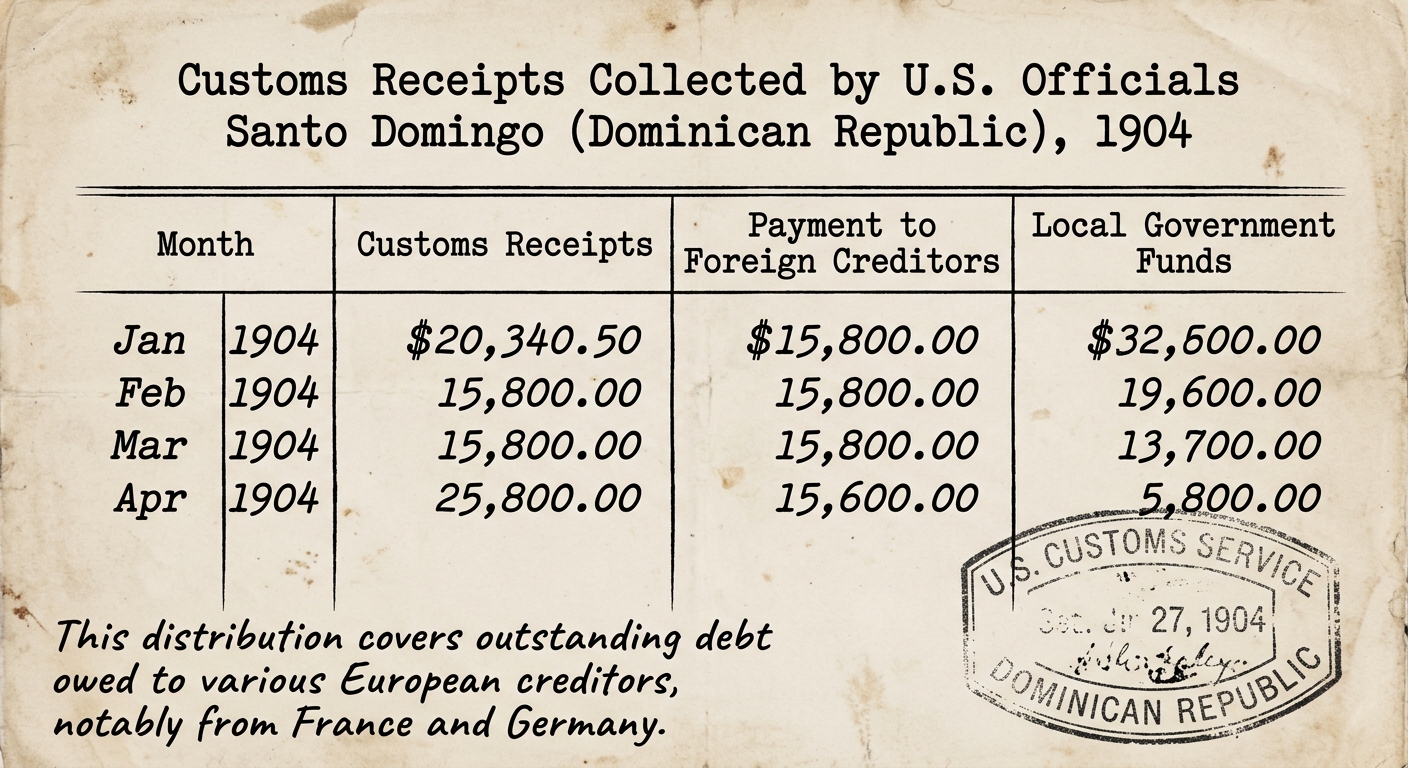
In 1904, U.S. leaders argued that unpaid debts in Latin America could invite European intervention. Under the Roosevelt Corollary, the United States claimed it could help manage stability—including financial issues like customs revenue and debt payments. Critics in the region sometimes saw these actions as economic control.
Which economic issue mentioned in the reading stimulus is presented as a reason European powers might intervene?
Based on the document’s table, which statement best describes how customs receipts are being used?
Which inference best explains why control over customs revenue could create resentment in a Latin American nation?
In the document, the money collected at ports and borders is called ________ revenue.
Using evidence from the reading stimulus and the financial record, explain how an economic problem (debt) could be used to justify U.S. involvement under the Roosevelt Corollary and why this might lead to resentment.
Use at least two specific details from the sources as evidence.