Historical Document:
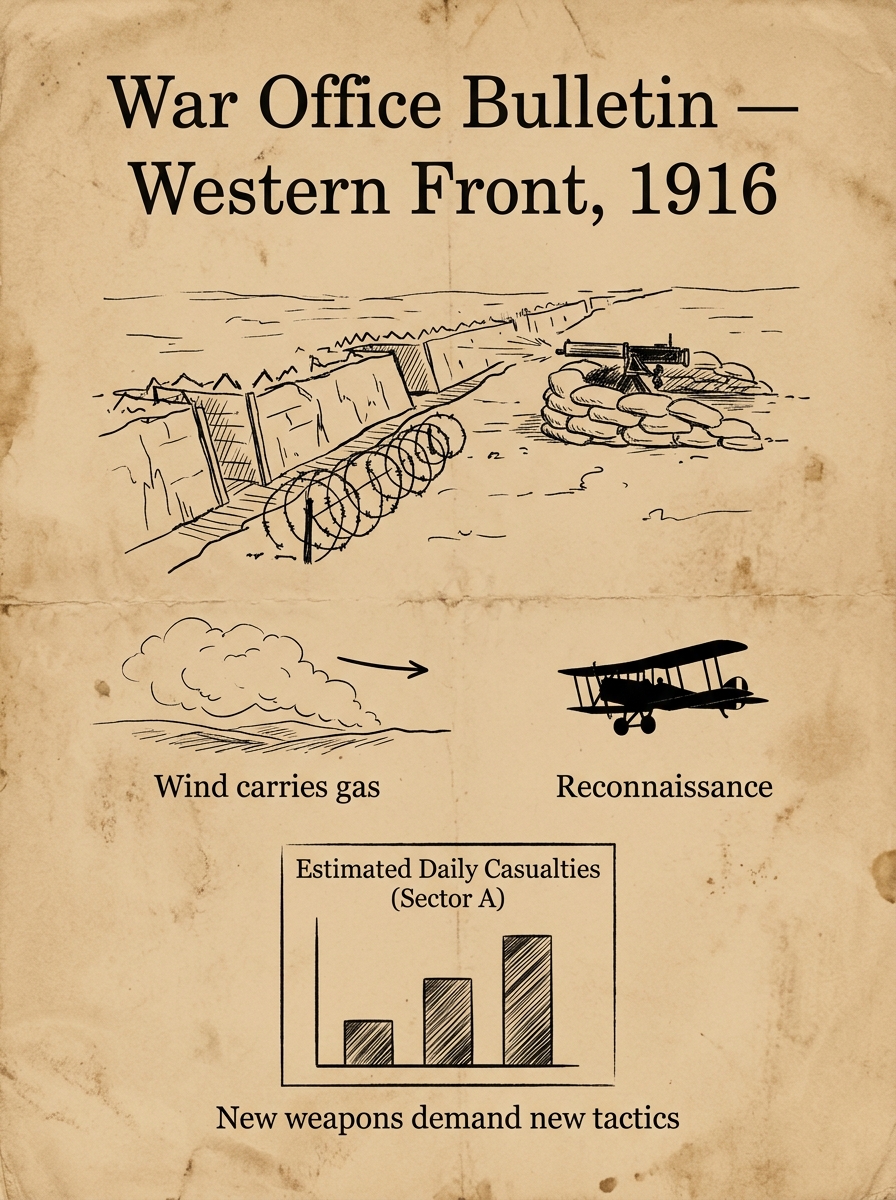
A military bulletin dated 1916 summarizes new weapons on the Western Front. Study the trench sketch, the gas diagram, the aircraft note, and the casualty chart. Use details from the document as evidence to answer the questions.
Use the historical document(s) and the short readings in the left panel to answer the associated questions.
Use the historical document(s) and the short readings in the left panel to answer the associated questions.
Historical Document:
A military bulletin dated 1916 summarizes new weapons on the Western Front. Study the trench sketch, the gas diagram, the aircraft note, and the casualty chart. Use details from the document as evidence to answer the questions.
Based on the document, which technology is most directly supported as strengthening defensive positions and contributing to stalemate on the Western Front?
Which detail from the document is the strongest evidence that new military technologies increased casualties?
What is the most likely purpose of this 1916 bulletin?
Using evidence from the document, explain how TWO new military technologies changed military strategy during World War I.
Using evidence from the document, explain one cause-and-effect chain that links new technology to higher casualties in World War I.
Historical Document:
A field intelligence summary (1917) reviews key developments from 1914–1917. Use the dated timeline and casualty chart to identify the order in which technologies spread and how battlefield conditions changed over time. Cite specific years or details as evidence.
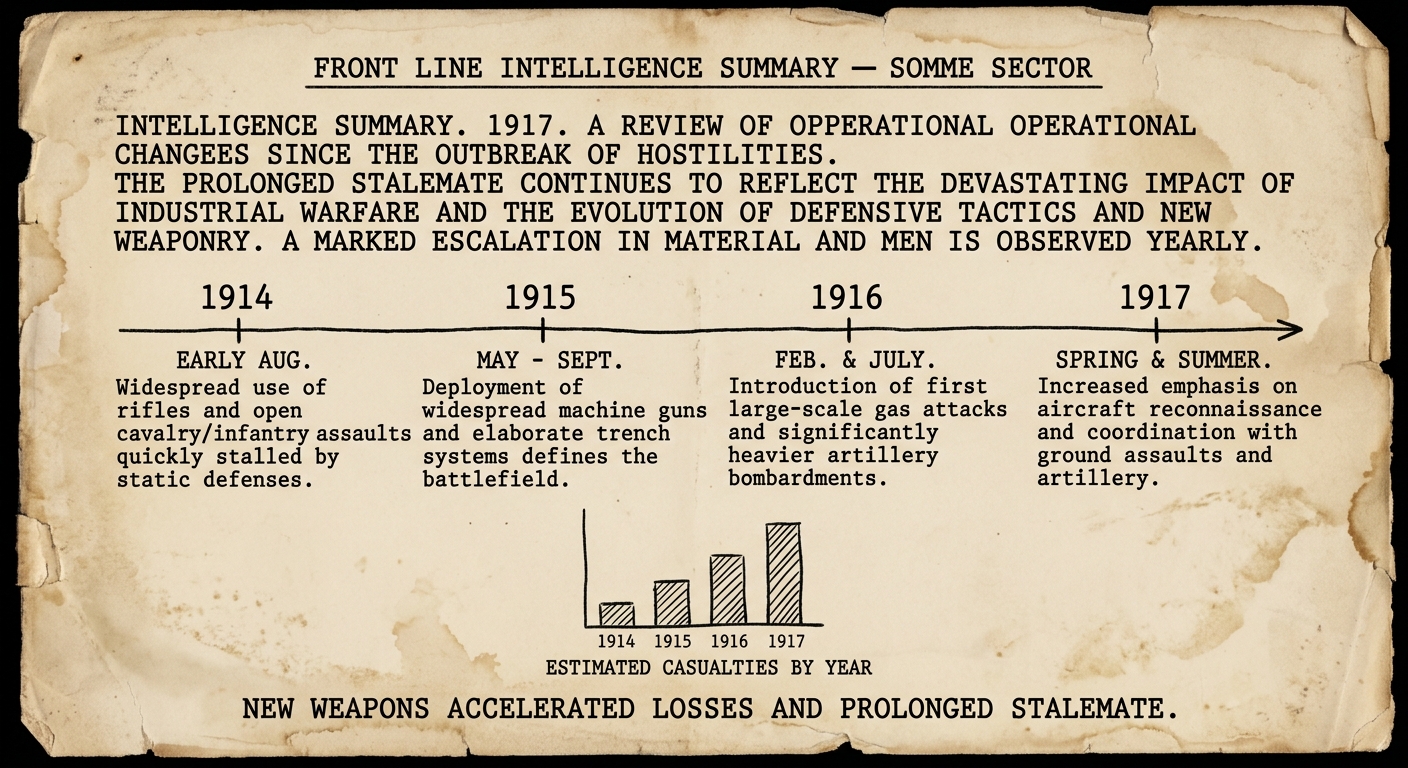
According to the dated timeline in the document, which development is shown as occurring earliest?
Which time period shows the largest increase in estimated casualties in the chart?
Which statement best connects the document’s timeline to why fighting on the Western Front became a stalemate?
Using evidence from the document’s dated entries, explain how the order of TWO technologies helped shape changes in military strategy from 1914 to 1917.
Using evidence from the timeline and casualty chart, explain one chronological cause-and-effect chain that links new technology to higher casualties in World War I.
Historical Document:
A 1918 after-action brief compares fighting on the Western Front in 1914 and 1917. Use the comparison table and casualty estimates to identify what changed and why. Support your answers with at least TWO specific details from the document.
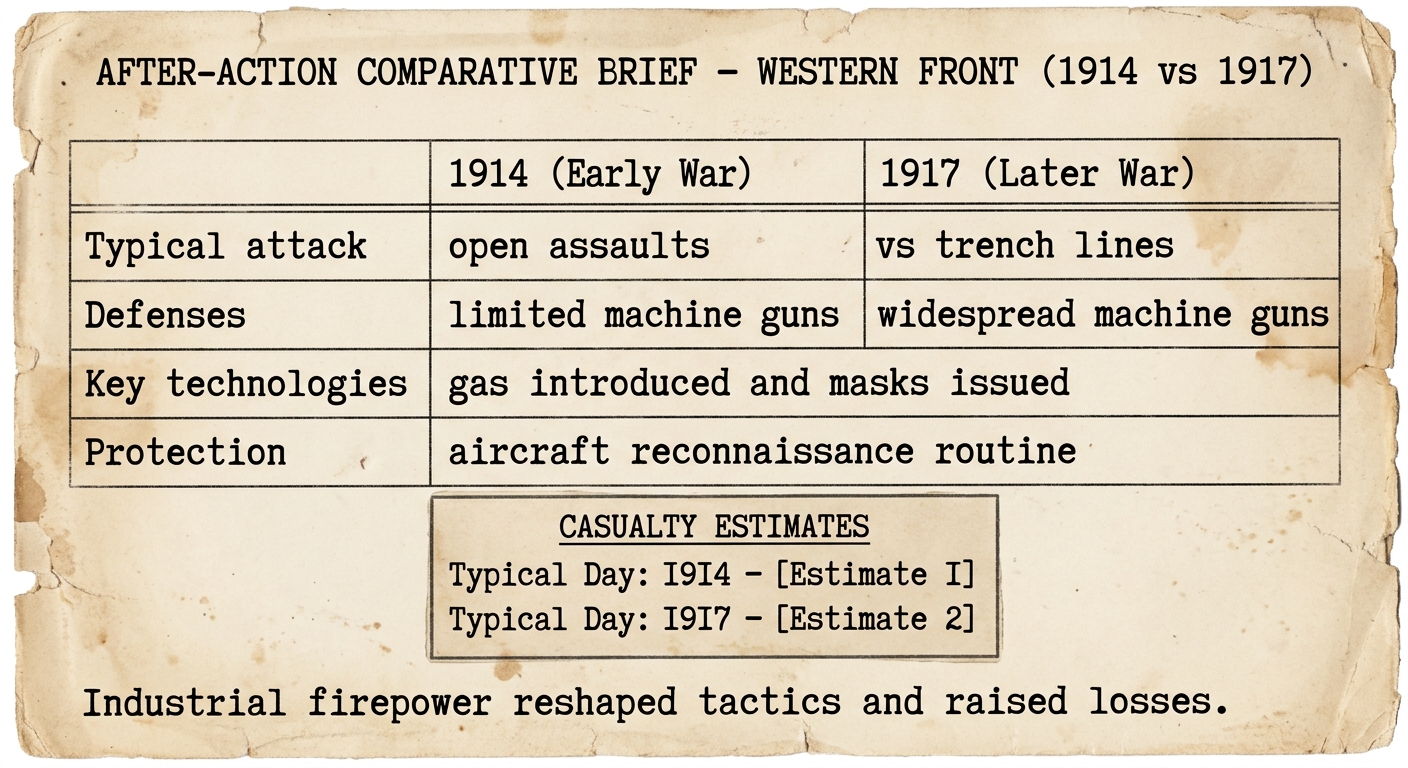
Which comparison is best supported by the document’s 1914 vs 1917 table?
Which contextual statement best explains why these changes mattered for World War I fighting on the Western Front?
Which detail from the document is the strongest evidence that fighting became more deadly as new technologies spread?
Using evidence from the document, compare how TWO technologies affected military strategy or soldiers’ experience in 1914 versus 1917.
Using evidence from the document, explain how the changes shown fit the broader context of World War I and help explain stalemate and high casualties on the Western Front.
Historical Document:
A 1916 staff map and field report shows trench lines, supply routes, artillery range, and prevailing winds on the Western Front. Use map evidence (locations, directions, and sectors) to explain how technology and terrain shaped strategy and contributed to high casualties.
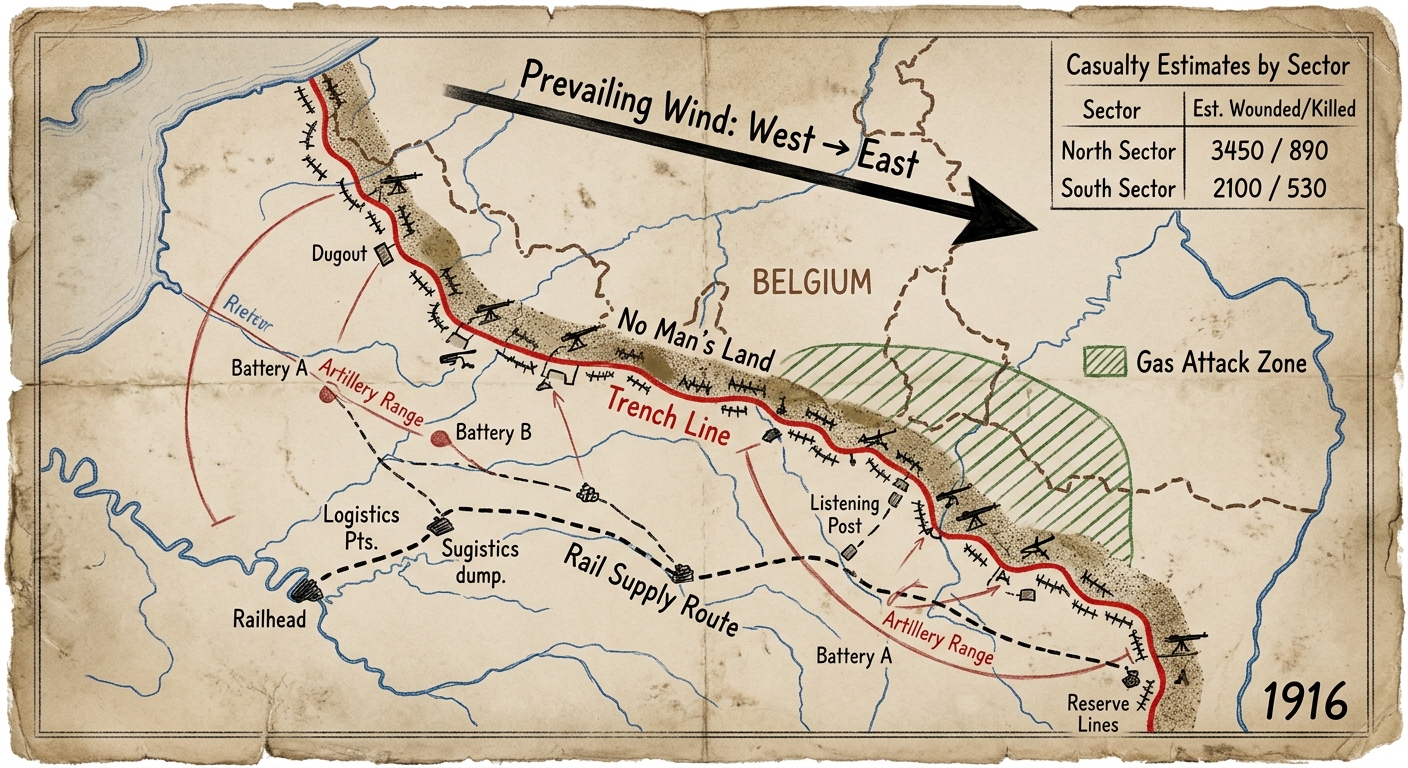
Based on the map’s prevailing wind arrow and the shaded gas attack zone, which area would be most at risk from the gas?
Which inference about casualties is best supported by the document’s sector information?
Which statement best explains how the trench line’s location could contribute to stalemate on the Western Front?
Using evidence from the map and report, explain how ONE military technology and ONE geographic factor (location, direction, or distance) shaped strategy on the Western Front.
Using evidence from the document, explain one geographic cause-and-effect chain that links where fighting occurred to higher casualties during World War I.
Historical Document:
A 1916 Ministry of Munitions ledger compares wartime production and costs in early 1915 and early 1916. Study changes in output and spending for weapons and protective gear. Use the data to explain how economic mobilization supported new technologies and increased casualties.
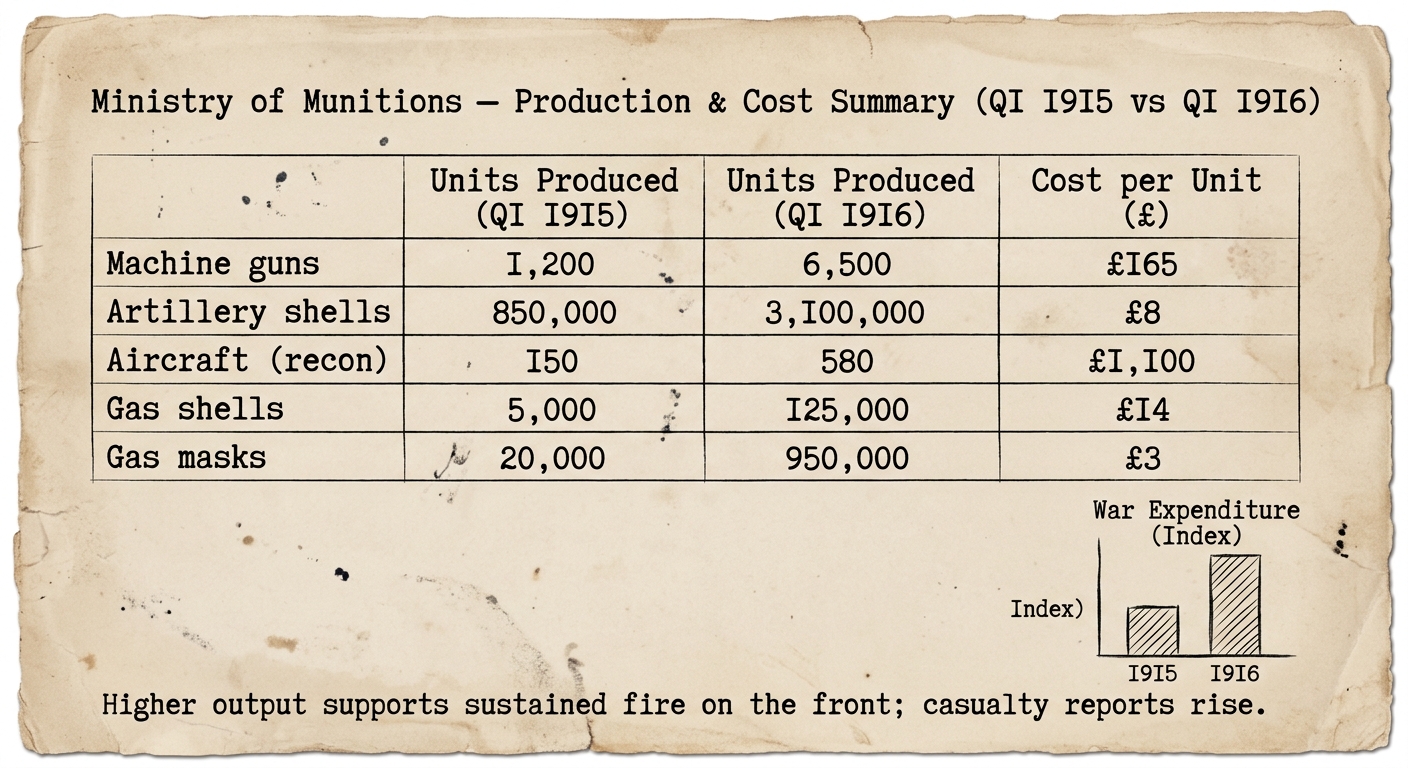
Based on the ledger, which category shows the largest increase in units produced from Q1 1915 to Q1 1916?
Which inference about the wartime economy is best supported by the production and spending information in the document?
Which statement best connects the document’s economic data to why World War I saw unprecedented casualties?
Using evidence from the document, explain how the ledger reflects a wartime economic system (such as government-directed mobilization) and how that supported new military technologies.
Using evidence from the document, explain one economic cause-and-effect chain that links increased production to changes in fighting and higher casualties in World War I.