Use the historical document(s) and the short readings in the left panel to answer the associated questions.

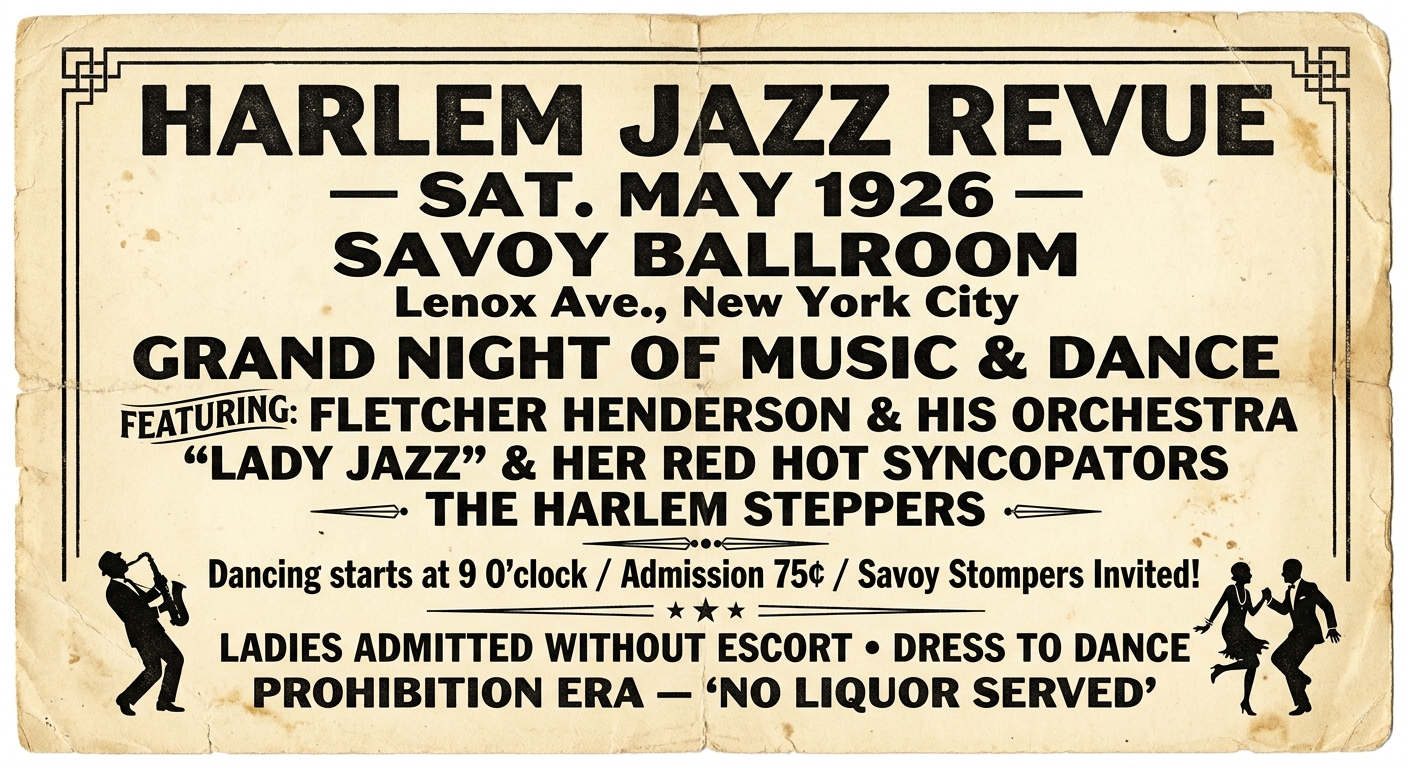
This 1926 flyer advertises a jazz show in Harlem, New York City. It highlights new entertainment and public nightlife during the Roaring Twenties. Details about women’s attendance and music culture can be used as evidence of changing social roles and cultural expression after World War I.
Which detail from the flyer is the strongest evidence of cultural change during the Roaring Twenties?
Based on the flyer, what is the most reasonable inference about women’s opportunities in the 1920s?
Which Roaring Twenties development is most directly illustrated by this flyer?
Using evidence from the flyer, explain how this source reflects cultural change in the Roaring Twenties.
Use at least two specific details from the document.
Explain one limitation of using only this flyer to understand the Roaring Twenties.
Then name one additional type of source a historian could use to strengthen conclusions about this era.

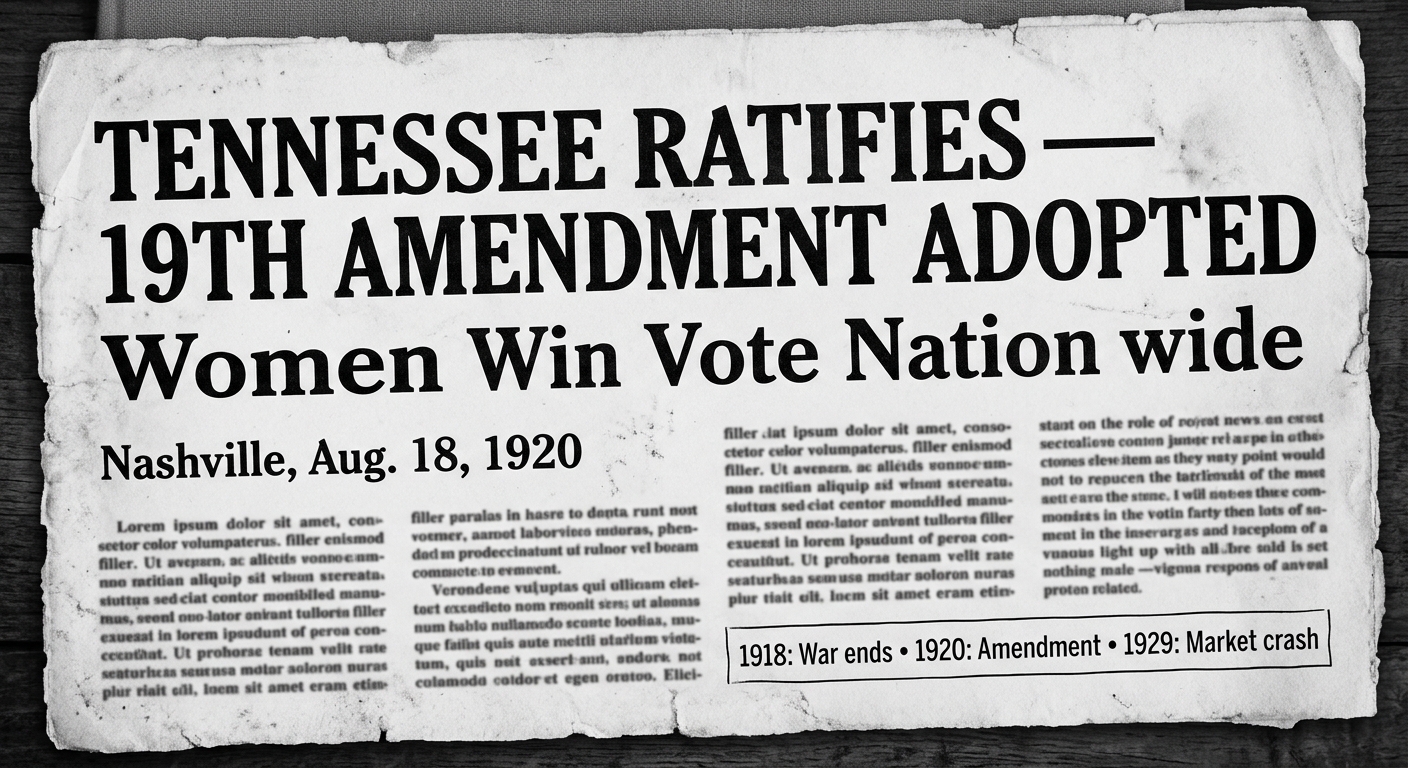
This August 1920 newspaper clipping announces adoption of the 19th Amendment. The date helps place women’s suffrage early in the Roaring Twenties, after World War I. Historians can use the headline and year to connect expanded political rights to later cultural changes in the 1920s.
Which timeline correctly places the document in the right chronological position?
Which event happened closest in time to the newspaper clipping’s date?
Create a three-event timeline from 1918 to 1929 that includes this document. Then explain one connection between the events.
Based on the date, which development is most likely to occur after this document?
Using evidence from the clipping, explain how the date and the headline help place women’s changing roles in a timeline of the Roaring Twenties.
Use at least two specific details.

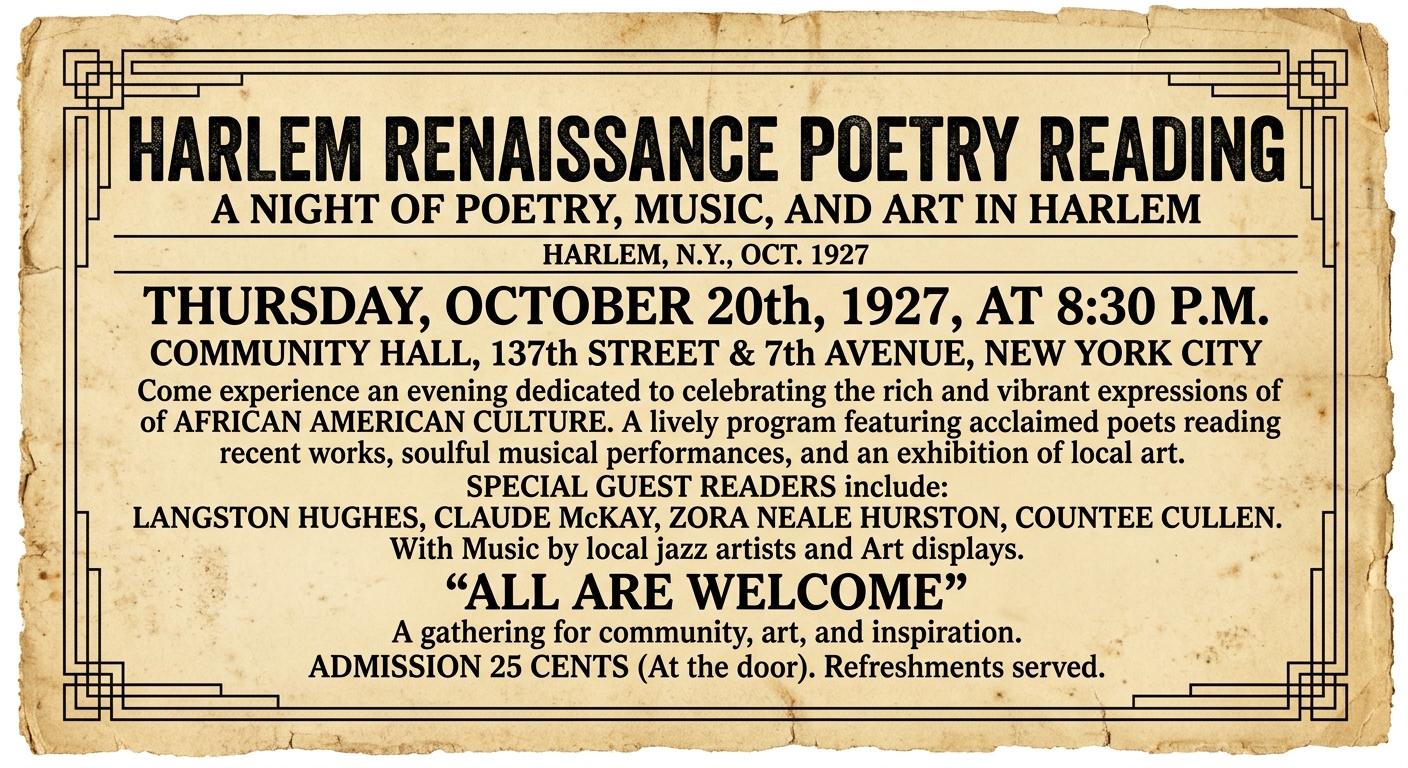
This October 1927 advertisement promotes a Harlem poetry reading during the Roaring Twenties. Historians can compare it with political documents like a 1920 suffrage clipping or a 1921 Prohibition notice to contextualize how cultural expression expanded alongside new laws. The date places Harlem Renaissance activity later in the decade.
Which statement best contextualizes this 1927 advertisement within the broader Roaring Twenties?
Which comparison best explains how this 1927 advertisement differs from a government notice like a Prohibition enforcement notice?
Contextualize this advertisement by explaining one condition after World War I that helped make events like this possible.
Then explain one limitation of using only this advertisement to understand the Harlem Renaissance.
Which detail from the advertisement would be most useful evidence for contextualizing the Harlem Renaissance within the Roaring Twenties?
Compare this 1927 cultural advertisement to a political change of the early 1920s (such as women’s suffrage or Prohibition).
Using at least two specific pieces of evidence, explain one way the sources reflect different types of change in the Roaring Twenties.

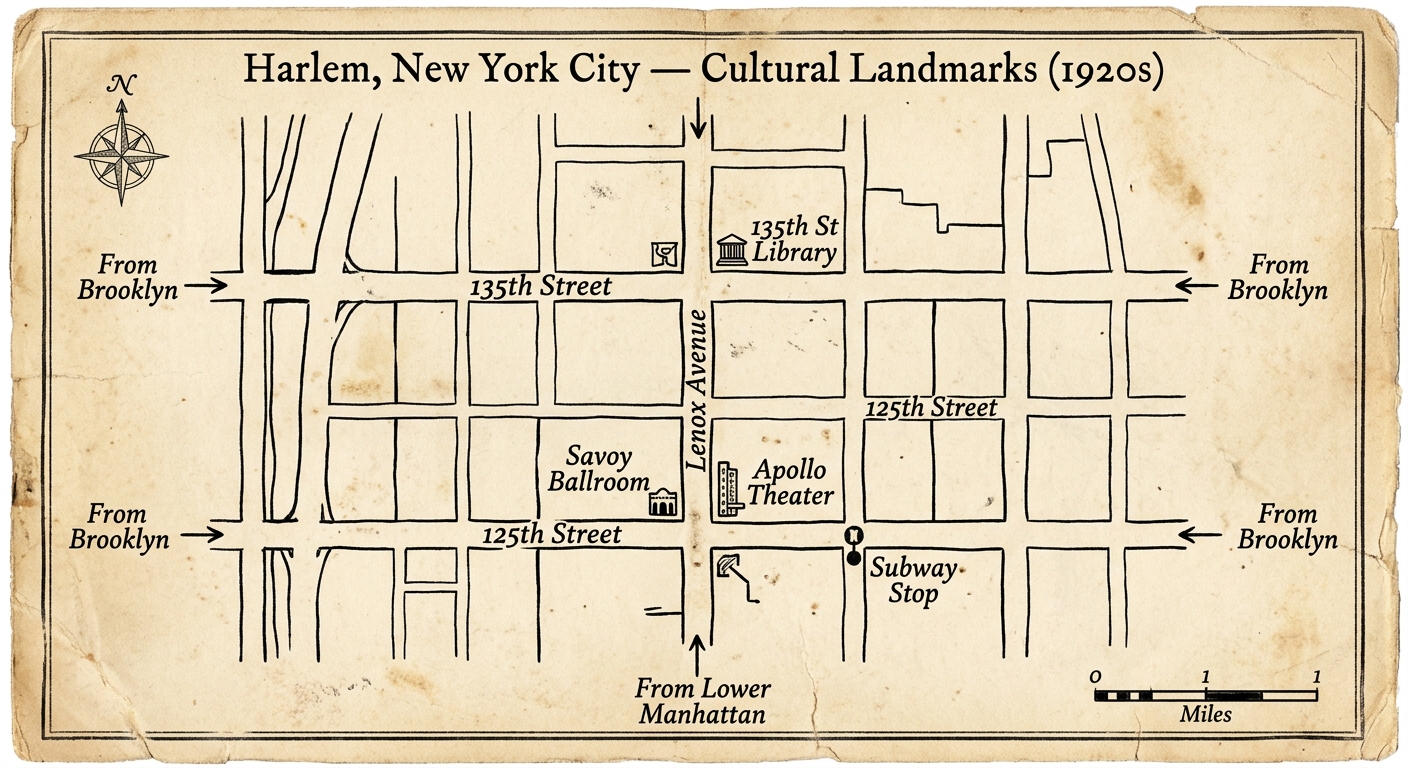
This 1925 map highlights cultural landmarks in Harlem, New York City, during the Roaring Twenties. The labeled streets and sites show how specific places supported music, literature, and community life. Historians can use the map to explain why Harlem became a center for African American cultural expression in this era.
Using evidence from the map, explain how geography helped shape cultural change during the Harlem Renaissance.
Use at least two specific details from the document.
Which map detail best supports the idea that Harlem functioned as a cultural center in the 1920s?
Based on the arrows showing travel to Harlem, what is the most reasonable inference about Harlem’s role in New York City during the Roaring Twenties?
Compare how this map could be used differently than an advertisement (like a jazz flyer) to study the Roaring Twenties.
Explain one strength of the map as evidence and one limitation.
Which statement best connects this map to the broader Roaring Twenties theme of cultural change?

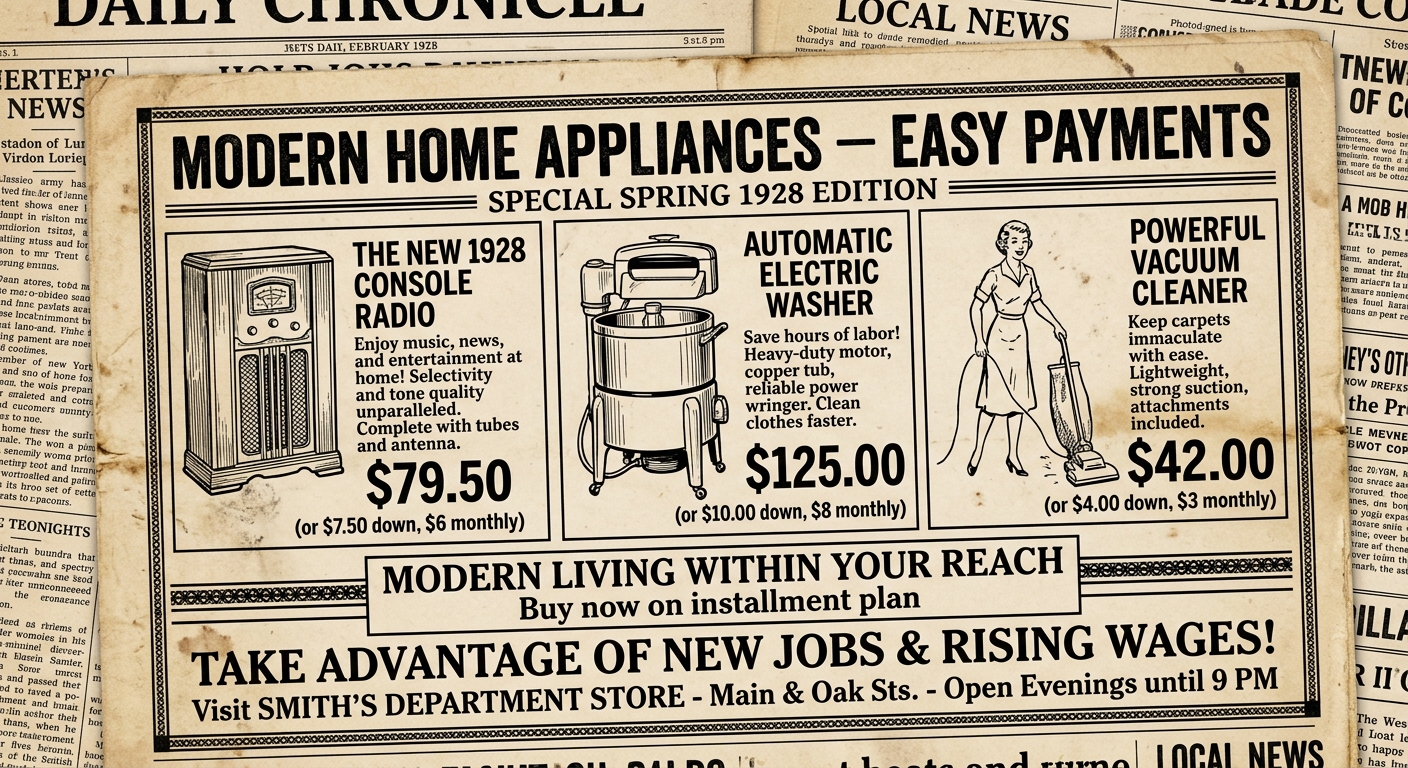
This Spring 1928 department store advertisement lists new consumer goods and offers installment payments. The document reflects late–Roaring Twenties economic prosperity and rising consumer spending. Historians can use prices, products, and payment terms as evidence for how new technology and credit affected everyday life before the 1929 crash.
Explain one limitation of using only this advertisement to understand the Roaring Twenties economy.
Then name one additional type of economic source a historian could use to strengthen conclusions.
Using evidence from the advertisement, explain how this document reflects economic prosperity and change in the Roaring Twenties.
Use at least two specific details from the source.
What is the most reasonable inference about how the installment plan could affect the economy in the 1920s?
Which comparison best explains how this economic advertisement differs from a Harlem cultural event flyer from the same decade?
Which detail from the advertisement is the strongest evidence of increased consumer spending in the late 1920s?