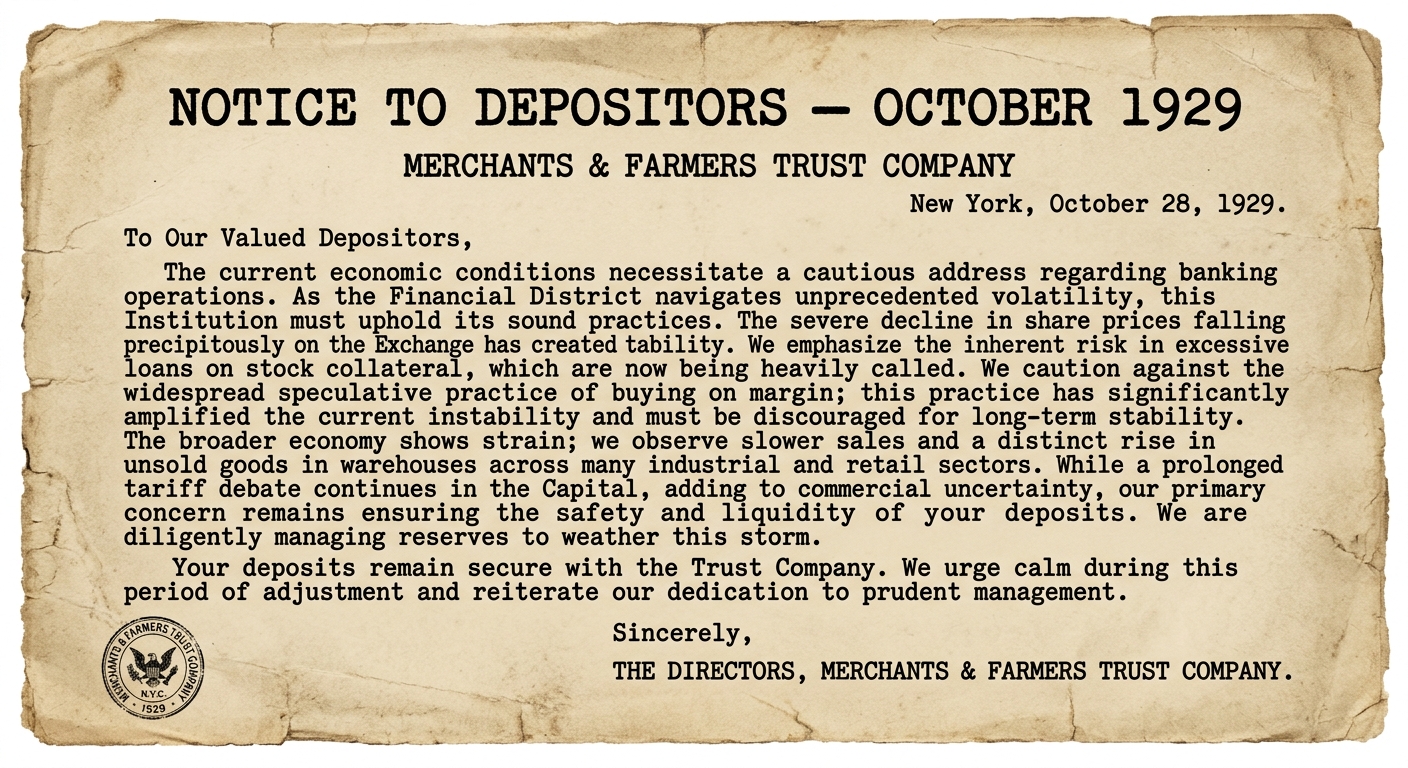
Source A (1929): This bank circular warns customers that many investors are buying stocks “on margin” (with borrowed money). It also notes slowed sales and “unsold goods.” Read the document image and use evidence from it to answer the questions.
Use the historical document(s) and the short readings in the left panel to answer the associated questions.
Use the historical document(s) and the short readings in the left panel to answer the associated questions.
Source A (1929): This bank circular warns customers that many investors are buying stocks “on margin” (with borrowed money). It also notes slowed sales and “unsold goods.” Read the document image and use evidence from it to answer the questions.
Based on Source A, which 1920s economic practice is MOST directly described?
Which conclusion is BEST supported by evidence in Source A about why bank failures could spread after the stock market fell?
Which additional piece of evidence would MOST strengthen the claim that overproduction contributed to the economic downturn described in Source A?
Using Source A, explain how TWO different economic practices mentioned or implied in the document could contribute to the Great Depression.
Support your explanation with at least TWO specific pieces of evidence from the source.
Create a cause-and-effect chain (at least 3 steps) that connects a 1920s practice in Source A to either:
(a) the stock market collapse or
(b) bank failures.
Use evidence from Source A in your chain.
Source B (Nov. 1930): This memo looks back on the 1929 stock market crash and describes events that followed, including rising loan defaults, deposit withdrawals, factories cutting output because goods were unsold, and reduced overseas orders after new tariff barriers. Use the document as evidence to answer the questions.
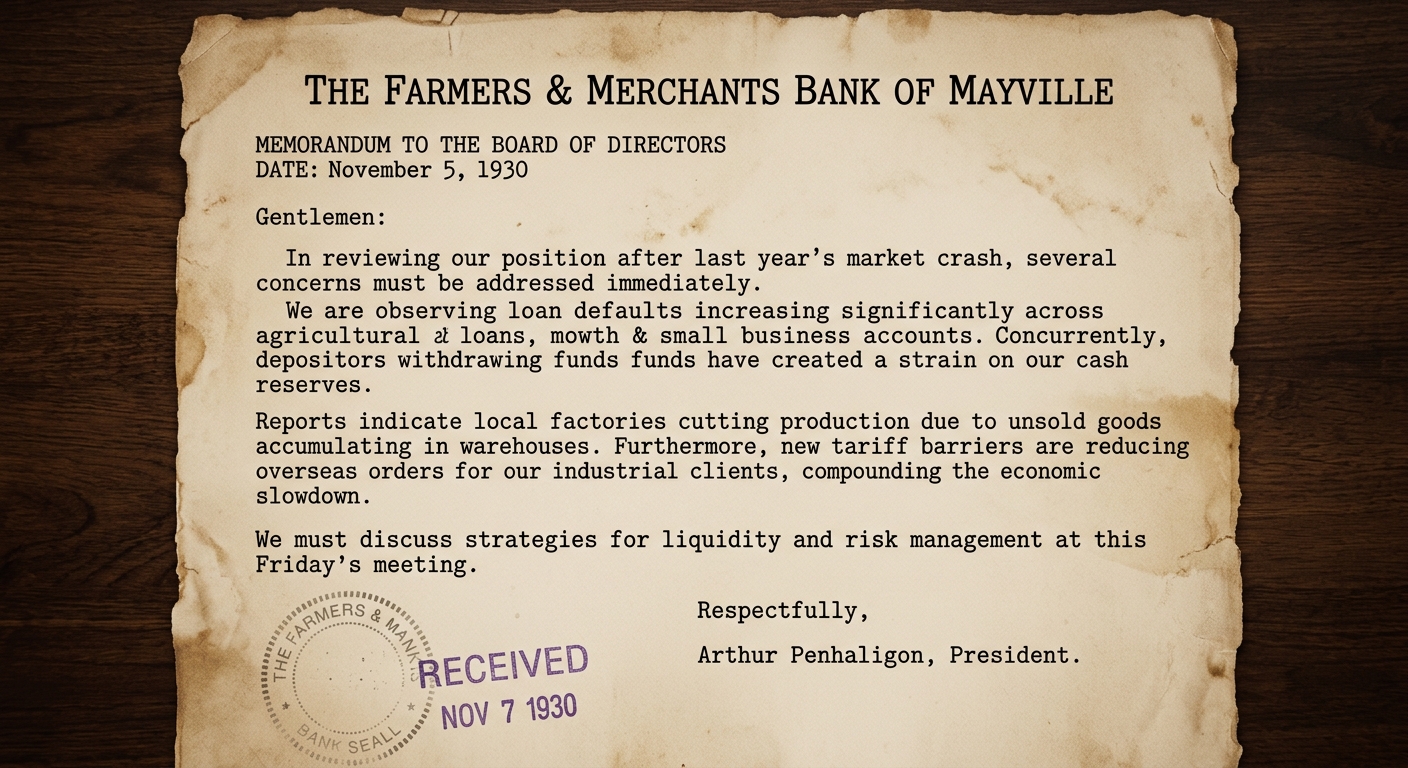
Based on Source B, which event is described as happening FIRST in the chain of events?
Which statement BEST explains a cause-and-effect relationship in Source B?
Using Source B, write a chronological explanation of how TWO events described in the memo could build on each other to deepen the Great Depression.
Include at least TWO specific pieces of evidence from the source.
Based on Source B, explain one plausible cause-and-effect chain (at least 3 steps) in chronological order that connects risky investing, protectionism, or overproduction to bank failures.
Use evidence from the memo.
Which sequence BEST matches the chronology implied in Source B?
Source C (Apr. 1931): This newspaper editorial reflects on the worsening downturn. The author criticizes higher tariff barriers and describes fewer overseas orders, growing unsold inventories, and job cuts. Read the editorial excerpt and use it to compare causes and place the source in its historical context.
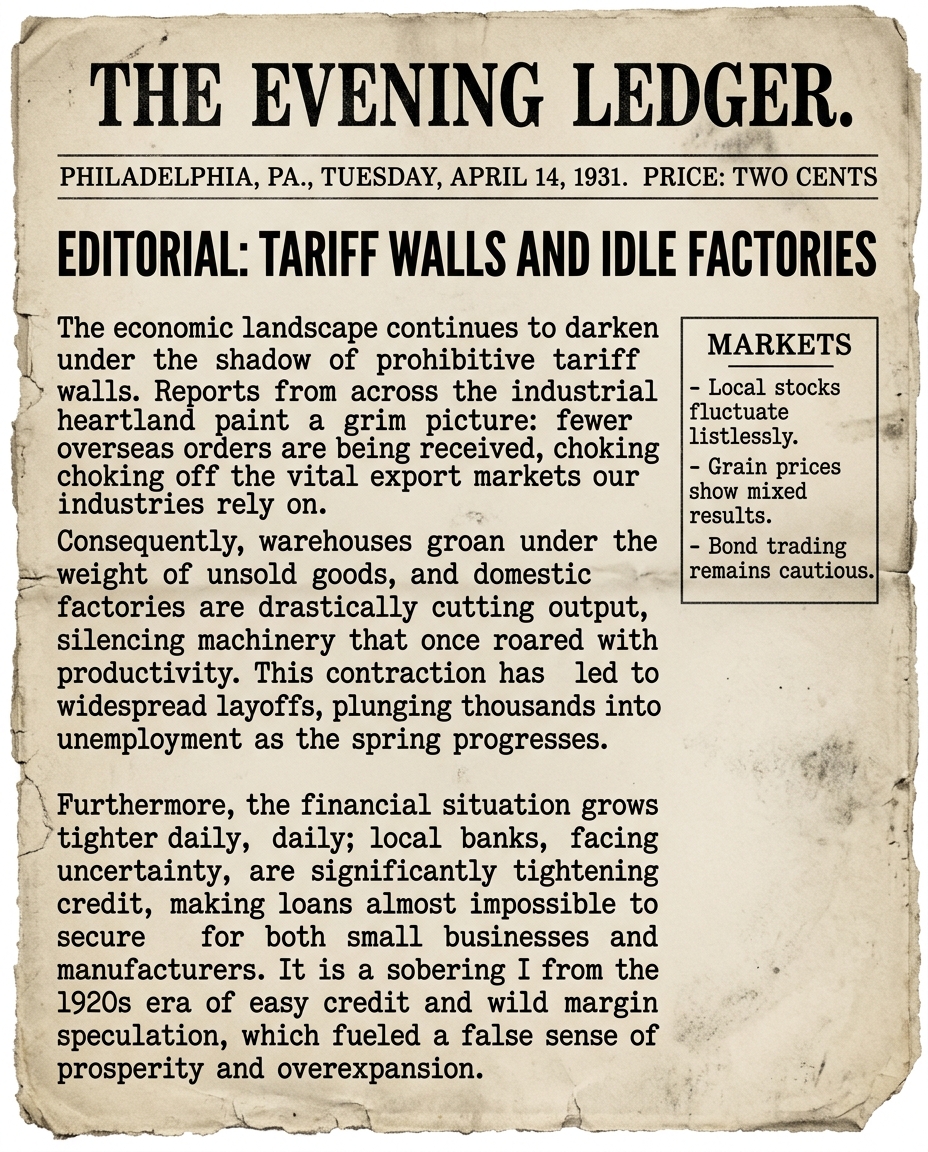
Which statement BEST compares TWO causes of the downturn discussed or implied in Source C?
Which historical context BEST explains why the author of Source C emphasizes tariffs and overseas orders?
In Source C, reduced overseas orders would MOST directly affect which group first?
Using Source C, compare how protectionism and overproduction could each deepen the economic downturn.
Support your comparison with at least TWO specific pieces of evidence from the source.
Contextualize Source C by explaining what it suggests about debates over the causes of the Great Depression.
Then compare the author’s emphasis to ONE other factor from 8.5.a (risky investing, protectionism, or overproduction) and explain how both could connect to bank failures or unemployment.
Source D (1930): This U.S. Commerce bulletin map highlights major export ports and trade routes. Notes on the page describe reduced overseas orders after higher tariff barriers and growing unsold inventories in industrial regions. Use the map and notes to answer the questions with evidence.
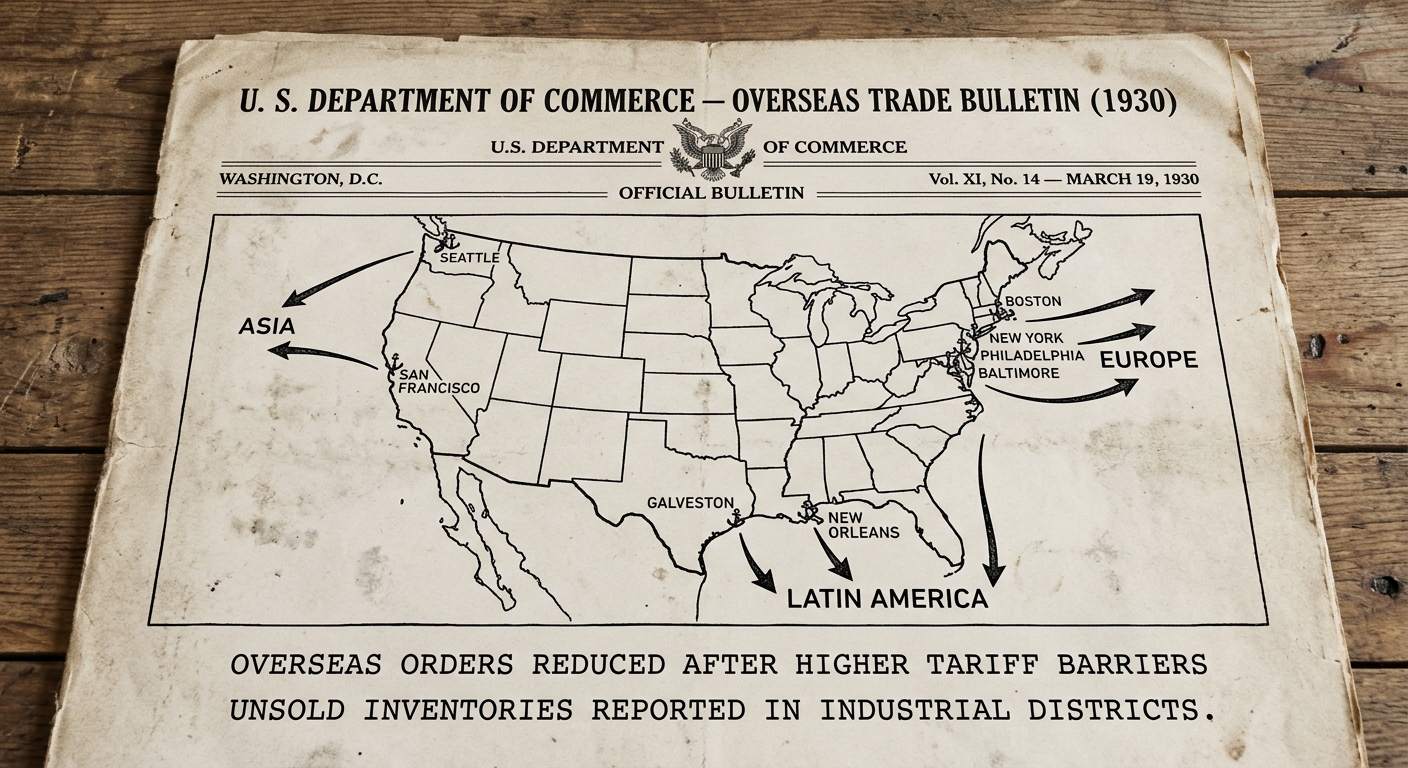
Based on Source D, which location would MOST likely feel the earliest impact if overseas orders from Europe declined?
Which statement BEST uses the geographic information in Source D to explain how protectionism could deepen the downturn?
Which additional map feature would MOST strengthen the claim that overproduction contributed to the downturn described in Source D?
Using Source D, explain how reduced overseas orders could contribute to unemployment in TWO different U.S. regions.
Support your answer with at least TWO specific pieces of evidence from the map or notes.
Using Source D, create a geographic cause-and-effect chain (at least 3 steps) showing how tariff barriers could contribute to bank failures.
Use evidence from the map or notes in your chain.
Source E (1928): This brokerage circular promotes buying stocks on margin and describes how customers can use borrowed money to purchase shares. It also celebrates high production and easy credit. Read the document image and use evidence from it to answer the questions.
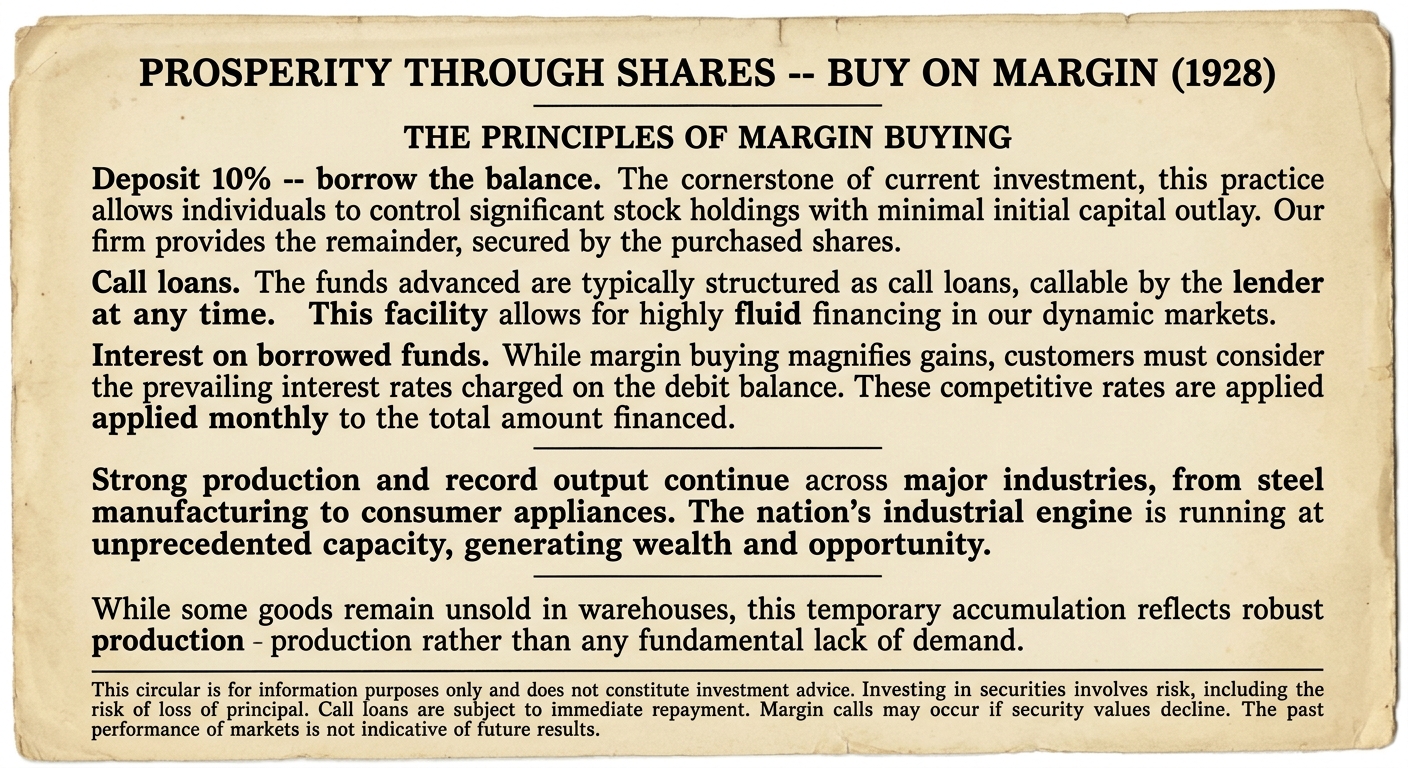
Based on Source E, which economic concept is MOST directly illustrated by buying stocks on margin?
Which statement BEST explains how easy credit in a market economy could increase economic risk during a downturn?
Which additional evidence would MOST strengthen the claim that overproduction was occurring in the broader economic system described in Source E?
Using Source E, explain how the economic practices described could affect the financial system during a boom and then worsen a crash.
Support your answer with at least TWO specific pieces of evidence from the source.
Using Source E, compare risky investing to ONE other factor (protectionism or overproduction).
Explain how BOTH could contribute to unemployment or bank failures.