Twa kɔ nsɛm atitiriw so
Log in
Sign up for FREE
arrow_back
Laabri

8.7a - Foreign Policy: - Practices A through E

star
star
star
star
star
Last updated about 1 month ago
25 Nsɛmmisa
Hyɛ no nsow a efi ɔkyerɛwfo no hɔ:

Use the historical document(s) and the short readings in the left panel to answer the associated questions.

Use the historical document(s) and the short readings in the left panel to answer the associated questions.

Ɛhia
1
8.7.a
DOK.SS.2
Ɛhia
1
8.7.a
DOK.SS.2
Ɛhia
1
8.7.a
DOK.SS.2
Ɛhia
2
8.7.a
DOK.SS.2
Ɛhia
2
8.7.a
DOK.SS.2
Ɛhia
1
8.7.a
DOK.SS.2
Ɛhia
1
8.7.a
DOK.SS.2
Ɛhia
1
8.7.a
DOK.SS.2
Ɛhia
2
8.7.a
DOK.SS.2
Ɛhia
2
8.7.a
DOK.SS.2
Ɛhia
1
8.7.a
DOK.SS.2
Ɛhia
1
8.7.a
DOK.SS.2
Ɛhia
1
8.7.a
DOK.SS.2
Ɛhia
2
8.7.a
DOK.SS.2
Ɛhia
1
8.7.a
DOK.SS.2
Ɛhia
1
8.7.a
DOK.SS.2
Ɛhia
1
8.7.a
DOK.SS.2
Ɛhia
2
8.7.a
DOK.SS.2
Ɛhia
2
8.7.a
DOK.SS.2
Ɛhia
1
8.7.a
DOK.SS.2
Ɛhia
1
8.7.a
DOK.SS.2
Ɛhia
1
8.7.a
DOK.SS.2
Ɛhia
2
8.7.a
DOK.SS.2
Ɛhia
2
8.7.a
DOK.SS.2

Document A (Historical Document)

This fictional excerpt resembles a U.S. State Department memorandum from March 1947. As you read, look for evidence about why U.S. leaders believed supporting other countries mattered. Use specific words or phrases from the document to support your answers about Cold War alliances and global tensions.
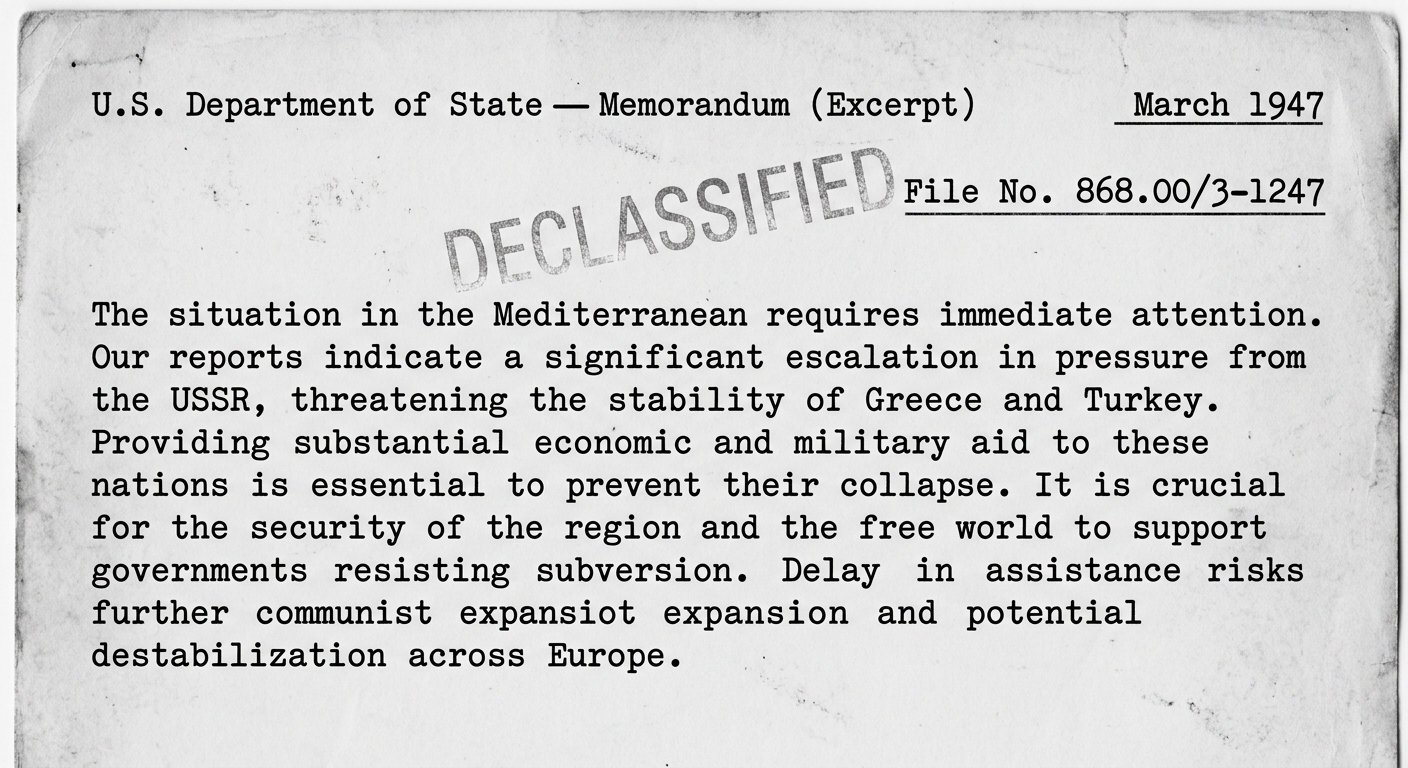
Scanned black-and-white typewritten memo excerpt dated March 1947 with a 'Declassified' stamp, discussing U.S. aid to Greece and Turkey and concern about Soviet pressure.

Asemmisa {{asɛmmisaAhyɛnsode}}
1.

Based on the evidence in Document A, which Cold War goal is the memo most clearly supporting?

Asemmisa {{asɛmmisaAhyɛnsode}}
2.

Which phrase from Document A is the best evidence that the memo is responding to a Cold War rivalry?

Asemmisa {{asɛmmisaAhyɛnsode}}
3.

How does Document A best connect to the idea that the Cold War reshaped political alliances around the world?

Asemmisa {{asɛmmisaAhyɛnsode}}
4.

Using two specific pieces of evidence from Document A, explain how Cold War tensions influenced U.S. decisions about supporting other countries. Write one well-formed paragraph.

Asemmisa {{asɛmmisaAhyɛnsode}}
5.

What is one reasonable inference about how documents like this could affect political alliances during the early Cold War?

Support your inference with evidence from Document A. Write one well-formed paragraph.

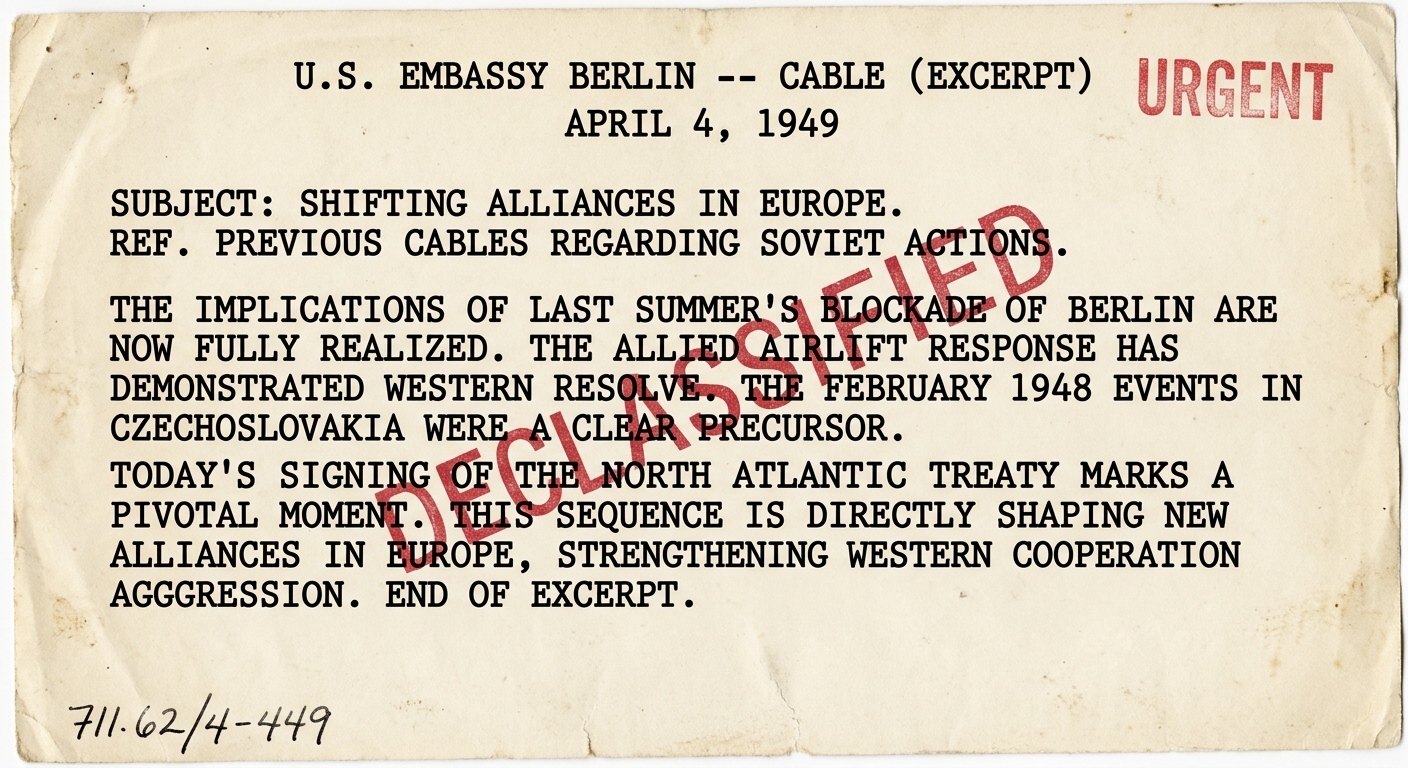
Document B (Historical Document)

This fictional excerpt resembles a U.S. Embassy cable from April 1949. Pay close attention to time words (such as “last summer” and “today”) and dated events. Use them as evidence to place developments in order and explain how Cold War tensions shaped alliances.

Scanned typewritten U.S. Embassy Berlin cable excerpt dated April 4, 1949, marked urgent and declassified, referencing the Berlin blockade, the airlift, events in Czechoslovakia, and the signing of the North Atlantic Treaty.

Asemmisa {{asɛmmisaAhyɛnsode}}
6.

Which development most likely happened after the event described as “last summer’s blockade of Berlin” in Document B?

Asemmisa {{asɛmmisaAhyɛnsode}}
7.

Which sequence best matches the chronological order implied by Document B?

Asemmisa {{asɛmmisaAhyɛnsode}}
8.

Which detail from Document B is most useful for determining that the document was written after the Berlin Airlift began?

Asemmisa {{asɛmmisaAhyɛnsode}}
9.

Using two specific pieces of evidence from Document B, explain how earlier Cold War events mentioned in the cable helped lead to later political alliances. Write one well-formed paragraph.

Asemmisa {{asɛmmisaAhyɛnsode}}
10.

Place Document B into a brief Cold War timeline.

In one paragraph, explain what happened before this cable and what development it suggests is happening during the time it was written.

Support your timeline with evidence from the document.

Document C (Historical Document)

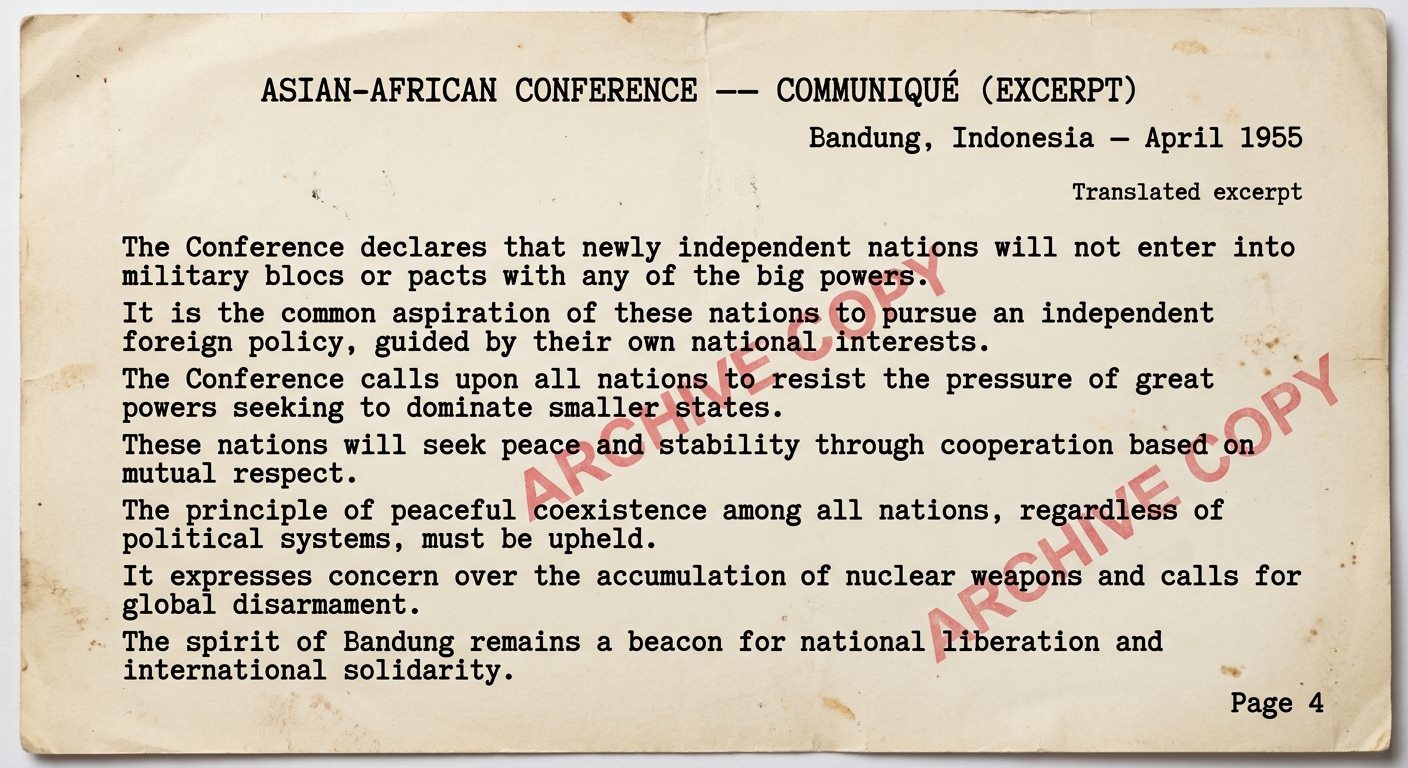
This fictional excerpt resembles a conference communiqué from April 1955. As you read, look for evidence about why some nations chose non-alignment during the Cold War. Use the document’s words to compare alliance choices and to place the authors’ goals in post–World War II context.

Asemmisa {{asɛmmisaAhyɛnsode}}
11.

Which statement best compares the viewpoint in Document C to a U.S. Cold War document that supports containment?

Asemmisa {{asɛmmisaAhyɛnsode}}
12.

Which historical context best helps explain why the authors of Document C might emphasize independence from “great powers” in 1955?

Asemmisa {{asɛmmisaAhyɛnsode}}
13.

Which phrase from Document C is the best evidence that the authors were concerned about being pulled into a Cold War rivalry?

Asemmisa {{asɛmmisaAhyɛnsode}}
14.

Using two pieces of evidence from Document C, explain how Cold War rivalry shaped different choices about alliances (joining a bloc vs non-alignment).

Include at least one comparison in your paragraph.

Ɛhia
2
Asemmisa {{asɛmmisaAhyɛnsode}}
15a.

In one well-formed paragraph, explain what was happening globally in the mid-1950s and how that context helps you interpret the authors’ message about alliances.

Support your answer with evidence from the document.

8.7.a
DOK.SS.2

Document D (Historical Document)

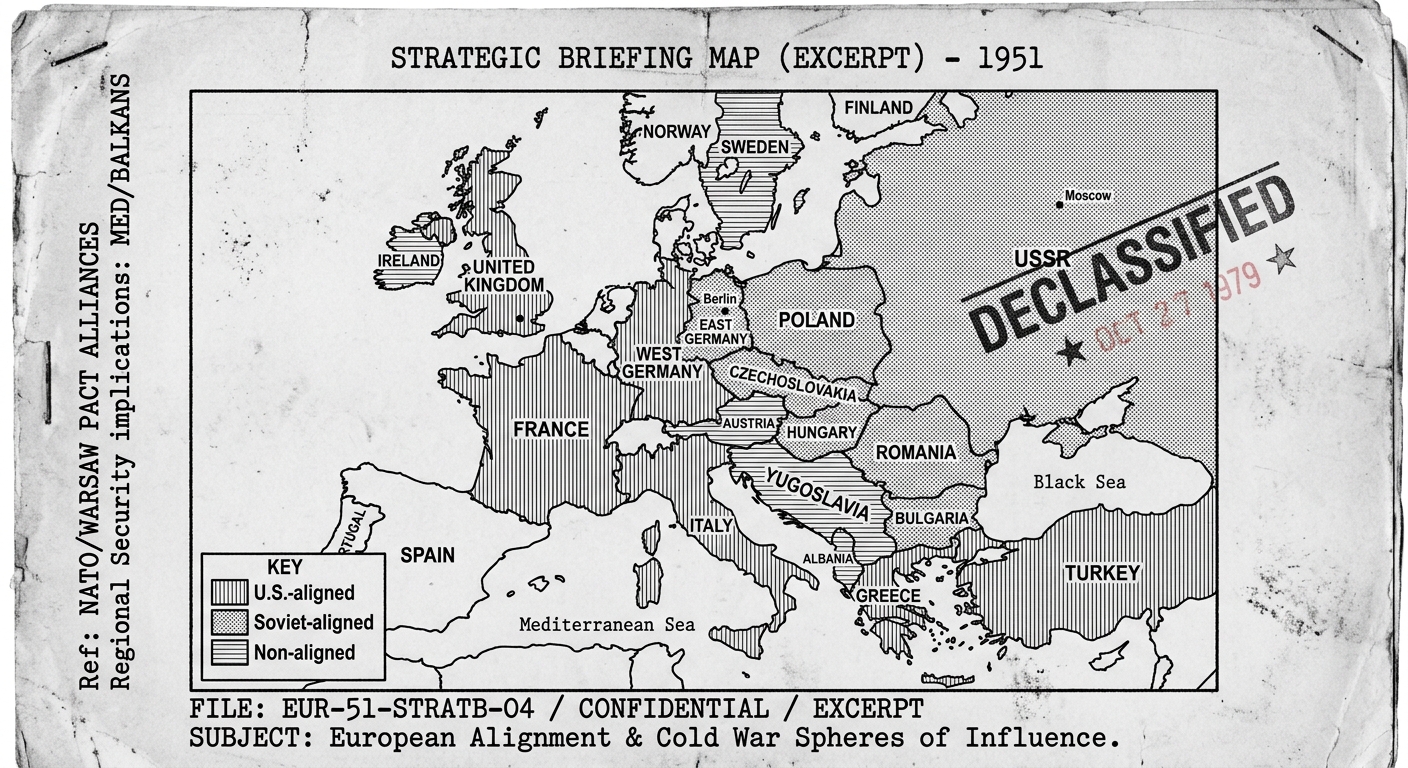
This fictional excerpt resembles a declassified briefing sheet from 1951 that includes a map key for Cold War alignments. Use the map’s labels, shading, and proximity of countries to interpret alliance patterns. Cite geographic evidence (location, neighbors, and regions) in your answers.

Asemmisa {{asɛmmisaAhyɛnsode}}
16.

According to the map key in Document D, which country is shown as non-aligned?

Asemmisa {{asɛmmisaAhyɛnsode}}
17.

Which geographic factor best helps explain why the United States might view Turkey as strategically important during the early Cold War?

Asemmisa {{asɛmmisaAhyɛnsode}}
18.

Which inference about Cold War alliances is best supported by the geographic pattern shown in Document D?

Asemmisa {{asɛmmisaAhyɛnsode}}
19.

Using two specific pieces of geographic evidence from Document D (map key + locations), explain how geography could influence political alliances during the Cold War. Write one well-formed paragraph.

Asemmisa {{asɛmmisaAhyɛnsode}}
20.

Choose two countries shown on Document D—one labeled U.S.-aligned and one labeled Soviet-aligned or non-aligned.

In one well-formed paragraph, compare their geographic situations and explain how geography could contribute to different alliance decisions.

Use evidence from the map.

Document E (Historical Document)

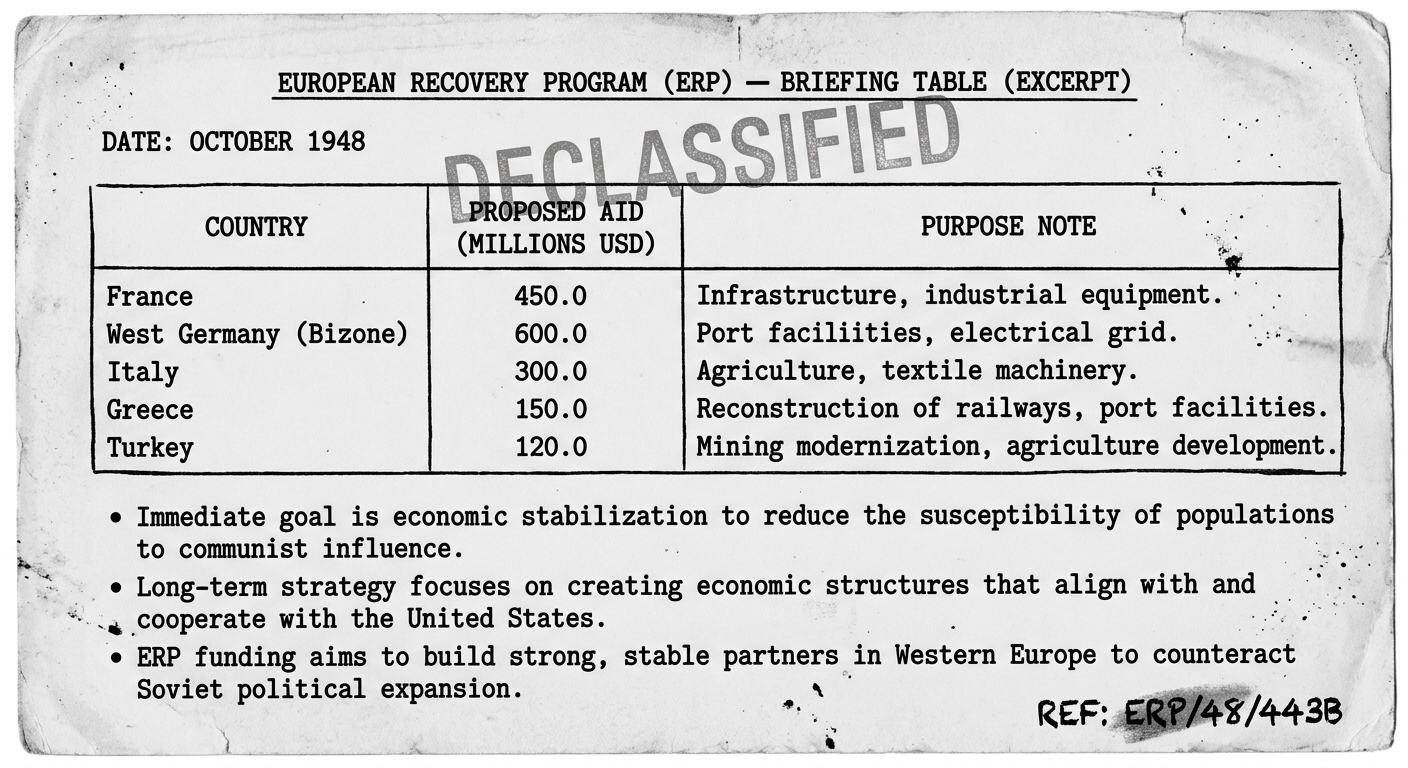
This fictional excerpt resembles a 1948 European Recovery Program (Marshall Plan) briefing. Use the table and the memo notes as evidence. Pay attention to which countries are listed, the aid amounts, and the stated goals. Explain how economic decisions could shape Cold War alliances.

Asemmisa {{asɛmmisaAhyɛnsode}}
21.

Which conclusion about U.S. Cold War goals is best supported by Document E?

Asemmisa {{asɛmmisaAhyɛnsode}}
22.

Which detail from Document E is the best evidence that U.S. economic aid was connected to Cold War political rivalry?

Asemmisa {{asɛmmisaAhyɛnsode}}
23.

Based on Document E, which comparison best explains how economic assistance could influence Cold War alliances?

Asemmisa {{asɛmmisaAhyɛnsode}}
24.

Using two specific pieces of evidence from Document E (one number from the table and one memo note), explain how economic policies could shape political alliances during the early Cold War.

Write one well-formed paragraph.

Asemmisa {{asɛmmisaAhyɛnsode}}
25.

Explain one way competition between different economic systems during the Cold War could influence which countries joined U.S.-aligned or Soviet-aligned blocs.

Support your answer with evidence from Document E.

Write one well-formed paragraph.