Twa kɔ nsɛm atitiriw so
Log in
Sign up for FREE
arrow_back
Laabri

8.7d - Foreign Policy: - Practices A through E

star
star
star
star
star
Last updated about 1 month ago
25 Nsɛmmisa
Hyɛ no nsow a efi ɔkyerɛwfo no hɔ:

Use the historical document(s) and the short readings in the left panel to answer the associated questions.

Use the historical document(s) and the short readings in the left panel to answer the associated questions.

8.7.d
DOK.SS.2
8.7.d
DOK.SS.2
8.7.d
DOK.SS.2
8.7.d
DOK.SS.2
8.7.d
DOK.SS.2
Ɛhia
1
8.7.d
DOK.SS.2
Ɛhia
1
8.7.d
DOK.SS.2
Ɛhia
1
8.7.d
DOK.SS.2
Ɛhia
1
8.7.d
DOK.SS.2
Ɛhia
1
8.7.d
DOK.SS.2
Ɛhia
1
8.7.d
DOK.SS.2
Ɛhia
1
8.7.d
DOK.SS.2
Ɛhia
1
8.7.d
DOK.SS.2
Ɛhia
1
8.7.d
DOK.SS.2
Ɛhia
1
8.7.d
DOK.SS.2
Ɛhia
1
8.7.d
DOK.SS.2
Ɛhia
1
8.7.d
DOK.SS.2
Ɛhia
1
8.7.d
DOK.SS.2
Ɛhia
1
8.7.d
DOK.SS.2
Ɛhia
1
8.7.d
DOK.SS.2
Ɛhia
1
8.7.d
DOK.SS.2
Ɛhia
1
8.7.d
DOK.SS.2
Ɛhia
1
8.7.d
DOK.SS.2
Ɛhia
1
8.7.d
DOK.SS.2
Ɛhia
1
8.7.d
DOK.SS.2
Ɛhia
1
8.7.d
DOK.SS.2
Ɛhia
1
8.7.d
DOK.SS.2
Ɛhia
1
8.7.d
DOK.SS.2
Ɛhia
1
8.7.d
DOK.SS.2
Ɛhia
1
8.7.d
DOK.SS.2

Historical Document (2001)
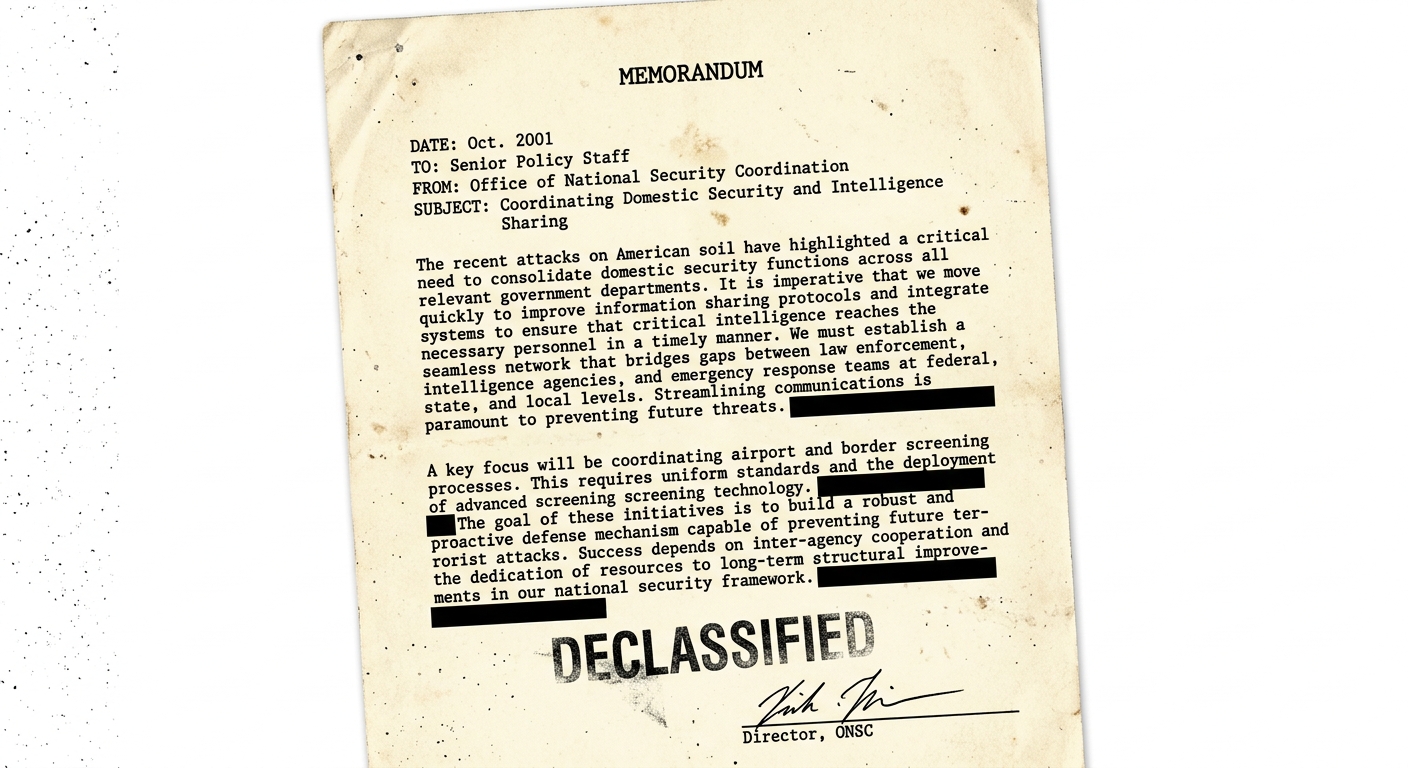
Grayscale scanned memo dated Oct. 2001 about coordinating domestic security and intelligence sharing, with redactions and a 'DECLASSIFIED' stamp.

After the September 11, 2001 attacks, U.S. leaders argued that preventing terrorism required new coordination at home. Policies expanded information-sharing between agencies and strengthened airport and border screening. Supporters emphasized safety, while critics warned that increased surveillance could threaten civil liberties.
Asemmisa {{asɛmmisaAhyɛnsode}}
1.

Which action would most directly match the document’s focus on preventing terrorism through coordination and intelligence-sharing?

Asemmisa {{asɛmmisaAhyɛnsode}}
2.

Explain how the document and the reading together show a change in U.S. national security policy after September 11, 2001.

Use at least two specific pieces of evidence (one from the document and one from the reading).

Asemmisa {{asɛmmisaAhyɛnsode}}
3.

Based on the document and the reading, which inference is best supported about U.S. priorities after September 11, 2001?

Asemmisa {{asɛmmisaAhyɛnsode}}
4.

Using evidence from the document and/or the reading, describe one potential benefit and one potential concern of the policy approach described.

Support each with specific evidence.

Asemmisa {{asɛmmisaAhyɛnsode}}
5.

Which detail from the document is the best evidence of a domestic policy response to terrorism?

Historical Document (2002)

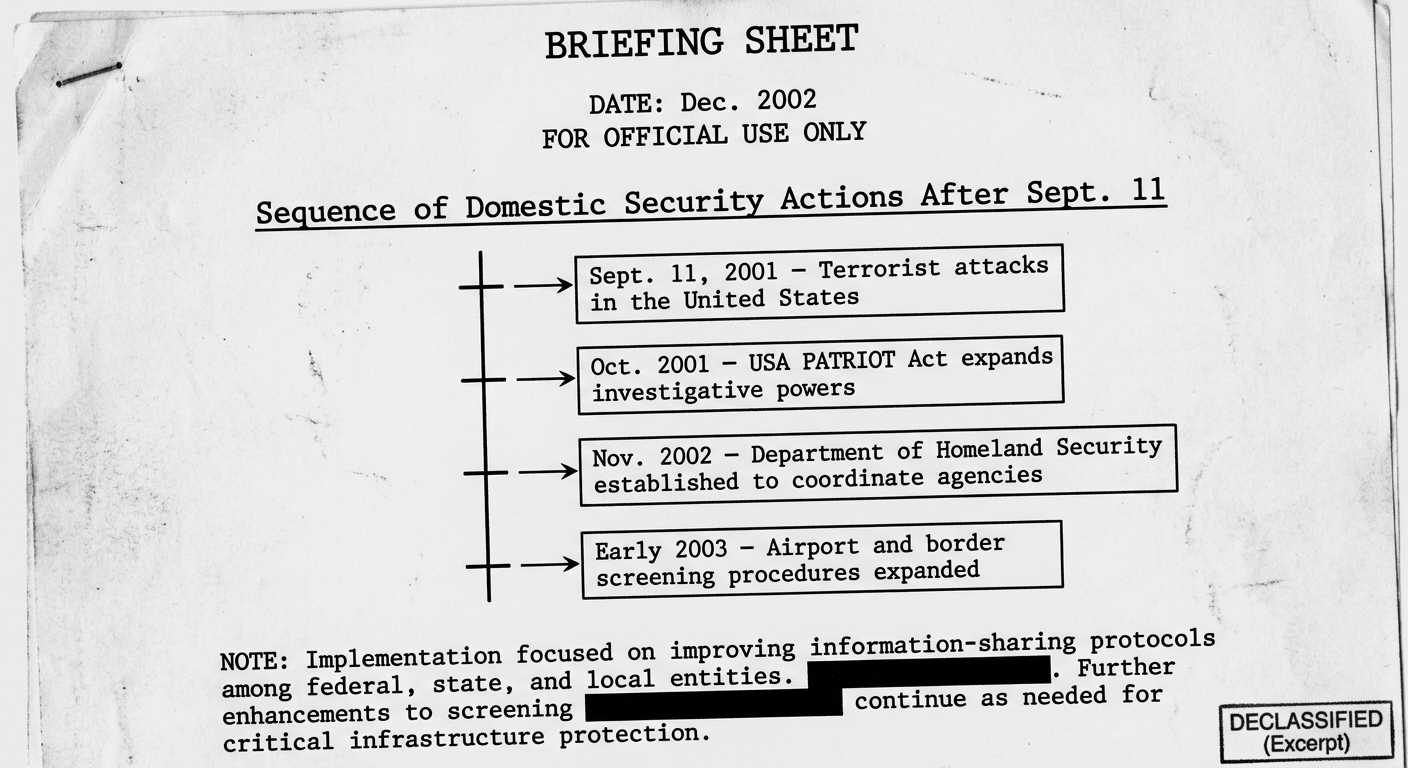
Grayscale scanned briefing sheet dated Dec. 2002 showing a timeline of post-9/11 domestic security actions, with redactions and a declassified stamp.

After September 11, 2001, U.S. officials described new security policies as a sequence of steps taken over time. The timeline below summarizes key domestic responses. Use the dates and descriptions to explain what happened first, what followed, and how later actions built on earlier ones.

Asemmisa {{asɛmmisaAhyɛnsode}}
6.

According to the timeline, which event happened immediately after the September 11, 2001 attacks?

Asemmisa {{asɛmmisaAhyɛnsode}}
7.

Which ordered pair places the two policy actions in the correct chronological order (earlier → later)?

Asemmisa {{asɛmmisaAhyɛnsode}}
8.

Which conclusion about the pattern over time is best supported by the timeline and the reading?

Asemmisa {{asɛmmisaAhyɛnsode}}
9.

Using evidence from the timeline and the reading, explain the sequence of U.S. domestic policy responses after September 11, 2001.

Include at least three events in order and use at least two specific pieces of evidence (dates and/or descriptions) from the sources.

Asemmisa {{asɛmmisaAhyɛnsode}}
10.

Choose one later action from the timeline (Nov. 2002 or Early 2003).

Explain how it could have been influenced by an earlier event on the timeline.

Use evidence from the timeline to support your reasoning.

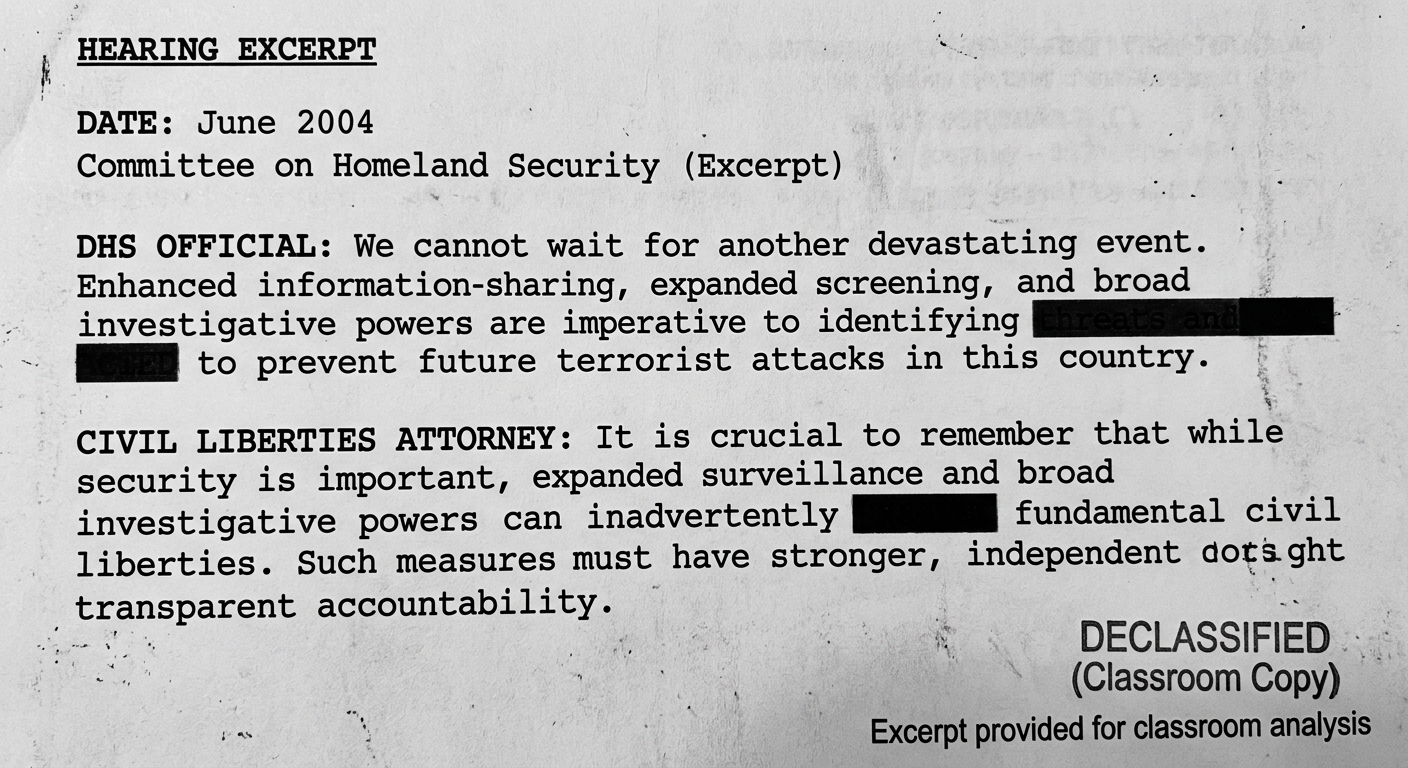
Historical Document (2004)

Grayscale scanned June 2004 hearing excerpt showing a DHS official and a civil liberties attorney offering different views on post-9/11 security policies, with redactions.

In the years after September 11, 2001, U.S. officials debated how to prevent terrorism. Some supported expanding investigative powers, information-sharing, and screening. Others warned that increased surveillance could weaken civil liberties. This excerpt shows two viewpoints during a 2004 hearing.

Asemmisa {{asɛmmisaAhyɛnsode}}
11.

Compare the two viewpoints in the document. Identify one similarity and one difference between them, using at least two specific pieces of evidence from the document and/or reading.

Asemmisa {{asɛmmisaAhyɛnsode}}
12.

Which concern is most directly raised by the civil liberties attorney’s viewpoint in the document?

Asemmisa {{asɛmmisaAhyɛnsode}}
13.

Using the historical context provided (post–September 11, 2001), explain how the conditions of the early 2000s could have led to the policies discussed in the document.

Include one potential tradeoff and support your reasoning with evidence from the document and/or reading.

Asemmisa {{asɛmmisaAhyɛnsode}}
14.

Which context best helps explain why these two viewpoints became part of U.S. policy debates in the early 2000s?

Asemmisa {{asɛmmisaAhyɛnsode}}
15.

Which statement from the document best reflects a priority on preventing future attacks through expanded security measures?

Historical Document (2002)

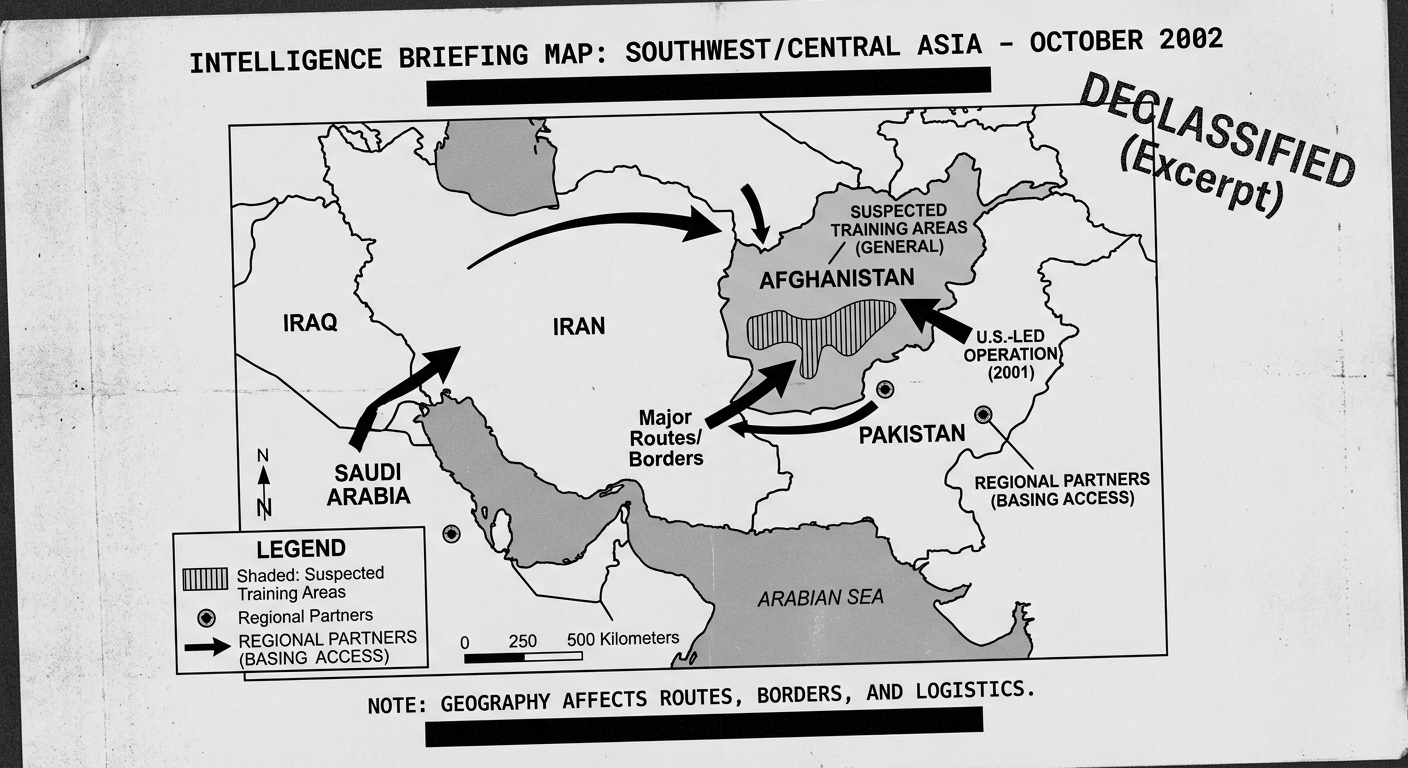
Grayscale scanned 2002 briefing map of Afghanistan and nearby countries, showing a U.S.-led operation arrow and general suspected training areas, with legend and compass.

After September 11, 2001, U.S. officials planned responses that involved both domestic security and military action overseas. This map excerpt highlights where operations and partnerships were concentrated. Use the map’s spatial evidence to explain how borders, distance, and location shaped decisions.

Asemmisa {{asɛmmisaAhyɛnsode}}
16.

Which statement best describes the spatial pattern of U.S. focus suggested by the map?

Asemmisa {{asɛmmisaAhyɛnsode}}
17.

Which geographic factor shown on the map most directly helps explain why Afghanistan became central to U.S. military action after September 11, 2001?

Asemmisa {{asɛmmisaAhyɛnsode}}
18.

Choose two countries shown on the map (for example, Afghanistan and Pakistan).

Describe one similarity and one difference in their strategic significance based on spatial evidence (borders, proximity, or routes) shown in the document.

Support your answer with evidence from the map.

Asemmisa {{asɛmmisaAhyɛnsode}}
19.

Using evidence from the map and the reading, explain how geography could have shaped U.S. responses to terrorism after September 11, 2001.

Use at least two specific pieces of evidence (one from the map and one from the reading).

Asemmisa {{asɛmmisaAhyɛnsode}}
20.

Which piece of evidence from the map best supports the idea that U.S. actions relied on regional partnerships as well as operations in Afghanistan?

Historical Document (2003)

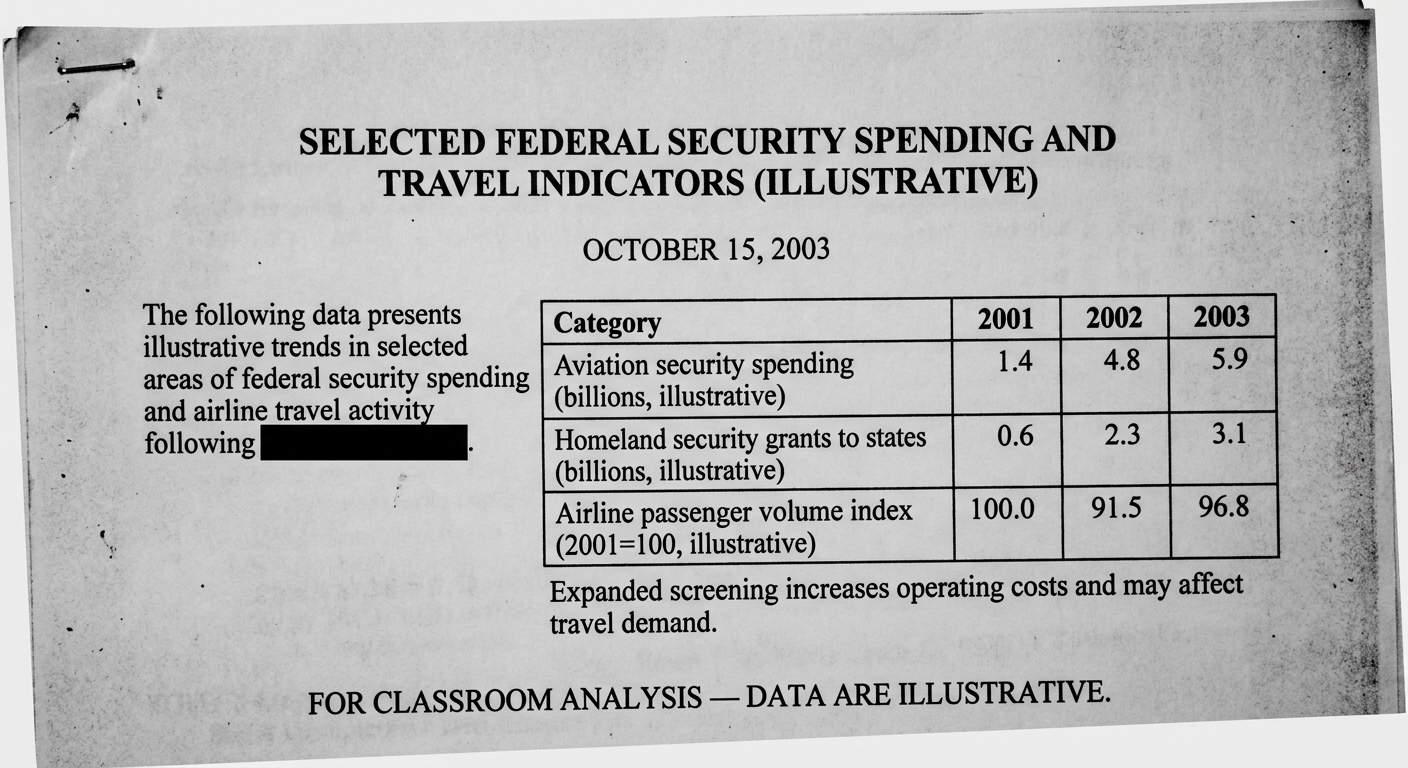
Grayscale scanned 2003 report excerpt with an illustrative table showing increases in security spending and changes in airline passenger volume after 2001.

After September 11, 2001, federal policies to prevent terrorism expanded domestic security programs. These changes affected how the government used resources and how people and businesses made travel decisions. Use the table’s economic evidence to answer the questions.

Asemmisa {{asɛmmisaAhyɛnsode}}
21.

Based on the table, which is the best example of an opportunity cost created by increasing federal security spending after 2001?

Asemmisa {{asɛmmisaAhyɛnsode}}
22.

Using evidence from the document and the reading, explain one way terrorism reshaped U.S. economic priorities after September 11, 2001 and one possible effect on people or businesses.

Use at least two specific pieces of evidence from the sources.

Asemmisa {{asɛmmisaAhyɛnsode}}
23.

Which economic explanation best connects expanded screening to changes in the market for air travel?

Asemmisa {{asɛmmisaAhyɛnsode}}
24.

Which statement best describes the overall trend shown in the table from 2001 to 2003?

Asemmisa {{asɛmmisaAhyɛnsode}}
25.

Compare two indicators in the table (for example, aviation security spending and passenger volume).

Describe one relationship you observe and explain one limitation of what the table can prove about cause and effect.