Twa kɔ nsɛm atitiriw so
Log in
Sign up for FREE
arrow_back
Laabri

8.8a - Demographic Change: - Practices A through E

star
star
star
star
star
Last updated about 1 month ago
25 Nsɛmmisa
Hyɛ no nsow a efi ɔkyerɛwfo no hɔ:

Use the historical document(s) and the short readings in the left panel to answer the associated questions.

Use the historical document(s) and the short readings in the left panel to answer the associated questions.

Ɛhia
1
8.8.a
DOK.SS.2
Ɛhia
1
8.8.a
DOK.SS.2
Ɛhia
1
8.8.a
DOK.SS.2
Ɛhia
1
8.8.a
DOK.SS.2
Ɛhia
1
8.8.a
DOK.SS.2
Ɛhia
1
8.8.a
DOK.SS.2
Ɛhia
1
8.8.a
DOK.SS.2
Ɛhia
1
8.8.a
DOK.SS.2
Ɛhia
1
8.8.a
DOK.SS.2
Ɛhia
1
8.8.a
DOK.SS.2
Ɛhia
1
8.8.a
DOK.SS.2
Ɛhia
1
8.8.a
DOK.SS.2
Ɛhia
1
8.8.a
DOK.SS.2
Ɛhia
1
8.8.a
DOK.SS.2
Ɛhia
1
8.8.a
DOK.SS.2
Ɛhia
1
8.8.a
DOK.SS.2
Ɛhia
1
8.8.a
DOK.SS.2
Ɛhia
1
8.8.a
DOK.SS.2
Ɛhia
1
8.8.a
DOK.SS.2
Ɛhia
1
8.8.a
DOK.SS.2
Ɛhia
1
8.8.a
DOK.SS.2
Ɛhia
1
8.8.a
DOK.SS.2
Ɛhia
1
8.8.a
DOK.SS.2
Ɛhia
1
8.8.a
DOK.SS.2
Ɛhia
1
8.8.a
DOK.SS.2

Read the historical document image. Consider the author and audience, the date (post–World War II), and the purpose. Use details from the document as evidence in your answers about how population growth and housing policies contributed to suburbanization and community changes.
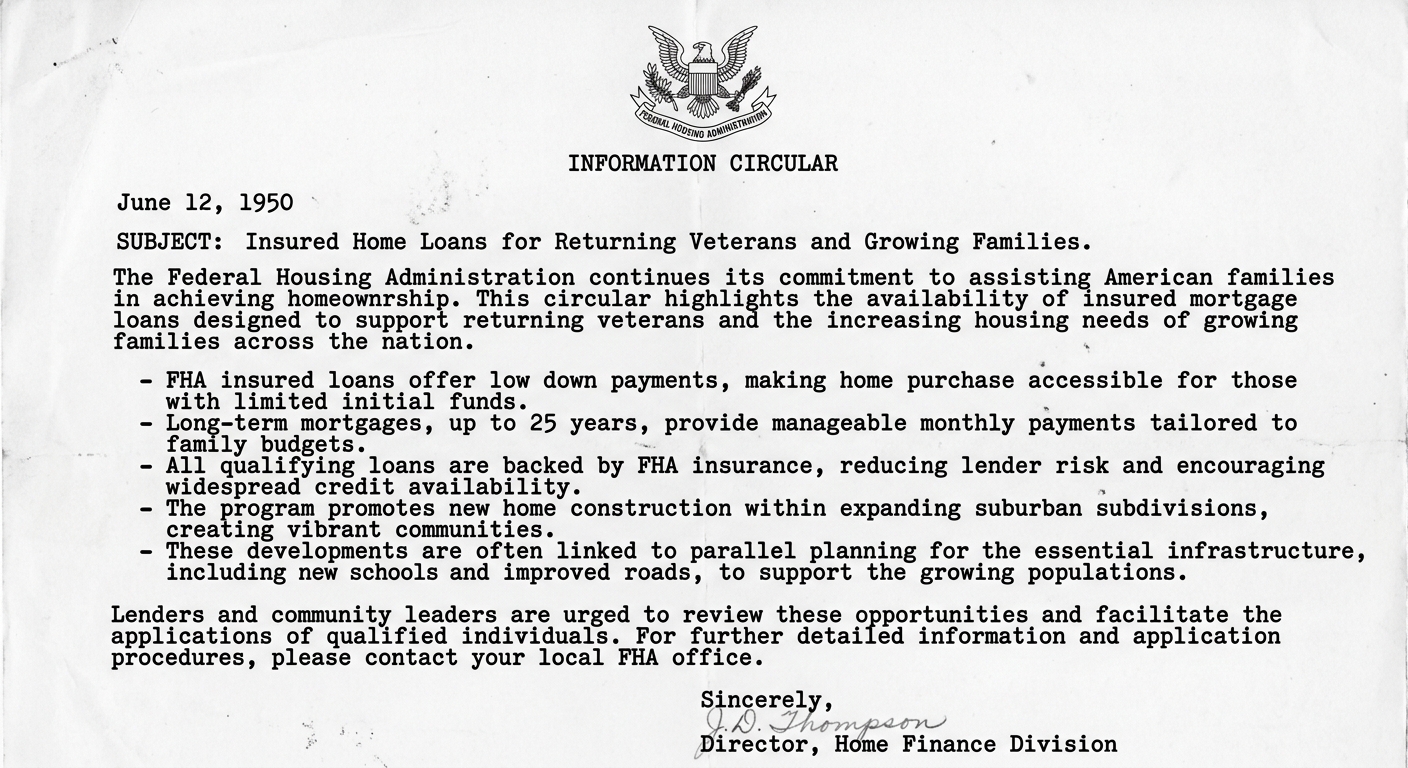
Black-and-white scanned 1950 Federal Housing Administration information circular about insured home loans for returning veterans and growing families, with a date, bullet points about low down payments and suburban home construction, and an official signature line.

Asemmisa {{asɛmmisaAhyɛnsode}}
1.

Based on the document, what is the main purpose of this circular?

Asemmisa {{asɛmmisaAhyɛnsode}}
2.

Which detail from the document best supports the inference that many Americans were forming new households after World War II?

Asemmisa {{asɛmmisaAhyɛnsode}}
3.

Which postwar change is most directly supported by the document?

Asemmisa {{asɛmmisaAhyɛnsode}}
4.

Using evidence from the document, explain two ways policies like those described could affect where people lived after World War II.

Cite two specific details from the document.

Asemmisa {{asɛmmisaAhyɛnsode}}
5.

Based on the document, identify one likely social or economic consequence for either suburbs or cities in the postwar era.

Support your response with one piece of evidence from the document and one reasonable inference.

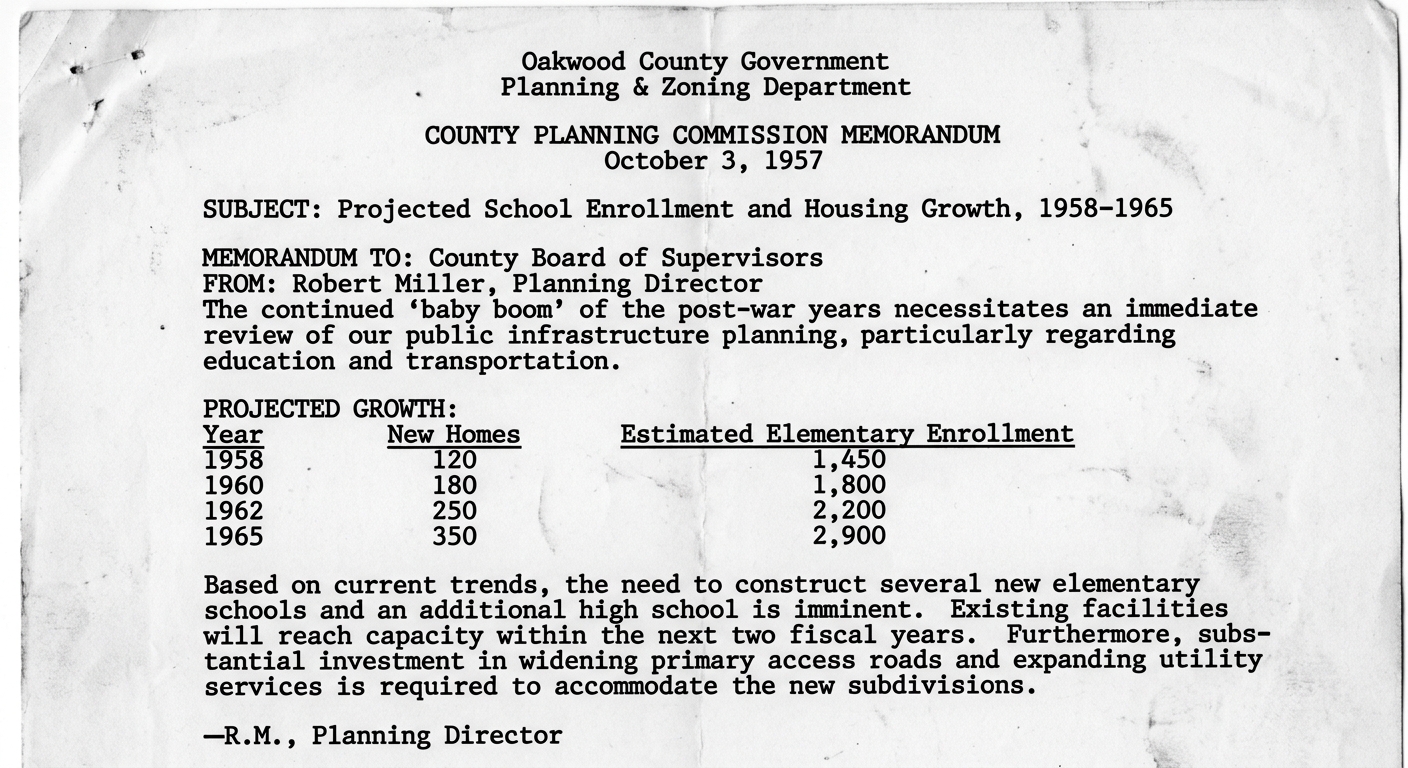
Read the planning memorandum (dated October 3, 1957). Pay attention to the years listed in the projections and what the county expects to happen first, next, and later. Use evidence from the document to explain how postwar population changes affected communities over time.

Black-and-white scanned 1957 County Planning Commission memorandum projecting housing growth and school enrollment increases from 1958 to 1965, referencing the baby boom and recommending new schools and road widening.

Asemmisa {{asɛmmisaAhyɛnsode}}
6.

According to the document’s timeline, which change is projected to happen first?

Asemmisa {{asɛmmisaAhyɛnsode}}
7.

Which statement best summarizes the trend shown from 1958 to 1965 in the document?

Asemmisa {{asɛmmisaAhyɛnsode}}
8.

Which cause-and-effect sequence is most consistent with the document’s projections?

Asemmisa {{asɛmmisaAhyɛnsode}}
9.

Using evidence from the document, explain how the memo connects postwar population change to at least two community needs over time.

Cite two specific details (including at least one year) from the document.

Asemmisa {{asɛmmisaAhyɛnsode}}
10.

Based on the timeline in the document, describe one decision a local government might prioritize by 1960 and explain why that decision would become more urgent by 1965.

Use evidence from the memo’s projections.

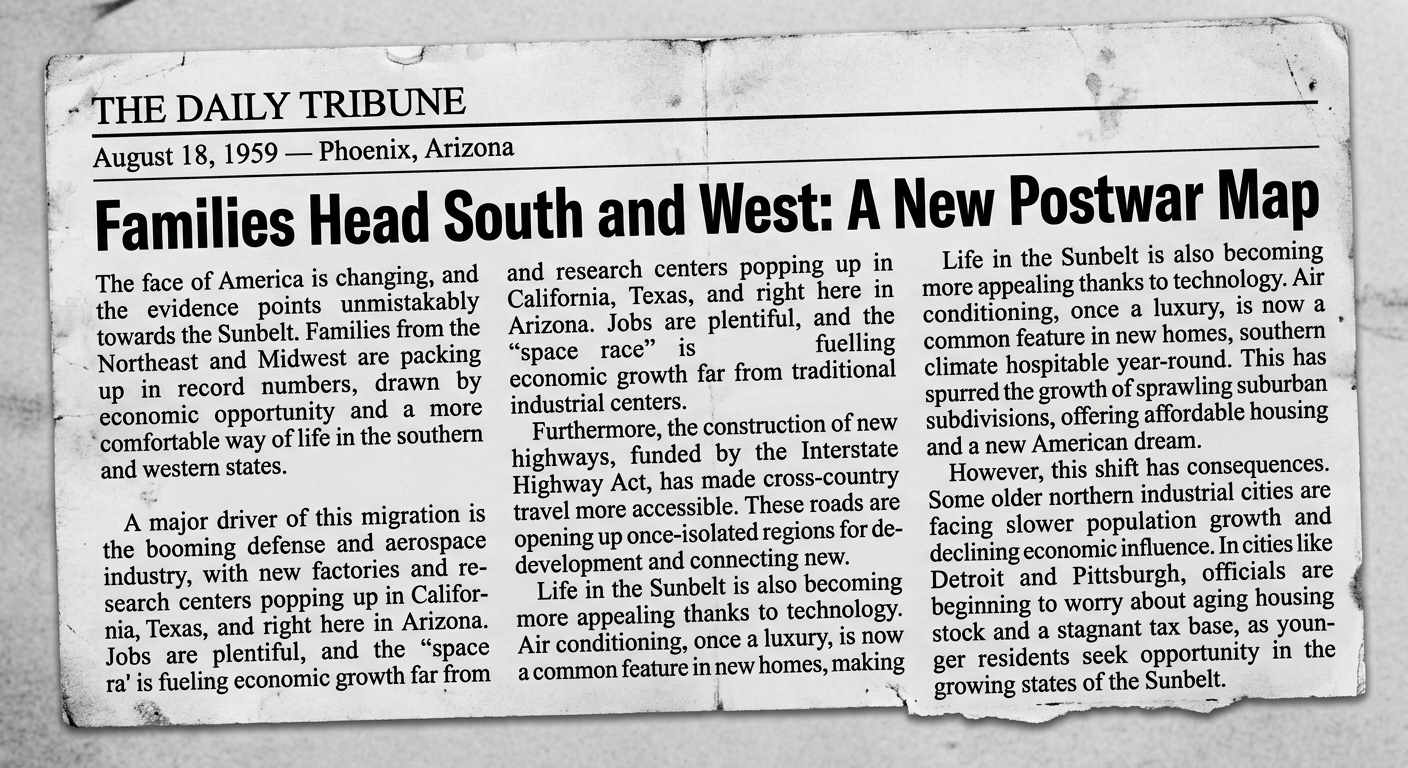
Read the 1959 newspaper editorial excerpt. Consider where and when it was written and the audience it targets. Compare the author’s claims to what you know about postwar migration, suburban growth, and regional economic change. Use evidence from the document in your responses.

Black-and-white 1959 newspaper editorial clipping from Phoenix, Arizona, about postwar migration to the South and West, mentioning defense jobs, highways, air conditioning, suburban growth, and slower growth in some northern industrial cities.

Asemmisa {{asɛmmisaAhyɛnsode}}
11.

Which statement best summarizes the author’s main point in the editorial?

Asemmisa {{asɛmmisaAhyɛnsode}}
12.

Which detail from the editorial best supports the idea that Sun Belt growth was connected to economic opportunity?

Asemmisa {{asɛmmisaAhyɛnsode}}
13.

Which comparison between regions is most consistent with the editorial?

Asemmisa {{asɛmmisaAhyɛnsode}}
14.

Using evidence from the editorial, compare two factors that encouraged people to relocate after World War II.

For each factor, explain how it fits the broader postwar context. Cite two specific details from the document.

Asemmisa {{asɛmmisaAhyɛnsode}}
15.

Contextualize this 1959 editorial: Explain one way it reflects postwar demographic change and one limitation of using an editorial as evidence about population shifts.

Use one specific detail from the document.

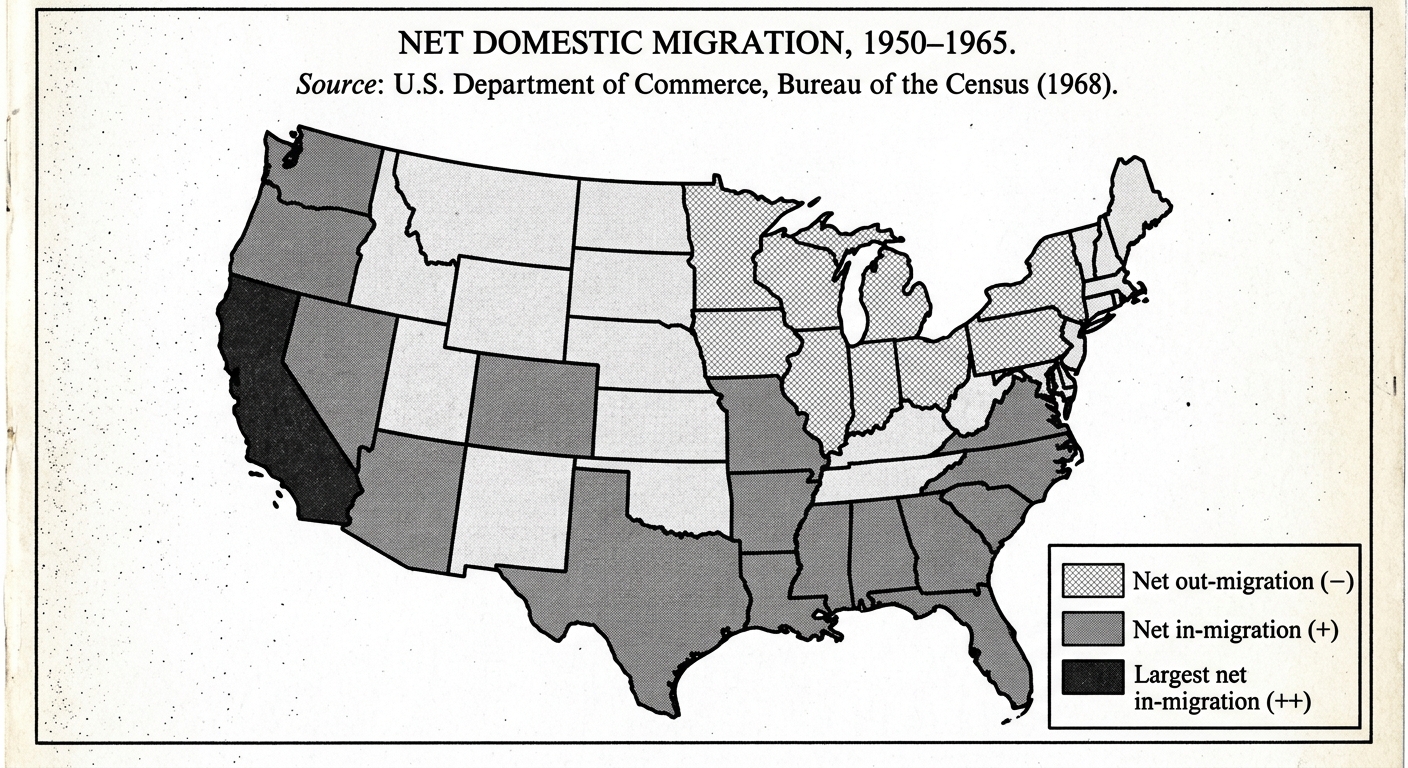
Study the map from a federal population report summarizing net domestic migration from 1950–1965. Use the title, legend, and shaded regions to identify where people moved. Then explain how geographic factors (climate, jobs, transportation routes) helped shape these population patterns after World War II.

High-contrast scanned 1968 Census Bureau-style map titled “Net Domestic Migration, 1950–1965,” showing U.S. states shaded for net out-migration in parts of the Northeast and Midwest and net in-migration in parts of the South and West, with a clear legend.

Asemmisa {{asɛmmisaAhyɛnsode}}
16.

According to the map’s legend and shading, which region shows the strongest net in-migration from 1950 to 1965?

Asemmisa {{asɛmmisaAhyɛnsode}}
17.

Which statement best describes the overall geographic pattern shown on the map?

Asemmisa {{asɛmmisaAhyɛnsode}}
18.

Which conclusion about political or economic effects is most consistent with the map’s regional pattern?

Asemmisa {{asɛmmisaAhyɛnsode}}
19.

Using the map as evidence, compare two U.S. regions (or groups of states) shown.

Describe how their net migration patterns differ and explain one plausible geographic factor that could help explain each region’s pattern.

Asemmisa {{asɛmmisaAhyɛnsode}}
20.

Using evidence from the map, explain how this migration pattern could contribute to suburban growth and regional economic change after World War II.

Cite two specific map details (regions or states) to support your explanation.

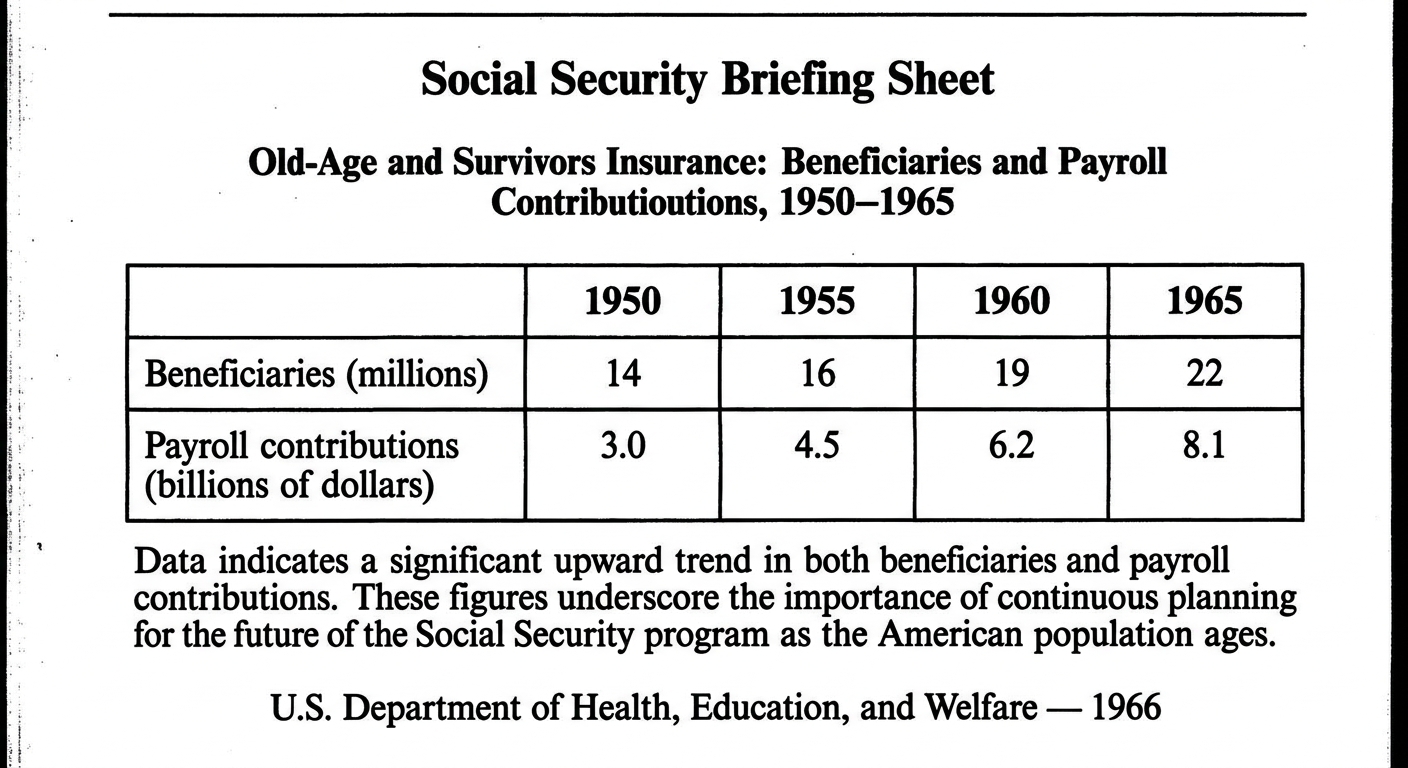
Study the federal briefing sheet about Social Security from the mid-1960s. Use the table to identify changes over time in beneficiaries and payroll contributions. Then explain how postwar demographic change (the baby boom and an aging population) can affect government spending and workers’ paychecks.

High-contrast black-and-white scanned 1966 Social Security briefing sheet with a readable table showing beneficiaries and payroll contributions rising from 1950 to 1965, and a note about planning as the population ages.

Asemmisa {{asɛmmisaAhyɛnsode}}
21.

Which statement best summarizes the overall trend shown in the table from 1950 to 1965?

Asemmisa {{asɛmmisaAhyɛnsode}}
22.

Which inference about the economy or the Social Security system is best supported by the table?

Asemmisa {{asɛmmisaAhyɛnsode}}
23.

Which comparison is most supported by the table’s data?

Asemmisa {{asɛmmisaAhyɛnsode}}
24.

Using evidence from the table, explain one likely effect on households and one likely effect on government budgeting as Social Security beneficiaries increased from 1950 to 1965.

Cite two specific data details (years and values).

Asemmisa {{asɛmmisaAhyɛnsode}}
25.

Compare this document’s economic concern to one other postwar economic demand linked to population change (for example, housing or schools).

Explain how both are connected to demographic shifts after World War II. Use one detail from the document and one contextual detail about the postwar era.