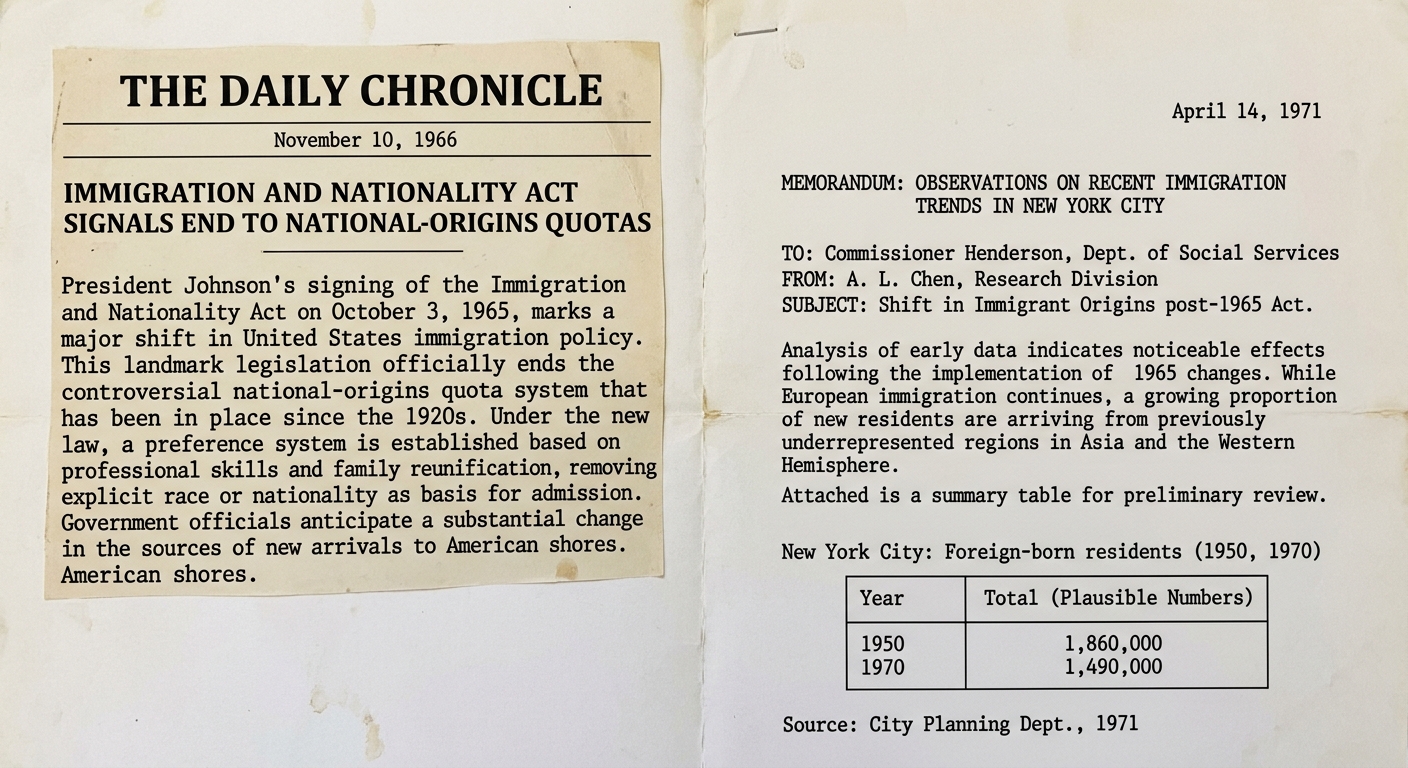
Read the document image. It is a recreated set of excerpts about U.S. immigration policy debates after 1965 and a small New York City data table. Use details from the text and the table as evidence when answering the questions.
Use the historical document(s) and the short readings in the left panel to answer the associated questions.
Use the historical document(s) and the short readings in the left panel to answer the associated questions.
Read the document image. It is a recreated set of excerpts about U.S. immigration policy debates after 1965 and a small New York City data table. Use details from the text and the table as evidence when answering the questions.
Based on the document, what is the main reason supporters gave for changing U.S. immigration policy in the mid-1960s?
Which piece of evidence from the document best supports the conclusion that immigration increased cultural diversity in New York City after 1950?
Which inference about immigration policy debates is best supported by the language of the excerpts?
Using evidence from both the written excerpts and the data table, explain how this document suggests immigration patterns and community life in New York City were changing after 1950.
The document includes supportive language about policy change. Write one question a historian should ask about the document’s perspective or purpose, and explain (using one detail from the document) why that question matters.
Read the document image. It is a recreated timeline of key U.S. immigration laws (1952–1990), a 1965 newspaper-style excerpt, and a small New York City data table. Use the dates and details as evidence to explain change over time.
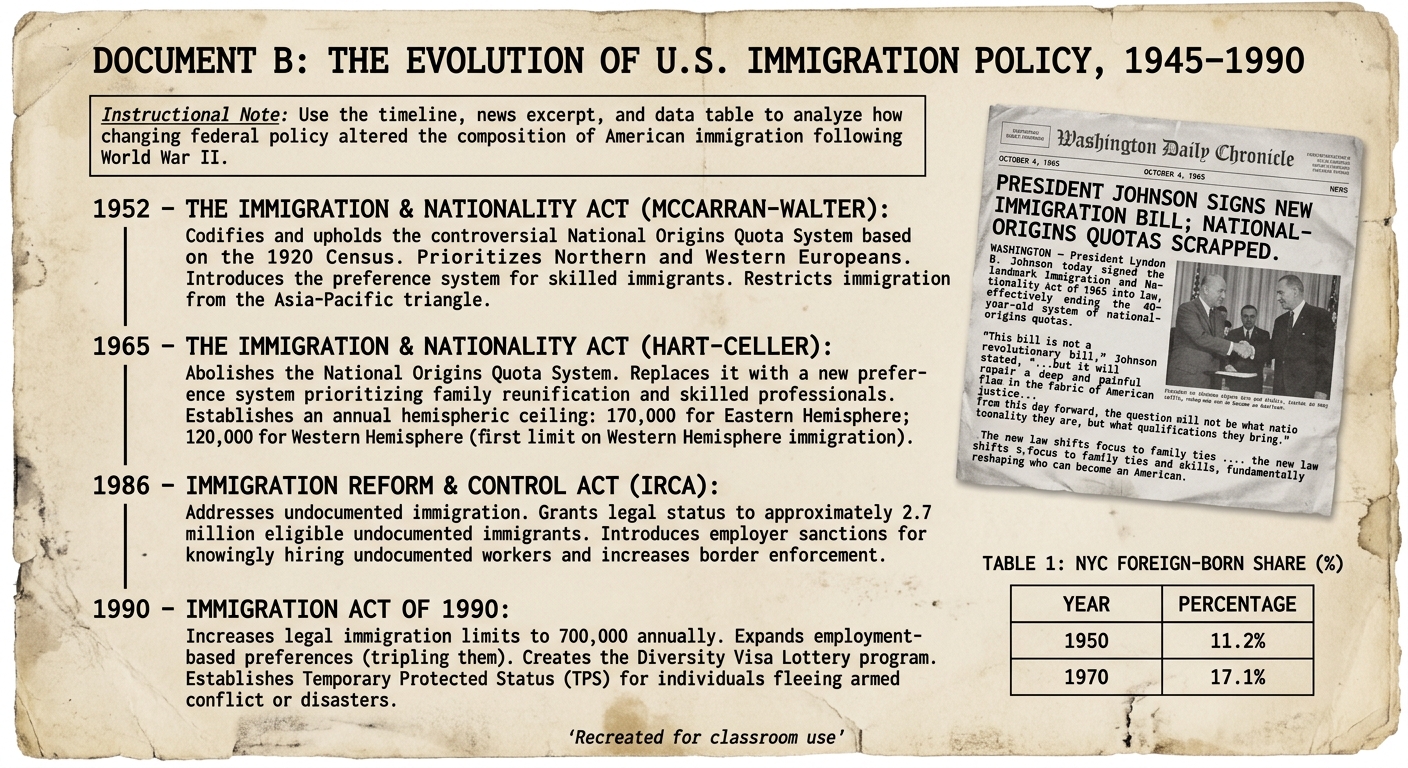
According to the timeline, which policy development happened first?
Which sequence correctly orders these events from earliest to latest, based on the document?
The NYC data table compares 1950 and 1970. Which event on the timeline happened between those two years and is most relevant for explaining change during that period?
Use two dated details from the timeline and one detail from the NYC table to explain how U.S. immigration policy and immigration patterns changed over time.
The document includes a 1965 excerpt and later laws on the timeline.
Explain one continuity and one change in immigration policy debates from 1965 to 1990, using dates or phrases from the document as evidence.
Read the document image. It includes two recreated 1974 excerpts with different viewpoints about immigration in New York City and a brief context box about the 1965 policy shift. Compare the sources and use specific phrases as evidence when answering the questions.
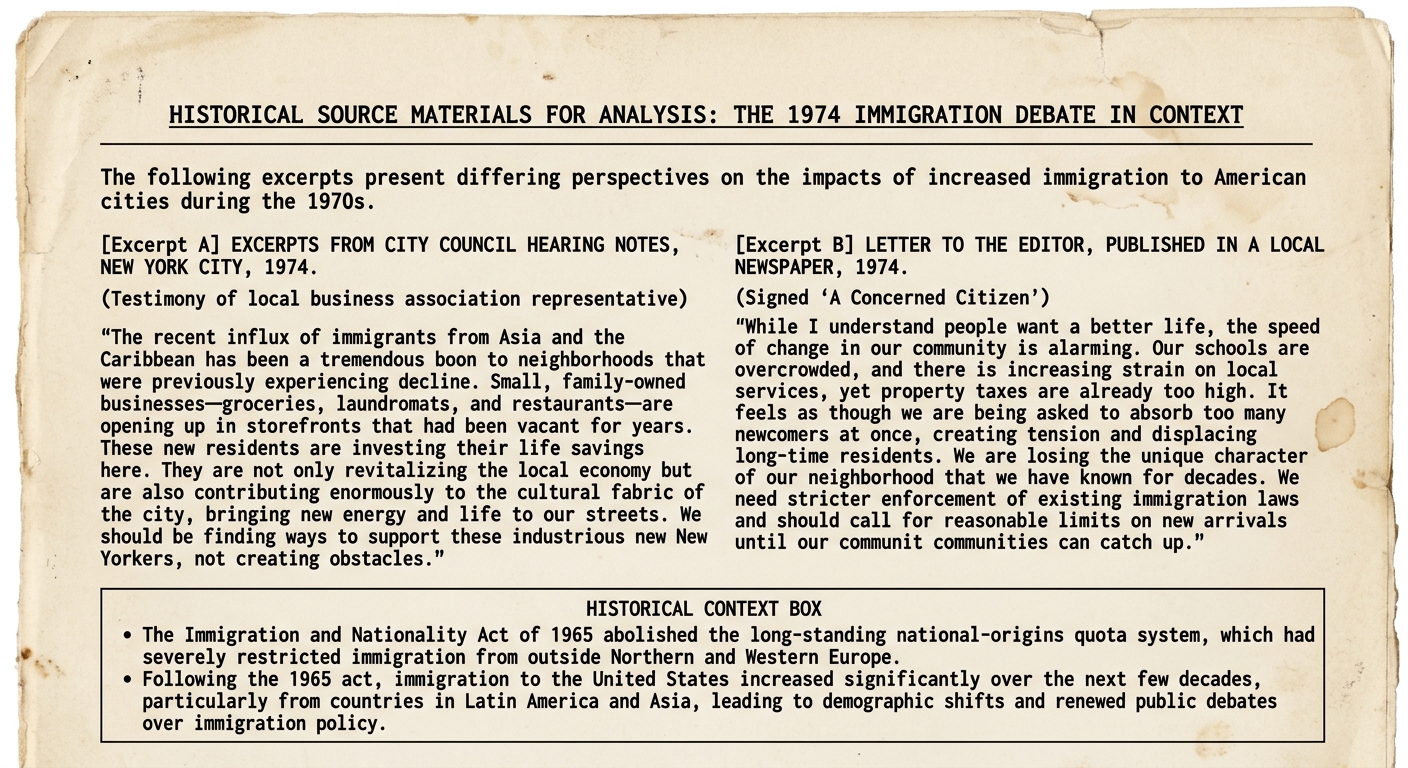
Which statement best compares the main ideas of Excerpt A and Excerpt B?
Which detail from the context box would be most useful for explaining why these 1974 opinions were part of a larger national debate?
Which inference is best supported when you consider BOTH excerpts and the context box together?
Choose one claim about immigration from Excerpt A and one claim from Excerpt B.
Explain how each claim reflects a different perspective on immigration’s impact in New York City, using one quoted or paraphrased phrase from each excerpt as evidence.
Using the context box, explain one reason why arguments like those in the 1974 excerpts might have become more common after 1965.
Use at least one dated detail from the document as evidence.
Read the document image. It is a recreated 1980 city planning summary with a simple map and a small language table showing changing immigration patterns in New York City after 1965. Use the map, legend, and table as evidence when answering the questions.
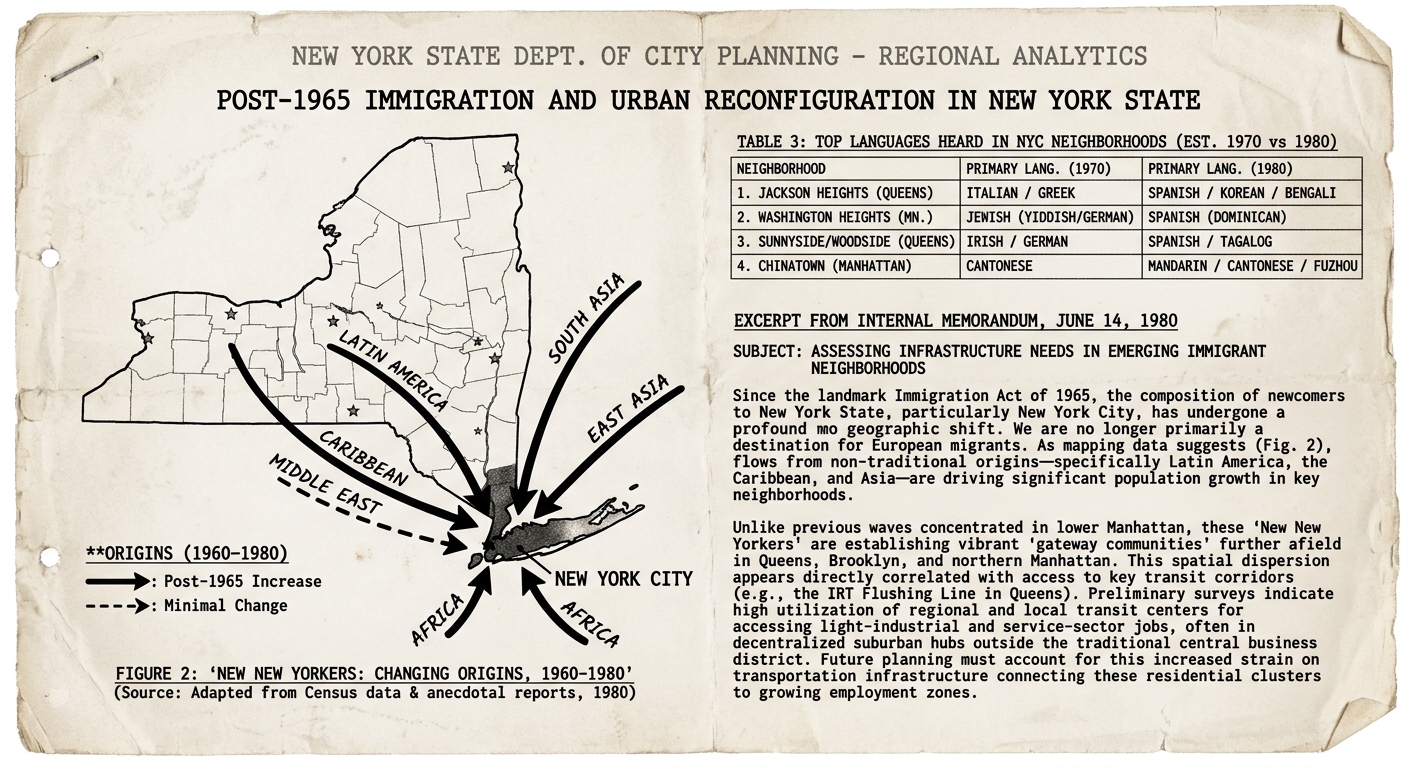
Which statement best describes what the arrows on the map suggest about immigration to New York City after 1965?
Which piece of evidence from the document best supports the conclusion that New York City neighborhoods became more culturally diverse between 1970 and 1980?
Based on the city planning excerpt, which geographic factor is MOST connected to where immigrant neighborhoods grew in New York City?
Use one detail from the map and one detail from the language table to explain how the document shows immigration contributing to cultural diversity in New York City after 1965.
Explain how the policy debates and immigration policy changes after 1965 could help explain the geographic patterns shown on the map.
Use one piece of evidence from the document in your explanation.
Read the document image. It is a recreated 1978 NYC labor report excerpt plus economic data tables and a chart about immigrant workers and small businesses after 1965. Use the economic evidence to explain how immigration affected jobs, businesses, and community economic life.
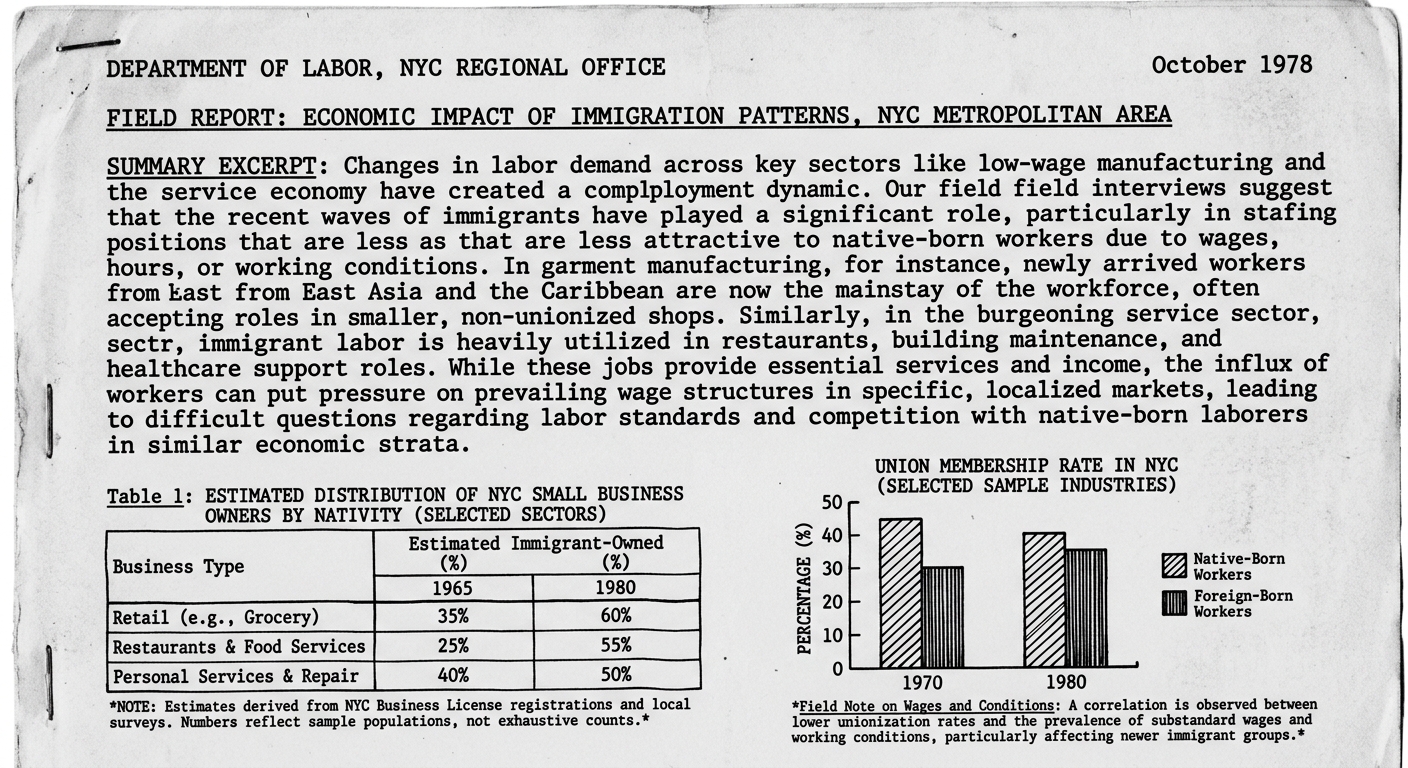
Which statement best describes an economic change shown in the document between 1965 and 1980?
Which piece of evidence from the document best supports the conclusion that immigrants contributed to New York City’s economy through entrepreneurship?
Based on the labor report excerpt, which economic concept is MOST directly illustrated?
Using evidence from the excerpt and ONE data display (table or chart), explain one way immigration changed New York City’s economic life after 1965.
The document suggests both benefits and challenges connected to economic change.
Identify one possible economic tradeoff mentioned or implied by the document, and support it with one piece of evidence.