Twa kɔ nsɛm atitiriw so
Log in
Sign up for FREE
arrow_back
Laabri

8.8c - Demographic Change: - Practices A through E

star
star
star
star
star
Last updated about 1 month ago
25 Nsɛmmisa
Hyɛ no nsow a efi ɔkyerɛwfo no hɔ:

Use the historical document(s) and the short readings in the left panel to answer the associated questions.

Use the historical document(s) and the short readings in the left panel to answer the associated questions.

8.8.c.i
DOK.SS.2
8.8.c.i
DOK.SS.2
8.8.c.i
DOK.SS.2
8.8.c.i
DOK.SS.2
8.8.c.i
DOK.SS.2
Ɛhia
1
8.8.c.i
DOK.SS.2
Ɛhia
2
8.8.c.i
DOK.SS.2
Ɛhia
2
8.8.c.i
DOK.SS.2
Ɛhia
1
8.8.c.i
DOK.SS.2
Ɛhia
1
8.8.c.i
DOK.SS.2
Ɛhia
2
8.8.c.i
DOK.SS.2
Ɛhia
1
8.8.c.i
DOK.SS.2
Ɛhia
1
8.8.c.i
DOK.SS.2
Ɛhia
1
8.8.c.i
DOK.SS.2
Ɛhia
2
8.8.c.i
DOK.SS.2
Ɛhia
1
8.8.c.i
DOK.SS.2
Ɛhia
2
8.8.c.i
DOK.SS.2
Ɛhia
2
8.8.c.i
DOK.SS.2
Ɛhia
1
8.8.c.i
DOK.SS.2
Ɛhia
1
8.8.c.i
DOK.SS.2
Ɛhia
1
8.8.c.i
DOK.SS.2
Ɛhia
1
8.8.c.i
DOK.SS.2
Ɛhia
1
8.8.c.i
DOK.SS.2
Ɛhia
2
8.8.c.i
DOK.SS.2
Ɛhia
2
8.8.c.i
DOK.SS.2
Ɛhia
1
8.8.c.i
DOK.SS.2
Ɛhia
1
8.8.c.i
DOK.SS.2
Ɛhia
2
8.8.c.i
DOK.SS.2
Ɛhia
2
8.8.c.i
DOK.SS.2
Ɛhia
1
8.8.c.i
DOK.SS.2

Historical Document:
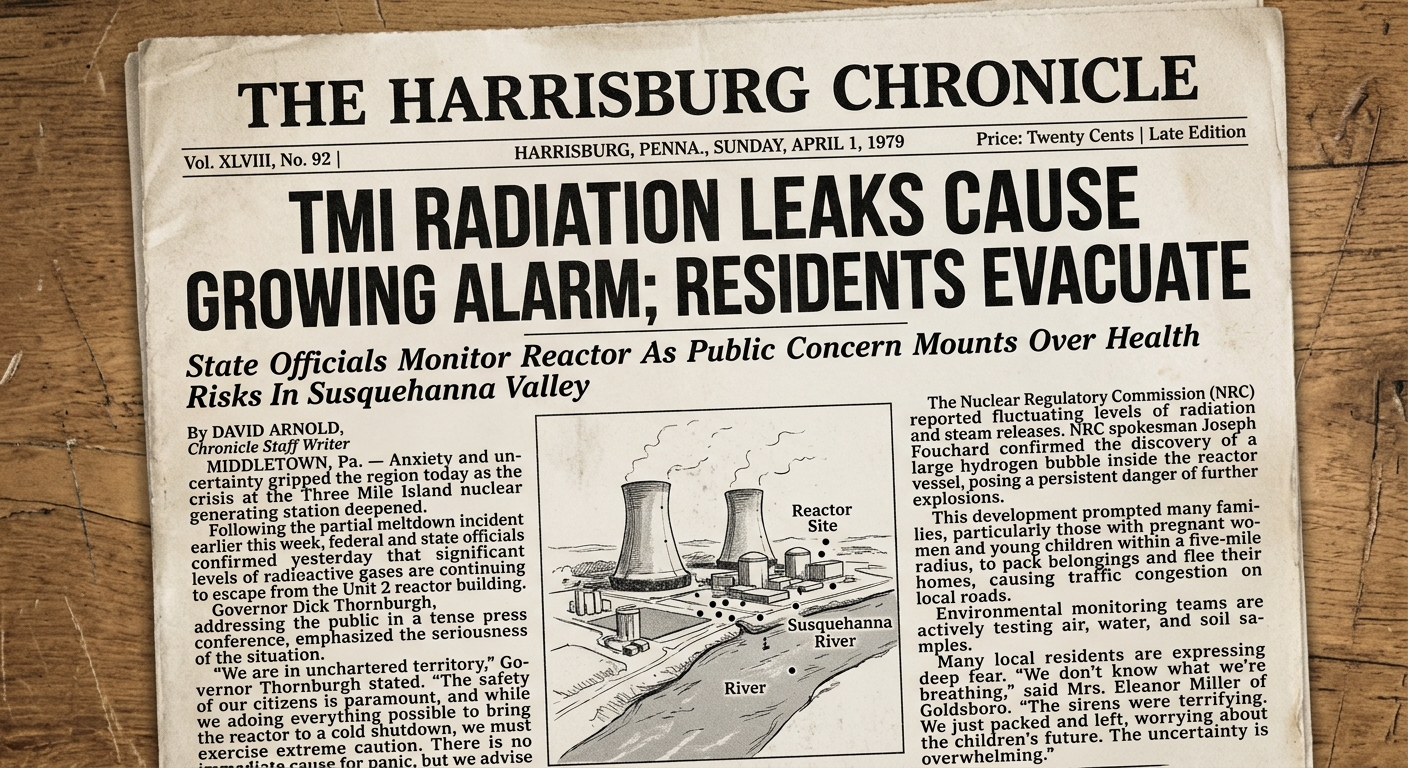
Black-and-white newspaper clipping dated April 1, 1979 reporting on the Three Mile Island accident, with a bold headline, short article text, and mentions of radiation monitoring and public concern.

Use the newspaper clipping as evidence about how people responded to an environmental risk from energy production. Focus on what the source says, not what you already know. Be ready to cite specific words, details, or claims from the document.
Asemmisa {{asɛmmisaAhyɛnsode}}
1.

Which claim is BEST supported by evidence in the newspaper clipping?

Asemmisa {{asɛmmisaAhyɛnsode}}
2.

Using evidence from the document, describe ONE action a government or community could take to reduce the type of environmental risk shown.

Explain why your action fits the evidence.

Asemmisa {{asɛmmisaAhyɛnsode}}
3.

Explain how the document shows that energy production can create environmental risks.

Use at least TWO specific details from the clipping or the reading stimulus as evidence.

Asemmisa {{asɛmmisaAhyɛnsode}}
4.

Based on the document, which cause-and-effect relationship is most reasonable?

Asemmisa {{asɛmmisaAhyɛnsode}}
5.

Which detail from the clipping would be the STRONGEST evidence that the situation involved potential environmental risk?

Historical Document:

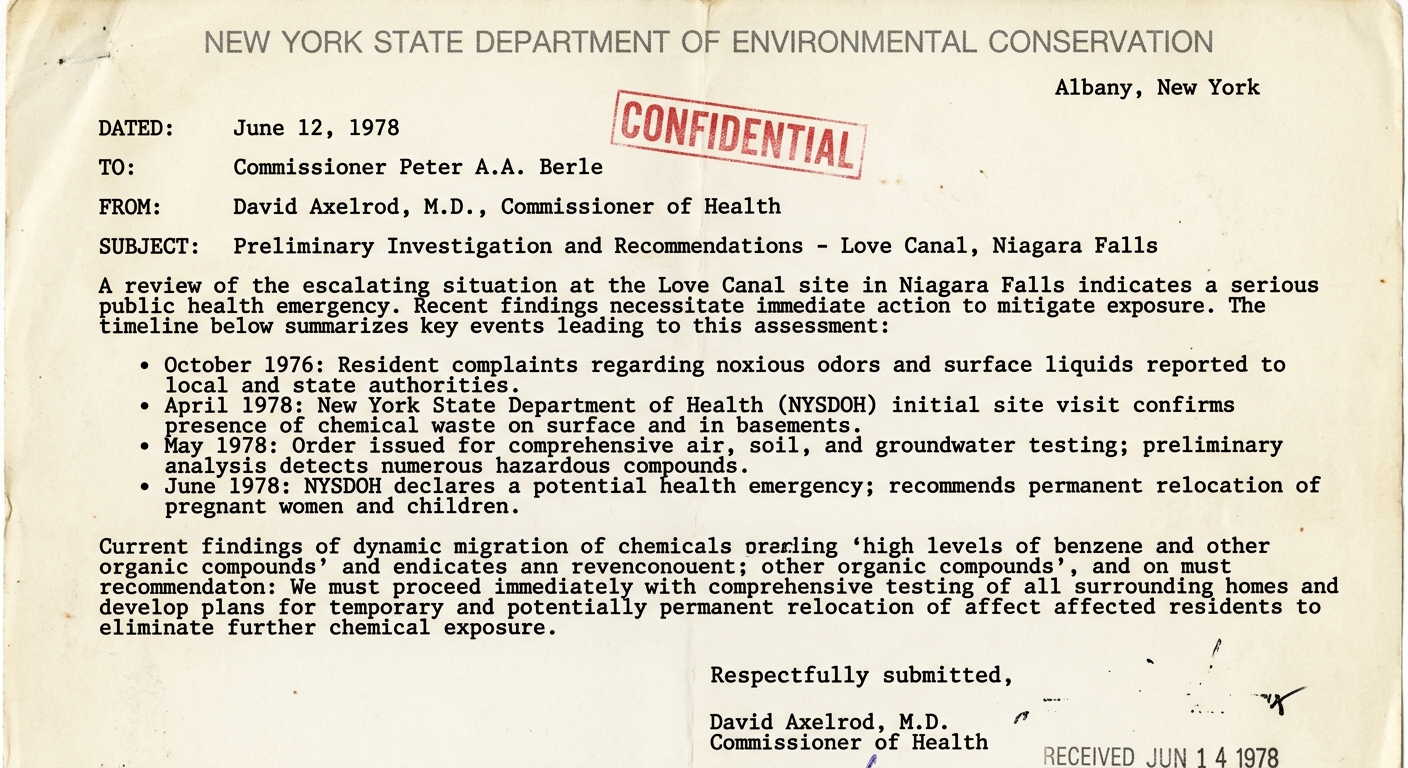
Typewritten government memo dated June 12, 1978 from New York State environmental officials, showing a bulleted timeline from 1976 to 1978 about Love Canal complaints, testing, discovery of chemical waste, and relocation planning.

Use the memo’s dated timeline as evidence about how officials and residents responded as an environmental problem grew over time. Focus on the sequence of events in the document, and cite specific dates or steps when you make a claim.

Asemmisa {{asɛmmisaAhyɛnsode}}
6.

Using evidence from the memo’s timeline, explain how the environmental risk developed over time.

Use at least TWO dated details from the document to support your answer.

Asemmisa {{asɛmmisaAhyɛnsode}}
7.

Which statement best describes the change over time shown in the memo’s timeline?

Asemmisa {{asɛmmisaAhyɛnsode}}
8.

Based on the sequence of events in the memo, which cause-and-effect relationship is most reasonable?

Asemmisa {{asɛmmisaAhyɛnsode}}
9.

According to the memo’s timeline, which event happened FIRST?

Asemmisa {{asɛmmisaAhyɛnsode}}
10.

Choose ONE later action mentioned in the memo (for example, expanded testing or relocation planning).

Explain how that action makes sense when you consider earlier events in the timeline.

Use evidence from at least TWO timeline entries.

Historical Document:

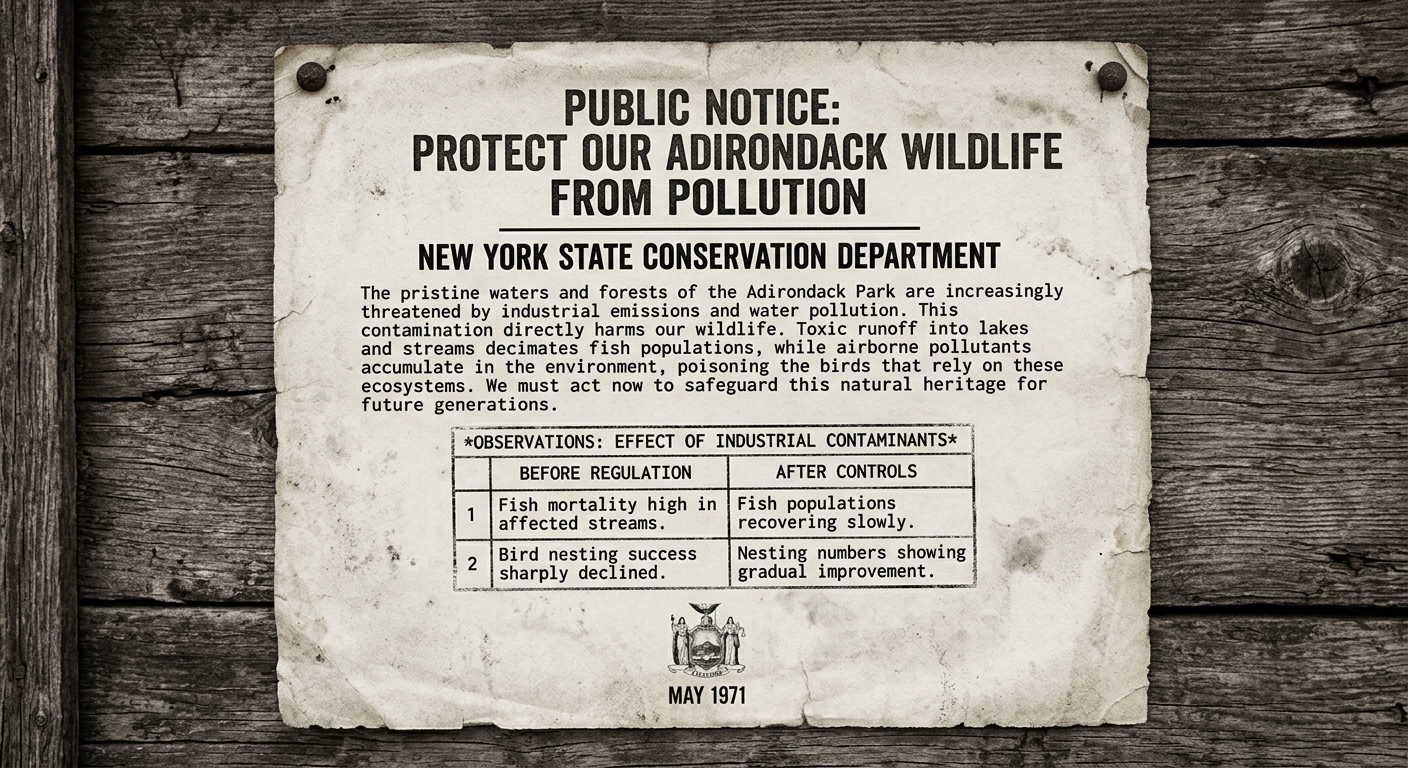
Black-and-white public notice flyer dated May 1971 about protecting Adirondack Park wildlife from pollution, including a short text and a small comparison table labeled 'Before regulation' and 'After controls'.

Use the flyer as evidence about how officials explained environmental harm and proposed solutions. Compare what the document suggests about conditions before and after pollution controls. When you answer, cite specific words, numbers, or categories from the document.

Asemmisa {{asɛmmisaAhyɛnsode}}
11.

Which comparison is BEST supported by the document’s “Before regulation” vs “After controls” information?

Asemmisa {{asɛmmisaAhyɛnsode}}
12.

What problem is it responding to, and what solution is it promoting?

Explain your answer using evidence from the flyer (for example, its comparisons or stated impacts).

Asemmisa {{asɛmmisaAhyɛnsode}}
13.

Compare the document’s description of environmental conditions “before regulation” and “after controls.”

What change does the document suggest?

Use at least TWO specific details from the document as evidence.

Asemmisa {{asɛmmisaAhyɛnsode}}
14.

Which detail from the flyer is the STRONGEST evidence that industrial activity could affect plant or animal life?

Asemmisa {{asɛmmisaAhyɛnsode}}
15.

Which statement BEST contextualizes the document within the larger environmental issues of the post–World War II United States?

Historical Document:

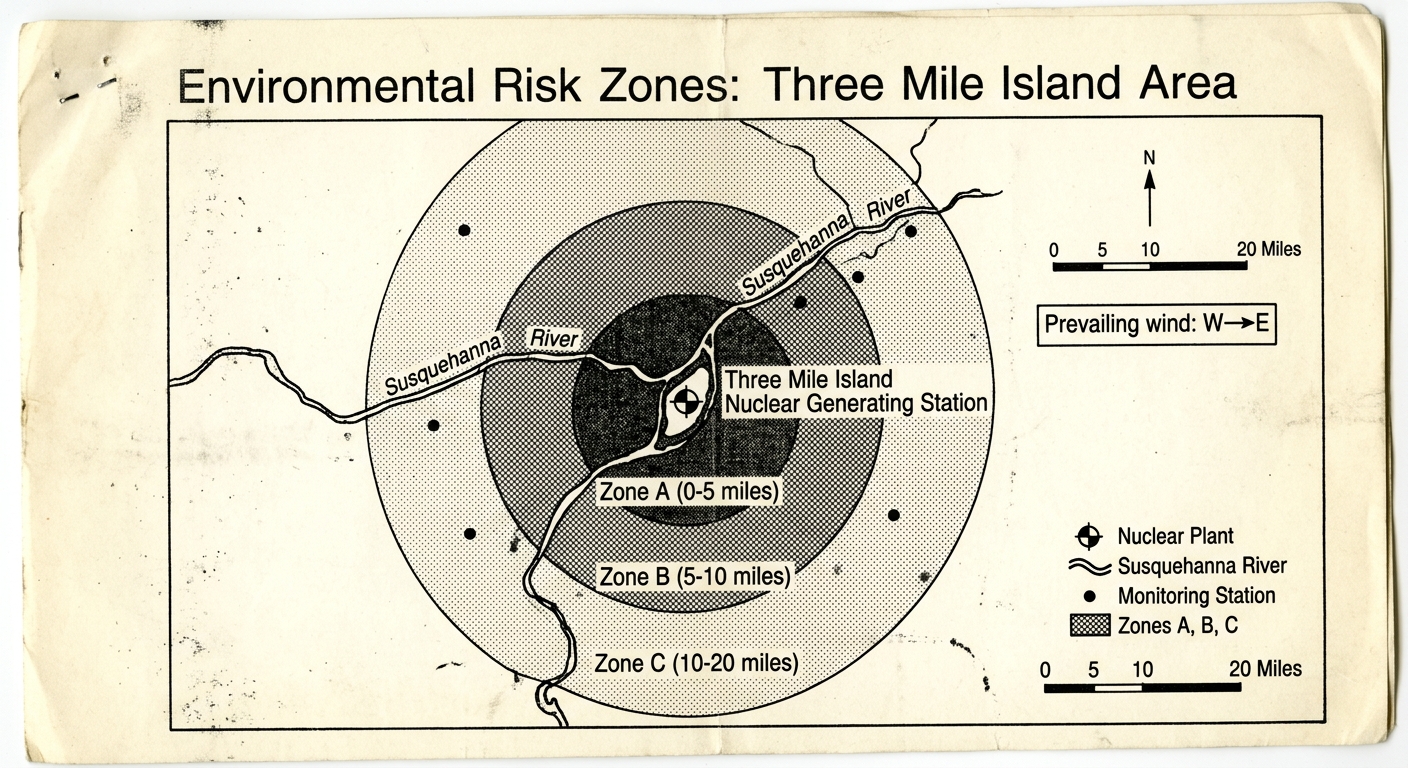
Black-and-white map handout titled 'Environmental Risk Zones: Three Mile Island Area' showing the plant symbol, Susquehanna River, three labeled distance zones, a legend, north arrow, scale bar, wind-direction note, and monitoring stations.

Use the map as evidence about how location affects environmental risk from energy production. Pay attention to distance zones, the river, and the note about wind direction. When you answer, cite at least two map features (labels, legend, or symbols).

Asemmisa {{asɛmmisaAhyɛnsode}}
16.

Which map feature provides the BEST evidence that environmental risk can vary by distance from the plant?

Asemmisa {{asɛmmisaAhyɛnsode}}
17.

Based on the map, which location would officials most likely prioritize for the FASTEST evacuation if an accident occurred at the plant?

Asemmisa {{asɛmmisaAhyɛnsode}}
18.

The map includes a note about prevailing wind direction. Which inference is MOST reasonable based on that note?

Asemmisa {{asɛmmisaAhyɛnsode}}
19.

Choose ONE location on the map (for example, a place in Zone B near the river, or a place in Zone C downwind).

Explain what specific action officials might take there (evacuation, water testing, or air monitoring) and justify it using evidence from the map.

Asemmisa {{asɛmmisaAhyɛnsode}}
20.

Use evidence from the map to explain how geography can influence the spread of environmental risk from energy production.

Use at least TWO map features (for example, zones, wind arrow, river, or monitoring stations) as evidence.

Historical Document:

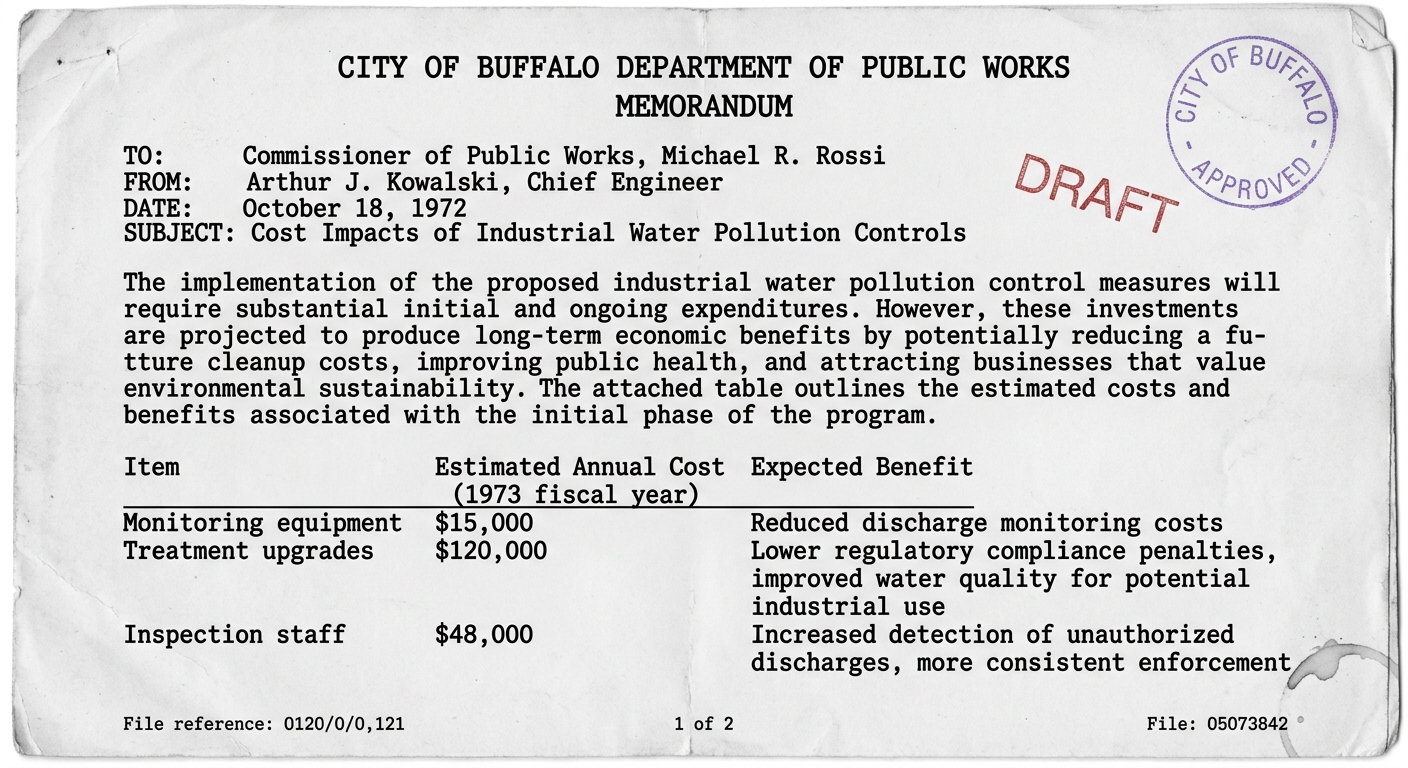
Black-and-white scanned budget memo dated October 18, 1972 listing costs and expected benefits of industrial water pollution controls, including a small table of expenses and benefits.

Use the budget memo as evidence about how pollution and industrial regulation can affect economic decisions. Focus on the tradeoffs between costs (spending, taxes, prices) and benefits (health, jobs, recreation). When you answer, cite specific costs or benefits listed in the document.

Asemmisa {{asɛmmisaAhyɛnsode}}
21.

Which claim about economic tradeoffs is BEST supported by the memo?

Asemmisa {{asɛmmisaAhyɛnsode}}
22.

Based on the memo, which conclusion is MOST reasonable about why a city might support pollution controls even if they cost money?

Asemmisa {{asɛmmisaAhyɛnsode}}
23.

Imagine a city council must choose between funding pollution controls now or delaying them to keep short-term costs lower.

Using evidence from the memo, explain which option the memo’s information would better support and why.

Asemmisa {{asɛmmisaAhyɛnsode}}
24.

Using evidence from the memo, explain ONE economic cost and ONE economic benefit of pollution controls.

Describe how each one could affect community decisions.

Asemmisa {{asɛmmisaAhyɛnsode}}
25.

Which piece of evidence from the memo BEST supports the idea that environmental policy can influence both public and private economic activity?