Use the historical document(s) and the short readings in the left panel to answer the associated questions.
Historical Document:
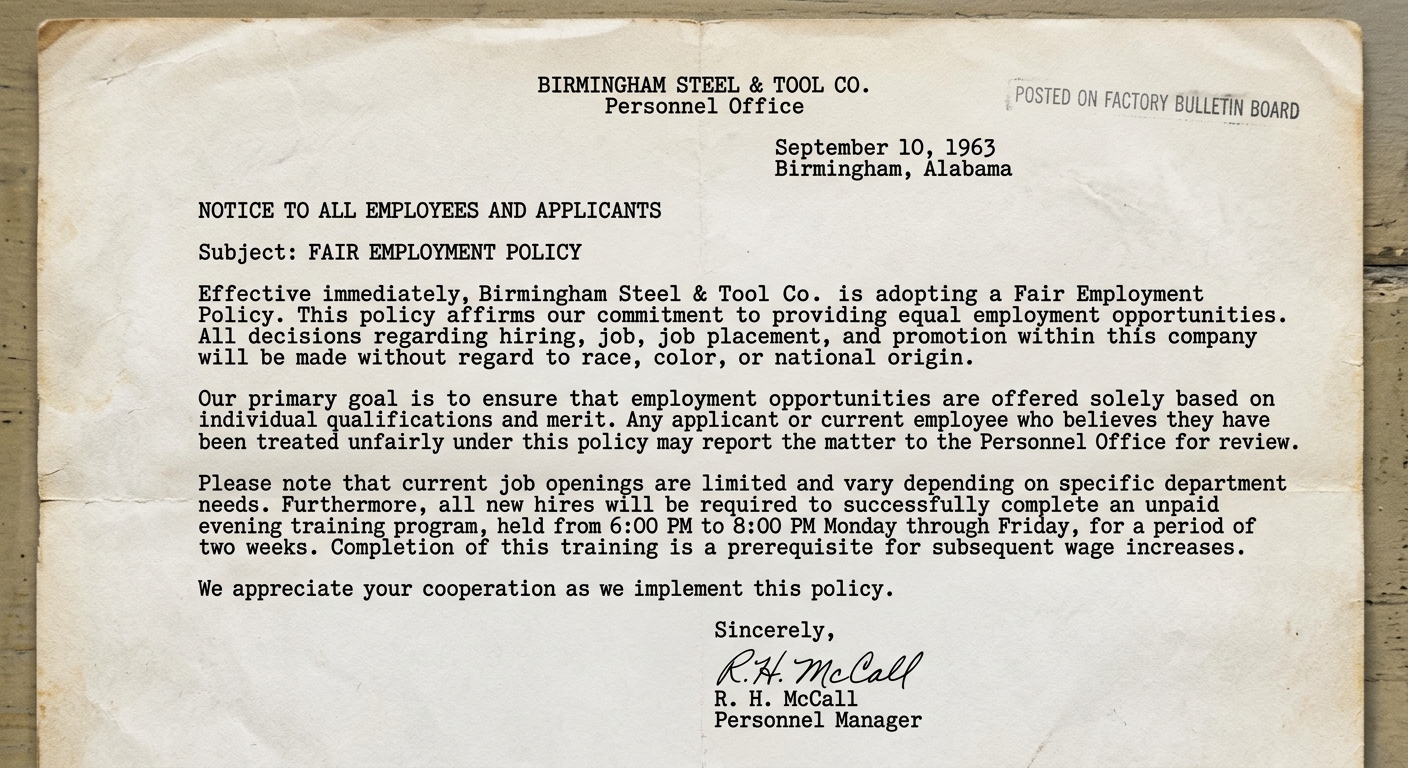
Source: A fictional notice posted by the personnel office of a Birmingham manufacturing company (September 1963). It announces new hiring rules after community pressure and federal attention. Read the notice closely to determine what changes are promised and what economic limits remain.

Using two specific pieces of evidence from the notice, explain how the document supports the idea that the civil rights movement led to greater equality under the law, while economic improvements could be slower.
Which conclusion about economic progress is best supported by the notice?
A historian wants to use this notice as evidence about change during the postwar civil rights era.
Explain what each of the following details helps the historian understand:
(1) the policy statement about hiring/promotion and
(2) the note about training, limited openings, or wage increases.
Which statement from the notice is the strongest evidence that the company is responding to demands for equality under the law during the civil rights era?
Based on the document, what is the most likely purpose of the notice?
Historical Document:

Source: A fictional community flyer from Greenwood, Mississippi (August 1964). It invites residents to a voter registration workshop after a new federal civil rights law. Read the date and details carefully to determine what progress had occurred—and what barriers to full political participation still remained.
The flyer is dated August 1964 and mentions “a new federal civil rights law passed this summer.”
Which event most likely happened shortly before this flyer was posted?
Which timeline places these civil rights milestones in the most accurate chronological order?
Which inference best shows a change over time that the flyer suggests about the civil rights movement by 1964?
Using two specific details from the flyer (including the date), explain how it provides evidence that legal equality could advance before full access to political or economic opportunity was achieved.
Place the flyer in historical context. Identify one earlier civil rights development that helped set the stage for this 1964 local action and one later federal action that addressed the voting barrier mentioned in the flyer.
Explain how the sequence matters.
Historical Document:

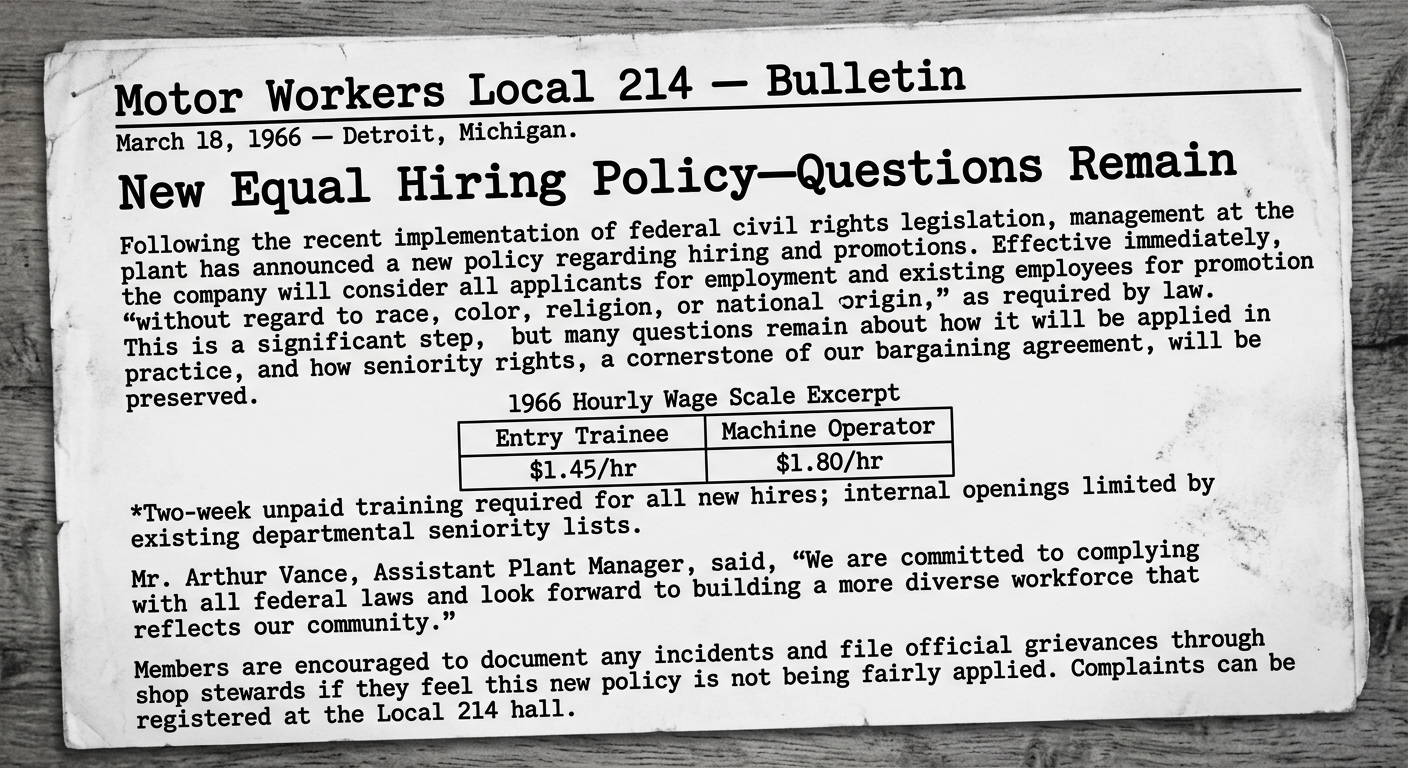
Source: A fictional excerpt from a union newsletter in Detroit (March 1966). It summarizes a factory’s new nondiscrimination policy after federal civil rights laws and lists training and wage details for entry-level jobs. Read closely to compare legal promises with economic realities.
Which broader historical context best explains why a workplace document like this would appear in 1966?
Which comparison is best supported by the newsletter excerpt?
Which statement best contextualizes the excerpt’s point that economic improvements could be slower than legal change?
Identify one earlier civil rights development that helped create pressure for workplace nondiscrimination and explain one reason economic progress could still remain uneven afterward.
Using two specific pieces of evidence from the excerpt, compare how the document describes:
(1) legal equality and
(2) economic opportunity in the workplace.
Historical Document (Image)

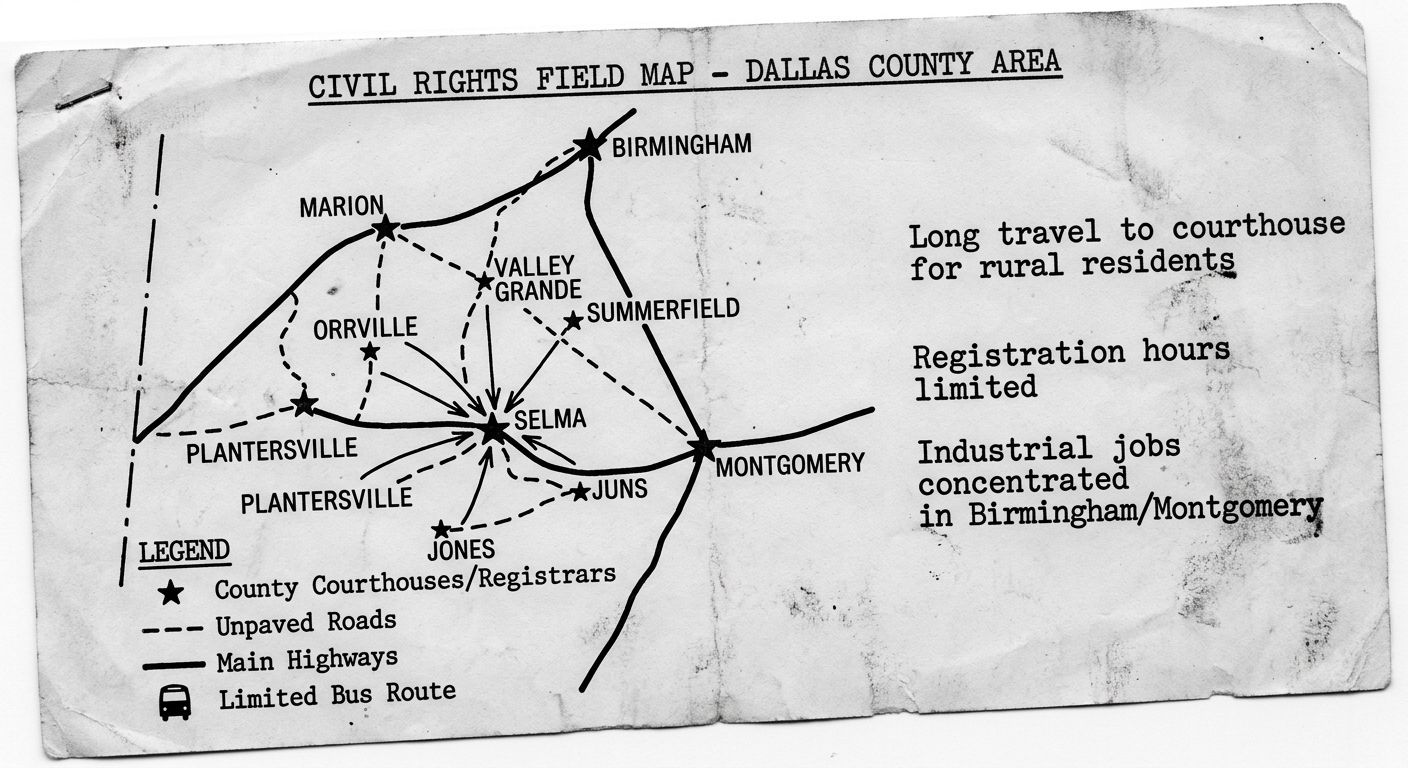
Source: A fictional civil rights field map prepared in Selma, Alabama (April 1965). It shows county courthouses, travel routes, and notes about transportation and registration barriers. Use the map to explain how location affected access to rights—and why opportunities could differ across communities.
Which statement best describes the geographic pattern shown on the field map?
Which inference about access to civil rights is best supported by the map’s routes and notes?
Using two specific details from the map (symbols, routes, or notes), explain how geography could affect people’s access to voting/registration and why economic opportunities might still differ across communities.
Which comparison between places on the map is best supported regarding economic opportunity after legal change?
Explain how the field map illustrates regional differences in the civil rights movement and why national legal changes did not produce equal outcomes everywhere at the same time.
Historical Document:

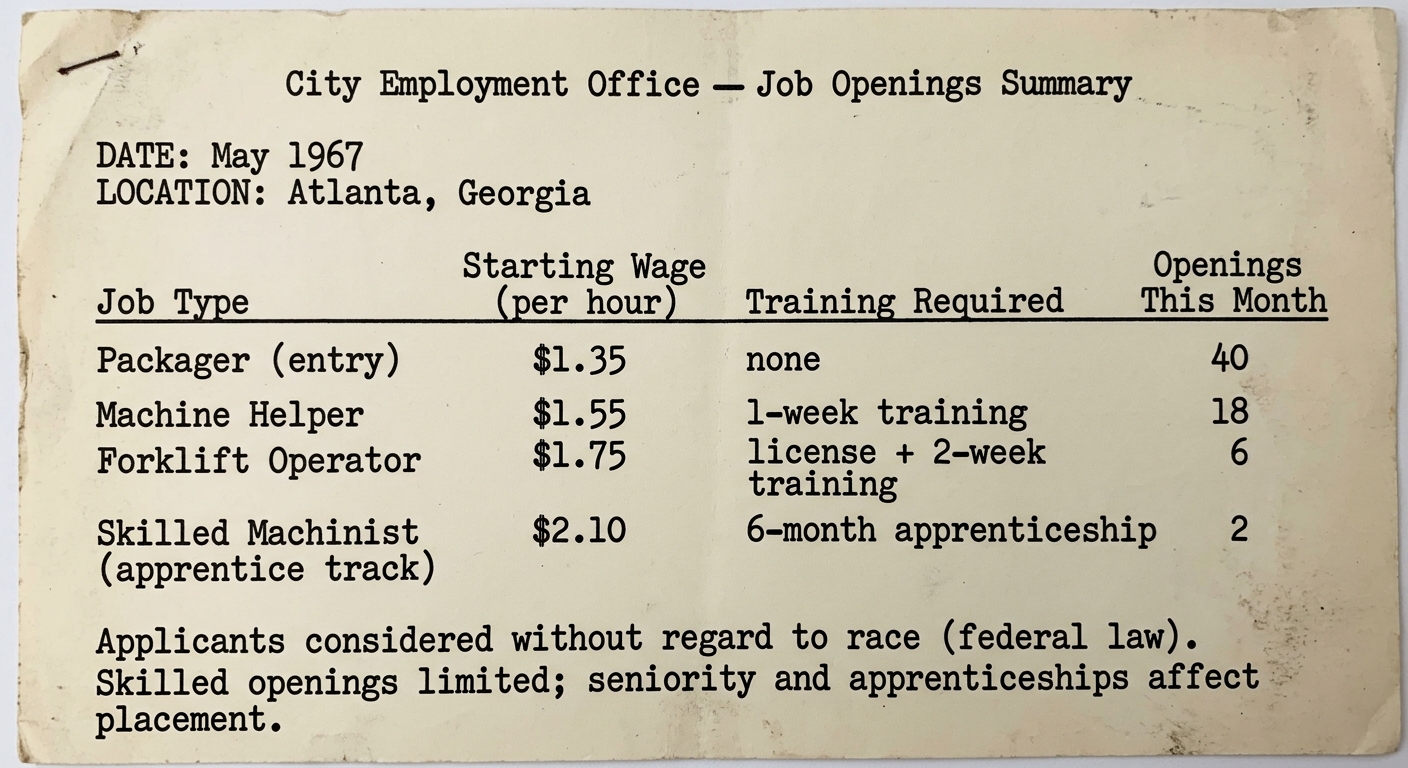
Source: A fictional summary from a city employment office (Spring 1967). It lists wages, training requirements, and openings for several factory jobs after new nondiscrimination rules. Read the table and notes to evaluate how the labor market could limit who benefited first from legal change.
Which conclusion about economic opportunity is best supported by the document’s table and notes?
Using two specific pieces of evidence from the document (numbers and/or notes), explain how legal equality could advance while economic improvements remained slower.
Which idea best explains why the jobs in the table have different wages and opportunities?
Based on the table, which job has the highest starting wage but also the largest training barrier before most workers can qualify?
Compare entry-level and skilled jobs in the table.
Explain how training requirements, openings, and the hiring system could shape who benefits first from workplace changes.