Twa kɔ nsɛm atitiriw so
Log in
Sign up for FREE
arrow_back
Laabri

8.9b - Domestic Politics and Reform: - Practices A through E

star
star
star
star
star
Last updated about 1 month ago
25 Nsɛmmisa
Hyɛ no nsow a efi ɔkyerɛwfo no hɔ:

Use the historical document(s) and the short readings in the left panel to answer the associated questions.

Use the historical document(s) and the short readings in the left panel to answer the associated questions.

Ɛhia
1
8.9.b
DOK.SS.2
Ɛhia
1
8.9.b
DOK.SS.2
Ɛhia
1
8.9.b
DOK.SS.2
Ɛhia
1
8.9.b
DOK.SS.2
Ɛhia
1
8.9.b
DOK.SS.2
Ɛhia
1
8.9.b
DOK.SS.2
Ɛhia
1
8.9.b
DOK.SS.2
Ɛhia
1
8.9.b
DOK.SS.2
Ɛhia
1
8.9.b
DOK.SS.2
Ɛhia
1
8.9.b
DOK.SS.2
Ɛhia
1
8.9.b
DOK.SS.2
Ɛhia
1
8.9.b
DOK.SS.2
Ɛhia
1
8.9.b
DOK.SS.2
Ɛhia
1
8.9.b
DOK.SS.2
Ɛhia
1
8.9.b
DOK.SS.2
Ɛhia
1
8.9.b
DOK.SS.2
Ɛhia
1
8.9.b
DOK.SS.2
Ɛhia
1
8.9.b
DOK.SS.2
Ɛhia
1
8.9.b
DOK.SS.2
Ɛhia
1
8.9.b
DOK.SS.2
Ɛhia
1
8.9.b
DOK.SS.2
Ɛhia
1
8.9.b
DOK.SS.2
Ɛhia
1
8.9.b
DOK.SS.2
Ɛhia
1
8.9.b
DOK.SS.2
Ɛhia
1
8.9.b
DOK.SS.2

Source A (Historical Document):

Read the document image.

Source A is a 1967 organizing flyer calling for equal opportunity in hiring and pay. It argues that the same civil rights principles used to challenge discrimination should also apply to women. The flyer urges supporters to use laws and courts to demand enforcement.
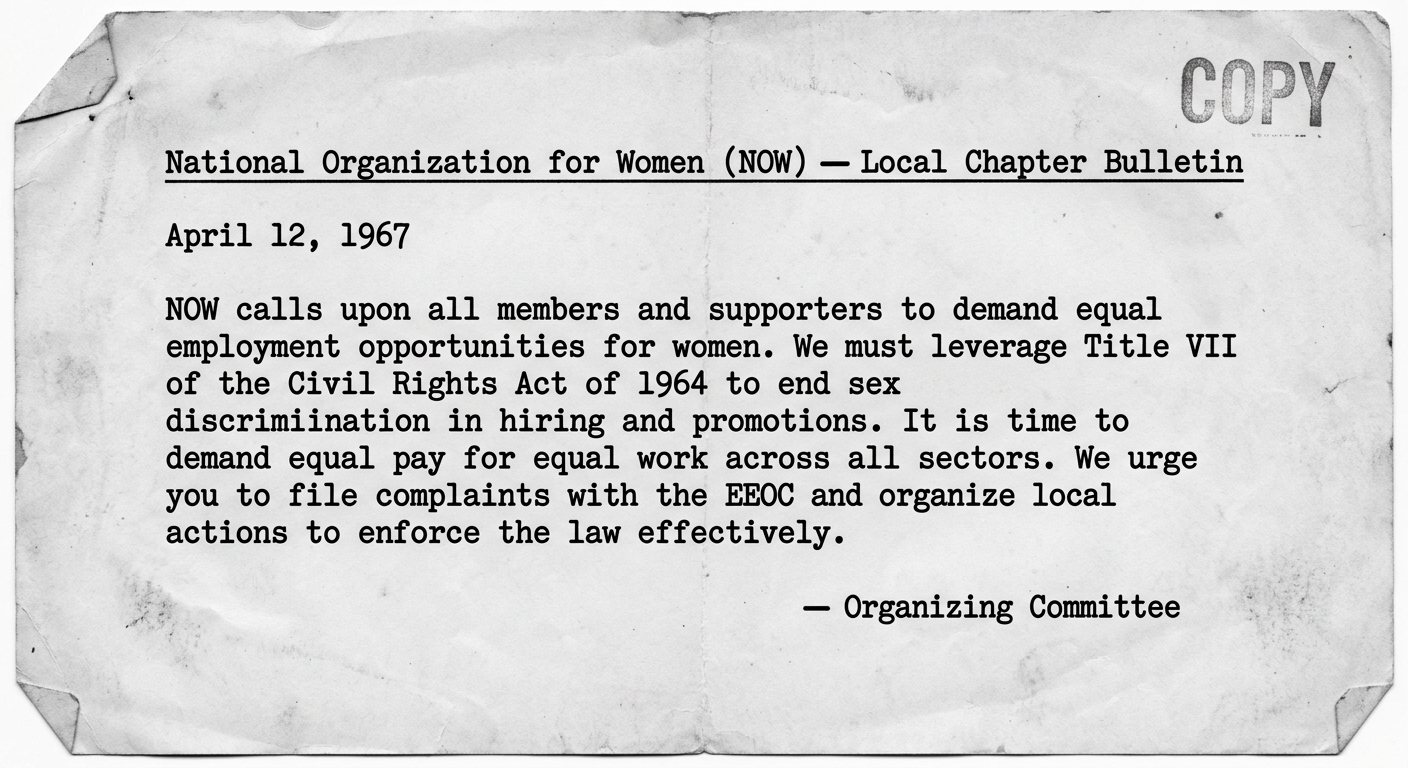
Black-and-white scanned 1967 NOW local chapter bulletin urging equal employment opportunity for women, referencing Title VII, equal pay, and organizing and filing complaints to enforce civil rights laws.

Asemmisa {{asɛmmisaAhyɛnsode}}
1.

Based on Source A, what is the flyer’s main claim about equality efforts in the 1960s?

Asemmisa {{asɛmmisaAhyɛnsode}}
2.

Which detail from Source A is the best evidence that the group supported using legal strategies to seek equality?

Asemmisa {{asɛmmisaAhyɛnsode}}
3.

Which inference is best supported by Source A about how the civil rights movement influenced women’s equality efforts?

Asemmisa {{asɛmmisaAhyɛnsode}}
4.

Using Source A, explain how the civil rights movement prompted renewed efforts for equality by women.

Use at least two specific pieces of evidence from the document to support your explanation.

Asemmisa {{asɛmmisaAhyɛnsode}}
5.

Based on Source A, identify one factor that could enable success and one factor that could limit success for women’s equality efforts.

Support each factor with evidence from the document.

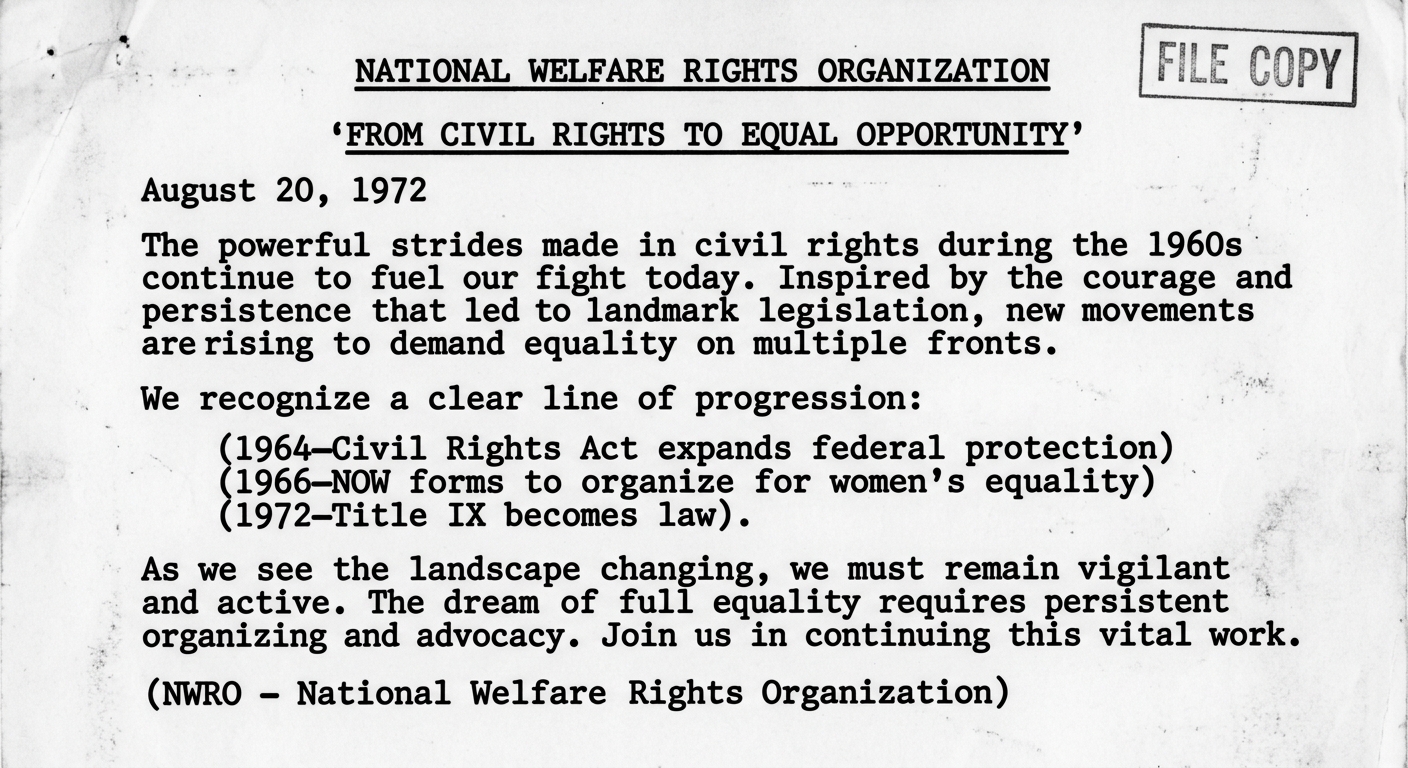
Source B (Historical Document):

Read the document image.

Source B is a 1972 newsletter excerpt that connects 1960s civil rights activism to later efforts for equality. It includes a short timeline listing the Civil Rights Act (1964), the formation of NOW (1966), and the passage of Title IX (1972) as milestones.

Black-and-white scanned 1972 NWRO newsletter excerpt with a small timeline listing 1964 Civil Rights Act, 1966 formation of NOW, and 1972 Title IX, linking civil rights activism to later equality efforts.

Asemmisa {{asɛmmisaAhyɛnsode}}
6.

Based on Source B’s timeline, which event happened second (in chronological order)?

Asemmisa {{asɛmmisaAhyɛnsode}}
7.

Which piece of evidence from Source B best supports the idea that women’s equality efforts built on earlier civil rights gains?

Asemmisa {{asɛmmisaAhyɛnsode}}
8.

Which statement best describes how the timeline in Source B helps a reader understand change over time in equality efforts?

Asemmisa {{asɛmmisaAhyɛnsode}}
9.

Using Source B, explain how civil rights achievements in the 1960s helped set the stage for later women’s equality efforts.

Use at least two specific pieces of evidence from the timeline or text.

Asemmisa {{asɛmmisaAhyɛnsode}}
10.

Based on Source B, identify one reason that progress toward equality might take time even after a law is passed.

Use evidence from the timeline’s sequence to support your answer.

Source C (Historical Document):

Read the document image.

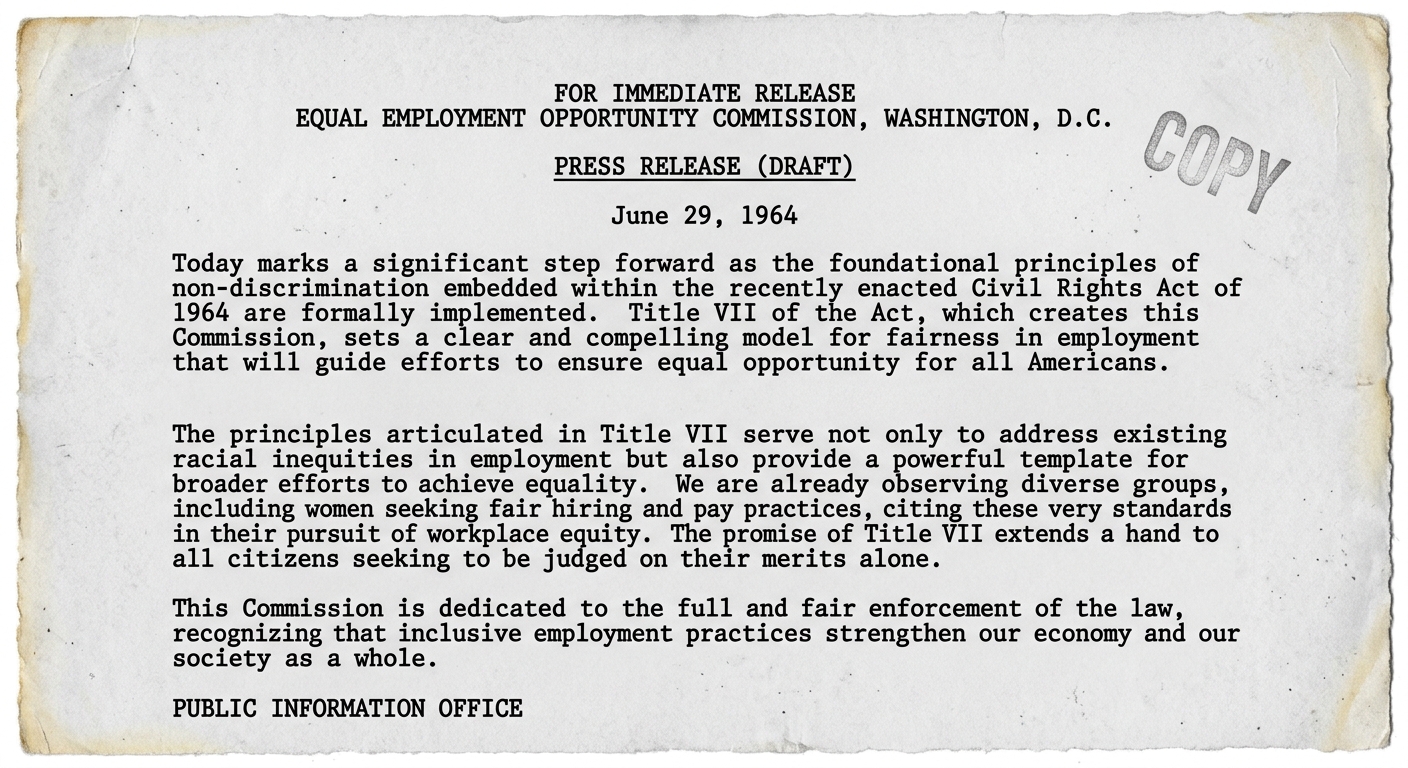
Source C is a 1964 public statement written soon after the Civil Rights Act became law. It focuses on employment protections under Title VII and notes that the law’s principles were being cited by other groups, including women, when arguing for fair hiring and pay.

Asemmisa {{asɛmmisaAhyɛnsode}}
11.

Based on Source C, which statement best compares women’s equality efforts to earlier civil rights efforts?

Asemmisa {{asɛmmisaAhyɛnsode}}
12.

Which phrase or idea in Source C best supports the claim that women’s equality efforts were part of a broader context of expanding civil rights?

Asemmisa {{asɛmmisaAhyɛnsode}}
13.

Which context best helps explain why a 1964 statement about employment rights might mention women’s equality efforts?

Asemmisa {{asɛmmisaAhyɛnsode}}
14.

Using Source C, explain how the document supports the idea that the civil rights movement prompted renewed efforts for equality by women.

In your answer, include one comparison to earlier civil rights strategies and cite at least two details from the document.

Asemmisa {{asɛmmisaAhyɛnsode}}
15.

Based on Source C, identify one way the document reflects its 1964 historical context and one way it points toward later equality efforts.

Support each part with evidence from the document.

Source D (Historical Document):

Read the document image.

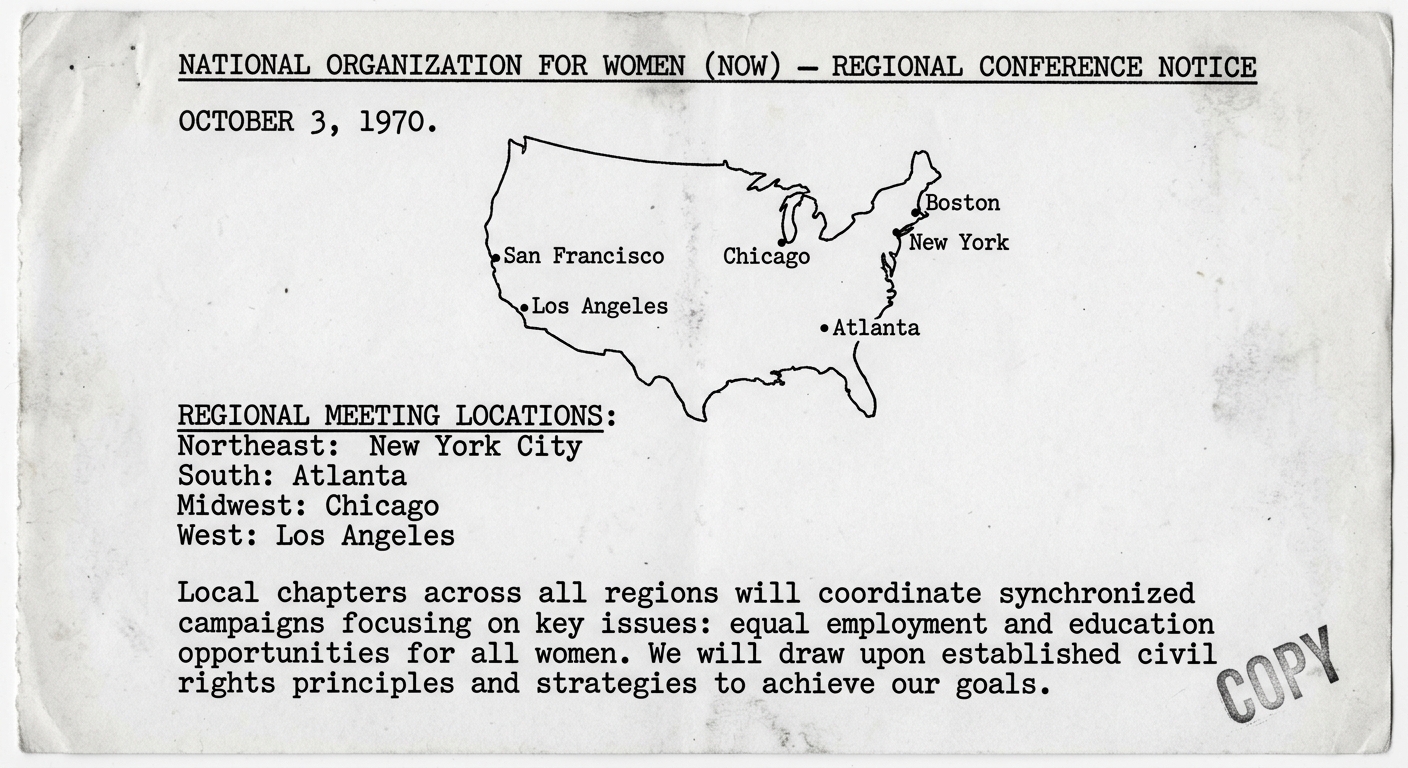
Source D is a 1970 conference notice from a women’s rights organization describing how local chapters in different U.S. regions planned meetings to coordinate equality campaigns. The notice includes a simple map with labeled cities and a list of meeting locations by region, suggesting a nationwide organizing effort.

Black-and-white 1970 NOW regional conference notice showing a simple U.S. map with cities labeled and a list of meeting locations by region for organizing women’s equality campaigns.

Asemmisa {{asɛmmisaAhyɛnsode}}
16.

Based on Source D’s regional list, which city is identified as the meeting location for the Midwest?

Asemmisa {{asɛmmisaAhyɛnsode}}
17.

Which piece of evidence from Source D best supports the idea that women’s equality organizing was national rather than limited to one area?

Asemmisa {{asɛmmisaAhyɛnsode}}
18.

Which inference about challenges to organizing across regions is best supported by Source D?

Asemmisa {{asɛmmisaAhyɛnsode}}
19.

Using Source D, explain how the document’s map and regional list help you understand the spread of women’s equality efforts.

Use at least two specific pieces of geographic evidence from the source.

Asemmisa {{asɛmmisaAhyɛnsode}}
20.

Based on Source D, identify one geographic factor that could enable organizing and one geographic factor that could limit organizing.

Support each factor with evidence from the map or regional list.

Source E (Historical Document):

Read the document image.

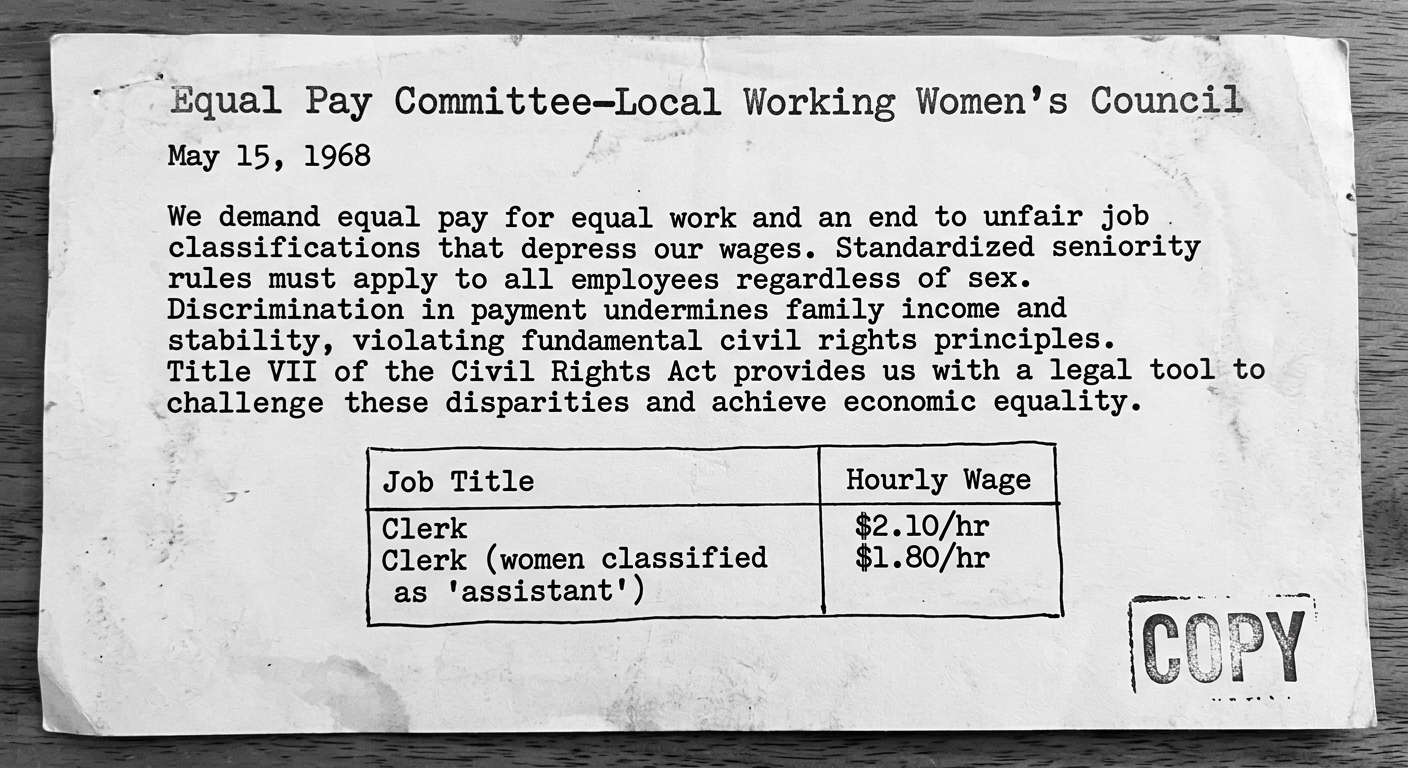
Source E is a 1968 leaflet from an equal-pay committee arguing that wage discrimination is an economic issue as well as a civil rights issue. It includes a small wage comparison and urges workers to use Title VII complaints and workplace organizing to challenge unequal pay and job classifications.

Asemmisa {{asɛmmisaAhyɛnsode}}
21.

Based on Source E, which statement best explains why the document treats equal pay as an economic issue?

Asemmisa {{asɛmmisaAhyɛnsode}}
22.

Which detail from Source E is the strongest evidence that wage inequality could be linked to workplace structures (not just individual choices)?

Asemmisa {{asɛmmisaAhyɛnsode}}
23.

Which inference is best supported by Source E about how civil rights strategies were used to address economic inequality for women?

Asemmisa {{asɛmmisaAhyɛnsode}}
24.

Using Source E, explain how the document uses economic evidence to support renewed efforts for equality by women.

Use at least two specific details (for example, the wage comparison, job classifications, or the use of Title VII).

Asemmisa {{asɛmmisaAhyɛnsode}}
25.

Based on Source E, identify one economic factor that could enable progress toward equal pay and one economic factor that could limit progress.

Support each factor with evidence from the document.