Use the historical document(s) and the short readings in the left panel to answer the associated questions.
Historical Document (Reconstruction Era)
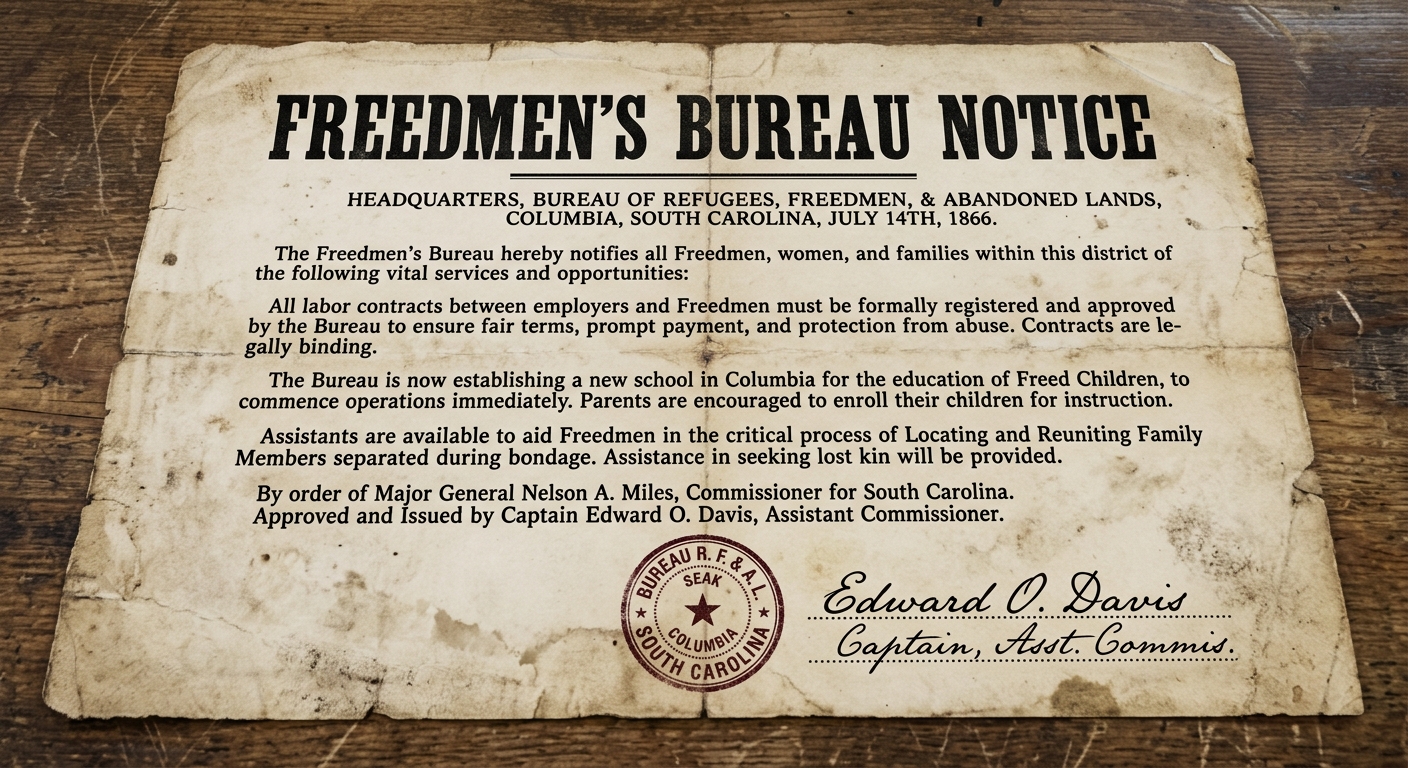
In 1865, Congress created the Freedmen’s Bureau to help people newly freed from slavery. Agents sometimes helped set up schools, assisted families seeking relatives, and supervised labor contracts. Many freedpeople valued this support, but funding shortages and local resistance limited what the Bureau could do.
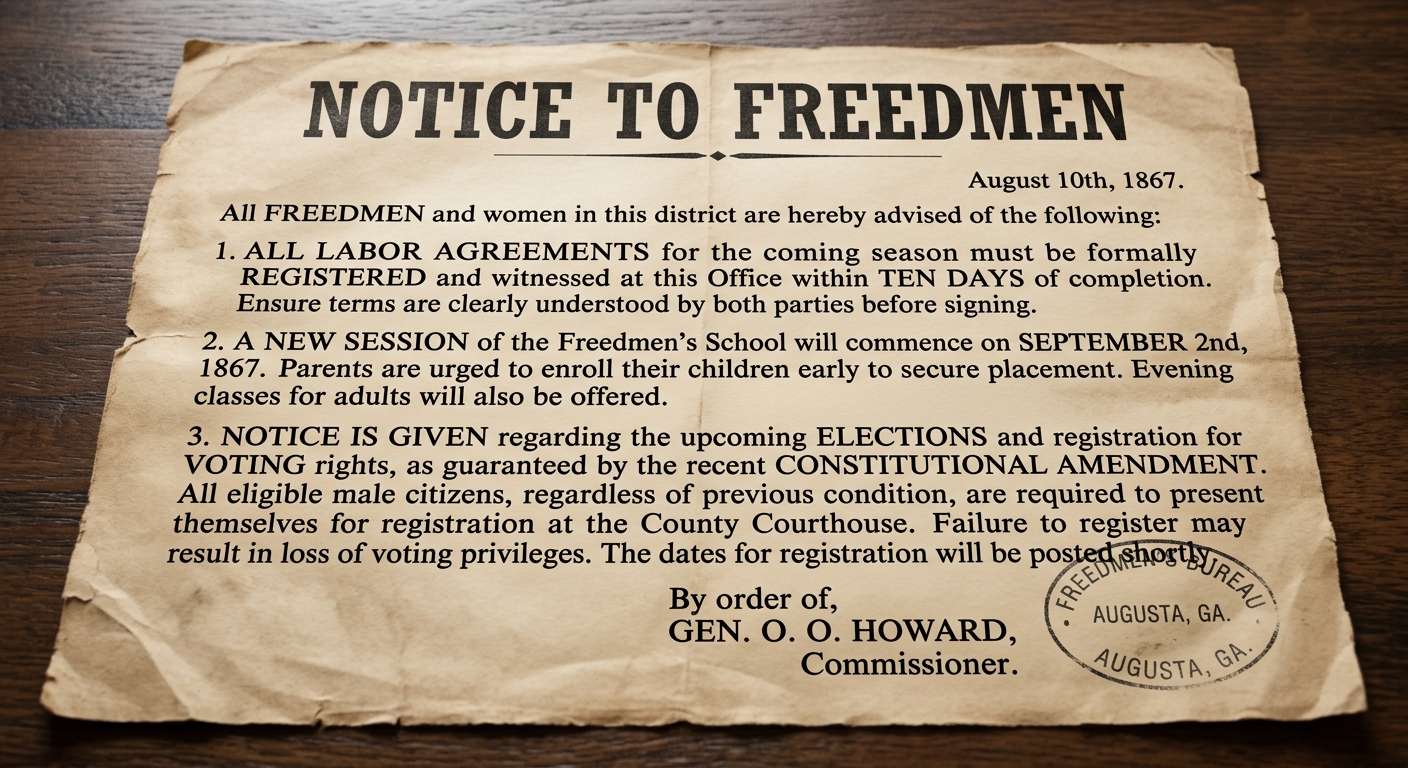
Based on the document and the reading, which action best shows an effort to expand the rights or protections of freed African Americans?
Explain how the notice suggests both opportunities and limits for freed African Americans during Reconstruction.
Use at least two details from the document and/or the reading.
A student claims, “The Freedmen’s Bureau focused only on education.” Which evidence from the document best challenges that claim?
Using evidence from the document and/or the reading, explain one way federal actions during Reconstruction attempted to change daily life for freed African Americans.
Include one specific example and what it was intended to accomplish.
Which piece of evidence from the document most directly supports the claim that federal authorities were trying to protect freedpeople’s labor rights after slavery?
Historical Document (Reconstruction Era)

After the Civil War, federal officials issued public notices to explain new rules and opportunities for freedpeople. These announcements often connected labor, schooling, and citizenship rights. The timing of each policy mattered: changes unfolded in steps, and later actions sometimes depended on earlier ones.
Using evidence from the notice and the reading, explain how the timing of labor registration and schooling could affect freedpeople’s ability to build new lives after slavery.
Construct a brief timeline (3 steps) using only information from the notice.
For each step, explain what federal officials likely intended to accomplish for freed African Americans.
A student says, “Voting rights came before changes to work and school.” Which detail from the notice best challenges the student’s claim?
Which evidence best supports the conclusion that Reconstruction policies for freedpeople unfolded in stages over time?
Which sequence best matches the order of events implied by the notice?
Historical Document (Reconstruction Era)

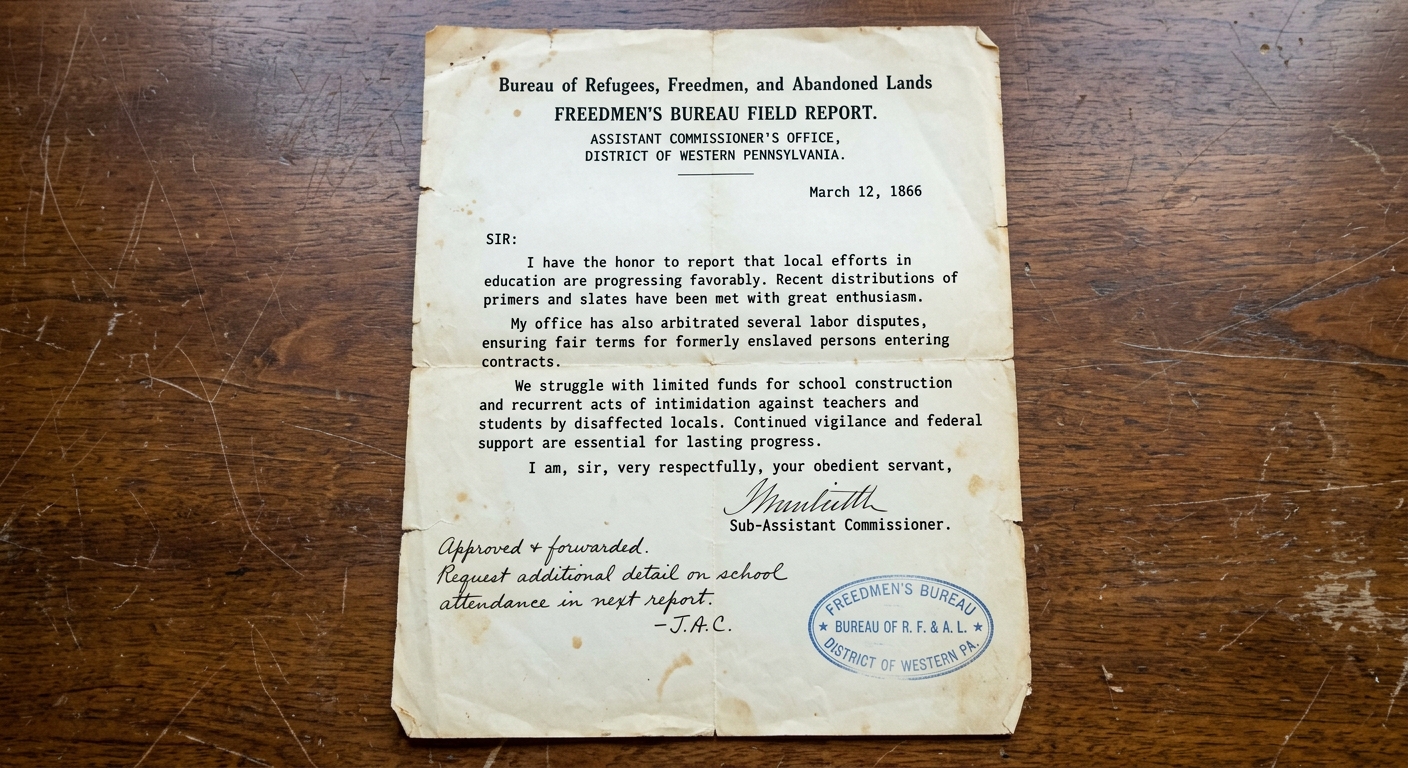
During Reconstruction, federal officials tried to support freedpeople through schools, labor contract oversight, and legal protections. These efforts varied by place and time. In some districts, agents reported cooperation; in others, violence, intimidation, and limited funding reduced what federal policies could accomplish.
Which detail from the field report provides the best context for why some freedpeople might still face unfair labor conditions after emancipation?
Explain why a federal agency might emphasize both assistance and resistance when describing freedpeople’s new lives after slavery.
Use at least two details from the document/reading.
The field report describes both assistance and obstacles. Which statement best summarizes that relationship in context?
Using evidence from both sources, compare one way Reconstruction policy aimed to expand opportunities for freed African Americans with one factor that limited those opportunities in some places.
Which comparison is best supported by the field report and the short reading?
Historical Document (Reconstruction Era)

Reading (about 40–50 words)
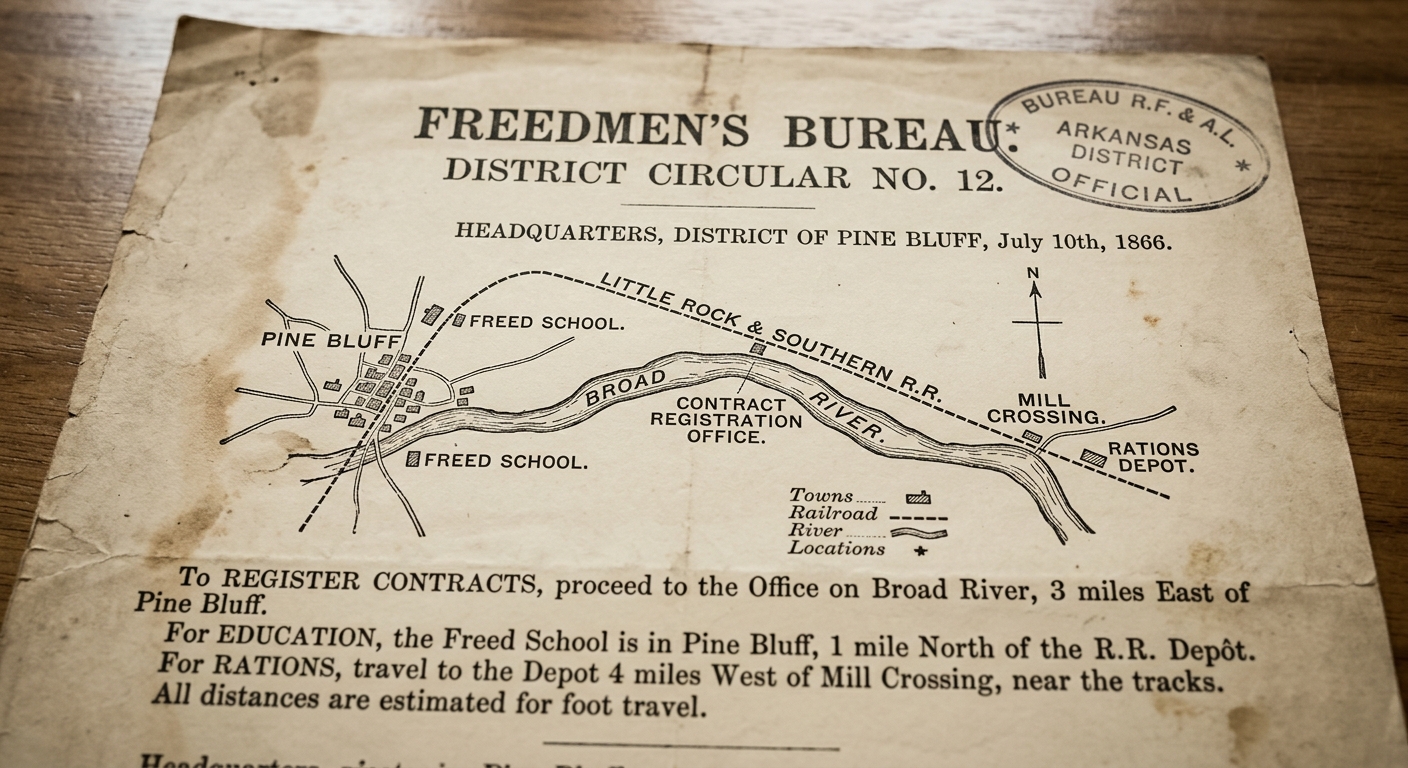
During Reconstruction, the Freedmen’s Bureau set up offices, schools, and supply depots in different places. Geography shaped access: rivers, roads, and rail lines affected travel time, and services were often located in towns. Understanding where services were located helps explain who could benefit and why.
Which piece of map evidence best supports the conclusion that transportation networks mattered for accessing Bureau services?
Compare two Bureau services shown on the map (for example, contract registration and schooling).
Explain how their locations could affect who benefited most from each service.
Which inference is best supported if the rations depot is shown on one side of the river and many freedpeople live on the other side with few crossings?
Using evidence from the map and the reading, explain one way physical geography or transportation could limit a freedperson’s ability to use Bureau services.
Cite at least two details.
Based on the map, which location would most likely be easiest for people from both towns to reach quickly?
Historical Document (Reconstruction Era)

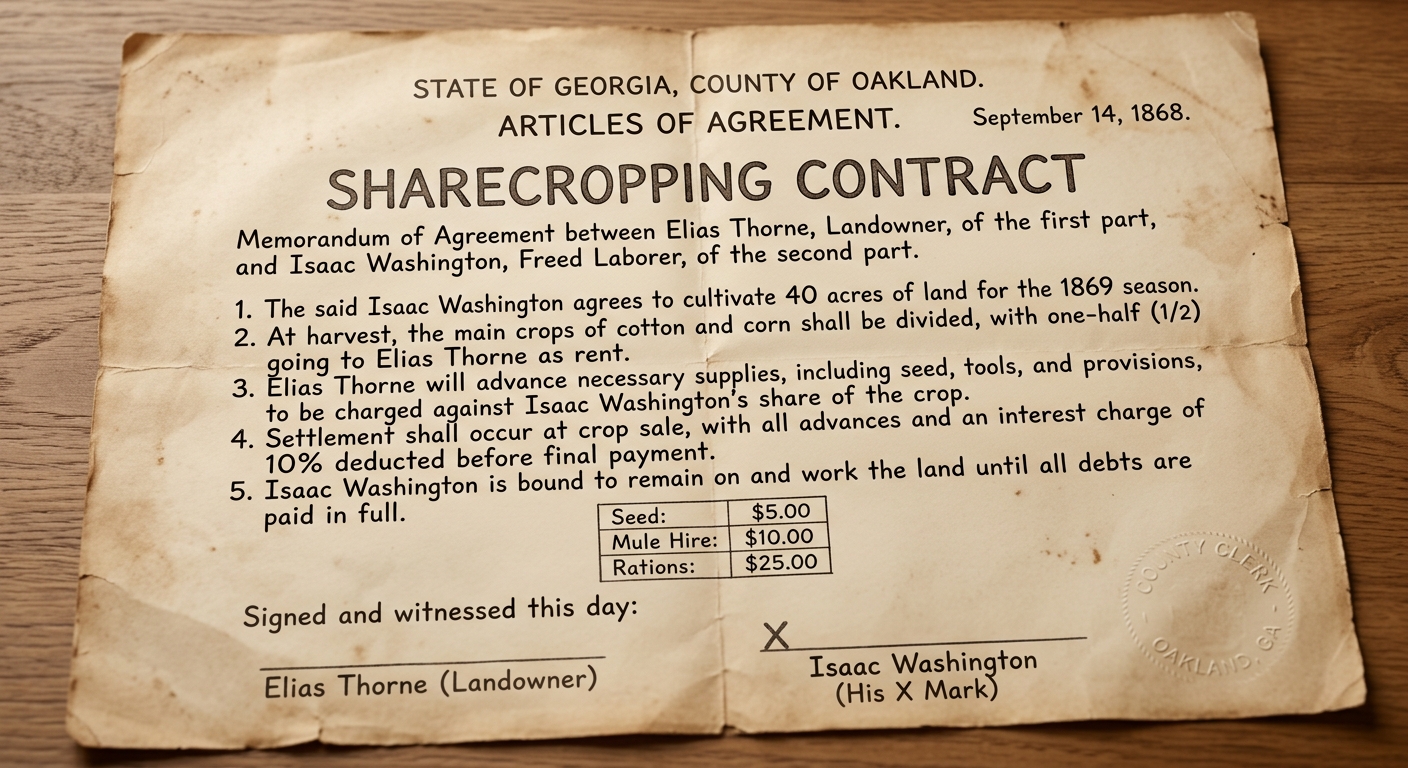
After emancipation, many freed families needed land, tools, and credit to farm. Sharecropping often provided access to these resources, but it could also create long-term debt. Contract terms about crop shares, supply costs, and repayment schedules shaped whether workers gained independence or remained economically dependent.
Using evidence from the contract and the reading, explain one way sharecropping could provide opportunity for freed African Americans and one way it could create economic limits.
Cite at least two details.
Compare this sharecropping system to wage labor.
Using evidence from the contract, explain one economic risk a sharecropper faced that a wage worker might face less directly.
Which contract term most directly reflects how a credit (debt) system could limit a sharecropper’s economic freedom?
Which detail from the contract would be the best evidence to support the claim that the landowner held greater economic power in the agreement?
Based on the contract and reading, which inference best explains why some freedpeople entered sharecropping agreements after the Civil War?