Use the historical document(s) and the short readings in the left panel to answer the associated questions.
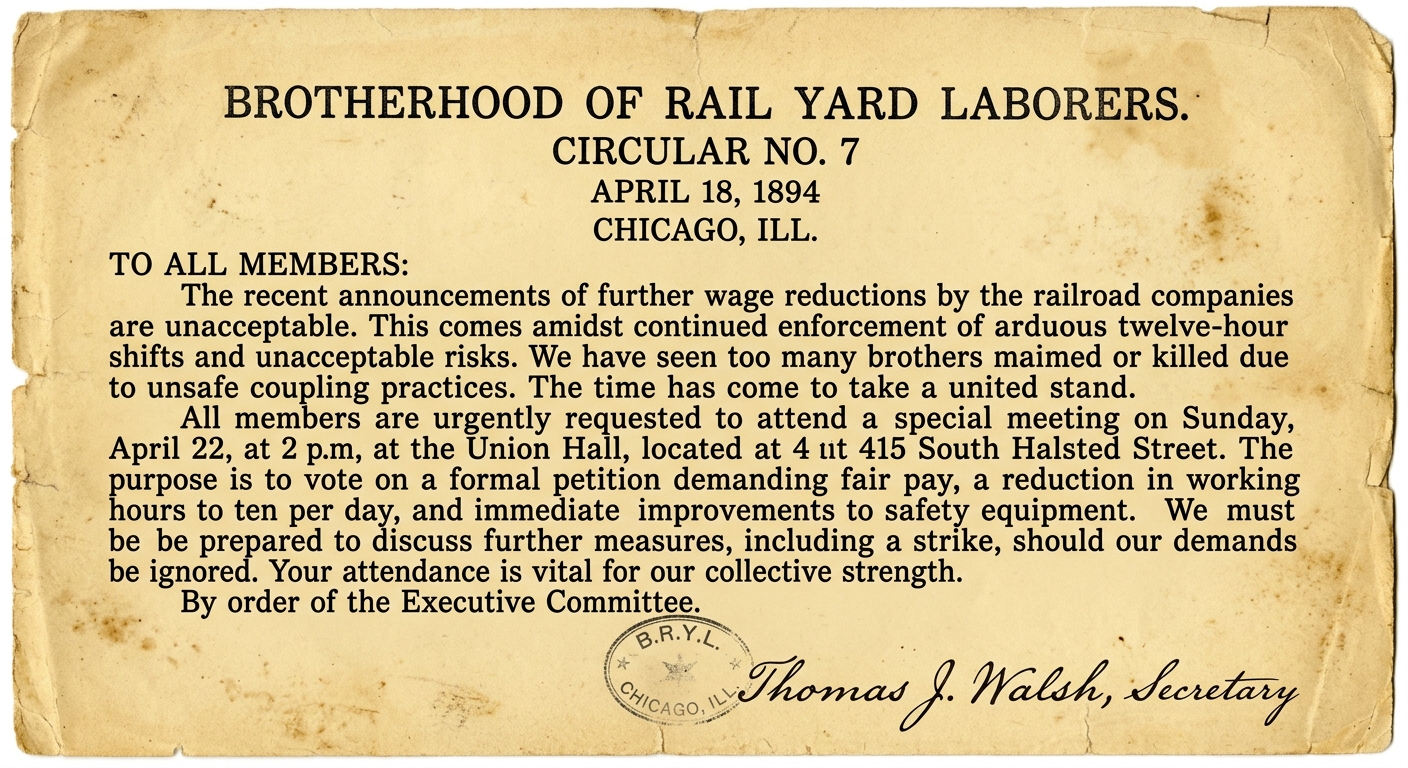
Historical Document:
Union Circular (Chicago, 1894)
Read the excerpt below, then study the document image.
In 1894, rail yard workers in Chicago reported wage cuts, twelve-hour shifts, and dangerous coupling work. Their union circular urges members to attend a meeting, sign a petition for safer conditions and fair pay, and prepare to strike if the company refuses.

Based on the excerpt and the union circular, which working condition is directly described as a problem for the workers?
Which action in the excerpt best shows a strategy workers used to improve conditions?
Which conclusion about the purpose of the union circular is best supported by evidence from the excerpt and document?
Using evidence from the excerpt and the document image, explain how this union circular shows laborers responding to shifts in working conditions.
Include two specific pieces of evidence from the sources.
The sources describe more than one strategy (for example, a petition, a meeting, and preparing to strike).
Choose two strategies mentioned and explain how each could pressure the company.
Use evidence from the excerpt/document to support your explanation.
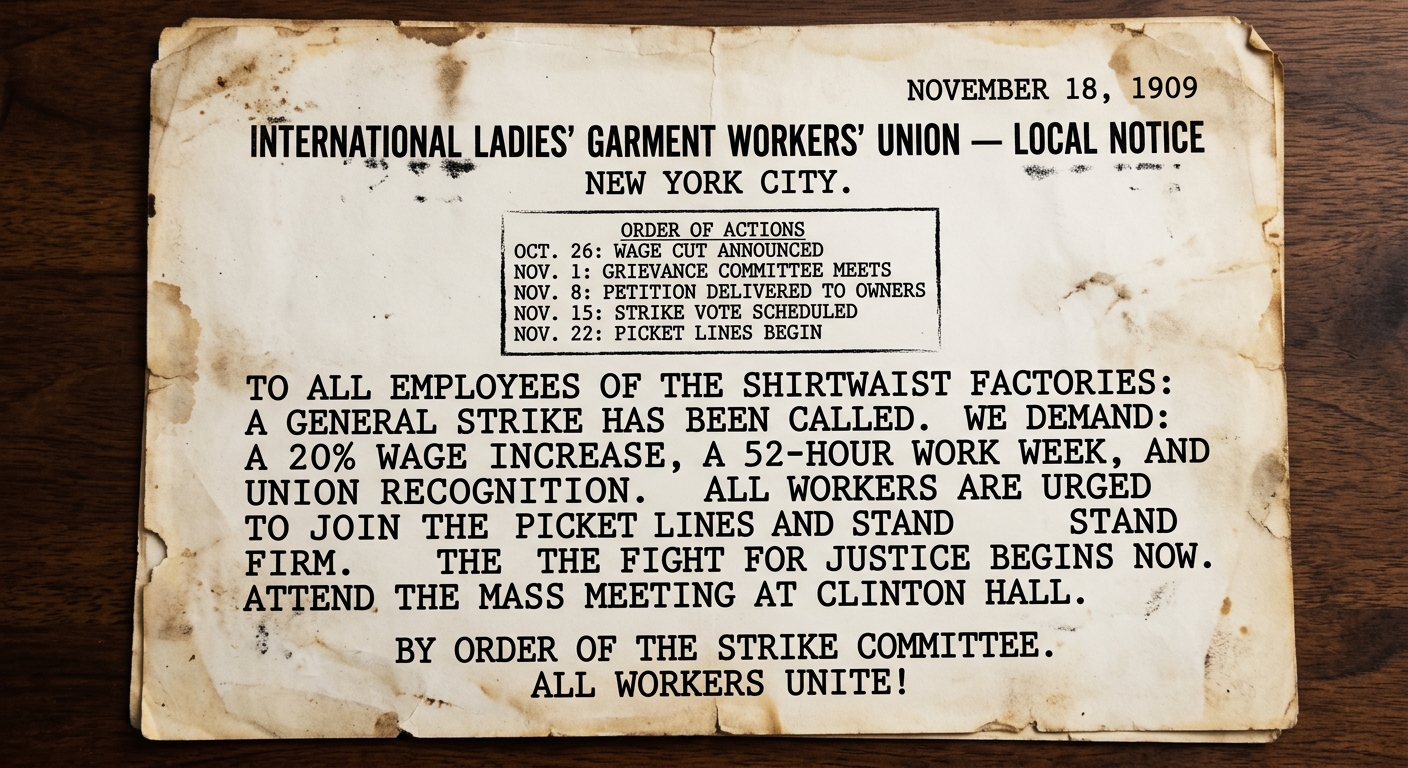
Historical Document: Union Strike Bulletin (New York City, 1909)
Read the excerpt below, then study the document image.
On November 10, 1909, a garment factory announced a wage cut and longer hours. By November 12, workers formed a grievance committee and gathered signatures. On November 15, they delivered a petition. The bulletin schedules a strike vote for November 18 and instructs members to begin picketing the next morning if talks fail.

According to the excerpt, which event happened first?
Based on the timeline in the excerpt, what happened immediately after workers delivered the petition on November 15?
Which statement best explains how the sequence of events shows workers using strategies to improve conditions over time?
Using evidence from the excerpt and the document image, explain how the timeline shows workers responding to changing working conditions.
Include two specific dated details as evidence.
Choose two events from the timeline and explain how the earlier event helped lead to the later event.
Use evidence from the dates/actions in the excerpt or document.
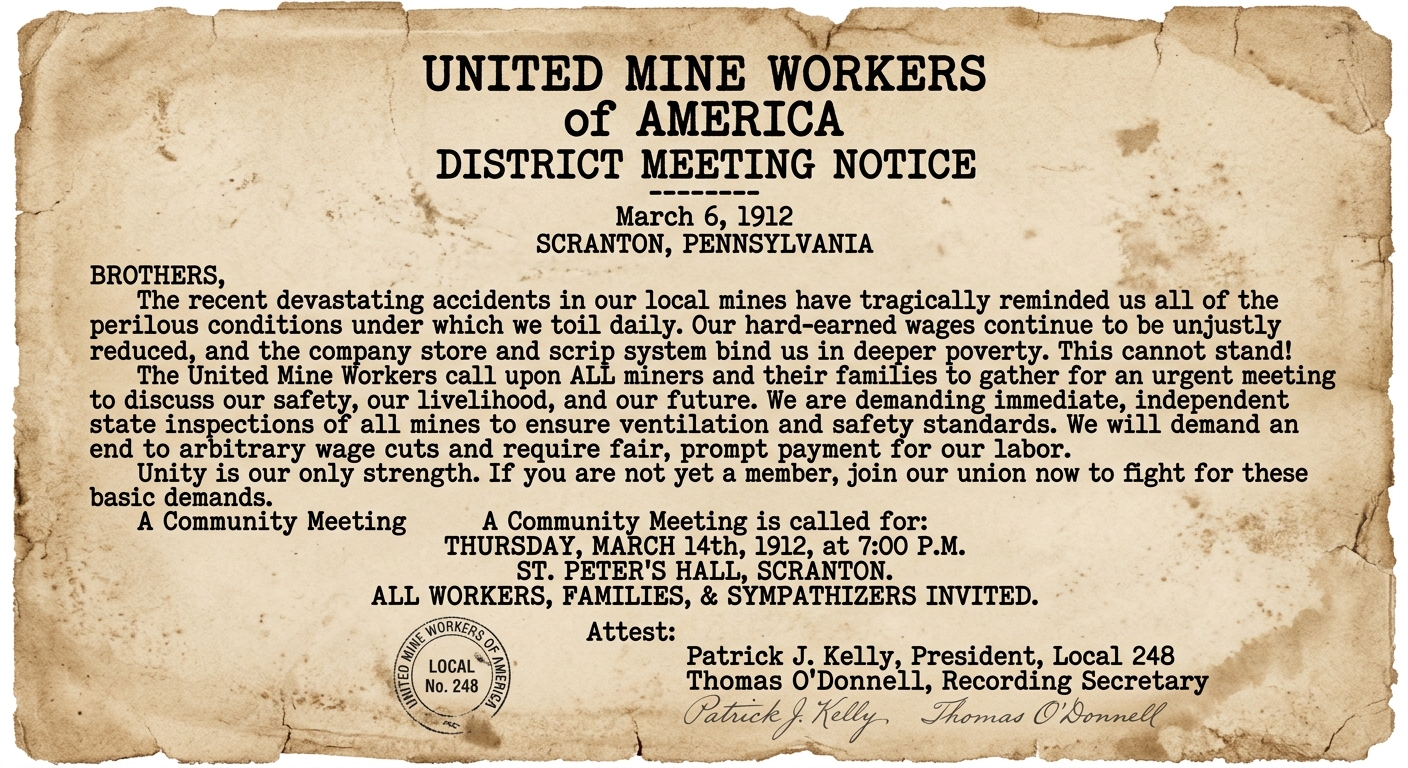
Historical Document: United Mine Workers Meeting Notice (Scranton, 1912)
Read the excerpt below, then study the document image.
In 1912, coal miners near Scranton reported fatal accidents, wage reductions, and pay in company scrip. Their union notice calls workers to a district meeting with families, urges joining the union, and proposes demanding safety inspections and fair wages, with a strike discussed if owners refuse.

Which problem in the excerpt is most similar to complaints made by many industrial workers in the late 1800s–early 1900s?
Which broader historical context best helps explain why a union notice like this would appear in 1912?
Which pair of actions from the excerpt best shows workers using collective strategies to improve conditions?
Using evidence from the excerpt and the document image, explain how this notice reflects working conditions and labor organizing in the early 1900s.
Include two specific pieces of evidence.
Compare this miners’ notice to labor disputes in other industries during this era.
Identify one similarity and one difference between miners’ concerns/strategies and those of urban factory workers.
Support each with evidence from the excerpt or document.
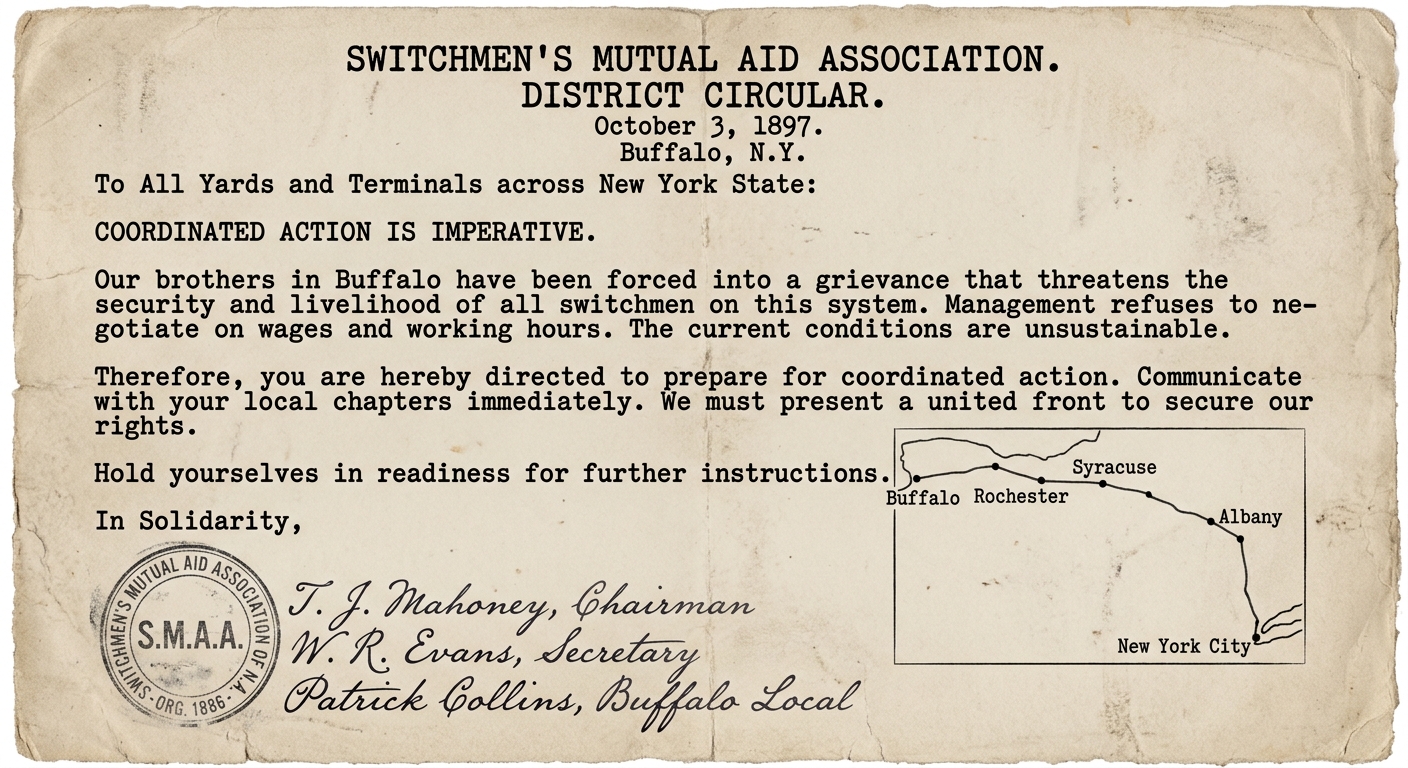
Read the excerpt below, then study the document image.
In 1897, switchmen in Buffalo urged union members in Rochester, Syracuse, Albany, and New York City to coordinate a one-day work stoppage and picketing at major rail yards. The circular argues that targeting connected hubs would disrupt shipments statewide and prevent the company from simply rerouting trains through another city.

Based on the cities listed in the excerpt and the route shown, which location is most likely being used as a key transportation hub for statewide rail shipments?
Which explanation best shows why workers targeted multiple connected rail-yard cities instead of only one location?
Which statement best connects geography to the workers’ organizing strategy in the excerpt?
Using evidence from the excerpt and the document image, explain how the geographic distribution of cities and rail yards shaped the union’s strategy.
Include two specific pieces of geographic evidence (such as place names or route connections).
Choose two locations named in the excerpt or shown on the route.
Explain how the company might try to respond geographically (for example, rerouting shipments) and how the workers’ plan attempts to limit that response.
Use evidence from the document.
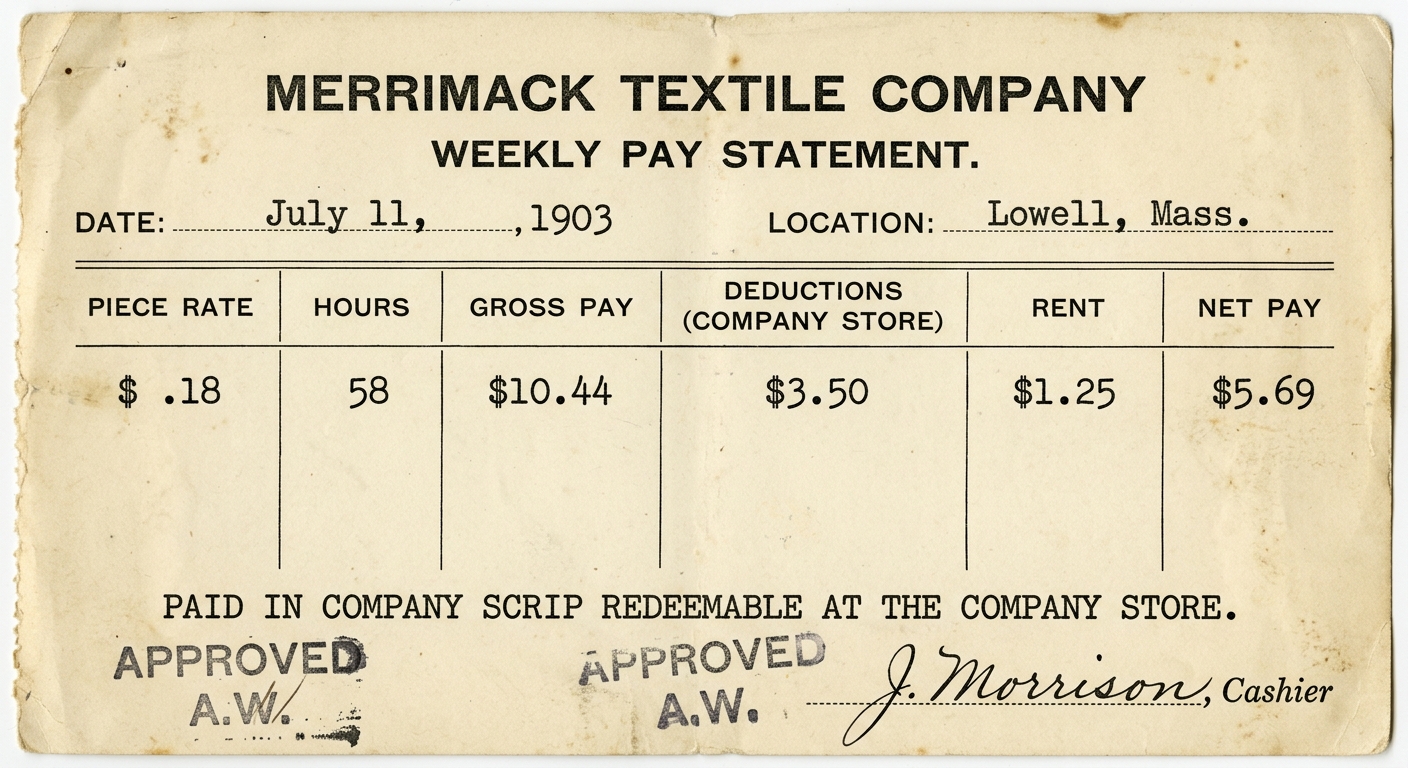
Historical Document: Weekly Pay Statement (Lowell, Massachusetts, 1903)
Read the excerpt below, then study the document image.
In 1903, textile workers in Lowell reported a lower piece rate and rising living costs. A pay statement listed deductions for rent and the company store, leaving less take-home pay. Workers planned to petition for cash wages and higher rates, and discussed striking if managers refused.

Which economic change described in the excerpt would most directly reduce workers’ take-home pay?
Which statement best explains why deductions for rent and the company store could make workers feel their wages were unfair?
Which worker demand from the excerpt is most directly related to changing an economic system that limited workers’ choices?
Using evidence from the excerpt and the document image, explain how this pay statement shows workers responding to economic pressures in the workplace.
Include two specific economic details as evidence.
The excerpt mentions more than one strategy (petitioning and possibly striking).
Compare these two strategies in economic terms:
explain one potential cost and one potential benefit of each strategy for workers.
Use evidence from the excerpt/document to support your comparison.