Use the historical document(s) and the short readings in the left panel to answer the associated questions.
Use the historical document(s) and the short readings in the left panel to answer the associated questions.
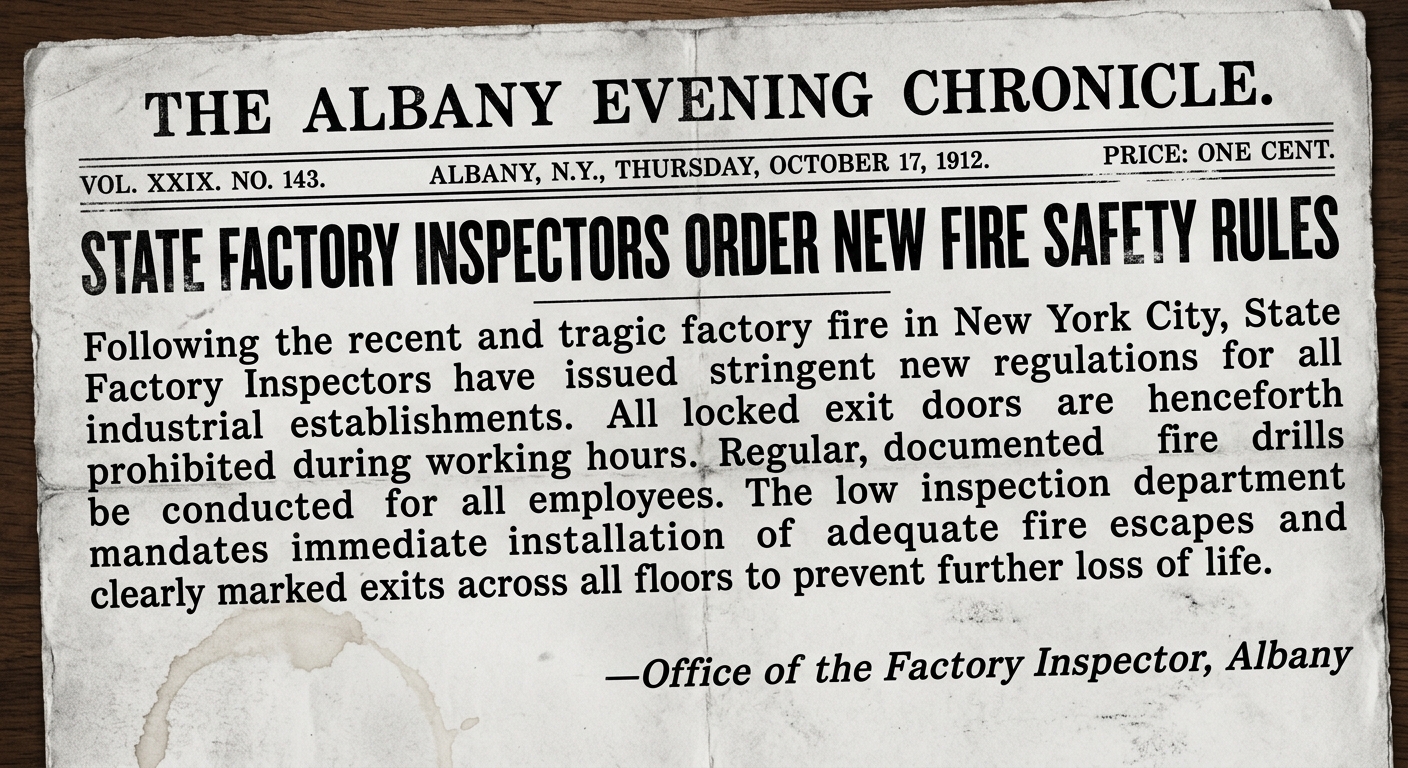
Read the 1912 notice. It describes new fire-safety rules for factories in New York, including keeping exit doors unlocked and practicing fire drills. Progressive reformers often used reports like this to push governments to regulate workplaces and protect workers’ health and safety.
Historical Document: (Progressive Era): Factory safety notice (1912)
Some people argued that reforms happened mainly because the public demanded change, while others argued reforms happened mainly because leaders wanted to protect businesses from negative publicity.
Using evidence from the document, explain which explanation is better supported and why.
Which detail from the notice is the BEST evidence that the government was responding to a social problem?
Which Progressive Era issue is MOST directly addressed by the notice?
Using evidence from the document, explain how Progressive reformers could argue that government action was needed to improve factory conditions.
Use at least two specific details from the notice.
Based on the language of the notice, which audience is the document MOST likely trying to influence?
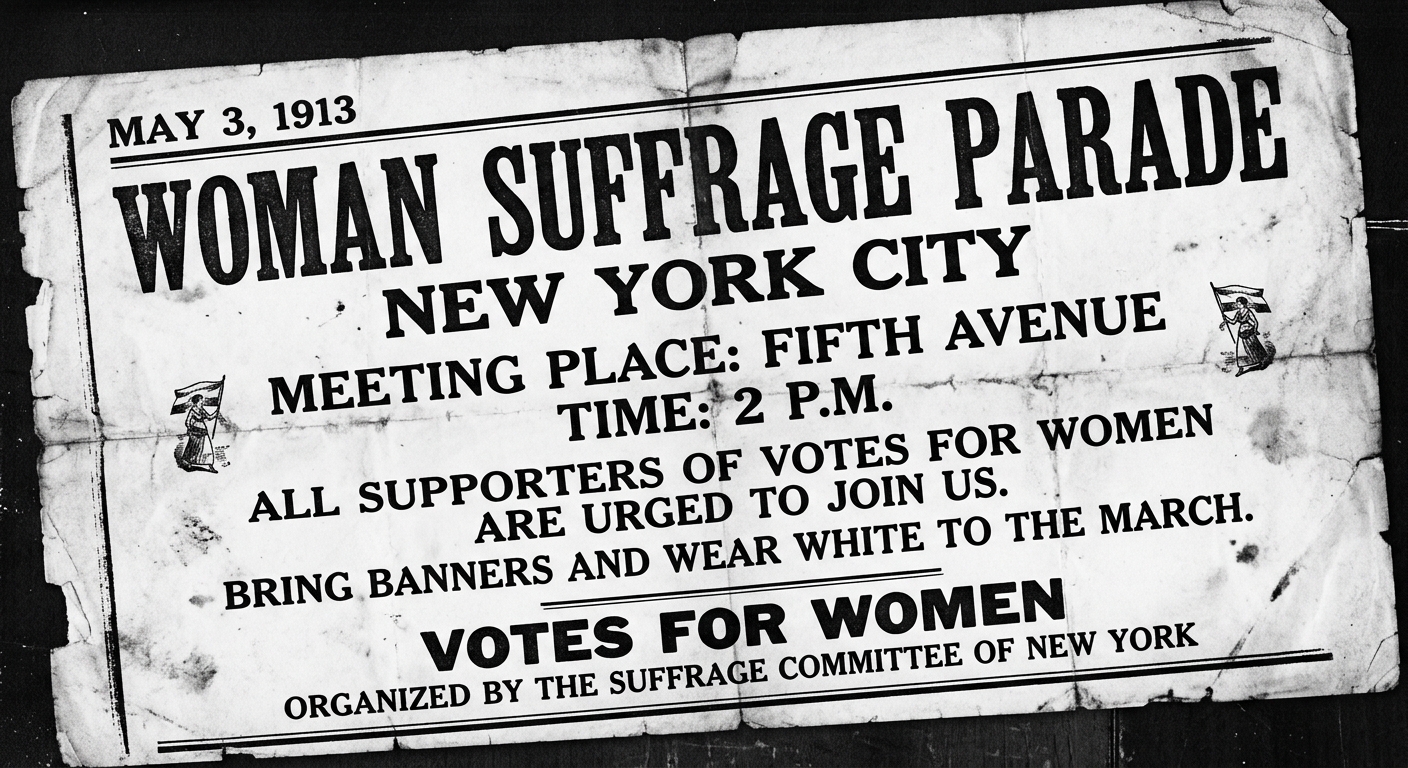
Read the 1913 flyer. It announces a public suffrage parade in New York City and urges supporters to join. Use the date and details to place this document in order with other Progressive Era reforms and explain what it suggests about the stage of the women’s rights movement.
Historical Document (Progressive Era): Woman suffrage parade flyer (1913)
Which event most likely happened AFTER the date of this flyer?
Using evidence from the flyer, explain where this document fits in a likely sequence of reform: public organizing → government action → national change.
Use at least two specific details from the document.
Based on the date (1913), which statement best describes the suffrage movement’s position in the overall timeline of reforms?
Which detail from the flyer is BEST evidence that activists were still trying to persuade the public (not celebrating a final victory)?
Describe one change over time from the activism shown in this 1913 flyer to the outcome of the women’s suffrage movement by 1920.
Use evidence from the document and a later milestone to support your answer.
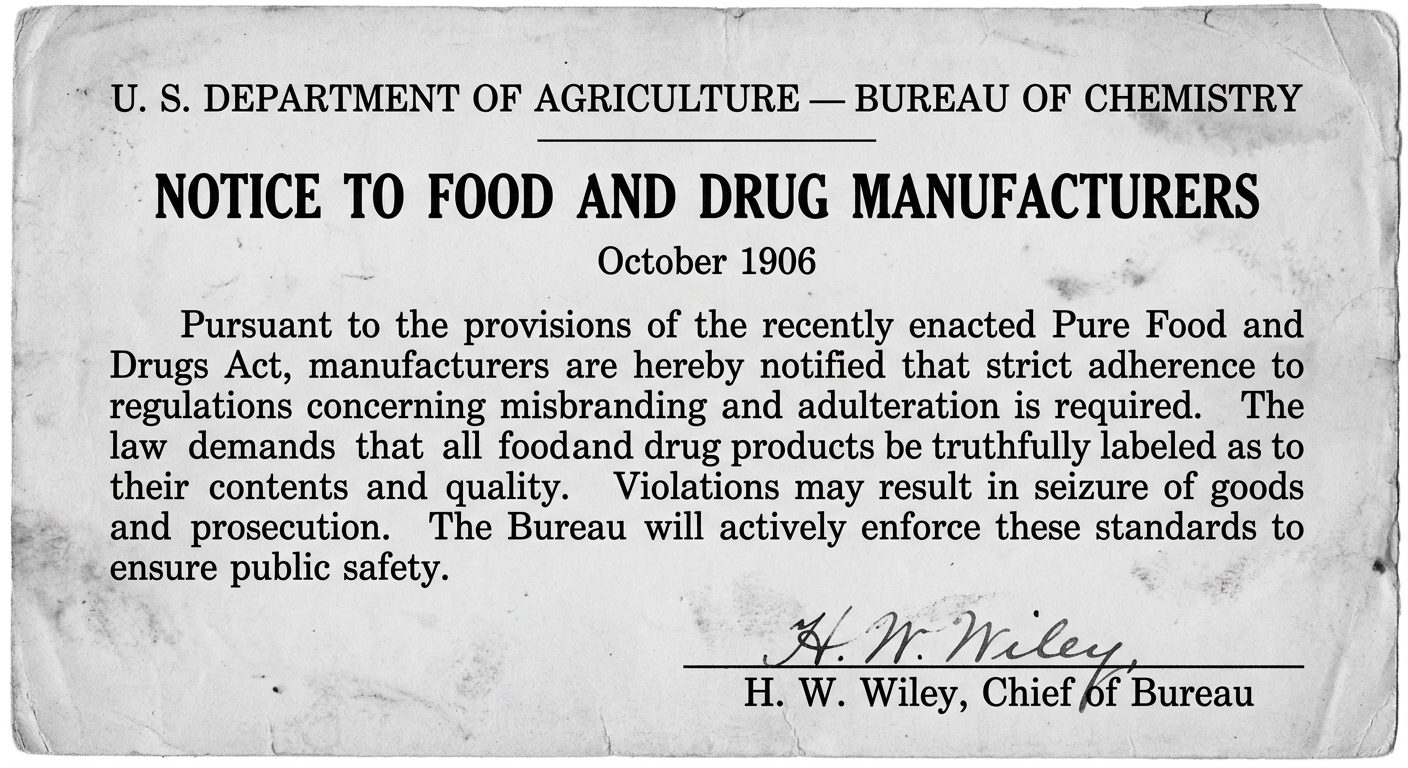
Read the 1906 federal circular. It explains new rules under the Pure Food and Drugs Act meant to prevent misbranding and adulteration. Place this document in the Progressive Era context and compare it to other reforms that used publicity, organizing, and government action to address social problems.
Historical Document (Progressive Era):
Pure Food and Drugs Act circular (1906)
Compare this 1906 federal reform to ONE other Progressive Era reform (for example, factory-safety laws or women’s suffrage organizing).
Explain one similarity and one difference in:
(1) the problem addressed and
(2) how reformers used government action.
Use at least two details from the circular.
Which development provides the BEST context for why the federal government issued rules like the ones in this 1906 circular?
Which comparison best matches this federal circular to Progressive Era workplace-safety reforms like state factory rules?
Explain how industrialization and public concern during the Progressive Era could lead to federal rules like these.
Use at least two specific details from the document as evidence.
Which Progressive Era reform strategy is MOST clearly shown in this circular?
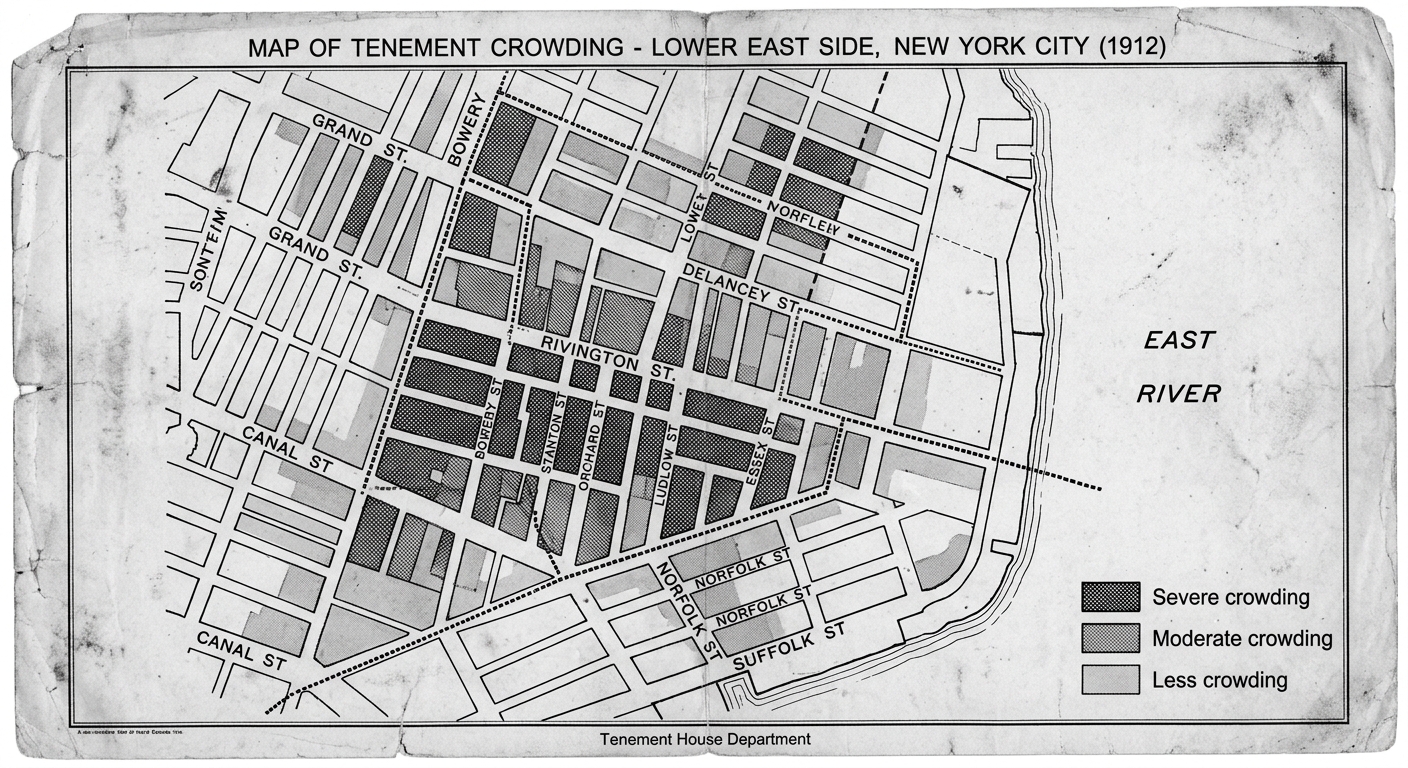
Read the 1912 map. Reformers used maps like this to show where tenement crowding was worst in New York City. Use the legend and place names to describe patterns and infer why city leaders might target certain neighborhoods with housing, sanitation, or fire-safety reforms.
Historical Document (Progressive Era): Tenement crowding map (1912)
Which inference about urban life during the Progressive Era is BEST supported by the crowding pattern shown on the map?
This map is most directly connected to which level of government reform efforts?
Based on the legend, which area on the map would reformers MOST likely label as needing the most urgent action?
Compare this place-based reform evidence (a city crowding map) to a nationwide Progressive reform (such as federal food and drug rules).
Explain one similarity and one difference in how geography affects:
(1) who is impacted and
(2) how rules could be enforced.
Use evidence from the map in your answer.
Using evidence from the map, explain how Progressive reformers could use geographic patterns to argue for targeted city reforms.
Use at least two specific details from the map (for example, the legend categories, clustering, or labeled places).
Read the 1911 wages table from a New York investigating commission. Reformers used data like this to argue that the labor market produced unsafe and unfair conditions. Use the wages and hours to interpret economic problems and evaluate which Progressive policies might respond.
Historical Document (Progressive Era): Garment shop wages table (1911)
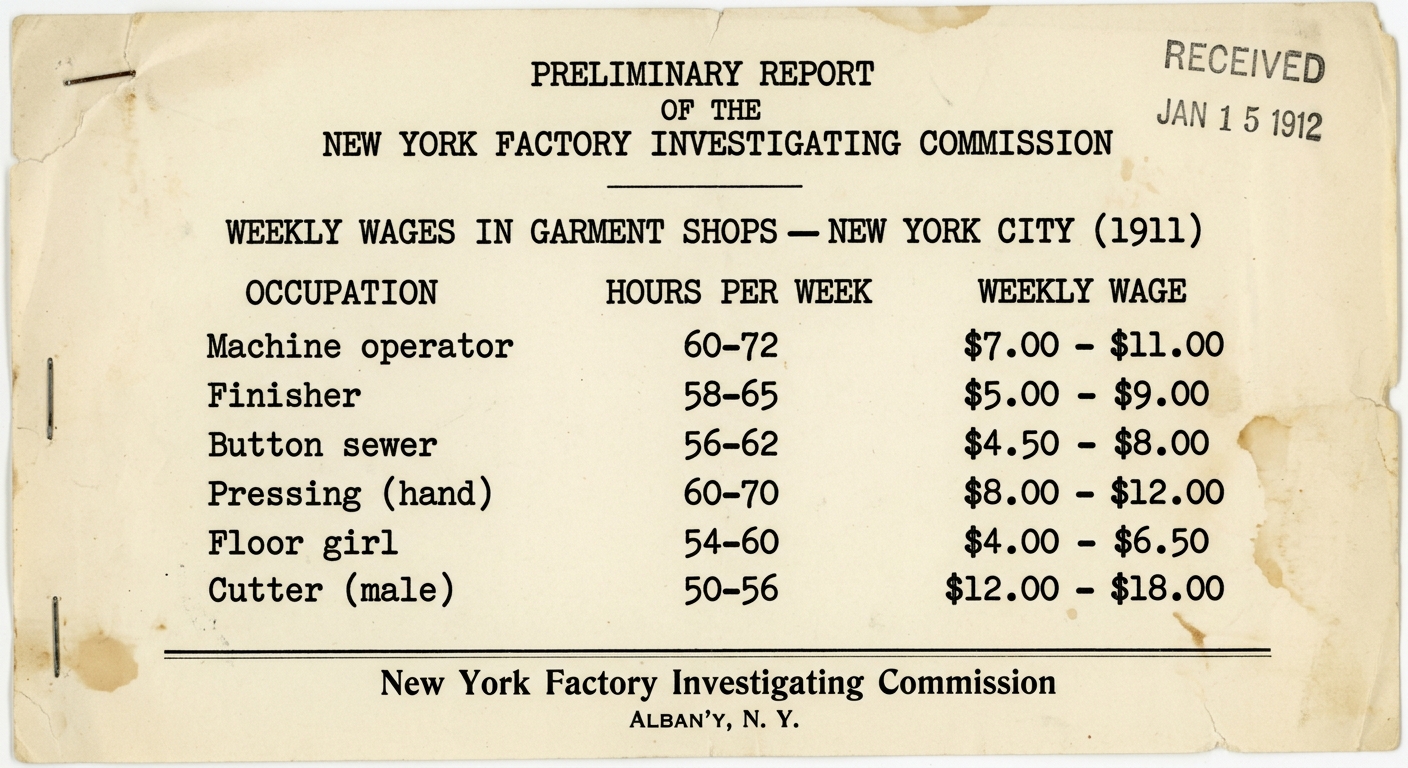
Compare two economic approaches to these working conditions: laissez-faire (limited government) and regulation (government rules).
Using evidence from the document, explain which approach Progressive reformers were more likely to support and why.
Which Progressive Era policy response is MOST directly supported by the evidence in the table?
Which statement best explains why Progressive reformers might argue the government should act based on this economic evidence?
Which economic problem is MOST directly supported by the wages-and-hours data in the table?
Using evidence from the table, explain how wages and hours reflect conditions in the labor market and why reformers might see a need for government rules.
Use at least two specific details from the table.