Historical Document (1899)
This excerpt is from a U.S. State Department circular sent to major powers about trade in China. As you read, note what the U.S. wants other countries to do and why that goal matters for American businesses in the Pacific.
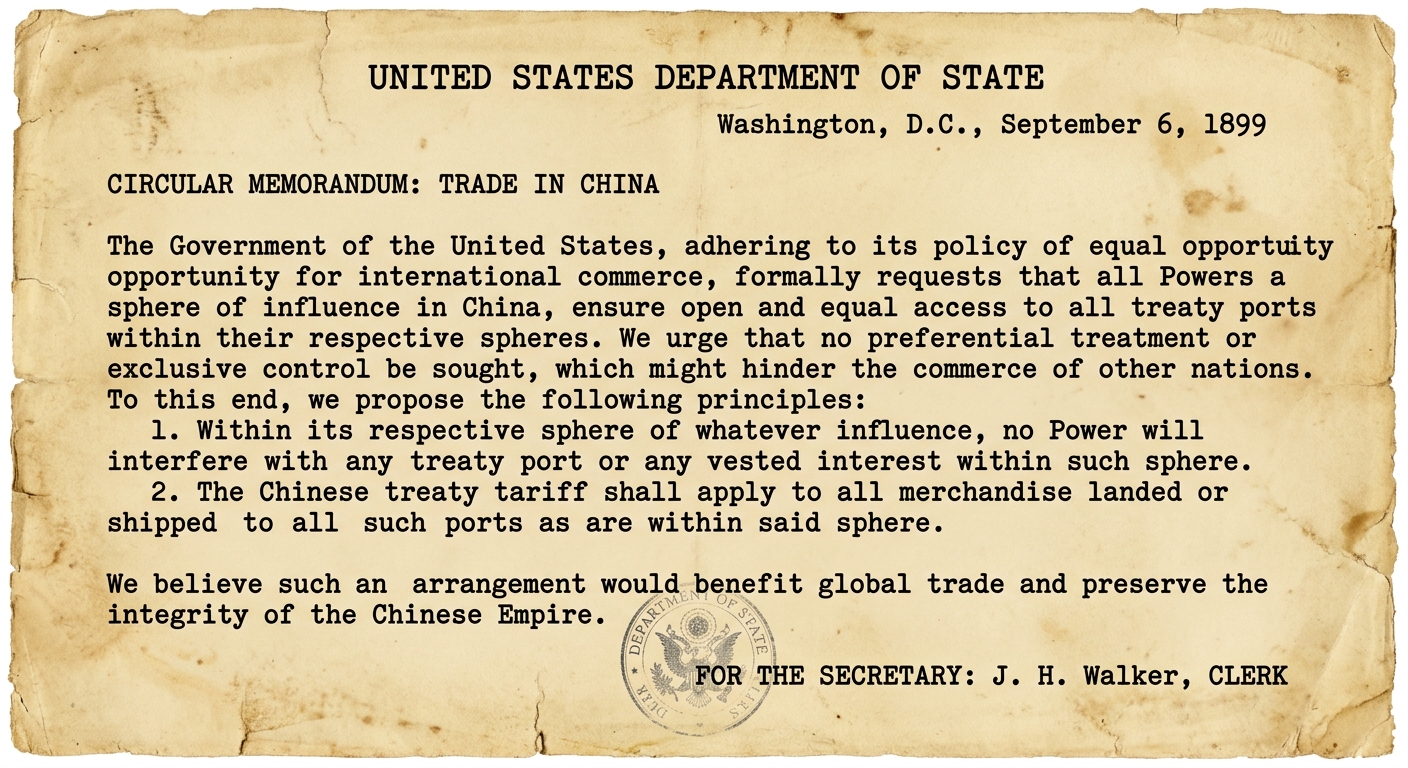
Use the historical document(s) and the short readings in the left panel to answer the associated questions.
Use the historical document(s) and the short readings in the left panel to answer the associated questions.
Historical Document (1899)
This excerpt is from a U.S. State Department circular sent to major powers about trade in China. As you read, note what the U.S. wants other countries to do and why that goal matters for American businesses in the Pacific.
Explain how the document provides evidence that interest in Pacific trade contributed to increased U.S. foreign interactions.
Use at least two specific pieces of evidence from the document (quote briefly or paraphrase) and explain how each piece supports your claim.
Based on the document, what is the main purpose of the U.S. message to other nations?
Which detail from the document is the BEST evidence that U.S. leaders were focused on economic access in the Pacific?
Which conclusion is BEST supported by the document about how Pacific trade affected U.S. foreign interactions?
Using evidence from the document, describe one possible benefit and one possible risk for the United States of pursuing the trade policy described.
Explain your reasoning for both.
Historical Document (1898)
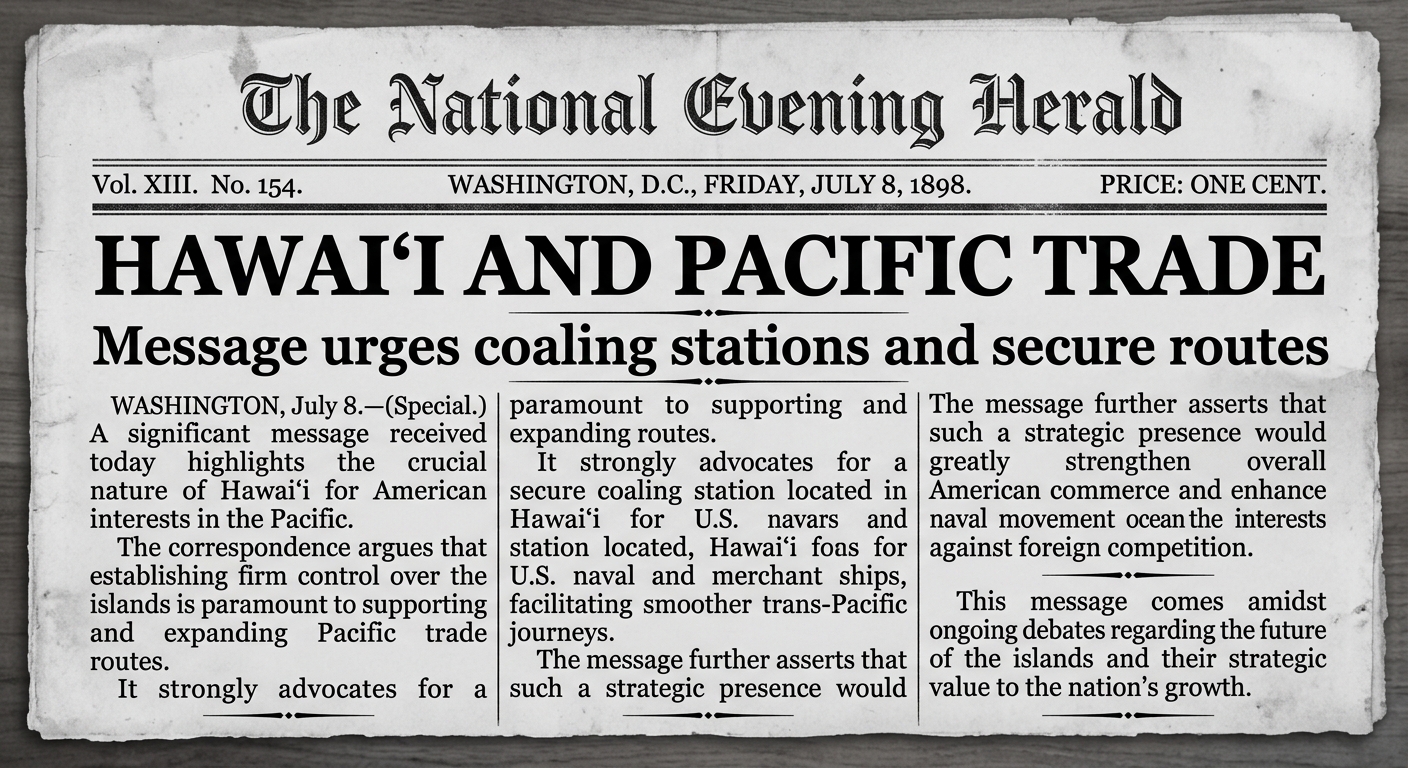
This newspaper-style excerpt summarizes a U.S. government message during debate over Hawai‘i. Pay attention to the date and to phrases about “coaling stations” and “Pacific trade routes.” Use these time clues to place the document in sequence with other U.S. actions in the Pacific.
Which event most likely happened BEFORE the July 1898 debate described in the document?
Which conclusion about change over time is BEST supported by the document?
Explain how this 1898 document fits into a timeline of expanding U.S. interactions in the Pacific.
Use at least two time/sequence words (for example, before, after, later) and cite two specific details from the document as evidence.
Using evidence from the document, describe a short cause-and-effect chain (2–3 steps) showing how interest in Pacific trade could lead from this moment in 1898 to increased U.S. foreign interactions later.
Based on the document’s date and topic, which sequence places these events in the MOST accurate chronological order?
Historical Document (1899)
This broadside contrasts two views of Pacific trade. Compare the “Open Trade” and “Closed Spheres” sections, then consider what problem the author thinks the United States faces. Use details from both sides to explain what the document suggests about U.S. foreign interactions in the Pacific.
Compare the “Open Trade” and “Closed Spheres” sections. How does the document connect economic goals to U.S. foreign interactions in the Pacific? Use at least two specific details from different parts of the document as evidence.
Which broader historical development BEST helps contextualize why a document like this would be produced in 1899?
Which statement best matches the document’s stance on how the United States should respond to competition in Pacific markets?
Contextualize this document in the late 1800s. Explain how it reflects larger trends in U.S. expansion and Pacific trade, and how those trends could increase U.S. foreign interactions.
Use evidence from the document and at least two contextual factors (for example, competition among powers, the need for overseas markets, or naval planning).
Which comparison is BEST supported by the document’s two panels?
Historical Document (c. 1899)
This map highlights Pacific trade routes used by steamships and the locations of key ports and coaling stations. Use the arrows and place names to infer why geography mattered for U.S. trade across the Pacific and how controlling or accessing these locations could increase U.S. foreign interactions.
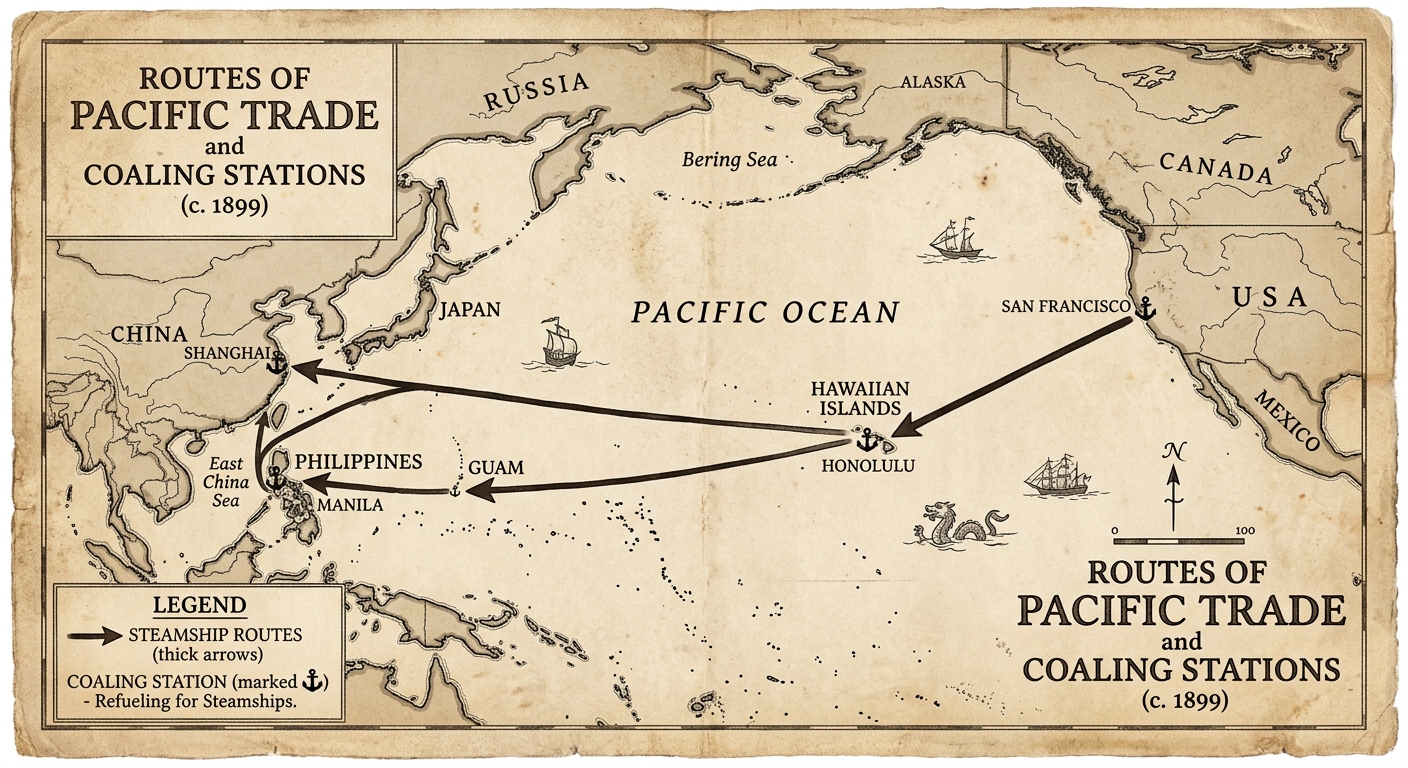
Which inference about U.S. foreign interactions is BEST supported by the map’s trade routes and port locations?
Based on the map, which location is BEST positioned to serve as a mid-Pacific coaling station for ships traveling between the U.S. West Coast and Asia?
Using evidence from the map, explain how the geography of the Pacific and the trade routes shown could contribute to increased U.S. foreign interactions.
Cite at least two specific map features (for example, arrows/routes, labeled ports, or coaling stations) and explain what each suggests.
According to the arrows on the map, which route MOST directly connects the U.S. West Coast to Asian ports?
Compare TWO locations on the map (for example, Hawai‘i and the Philippines).
Explain how their geographic positions on Pacific trade routes could lead to different types of U.S. foreign interactions. Use map evidence to support your comparison.
Historical Document (c. 1900)
This table summarizes U.S. export values shipped across the Pacific to Hawai‘i and East Asian ports. Use the trend and the note about shipping costs to infer why American businesses wanted secure routes and access to overseas markets—and how those economic goals could increase U.S. foreign interactions.
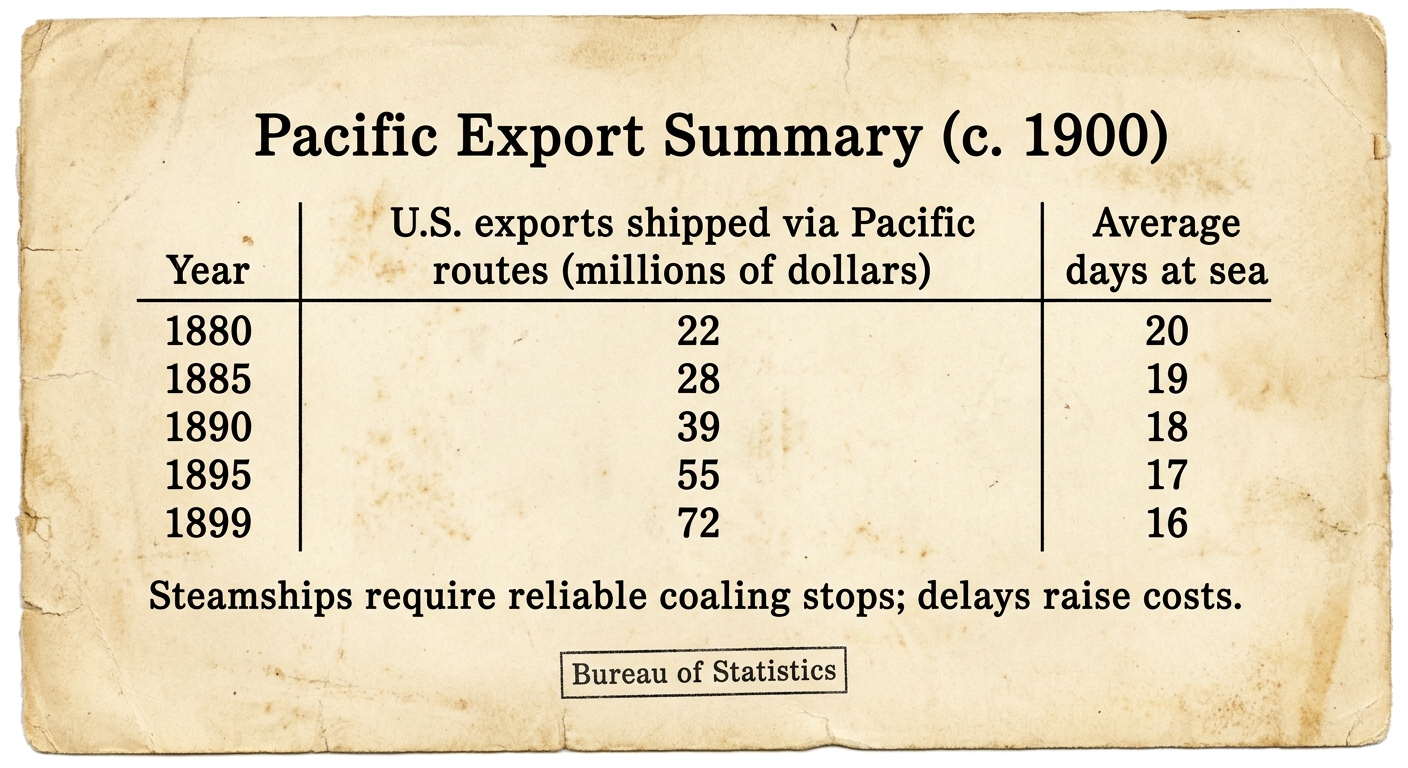
Which statement best describes the economic trend shown in the table, and why it might matter for U.S. foreign interactions in the Pacific?
Based on the table and the note about shipping costs, which economic goal is MOST consistent with the document?
Which action would MOST directly support the economic interests suggested by the document?
Using evidence from the document, describe one possible economic benefit and one possible economic cost or risk for the United States of pursuing policies to expand Pacific trade.
Support both with evidence and reasoning.
Use evidence from the table to explain how interest in Pacific trade could contribute to increased U.S. foreign interactions.
Cite at least two specific data points (years and values) and explain what they suggest about U.S. economic priorities.