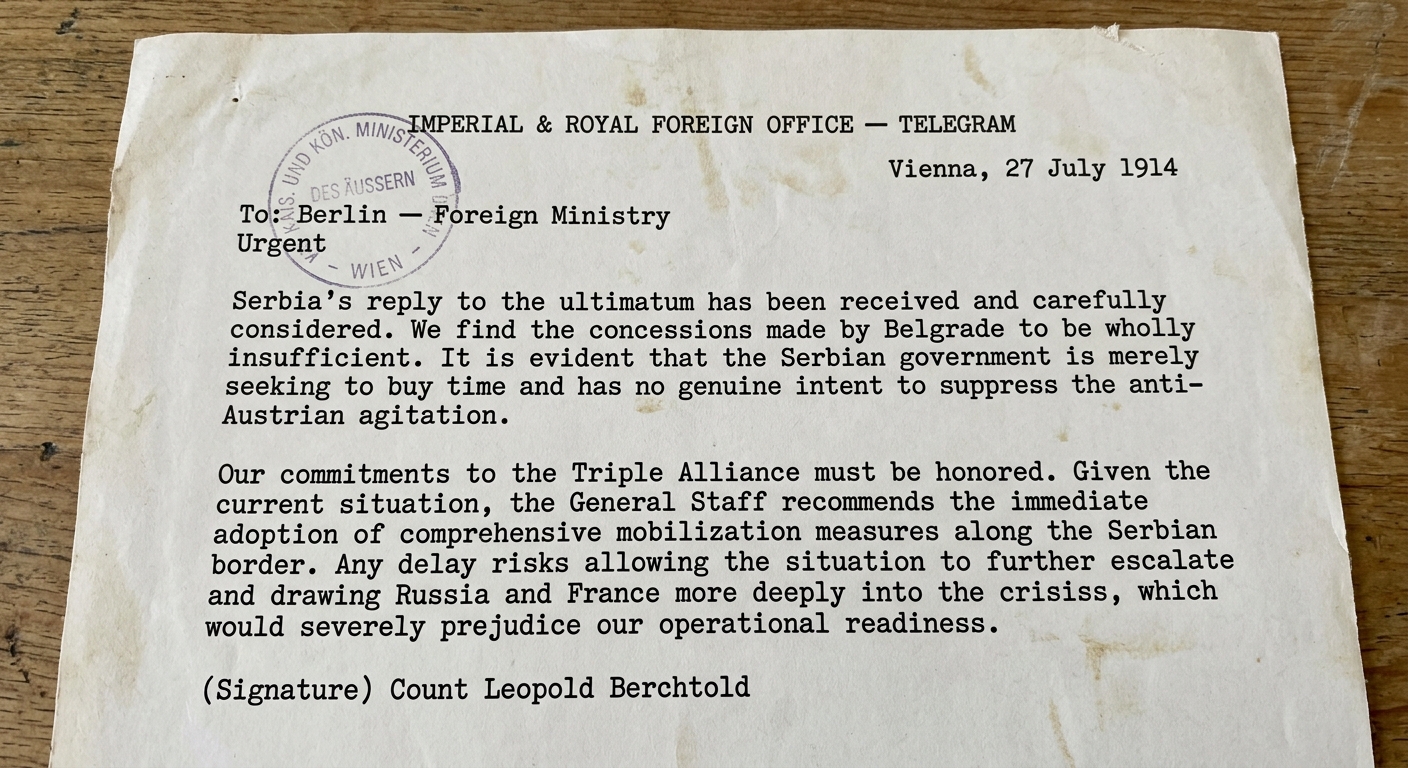
Read the diplomatic telegram below, dated July 27, 1914. As you read, underline words that show leaders’ fears and priorities. Then answer the questions using evidence from the document to connect it to causes of World War I.
Use the historical document(s) and the short readings in the left panel to answer the associated questions.
Use the historical document(s) and the short readings in the left panel to answer the associated questions.
Read the diplomatic telegram below, dated July 27, 1914. As you read, underline words that show leaders’ fears and priorities. Then answer the questions using evidence from the document to connect it to causes of World War I.
Which detail from the telegram is the BEST evidence that military planning and readiness were influencing political decisions?
Which cause of World War I is MOST directly supported by the telegram’s emphasis on “commitments to the alliance” and the risk of other countries being drawn into the crisis?
Using evidence from the telegram, explain how TWO different factors (militarism, alliance system, imperialism, nationalism) helped push Europe toward war.
Cite at least one specific phrase from the document for each factor you choose.
Based on the telegram, what is the sender’s main warning about the crisis?
What is one reasonable inference about why leaders might have believed quick mobilization was necessary in July 1914?
Support your inference with evidence from the telegram.
Read the briefing note below, dated July 29, 1914.
Track the dates carefully to see how a crisis moved from assassination to ultimatum, war, and mobilization. Then answer the questions using evidence from the timeline to connect the sequence of events to causes of World War I.
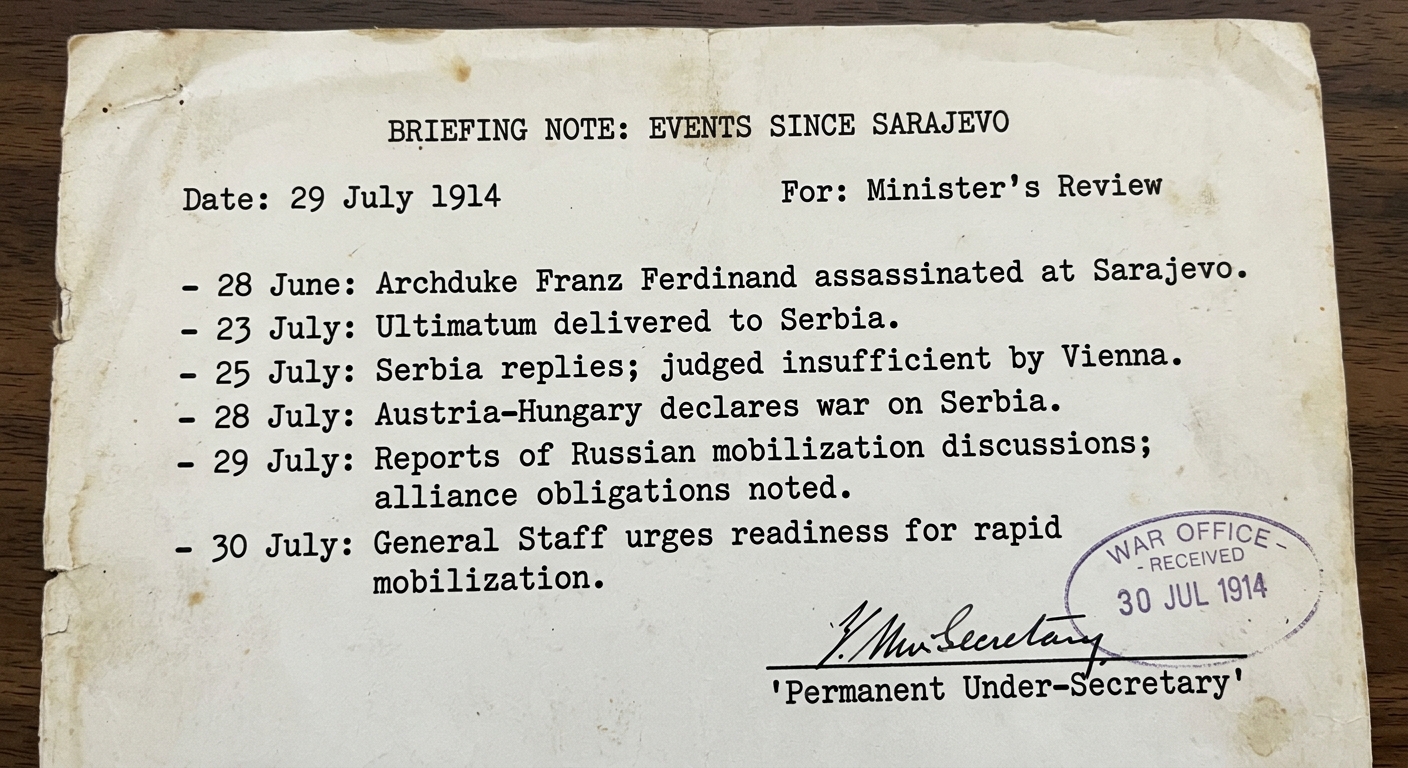
According to the briefing note, which event happened immediately BEFORE “28 July: Austria-Hungary declares war on Serbia”?
Which statement BEST describes how decisions changed over time in the timeline?
Create a 4-step timeline using the briefing note (choose four dated entries in order).
Then explain in 2–4 sentences how the timing of these steps increased the risk of a wider war.
Use evidence from the document.
Using evidence from the briefing note, explain how the order of events shows TWO factors (militarism, alliance system, imperialism, nationalism) pushing Europe toward war.
Cite at least one dated entry (or phrase) for each factor.
Which dated entry BEST supports the claim that the alliance system helped expand the crisis beyond Austria-Hungary and Serbia?
Read the two excerpts below from July 1914.
Compare what each author emphasizes and consider the audience for each source. Then use evidence from both sources to explain how different factors helped create the context for World War I.
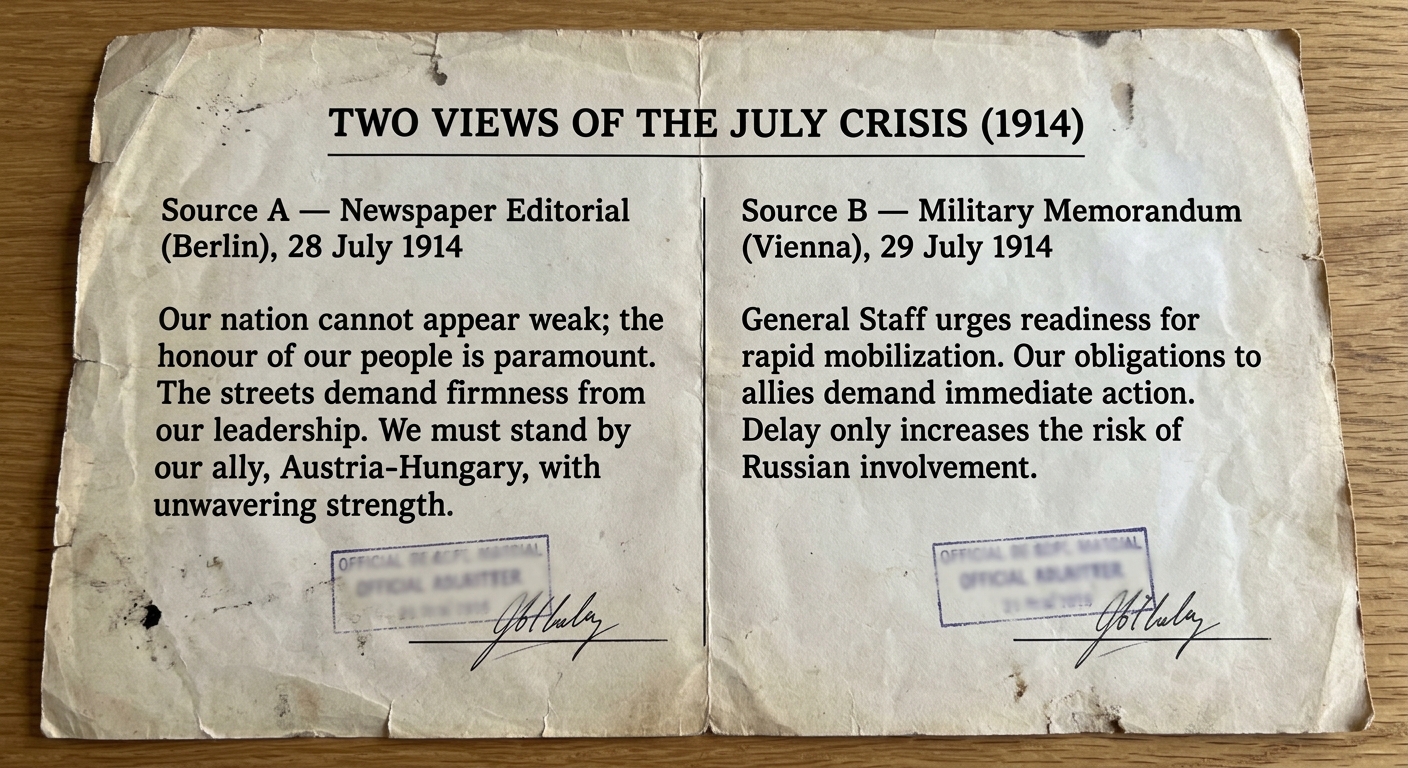
Which comparison between Source A and Source B is BEST supported by the excerpts?
Which contextual statement BEST explains why the two sources emphasize different concerns in late July 1914?
Using evidence from BOTH sources, explain one key similarity and one key difference in how the writers respond to the July 1914 crisis.
Cite at least one phrase or idea from each source.
Contextualize the two sources: Explain how each excerpt connects to a different cause (European militarism, the alliance system, imperialism, and nationalism).
Then explain why these causes mattered in Europe in 1914. Use evidence from the sources.
Which pair of causes (European militarism, the alliance system, imperialism, and nationalism) is MOST strongly suggested when you compare the main focus of each source?
Study the map of Europe in 1914 and the legend.
Use location, borders, and alliance groupings to explain how a crisis in the Balkans could spread. Then answer the questions using evidence from the map to connect geography to the causes of World War I.
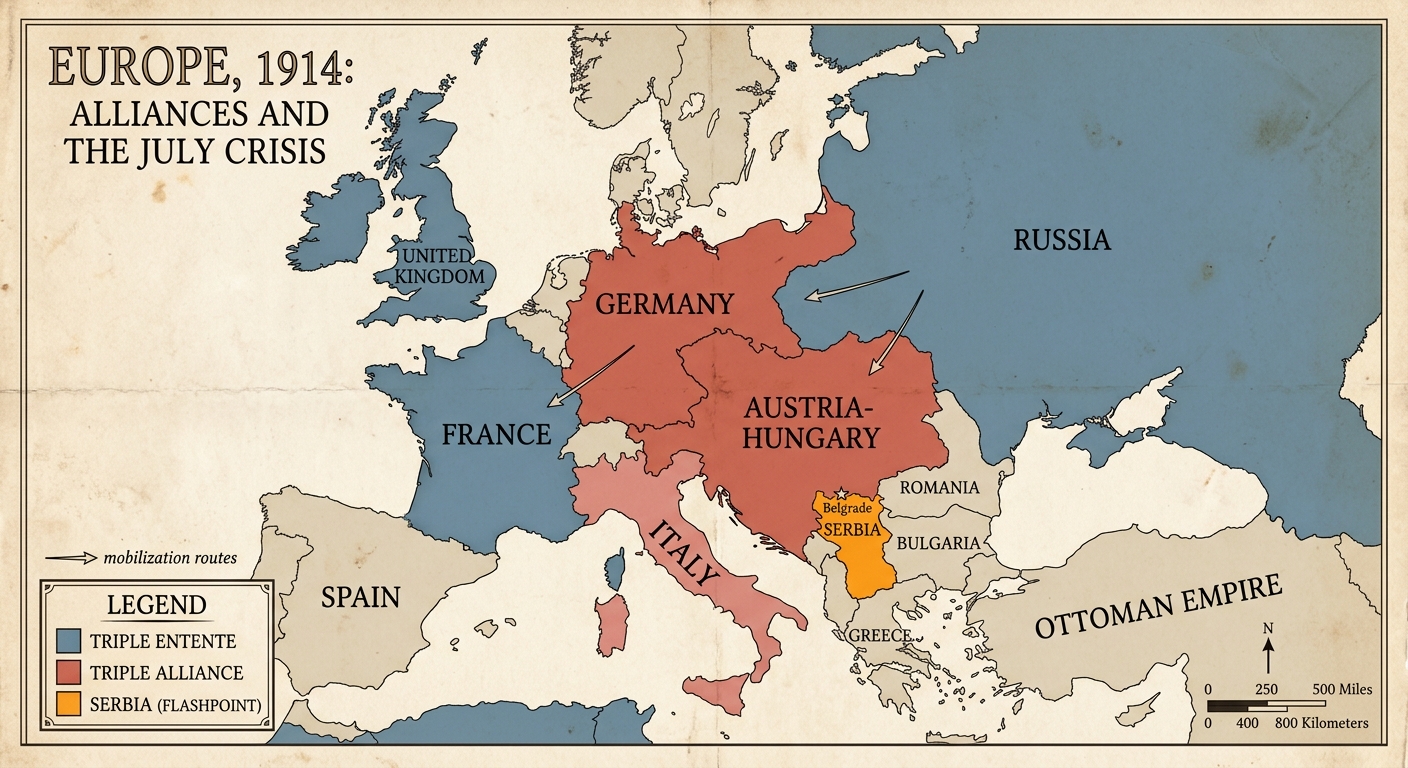
Using evidence from the map, explain how geography and the alliance system together increased the risk of a wider war in 1914.
Cite at least TWO specific map features (for example, borders, locations, or alliance shading).
Which statement BEST explains, using the map, how the alliance system and geography could turn a regional conflict into a wider war?
Based on the map’s locations and the “mobilization routes,” make one reasonable inference about why leaders might have believed rapid mobilization was necessary in 1914.
Support your inference with evidence from the map.
Based on the map, which location is MOST likely to be a flashpoint because it lies near multiple major powers and alliance borders?
Which map feature is the BEST evidence for the role of militarism in the crisis?
Study the spending table below, compiled in March 1914.
Look for patterns in how governments allocated money to armies and navies. Then answer the questions using evidence from the document to explain how economic choices and competition connected to causes of World War I.
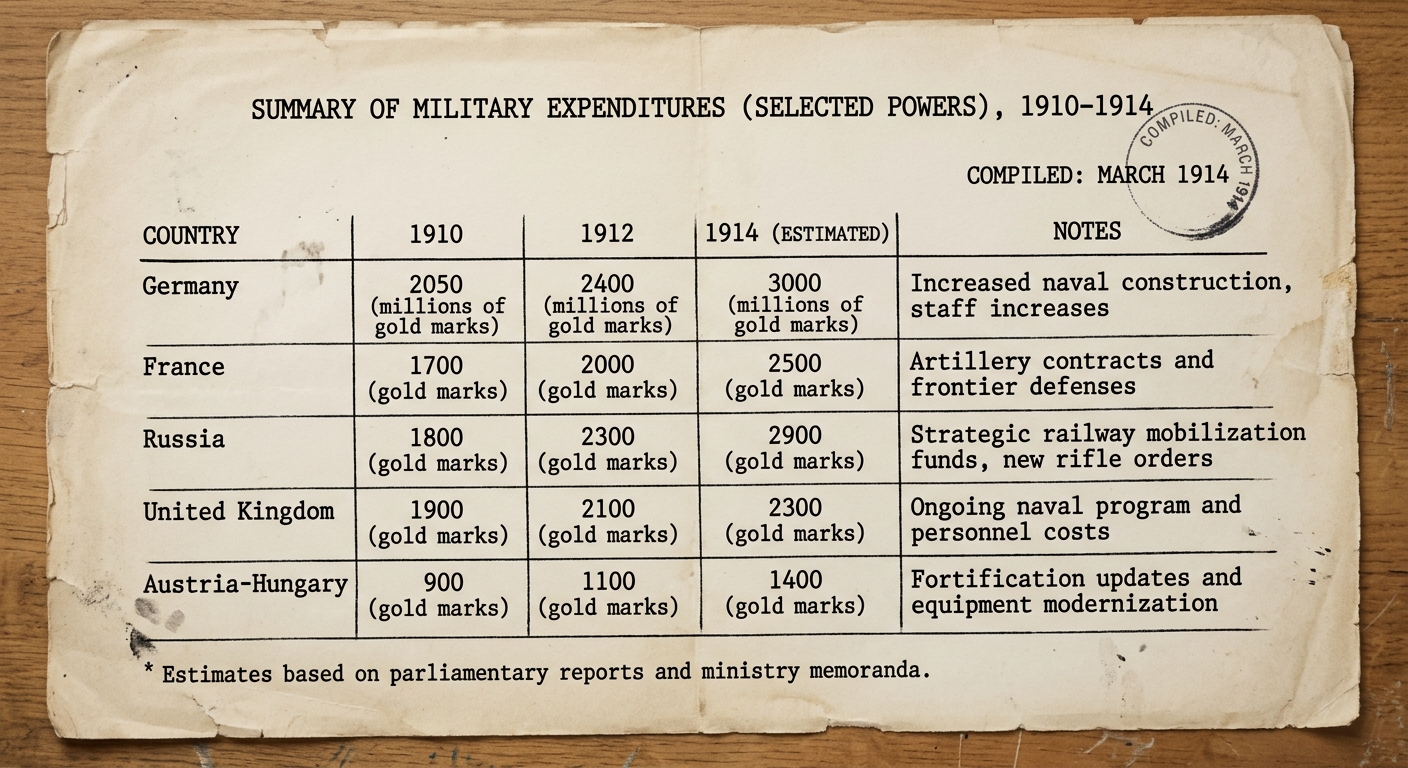
Which detail from the table is the BEST evidence that militarism involved major economic investment before 1914?
Using evidence from the table, compare TWO countries’ spending from 1910 to 1914 (estimated).
Explain what the comparison suggests about militarism as a cause of World War I. Cite at least one number for each country.
Explain how economic choices shown here connect to TWO causes (European militarism, the alliance system, imperialism, and nationalism).
Then explain why those causes mattered in Europe by 1914. Use evidence from the document (numbers or notes).
Based on the pattern of rising expenditures across multiple countries, which inference is MOST reasonable?
Which statement BEST describes the overall economic trend shown in the table from 1910 to 1914 (estimated)?