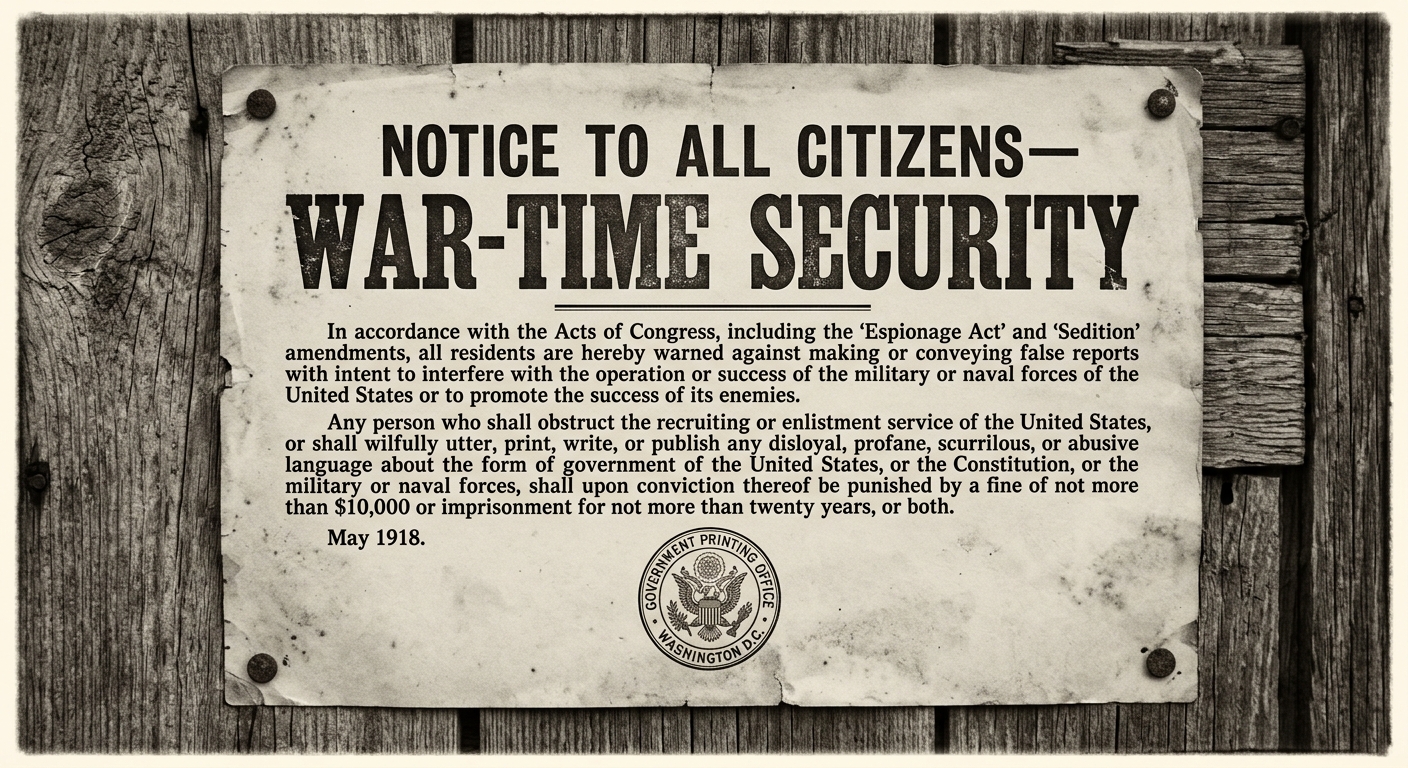
Study this May 1918 U.S. government notice posted during World War I. As you read, note the actions it warns against and the punishments it lists. Use those details as evidence to explain how wartime policies could limit civil liberties at home.
Use the historical document(s) and the short readings in the left panel to answer the associated questions.
Use the historical document(s) and the short readings in the left panel to answer the associated questions.
Study this May 1918 U.S. government notice posted during World War I. As you read, note the actions it warns against and the punishments it lists. Use those details as evidence to explain how wartime policies could limit civil liberties at home.
Based on the language of the notice, what is the most likely purpose of this document?
Which phrase from the notice is the BEST evidence that civil liberties were limited during World War I?
Which development is MOST likely to increase U.S. support for joining the Allies in World War I?
Using evidence from the notice, explain TWO ways the U.S. government limited civil liberties during World War I. Use at least two specific details from the document.
Use the notice and your knowledge of World War I to explain how international or military pressures can lead to domestic restrictions on civil liberties.
Support your answer with ONE detail from the document and ONE historical example or policy.
Study this timeline-style document compiled in 1918.
Use the dates and event descriptions to explain what happened first, what happened next, and how events leading to U.S. entry into World War I were followed by domestic laws that restricted civil liberties.
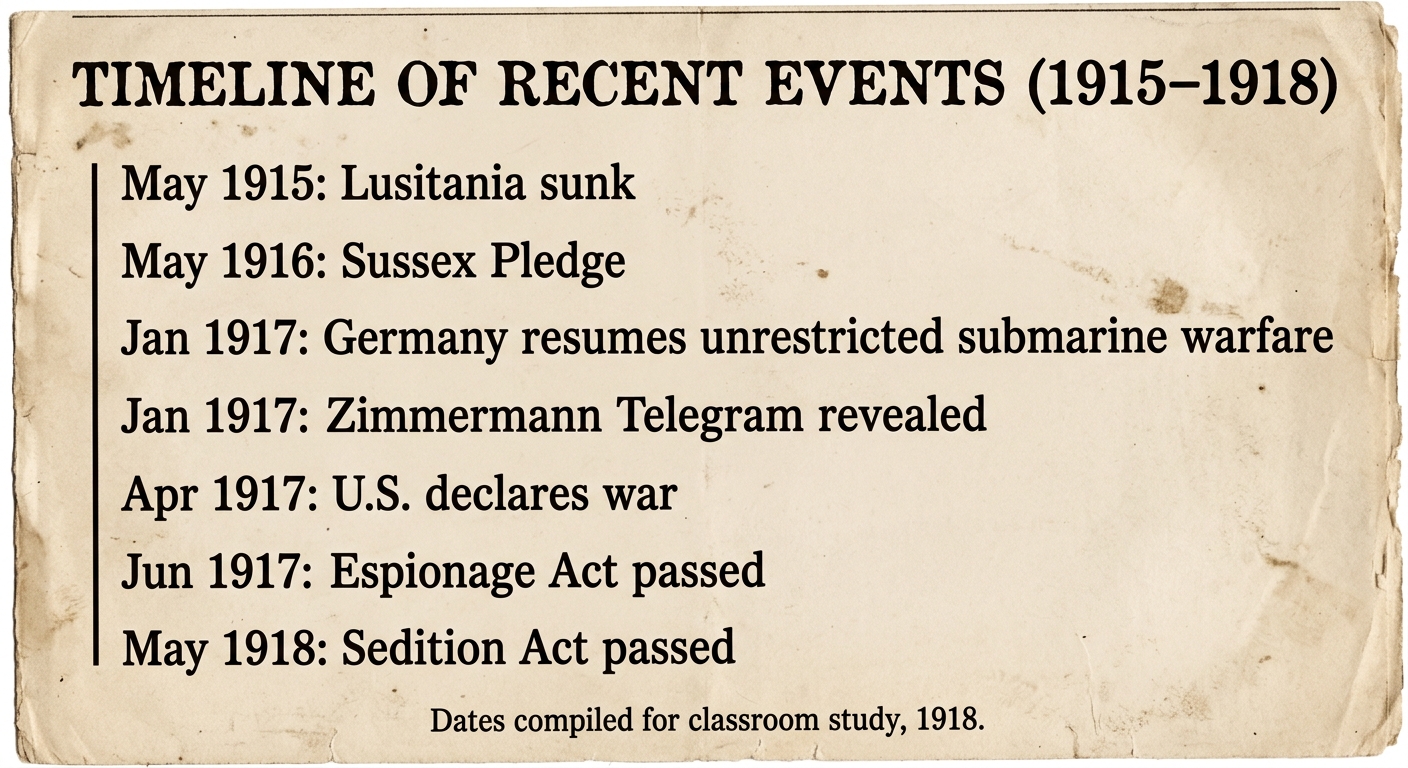
According to the timeline, which event happened immediately before the United States declared war in April 1917?
Which event on the timeline happened AFTER U.S. entry into World War I and is MOST directly connected to limiting civil liberties at home?
Which pair of events is listed in the correct chronological order on the timeline?
Using the timeline, explain how the sequence of events shows a shift from international pressures to domestic restrictions.
Use evidence from TWO different dated entries, and explain how the timing supports your reasoning.
Write 3–4 sentences explaining one international event on the timeline that contributed to U.S. entry into World War I and one domestic law on the timeline that limited civil liberties afterward.
Include the dates for both entries and explain the before/after relationship.
Study these two brief excerpts compiled in 1918.
One summarizes international events that increased U.S. support for joining the Allies. The other summarizes wartime restrictions at home. Compare the excerpts and use specific details to explain what each reveals about wartime pressures.
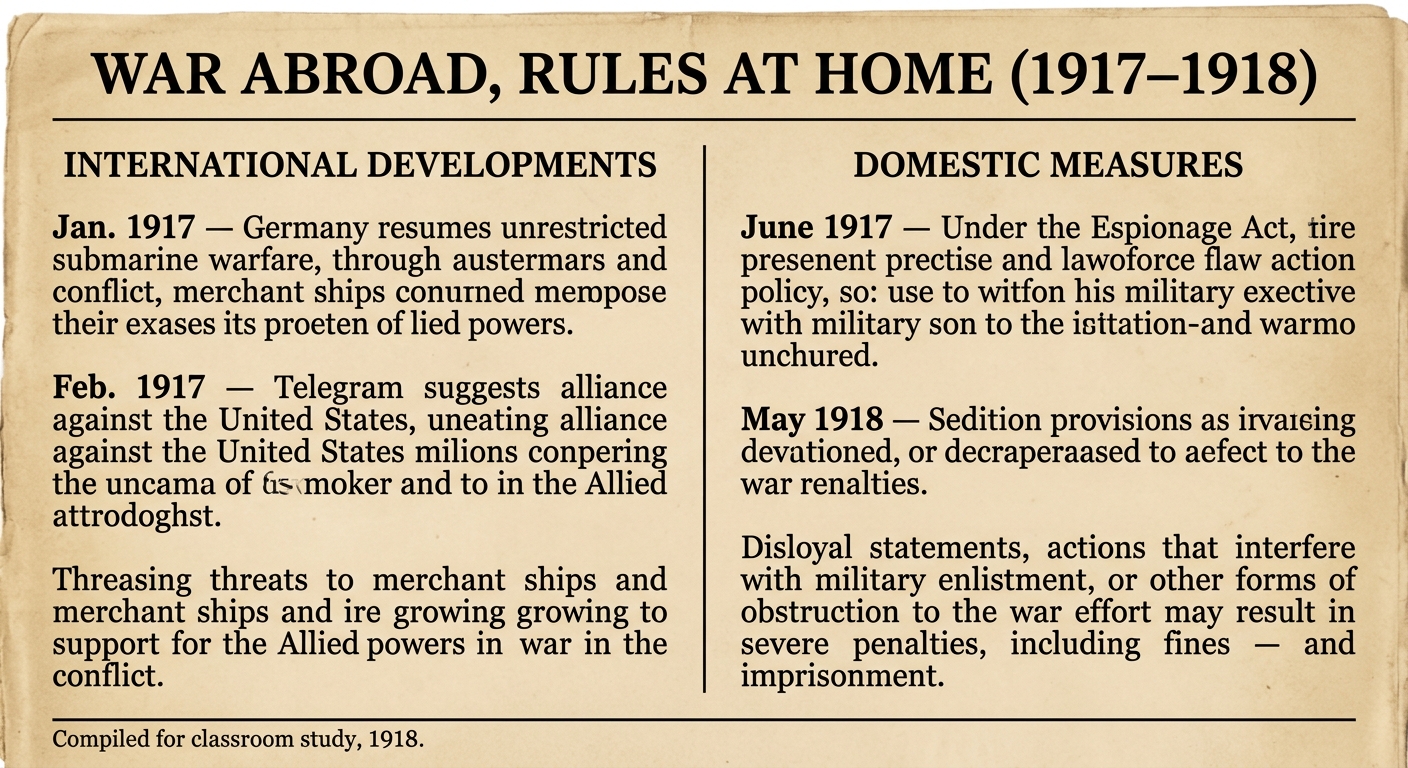
Which statement BEST compares the focus of the international excerpt and the domestic excerpt?
Which context BEST helps explain why the domestic excerpt appeared during World War I?
Which detail from the domestic excerpt is the BEST evidence that civil liberties were limited?
Compare the two excerpts by explaining what each suggests about U.S. entry into World War I and civil liberties at home.
Use ONE specific detail from each excerpt as evidence.
Contextualize the excerpts by explaining how international military threats and domestic limits on civil liberties can develop together during wartime.
Use ONE detail from the document and ONE outside historical example or policy from World War I.
Study this 1917 map of Atlantic shipping routes and war zones.
Use the locations, shipping lanes, and the marked danger zone to explain how geography could influence U.S. support for joining the Allies. Then connect those wartime pressures to later limits on civil liberties at home.
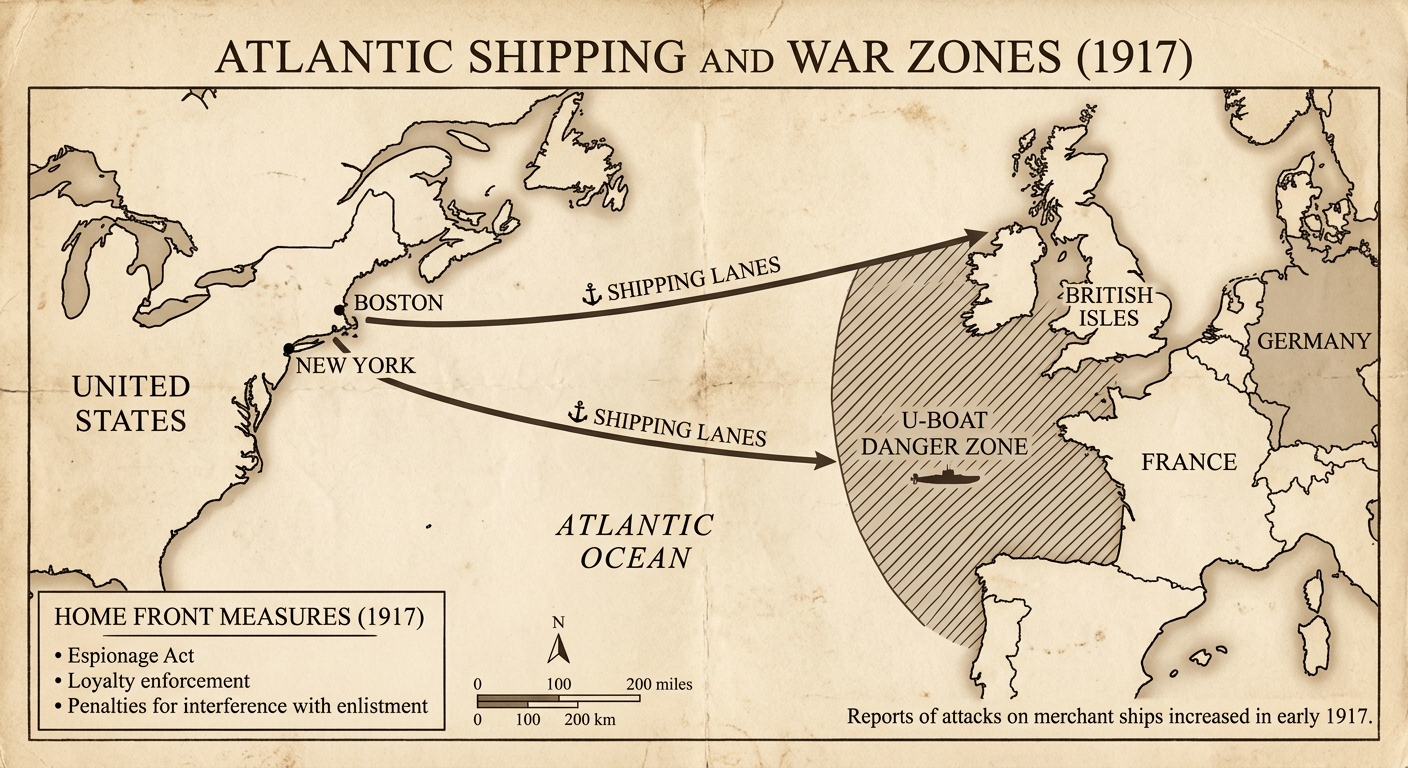
Based on the map, which geographic feature MOST directly explains why Germany’s submarine campaign affected the United States?
Which location would MOST likely feel the effects of disrupted Atlantic shipping first, based on the map?
Which statement BEST connects the map’s Atlantic danger zone to the “Home Front Measures (1917)” inset?
Use TWO details from the map to explain how geography contributed to U.S. support for joining the Allies in World War I.
Contextualize the map by explaining how threats in a specific place (the Atlantic shipping routes) could lead to limits on civil liberties at home during World War I.
Use ONE map detail and ONE outside historical example or policy.
Study this 1917 trade-and-shipping infographic.
Use the export and shipping-risk evidence to explain how economic ties and wartime trade pressures could increase U.S. support for joining the Allies. Then connect economic mobilization at home to policies that restricted civil liberties.
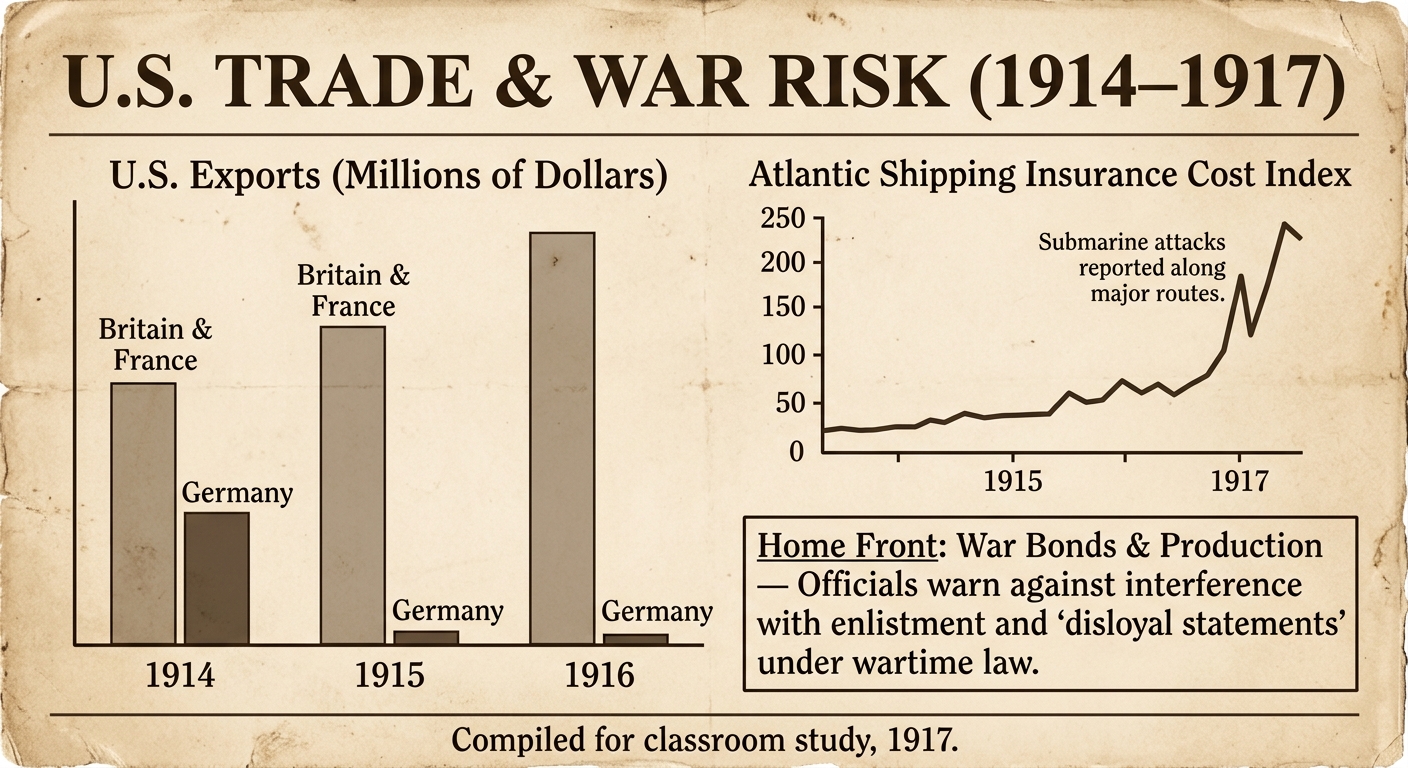
Which economic trend in the document BEST supports the idea that U.S. economic ties favored the Allies before U.S. entry into World War I?
Which international development is MOST likely to explain the rise in Atlantic shipping insurance costs shown in the document?
Which statement BEST explains how wartime economic mobilization could be connected to limits on civil liberties?
Use TWO pieces of economic evidence from the document to explain how economic developments could sway U.S. support toward joining the Allies in World War I.
Contextualize the infographic by explaining how wartime economic policies can increase pressure to limit civil liberties.
Use ONE detail from the document and ONE outside historical example or policy from World War I.