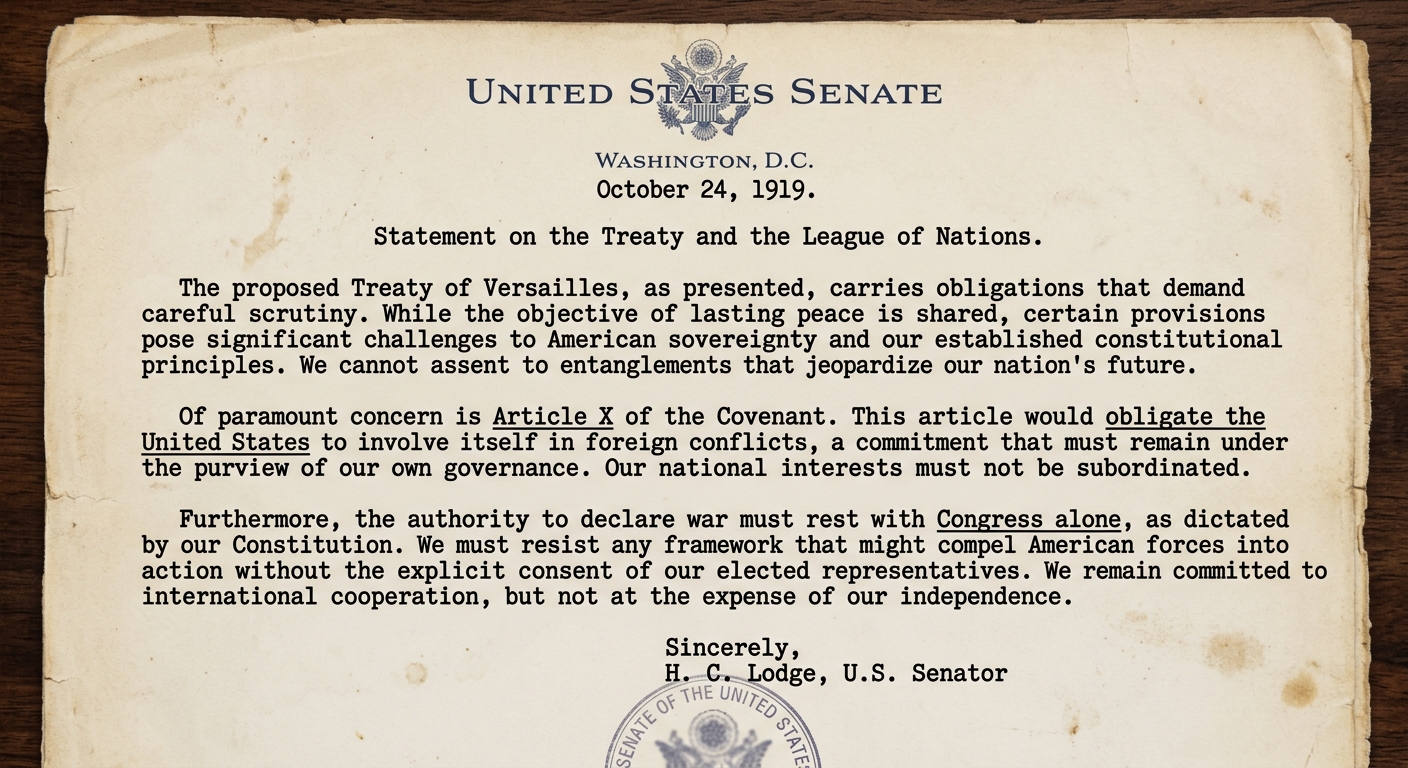
Excerpt from a U.S. Senate statement (1919) arguing that the Treaty of Versailles should not be approved unless the League of Nations is limited. The author warns that joining could obligate U.S. action in future conflicts without Congress’s choice.
Use the historical document(s) and the short readings in the left panel to answer the associated questions.
Use the historical document(s) and the short readings in the left panel to answer the associated questions.
Excerpt from a U.S. Senate statement (1919) arguing that the Treaty of Versailles should not be approved unless the League of Nations is limited. The author warns that joining could obligate U.S. action in future conflicts without Congress’s choice.
Using the historical document, which phrase best supports the claim that some senators feared the League of Nations could pull the United States into future conflicts?
Which inference is best supported by the document about why the United States, after refusing to ratify the Treaty of Versailles, would focus more on domestic matters than international commitments?
Based on the document’s emphasis on who can commit the nation to war, which statement best describes the constitutional role being defended?
Write one well-formed paragraph explaining how evidence from the document helps explain why the United States refused to ratify the Treaty of Versailles and then focused more on domestic matters.
Use at least two pieces of evidence from the document.
Write one well-formed paragraph evaluating two interpretations of the document:
(1) the author mainly fears losing Congress’s power to decide on war, or
(2) the author mainly opposes international cooperation in general.
Which interpretation is better supported? Use evidence from the document.
Newspaper-style excerpt (1920) summarizing the Senate’s failure to approve the Treaty of Versailles and U.S. participation in the League of Nations. The report notes that, after months of debate following the war’s end, leaders favored limiting foreign commitments and turning attention back to domestic concerns.
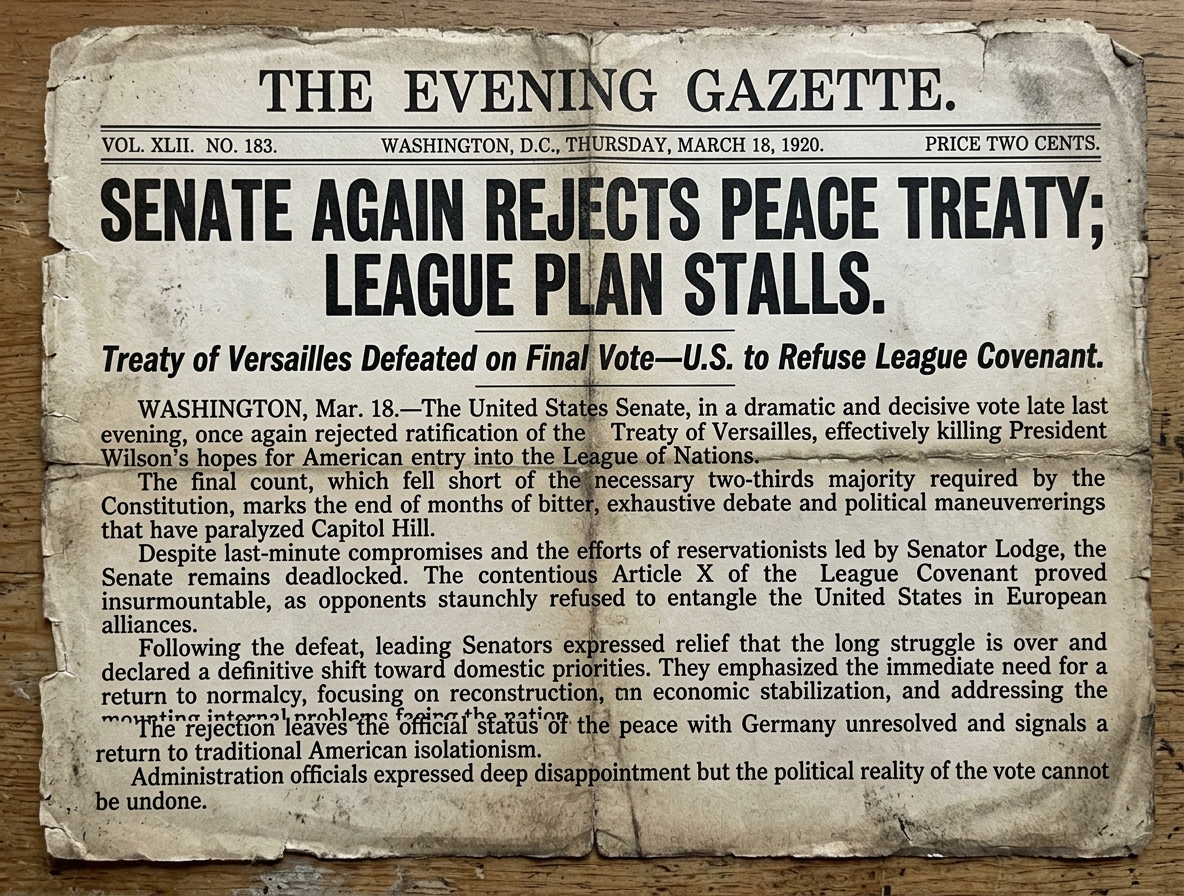
Based on the newspaper excerpt, which event happened first in the sequence of events related to the end of World War I and the debate over the Treaty of Versailles?
Which sequence best matches the timeline suggested by the newspaper excerpt about the United States after World War I?
Which inference about the timing of the Senate’s decision is best supported by the excerpt?
Write one well-formed paragraph explaining how the excerpt helps place the Senate’s refusal to ratify the Treaty of Versailles in postwar chronology.
Use at least two time-related clues from the excerpt and connect them to the shift toward domestic focus.
Write one well-formed paragraph explaining how the timing of the Senate’s refusal to ratify the Treaty of Versailles could influence later U.S. policy priorities.
Use evidence from the excerpt to describe what came before and what came after.
Campaign handbill (1920) presenting two contrasting arguments about the League of Nations. One side claims cooperation could prevent another war. The other warns “Article X” might obligate U.S. action abroad and stresses that “Congress alone” should decide on war.
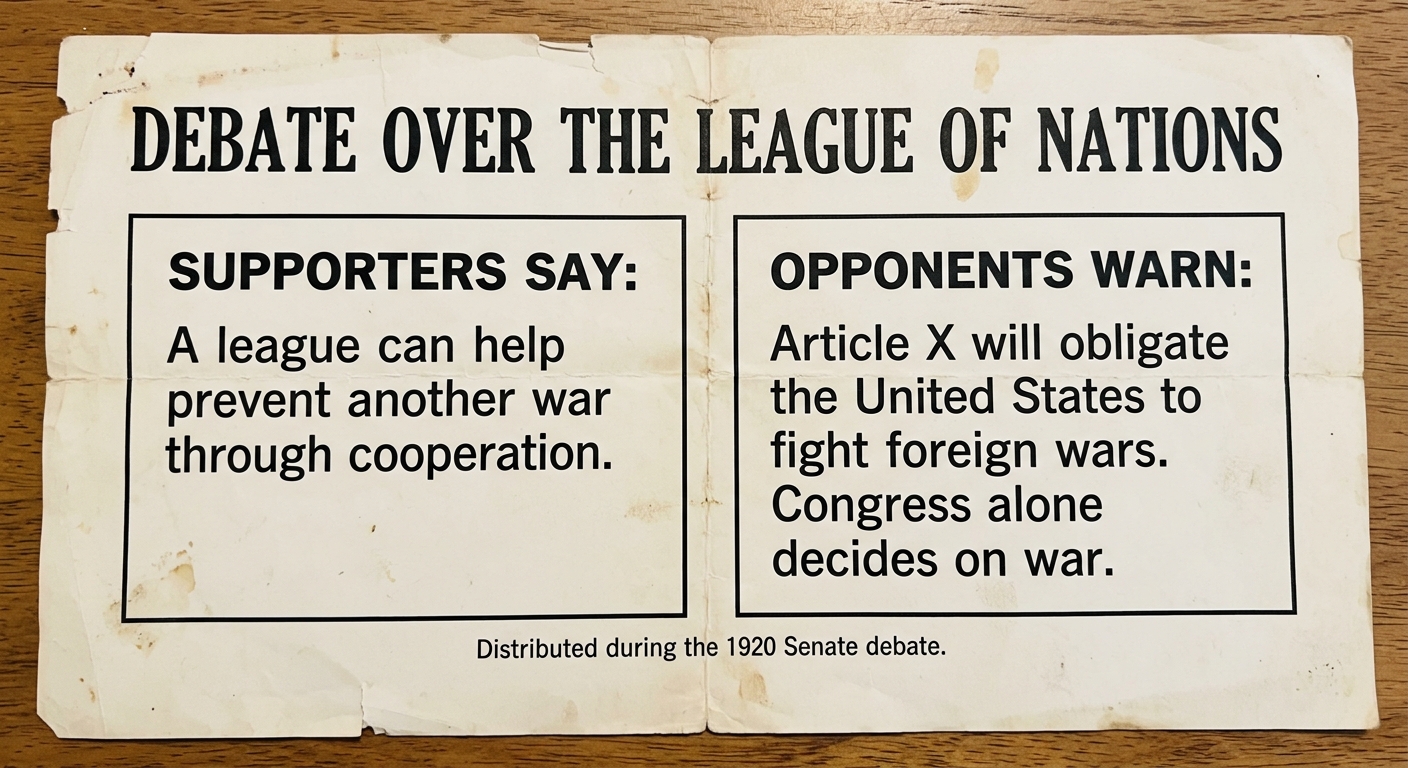
Which statement best compares the two viewpoints presented in the handbill about the League of Nations?
Which postwar context best helps explain why the opponents’ argument in the handbill could be persuasive to many Americans?
Which piece of evidence from the handbill best supports the conclusion that some leaders wanted to limit international commitments after World War I?
Which statement best compares the two viewpoints presented in the handbill about the League of Nations?
Which postwar context best helps explain why the opponents’ argument in the handbill could be persuasive to many Americans?
Map (1919) showing the Atlantic region during the debate over the Treaty of Versailles and the League of Nations. Europe is emphasized as the center of League commitments, while the United States is shown as debating ratification. The map highlights why overseas obligations felt distant from domestic priorities.
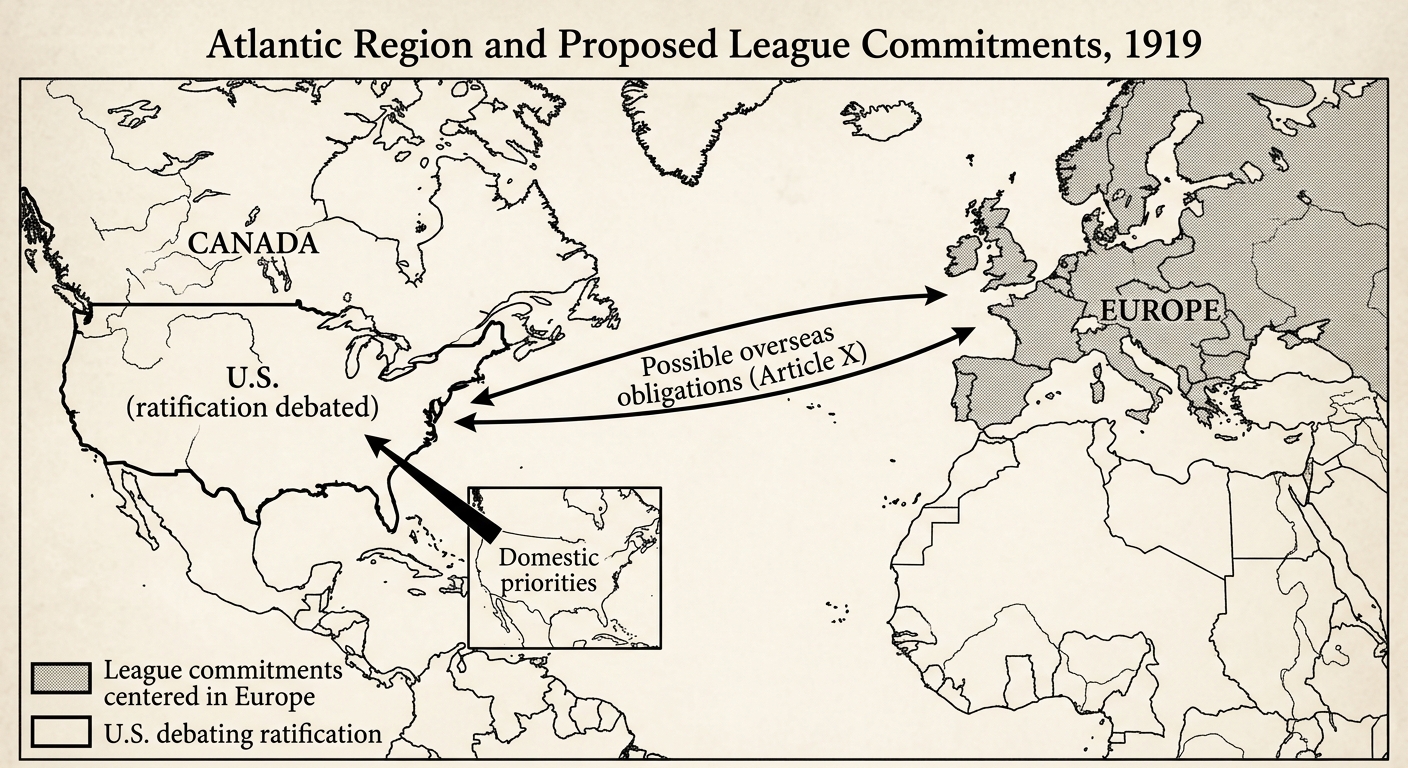
Based on the map, which region is most emphasized as the focus of the League of Nations commitments being debated in the United States?
Which inference best uses evidence from the map to explain why some Americans after World War I preferred focusing on domestic matters rather than joining the League of Nations?
Which feature of the map best supports the conclusion that joining the League could increase U.S. involvement in overseas conflicts?
Write one well-formed paragraph explaining how the map helps contextualize why some senators opposed ratifying the Treaty of Versailles.
Use at least two details from the map and connect them to the shift toward domestic focus.
Write one well-formed paragraph comparing the geographic focus of the League commitments shown on the map with the geographic focus suggested by “domestic priorities.”
Explain how this comparison relates to the United States refusing to ratify the Treaty of Versailles.
Treasury-style summary (1921) comparing federal spending after World War I. The chart shows costs tied to overseas military operations falling while domestic programs and war-debt costs rise. A note links the shift to leaders debating whether to limit foreign commitments and focus attention at home.
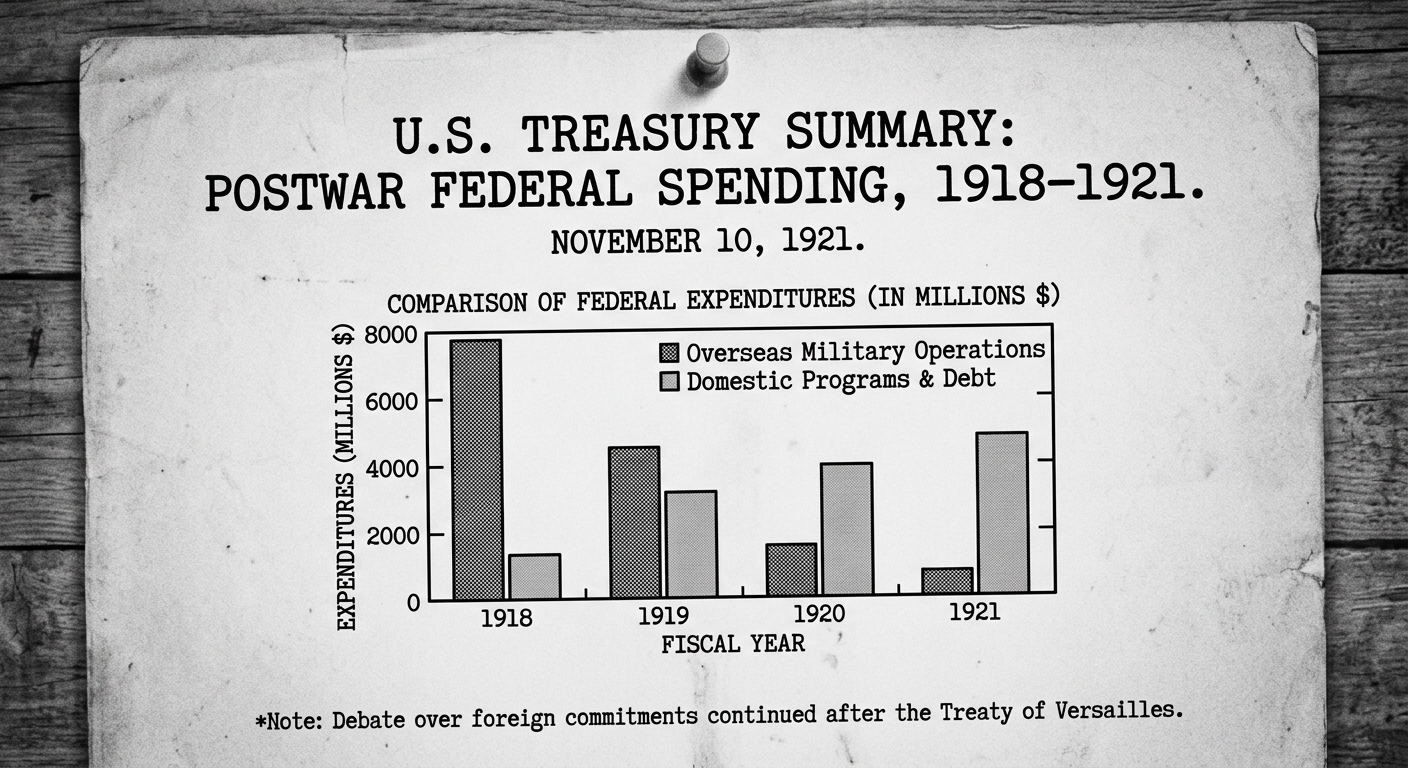
Which trend is best supported by the chart about U.S. federal spending priorities from 1918 to 1921?
Which inference best connects the economic evidence in the document to the idea that the United States shifted its focus toward domestic matters after World War I?
According to the chart, which claim is best supported about the tradeoff between overseas commitments and domestic priorities in the years after World War I?
Write one well-formed paragraph explaining how evidence from the chart supports the idea that the United States, after refusing to ratify the Treaty of Versailles, focused more on domestic matters.
Use at least two pieces of numerical evidence from the chart.
Write one well-formed paragraph comparing two policy choices suggested by the document:
(1) maintaining higher spending for overseas commitments, or
(2) shifting resources toward domestic programs and war-debt costs.
Which choice better matches the postwar direction?
Use evidence from the chart.