Twa kɔ nsɛm atitiriw so
Log in
Sign up for FREE
arrow_back
Laabri

8.5b - Great Depression: - Practices A through E

star
star
star
star
star
Last updated about 1 month ago
25 Nsɛmmisa
Hyɛ no nsow a efi ɔkyerɛwfo no hɔ:

Use the historical document(s) and the short readings in the left panel to answer the associated questions.

Use the historical document(s) and the short readings in the left panel to answer the associated questions.

8.5.b
DOK.SS.2
8.5.b
DOK.SS.2
8.5.b
DOK.SS.2
8.5.b
DOK.SS.2
8.5.b
DOK.SS.2
Ɛhia
1
8.5.b
DOK.SS.2
Ɛhia
1
8.5.b
DOK.SS.2
Ɛhia
1
8.5.b
DOK.SS.2
Ɛhia
1
8.5.b
DOK.SS.2
Ɛhia
1
8.5.b
DOK.SS.2
Ɛhia
1
8.5.b
DOK.SS.2
Ɛhia
1
8.5.b
DOK.SS.2
Ɛhia
1
8.5.b
DOK.SS.2
Ɛhia
1
8.5.b
DOK.SS.2
Ɛhia
1
8.5.b
DOK.SS.2
Ɛhia
1
8.5.b
DOK.SS.2
Ɛhia
1
8.5.b
DOK.SS.2
Ɛhia
1
8.5.b
DOK.SS.2
Ɛhia
1
8.5.b
DOK.SS.2
Ɛhia
1
8.5.b
DOK.SS.2
Ɛhia
1
8.5.b
DOK.SS.2
Ɛhia
1
8.5.b
DOK.SS.2
Ɛhia
1
8.5.b
DOK.SS.2
Ɛhia
1
8.5.b
DOK.SS.2
Ɛhia
1
8.5.b
DOK.SS.2
Ɛhia
1
8.5.b
DOK.SS.2
Ɛhia
1
8.5.b
DOK.SS.2
Ɛhia
1
8.5.b
DOK.SS.2
Ɛhia
1
8.5.b
DOK.SS.2
Ɛhia
1
8.5.b
DOK.SS.2

Historical Document:

County Relief Office Intake Card (1932)

Read the short intake record below from a county relief office in 1932. The card lists a worker’s job status, income, rent situation, and family needs. Use details from the document as evidence to explain how the Great Depression (and related farm problems) affected families and local businesses.
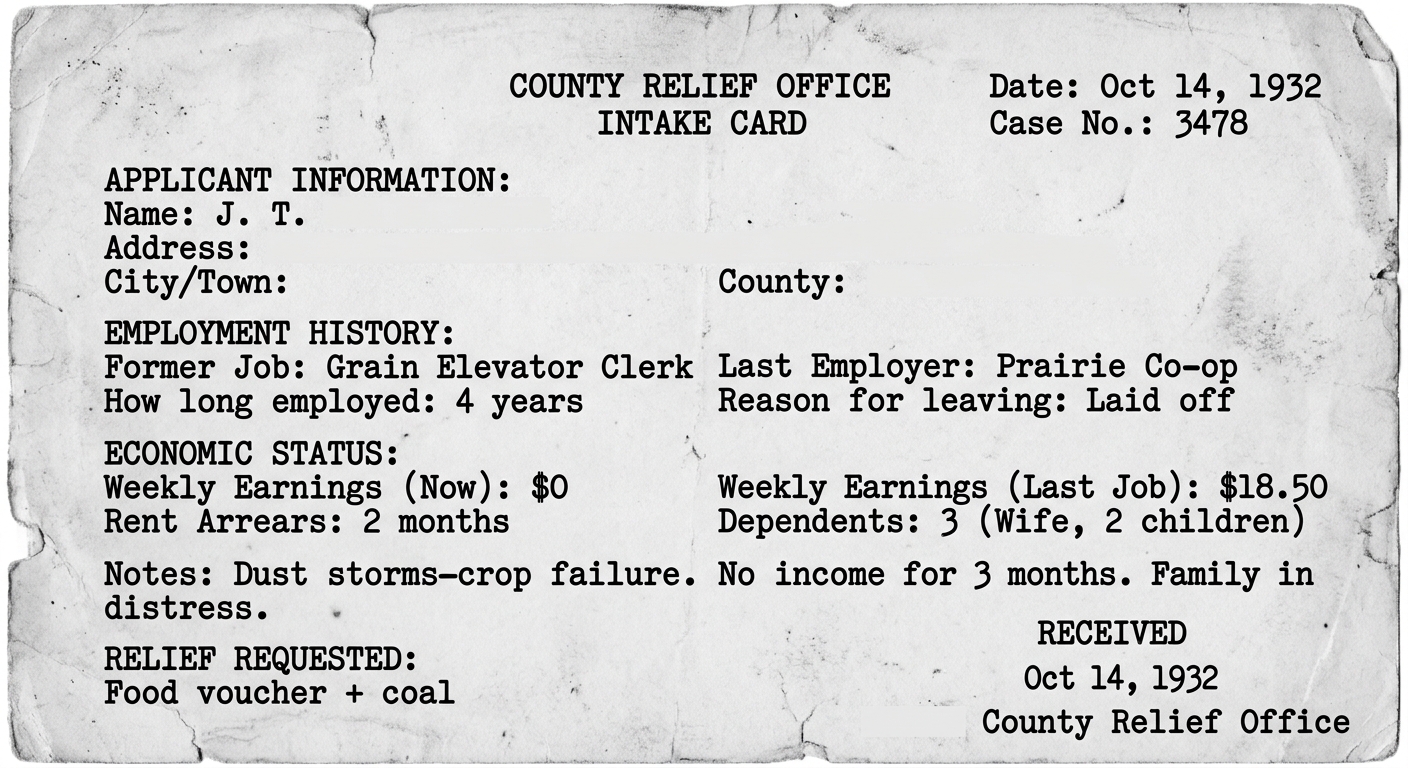
Black-and-white 1932 county relief office intake card showing a laid-off worker, three dependents, two months rent owed, and a note about dust storms and crop failure.

Asemmisa {{asɛmmisaAhyɛnsode}}
1.

Using evidence from the intake card, explain two ways the Great Depression (and/or related farm problems) affected this family.

In your response, quote or describe at least two specific details from the document.

Asemmisa {{asɛmmisaAhyɛnsode}}
2.

Use evidence from the intake card to explain how hardships like these could also affect businesses in the same community.

Include at least two specific pieces of evidence from the document to support your reasoning.

Asemmisa {{asɛmmisaAhyɛnsode}}
3.

Which statement is best supported by evidence from the intake card?

Asemmisa {{asɛmmisaAhyɛnsode}}
4.

Based on the document, which inference about how people responded to hardship in the early 1930s is most reasonable?

Asemmisa {{asɛmmisaAhyɛnsode}}
5.

Which detail from the document is the strongest evidence that the Great Depression harmed local businesses or employers?

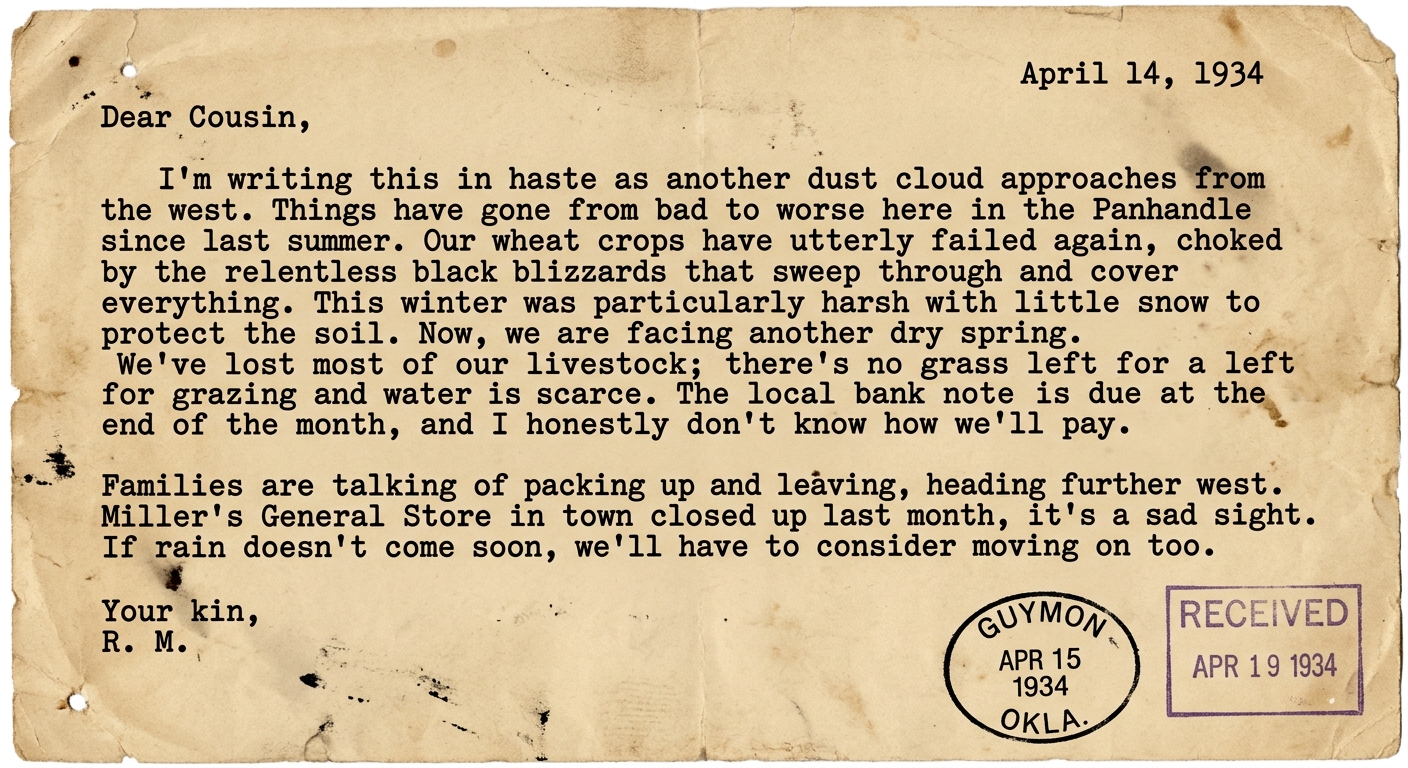
Historical Document:

Farmer Letter from the Dust Bowl (1934)

Read the letter below, dated 1934, from a Plains farmer writing to a relative in New York. Pay attention to the time markers (such as “since last summer,” “this winter,” and “now”) and use the sequence of events to explain how hardships grew over time for families and local businesses.

Black-and-white 1934 letter from a Dust Bowl farmer describing dust storms over several months and worsening financial hardship.

Asemmisa {{asɛmmisaAhyɛnsode}}
6.

Which sequence of events is most consistent with the time markers in the letter?

Asemmisa {{asɛmmisaAhyɛnsode}}
7.

Based on the letter’s timeline, which outcome would most likely happen LAST?

Asemmisa {{asɛmmisaAhyɛnsode}}
8.

Use the letter’s timeline to explain how the Dust Bowl and Great Depression could affect local businesses over time (not just in a single moment).

Include at least two pieces of evidence from the letter and explain the order in which business impacts might occur.

Asemmisa {{asɛmmisaAhyɛnsode}}
9.

Which detail best shows that the writer is comparing conditions across more than one season or year?

Asemmisa {{asɛmmisaAhyɛnsode}}
10.

Using chronological evidence from the letter, describe how the family’s situation changed over time.

Quote or describe at least two time markers (for example, “since last summer,” “this winter,” “now”) and connect each to a specific hardship mentioned.

Historical Document:

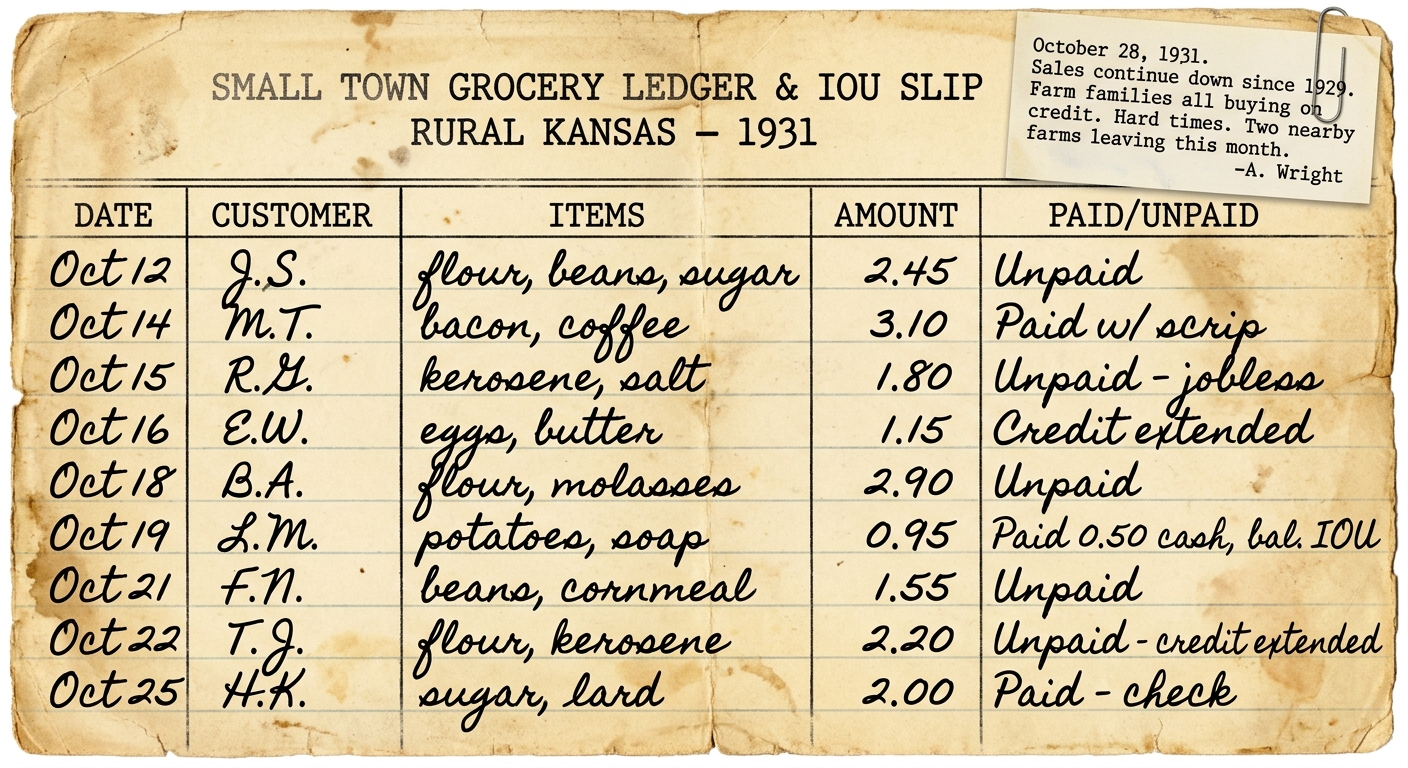
Small-Town Grocery Ledger & Credit Note (1931)

Read the store ledger and note from a rural grocery in 1931. Compare what the record suggests about families’ needs and what it suggests about the business. Use the broader context of the Great Depression and farm hardship to explain why a store might extend credit and still struggle.

Black-and-white 1931 grocery store ledger showing customers buying basic goods on credit and several unpaid balances.

Asemmisa {{asɛmmisaAhyɛnsode}}
11.

Explain how broader Great Depression and farm conditions could have led to both:

(1) families needing credit and

(2) small businesses struggling.

Use at least two pieces of evidence from the document to support your explanation.

Asemmisa {{asɛmmisaAhyɛnsode}}
12.

Which statement best compares the effects of the Great Depression on families and on the grocery store shown in the document?

Asemmisa {{asɛmmisaAhyɛnsode}}
13.

Which detail from the document best supports the idea that the store was trying to adapt to customers’ hardships?

Asemmisa {{asɛmmisaAhyɛnsode}}
14.

In the context of the early 1930s, which inference best explains why unpaid balances could hurt the wider community economy?

Asemmisa {{asɛmmisaAhyɛnsode}}
15.

Use evidence from the ledger and note to compare how the Great Depression affected families and how it affected this grocery business.

In your response, quote or describe at least two specific details from the document.

Historical Document:

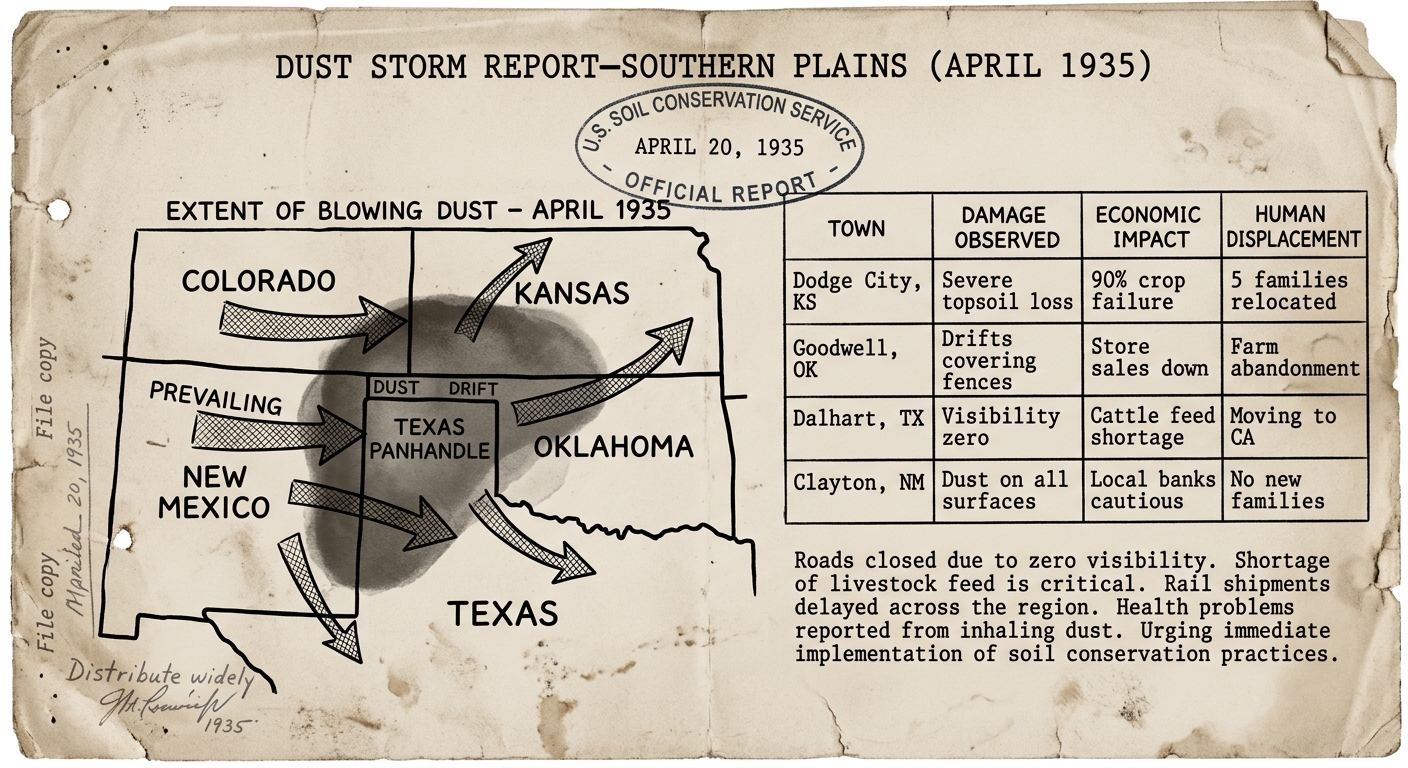
Dust Storm Report Map—Southern Plains (1935)

Study the 1935 dust-storm report map and notes from the southern Great Plains. Use the map’s locations, arrows, and place names to explain how environmental disaster affected different communities. Support your answers by citing at least two geographic details (states, towns, or directions) from the document.

Black-and-white 1935 Dust Storm Report map of the southern Great Plains showing dust movement and notes about crop failure and community impacts.

Asemmisa {{asɛmmisaAhyɛnsode}}
16.

Which statement is best supported by the map’s arrows and shading?

Asemmisa {{asɛmmisaAhyɛnsode}}
17.

Explain how the geography shown in the document could affect local businesses over time.

Use at least two pieces of geographic evidence (locations, directions, or place names) and link them to at least two business impacts (such as sales changes, supply problems, layoffs, or store closures).

Asemmisa {{asɛmmisaAhyɛnsode}}
18.

Which piece of evidence best shows that the Dust Bowl could disrupt businesses through transportation or supply routes?

Asemmisa {{asɛmmisaAhyɛnsode}}
19.

Which inference is most reasonable when you combine the map’s locations with the notes about crop failure and relocation?

Asemmisa {{asɛmmisaAhyɛnsode}}
20.

Use geographic evidence from the document to explain how the Dust Bowl affected families in different places.

In your response, cite at least two geographic details (such as state names, town names, or directions shown by arrows) and connect each to a specific hardship mentioned in the notes.

Historical Document:

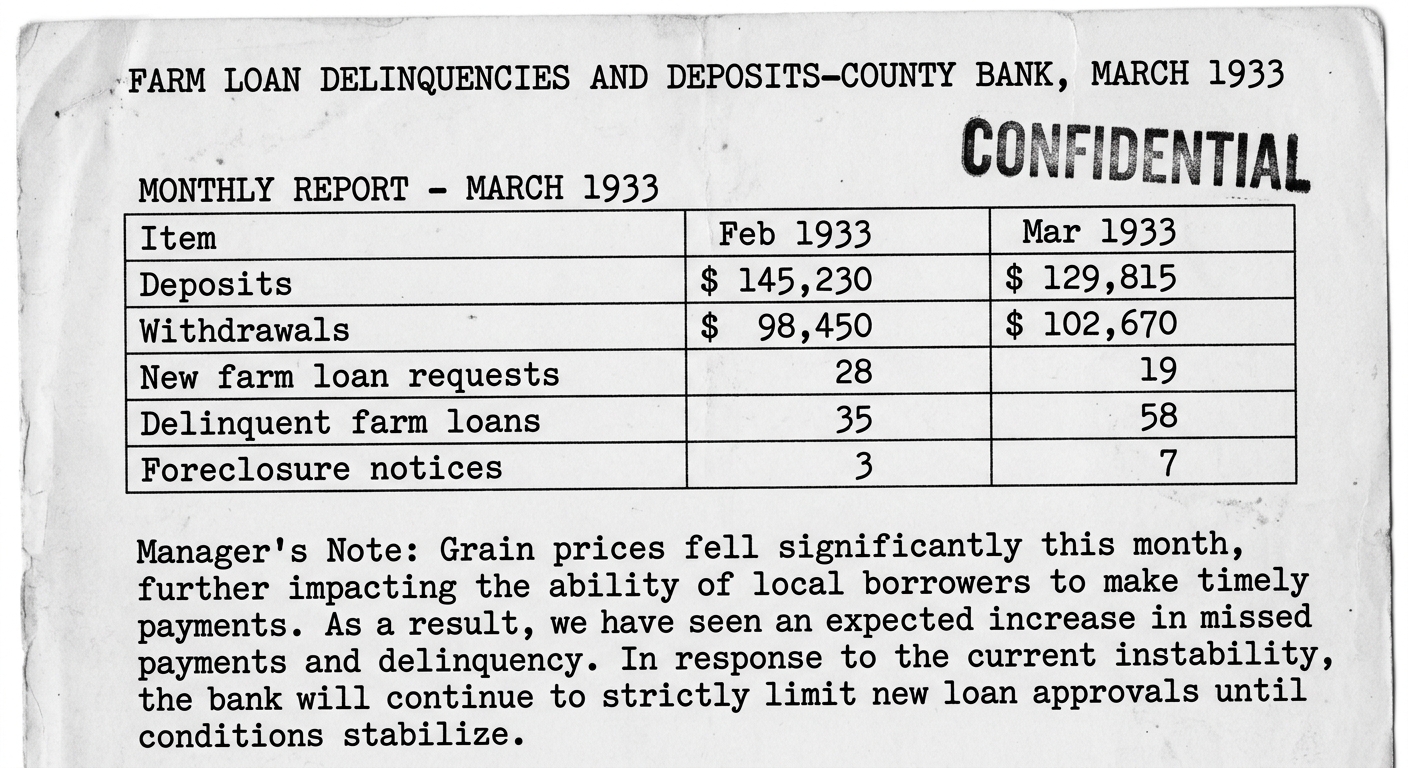
County Bank Report—Farm Loans & Deposits (1933)

Study the 1933 bank report excerpt below. It summarizes deposits, loan requests, and missed farm-loan payments during the Great Depression. Use the numbers and the manager’s note as evidence to explain how changes in credit, savings, and debt could affect families, farms, and local businesses.

Black-and-white 1933 bank report table showing falling deposits and rising delinquent farm loans and foreclosures.

Asemmisa {{asɛmmisaAhyɛnsode}}
21.

Which statement best describes what the data suggest about credit conditions in March 1933?

Asemmisa {{asɛmmisaAhyɛnsode}}
22.

Explain how the banking and credit evidence in the document helps show why local businesses could struggle during the Great Depression.

Use at least two pieces of evidence and connect them to at least two business impacts (such as layoffs, lower sales, or store closures).

Asemmisa {{asɛmmisaAhyɛnsode}}
23.

In a market economy, which outcome is most likely when a local bank limits new farm loans?

Asemmisa {{asɛmmisaAhyɛnsode}}
24.

Use evidence from the data and the manager’s note to explain how changes in savings (deposits) and debt (delinquent loans) could affect families’ daily lives.

Cite at least two specific pieces of evidence from the document.

Asemmisa {{asɛmmisaAhyɛnsode}}
25.

Which piece of evidence from the document best supports the idea that the bank faced greater financial risk?