Use the historical document(s) and the short readings in the left panel to answer the associated questions.
Study the historical document shown. It is a government notice from July 1936 about registering workers for Social Security under the New Deal. Use details from the document (words, audience, and purpose) as evidence to answer the questions that follow.
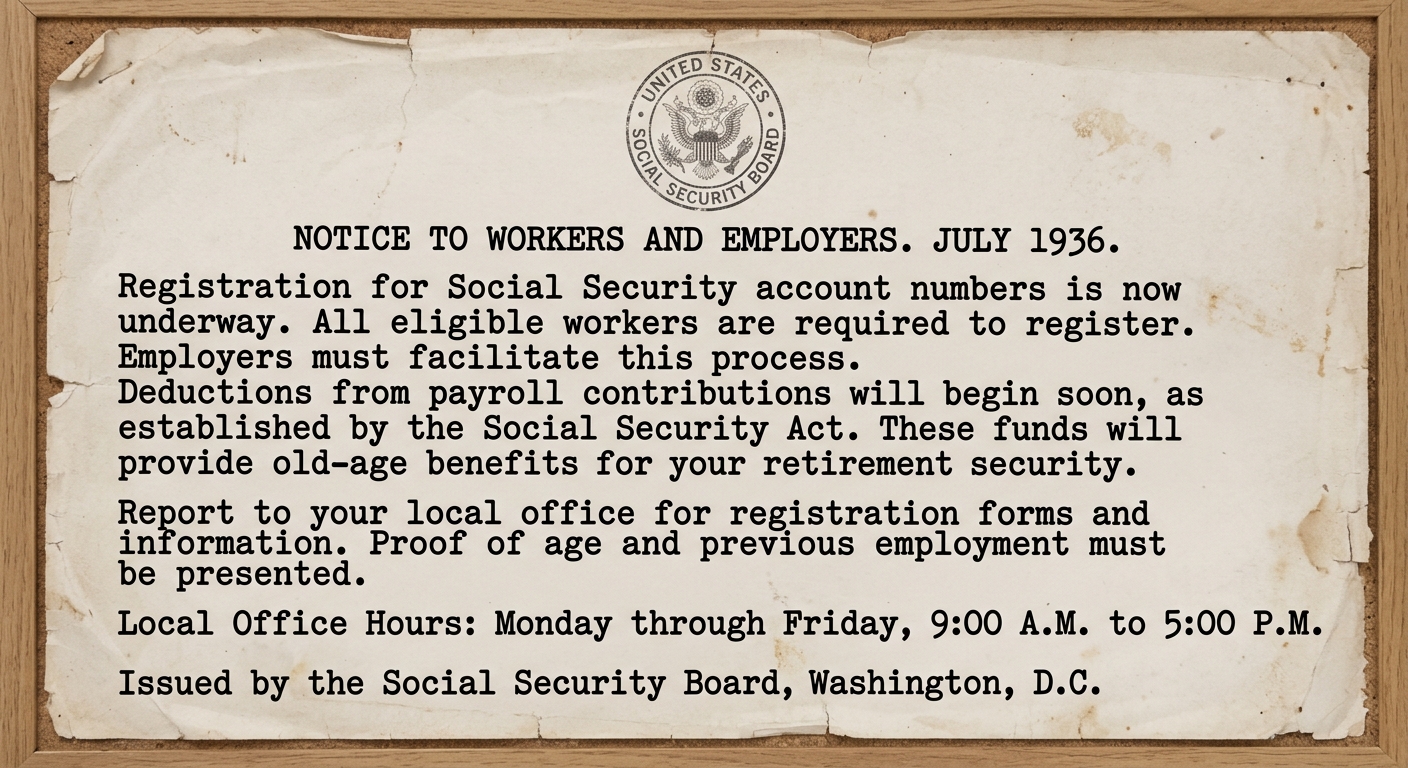
Based on the July 1936 Social Security notice, which New Deal goal is most directly supported by the document?
Which conclusion about the role of the federal government is best supported by evidence in the 1936 Social Security notice?
What is the most likely intended audience for this July 1936 notice?
Using evidence from the July 1936 Social Security notice, explain how the New Deal changed the role of government in Americans’ economic life.
Then explain one reason why a program like this might still not resolve all hardships Americans faced during the Great Depression.
Choose one group mentioned or implied by the document (for example, older workers, unemployed workers, or employers).
Using evidence from the notice, explain one way the Social Security program could help that group and one challenge that group might still face during the 1930s.
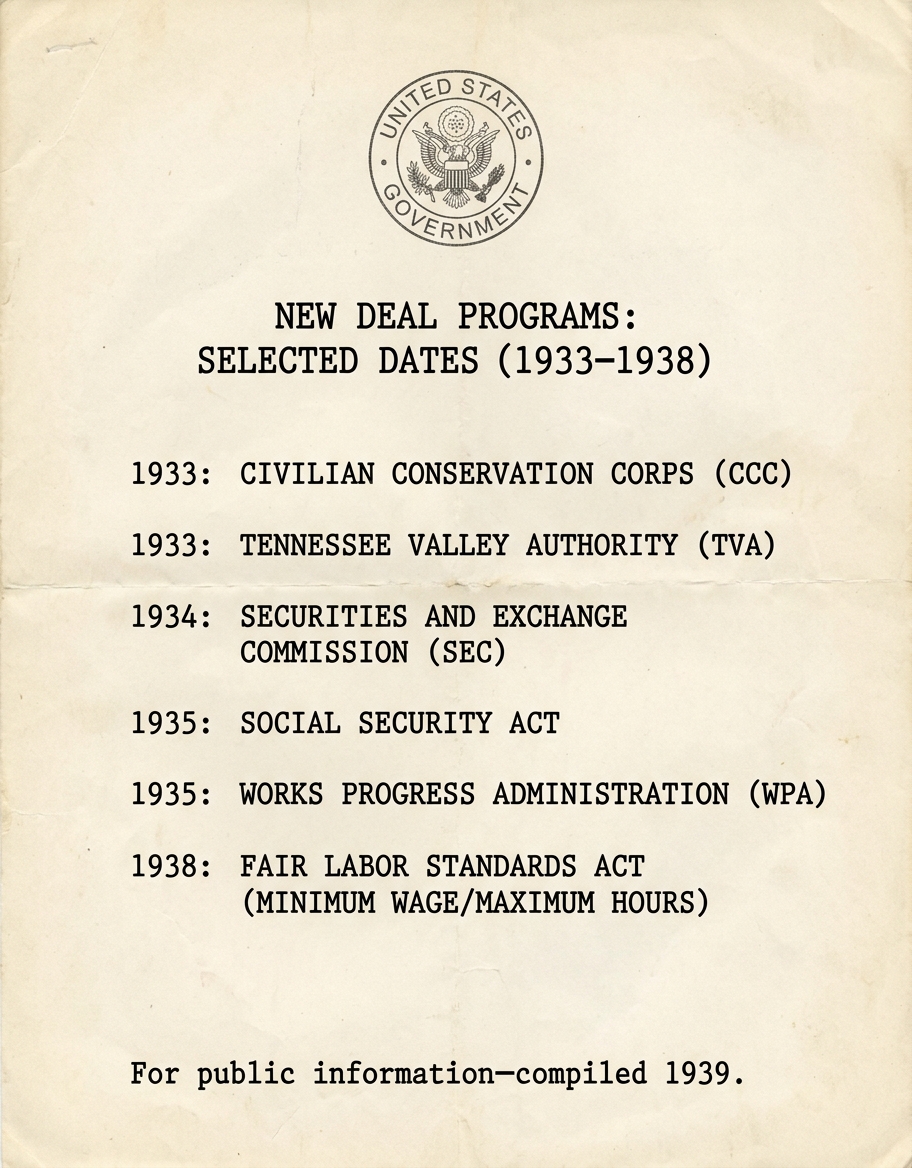
Study the dated list of New Deal programs in the document. Use the years to place programs in order and to explain how federal actions changed over time. Use at least one date as evidence when answering the questions that follow.

According to the dated list in the document, which New Deal program was created earliest?
Which sequence correctly places these programs in chronological order, based on the document?
Which claim about the New Deal is best supported by the timing of programs in the dated list?
Using evidence from the dated list, explain one way the federal government’s role in economic life expanded over time during the New Deal.
Cite two programs from different years as evidence. Then explain one reason why these reforms still might not resolve all hardships Americans faced.
According to the dated list in the document, which New Deal program was created earliest?
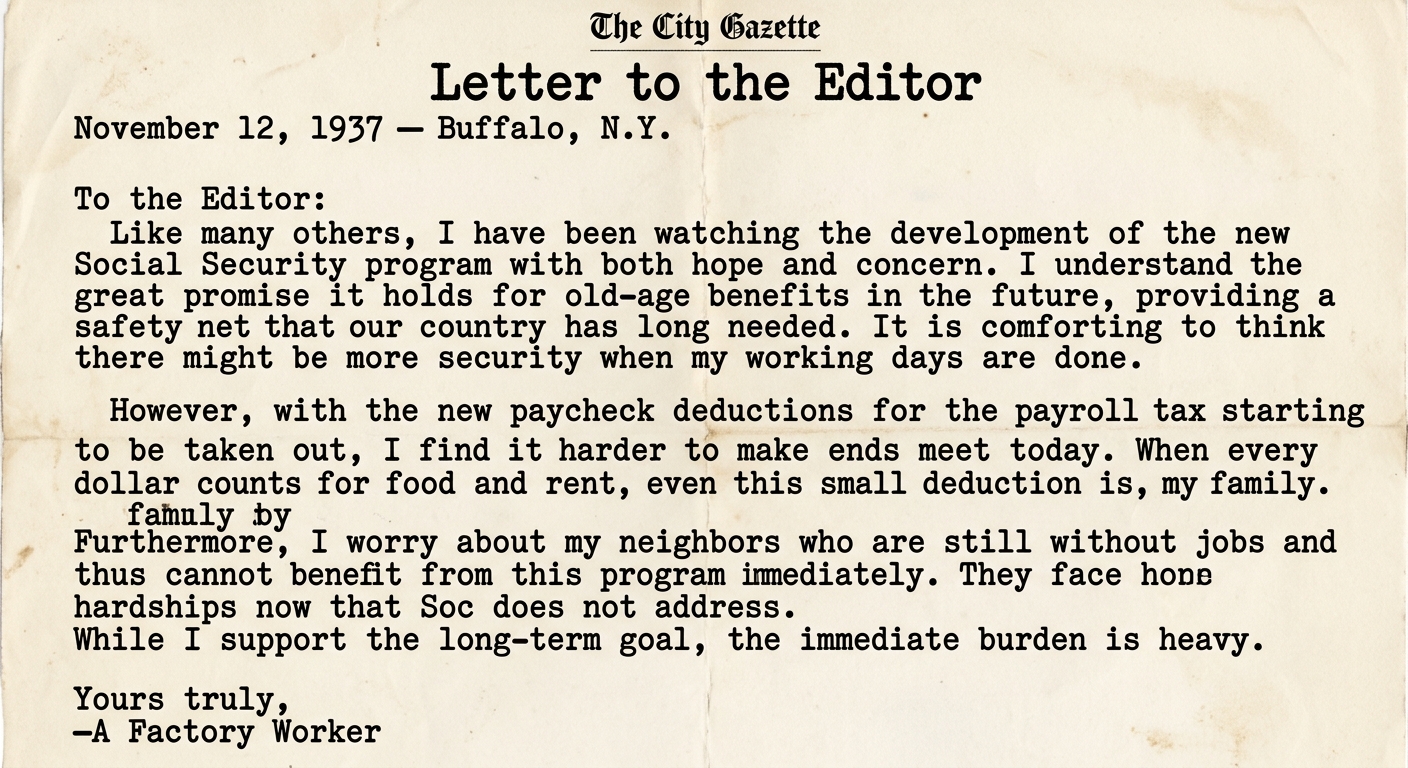
Study the historical document shown. It is a letter to the editor from 1937 about Social Security. As you read, compare the writer’s concerns to other New Deal goals and place the letter in the context of Great Depression hardships. Use evidence from the letter in your answers.

Which statement best describes the writer’s point of view about Social Security, based on the letter?
Which Great Depression condition provides the most important context for the writer’s concern about paycheck deductions?
Which comparison is best supported by evidence in the letter and by what you know about New Deal programs?
Using evidence from the letter, compare one New Deal approach that offered longer-term economic security with one approach that offered more immediate help during the Great Depression.
Then explain one reason why New Deal reforms still might not resolve all hardships Americans faced.
Place this letter in historical context. Explain why reasonable people in 1937 might disagree about Social Security.
In your answer, compare the likely perspective of two different groups (for example, employed workers, unemployed workers, older adults, or employers) and use evidence from the letter.
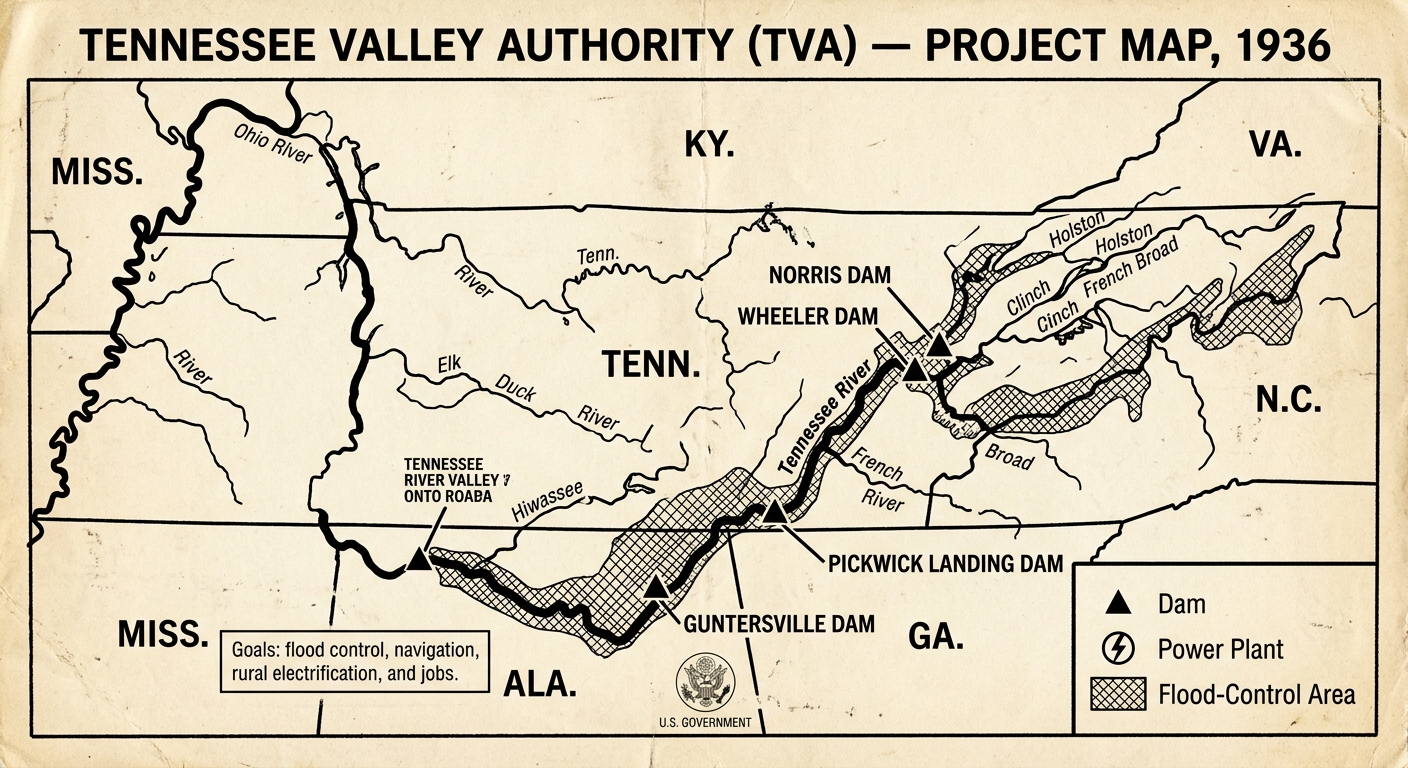
Study the historical document shown. It is a 1936 map explaining a New Deal project in the Tennessee River Valley. Use map evidence (region, river system, and project locations) to explain how geography shaped federal efforts to address Great Depression hardships.

Based on the TVA project map, which statement best explains why this New Deal program focused on the Tennessee River Valley?
Which piece of map evidence most directly supports the idea that flood control was a major goal of the TVA project?
Which claim about the role of the federal government is best supported by the map and caption?
Using evidence from the TVA map, explain how geography influenced this New Deal program’s design and goals. Use two specific map details as evidence.
Then explain one reason why programs like TVA might still not resolve all hardships Americans faced during the Great Depression.
Compare how a river-valley project like TVA might affect rural communities and urban communities in the region.
Use evidence from the map or caption (for example, dams, power plants, flood control, or navigation) to support your comparison.
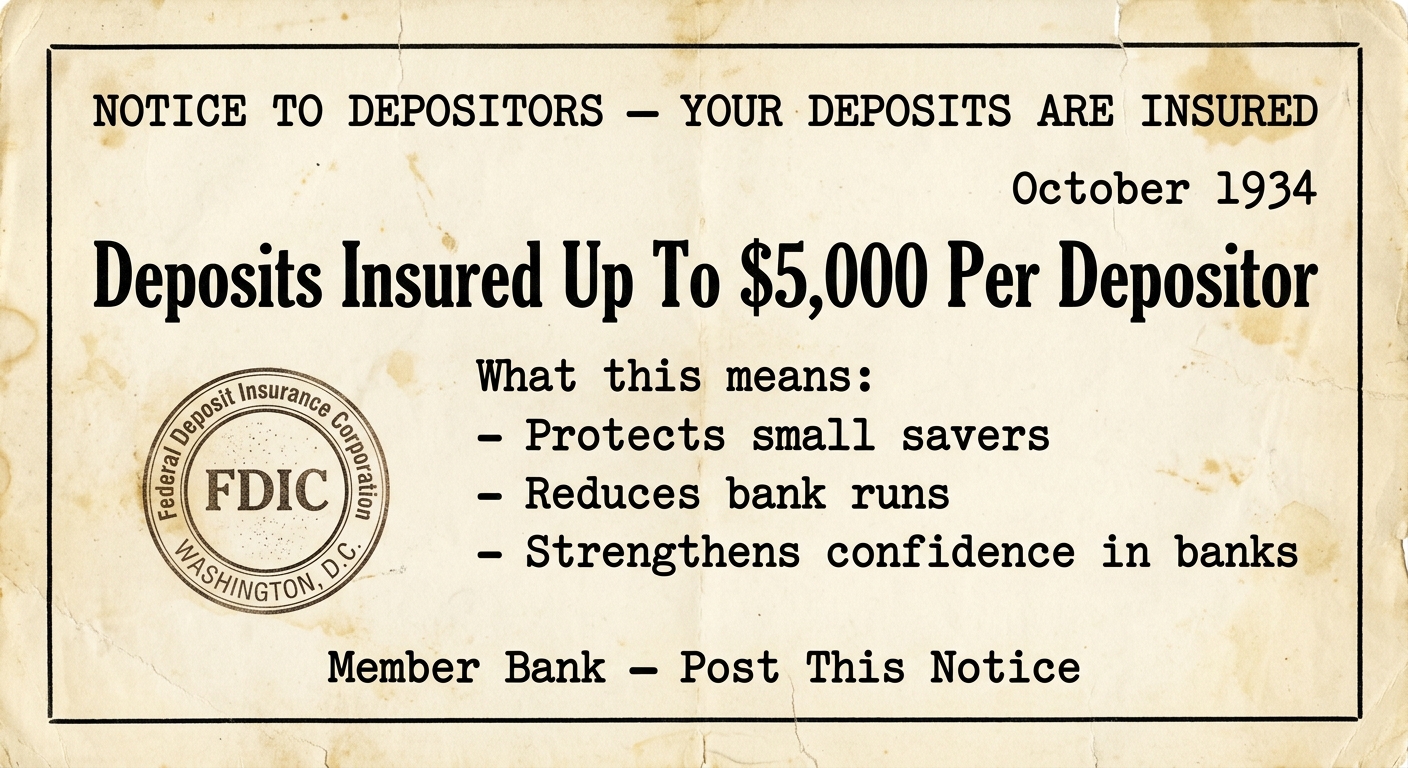
Study the historical document shown. It is a 1934 bank notice explaining Federal Deposit Insurance under the New Deal. Use details from the notice to explain how the federal government tried to stabilize the banking system and influence economic behavior during the Great Depression.

Based on the 1934 FDIC notice, which Great Depression economic problem was this New Deal reform designed to address most directly?
Which conclusion about the U.S. economic system is best supported by the FDIC notice?
Which inference about people’s economic behavior is best supported by the FDIC notice?
Using evidence from the FDIC notice, explain how deposit insurance could help stabilize the banking system during the Great Depression.
Use two specific details from the document as evidence. Then explain one reason why this reform might not resolve all hardships Americans faced.
Compare how a banking reform like FDIC deposit insurance and a program like Social Security could affect the economy in different ways.
In your answer, use at least one piece of evidence from the FDIC notice and describe one way each program changed the role of the federal government.