Use the historical document(s) and the short readings in the left panel to answer the associated questions.
Historical Document (Image):
Office of Price Administration (OPA) Rationing Notice, 1943
During World War II, the U.S. government rationed goods like sugar and gasoline so the military would have enough supplies. Ration coupons limited how much each household could buy. Notices like this explain rules and penalties, showing how daily life changed on the home front.
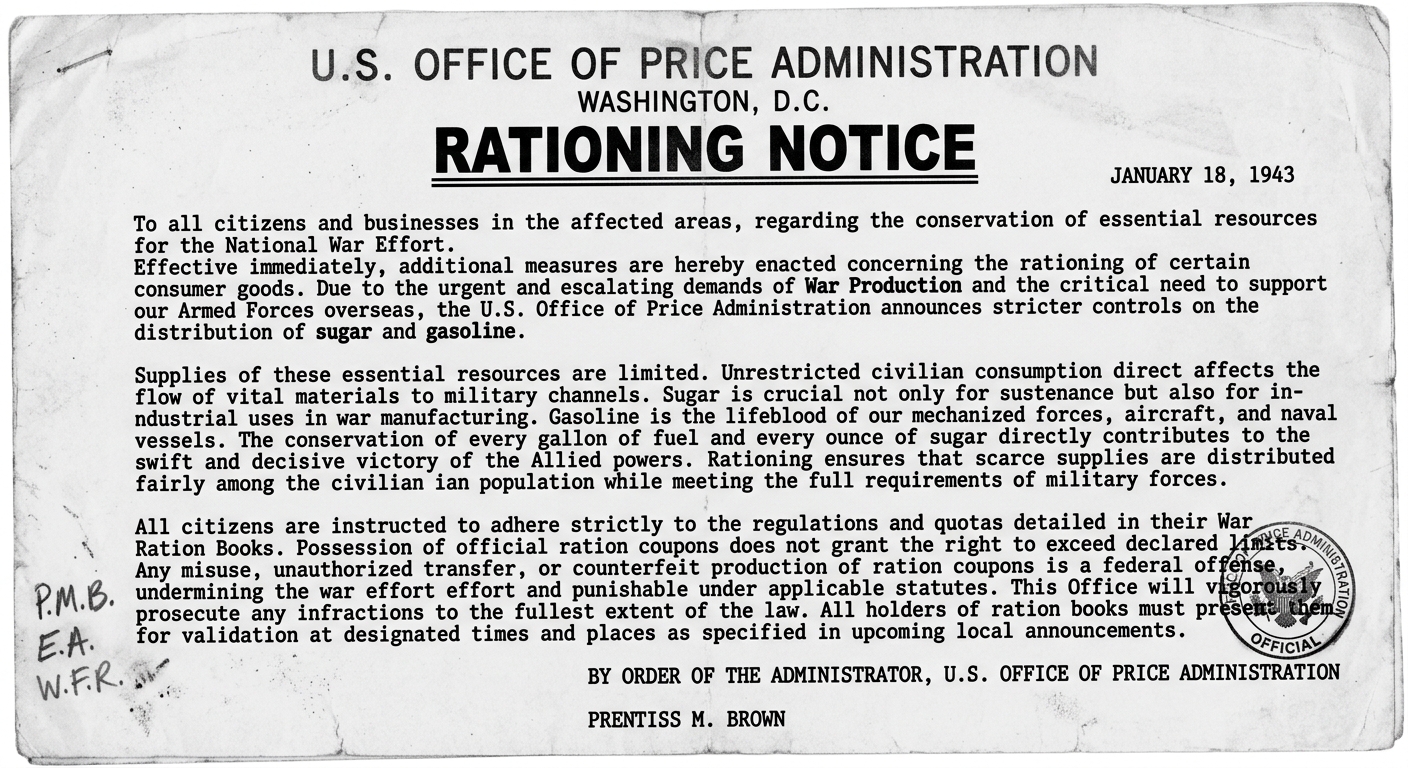
Based on the OPA rationing notice, what is the MAIN reason the government limited purchases of goods like sugar and gasoline?
Which statement is BEST supported by evidence from the rationing notice?
Which inference about the U.S. government’s role on the home front is MOST supported by the document?
Use evidence from the OPA rationing notice to explain how World War II affected day-to-day life on the home front.
Identify two specific details from the document and explain what each detail shows.
The standard explains that from 1939–1941 the United States tried to stay neutral while providing aid to Britain, but entered the war after the attack on Pearl Harbor.
Using one detail from the rationing notice and your knowledge of this timeline, explain how the document reflects a shift from neutrality to full wartime mobilization.
Historical Document (Image):
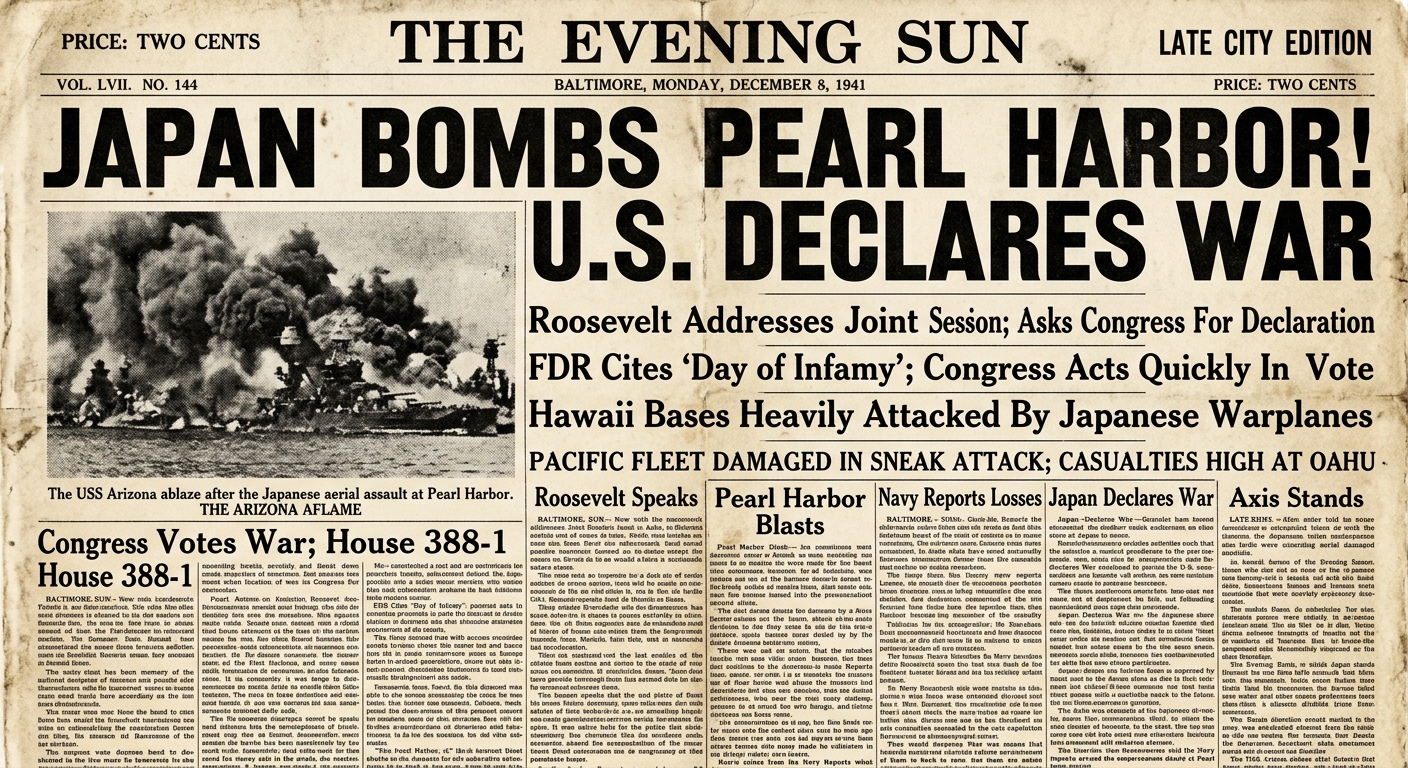
Newspaper Clipping on Pearl Harbor, December 8, 1941
The headline and date show a turning point in U.S. policy. Before 1941, the United States tried to remain neutral while aiding Britain. After Japan attacked Pearl Harbor, the country entered World War II and rapidly expanded the military and home-front production.

The document is dated December 8, 1941. Which event most directly happened immediately BEFORE the event described in the headline?
Which statement BEST explains how the event in the document fits into the 1939–1941 timeline described in the standard?
Based on the standard and the document’s date, which action is most likely to occur AFTER the event described?
Use evidence from the document (the date and headline) to explain why December 1941 is a turning point in the U.S. timeline described in the standard.
Include one event from BEFORE this turning point and one change that happened AFTER it.
Create a brief timeline of THREE steps from 1939 to 1942 that connects the neutrality period to the event shown in the document and then to U.S. wartime mobilization.
Use at least one detail from the document as evidence.
Historical Document (Image):
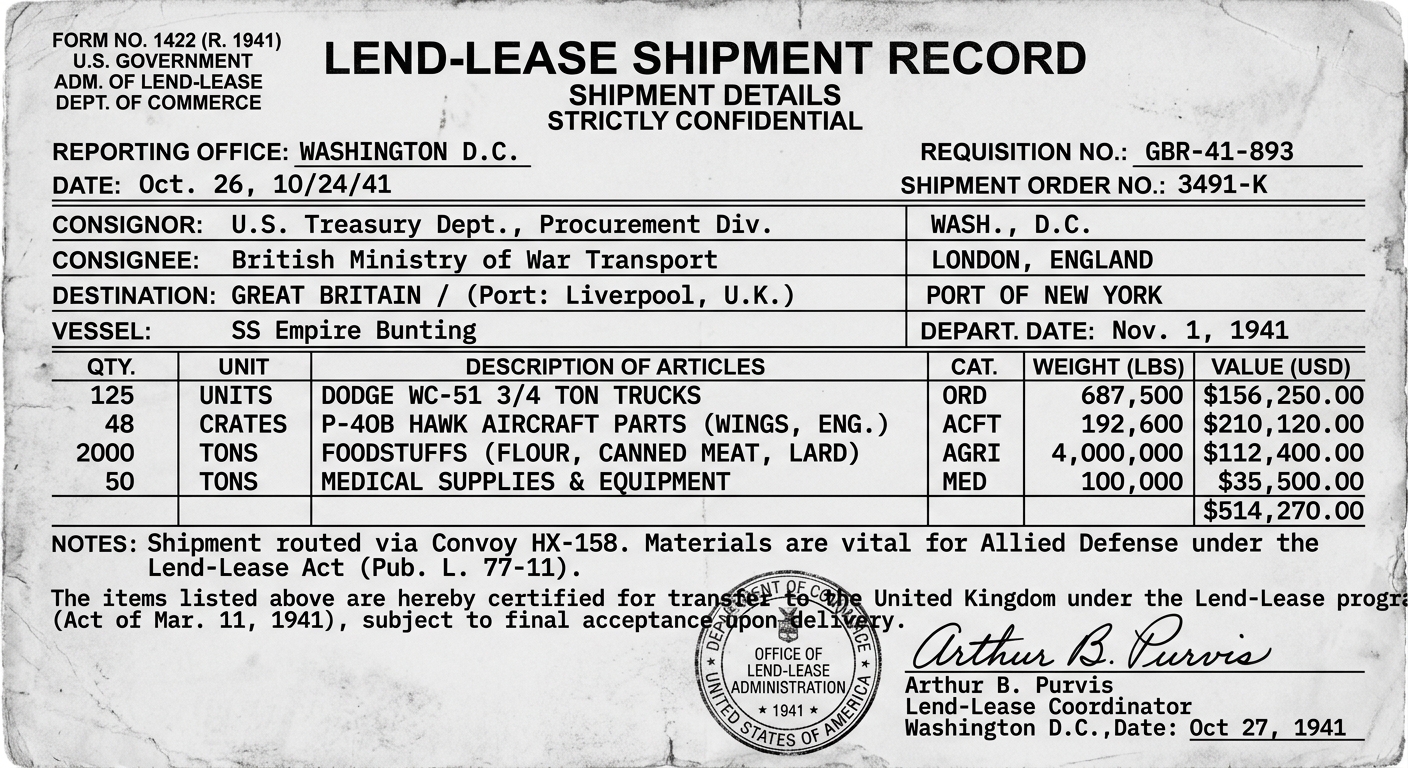
Lend-Lease Shipment Record, 1941
Before the United States formally entered World War II, the government approved shipments of supplies to Britain through the Lend-Lease program. This document reflects how the U.S. tried to remain officially neutral while still supporting Britain’s war effort—an important context for later full mobilization after Pearl Harbor.

Which comparison is BEST supported by the document?
Based on the 1939–1941 timeline in the standard, why would the United States most likely approve a document like this in 1941?
Which evidence pair BEST supports the idea that the United States was moving from neutrality toward deeper involvement in the war?
Compare the U.S. position shown in this 1941 document with the period after Pearl Harbor described in the standard.
Use one detail from the document as evidence and describe one change that occurred after December 1941.
Contextualize this document within the 1939–1941 period described in the standard.
Explain what the document suggests about U.S. policy before Pearl Harbor and how U.S. actions after Pearl Harbor changed.
Historical Document:
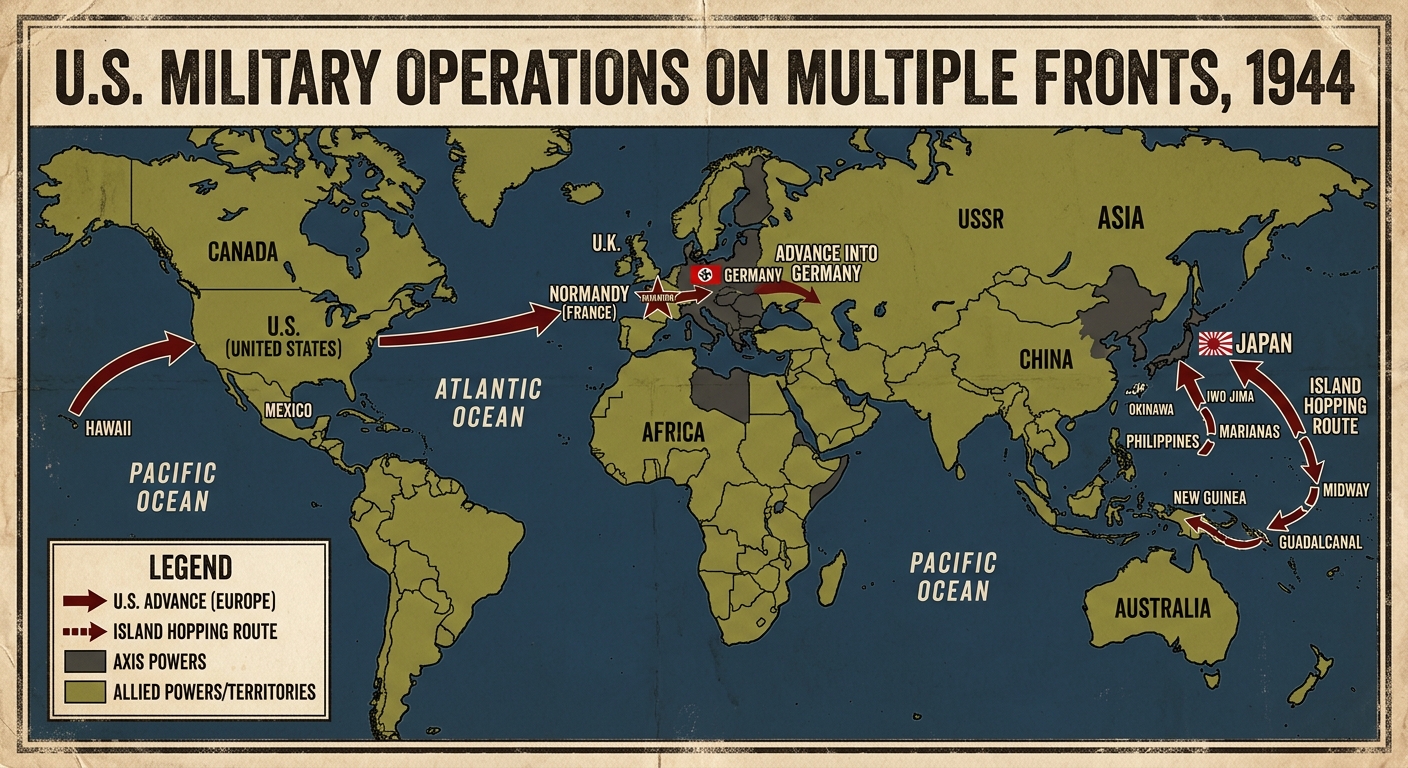
Map of U.S. Military Operations on Multiple Fronts, 1944 (Reproduction)
This map highlights how the United States fought World War II in both Europe and the Pacific. The oceans, distances, and island chains shown here shaped military strategy. The arrows and labels provide evidence about where U.S. forces moved and why geography mattered.

Based on the map, which geographic factor BEST helps explain why the United States had to plan for a war on multiple fronts?
Which statement is BEST supported by evidence from the map about how geography influenced U.S. strategy?
The map labels Normandy (France). Which geographic idea BEST helps explain why Normandy was an important location for an invasion?
Use evidence from the map to explain how geography required different U.S. strategies in Europe and the Pacific.
Identify two specific map details (such as arrows, labels, oceans, or island chains) and explain what each detail shows.
Using evidence from the map, explain how fighting in both the Atlantic/Europe and the Pacific could increase demand for supplies and help explain why rationing became necessary at home.
Historical Document (Image):
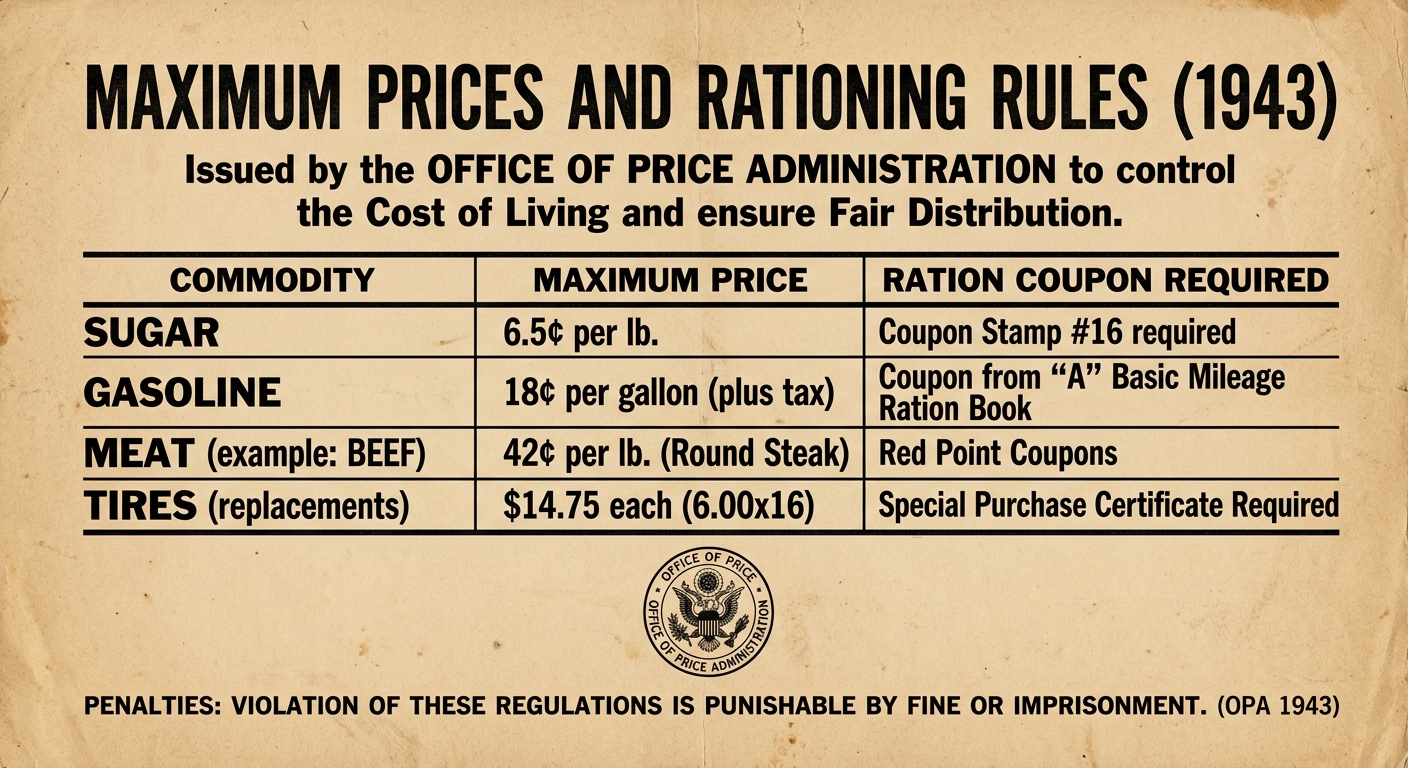
Office of Price Administration (OPA) Price and Rationing Notice, 1943
During World War II, the U.S. government set maximum prices and required ration coupons for some goods. These policies show how the wartime economy shifted toward greater government direction to manage scarcity and ensure enough essential resources were available for military use.

Based on the OPA notice, which economic problem was the government most directly trying to address?
Which statement BEST describes the role of the federal government in the wartime economy, as shown in the document?
Which outcome is MOST consistent with the reason for price ceilings and ration coupons shown in the document?
Use evidence from the OPA notice to explain how World War II changed the U.S. economic system on the home front.
Identify two specific details from the document and explain what each detail shows about government involvement in the economy.
Explain how fighting on multiple fronts could increase demand for supplies and lead to policies like rationing or price ceilings.
Use one economic concept (scarcity, supply and demand, or opportunity cost) in your explanation.