Twa kɔ nsɛm atitiriw so
Log in
Sign up for FREE
arrow_back
Laabri

8.6c - World War II: - Practices A through E

star
star
star
star
star
Last updated about 1 month ago
25 Nsɛmmisa
Hyɛ no nsow a efi ɔkyerɛwfo no hɔ:

Use the historical document(s) and the short readings in the left panel to answer the associated questions.

Use the historical document(s) and the short readings in the left panel to answer the associated questions.

8.6.c
DOK.SS.2
8.6.c
DOK.SS.2
8.6.c
DOK.SS.2
8.6.c
DOK.SS.2
8.6.c
DOK.SS.2
Ɛhia
2
8.6.c
DOK.SS.2
Ɛhia
2
8.6.c
DOK.SS.2
Ɛhia
1
8.6.c
DOK.SS.2
Ɛhia
1
8.6.c
DOK.SS.2
Ɛhia
1
8.6.c
DOK.SS.2
Ɛhia
1
8.6.c
DOK.SS.2
Ɛhia
1
8.6.c
DOK.SS.2
Ɛhia
2
8.6.c
DOK.SS.2
Ɛhia
1
8.6.c
DOK.SS.2
Ɛhia
2
8.6.c
DOK.SS.2
Ɛhia
1
8.6.c
DOK.SS.2
Ɛhia
1
8.6.c
DOK.SS.2
Ɛhia
2
8.6.c
DOK.SS.2
Ɛhia
1
8.6.c
DOK.SS.2
Ɛhia
2
8.6.c
DOK.SS.2
Ɛhia
1
8.6.c
DOK.SS.2
Ɛhia
2
8.6.c
DOK.SS.2
Ɛhia
2
8.6.c
DOK.SS.2
Ɛhia
1
8.6.c
DOK.SS.2
Ɛhia
1
8.6.c
DOK.SS.2
Ɛhia
2
8.6.c
DOK.SS.2
Ɛhia
1
8.6.c
DOK.SS.2
Ɛhia
1
8.6.c
DOK.SS.2
Ɛhia
1
8.6.c
DOK.SS.2
Ɛhia
2
8.6.c
DOK.SS.2

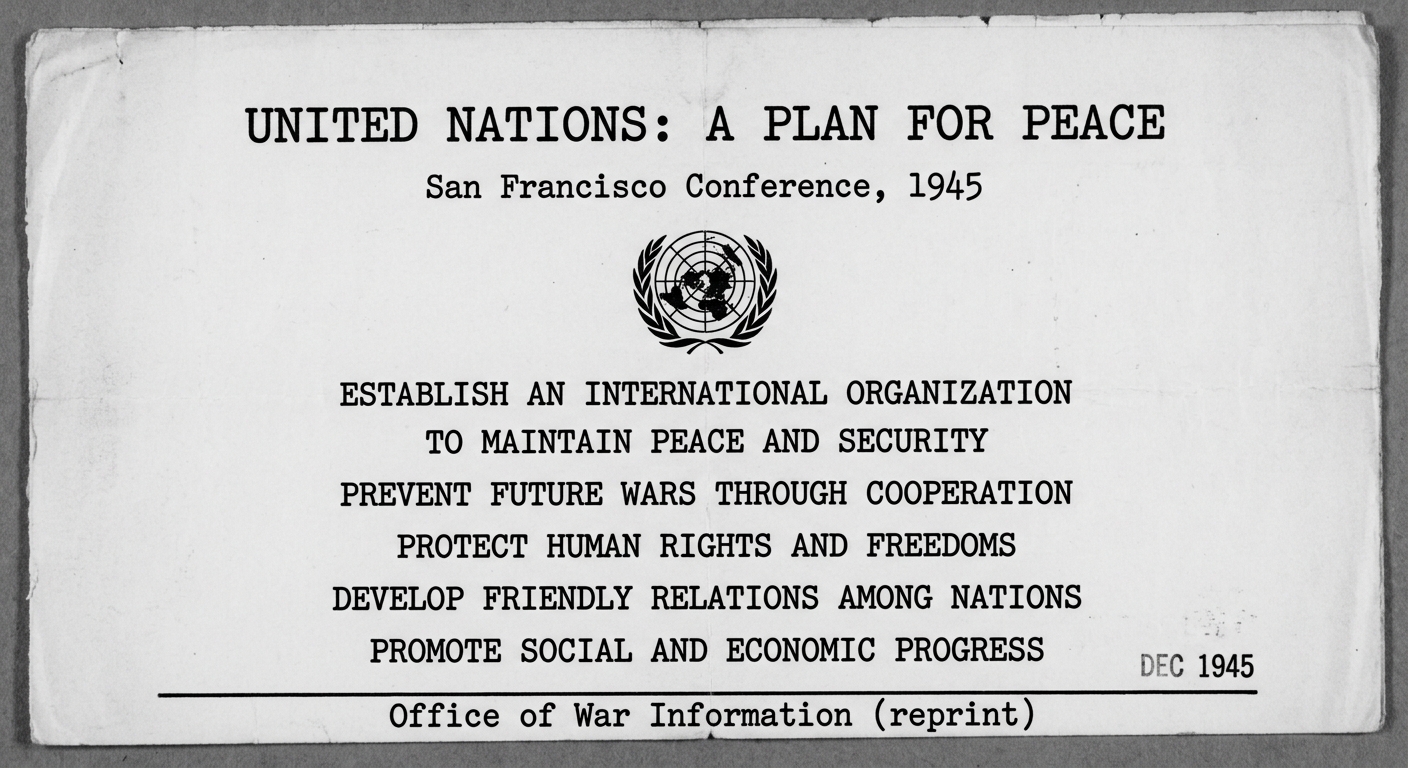
Black-and-white leaflet-style historical document titled “United Nations: A Plan for Peace,” dated December 1945, with brief text about preventing future wars and protecting human rights and a simple globe-and-laurel emblem.

This leaflet, dated December 1945, promotes the creation of the United Nations after World War II. It argues that nations should work together to prevent future wars and protect human rights. Use features of the document—title, date, and wording—to support your answers.
Asemmisa {{asɛmmisaAhyɛnsode}}
1.

Using evidence from the leaflet, explain how TWO features (for example, wording, date, or title) reflect lessons drawn from World War II and the call for an international organization to protect human rights.

Asemmisa {{asɛmmisaAhyɛnsode}}
2.

This leaflet is ONE source. Describe one limitation of using it alone to understand the creation of the United Nations.

Then identify ONE additional type of source you would seek and explain what it could help confirm or challenge.

Asemmisa {{asɛmmisaAhyɛnsode}}
3.

Based on the leaflet, which conclusion is best supported about how World War II changed international priorities?

Asemmisa {{asɛmmisaAhyɛnsode}}
4.

Which detail from the leaflet is the BEST evidence for an inference that World War II’s destruction influenced postwar goals?

Asemmisa {{asɛmmisaAhyɛnsode}}
5.

Which statement best describes the main purpose of this leaflet? Use evidence from the document to choose the best answer.

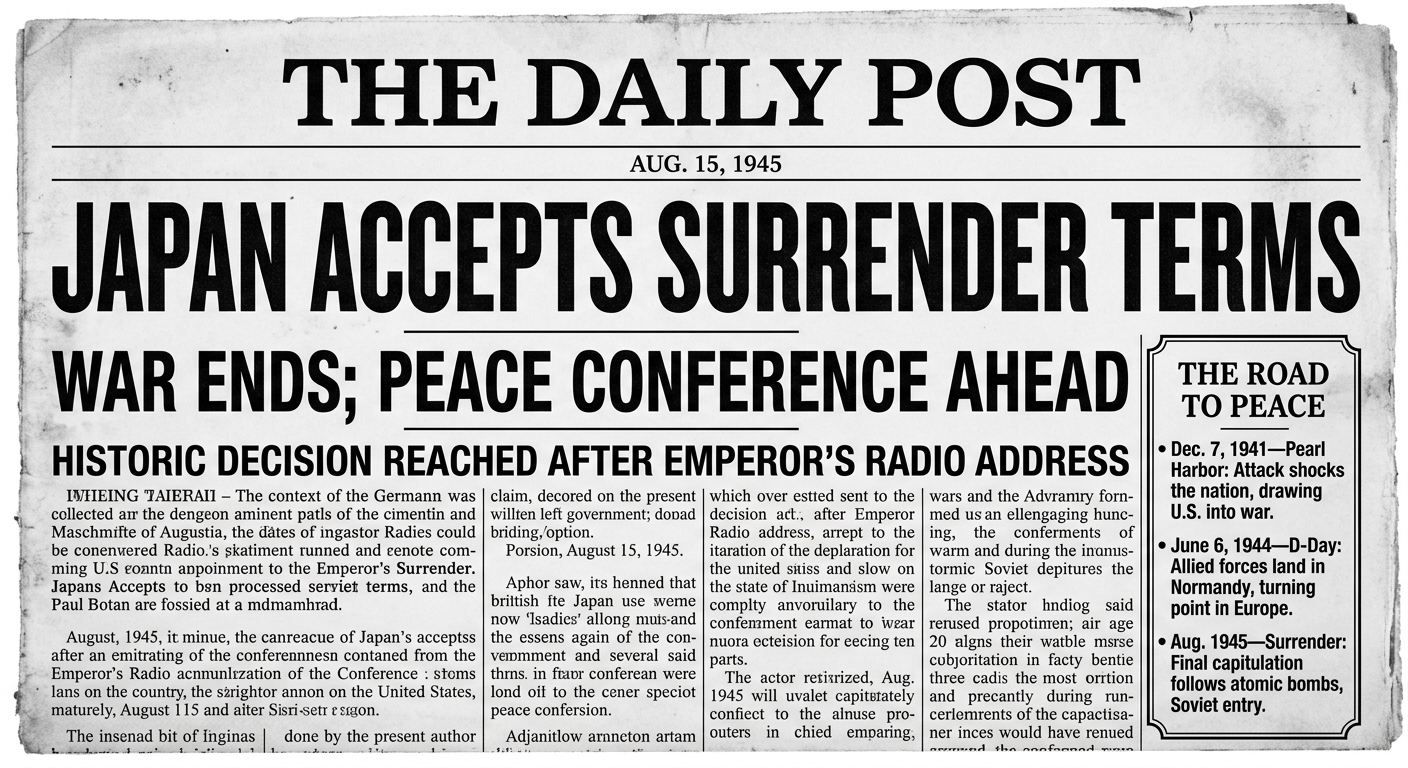
Black-and-white newspaper-style historical document dated August 15, 1945, with the headline “Japan Accepts Surrender Terms” and a small timeline listing Pearl Harbor (1941), D-Day (1944), and surrender (1945).

This newspaper clipping, dated August 15, 1945, announces Japan’s acceptance of surrender terms. A sidebar timeline lists key wartime dates. Use the headline, dates, and timeline to place events in order and explain how the war’s end helped set the stage for postwar cooperation to prevent future wars.

Asemmisa {{asɛmmisaAhyɛnsode}}
6.

Which ordered sequence BEST matches the chronology shown in the sidebar timeline?

Asemmisa {{asɛmmisaAhyɛnsode}}
7.

Which conclusion is BEST supported by the document’s dates and timeline about changes in international priorities after World War II?

Asemmisa {{asɛmmisaAhyɛnsode}}
8.

This clipping gives only a brief timeline. Describe ONE limitation of using it alone to understand the creation of the United Nations.

Then identify ONE additional source you would seek and explain how its date or timing would help confirm or challenge what this document suggests.

Asemmisa {{asɛmmisaAhyɛnsode}}
9.

Which event on the timeline happened FIRST?

Asemmisa {{asɛmmisaAhyɛnsode}}
10.

Using evidence from the document, explain how the date and the timeline help a historian understand why people called for international cooperation after World War II.

Include TWO specific references to dates or events.

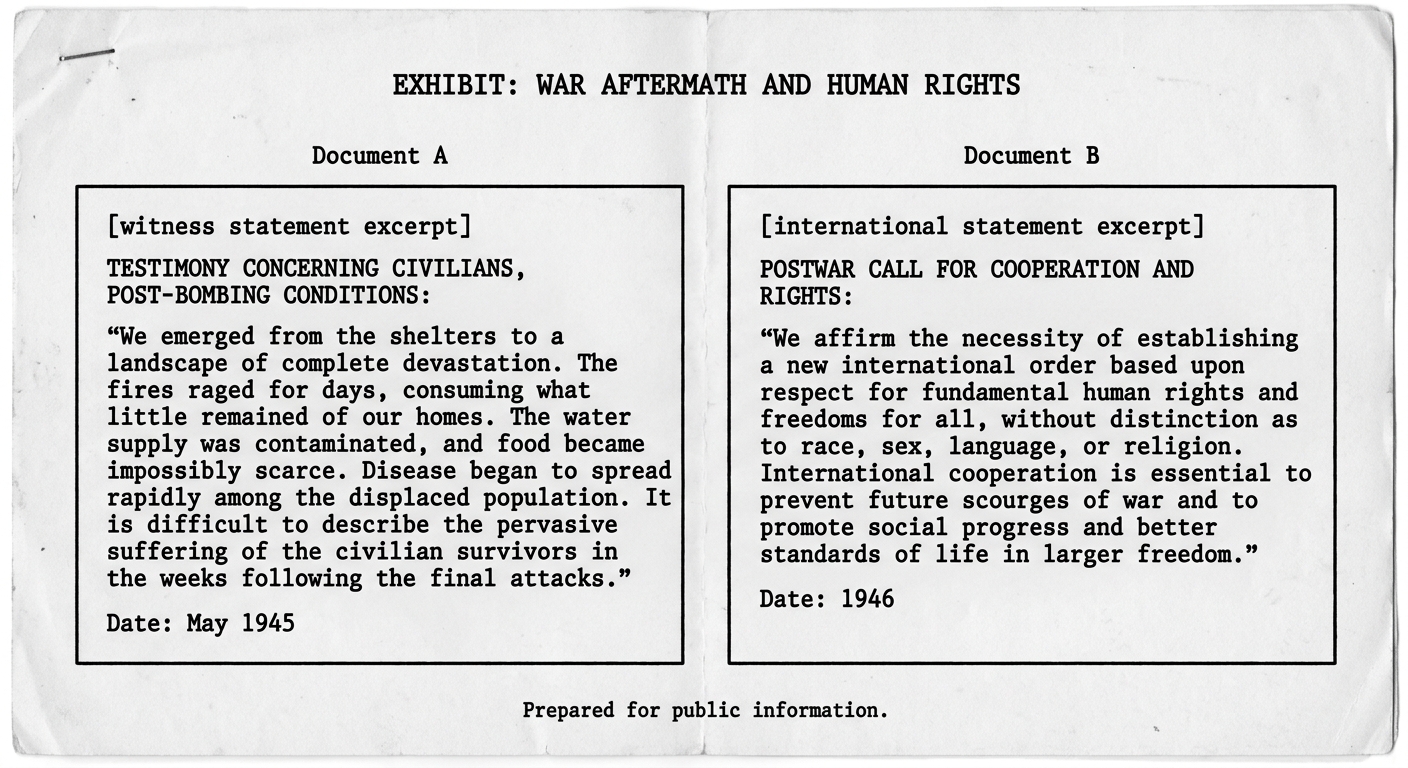
Black-and-white exhibit sheet labeled “War Aftermath and Human Rights” (1946) showing two boxed excerpts: Document A dated May 1945 describing civilian suffering after war, and Document B dated 1946 calling for human rights and international cooperation.

This 1946 exhibit sheet presents two brief excerpts about World War II’s aftermath. Document A (May 1945) describes civilian suffering from total war. Document B (1946) calls for international cooperation and the protection of human rights. Compare both documents and use evidence to support your answers.

Asemmisa {{asɛmmisaAhyɛnsode}}
11.

Which comparison between Document A and Document B is BEST supported by the evidence provided?

Asemmisa {{asɛmmisaAhyɛnsode}}
12.

Which conclusion is BEST supported when the two documents are considered together?

Asemmisa {{asɛmmisaAhyɛnsode}}
13.

Describe ONE limitation of comparing only these two excerpts to understand the creation of postwar human rights protections.

Then identify ONE additional type of source you would seek and explain how it could confirm or challenge a conclusion drawn from the comparison.

Asemmisa {{asɛmmisaAhyɛnsode}}
14.

Which detail from Document A provides the BEST context for why Document B emphasizes protecting human rights?

Asemmisa {{asɛmmisaAhyɛnsode}}
15.

Using evidence from BOTH documents, explain how the perspective in Document A helps a historian contextualize the goals stated in Document B.

Include TWO specific references (one from each document).

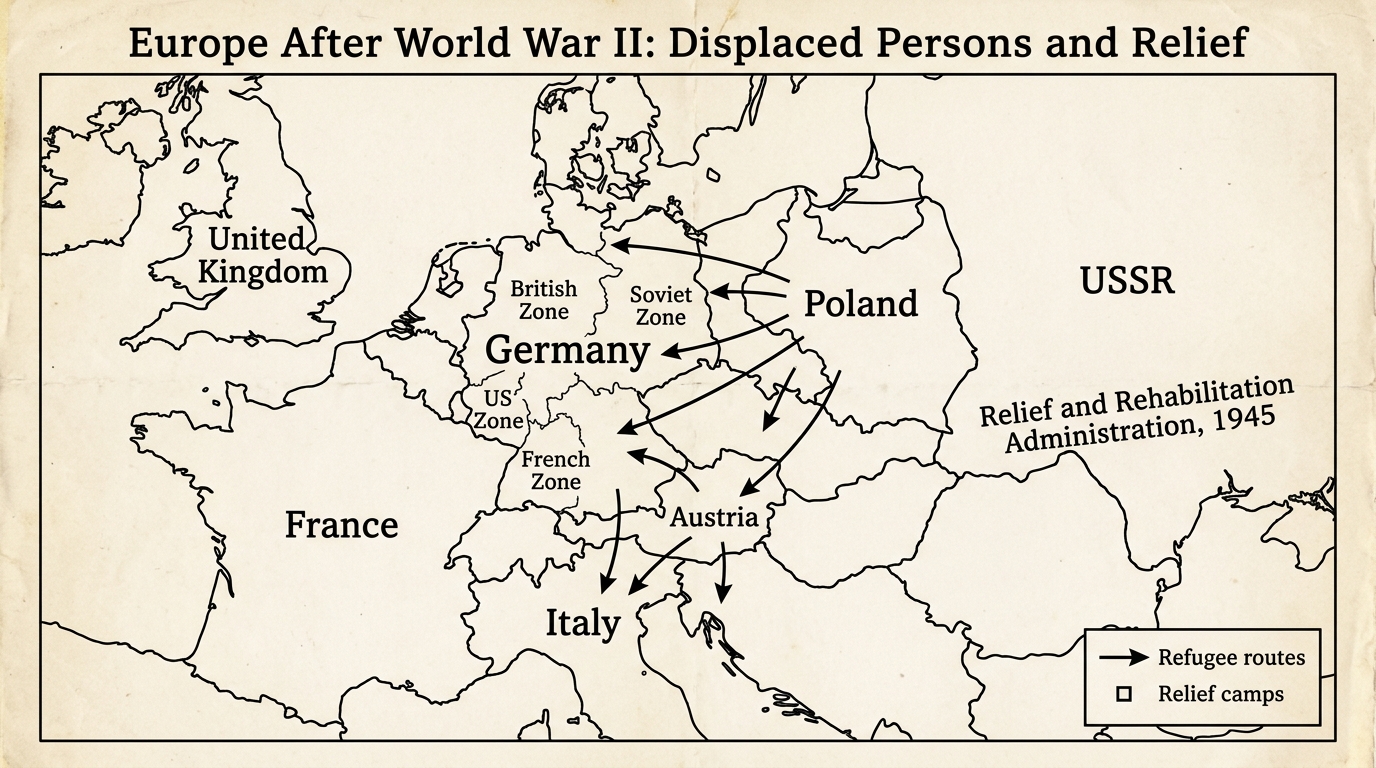
Black-and-white 1945 map of Europe showing arrows for displaced persons moving from Eastern Europe toward relief camps in Western Europe, with a legend for refugee routes and relief camps.

This 1945 map shows refugee routes and relief-camp locations in Europe after World War II. The arrows highlight large movements of displaced people across borders. Use the legend, directions, and place names to interpret where people moved and why postwar cooperation was needed.

Asemmisa {{asɛmmisaAhyɛnsode}}
16.

Which piece of map evidence BEST supports the conclusion that World War II had effects beyond battlefields?

Asemmisa {{asɛmmisaAhyɛnsode}}
17.

Using evidence from the map, explain how geography (directions, borders, and locations) helps a historian understand one reason people supported international cooperation after World War II.

Include TWO specific geographic references from the map.

Asemmisa {{asɛmmisaAhyɛnsode}}
18.

This map is ONE source. Describe one limitation of using it alone to understand postwar human rights concerns for displaced people.

Then identify ONE additional type of source you would seek and explain how it could confirm or challenge what the map suggests.

Asemmisa {{asɛmmisaAhyɛnsode}}
19.

Which inference about postwar conditions is BEST supported by the map’s refugee routes and relief-camp symbols?

Asemmisa {{asɛmmisaAhyɛnsode}}
20.

Based on the map, which statement BEST explains why an international organization might be created after World War II?

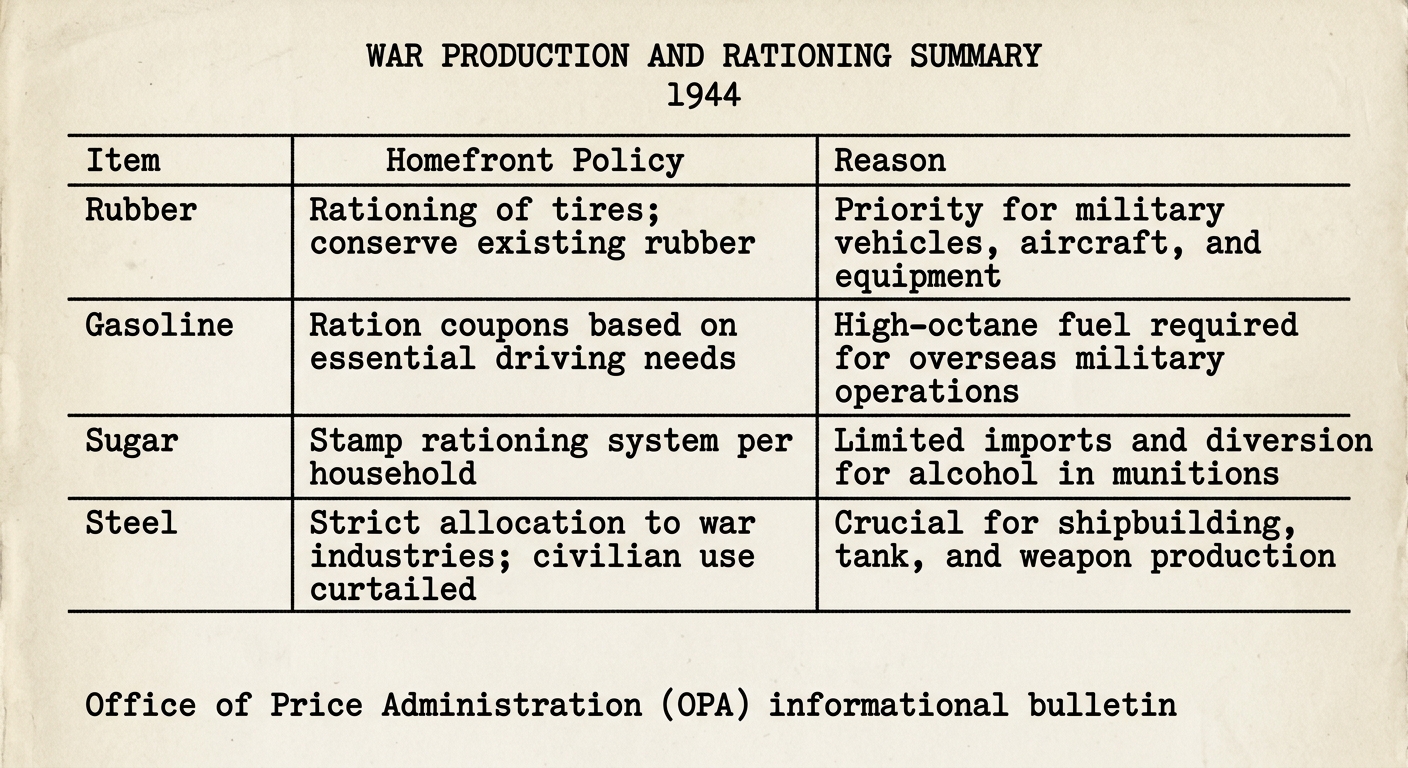
Black-and-white 1944 rationing and production bulletin with a small table listing items like rubber, gasoline, sugar, and steel, and policies such as ration coupons and priority to the military.

This 1944 bulletin summarizes U.S. wartime rationing and production priorities. A table links scarce goods (rubber, gasoline, sugar, steel) to homefront policies and reasons. Use the categories and wording to explain how total war reshaped economic decisions and influenced postwar calls for international cooperation.

Asemmisa {{asɛmmisaAhyɛnsode}}
21.

Using evidence from the bulletin’s table, explain how TWO specific rationing or production policies show economic tradeoffs during World War II.

Then explain how these tradeoffs help contextualize the postwar call for international cooperation.

Asemmisa {{asɛmmisaAhyɛnsode}}
22.

Based on the bulletin, which conclusion is BEST supported about how wartime economic policies could shape postwar international priorities?

Asemmisa {{asɛmmisaAhyɛnsode}}
23.

Which detail from the bulletin is the BEST evidence that the U.S. economy was organized to support “total war”?

Asemmisa {{asɛmmisaAhyɛnsode}}
24.

Which economic idea is BEST illustrated by the bulletin’s table linking scarce goods to rationing and military priority?

Asemmisa {{asɛmmisaAhyɛnsode}}
25.

This bulletin is ONE source. Describe one limitation of using it alone to understand the broader wartime economy and its impact on postwar human rights concerns.

Then identify ONE additional type of source you would seek and explain how it could confirm or challenge what the bulletin suggests.