Twa kɔ nsɛm atitiriw so
Log in
Sign up for FREE
arrow_back
Laabri

8.7b - Foreign Policy: - Practices A through E

star
star
star
star
star
Last updated about 1 month ago
25 Nsɛmmisa
Hyɛ no nsow a efi ɔkyerɛwfo no hɔ:

Use the historical document(s) and the short readings in the left panel to answer the associated questions.

Use the historical document(s) and the short readings in the left panel to answer the associated questions.

8.7.b
DOK.SS.2
8.7.b
DOK.SS.2
8.7.b
DOK.SS.2
8.7.b
DOK.SS.2
8.7.b
DOK.SS.2
Ɛhia
1
8.7.b
DOK.SS.2
Ɛhia
2
8.7.b
DOK.SS.2
Ɛhia
2
8.7.b
DOK.SS.2
Ɛhia
1
8.7.b
DOK.SS.2
Ɛhia
1
8.7.b
DOK.SS.2
Ɛhia
1
8.7.b
DOK.SS.2
Ɛhia
2
8.7.b
DOK.SS.2
Ɛhia
2
8.7.b
DOK.SS.2
Ɛhia
1
8.7.b
DOK.SS.2
Ɛhia
1
8.7.b
DOK.SS.2
Ɛhia
2
8.7.b
DOK.SS.2
Ɛhia
1
8.7.b
DOK.SS.2
Ɛhia
2
8.7.b
DOK.SS.2
Ɛhia
1
8.7.b
DOK.SS.2
Ɛhia
1
8.7.b
DOK.SS.2
Ɛhia
1
8.7.b
DOK.SS.2
Ɛhia
2
8.7.b
DOK.SS.2
Ɛhia
1
8.7.b
DOK.SS.2
Ɛhia
2
8.7.b
DOK.SS.2
Ɛhia
1
8.7.b
DOK.SS.2
Ɛhia
1
8.7.b
DOK.SS.2
Ɛhia
1
8.7.b
DOK.SS.2
Ɛhia
1
8.7.b
DOK.SS.2
Ɛhia
2
8.7.b
DOK.SS.2
Ɛhia
2
8.7.b
DOK.SS.2

Historical Document:

The document below is a 1947 U.S. State Department memo about responding to Soviet influence after World War II. Read it closely. Use specific words or phrases from the memo as evidence when answering questions about how the United States applied the policy of containment.
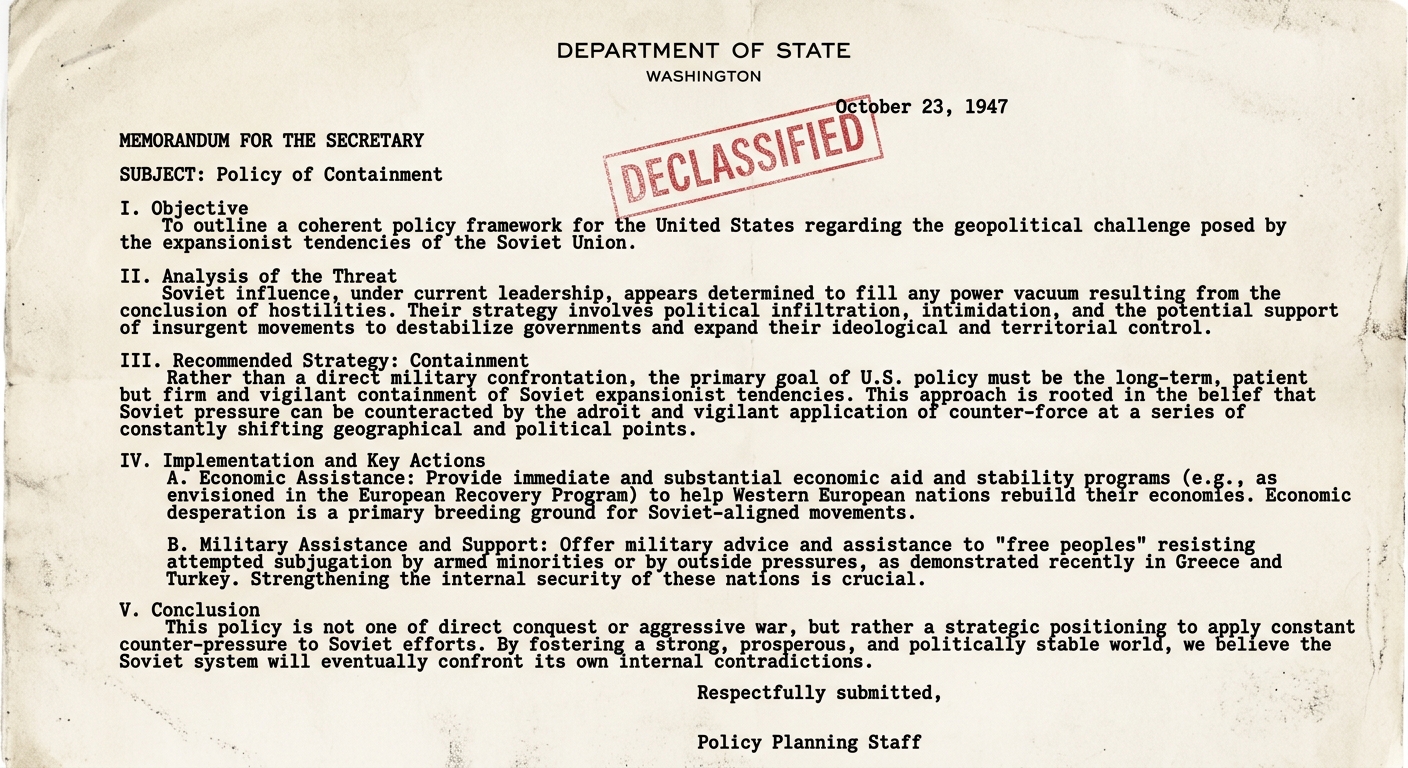
Black-and-white typewritten U.S. Department of State memo dated October 1947 titled "Policy of Containment," stamped "Declassified," describing U.S. plans to aid nations under pressure to prevent the spread of Soviet influence.

Asemmisa {{asɛmmisaAhyɛnsode}}
1.

Which statement best describes the main purpose of the memo?

Asemmisa {{asɛmmisaAhyɛnsode}}
2.

Explain how the memo defines the problem the United States faced and the strategy it proposed.

Use two specific pieces of evidence (quote or paraphrase) from the memo, and explain how each piece of evidence supports the policy of containment.

Asemmisa {{asɛmmisaAhyɛnsode}}
3.

The memo suggests supporting other nations rather than taking direct control.

Describe one policy option the U.S. could use (economic aid, military aid, or diplomacy) that fits the memo’s approach.

Then explain why that option is more consistent with containment than launching an immediate direct war against the Soviet Union.

Use evidence from the memo.

Asemmisa {{asɛmmisaAhyɛnsode}}
4.

Based on the memo, which action best matches how the United States often practiced containment between 1945 and 1990?

Asemmisa {{asɛmmisaAhyɛnsode}}
5.

Which evidence from the memo best supports the idea of containment?

Historical Document:

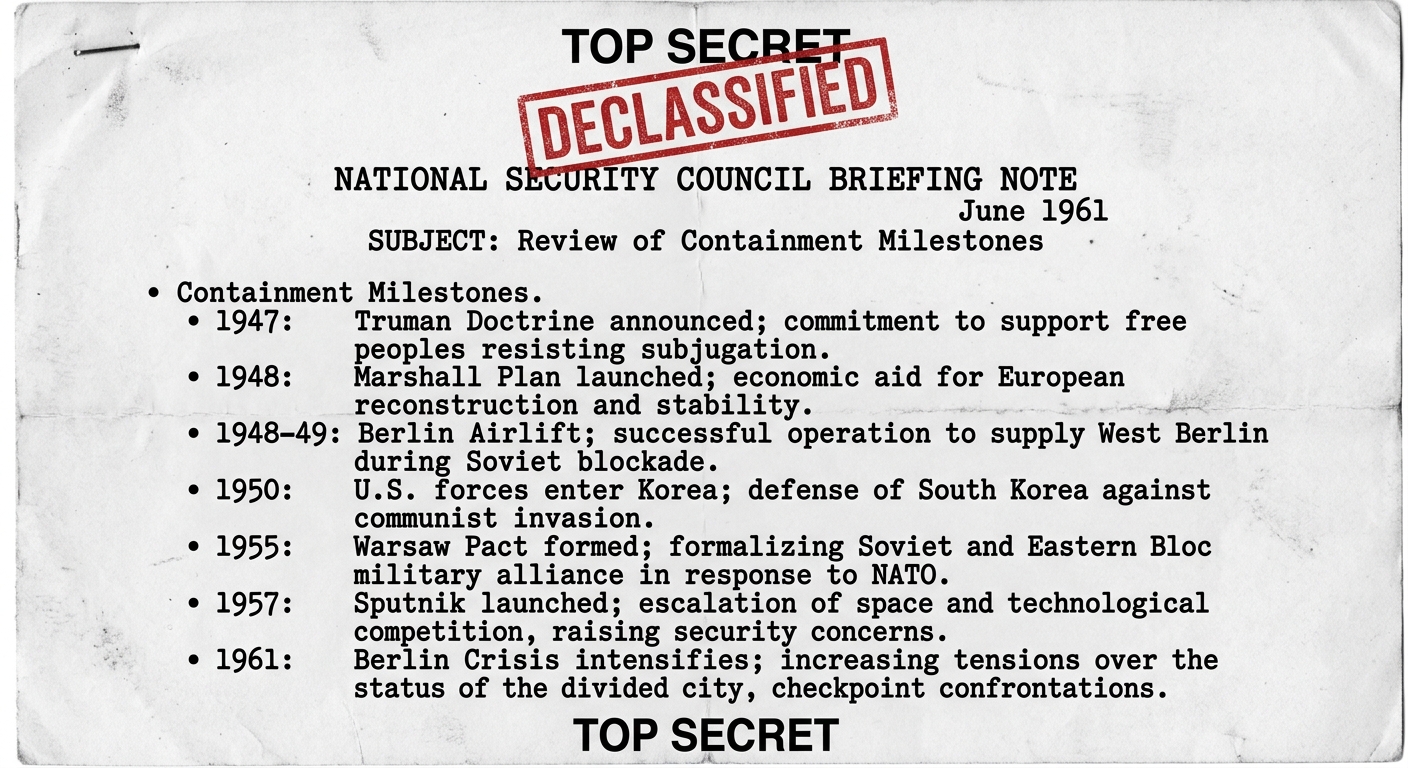
The document below is a June 1961 National Security Council briefing note summarizing earlier Cold War events. Read the dated entries closely. Use the timeline details as evidence when answering questions about how containment policies developed over time between 1947 and 1961.

Black-and-white typewritten National Security Council briefing note dated June 1961 with a bulleted list of containment milestones from 1947 to 1961, stamped "Declassified."

Asemmisa {{asɛmmisaAhyɛnsode}}
6.

Which conclusion about the U.S. policy of containment is best supported by the timeline of events in the briefing note?

Asemmisa {{asɛmmisaAhyɛnsode}}
7.

Choose any three events listed in the briefing note.

Put them in chronological order and explain how that order helps show the development of containment.

Use dates or date ranges from the document as evidence.

Asemmisa {{asɛmmisaAhyɛnsode}}
8.

Using two dated entries from the briefing note, explain one way U.S. containment policy stayed consistent and one way it changed between 1947 and 1961.

Quote or paraphrase the entries you use.

Asemmisa {{asɛmmisaAhyɛnsode}}
9.

Which sequence correctly orders the events from earliest to latest, based on the briefing note?

Asemmisa {{asɛmmisaAhyɛnsode}}
10.

According to the briefing note, which event happened earliest?

Historical Document:

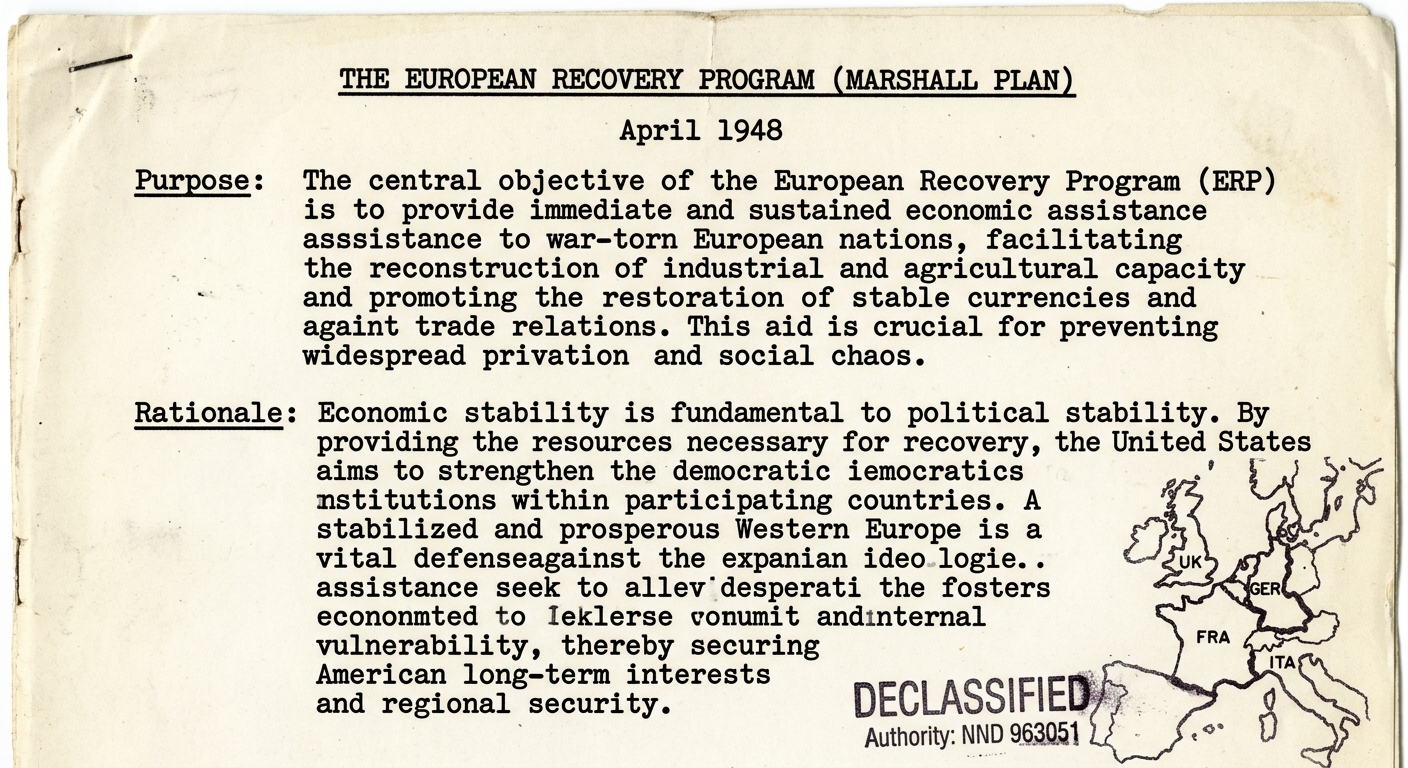
The document below is a 1948 U.S. briefing sheet promoting the European Recovery Program (Marshall Plan). Read it closely. Use the document to compare different containment strategies and to explain how the plan fit the early Cold War context after World War II.

Black-and-white 1948 pamphlet titled "European Recovery Program (Marshall Plan)" explaining economic aid to rebuild Europe and reduce communist influence, with a small outline map of Europe and a "Declassified" stamp.

Asemmisa {{asɛmmisaAhyɛnsode}}
11.

Compare the containment approach described in the document with a military-based containment approach (such as U.S. involvement in the Korean War).

Use two specific details from the document and explain one similarity and one difference.

Asemmisa {{asɛmmisaAhyɛnsode}}
12.

Which containment strategy is most directly represented in the document?

Asemmisa {{asɛmmisaAhyɛnsode}}
13.

Explain how conditions in Europe after World War II helped shape this policy choice.

Use evidence from the document and at least one relevant piece of historical context from the early Cold War.

Asemmisa {{asɛmmisaAhyɛnsode}}
14.

Which comparison best connects the document to other U.S. containment actions between 1945 and 1990?

Asemmisa {{asɛmmisaAhyɛnsode}}
15.

Which statement best explains the early Cold War context that made U.S. leaders support this plan in 1948?

Historical Document:

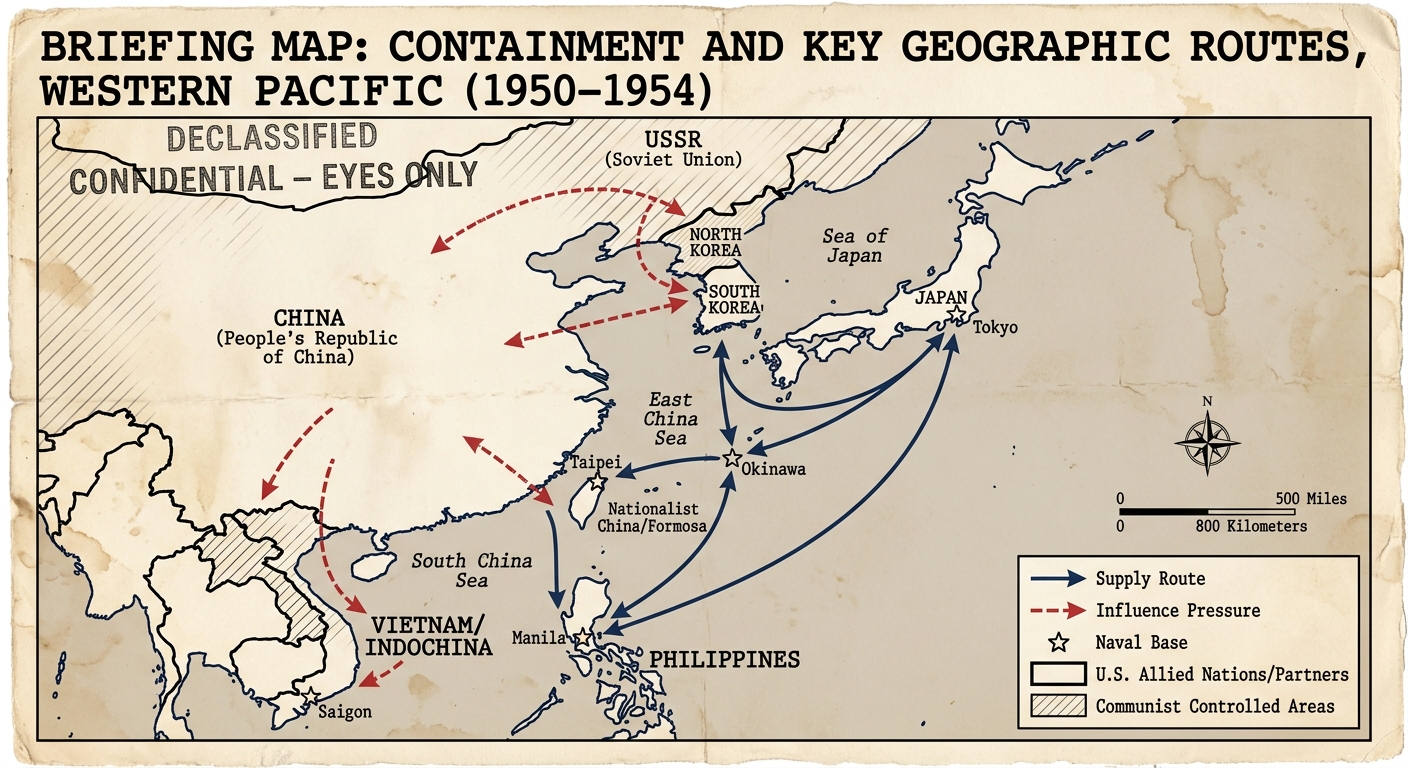
A 1950s briefing map highlights where U.S. leaders saw “influence pressure” and which sea routes supported allies. The map suggests that islands, straits, and nearby bases shaped containment choices by making some areas easier to supply or defend than others.

A fictional 1950s-style briefing map of the Western Pacific showing countries and sea routes, with arrows for supply routes and influence pressure and star icons marking island bases.

Asemmisa {{asɛmmisaAhyɛnsode}}
16.

Which map feature best supports the idea that U.S. containment policy relied on geography to support allies?

Asemmisa {{asɛmmisaAhyɛnsode}}
17.

Explain how ONE geographic factor shown on the map (for example, island locations, sea routes, or proximity to regions labeled with “influence pressure”) could shape a U.S. containment decision.

Use at least two specific details from the map as evidence.

Asemmisa {{asɛmmisaAhyɛnsode}}
18.

Based on the map, which location would most likely be used to support containment because it could help control movement through nearby sea routes?

Asemmisa {{asɛmmisaAhyɛnsode}}
19.

Using the map as evidence, describe one way the United States could try to contain communism without directly taking control of another country.

Explain why that approach fits containment between 1945 and 1990.

Asemmisa {{asɛmmisaAhyɛnsode}}
20.

Which conclusion about containment is best supported by the map’s arrows labeled “Influence Pressure”?

Historical Document:

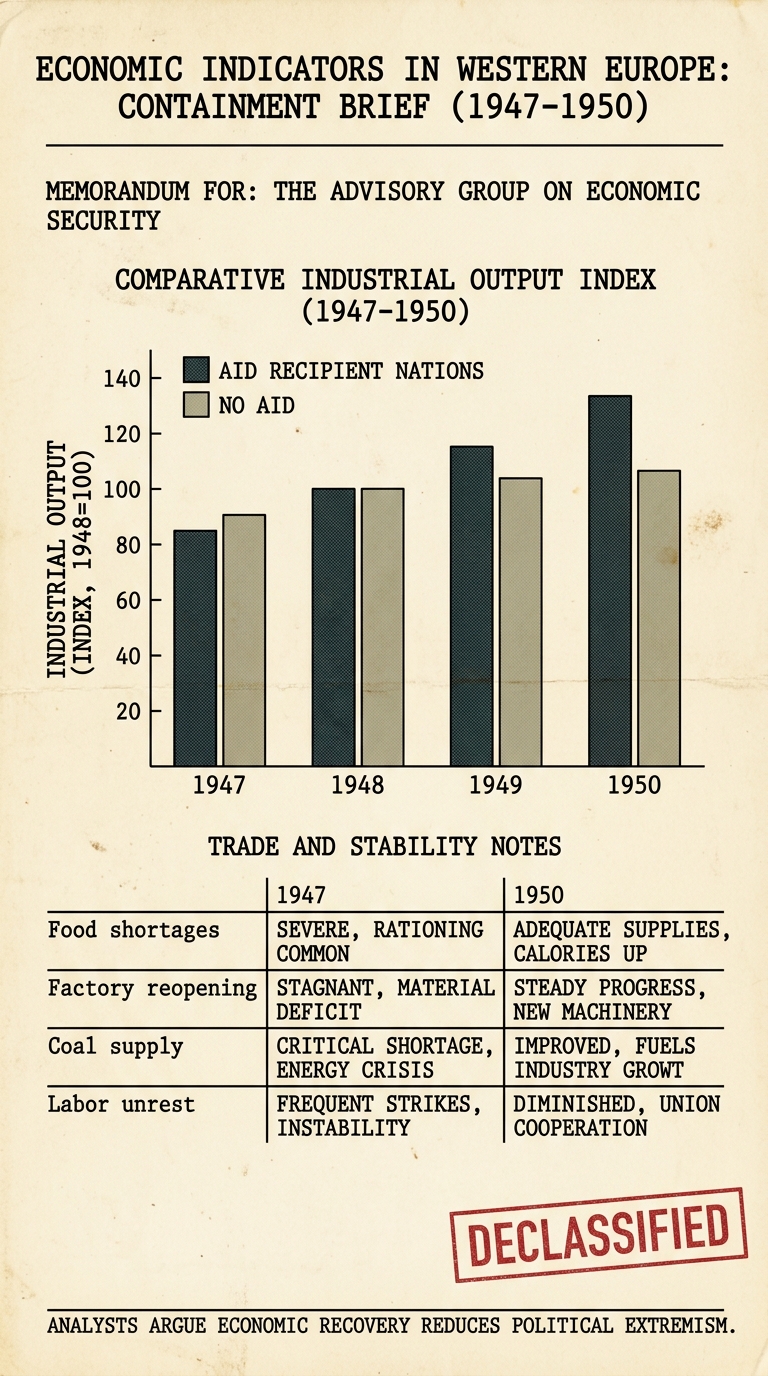
This declassified briefing sheet compares economic recovery in Western Europe from 1947 to 1950. Analysts argue that rebuilding factories, increasing trade, and reducing shortages could make communist parties less appealing. U.S. officials used these economic indicators to support containment without direct war.

A fictional 1947–1950 U.S. containment briefing infographic showing a bar chart of Western Europe industrial output for aid recipients vs no aid, plus a small table of postwar economic conditions.

Asemmisa {{asɛmmisaAhyɛnsode}}
21.

Based on the document, which economic condition is most directly connected to the idea that recovery could reduce support for communism?

Asemmisa {{asɛmmisaAhyɛnsode}}
22.

Which conclusion is best supported by comparing the chart groups “Aid Recipient Nations” and “No Aid” from 1947–1950?

Asemmisa {{asɛmmisaAhyɛnsode}}
23.

Which evidence from the document best supports the claim that economic aid was used as a containment strategy?

Asemmisa {{asɛmmisaAhyɛnsode}}
24.

Explain how the document suggests a connection between economic systems and containment.

Use two specific pieces of evidence from the chart or table, and explain how each supports the policy of containment.

Asemmisa {{asɛmmisaAhyɛnsode}}
25.

Identify one tradeoff or limitation of using economic aid as a containment tool, and explain how the document’s evidence could be used to argue for continuing (or expanding) that approach.