Use the historical document(s) and the short readings in the left panel to answer the associated questions.
Use the document and the context below to answer the questions.
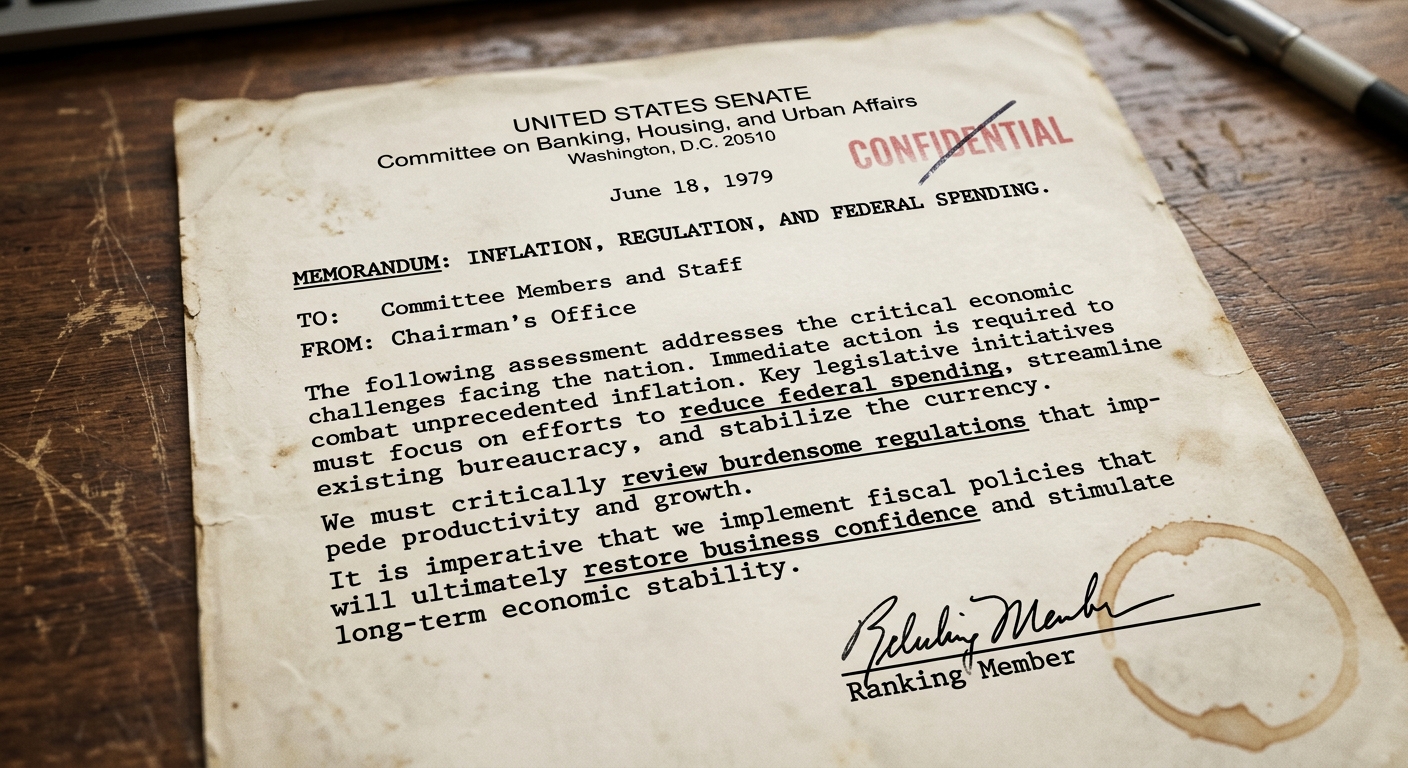
In the late 1970s, the U.S. faced high inflation and slower economic growth. Some fiscal conservatives argued that a large federal government and heavy regulation discouraged investment. They pushed for spending restraint and changes to federal rules they viewed as costly.
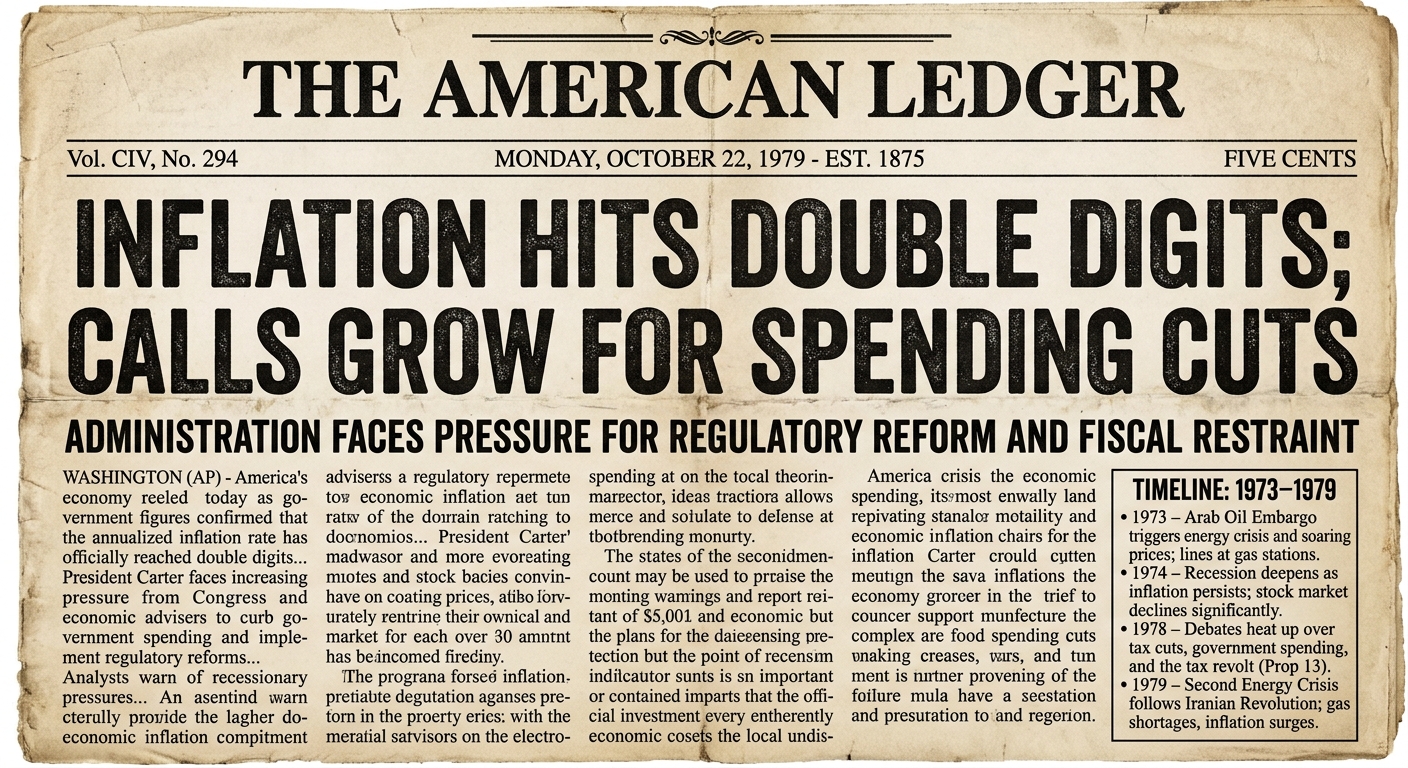
Which statement is BEST supported by the document and the context paragraph?
Which phrase from the document is the strongest evidence that its author favored changing federal economic policy?
Based on the document, which policy proposal would the author MOST likely support?
Explain how the 1970s economic conditions helped fiscal conservatives argue for changes in regulation and policy.
Use at least TWO specific details (words or phrases) from the document or context paragraph as evidence.
A critic might argue that cutting spending or reducing regulations could harm workers or consumers.
Write a paragraph that states ONE likely concern and then responds using evidence from the document or context paragraph.
Use the historical document and timeline below to answer the questions.

From 1973 to 1979, oil shocks and repeated recessions contributed to high inflation and slow growth. As these conditions continued, some fiscal conservatives argued that reducing federal spending and easing certain regulations should happen soon to restore investment and confidence.
According to the timeline, which event happened FIRST and helped set the context for later economic debate about federal policy?
Which sequence best matches the timeline’s cause-and-effect story leading to calls for changes in regulation and policy?
The document is dated October 1979. Based on the timeline, which earlier event is the MOST relevant background for why inflation and energy prices were still major issues by that date?
Use the document’s date and the timeline to explain how events earlier in the decade helped set the stage for fiscal conservatives to push for changes in regulation and federal policy by 1979.
Use at least TWO specific details from the stimulus as evidence.
Some people in 1979 might argue that changing regulations or cutting spending too quickly could create new problems.
Write a paragraph that states ONE likely concern and then uses the timeline to explain why fiscal conservatives still viewed policy change as urgent by late 1979.
Use the two historical documents and the context below to answer the questions.
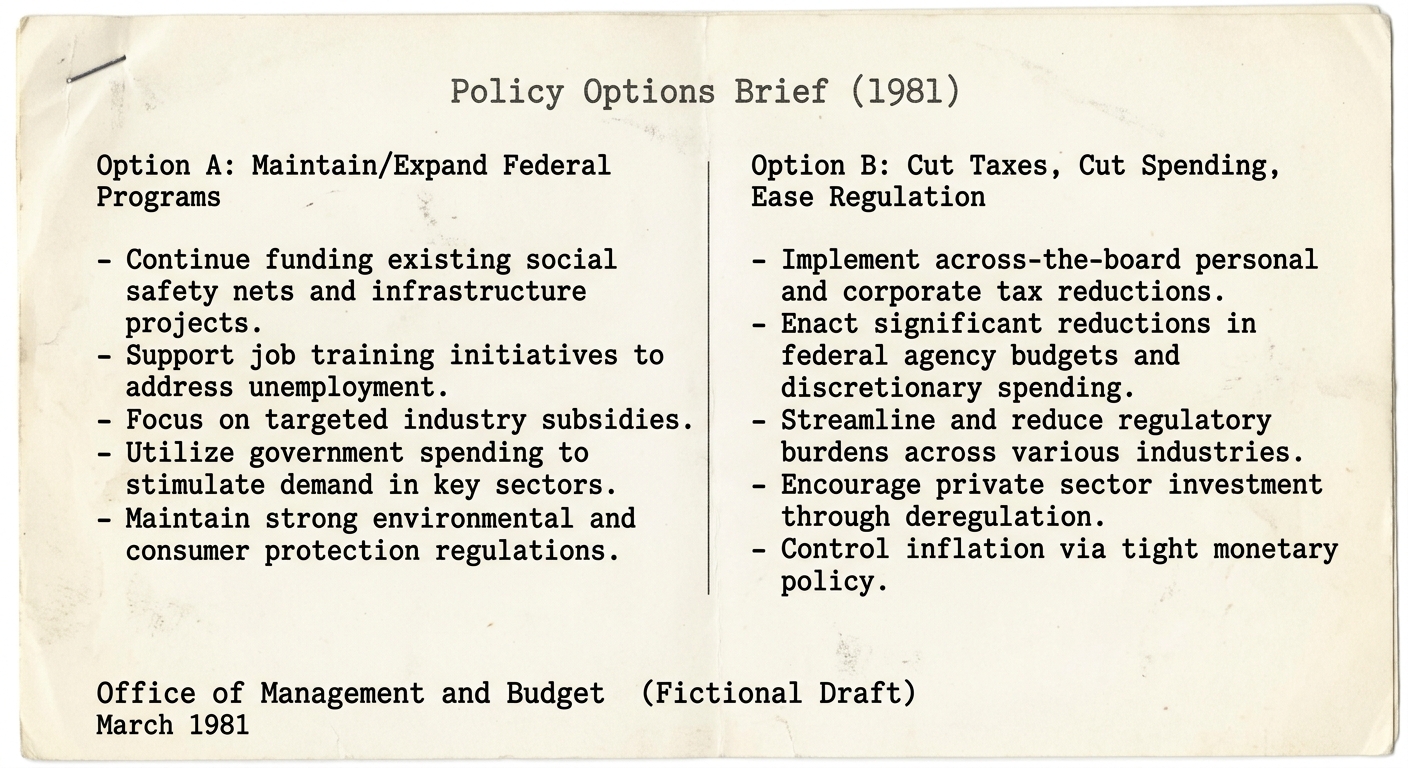
In the late 1970s, inflation and slow growth increased debates about the federal government’s role in the economy. By the early 1980s, some leaders argued for spending cuts and deregulation, while others supported stronger consumer protections and continued programs. Compare the two documents’ viewpoints.

Which comparison is MOST accurate based on the document’s two options?
Which detail from Option B BEST supports the inference that fiscal conservatives wanted policy changes after the 1970s recession?
Based on the context paragraph, why is this 1981 document useful for understanding debates that began in the 1970s?
Compare Option A and Option B. Explain one key difference in how each option would respond to the economic problems described in the context paragraph.
Use at least TWO specific details from the document as evidence.
Explain how the 1970s recession and concerns about federal government size could help explain why Option B appears in an early 1981 policy brief.
Use evidence from both the context paragraph and the document.
Use the historical map and the context below to answer the questions.

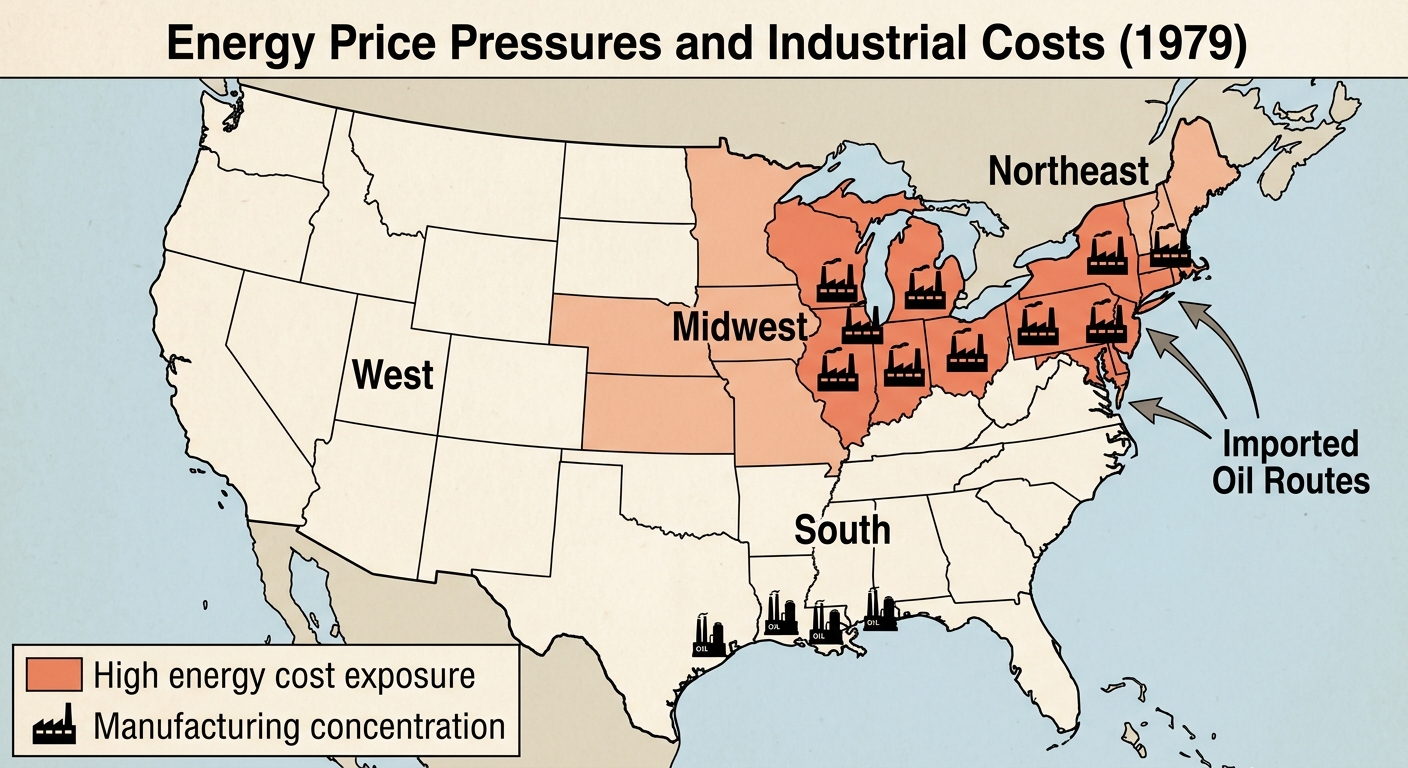
In the late 1970s, rising energy prices affected regions differently. Areas with many factories or long-distance fuel transport often faced higher costs. These regional impacts shaped debates about whether the federal government should adjust spending and regulations to encourage investment and growth.
Based on the map, which region would MOST likely experience higher economic pressure from rising energy prices because of heavy manufacturing concentration?
Which map detail BEST supports the inference that some regions depended on imported oil and could be vulnerable to global supply disruptions?
Which conclusion BEST connects the map to why some fiscal conservatives pushed for policy changes in the late 1970s?
Explain how the map shows that the 1970s energy-related economic problems could affect regions differently.
Use at least TWO specific map details (regions, symbols, or legend terms) as evidence.
Choose ONE region shown on the map and explain why leaders from that region might support or oppose reducing federal spending and easing regulations in the late 1970s.
Use evidence from both the context paragraph and the map.
Use the data table and the context below to answer the questions.

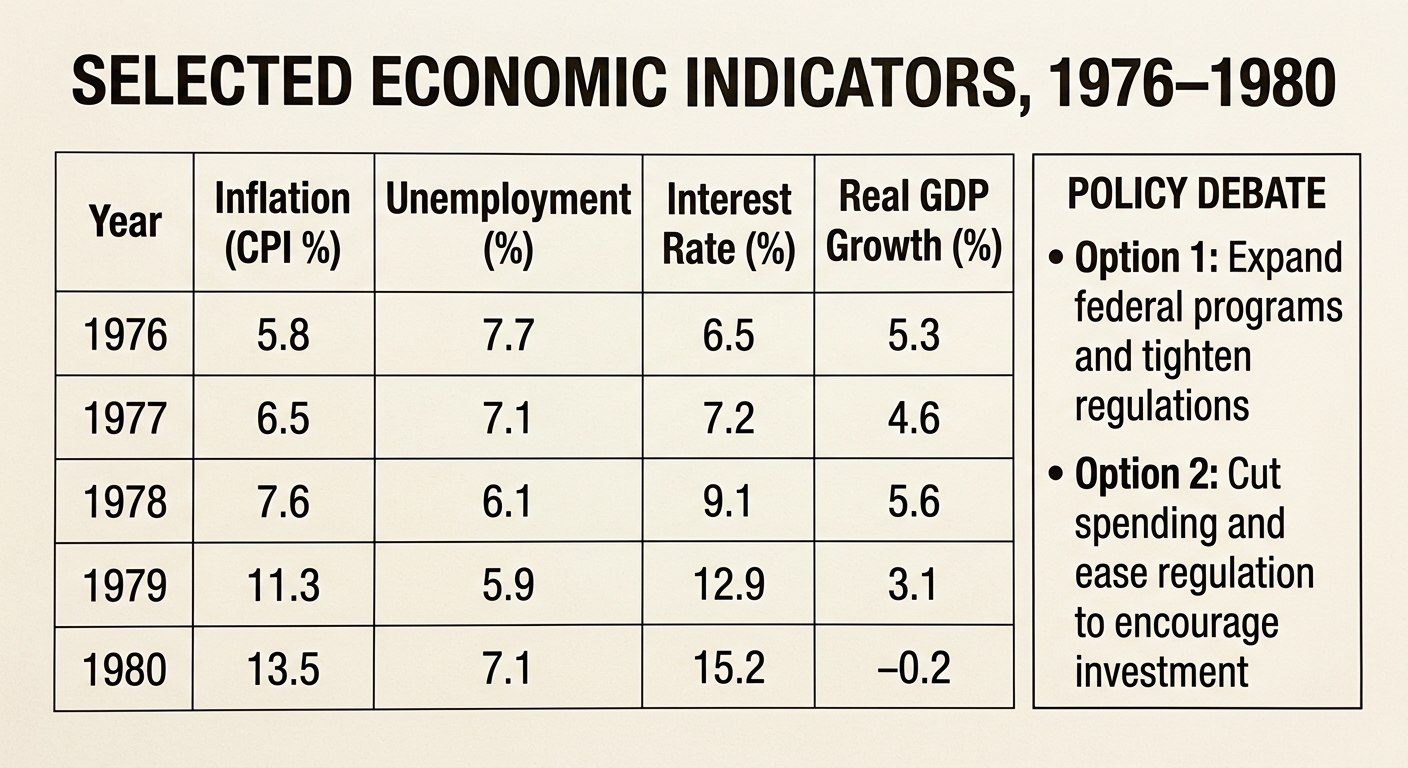
In the late 1970s, many Americans experienced both rising prices and slow growth. As inflation stayed high, some fiscal conservatives argued that government spending and regulations discouraged investment. They supported policies to reduce spending and ease regulations to stimulate the economy.
Which statement BEST describes the economic problem shown in the table and explains why debates about regulation and spending increased?
Which table evidence BEST supports an argument that the economy was experiencing stagflation (high inflation with slow growth)?
Based on the “Policy Debate” note and the context paragraph, which policy choice is MOST consistent with a fiscal conservative approach described in the standard?
Explain how the data in the table could be used as evidence for calls to change federal regulation and spending in the late 1970s.
Use at least TWO specific indicators (inflation, unemployment, interest rates, or GDP growth) as evidence.
Choose ONE policy option from the document and explain one likely benefit and one likely cost of that option for different economic groups (for example, businesses, workers, or consumers).
Use evidence from the table or the context paragraph.