Use the historical document(s) and the short readings in the left panel to answer the associated questions.
Read the document below. It is a historical-style memo about public meetings during a period of fear about “subversive” activity in the United States. Use the memo’s specific language to decide what civil liberties might be limited and how federal power could become involved.
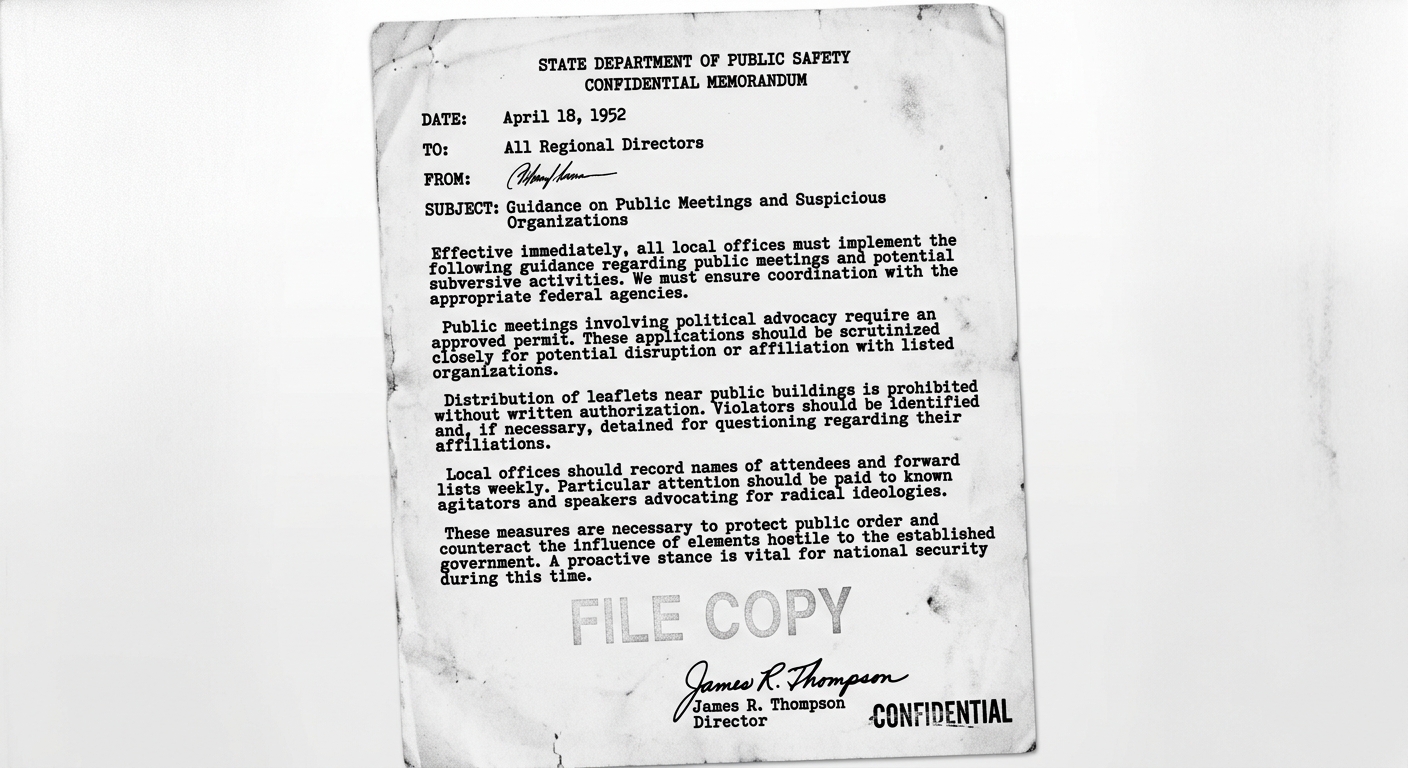
Which civil liberty is MOST directly affected by the memo’s requirement that some public meetings receive an “approved permit”?
Which line from the memo is the BEST evidence that the policy could discourage people from exercising civil liberties?
If a person challenged the memo’s restrictions in federal court, which constitutional idea BEST explains why the federal government could have a role in the dispute?
Using evidence from the memo, explain how the policy could violate civil liberties.
Quote or clearly reference TWO specific phrases from the document and explain how each phrase supports your reasoning.
A debate can occur over civil liberties and government power. Using evidence from the memo, write ONE argument supporting the memo’s policy and ONE argument opposing it.
Then explain which argument is better supported by the document’s wording.
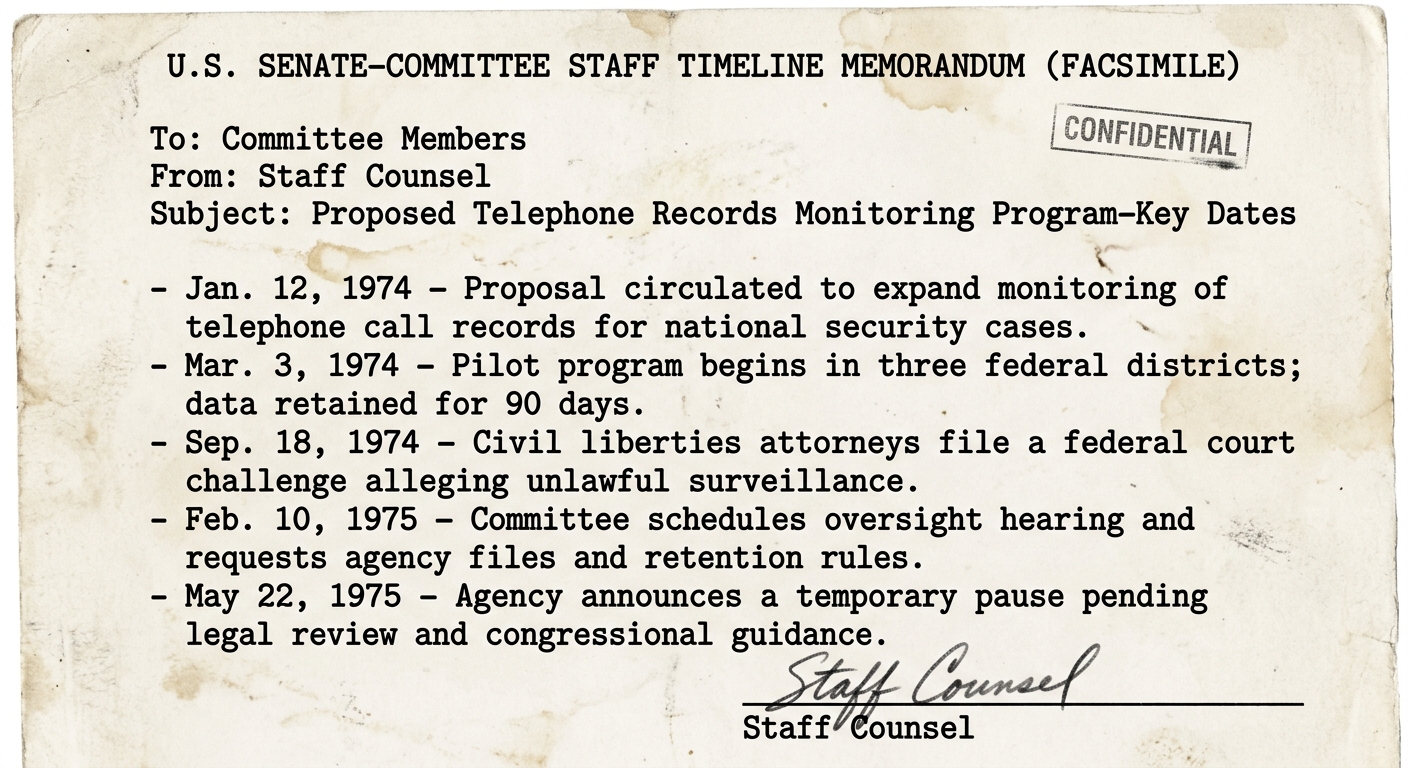
Read the document below. It is a historical-style timeline memo about federal electronic surveillance in the mid-1970s. Use the dates to place events in order and explain how the sequence shows the growth of government power and challenges to it.

According to the timeline memo, which event happened FIRST?
Which sequence correctly orders these events from EARLIEST to LATEST based on the memo?
Based on the memo’s sequence of events, what is the MOST likely reason the agency paused the program on May 22, 1975?
Using evidence from the timeline memo, explain how the sequence of events shows an expansion of government action followed by increased oversight or challenge.
Clearly reference TWO dated entries and explain how the timing supports your explanation.
A debate can occur over civil liberties and government power. Using evidence from the timeline memo, write ONE argument supporting the monitoring program and ONE argument opposing it.
Use evidence from TWO different dates, and explain how the timing strengthens one side’s argument.
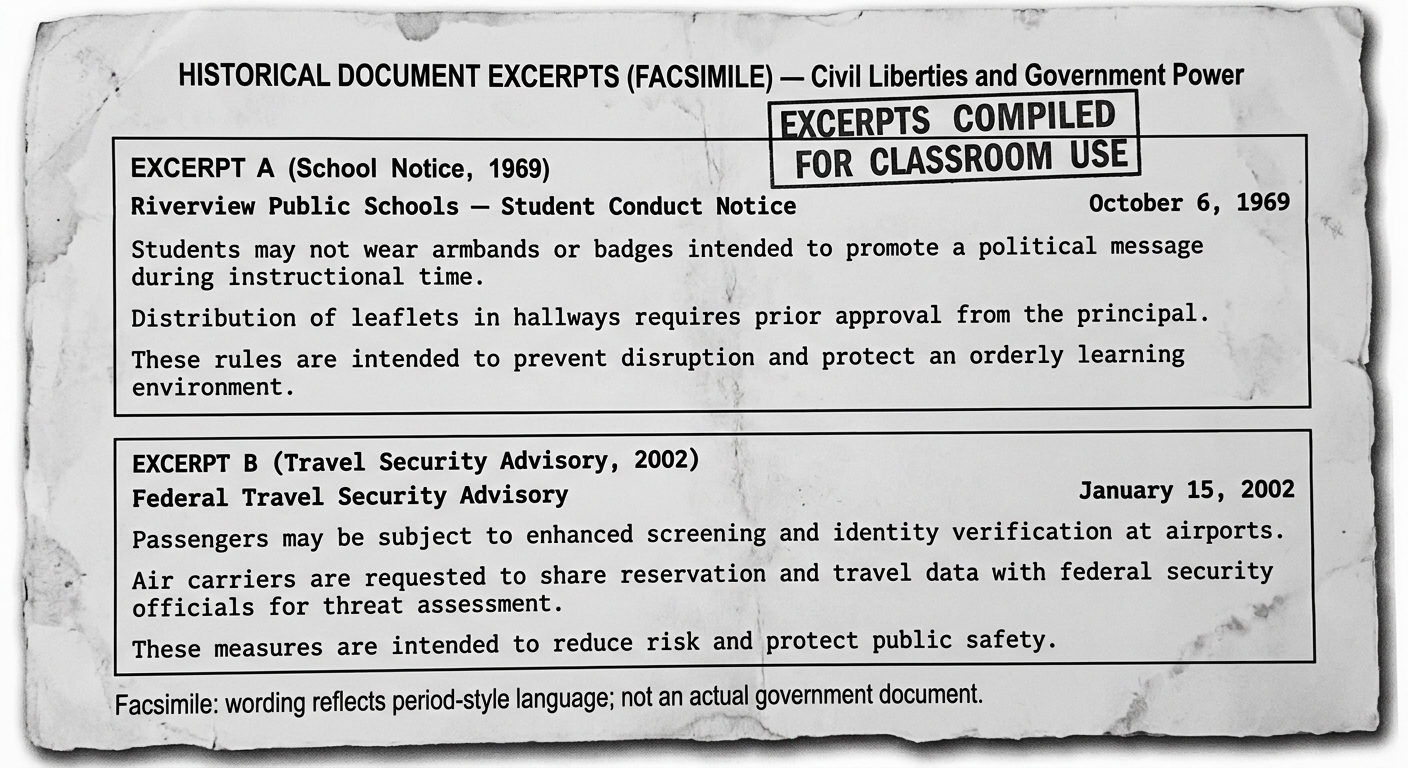
Read the document below. It includes two historical-style excerpts from different periods. Compare what each excerpt limits, the reasons given, and how the setting and time period shape government actions. Use specific words from BOTH excerpts as evidence.

Which similarity is BEST supported by BOTH excerpts?
Which contextual factor BEST helps explain why Excerpt B includes sharing travel data for “threat assessment”?
Which difference between Excerpt A and Excerpt B is MOST accurate based on the text?
Compare how Excerpt A and Excerpt B frame the tradeoff between civil liberties and security/order.
Quote or clearly reference ONE phrase from each excerpt and explain what each phrase suggests about government power.
Explain how the time period and setting could shape how people respond to these policies.
Use evidence from BOTH excerpts (at least one specific phrase from each).
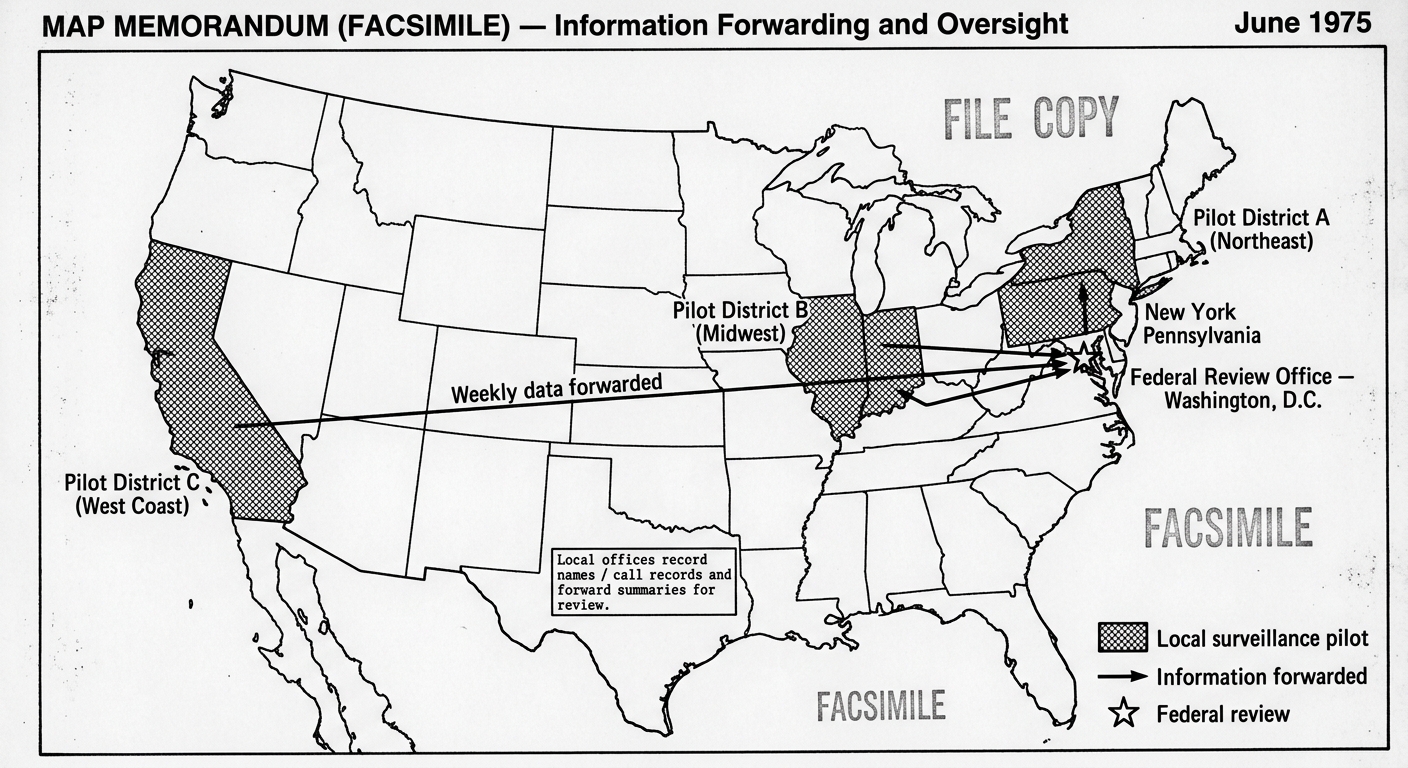
Read the map memo below. It shows where a monitoring policy operated and where information was sent for review. Use the map’s locations, labels, and arrows to explain how geography can shape government power and how people in different places might experience civil liberties issues.

Based on the map memo, which pilot district is located farthest from the Federal Review Office in Washington, D.C.?
What does the map’s arrows to Washington, D.C. MOST strongly suggest about the role of the federal government in this policy?
Which comparison is BEST supported by the map memo?
Using evidence from the map memo, explain how the policy could move from local action to federal involvement.
Clearly reference TWO map features (for example, the legend, arrows, labels, or note box) and explain how each supports your explanation.
A debate can occur over civil liberties and government power. Using geographic evidence from the map memo, write ONE argument supporting the program and ONE argument opposing it.
Then explain how a geographic factor (distance, region, or centralized review) could strengthen one side’s argument.
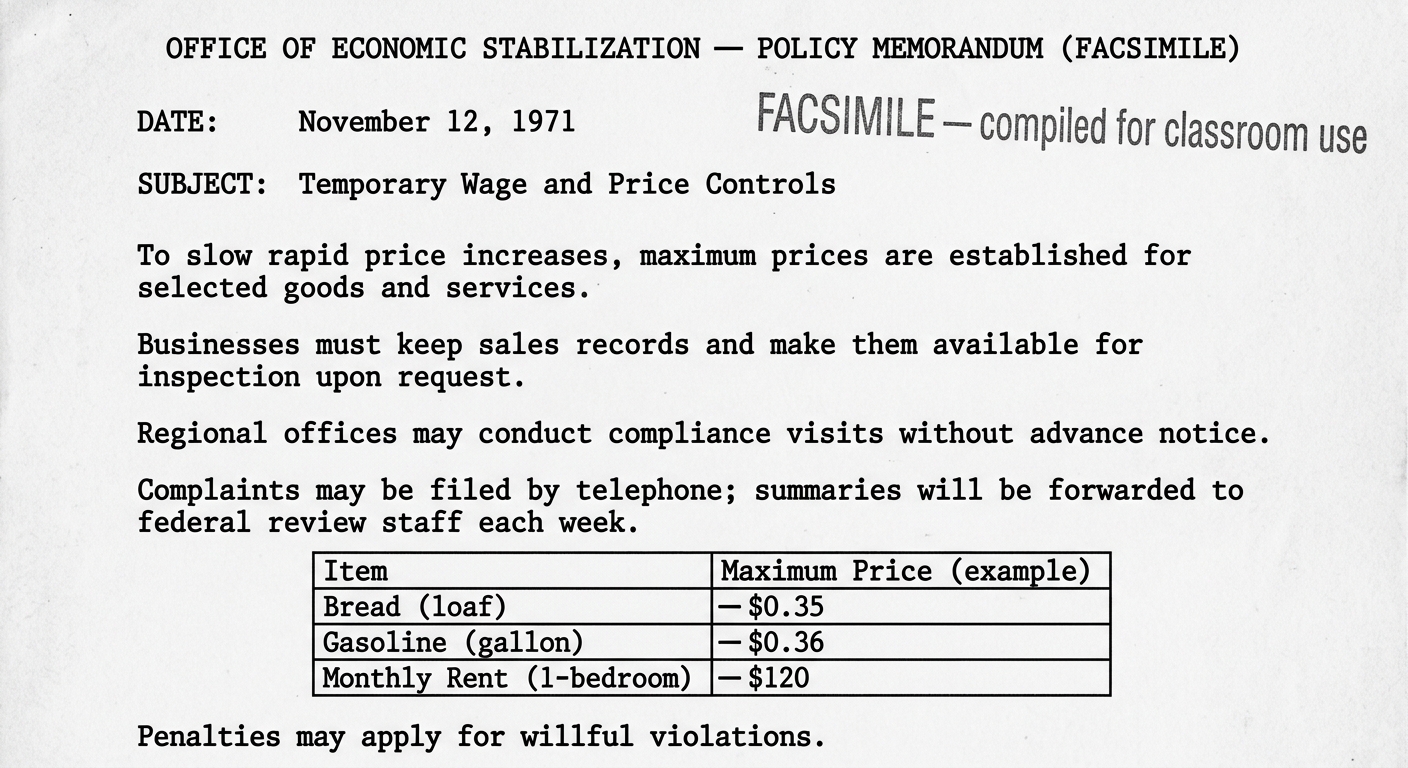
Read the document below. It is a historical-style memo about an economic policy meant to slow inflation. Use the memo’s specific language and the example price table to explain the policy’s economic goals and how enforcement could raise questions about civil liberties and federal power.

Based on the memo, which economic problem is the policy MOST directly intended to address?
Which feature of the memo is the BEST example of government intervention typical of a mixed economy?
Which line from the memo is the BEST evidence that enforcing the policy could raise civil liberties concerns?
Using evidence from the memo, explain one economic goal of the policy and one way enforcement could affect civil liberties.
Clearly reference TWO specific features (for example, a sentence and a table entry) and explain how each supports your reasoning.
A debate can occur over civil liberties and government power. Using evidence from the memo, write ONE argument supporting the policy and ONE argument opposing it.
Include at least one piece of economic evidence and one enforcement-related detail.
Then explain which argument is better supported by the memo’s wording.