Twa kɔ nsɛm atitiriw so
Log in
Sign up for FREE
arrow_back
Laabri

Copy of Cells Question Bank - 2025 (5/2/2026)

star
star
star
star
star
Last updated about 4 hours ago
67 Nsɛmmisa
Prok vs Euk Low Level Questions
Ɛhia
1
Ɛhia
1
Ɛhia
1
1
1
1
1
1
1
1
1
1
1
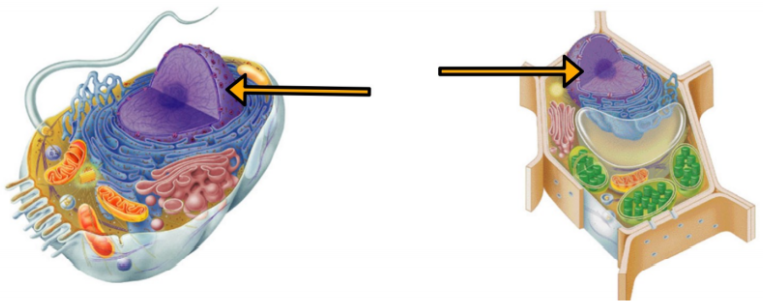
1
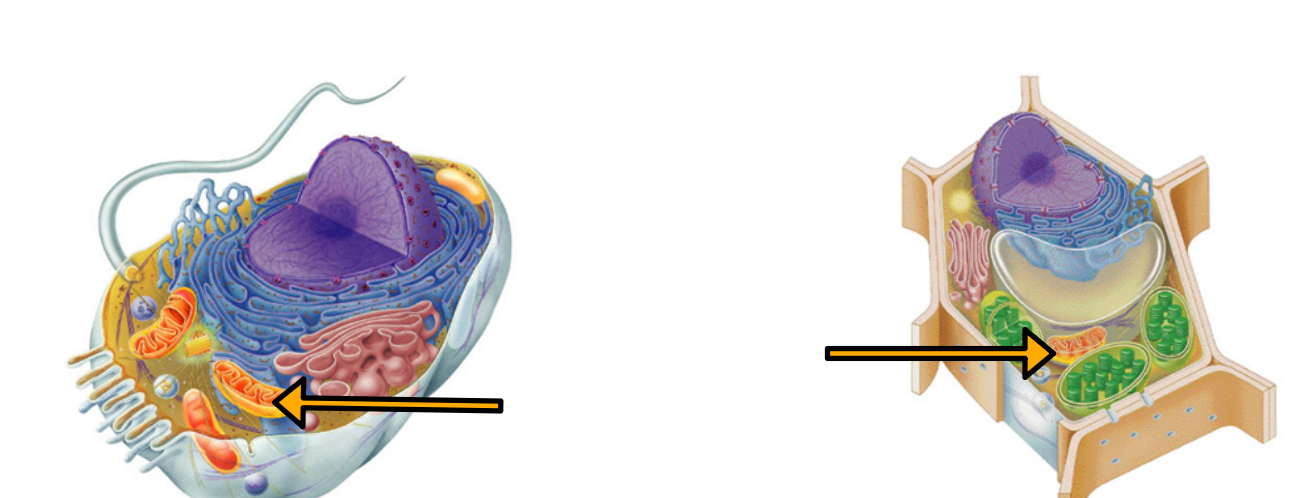
1
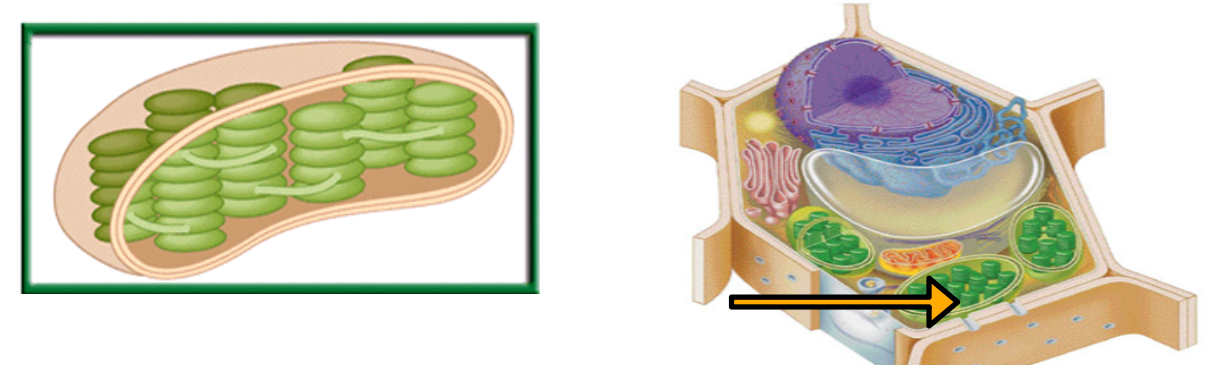
1
Ɛhia
1
Prok vs Euk Mid Level Questions
13
1
1
Ɛhia
2
B.C.4A
Ɛhia
2
B.C.4A
Ɛhia
2
B.C.4A
Ɛhia
1
B.C.4A
Ɛhia
1
B.C.4A
Ɛhia
1
B.C.4A
1
Ɛhia
1
1
1
1
1
Ɛhia
1
B.C.4A
Ɛhia
1
1
1
1
Ɛhia
1
B.C.4A
Ɛhia
1
B.C.4A
Ɛhia
2
B.C.4A
Ɛhia
2
B.C.4A
Ɛhia
1
Ɛhia
1
B.C.4A
Ɛhia
1
B.C.4A
Ɛhia
1
B.C.4A
1
B.C.4A
1
1
Ɛhia
1
B.C.4A
Ɛhia
1
Ɛhia
1
Ɛhia
1
Ɛhia
1
Ɛhia
1
Ɛhia
1
Ɛhia
1
Ɛhia
1
Ɛhia
1
Ɛhia
1
Ɛhia
1
Ɛhia
1
Ɛhia
1
Ɛhia
1
Ɛhia
1
Ɛhia
1
Ɛhia
1
Prok vs Euk High Level
Ɛhia
1
Asemmisa {{asɛmmisaAhyɛnsode}}
1.

Sort the items below into being True/Present for Eukaryotes or Prokaryotes.

  • Large

  • Small

  • Complex

  • Simple

  • Membrane Bound Organelles

  • No Membrane Bound Organelles

  • Eukaryotes

    (3 items)

  • Prokaryotes

    (3 items)
Asemmisa {{asɛmmisaAhyɛnsode}}
2.

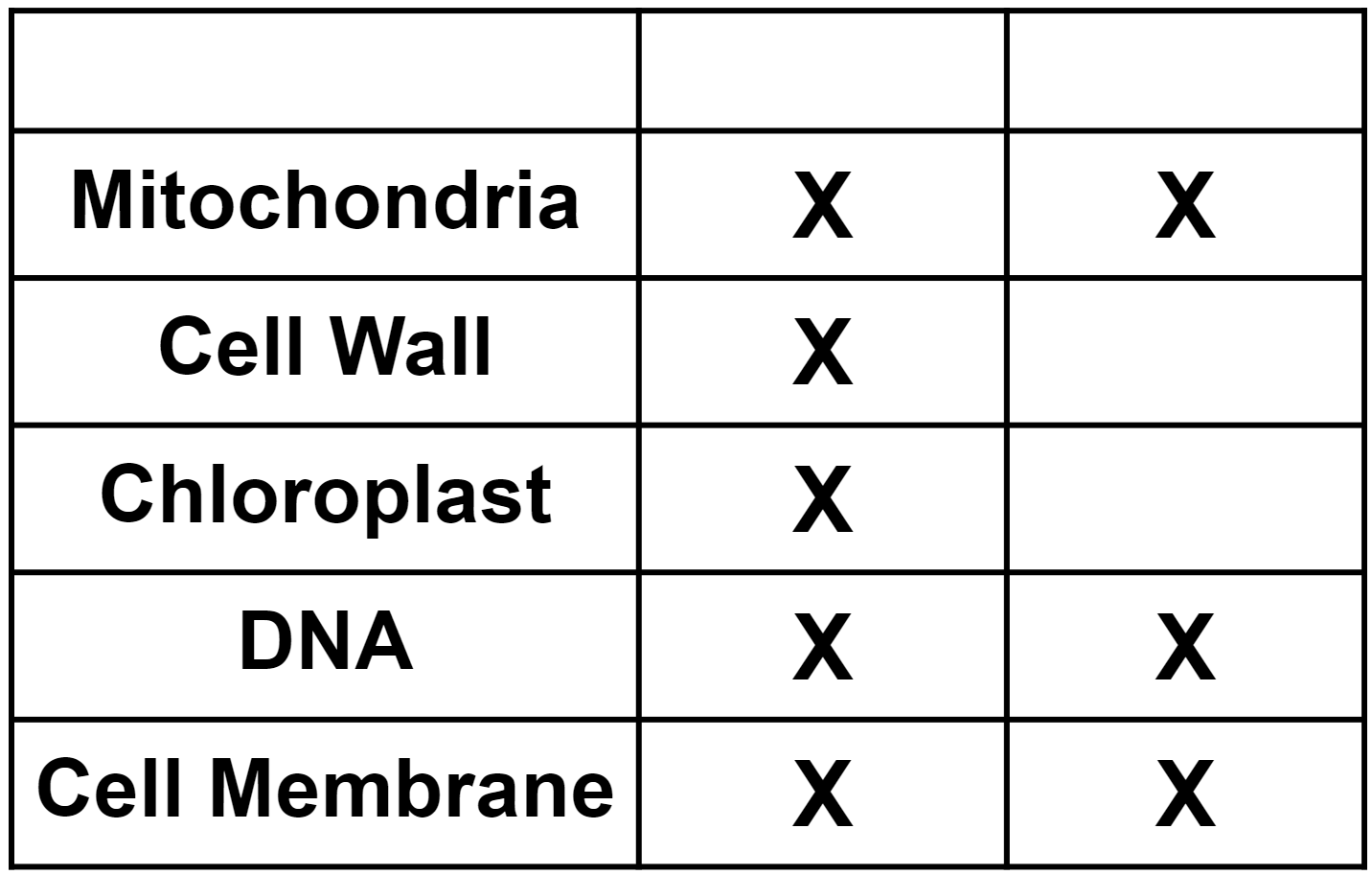
For each row, select if the structure is observed in prokaryotes, eukaryotes, OR select both boxes if the structure is found in both type of cell.

Prokaryote

Eukaryote

Nucleus

No nucleus

Cell membrane

Ribosomes

DNA

Cytoplasm

Simple

Complex

Asemmisa {{asɛmmisaAhyɛnsode}}
3.

Eukaryotes Only

Prokaryotes Only

BOTH (All Cells)

Living thing

Simple

Complex

Large

Small

DNA

Nucleus

No nucleus

Cell membrane

Ribosomes

Cytoplasm

Membrane bound organelles

Asemmisa {{asɛmmisaAhyɛnsode}}
4.

Decide whether each item below belongs to Prokaryotes (2), Eukaryotes (2), or Both (2).

  • Large

  • Small

  • Simple

  • Complex

  • Ribosomes

  • DNA

  • Prokaryotes Only

    2 items

  • Eukaryotes Only

    2 items

  • Both

    2 items

Asemmisa {{asɛmmisaAhyɛnsode}}
5.

Decide whether each item below belongs to Prokaryotes (1), Eukaryotes (2), or Both (2).

  • Nucleus

  • No nucleus

  • Cell Membrane

  • Cytoplasm

  • Membrane Bound Organelles

  • Prokaryotes

    1 item

  • Eukaryotes

    2 items

  • Both

    2 items

Asemmisa {{asɛmmisaAhyɛnsode}}
6.

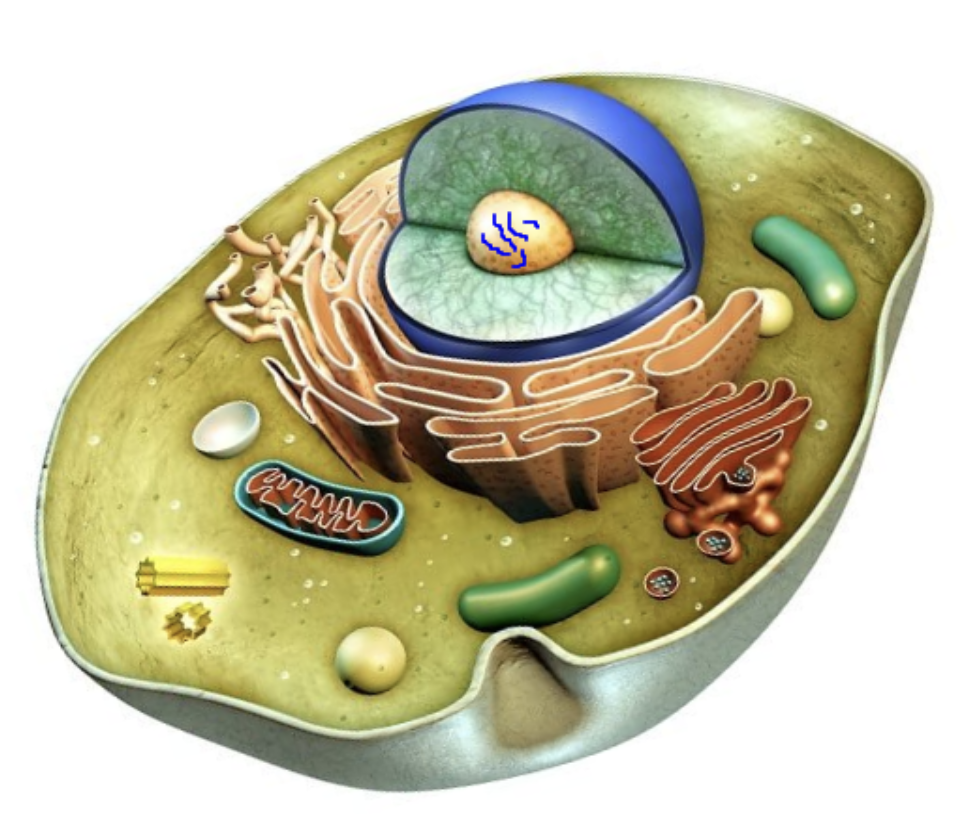
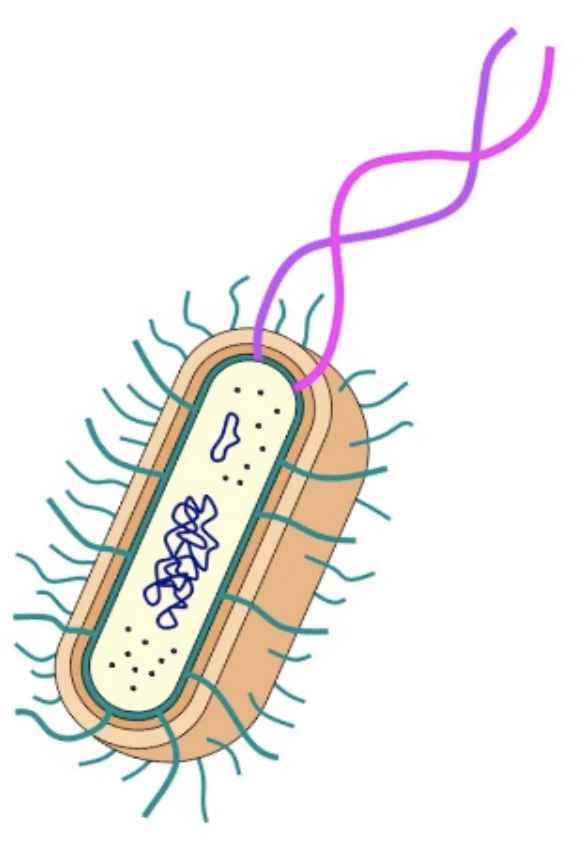
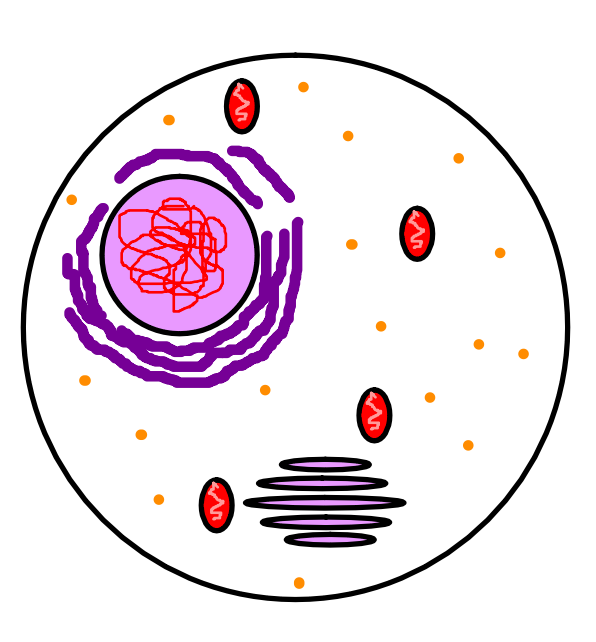
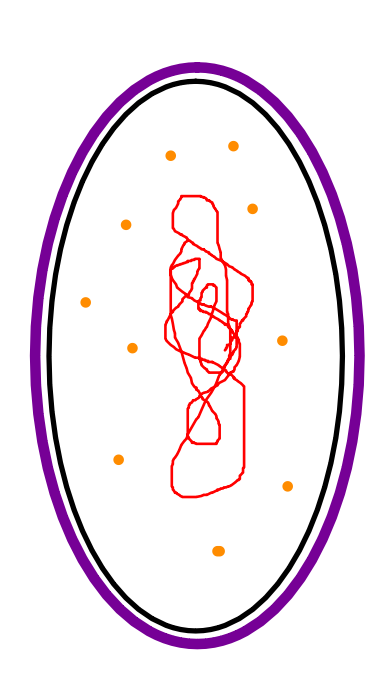
Select all of the cells below that have DNA.

Asemmisa {{asɛmmisaAhyɛnsode}}
7.

Select all of the cells below that have a nucleus.

Asemmisa {{asɛmmisaAhyɛnsode}}
8.

Select all of the cells below that have ribosomes.

Asemmisa {{asɛmmisaAhyɛnsode}}
9.

Select all of the cells below that have mitochondria.

Asemmisa {{asɛmmisaAhyɛnsode}}
10.

Select all of the cells below that have chloroplasts.

Asemmisa {{asɛmmisaAhyɛnsode}}
11.

Select all of the cells below that have a cell membrane.

Asemmisa {{asɛmmisaAhyɛnsode}}
12.

Select all of the cells below that have a cell wall.

Asemmisa {{asɛmmisaAhyɛnsode}}
13.

Correctly match the cell organelle to its function (job).

Draggable itemarrow_right_altCorresponding Item

Chloroplast

arrow_right_alt

Provides Instructions for Making Proteins

DNA

arrow_right_alt

Responsible for making the proteins that build our physical traits.

Ribosome

arrow_right_alt

Creates ATP (energy) by breaking down glucose (food) for both plant and animal cells.

Cell Membrane

arrow_right_alt

Uses solar (sun) energy to make glucose (food) for plant cells.

Mitochondria

arrow_right_alt

Maintains homeostasis by controlling what can enter and leave the cell.

Asemmisa {{asɛmmisaAhyɛnsode}}
14.

You can find ribosomes in....

Asemmisa {{asɛmmisaAhyɛnsode}}
15.

Why are prokaryotes so simple?

Asemmisa {{asɛmmisaAhyɛnsode}}
16.

Why are eukaryotes so complex?

Asemmisa {{asɛmmisaAhyɛnsode}}
17.

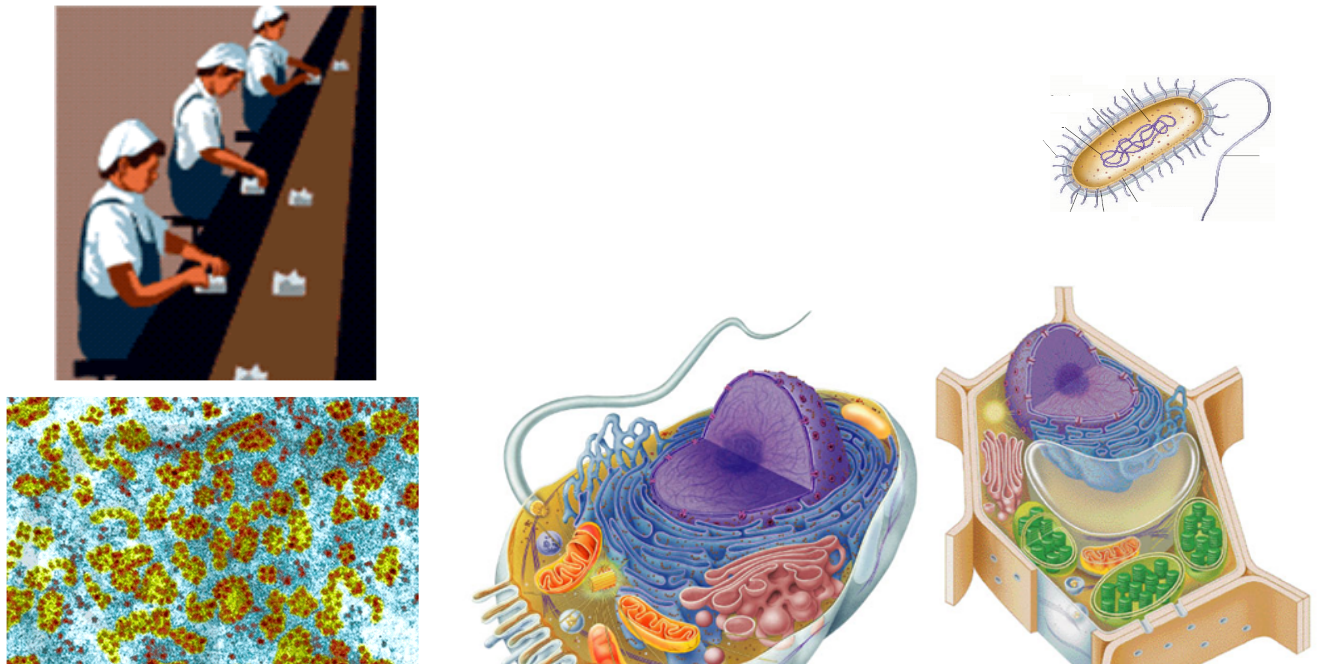
Provides instructions for making proteins (P.I.M.P)

Asemmisa {{asɛmmisaAhyɛnsode}}
18.

Categorize each item as plant or both animal and plant cells.

  • Nucleus

  • Cell Wall

  • Chloroplast

  • Ribosome

  • Cell Membrane

  • Vacuole

  • Mitochondria

  • Plant (2 items)

  • Both Animal and Plant Cell (5 items)

Asemmisa {{asɛmmisaAhyɛnsode}}
19.

Which cell components could be observed in a prepared slide of leaf cells but not in prepared slides of human cheek cells?

Asemmisa {{asɛmmisaAhyɛnsode}}
20.

When mammals get an infection, their body temperature often rises 2-3 degrees. The body gets the energy it needs to react to an infection by –

Asemmisa {{asɛmmisaAhyɛnsode}}
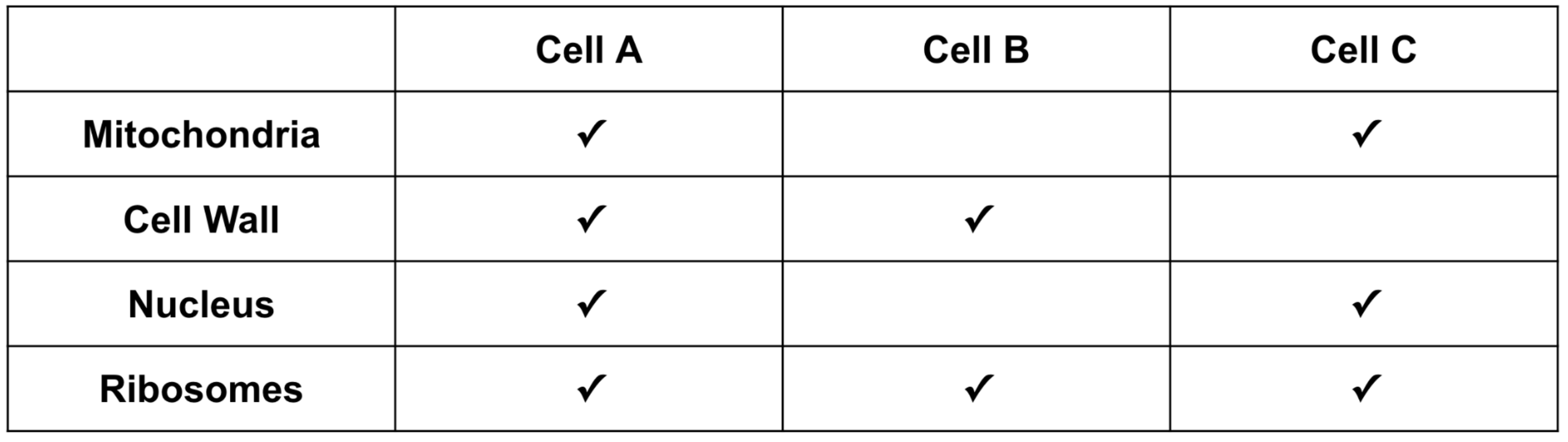
21.

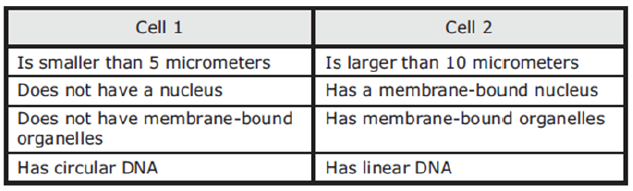
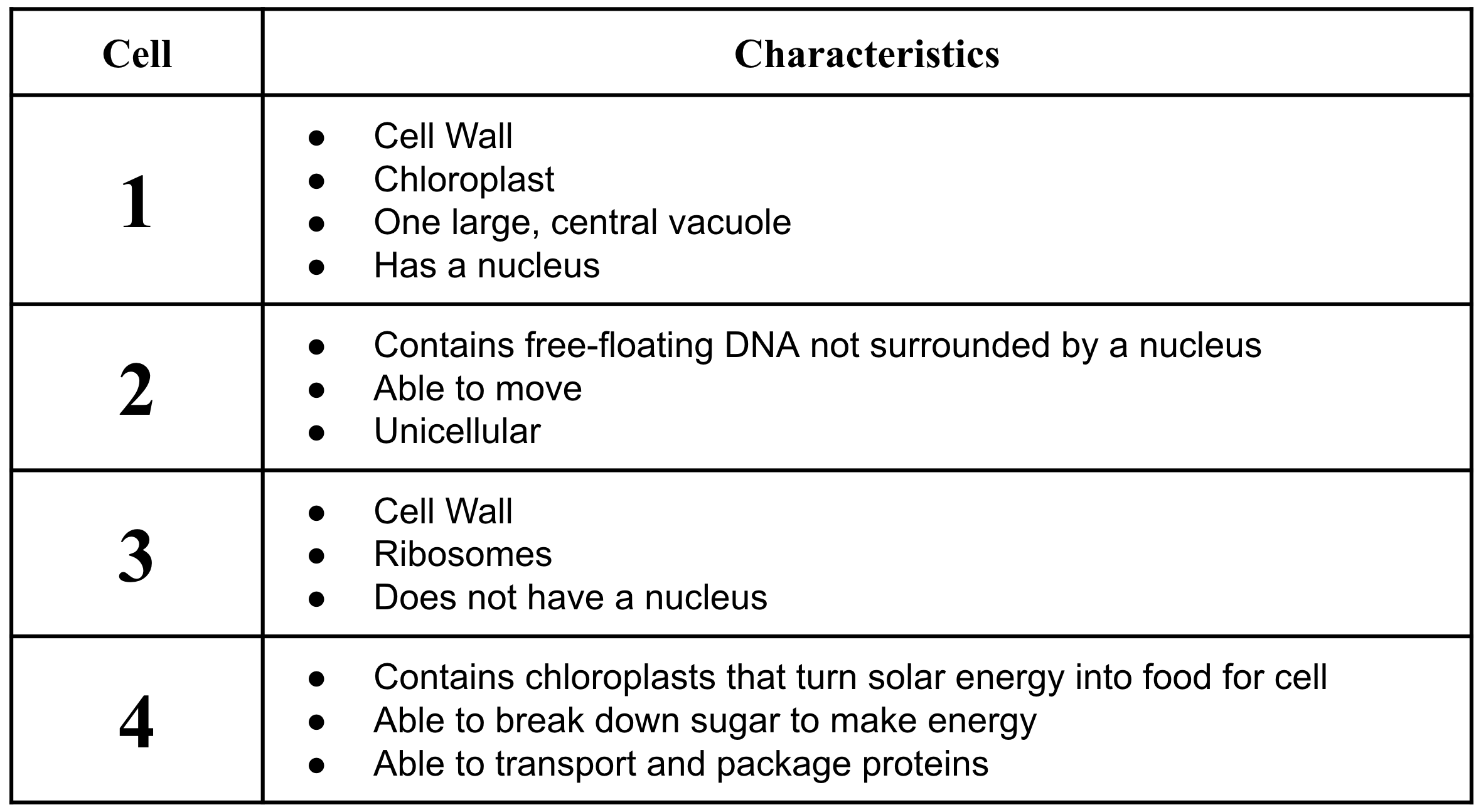
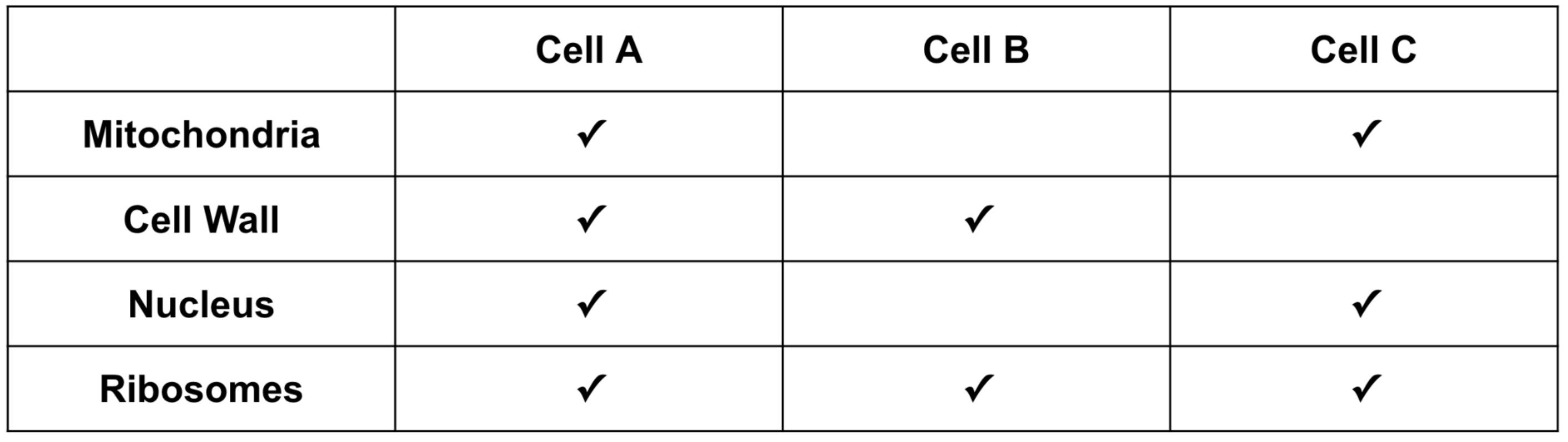
Some students used information they gathered from lab investigations to prepare a table. They entered the table in their lab notebooks.

Which of these correctly identifies the two cells described in the table above?

Select TWO answer choices.

Asemmisa {{asɛmmisaAhyɛnsode}}
22.

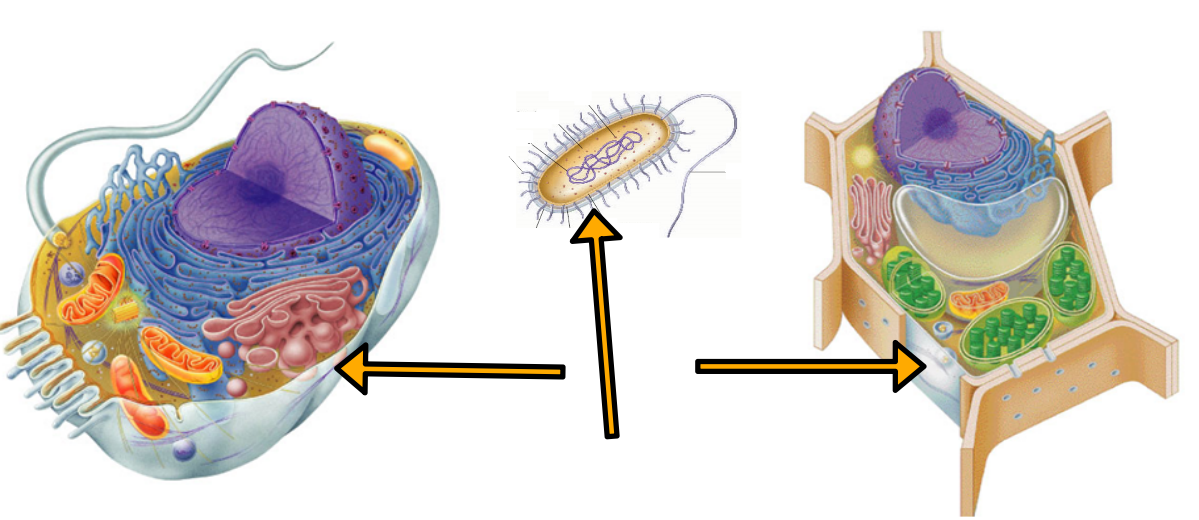
A student groups different types of cells as shown below.

Identify the groups the student created by moving the correct answer to the boxes provided.

Mmuae Afoforo a Wobɛpaw:
Prokaryotic Cells
Animal Cells
Eukaryotic Cells
Fungal Cell
Asemmisa {{asɛmmisaAhyɛnsode}}
23.

A student groups different types of cells as shown below.

Complete the sentence below with the provided options.

The cells in Section 1 are because they .

Mmuae Afoforo a Wobɛpaw:
contain ribosomes
prokaryotic cells
eukaryotic cells
lack a nucleus
Asemmisa {{asɛmmisaAhyɛnsode}}
24.

A scientist has discovered a new toxin to use in biological warfare. This newly synthesized poison crosses all cellular membranes and attacks the cell by breaking down its genetic material (DNA). This stops all cellular activity and kills the cell.

Based on this information, the new toxin could be used to kill which type of cell?

Asemmisa {{asɛmmisaAhyɛnsode}}
25.

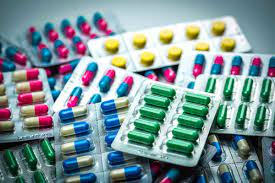
Antibiotics are medicines that treat infections by killing bacteria. Some antibiotics work by targeting and shutting down bacterial ribosomes.

What effect would shutting down the RIBOSOMES of a bacteria have?

Asemmisa {{asɛmmisaAhyɛnsode}}
26.

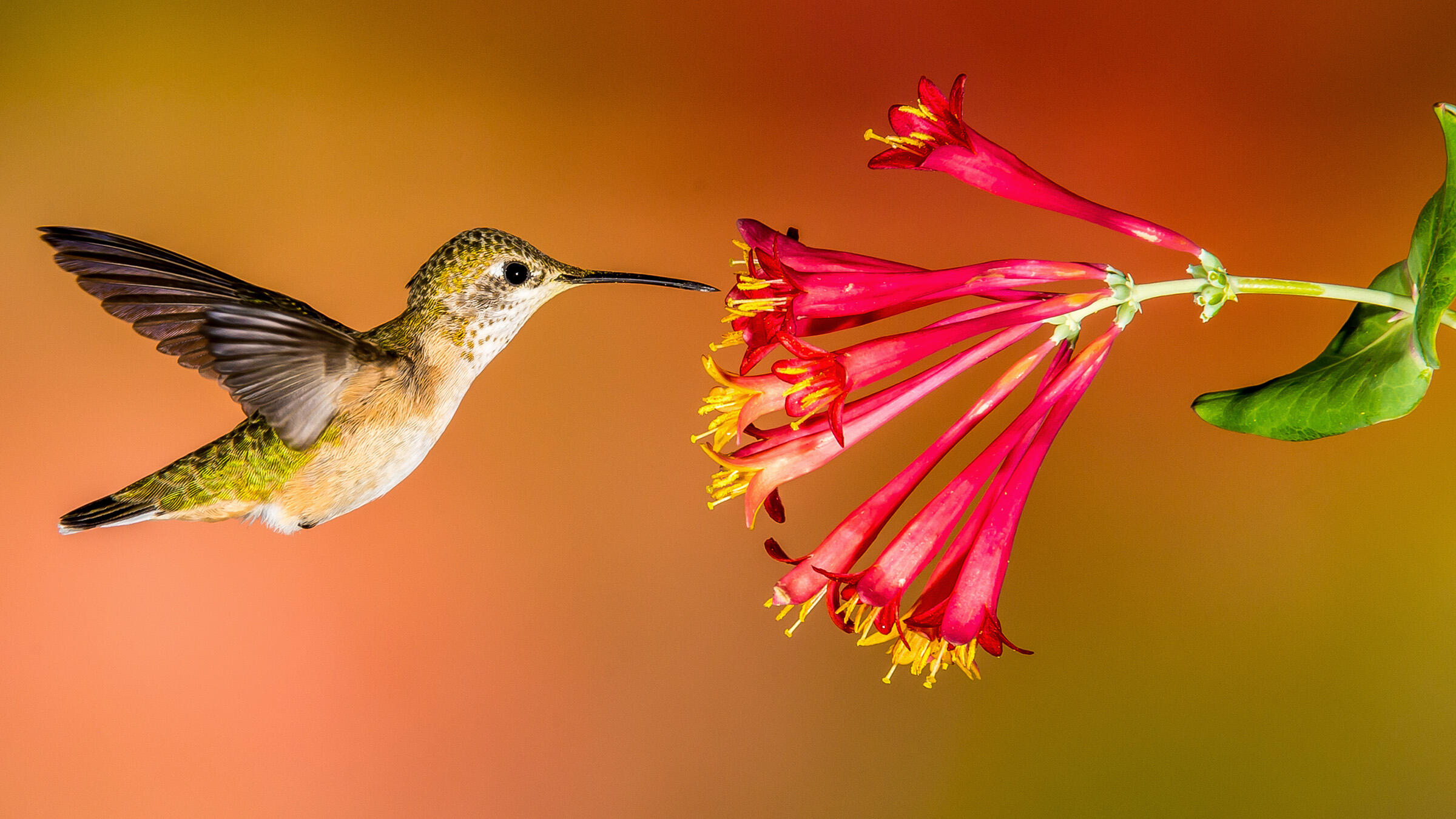
Hummingbirds must eat almost continuously to maintain their high energy needs. For example, their wings beat more than 3,000 times per minute.

Therefore, hummingbird muscle cells must have a large number of

Asemmisa {{asɛmmisaAhyɛnsode}}
29.

Responsible for synthesizing (making) proteins in both Eukaryotic and Prokaryotic Cells.

Asemmisa {{asɛmmisaAhyɛnsode}}
30.

Holds the DNA in Eukaryotic Cells.

Asemmisa {{asɛmmisaAhyɛnsode}}
31.

Breaks down glucose (food) into ATP (energy) to power Eukaryotic Cells.

Asemmisa {{asɛmmisaAhyɛnsode}}
32.

Uses sunlight (energy) to make glucose (food) for Plant Cells.

Asemmisa {{asɛmmisaAhyɛnsode}}
33.

Which cell components could be observed in a prepared slide of leaf cells but not in prepared slides of human cheek cells?

Asemmisa {{asɛmmisaAhyɛnsode}}
34.

When mammals get an infection, their body temperature often rises 2-3 degrees. The body gets the energy it needs to react to an infection by –

Asemmisa {{asɛmmisaAhyɛnsode}}
35.

Match the similarities and differences between prokaryotic and eukaryotic cells

Mmuae Afoforo a Wobɛpaw:
has DNA
smaller (1-5 um)
bacterial cells
ribosomes present
animal cells
larger (10-100 um)
plant cells
Asemmisa {{asɛmmisaAhyɛnsode}}
36.

Match the similarities and differences between prokaryotic and eukaryotic cells

Mmuae Afoforo a Wobɛpaw:
evolutionarily older type of cell
can have a cell wall
undergoes mitosis/meiosis to make new cells
has cytoplasm
has a nucleoid (condensed circular DNA)
has linear DNA in a nucleus
Asemmisa {{asɛmmisaAhyɛnsode}}
37.

Match the similarities and differences between prokaryotic and eukaryotic cells

Mmuae Afoforo a Wobɛpaw:
has plasma membrane
reproduces by binary fission
membrane-bound organelles
no membrane bound organelles
multicellular
unicellular
Asemmisa {{asɛmmisaAhyɛnsode}}
38.

Differentiating between prokaryotic and eukaryotic cells

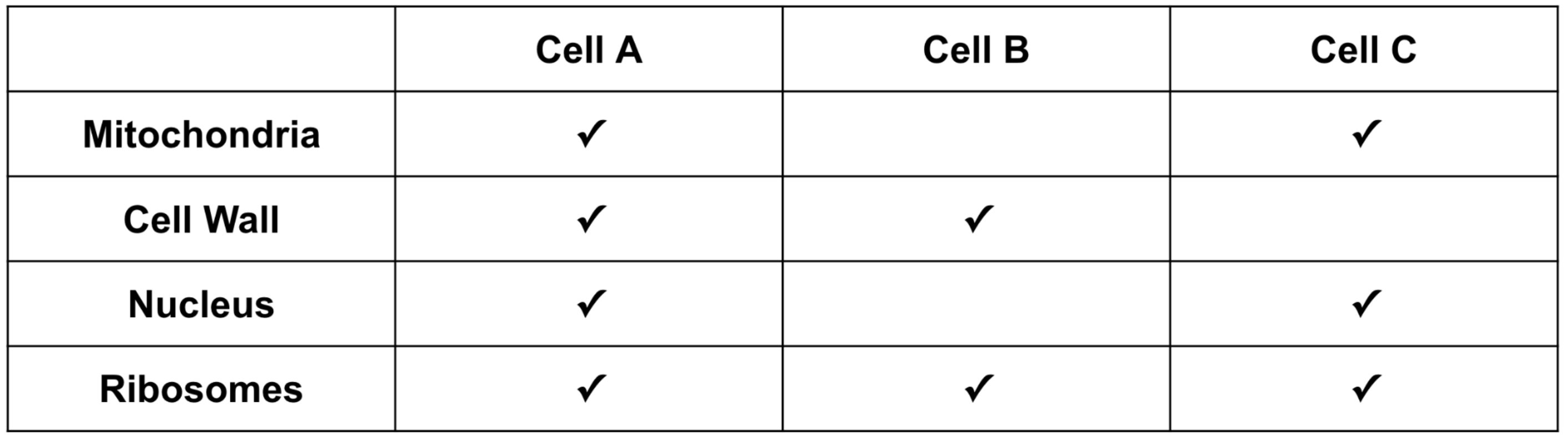
Some students used information they gathered from lab investigations to prepare a table. They entered the table in their lab notebooks.

Which of these correctly identifies the two cells described in the table above?

Asemmisa {{asɛmmisaAhyɛnsode}}
39.

Differentiating between prokaryotic and eukaryotic cells

Students created note cards comparing characteristics of eukaryotic and prokaryotic cells.

Which set of note cards most accurately compares these cells?

Asemmisa {{asɛmmisaAhyɛnsode}}
40.

Differentiating between prokaryotic and eukaryotic cells

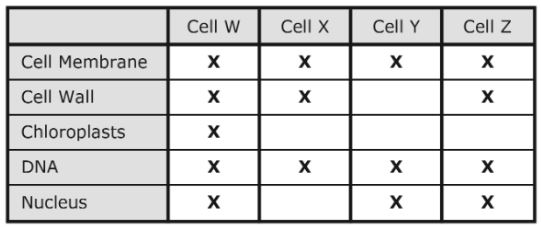
Based on the information in the table below, which of the cell(s) would be classified as EUKARYOTIC?

Select TWO correct answers.

Asemmisa {{asɛmmisaAhyɛnsode}}
41.

Differentiating between plant and animal cell.

Below is a table demonstrating the difference between a plant cell and an animal cell.

Move ONE correct answer to each box.

Mmuae Afoforo a Wobɛpaw:
Prokaryote
Animal Cell
Plant Cell
Asemmisa {{asɛmmisaAhyɛnsode}}
42.

Explain you answer above.

Asemmisa {{asɛmmisaAhyɛnsode}}
43.

Differentiating between plant and animal cell.

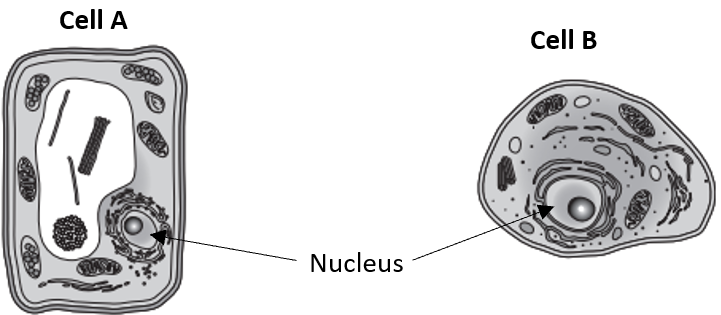
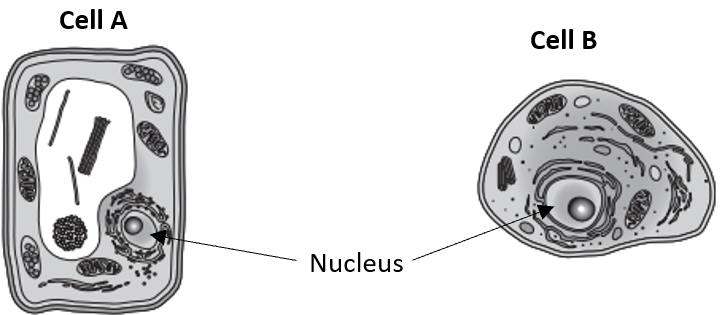
Below are two cells observed under a microscope. What is the difference between Cell A and Cell B?

Asemmisa {{asɛmmisaAhyɛnsode}}
44.

Differentiating between plant and animal cell.

Below are two cells observed under a microscope.

What do Cell A and Cell B have in common? (What similarities do they share?)

Asemmisa {{asɛmmisaAhyɛnsode}}
45.

What is a similarity shared by Cell A and Cell B?

Asemmisa {{asɛmmisaAhyɛnsode}}
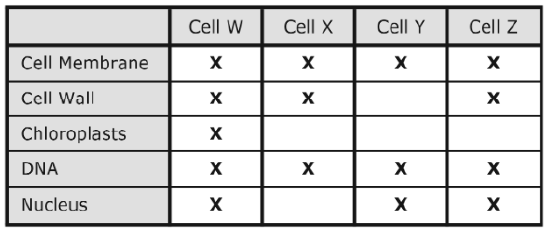
46.

Students use a microscope to look for structures present in four different cells. The students placed and X for each structure that was viewed for each cell on the table shown.

Which cell that was viewed is most likely a prokaryote?

Asemmisa {{asɛmmisaAhyɛnsode}}
47.

Students use a microscope to look for structures present in four different cells. The students placed an "X" for each structure that was viewed for each cell on the table shown below.

Which cell is most likely a PROKARYOTE?

Asemmisa {{asɛmmisaAhyɛnsode}}
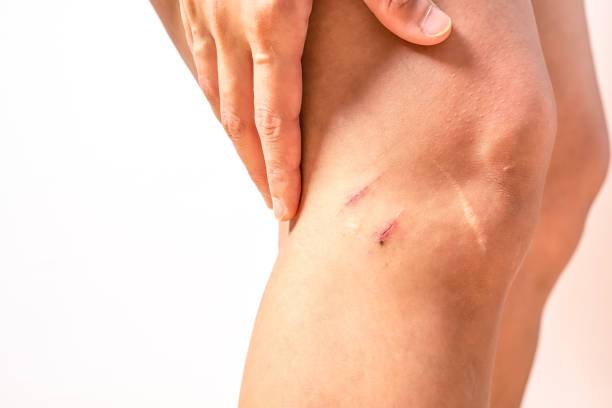
48.

During a school pep rally, Zach tripped and scraped his knee. His body starts the process of making new skin cells to replace the damaged skin cells.

Which cell organelle synthesizes the proteins to form the new skin cells?

Asemmisa {{asɛmmisaAhyɛnsode}}
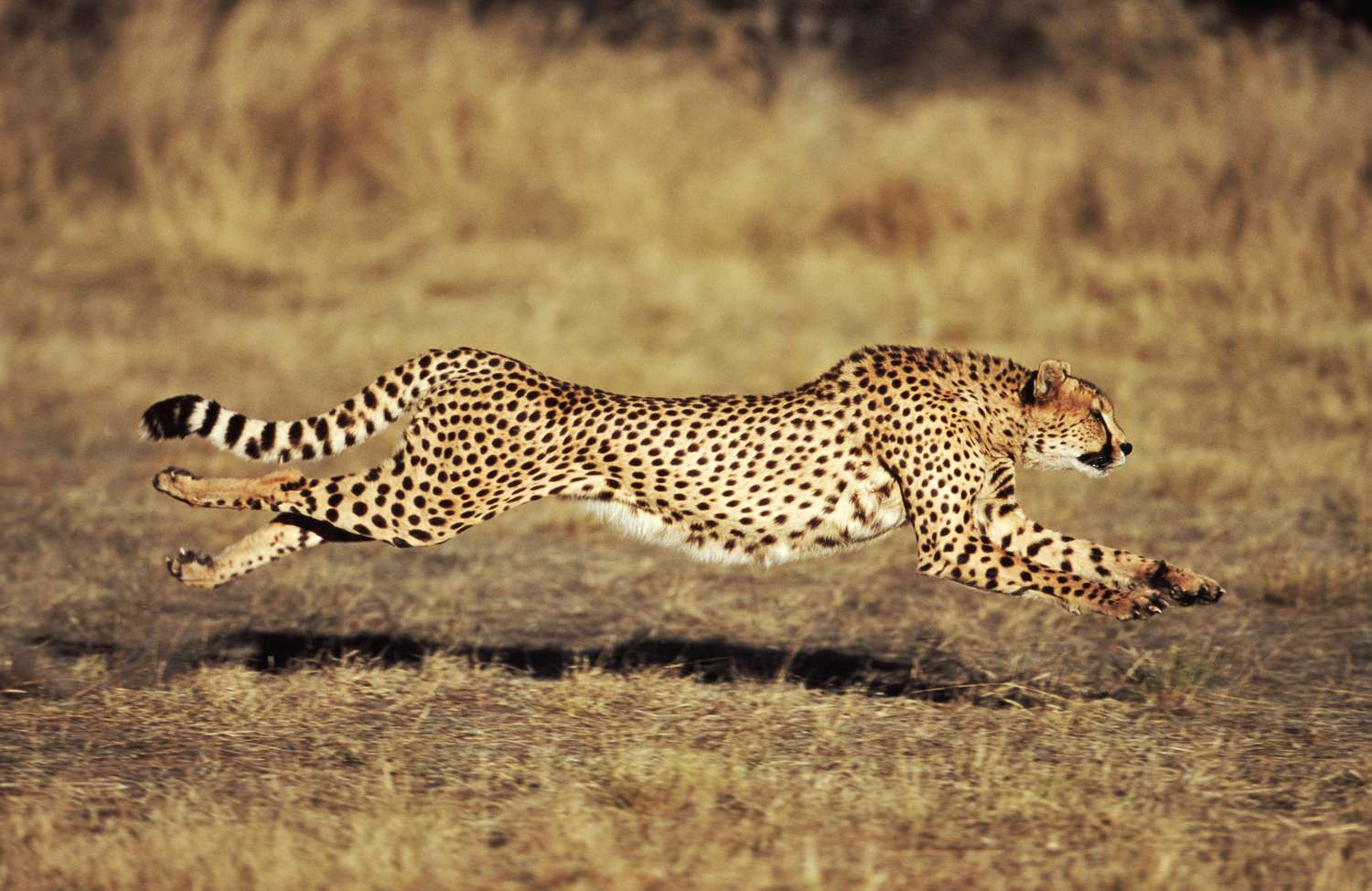
49.

Cheetahs run at speeds up to 70 miles per hour! These consumers eat to provide their bodies with high amounts of energy needed to run at these high speeds.

The leg muscles of cheetahs must have a large number of which organelle to provide them with the energy they need?

Asemmisa {{asɛmmisaAhyɛnsode}}
50.

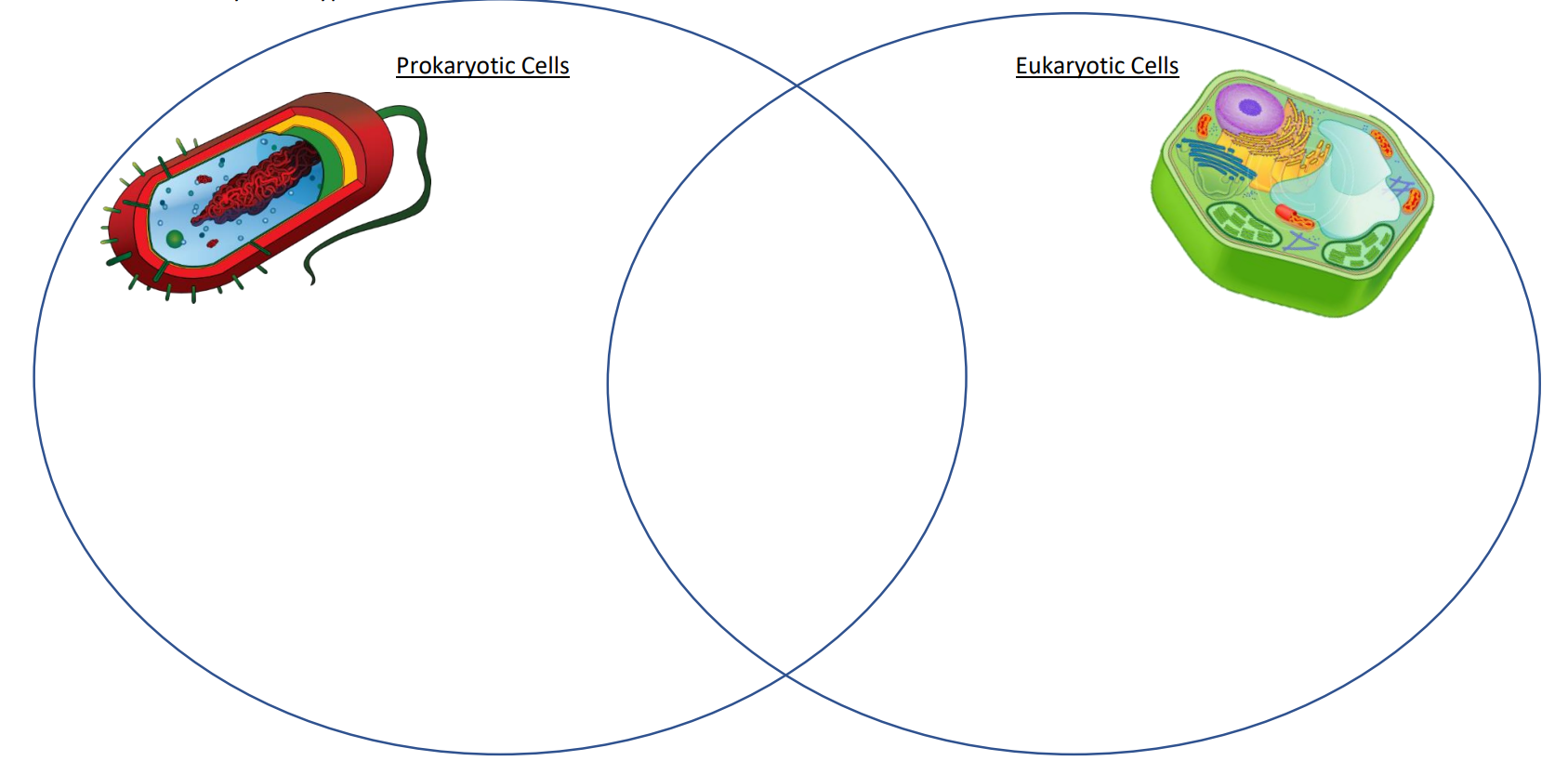
Prokaryote or Eukaryote?

Membrane-bound organelles

Asemmisa {{asɛmmisaAhyɛnsode}}
51.

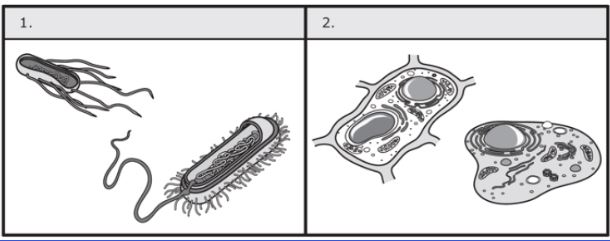
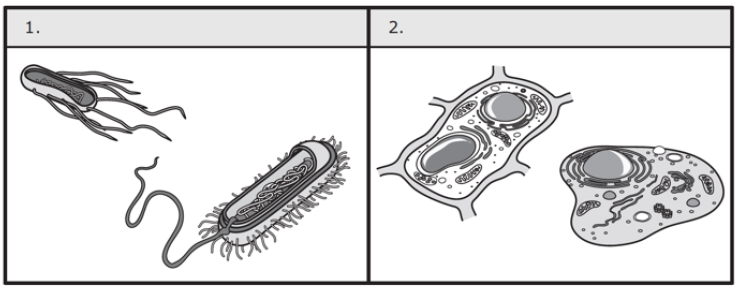
Which cells are eukaryotic?

Asemmisa {{asɛmmisaAhyɛnsode}}
52.

Which is the plant cell?

Asemmisa {{asɛmmisaAhyɛnsode}}
53.

Which is the prokaryote?

Asemmisa {{asɛmmisaAhyɛnsode}}
54.

Stores excess food, water, waste, and enzymes

Asemmisa {{asɛmmisaAhyɛnsode}}
55.

Packages and exports proteins

Asemmisa {{asɛmmisaAhyɛnsode}}
56.

Second layer of support and protection in plant cells

Asemmisa {{asɛmmisaAhyɛnsode}}
57.

Maintains homeostasis by controlling what goes in/out

Asemmisa {{asɛmmisaAhyɛnsode}}
58.

Synthesizes (makes) protein

Asemmisa {{asɛmmisaAhyɛnsode}}
59.

Uses sunlight to create glucose (food) for the cell

Asemmisa {{asɛmmisaAhyɛnsode}}
60.

Holds and protects the DNA in eukaryotic cells

Asemmisa {{asɛmmisaAhyɛnsode}}
61.

Controls what goes in and out of the cell

Asemmisa {{asɛmmisaAhyɛnsode}}
62.

Synthesizes proteins in prokaryotes and eukaryotes

Asemmisa {{asɛmmisaAhyɛnsode}}
63.

Gives structure to plant and bacteria cells

Asemmisa {{asɛmmisaAhyɛnsode}}
64.

Where photosynthesis takes place

Asemmisa {{asɛmmisaAhyɛnsode}}
65.

Converts food into ATP for the cell

Asemmisa {{asɛmmisaAhyɛnsode}}
66.

Contains genetic information

Asemmisa {{asɛmmisaAhyɛnsode}}
67.