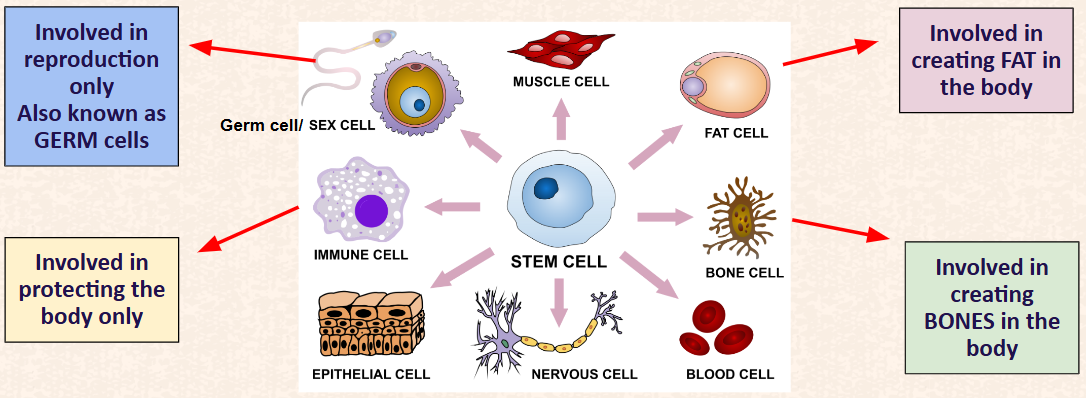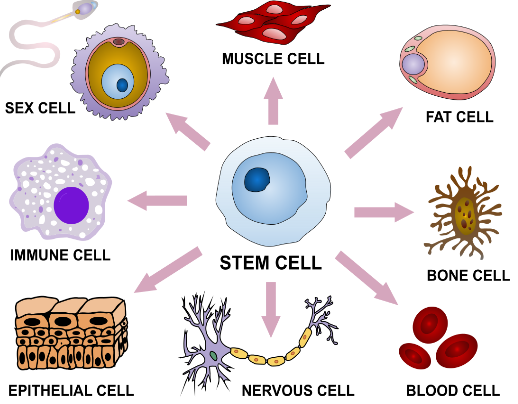
Cell differentiation is a process of converting cells in the body into .
Cell differentiation is a process of converting cells in the body into .
Specialized cells are cells that perform a within the body.
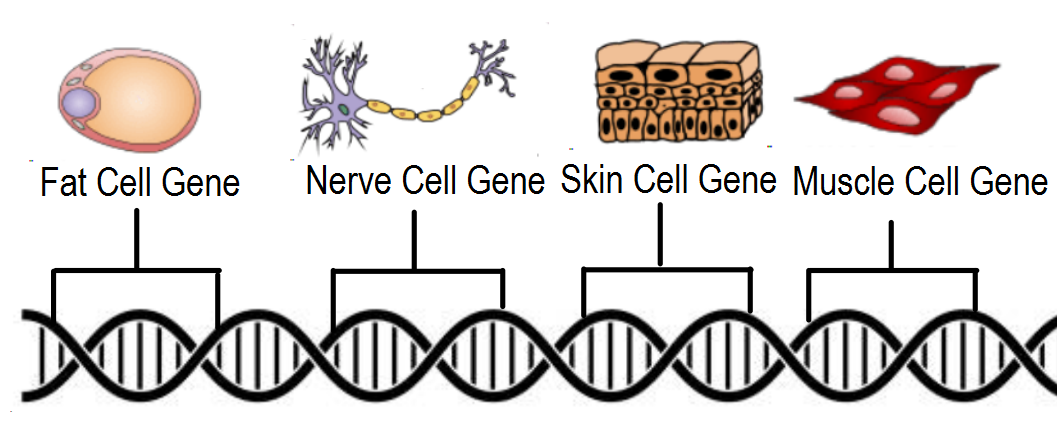
Each of our cells contains the entire genetic sequence.
However, only _________________ of the code are expressed to form different types of cells.
| Draggable emne | arrow_right_alt | Korresponderende emne |
|---|---|---|
Adult Development Stage | arrow_right_alt | This is when an embryo is forming and creating different cell types for the first time |
The Embryonic Development Stage | arrow_right_alt | The stem cells change due to genetic and environmental factors ie. temperature, sex, drugs/chemicals, enzymes. |
All cells can perform all functions and these are called stem cells.
What factors can influence how cells become specialized?
Toxins
Temperature
Viruses
Diet/Nutrients
Hormones
Chemicals
Drugs
Internal cell signals
Internal Factors
External Factors
What happens to stem cells when they are grown in a cooler environment?
A researcher is studying genetic factors in the development of nerve cells. He finds that when a certain gene is turned off, the cells fail to develop into functional nerve cells and instead remain undifferentiated.
Which of these best explains why the cells did not develop into functional nerve cells?
In an experiment, a group of developing cells is exposed to different concentrations of a hormone. The cells exposed to a higher concentration start to form liver tissue, while those exposed to a lower concentration become skin cells.
Which of these best explains how hormones contribute to cell differentiation?
In an experiment, scientists expose developing frog embryos to different temperatures. They find that embryos kept at a cooler temperature develop into males, while those at a warmer temperature develop into females.
How does temperature impact the developing frog embryos?
Researchers expose a developing turtle embryo to low levels of a chemical pollutant. They observe that the affected cells show abnormal patterns of differentiation, leading to malformed tissues. Embryos not exposed to the pollutant develop normally.
Which of these best explains why embryos exposed to chemical pollutants do not form properly?
A group of human cells is exposed to a virus that integrates its genetic material into the host cells' DNA. As a result, the infected cells show altered (changed) gene expression, leading to unexpected differentiation patterns compared to uninfected cells.
How do viruses affect infected cells?
Scientists investigate how certain drugs impact cell specialization by treating developing nerve cells with a medication designed to reduce inflammation. They observe that the treated cells show delayed and incomplete differentiation compared to untreated cells, which develop normally.
Why do the treated cells function differently than the non-treated cells?
When a stem cell divides, it produces two daughter cells. One daughter cell will remain a stem cell, while the other daughter cell will differentiate into a specialized cell.
Which factor will most likely determine what type of specialized cell will be produced?
Where are the stem cells located?
What is the function of the molecules released by specialized blood cells surrounding a stem cell?
What does a stem cell in the bone marrow become after it starts expressing certain genes?
What triggers a stem cell to start specializing into a particular type of cell?
What type of external factor is causing the stem cell to differentiate in this case?
What changes occur in stem cells when the temperature is slightly raised?
Which factor is influencing the differentiation of cells in this experiment?