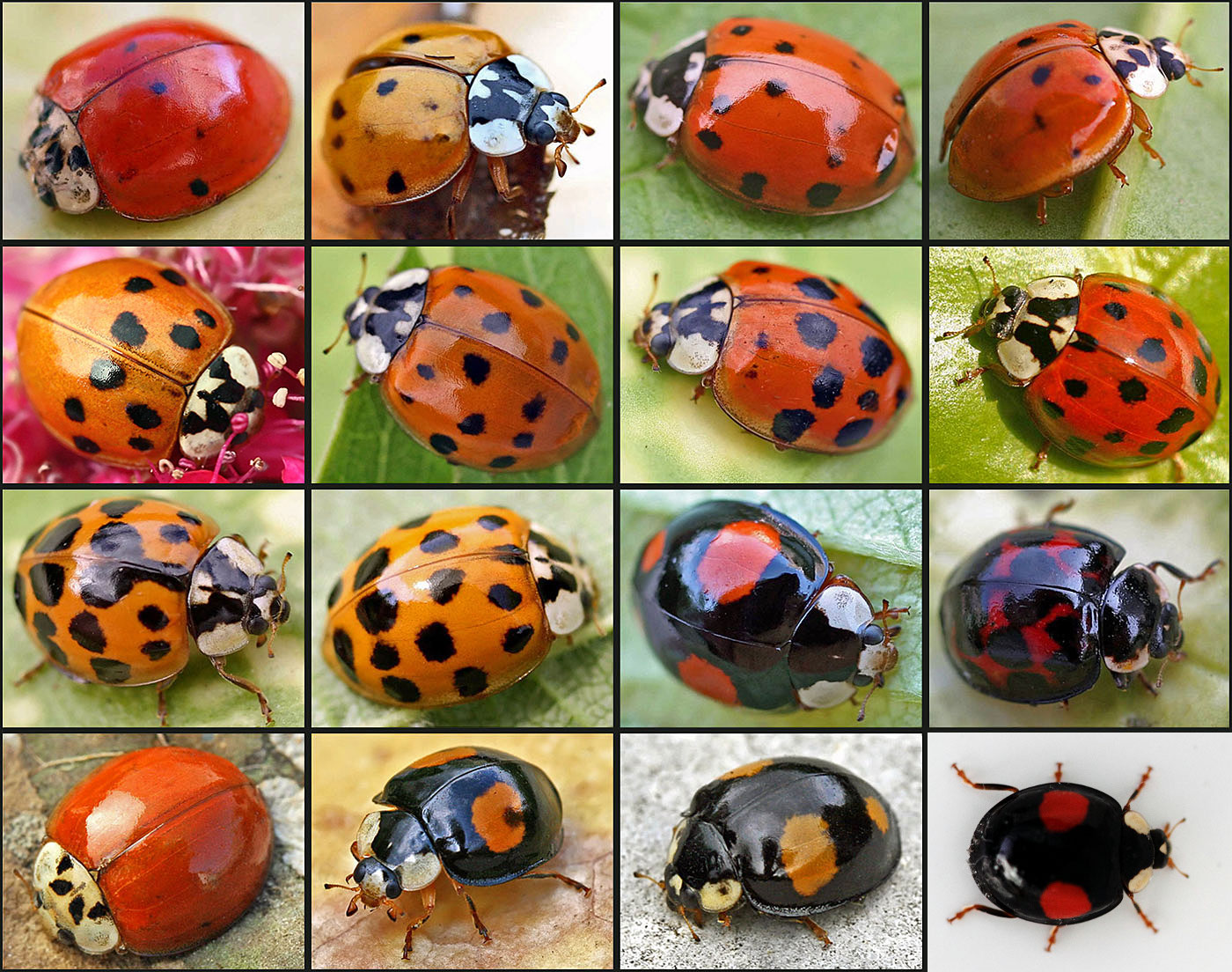
In every population, there are differences among each individual. For example, in a population of lady bugs, each individual lady bug has its own spot pattern. This is referred to as .
In every population, there are differences among each individual. For example, in a population of lady bugs, each individual lady bug has its own spot pattern. This is referred to as .
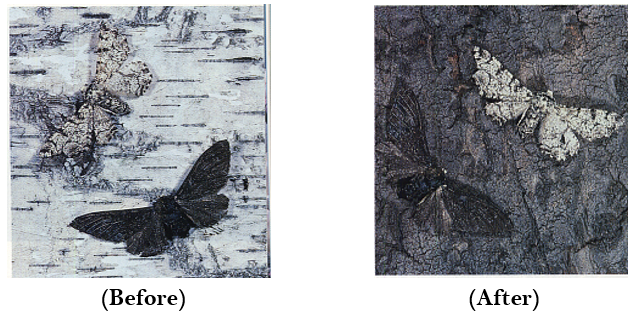
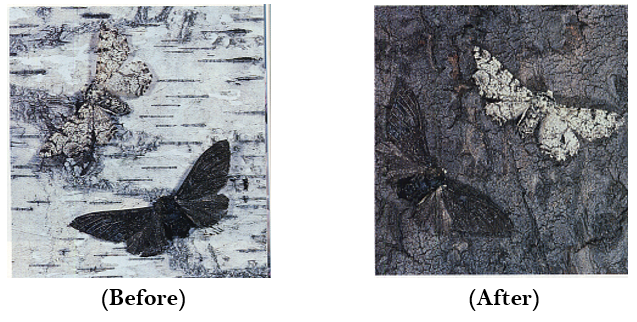
READ THIS: The picture (below) shows what the environment was like both before and after the Industrial Revolution. Industrialization in England produced black soot (powder) that covered many tree trunks and branches. At about the same time, the number of light-colored moths in this part of the country began to decrease over time.
Why did this change within the moth population occur over time?
READ THIS: The picture (below) shows what the environment was like both before and after the Industrial Revolution. Industrialization in England produced black soot (powder) that covered many tree trunks and branches. At about the same time, the number of light-colored moths in this part of the country began to decrease over time.
Over time, Natural Selection caused a change in the moth population metioned in the scenario above. Which of the following most likely occurred as the result of Natural Selection?
Adaptations that result from Natural Selection are expected to increase the fitness of an organism. In terms of Natural Selection, which of the following best describes fitness?
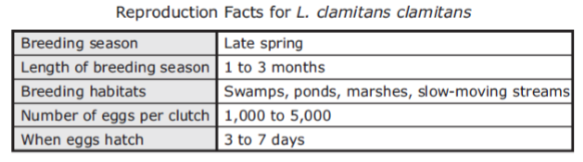
The green frog (Lithobates clamitans clamitans) is found in many parts of the United States. The table below contains some information about this frog.
Why does the ability to lay 1,000 to 5,000 eggs increase the fitness of the species of L. clamitans clamitans?
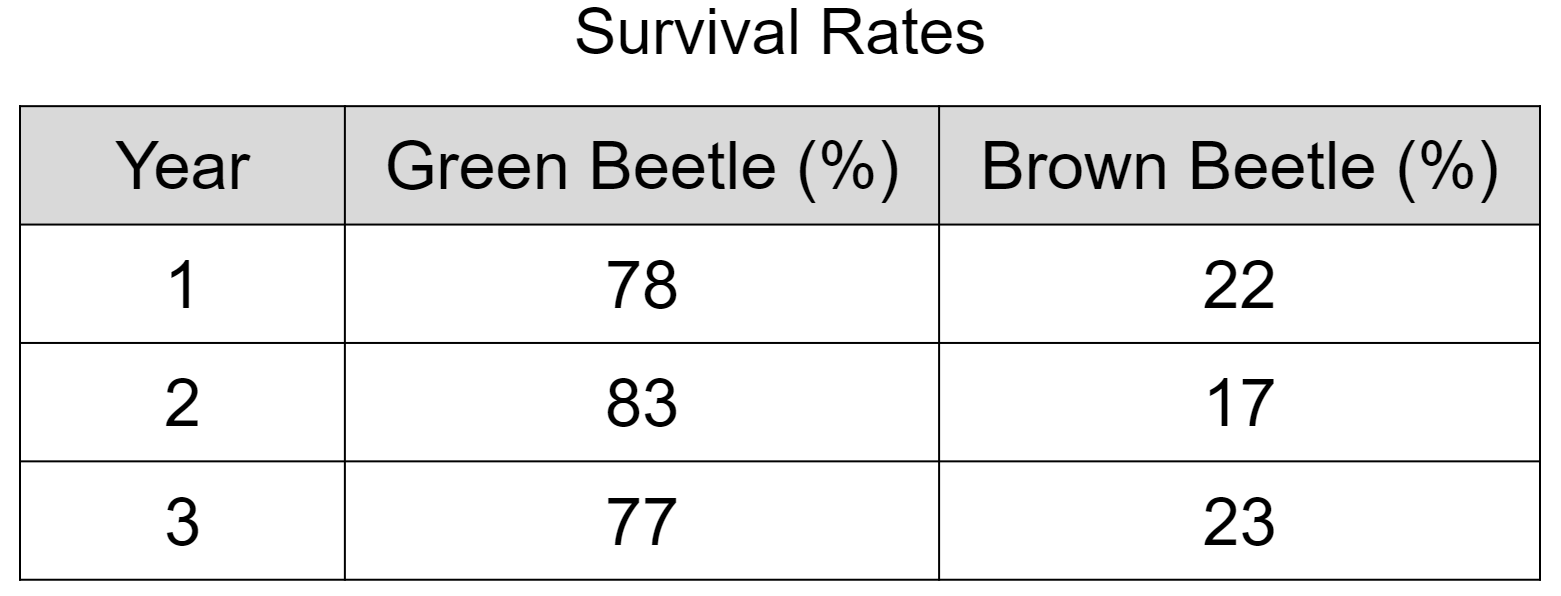
The table (below) shows the survival rate of two types of beetles in the same environment over a period of three years.
Which statements about the beetles in this environment is best supported by the data?
Select TWO correct answers:
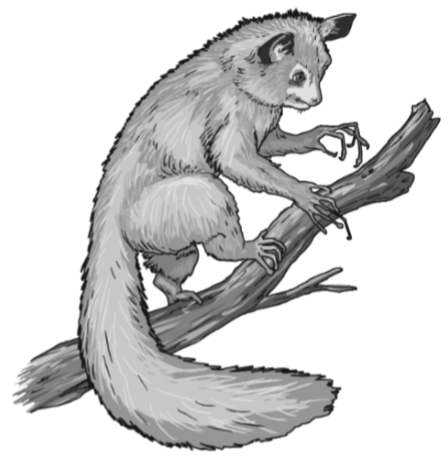
The aye-aye lemur is a mammal that feeds mostly on insect larvae that live inside trees. The aye-aye lemur has a specialized middle finger that is long and thin. The aye-aye lemur moves along a tree branch and taps the branch with its specialized finger. When the aye-aye lemur hears a difference in echo, it will tear open the bark with its teeth until the insect tunnel is exposed (visible). The aye-aye lemur then uses its specialized finger to reach the insect larvae and remove it.
Which selective pressure most likely resulted in the development of the aye-aye lemur's special adaptation?
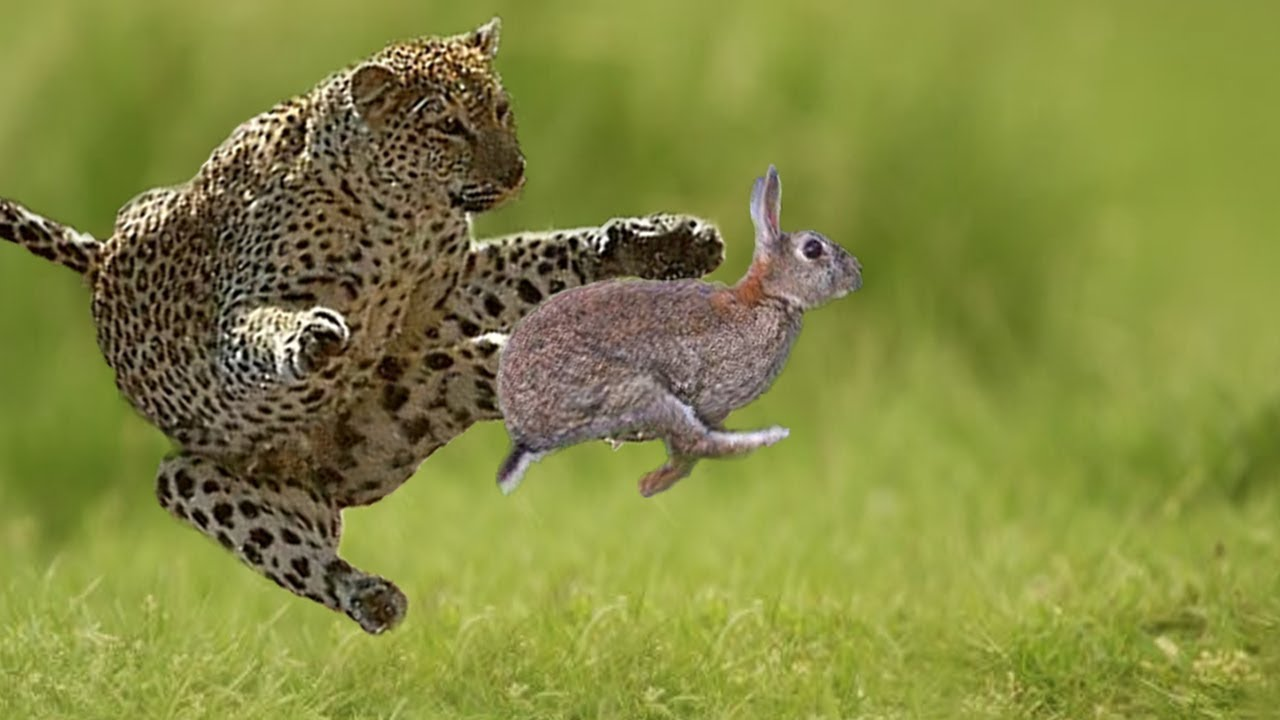
A new predator of rabbits has been introduced within an ecosystem. This new predator runs faster than the native predators of rabbits.
Which statement describes what will most likely occur in the rabbit population due to the introduction of the new predator?
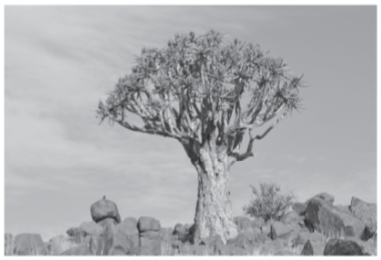
The quiver tree grows in desert areas in southern Africa. In recent decades, average temperatures have been rising in southern Africa. Scientists predict that this warming trend will continue. Quiver trees in the hottest parts of their range near the equator are dying, but quiver trees at high elevations, or in parts of the range that are farther from the equator where it is cooler are growing and reproducing.
Which of these best explains what is happening to the quiver tree population in southern Africa?
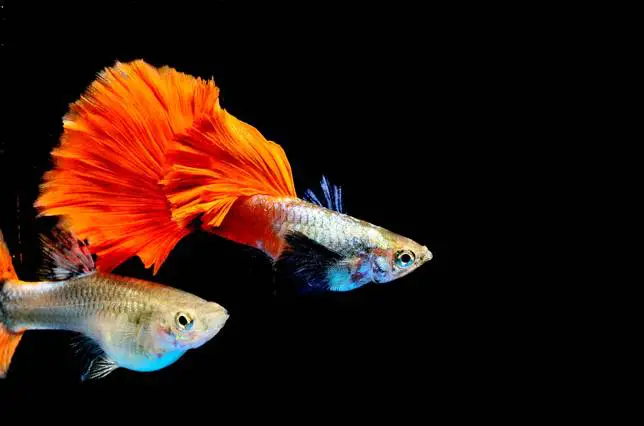
Guppies that live in an area without predators are colorful. Guppies that live in an area with predators are not colorful.
The predators in an area die because of disease.
Which of these is most likely to happen to the guppy population in this area over time?
Complete the following statement with the options provided below:
There will be in the number of colorful guppies because due to disease.
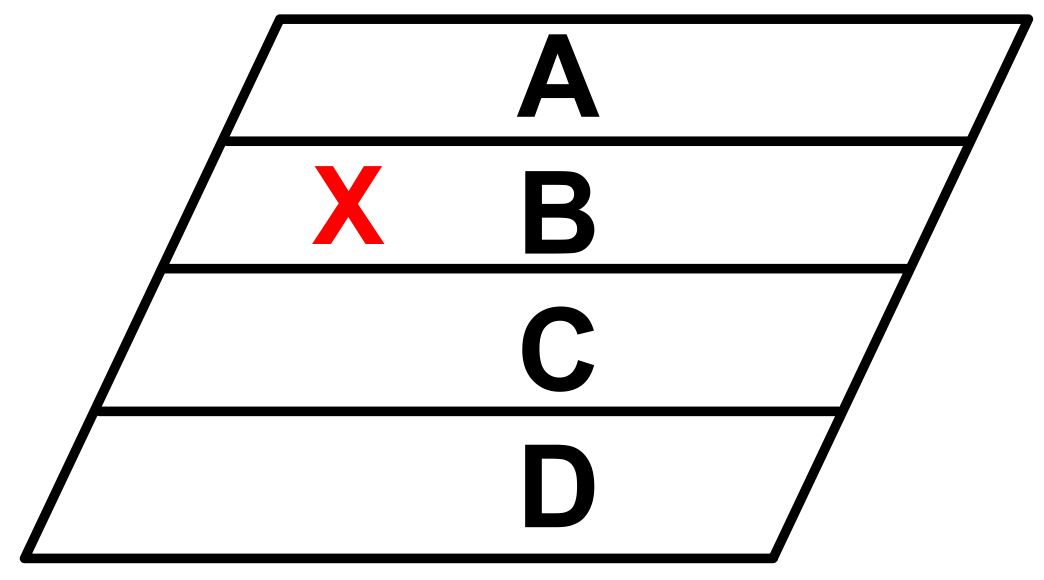
If "X" indicates the location of a fossil, select the layer in which you would find its most recent common ancestor on the diagram below.
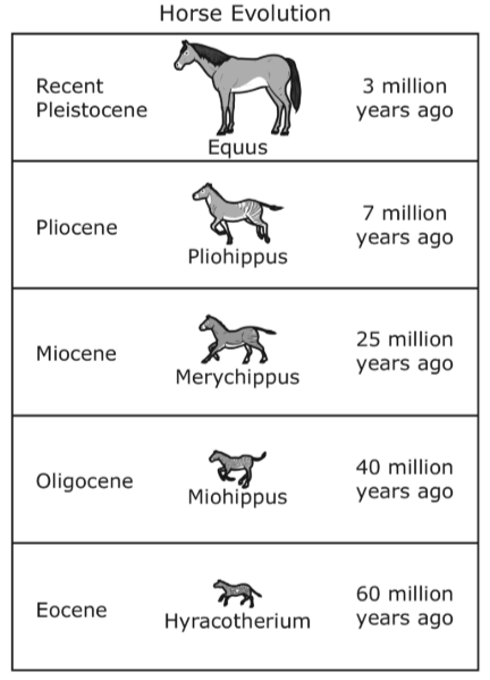
The diagram (below) shows data on the evolution of horses.
The data in the diagram is evidence that...
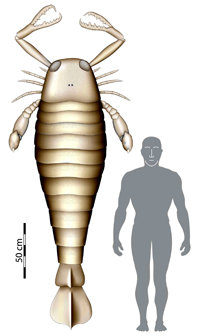
After examining the fossil record, scientists have determined that scorpions today are much smaller than their extinct ancestors. For example, Jaekelopterus rhenaniae, a giant scorpion species that lived 255 million to 460 million years ago, was 2.5 meters (over 8 feet) long!
Which of the following conclusions is supported by this information?
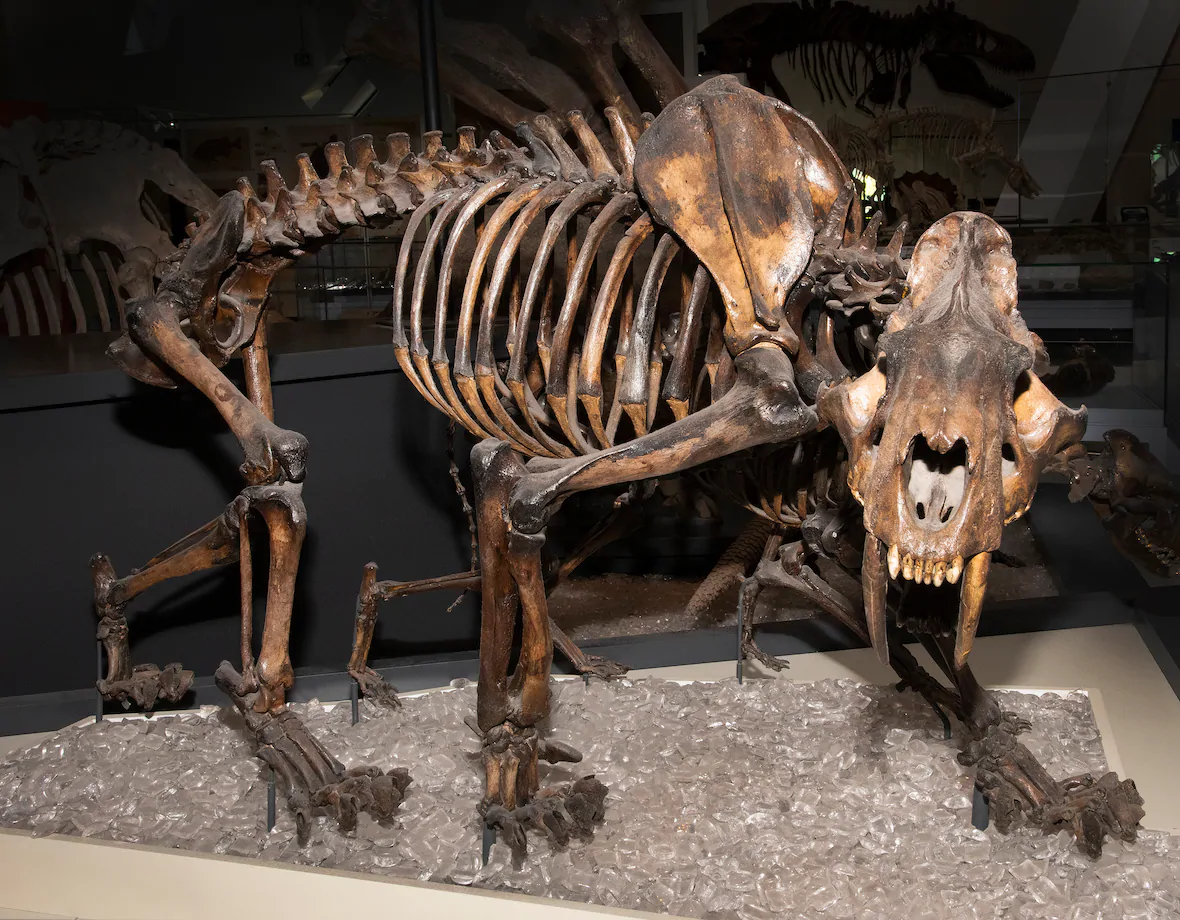
In 2010, scientists excavated (to dig with a shovel) a skull fossil that provides evidence of a newly discovered species of big cat. Based on the evidence, scientists hypothesized that big cats branched off from smaller wild cats about 6 million years ago.
Which of these resources did the scientists most likely rely on to form their hypothesis?
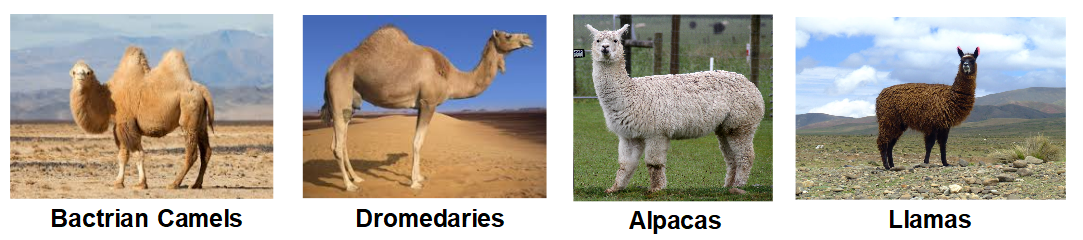
Bactrian camals, dromedaries, llamas, and alpacas are all members of the same taxonomic family, Camelidae. Members of this family all have two toes, no hooves, true canine teeth, and a split upper lip. The family Camelidae originated in North America.
The physical features of animals in this family and the family's geographical origin provide evidence that all of these animals...
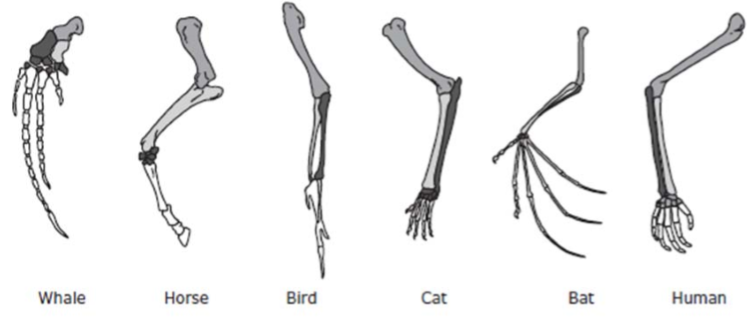
The limbs of several different organisms are shown in the illustration below. Scientists sometimes compare the limbs of these organisms to look for evidence of common ancestry.
These limbs provide evidence of common ancestry, because they...
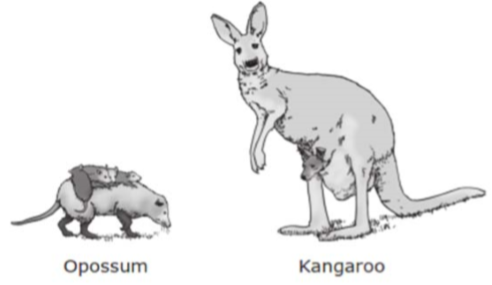
The opossum, which is native to North America, and the kangaroo, which is native to Australia, are marsupials.
The fact that both of these mammals incubate (keep warm) their immature offspring (babies) in a pouch provides evidence that they...
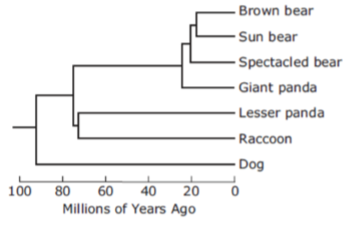
An analysis of DNA and RNA sequences can be used to classify organisms. A dendrogram, such as the one shown below, is based on moleculer data. It can be used to represent evolutionary relationships within a group of organisms that are hypothesized to have descended (come) from a common ancestor.
Which statement is best supported by the information in this dendrogram?
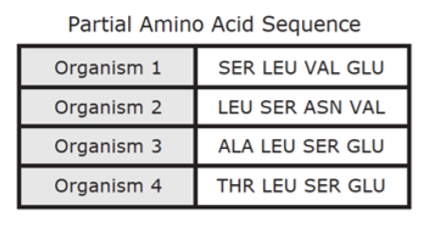
Scientists can determine relatedness among organisms by comparing partial amino acid sequences. The table (below) shows four partial amino acid sequences from four different organisms.
Which organism is the LEAST related to the other three organisms?
Select your answer on the diagram below:
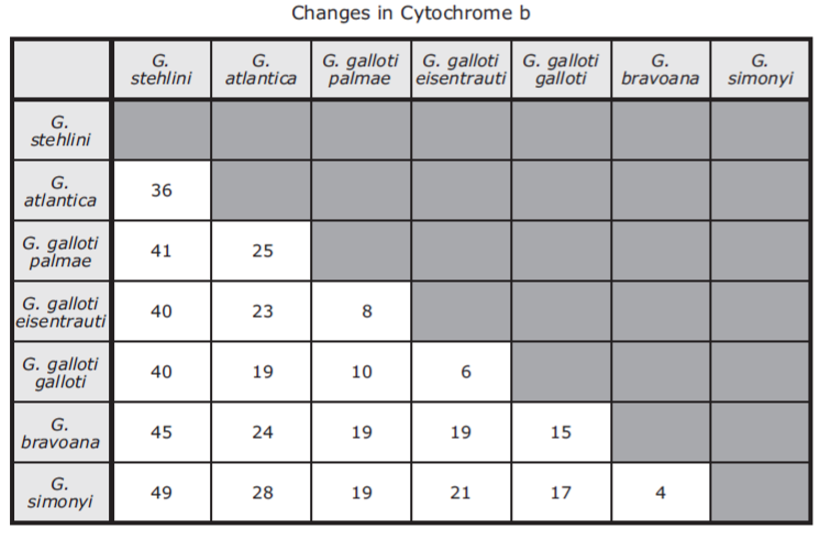
READ THIS: Researchers studying populations of lizards from the genus Gallotia on the Canary Islands compared the protein "cytochrome b" (a really important protein that you need to survive) in different populations. The table (below) shows the number of DIFFERENCES in the cytochrome b protein between different populations.
Which conclusion about the relatedness of the lizards does this data support?
** The table shows DIFFERENCES!**
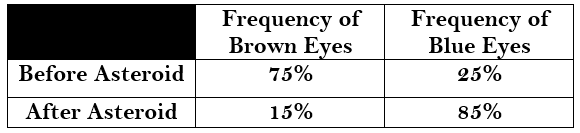
In the town of “Darwinville”, there are both brown and blue-eyed individuals. Recently, an asteroid from outer space collided with a section of the town, resulting in a high number of deaths within the population. Over time, the frequency of brown-eyed and blue-eyed individuals changed, as shown in the data table below:
The change in eye color that occurred within the human population of Darwinville is an example of…
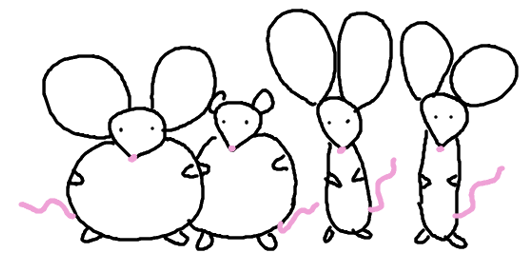
READ THIS: On “Isla Vanderpool”, a small island off the coast of South America, there exists a population of mice that have no known predators. Within the population of mice, there is variation. Some mice are fat, while some mice are skinny. Also, some mice have large ears, while some mice have small ears. Since the mice do not have any predators, both fat and skinny mice are equally “fit” (50% fat, 50% skinny). However, 75% of the population of mice have large ears, while only 25% have small ears. One day, a group of foxes are introduced to the island. The skinny mice are lighter and faster, and thus better able to escape the predatory foxes, while the fat mice are less likely to survive and reproduce. Over time, the majority of the population of mice are skinny and there are no mice with small ears.
The change in body shape (fat vs. skinny) that occurred within the population of mice is an example of…
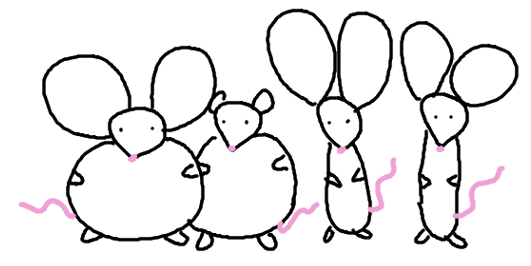
READ THIS: On “Isla Vanderpool”, a small island off the coast of South America, there exists a population of mice that have no known predators. Within the population of mice, there is variation. Some mice are fat, while some mice are skinny. Also, some mice have large ears, while some mice have small ears. Since the mice do not have any predators, both fat and skinny mice are equally “fit” (50% fat, 50% skinny). However, 75% of the population of mice have large ears, while only 25% have small ears. One day, a group of foxes are introduced to the island. The skinny mice are lighter and faster, and thus better able to escape the predatory foxes, while the fat mice are less likely to survive and reproduce. Over time, the majority of the population of mice are skinny and there are no mice with small ears.
The change in ear size (large vs. small) that occurred within the population of mice is an example of…
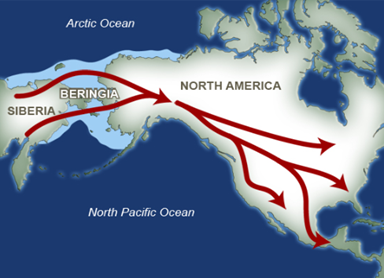
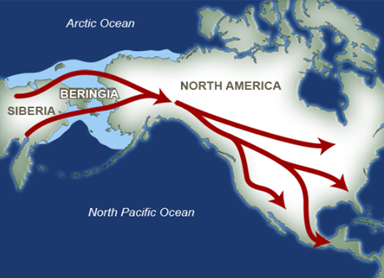
READ THIS: During the last ice age, there existed a frozen land bridge connecting Asia and North America. The existence of this land bridge allowed for many species to migrate to and populate both North and South America. About 10,000 years ago, towards the end of the last ice age, the land bridge thawed as Earth became warmer. This isolated the populations of many species in North America from the populations located in Asia.
What would you expect to happen to the populations of organisms in North American and Asia over time?
READ THIS: During the last ice age, there existed a frozen land bridge connecting Asia and North America. The existence of this land bridge allowed for many species to migrate to and populate both North and South America. About 10,000 years ago, towards the end of the last ice age, the land bridge thawed as Earth became warmer. This isolated the populations of many species in North America from the populations located in Asia.
Humans also migrated over the land bridge with the other organisms during the ice age. 10,000 years ago as the land bridge melted, the populations of humans in Asia and North America were isolated from one another. However, humans have continued to remain the same species. Which of the following scenarios best explains why humans have remained a single species over time?