Twa kɔ nsɛm atitiriw so
Log in
Sign up for FREE
arrow_back
Laabri

Wednesday (02/12) - Speciation and Mechanisms - AAC

star
star
star
star
star
Last updated about 3 hours ago
29 Nsɛmmisa
Natural Selection Scenarios Warm Up
Ɛhia
2
Ɛhia
2
Ɛhia
2
Ɛhia
2
1
Speciation and Mechanisms Practice and Exit
Ɛhia
1
Ɛhia
1
1
Ɛhia
1
Ɛhia
1
Ɛhia
1
Ɛhia
1
Ɛhia
1
Ɛhia
1
Ɛhia
1
Ɛhia
1
Ɛhia
1
Ɛhia
1
1
Ɛhia
1
Ɛhia
1
Ɛhia
1
Ɛhia
1
1
Ɛhia
1
Ɛhia
1
1
1
1
Asemmisa {{asɛmmisaAhyɛnsode}}
1.

The table below describes 3 female mice that live in a sandy beach area. The sand beach is mostly tan in color with scattered plants.
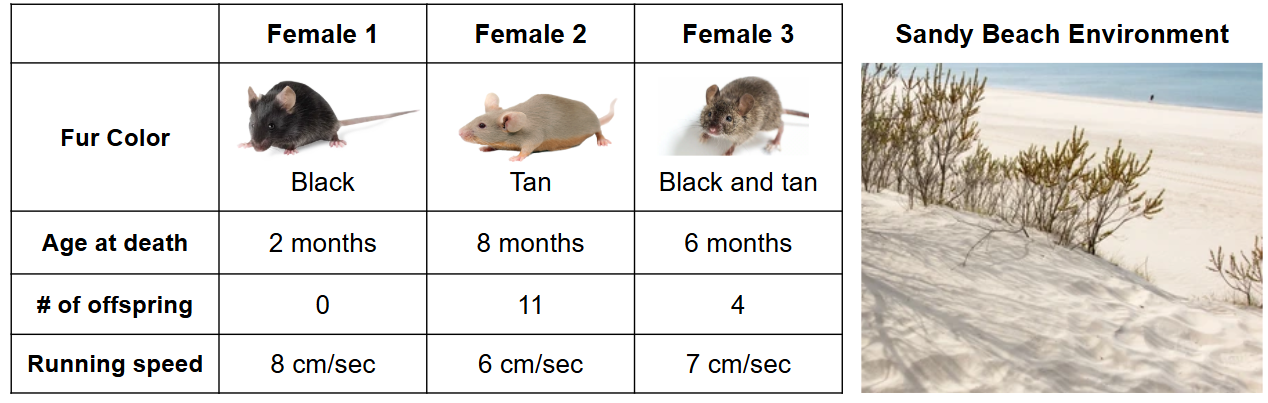
Based on the information in the table, has the most offspring.

The organism who is most fit in this scenario is .

Asemmisa {{asɛmmisaAhyɛnsode}}
2.

Complete the paragraph below using key vocabulary terms:

Organisms who can survive and reproduce are for their environment. Within a population, differences in phenotypes show . These differences the chance of survival for the population. New traits or phenotypes can appear in a population if occur at random.

Mmuae Afoforo a Wobɛpaw:

most fit

least fit

decrease

increase

variation

adaptations

mutations

mitosis

Asemmisa {{asɛmmisaAhyɛnsode}}
3.

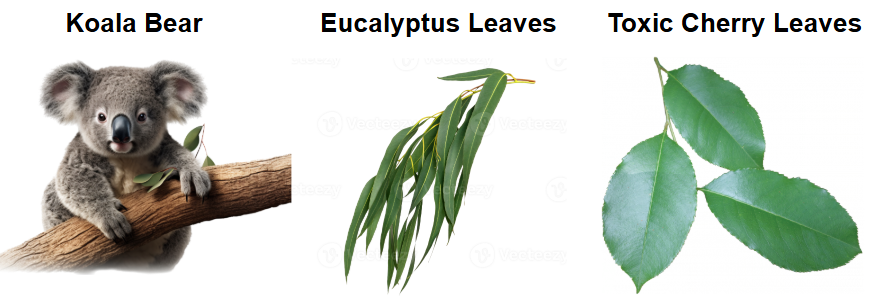
Most koala bears only eat leaves from the eucalyptus tree. However, there is a small percent of koalas that have a mutation that allows them to digest and feed on toxic cherry tree leaves.

The variation in the koala population is .

Asemmisa {{asɛmmisaAhyɛnsode}}
4.

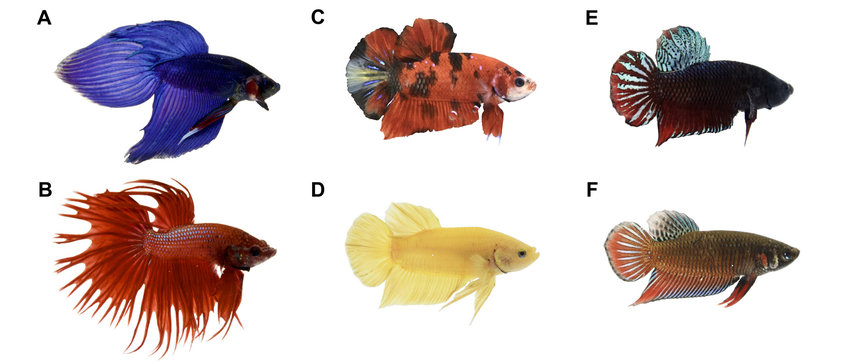
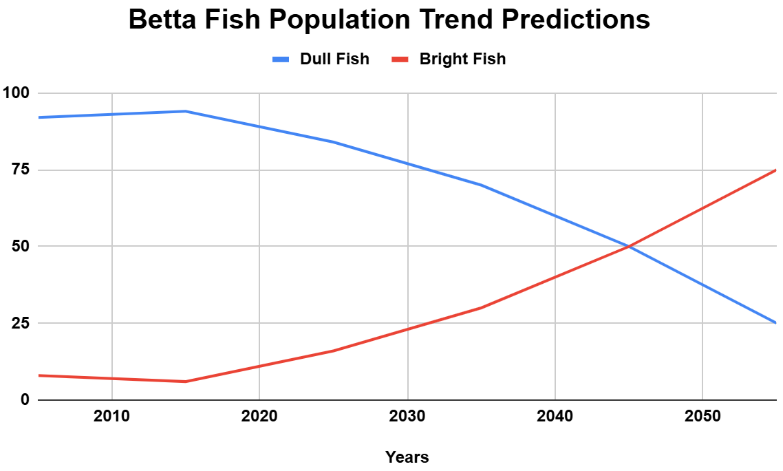
The diagram below shows betta fish which are native to Southeast Asia. The native fish are dull in color to blend into their environment and avoid predators while brightly colored betta fish are successful in attracting mates.

In the wild with many predators, the . This trait is an advantage because it allows the betta fish to .

Asemmisa {{asɛmmisaAhyɛnsode}}
5.

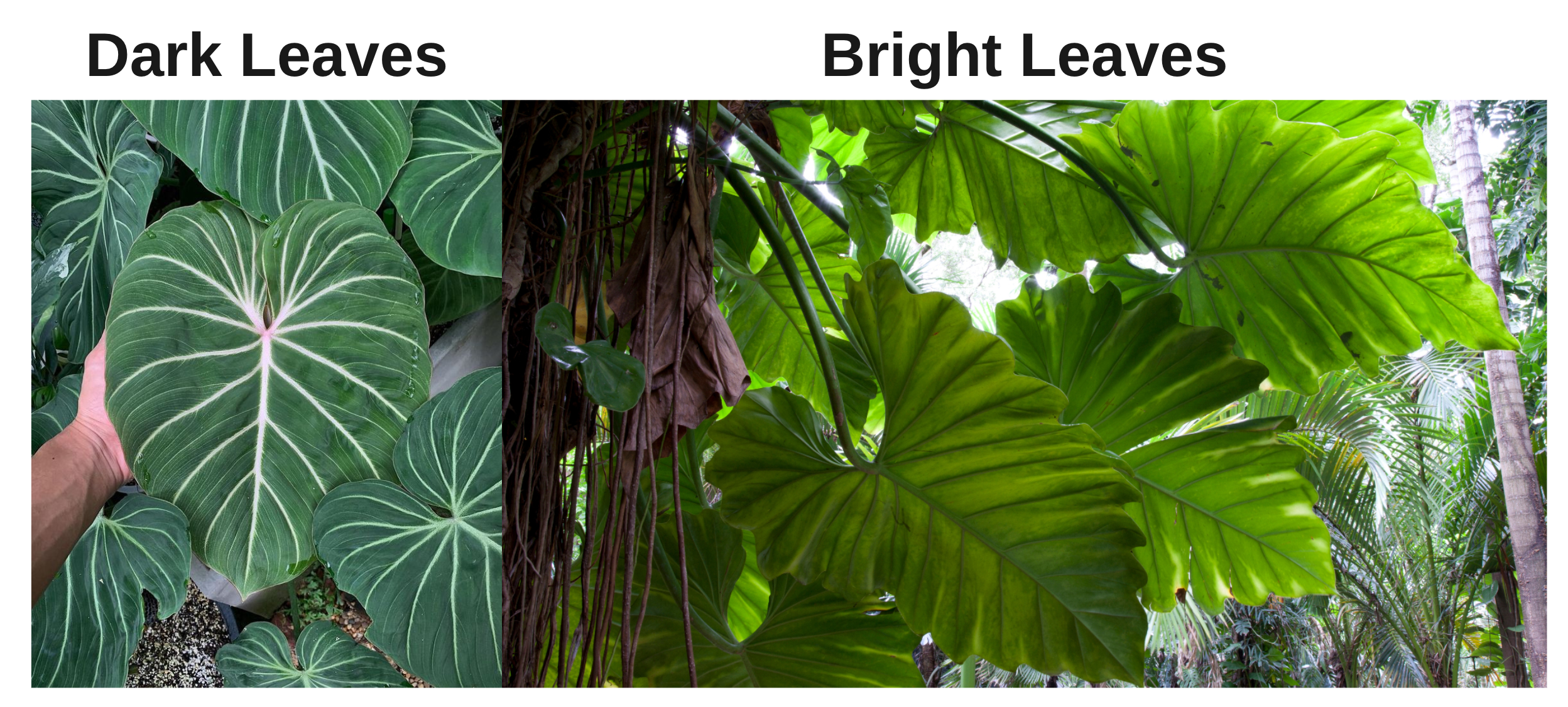
In the Amazon rainforest, tall trees block most of the light from reaching plants that grow on the floor. As a result, many plants on the forest floor have developed adaptations to help them survive with limited sunlight.

Some forest floor leaves are wide/dark in color which helps absorb sunlight for photosynthesis. Others have thinner/lighter leaves which do not absorb as much sunlight.

The variation in the plants on the forest floor is because .

Asemmisa {{asɛmmisaAhyɛnsode}}
6.

African Honeybees are introduced into South American ecosystems. They mate with South American Honeybees and produce a new species of bee.

Which table best represents the mechanism of evolution and the effect on the gene pool of the bees population?

Asemmisa {{asɛmmisaAhyɛnsode}}
7.

A forest fire kills off a large part of the population of squirrels in a forest. Most of the red-tailed squirrels are killed off, leaving mostly white tailed squirrels behind.

Which statement explains the most likely consequence of having low genetic diversity on the squirrel population after the forest fire?

Asemmisa {{asɛmmisaAhyɛnsode}}
8.

In a forest, there are two distinct populations of rabbits: one population has mostly white fur, and the other has mostly brown fur. These populations are separated by a river. After several years, a group of rabbits from the brown-fur population decide to migrate across the river and begins to mate with the white-fur rabbits in the other population.

Which of the following statements best describes the impact of the new distribution of fur color in the rabbit population.

Asemmisa {{asɛmmisaAhyɛnsode}}
9.

Beavers build a dam over a previously un-passable river. This allows deer from one side of the river to mate with deer from the population on the other side of the river, changing the allele frequency in both populations.

The beavers indirectly influenced the evolutionary direction of the deer populations by facilitating in genetic diversity.

Asemmisa {{asɛmmisaAhyɛnsode}}
10.

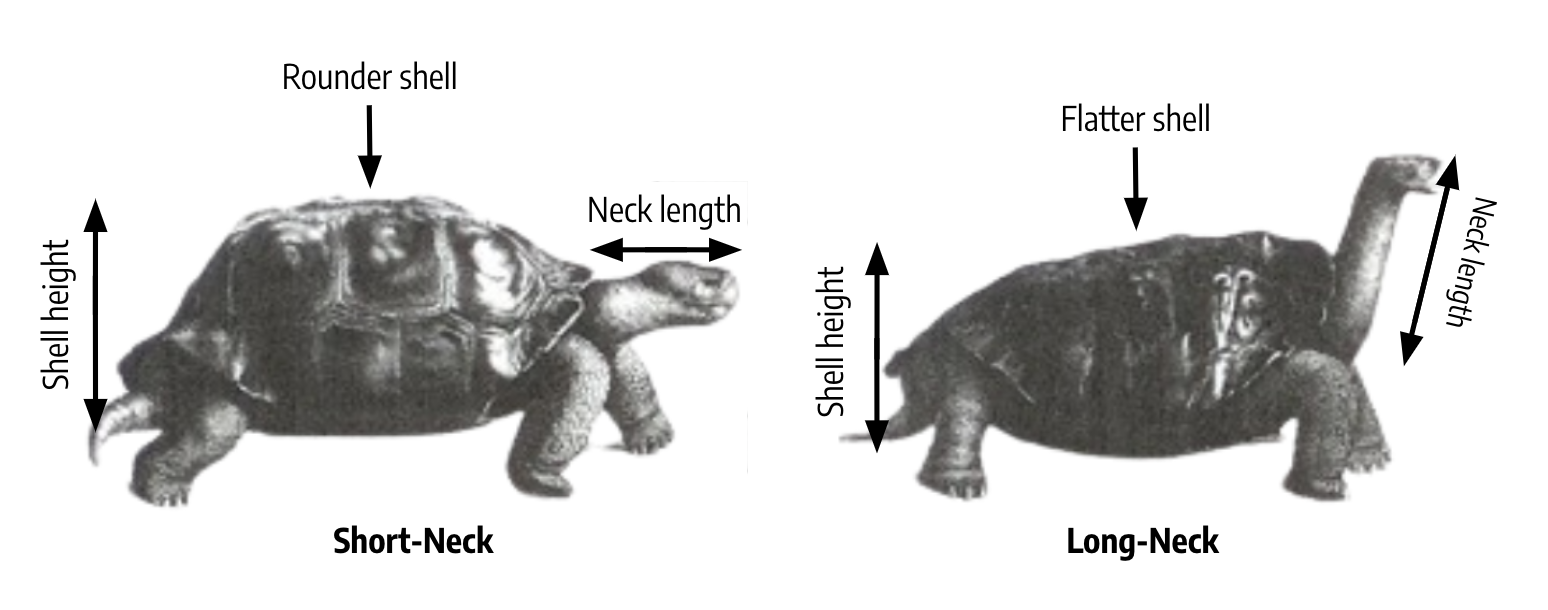
The image below shows a fossilized short-neck tortoise and a modern long-neck tortoise. In the living long-neck tortoise, the longer neck and distinct shell shape have evolved to help it access food more easily, survive, and reproduce more effectively.

Which question would be most helpful in determining if the changes in neck length and shell shape of the tortoises are a result of natural selection?

Asemmisa {{asɛmmisaAhyɛnsode}}
11.

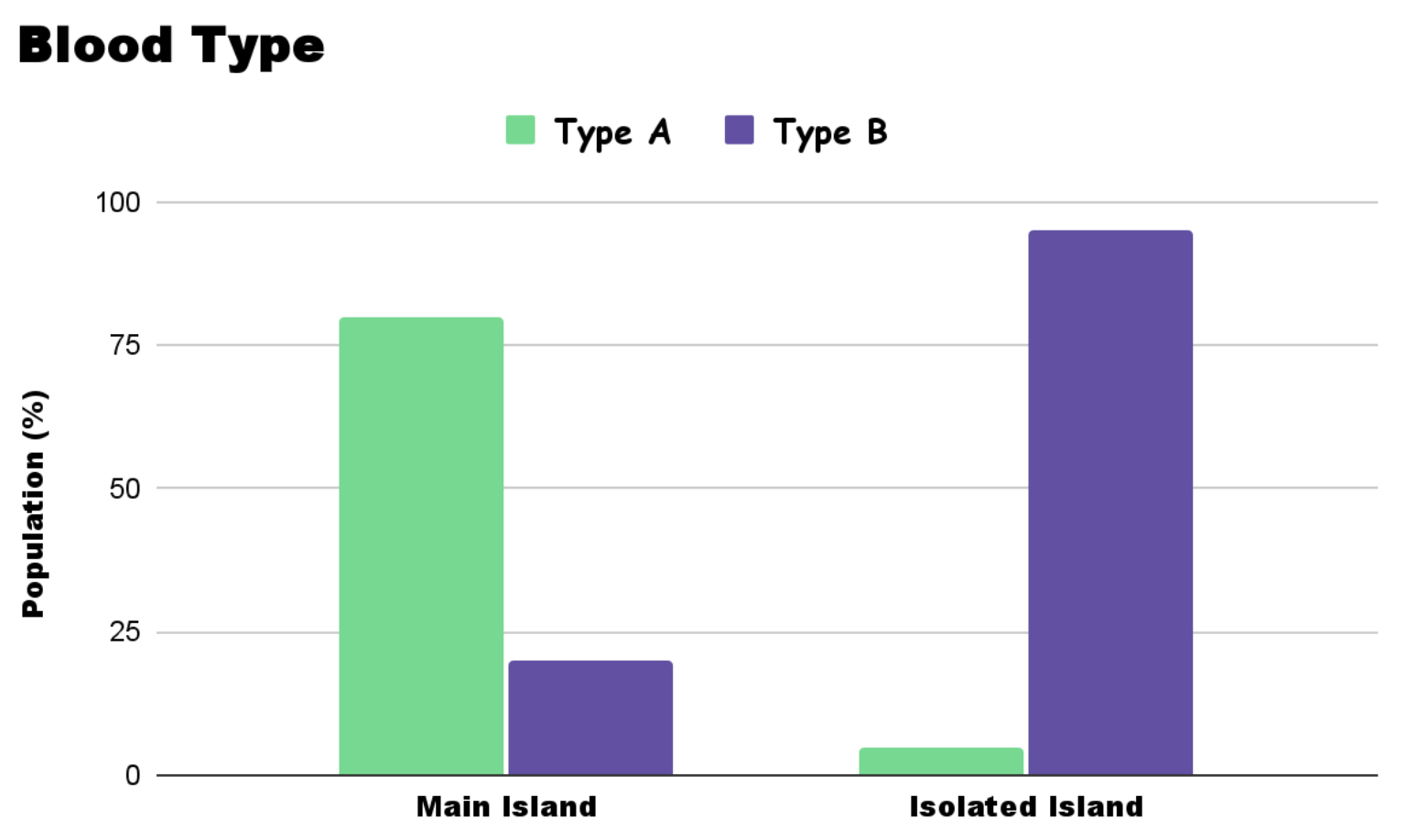
Geneticists have determined that majority of individuals in an isolated island population have blood type B. Type A blood is found to be more common in the mainland population from which the island was settled.

The type of mechanism is

Asemmisa {{asɛmmisaAhyɛnsode}}
12.

When a whale moves from one pod to another and successfully mates, it introduces new alleles into the new pod's gene pool. Over time, this exchange of genetic material makes the gene pools of both pods more similar and increases genetic diversity in the population.

Which mechanism of evolution is responsible for this change in genetic diversity?

The mechanism responsible is .

Asemmisa {{asɛmmisaAhyɛnsode}}
13.

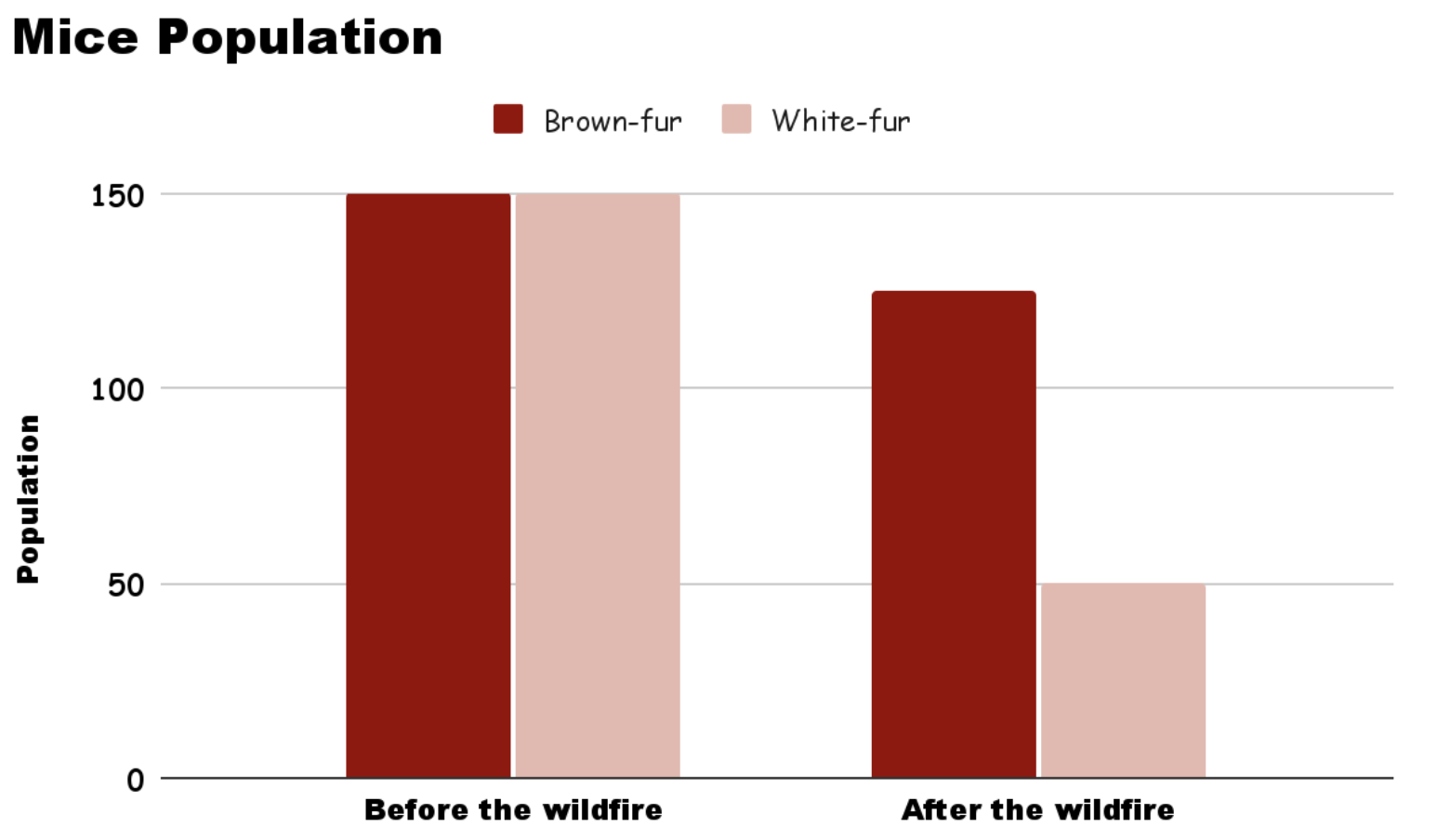
A small population of mice with brown fur and white fur live in a field. One day, a wildfire, drastically reduces the population size, leaving only a few mice behind.

Over the next few generations, the gene pool of the mouse population shifts, and brown fur becomes much more common in the population, despite there being no advantage to having brown fur in that environment.

What mechanism of evolution is responsible for the change in fur color in this scenario?

The mechanism of evolution responsible for the change in fur color is .

Asemmisa {{asɛmmisaAhyɛnsode}}
14.

In a population of fish there is a variety of phenotypes, such as stripes, no stripes, and spots. A fishing ship comes by and catches all of the fish except for two striped fish. The striped fish survive and reproduce. Eventually the population of fish is all striped.

Which statement is true?

Asemmisa {{asɛmmisaAhyɛnsode}}
15.

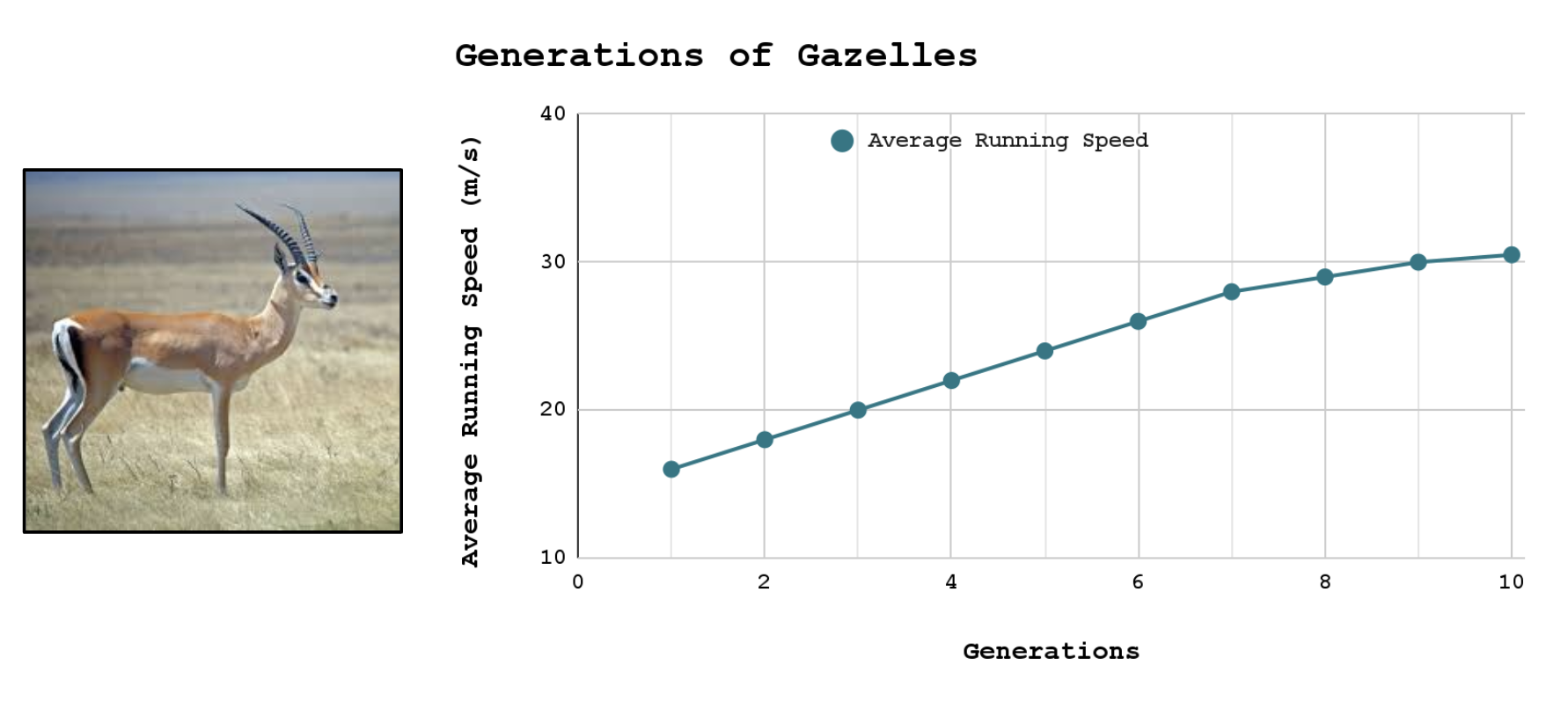
In a grassland ecosystem, a population of gazelles has a range of running speeds. Some gazelles are naturally faster, while others are slower. Cheetahs, the main predators of the gazelles, hunt by chasing down their prey. Over many generations, researchers observed their average running speed shown in the graph below.

Based on the graph data the running speed of the gazelles because

Asemmisa {{asɛmmisaAhyɛnsode}}
17.

Today, northern elephant seals have declined due to over hunting in the mid 1800’s. Hunting reduced their population size to as few as 20 individuals at the end of the 19th century. Their population has since rebounded to over 30,000—but they have much less phenotypic distribution of alleles than a population of southern elephant seals that was not so intensely hunted.

Which table best represents the change of mechanism and the effect on the gene pool of the Northern elephant seals population?

Asemmisa {{asɛmmisaAhyɛnsode}}
18.

A group of 10 giraffes from a larger population becomes isolated in a new, remote valley after a natural disaster. The valley has different environmental conditions than the original habitat, and only these 10 giraffes are able to establish a new population. Over time, the new giraffe population grows to 200 individuals, but it displays a reduced genetic diversity compared to the original population.

What type of change is responsible for the reduced genetic diversity in the new giraffe population, and how did this phenomenon occur?

in genetic diversity in the new giraffe population, in the isolated valley, while the original population predominantly has since

Asemmisa {{asɛmmisaAhyɛnsode}}
21.

In a population of insects living in the same forest, some individuals develop a preference for laying their eggs on a newly introduced fruit tree, while others continue to lay their eggs on the original native tree.

Over time, the insects that hatch on the new tree mate mostly with others that also prefer that tree, while those on the native tree do the same.

Over many generations, genetic differences accumulate, and the two groups of insects can no longer interbreed, even though they still live in the same forest.

What is the most likely explanation for why these two insect populations have become separate species?

Asemmisa {{asɛmmisaAhyɛnsode}}
22.

The Afrikaner population in South Africa came from a few colonists that settled there hundreds of years ago. Today, the Afrikaner population has an unusually high frequency of the gene that causes Huntington’s disease. Scientists believe this is because the original colonists just happened to carry that gene with unusually high frequency.

Asemmisa {{asɛmmisaAhyɛnsode}}
23.

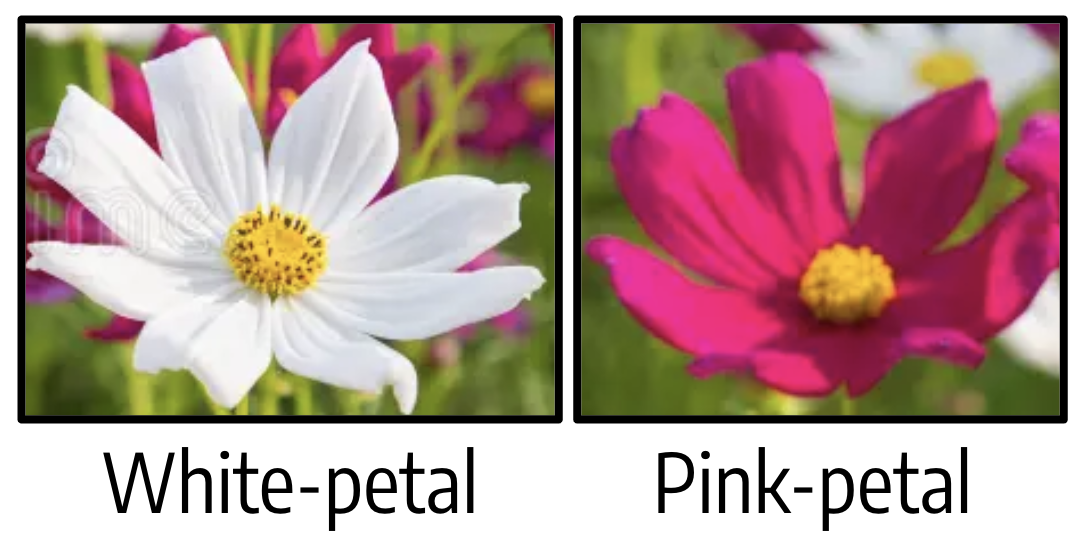
A group of butterflies from a population with bright blue wings migrates to a new area where the resident butterflies have mostly brown wings. What is the likely impact on the new population's wing color distribution?

Asemmisa {{asɛmmisaAhyɛnsode}}
24.

Humans first evolved in sub-Saharan Africa. Populations of modern humans likely migrated from Africa, populating the rest of the world within the last 100,000 years. A general trend observed in the human population is that the farther a native population is from Africa, the less genetic diversity in that population. What could explain this trend?

Asemmisa {{asɛmmisaAhyɛnsode}}
25.

What is the difference between allopatric and sympatric speciation?

Asemmisa {{asɛmmisaAhyɛnsode}}
26.

200 years ago, the ancestors of apple maggot flies laid their eggs ONLY on hawthorns — but today, these flies lay eggs on hawthorns AND domestic apples. Females generally choose to lay their eggs on the type of fruit they grew up in, and males tend to look for mates on the type of fruit they grew up in.

So hawthorn flies generally end up mating with other hawthorn flies and apple flies generally end up mating with other apple flies. This behavior has resulted in reduced gene flow between the populations that prefer different fruits, even if they are in the same orchard.

What type of speciation is being described in this scenario?

Asemmisa {{asɛmmisaAhyɛnsode}}
27.

When Arizona's Grand Canyon formed, squirrels and other small mammals that had once been part of a single population could no longer contact and reproduce with each other across this new geographic barrier. They could no longer interbreed. The type of speciation being described in this scenario is .

Asemmisa {{asɛmmisaAhyɛnsode}}
28.

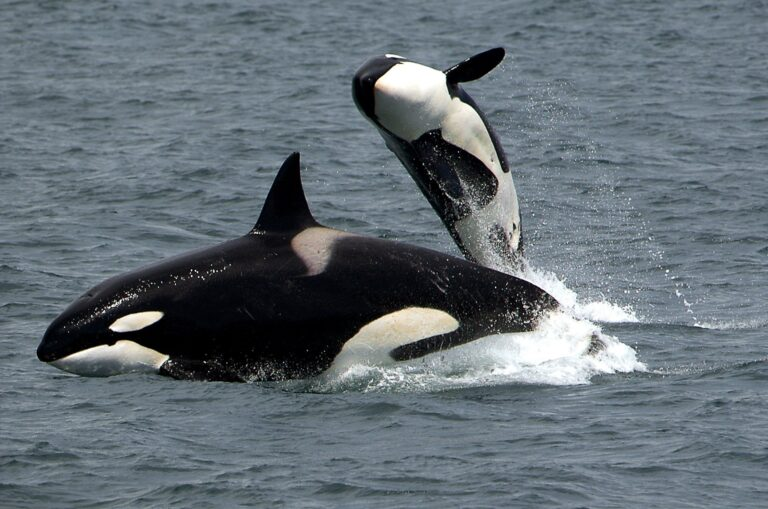
Despite living in the same water, orcas avoid each other and do not interbreed. They are different in many ways like having different diets, vocal behavior, and social structure. They also attack different prey. This remarkable reduction in the population reduced the size of the population and has also affects gene variation..

Asemmisa {{asɛmmisaAhyɛnsode}}
29.

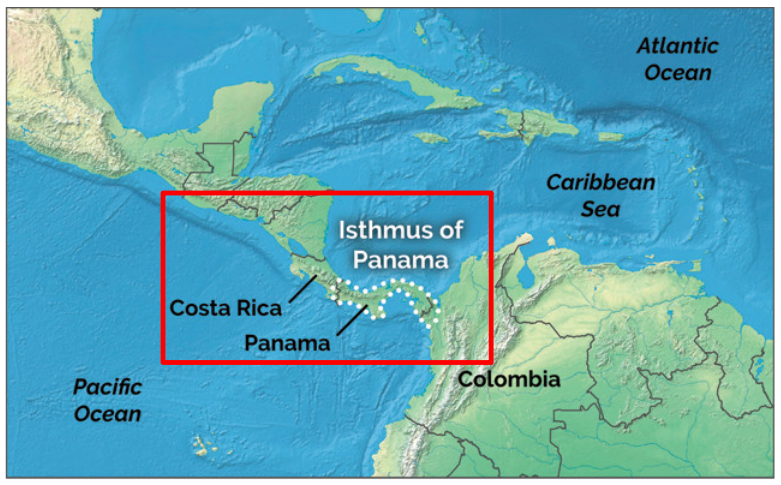
When the Isthmus of Panama closed around 3 million years ago, it formed a land bridge that isolated aquatic species on either side, including snapping shrimp. Despite their identical appearance, males from one side would aggressively snap at females from the opposite side instead of courting them. What type of speciation is being indicated in this scenario?