Fitness is the ability of an organism to survive and
Match the vocabulary term to its correct definiton:
| Draggable emne | arrow_right_alt | Korresponderende emne |
|---|---|---|
Variation | arrow_right_alt | A gradual change in the heritable traits within a population over a long period of time. |
Evolution | arrow_right_alt | Organisms who are better adapted to their environment tend to survive and reproduce more offspring than the organisms who are unfit. |
Adaptation | arrow_right_alt | The differences in the physical traits that exist between individuals within a population. |
Natural Selection | arrow_right_alt | An organism's ability to survive long enough to reproduce. |
Fitness | arrow_right_alt | Good traits that an organism has that helps it to survive and reproduce better in a particular environment. |
Fitness is the ability of an organism to survive and
Salamanders in coastal California exhibit color variations based on their habitats; those in dark redwood forests are dark-colored, while those in sandy soils, like at Fort Ord Natural Reserve, are pale pink.
A population of dark-colored salamanders is introduced to Fort Ord, where there are many predators, the population of the dark-colored salamanders will , and the population of the pale pink salamanders will .
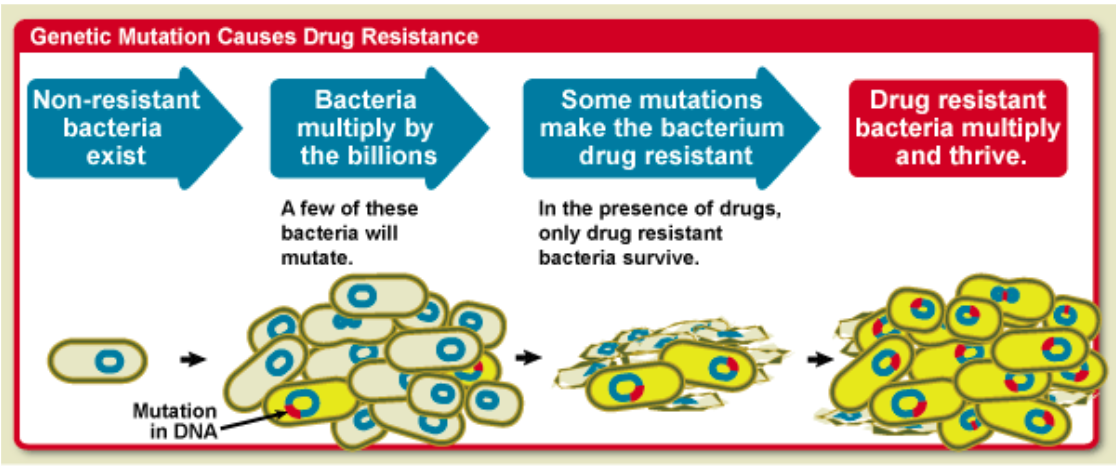
When bacteria are first exposed to an antibiotic, those that are most vulnerable will die quickly. This allows the remaining resistant bacteria to transmit their resistant traits to future generations. Consequently, when these surviving bacteria encounter the same antibiotic again, it becomes ineffective.
Which statement best describes how only a few resistant bacteria resulted in the antibiotic to stop working?
The figure shows changes in the beak shapes of finches from the Galapagos Island across multiple generations. In finches, the shape of the beaks varies depending on the types of food they eat.
Which question would BEST help determine whether the change in the beak shape was influenced by natural selection?
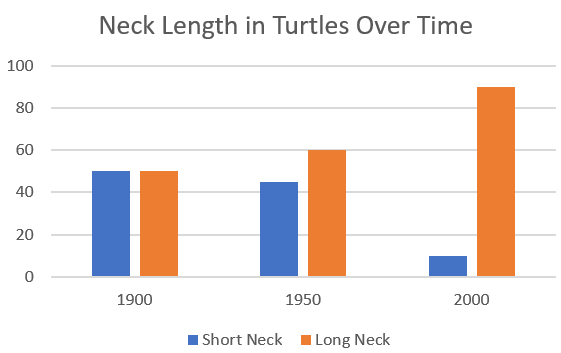
The bar graph illustrates the neck length variation within a population of turtles. Data was gathered in the years 1950 and 2000, after a drought occurred in 1970.
Which factor BEST describes the change in this population of the neck length between 1950 and 2000?
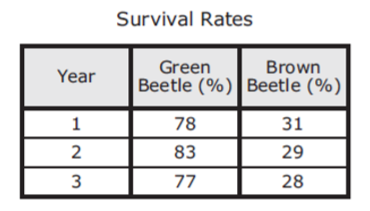
The table (below) shows the survival rate of two types of beetles in the same environment over a period of three years.
Which statement about the beetles in this environment is best supported by the data?
DDT is a common insecticide used to get rid of pests in crops. Yellow grasshoppers are immune to DDT, but they stand out and are easily eaten by predators. The green grasshoppers are able to camouflage better than the others which protects them from predators, but they are not immune to DDT.
After several generations, a farmer notices that the green grasshopper are no longer dying from the DDT. Which of these BEST explains how the green grasshoppers gained immunity to DDT?
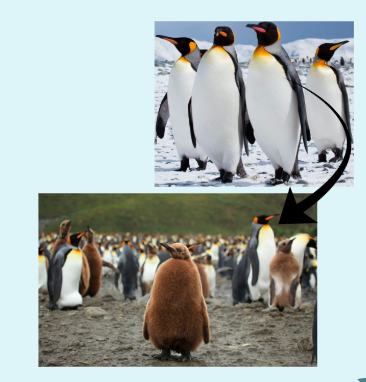
When temperatures get colder, many penguins will migrate to warmer areas and join other colonies. Which of the following happens as a result?
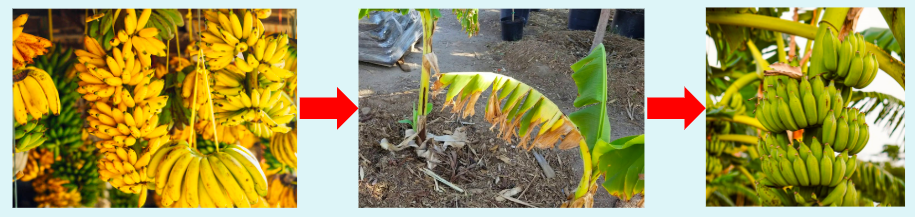
A disease in banana trees kills off 80% of the plants that were growing. Now, only the trees that make small bananas remain. Which of the following happens as a result?
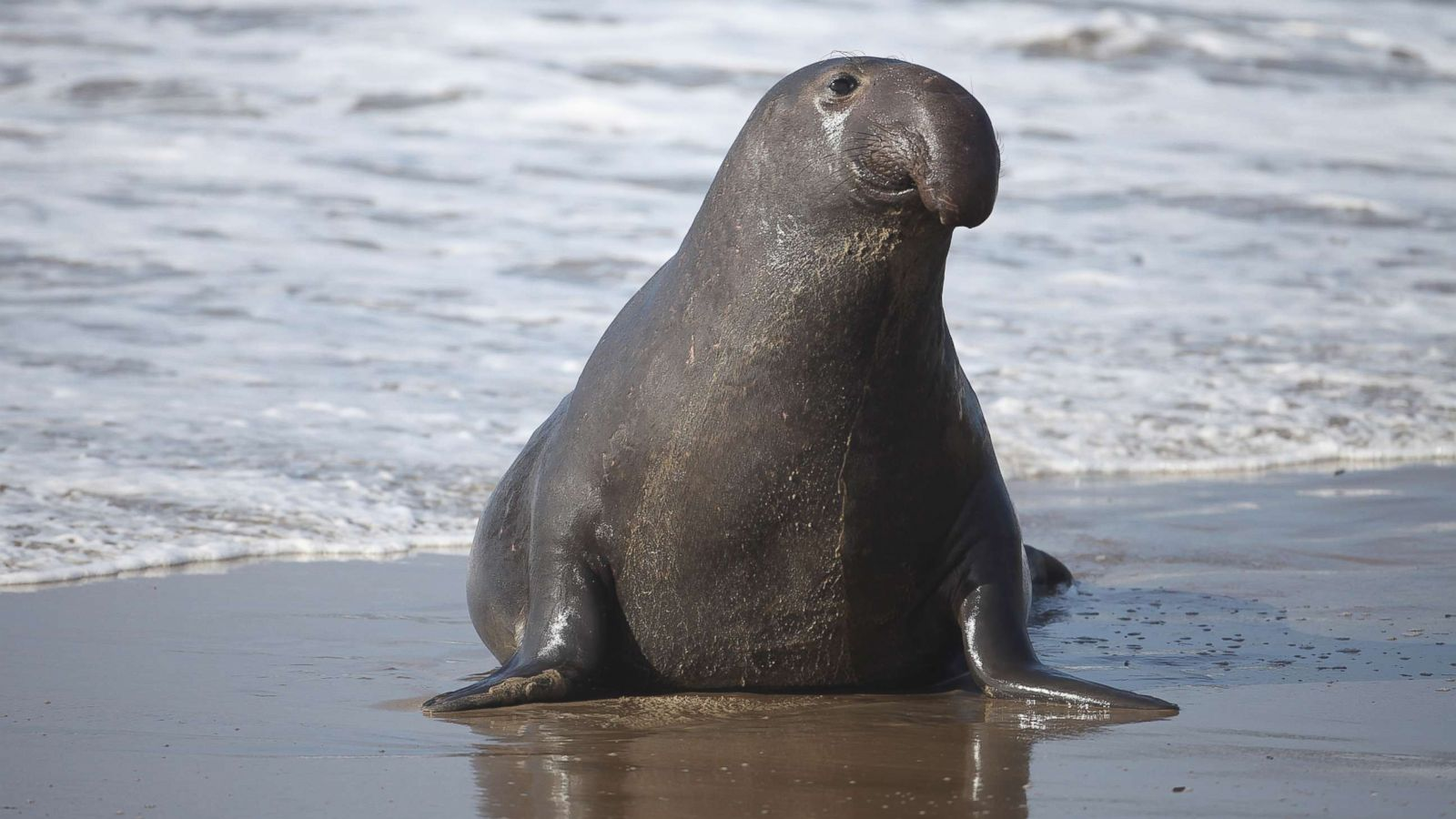
Northern elephant seals have reduced genetic variation because humans hunted them in the 1890s, reducing their population to as few as 20 individuals at the end of the 19th century. Their population has since rebounded to over 30,000. They have much less genetic variation than a population of southern elephant seals that was not so intensely hunted.
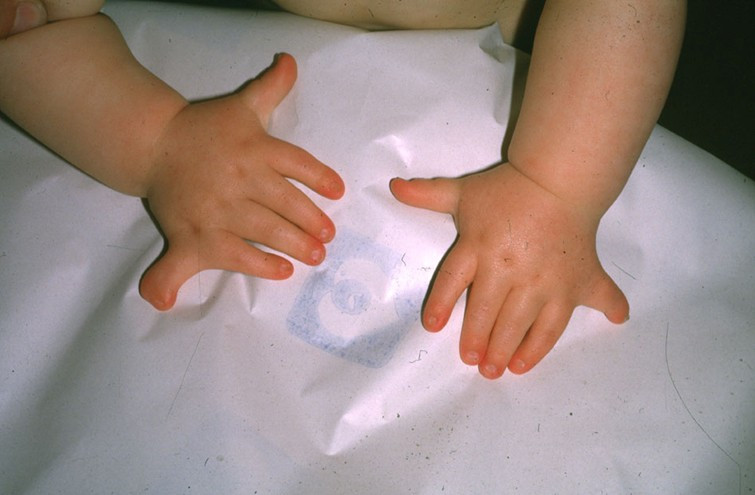
In Eastern Pennsylvania, there is an established Amish community of around 200 individuals who migrated from Germany. They tend to marry within their group and live in isolation, causing genetic mutations to persist over generations. An example of this is Ellis-van Creveld syndrome, a rare disorder marked by extra fingers or toes, and dwarfism. The prevalence of Ellis-van Creveld syndrome is significantly higher among the Amish community compared to larger populations.