Practice
Jim’s sperm cells are shown below.
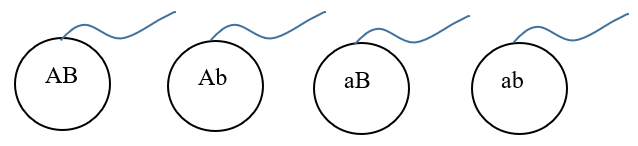
Based on this information, what is Jim’s genotype?
Practice
Jim’s sperm cells are shown below.
Based on this information, what is Jim’s genotype?
What to include in the review
1. Identify genotype vs phenotype.
2. Codominance - possible phenotypic and genotypic probability.
3. Identifying parents in a cross ( Ex. Gg x gg, working backwards).
4. Given a scenario determine genotypic ratios.
5. Circle graph shows the genotype probability.
6. When does a recessive trait show up?
7. Pedigrees - genotypes of individuals.
8. Given parent's blood types, determine blood types (phenotypes) of the possible children.
9. Given a model/table of a genetic control, determine which Punnett square will represent a particular cross.
10. Incomplete dominance - determine which Punnett square will represent the highest probability of expected outcome.
11. Expected percentages when two heterozygous parents are crossed.
12. Dihybrids - which genotype will not be possible.
13. Dihybrids - expected phenotypic ratio when two heterozygous are crossed (9:3:3:1).
14. Dihybrids -determine the required phenotypes and genotypes of offspring.
15. Monohybrid cross - What percentage will be affected, students to provide a numeric answer.
16. Given a table of possible genotypes and phenotypes of an organism, determine the expected phenotypes when given the parent's genotypes.
17. X -Linked - Given the affected parents, determine the percentage chance of offspring affected.
AAC
***Include lethal trait example (Agouti Mice)
Jim’s sperm cells are shown below.
Based on this information, what is Jim’s genotype?
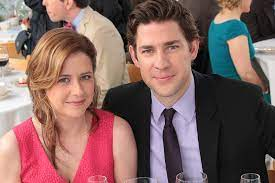
Jim meets Pam. Pam’s genotype is AABb.
How many different types of gametes can she produce?
In pigs long tail is dominant over short tails
Dominant: L = Long
Recessive: l = Short
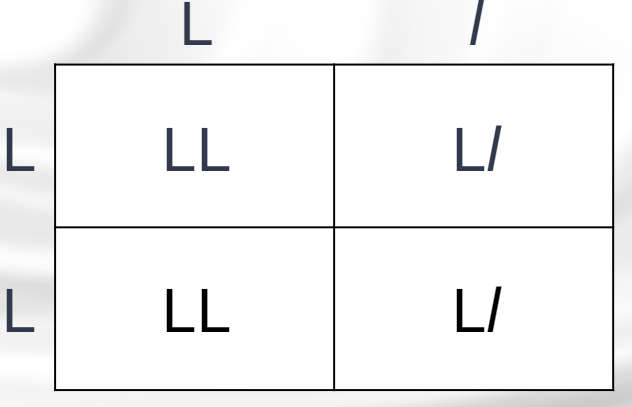
A homozygous recessive parent mates with a short parent. What are the parent's letters?.
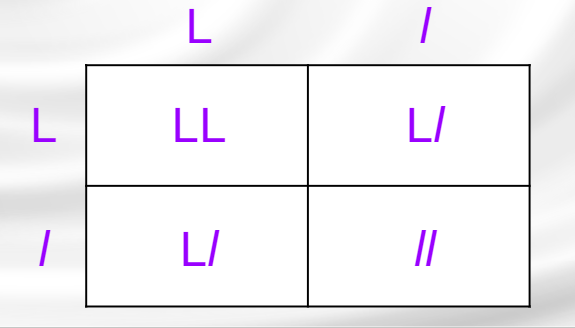
A heterozygous parent mates with a heterozygous parent. What are the parent's letters?.
In pigs long tail is dominant over short tails
Dominant: L = Long
Recessive: l = Short
A pure recessive parent mates with a hybrid parent. What are the parent's letters?
Brenda claims that Jose is not the father of her child, Steve. Brenda has Type A blood and Jose has Type B blood. The baby has Type O blood.
What do you think?
Two men claim that they are the father of one little boy (Frank). A blood test was done to see if either one of the men could POSSIBLY be the father. The first man, Dwight, has Type A blood. The second man, Robert, has Type O blood. The little boy has Type AB blood and the mother, Angela, also has Type AB blood.
Who is the father of the little boy?
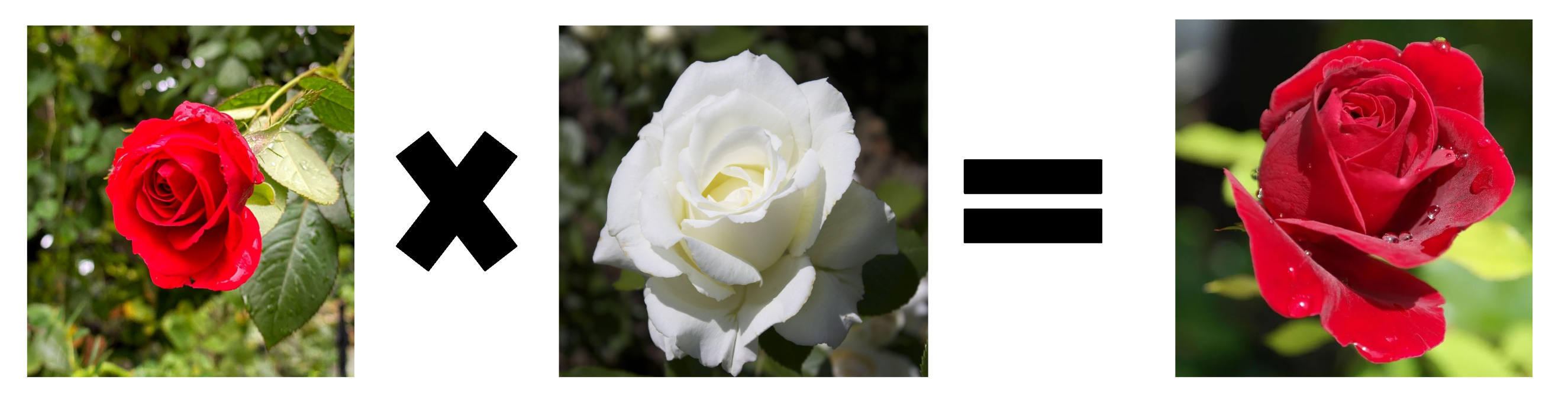
The cross shown is an example of because . The resulting flower's genotype is .
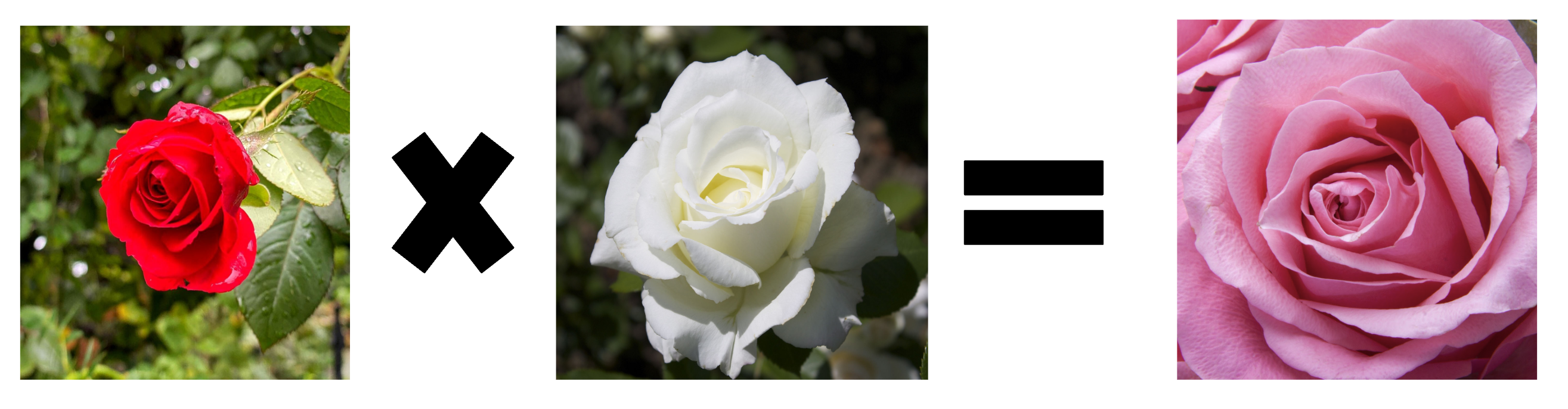
The cross shown is an example of because . The resulting flower's genotype is .
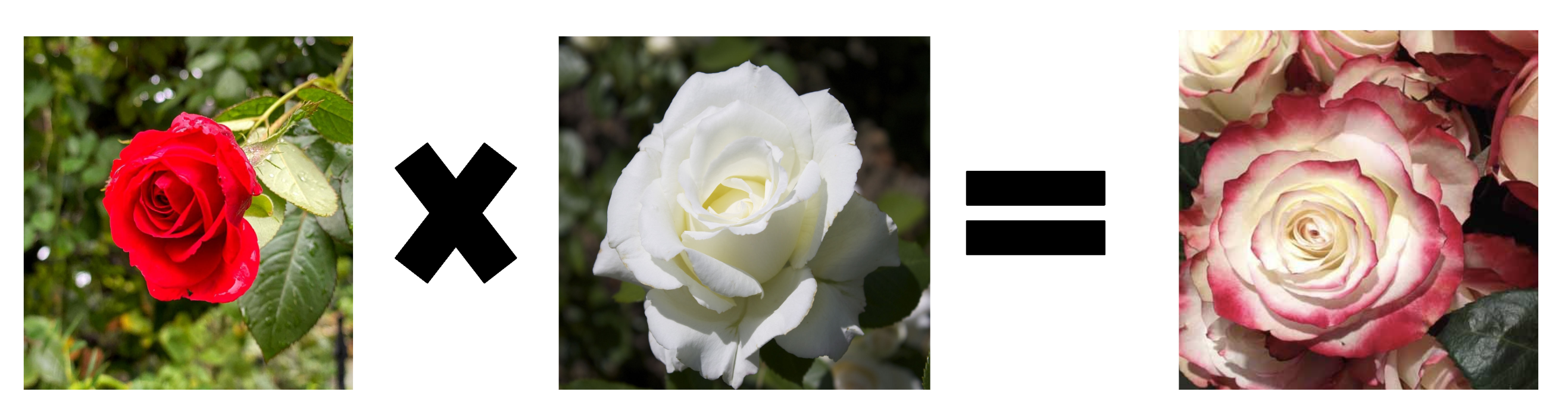
The cross shown is an example of because . The resulting flower's genotype is .
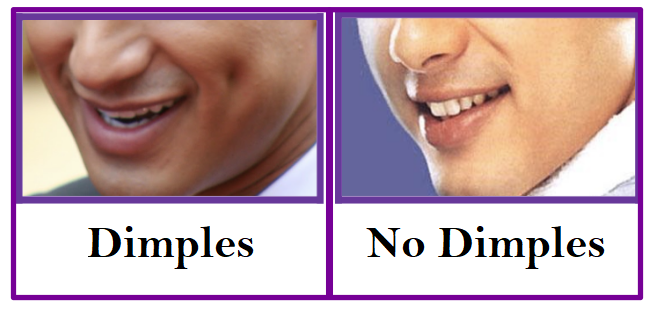
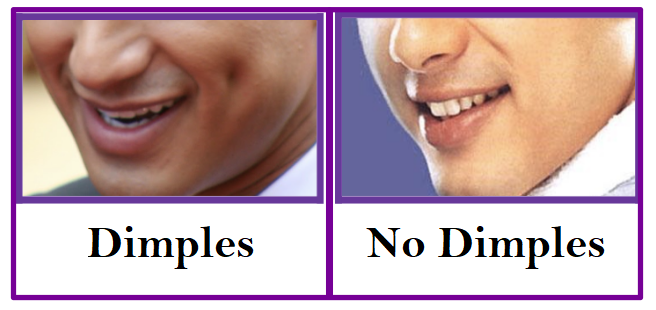
In humans dimples is dominant to no dimples.
What allele will we use for dimples?
What allele will we use for no dimples?
Gina is heterozygous for dimples.
What is Gina’s Genotype?
What is Gina’s Phenotype?
Question on the board.
(Answers are reusable)
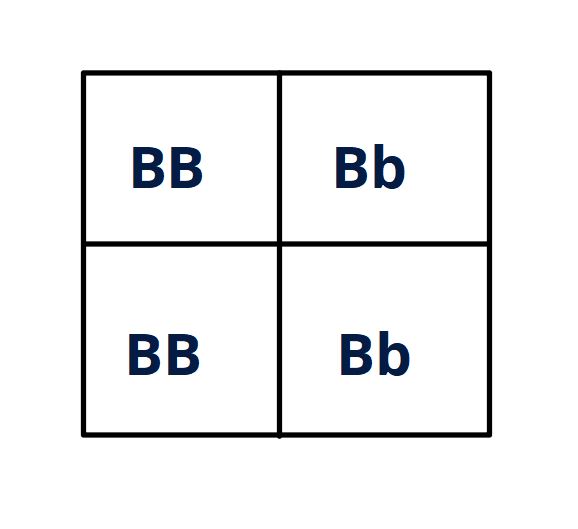
An individual with the AA genotype and an individual with the BO genotype can produce offspring with which of the following phenotypes?
Phenotypes
Type A: Type B: Type AB: Type O:
(Show your work)
Genetic Makeup “Just Letters”
AA, Aa, aa
Physical Characteristics. What you can see. Example: Brown Eyes, Blue Eyes
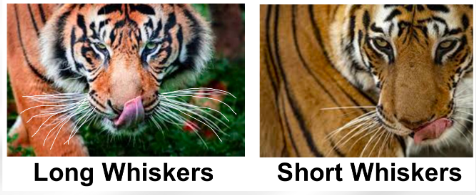
In tigers, short whiskers are recessive to long whiskers.
The dominant trait is and the recessive trait is .
In tigers, short whiskers are recessive to long whiskers. Complete the cross:
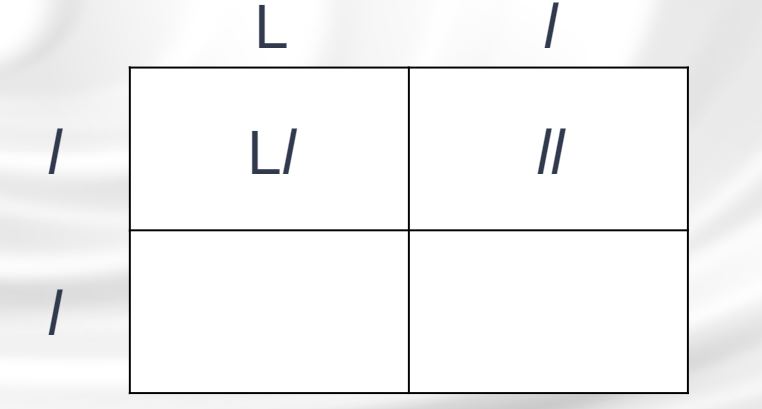
Determine the percentage of each genotype:
In tigers, short whiskers are recessive to long whiskers.
A homozygous long whisker tiger () mates with a short whiskered tiger
().
In tigers, short whiskers are recessive to long whiskers.
A tiger is homozygous recessive for whisker length. What is the tiger's phenotype?
In tigers, short whiskers are recessive to long whiskers.
A tiger is homozygous recessive for whisker length. What is the tiger's genotype?
Select all offspring (boxes) that are heterozygous for the trait.
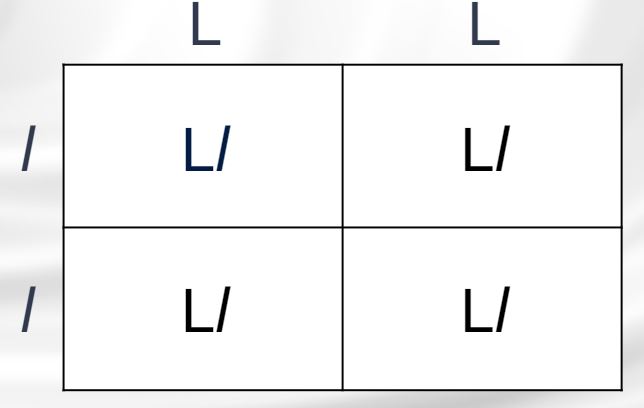
Two hybrid long whisker tigers mate. Which statement is true? .
What is the chance of having a short whisker offspring?
In humans, being right-handed is dominant to being left-handed. Shaded individuals in the pedigree are right-handed.
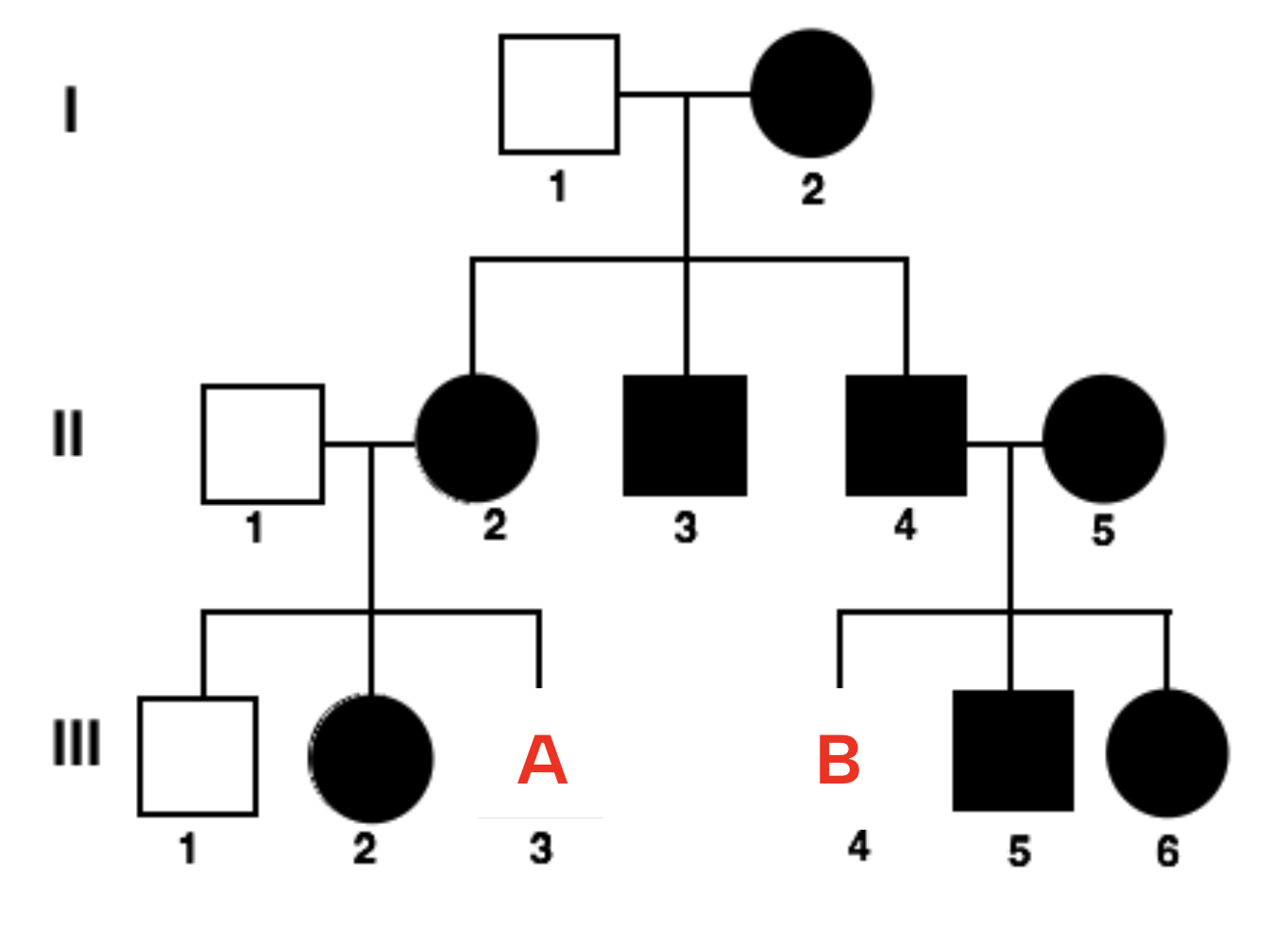
In humans, being right-handed is dominant to being left-handed. Shaded individuals in the pedigree are right-handed.
The genotype of individual I-1 is .
The genotype of individual III-3 is .
In humans, being right-handed is dominant to being left-handed. Shaded individuals in the pedigree are right-handed.
Which person ONLY has a chance of being left-handed?