Match the vocabulary terms to their definition.
| Draggable item | arrow_right_alt | Corresponding Item |
|---|---|---|
Passive Transport | arrow_right_alt | The process of molecules moving into and out of the cell. |
Active Transport | arrow_right_alt | When molecules move from a high concentration to a low concentration until equilibrium is reached - without energy. |
Equilibrium | arrow_right_alt | When molecules are moved from a low concentration to a high concentration - using energy. |
Cell Transport | arrow_right_alt | The state of balance of molecules across a cellular membrane. |
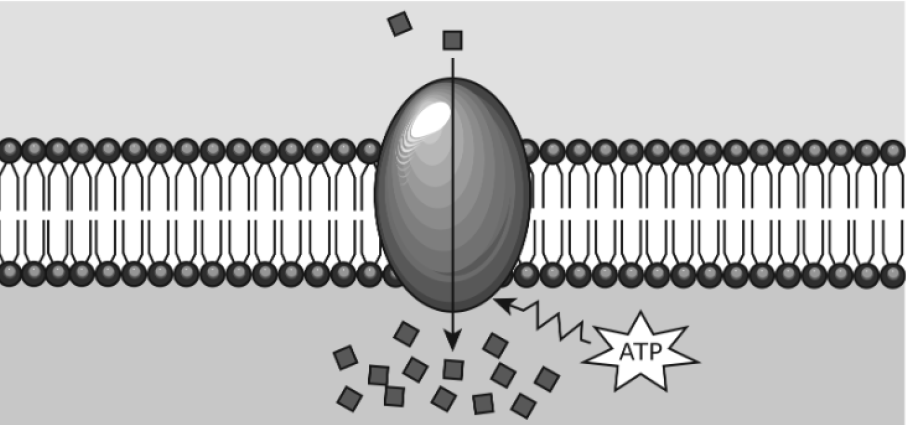
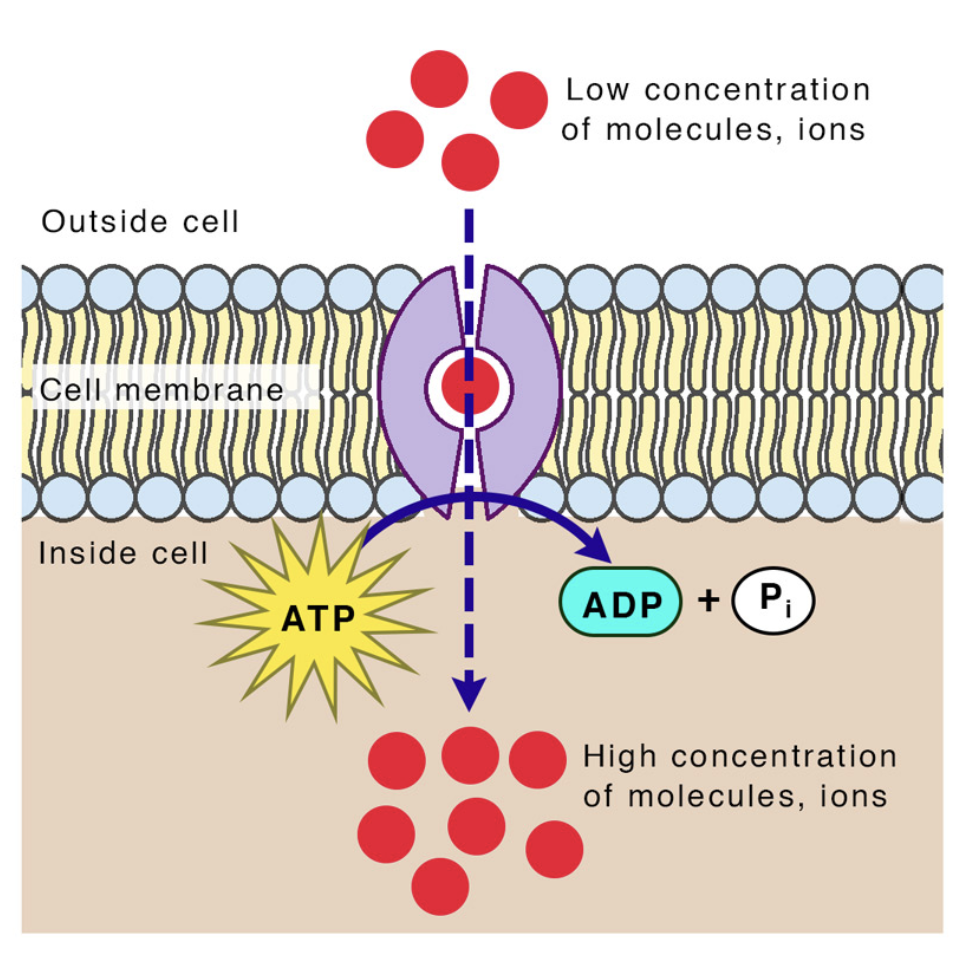
The diagram below shows activity occuring across the plasma membrane (cell membrane).
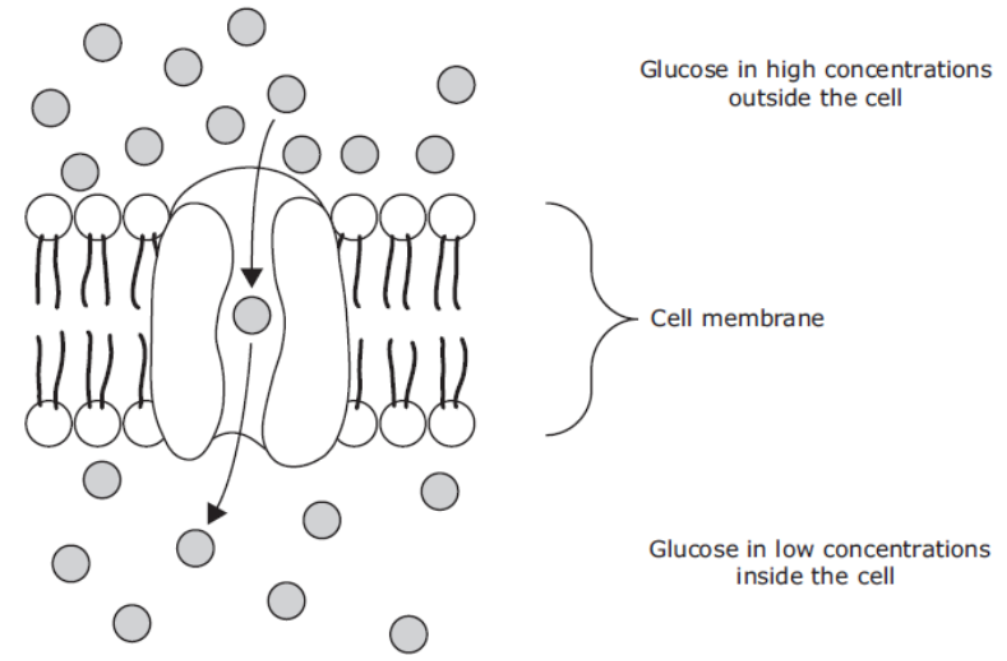
Which two processes does this diagram model?
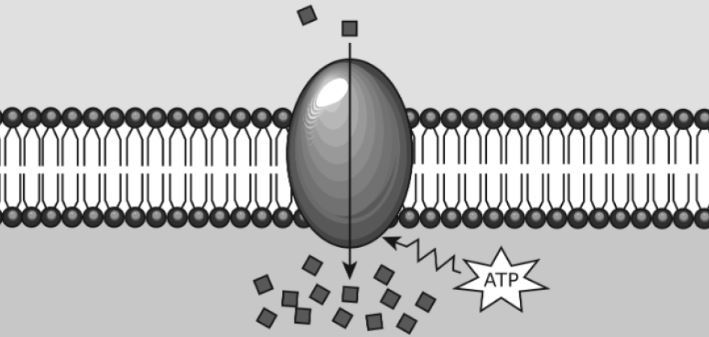
Which of the following correctly identifies how the cell membrane contributes to the maintenance of cellular homeostasis?
Determine which characteristic applies to each type of cell transport.
Select the correct answer in each row.
Molecules move from HIGH to LOW concentration | Energy is Needed | |
|---|---|---|
Osmosis | ||
Facilitated Diffusion | ||
Protein Pump | ||
Endo/Exocytosis |
Identify the concentrations observed in the diagram below.
Move ONE correct answer to each box. Not all answer choices will be used.
Complete the sentence below by selecting the correct answers from the drop-down menus.
is shown above because energy is being used to move molecules against the concentration gradient from a concentration.

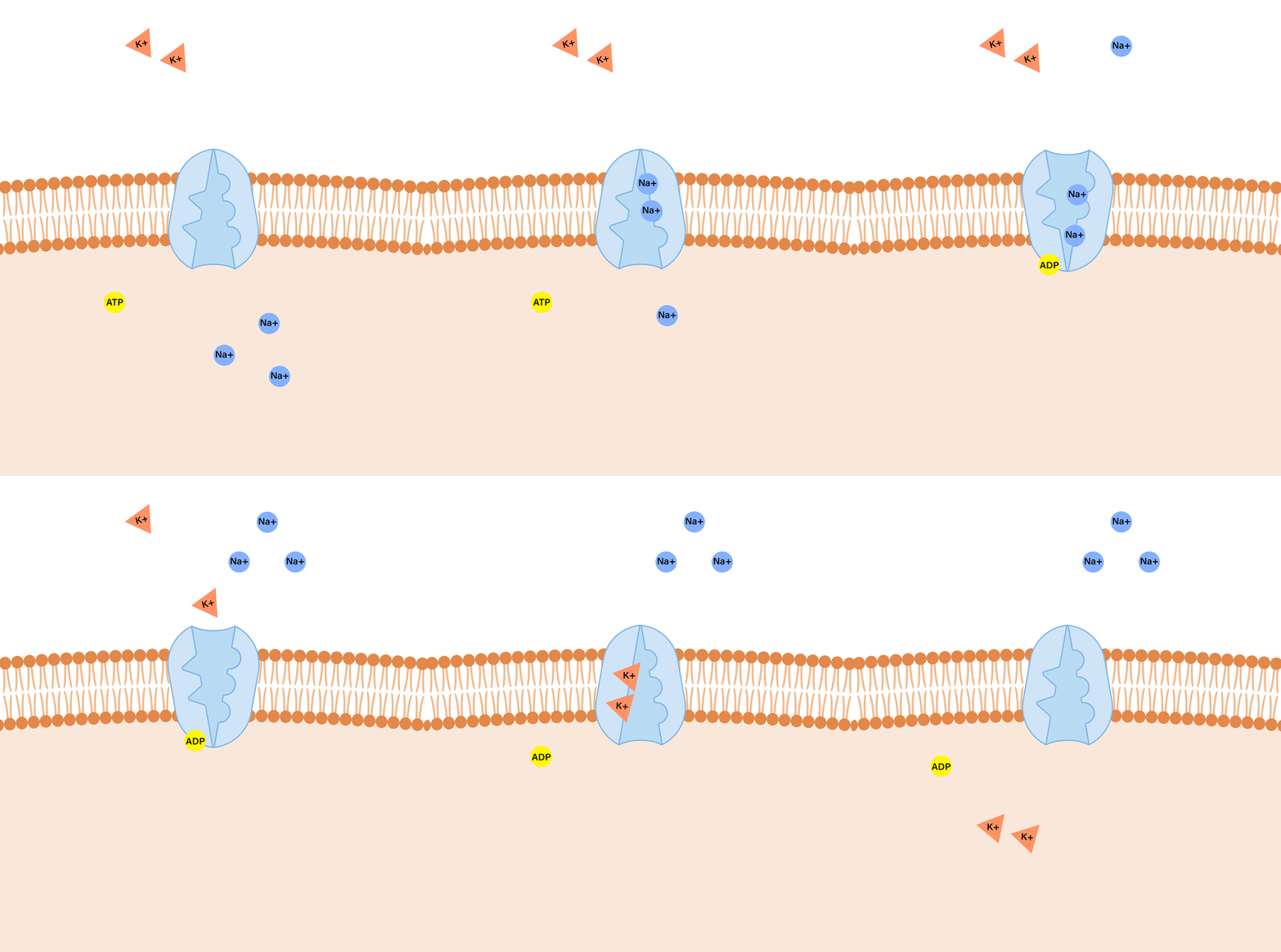
In order to send electrical signals throughout the body, the cell membrane must use energy to send sodium ions (Na+) from a low concentration inside the cell to a high concentration outside the cell.
This is an example of which method of transport?
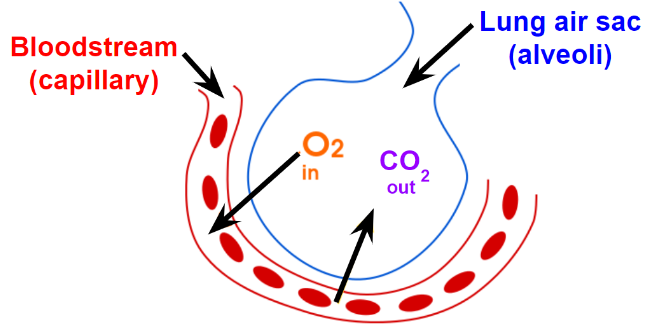
The lungs exchange gas with our blood to maintain homeostasis. When we breathe in, there is a high concentration of oxygen in our lungs and a low concentration of oxygen in our blood.
This movement of oxygen molecules from a high to low concentration is an example of what type of cell transport?
The structure most responsible for maintaining cell homeostasis is the
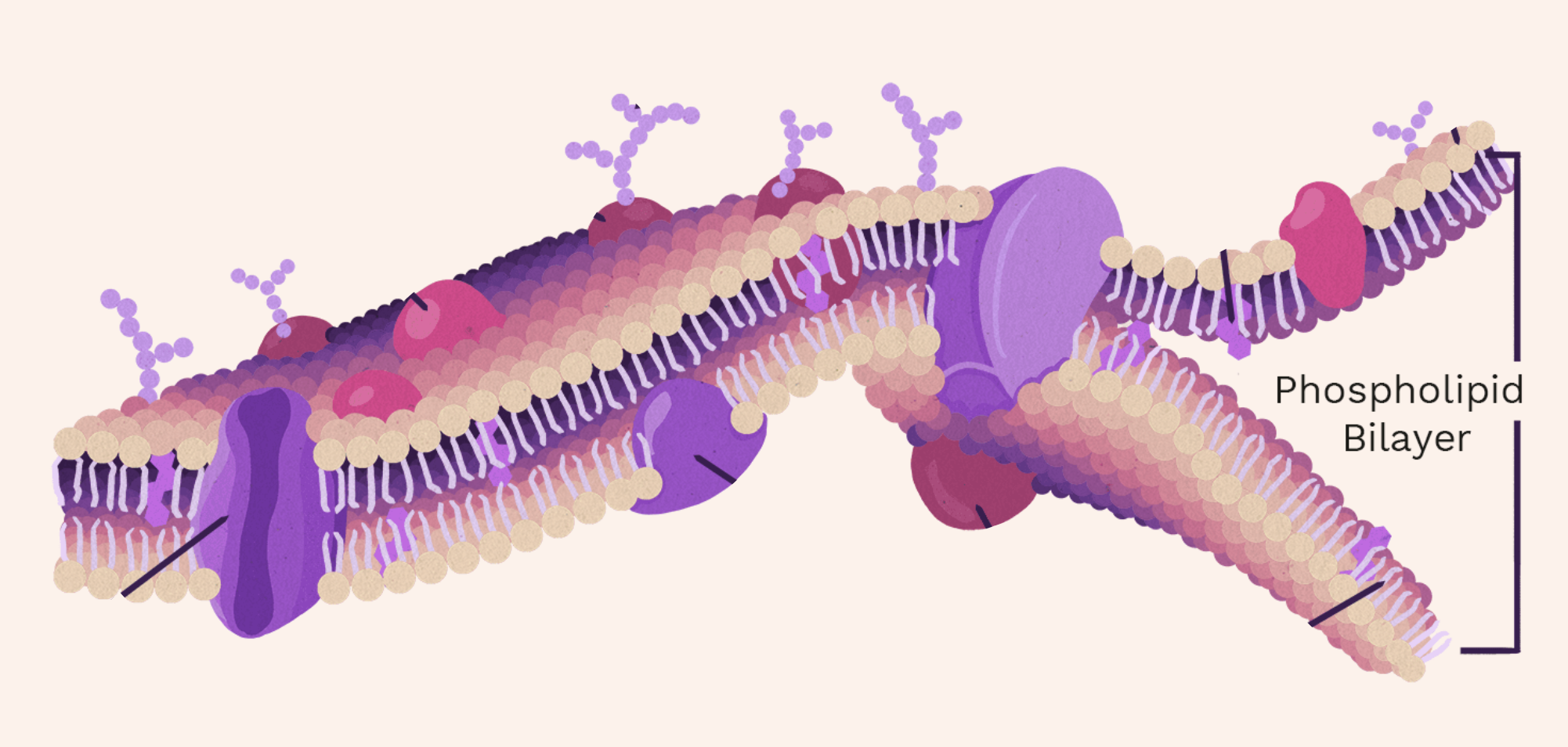
The cell membrane plays an important role in maintaining homeostasis by controlling what goes in and out of the cell.

Which type of molecule makes up the MAJORITY (most) of the cell membrane?
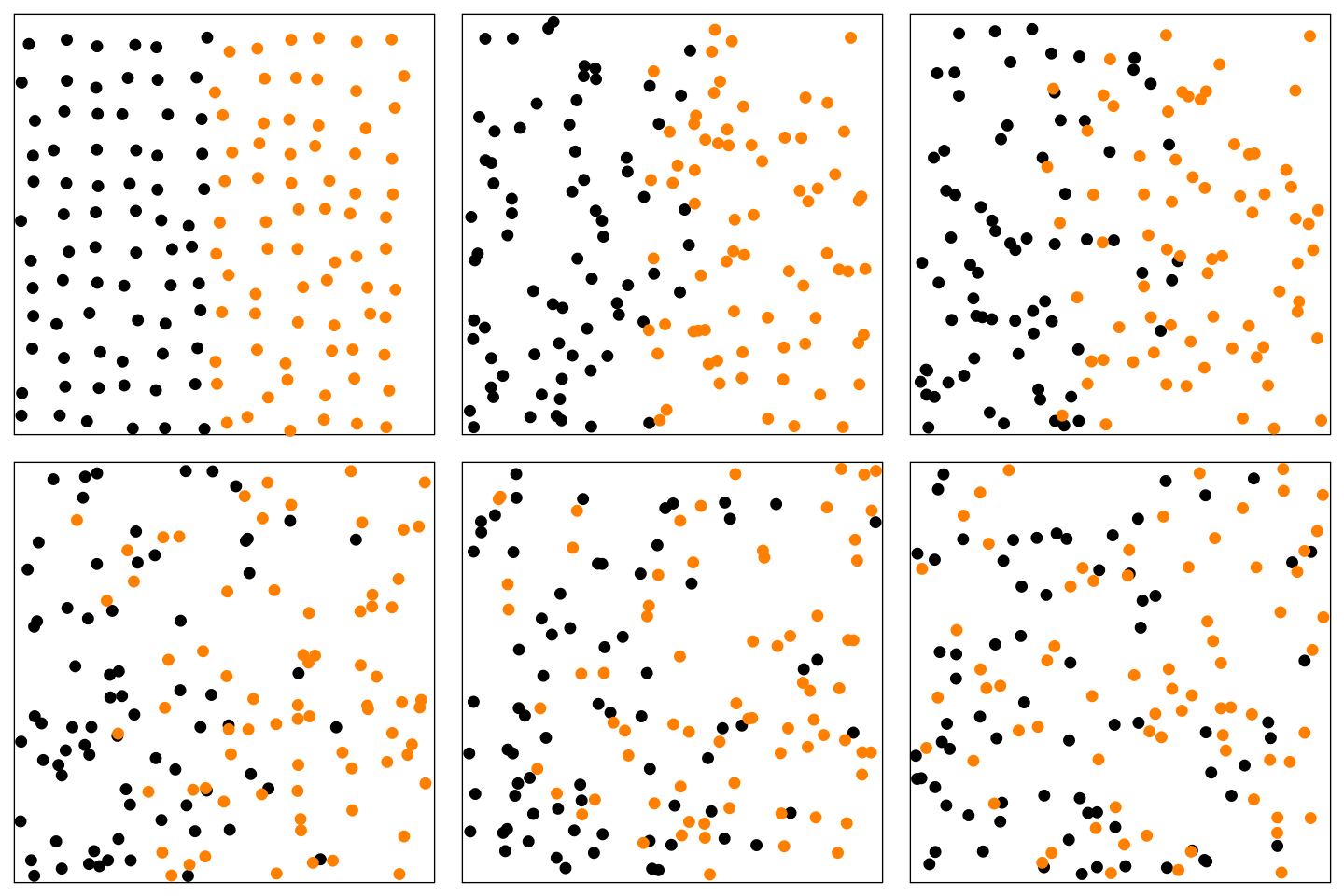
As a result of diffusion, osmosis, and facilitated diffusion, the concentration of molecules...

Which option below best describes the concentration of molecules after passive transport?
Osmosis occurs when molecules move the concentration gradient from a concentration.
These molecules will continue moving until is reached.
Determine which statements apply to each type of transport.
Move against the concentration gradient | Ends in equilibrium | |
|---|---|---|
Diffusion | ||
Protein Pump | ||
Osmosis | ||
Endo/Exocytosis |
Which table correctly identifies how the plasma membrane (cell membrane) contributes to the maintenance of cellular homeostasis?

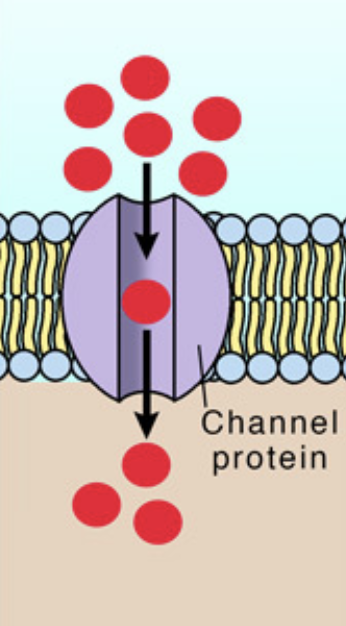
The type of transport used in this diagram is transport and it is necessary because .
![]()
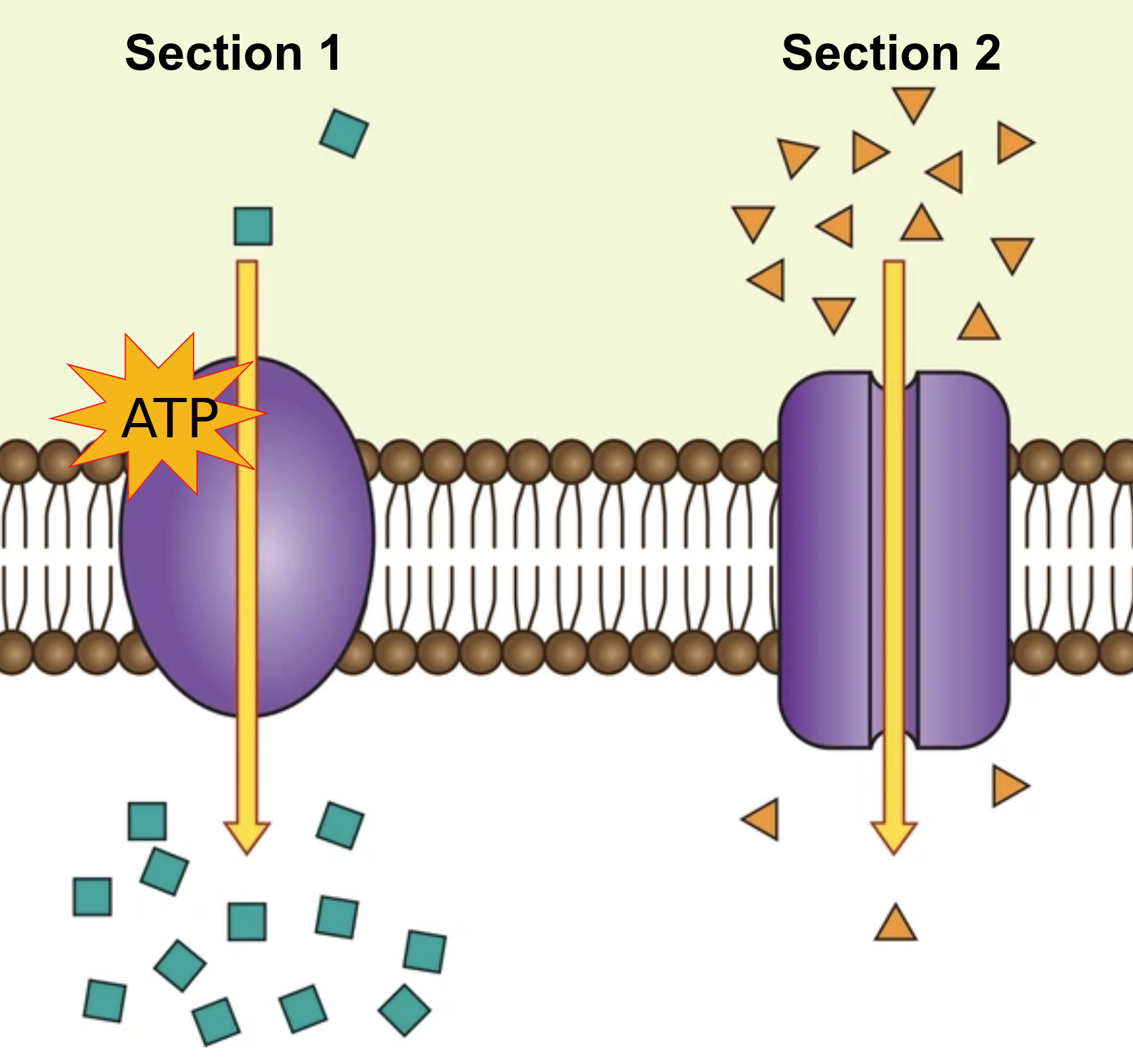
Section 1 represents because it moves molecules .
Section 2 represents because it moves molecules .
![]()
The type of transport used in this diagram is transport and it is necessary because .
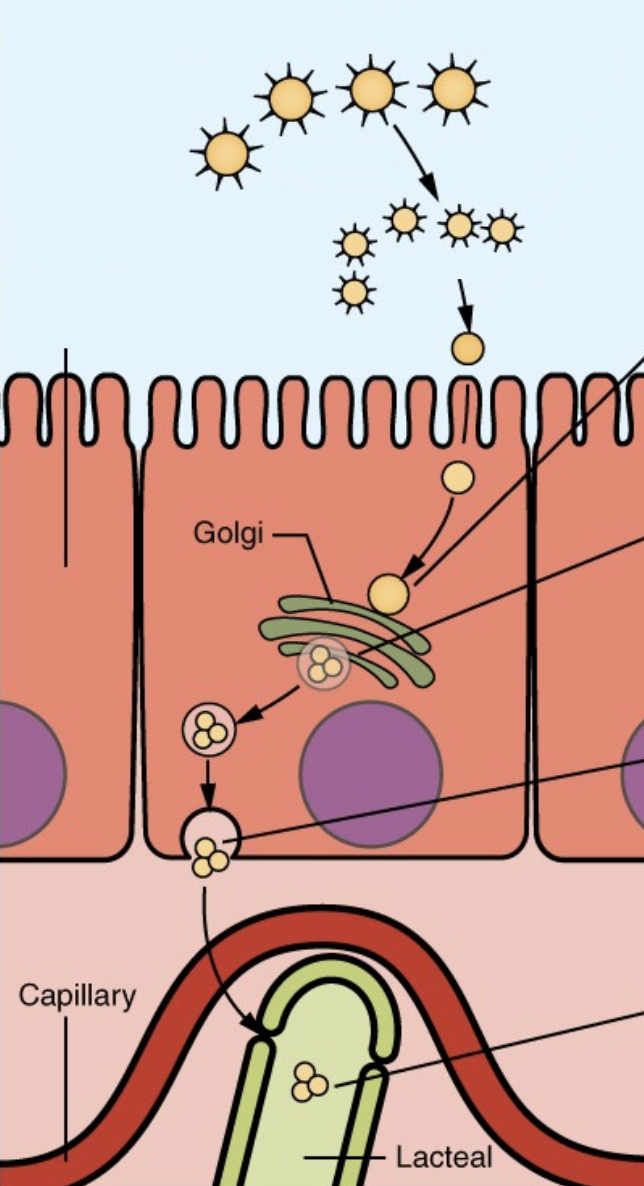
Human Intestines have specialized cells that function in nutrient absorption. These cells have tiny finger-like projections that take in as many nutrients from digested food as possible.
The diagram below shows a specialized cell taking in nutrients for further absorption, which are packaged into vesicles and transported into the cell using energy.
![]()
This is an example of transport because the nutrients digested move the concentration gradient.
Maria likes to have a bottle of lavender water (perfume) in the middle of her room, the scent diffuses throughout the room and leads to the entire room smelling like lavender. What type of transport is this?