Twa kɔ nsɛm atitiriw so
Log in
Sign up for FREE
arrow_back
Laabri

Copy of bk Copy of Unit 2 Test Review: CELLS and VIRUSES (12/10/2025) (5/2/2026)

star
star
star
star
star
Last updated about 3 hours ago
30 Nsɛmmisa
Ɛhia
1
Ɛhia
1
1
Ɛhia
1
BIO.5.B
Ɛhia
1
B.C.4A
Ɛhia
1
Ɛhia
1
Ɛhia
1
Ɛhia
1
Ɛhia
1
Ɛhia
2
Ɛhia
1
1
1
Ɛhia
1
B.C.4C
Ɛhia
1
B.C.4C
Ɛhia
2
2
Ɛhia
2
BIO.5.D
Ɛhia
1
BIO.5.D
Ɛhia
1
BIO.5.D
Ɛhia
1
B.C.4C
Ɛhia
2
1
Ɛhia
1
Ɛhia
1
B.C.4C
2
1
Asemmisa {{asɛmmisaAhyɛnsode}}
1.

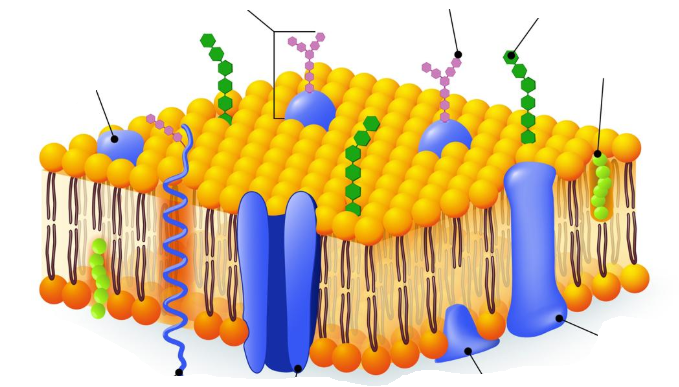
The image shows that the cell membrane consists of a double layer of lipid molecules. Its primary role is to regulate the movement of substances into and out of the cell, helping the cell maintain a stable internal environment.

Which biomolecule makes up the majority of the cell membrane?
Asemmisa {{asɛmmisaAhyɛnsode}}
2.

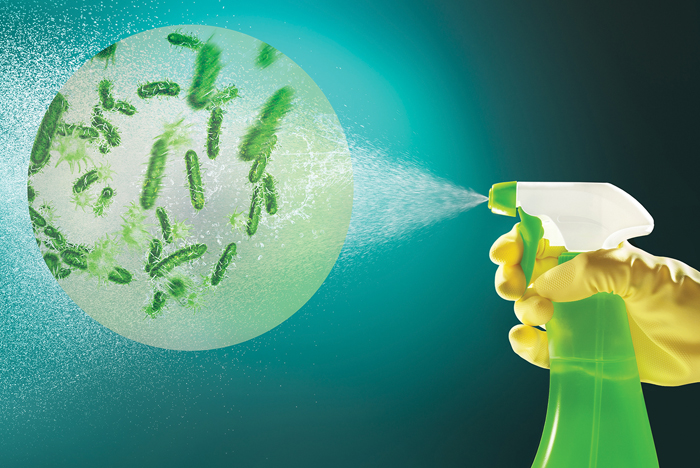
Disinfectants are chemicals used to kill harmful microorganisms on surfaces. Some disinfectants work by breaking down the cell membrane of bacteria.

What effect would destroying the cell membrane of a bacterium have?

Asemmisa {{asɛmmisaAhyɛnsode}}
3.

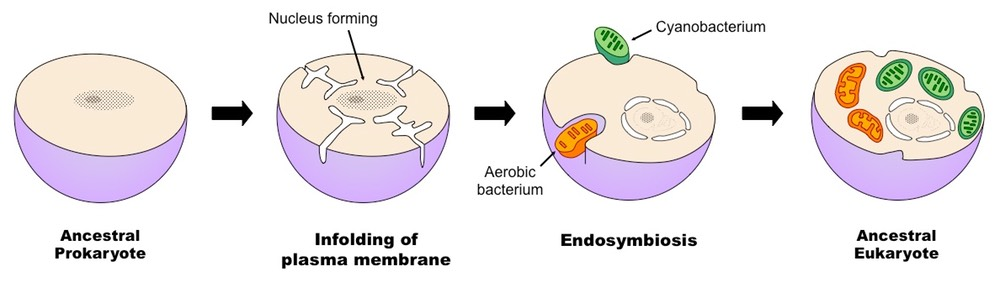
The organelle that produces energy for the cell ( cell that was engulfed by a eukaryotic cell. This theory is called the

Asemmisa {{asɛmmisaAhyɛnsode}}
5.

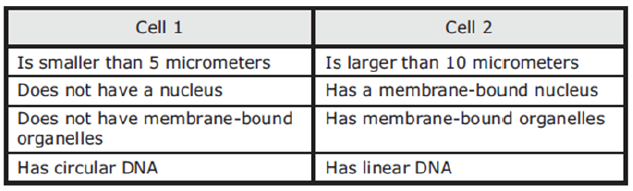
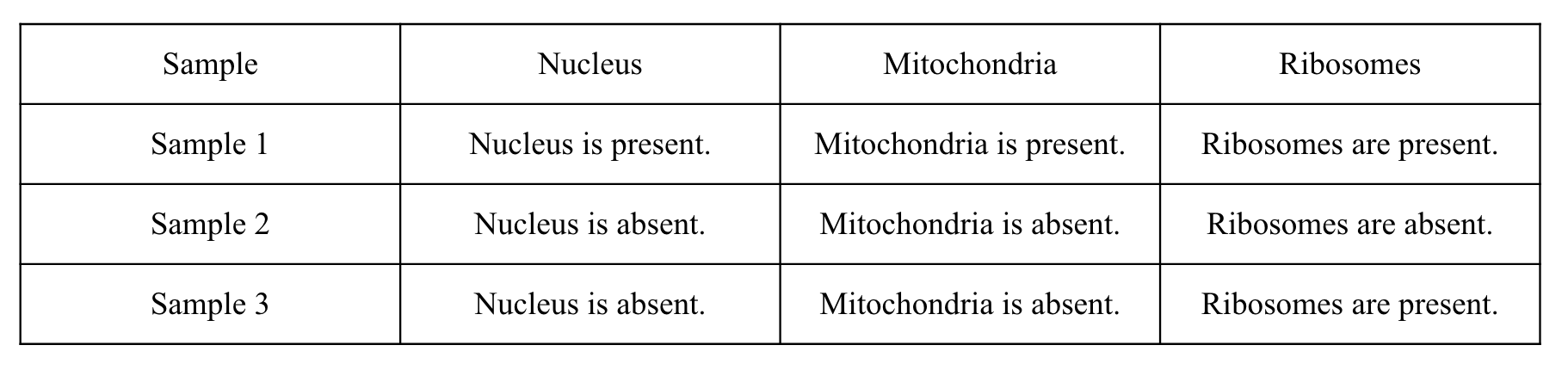
Some students used information they gathered from lab investigations to prepare a table. They entered the table in their lab notebooks.

Which of these correctly identifies the two cells described in the table above?

Asemmisa {{asɛmmisaAhyɛnsode}}
6.

Using the structures shown in the table, identify the four pathogens being described.

(Make sure to scroll over to get to the Virus option)

Prokaryote

Eukaryote Animal

Eukaryote Plant

Virus

Cell Membrane

Mitochondria

Cell Wall

DNA

Chloroplast

Nucleus

Asemmisa {{asɛmmisaAhyɛnsode}}
7.

Water is the most abundant molecule inside of a cell, however too much water entering a cell can cause the cell to burst (pop).

Which cell organelle is responsible for maintaining homeostasis by controlling how molecules, such as water, enter and leave the cell?

Asemmisa {{asɛmmisaAhyɛnsode}}
8.

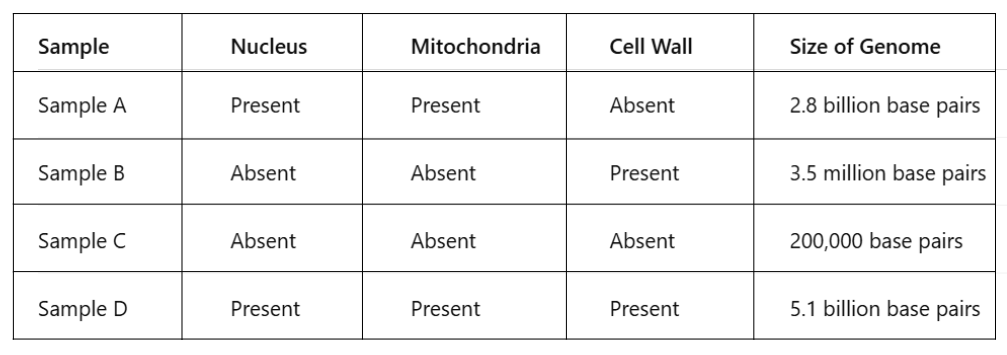
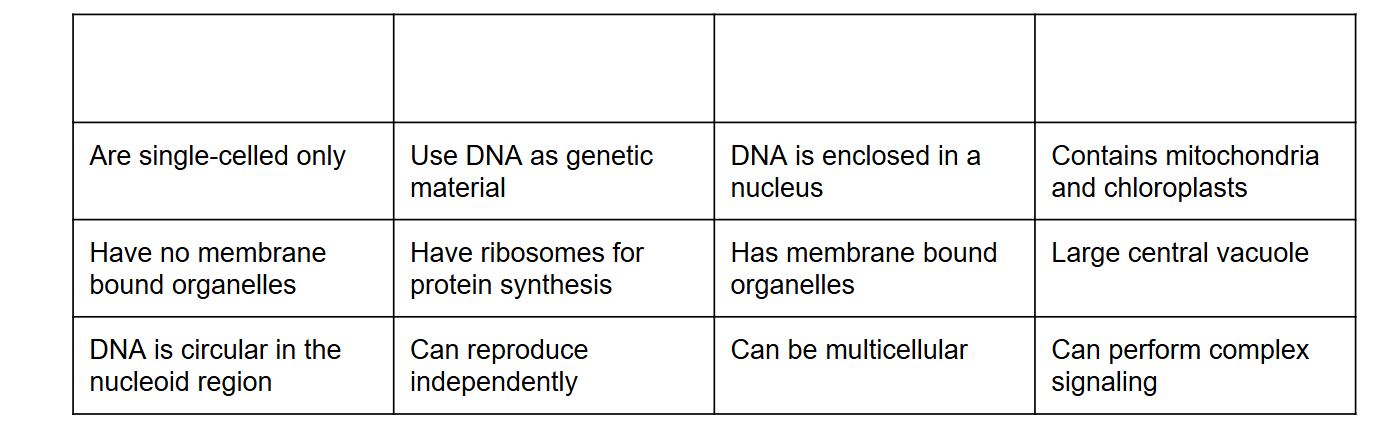
The table below shows the characteristics of four cell samples.

Sample A is a.

Sample C is a .

Sample D is a .

Asemmisa {{asɛmmisaAhyɛnsode}}
9.

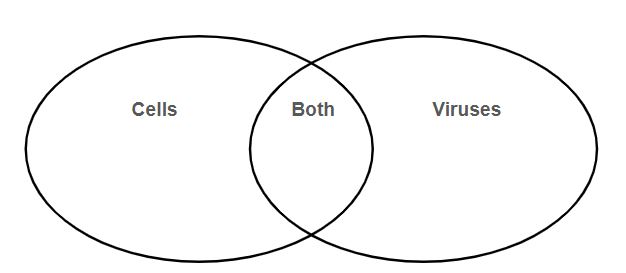
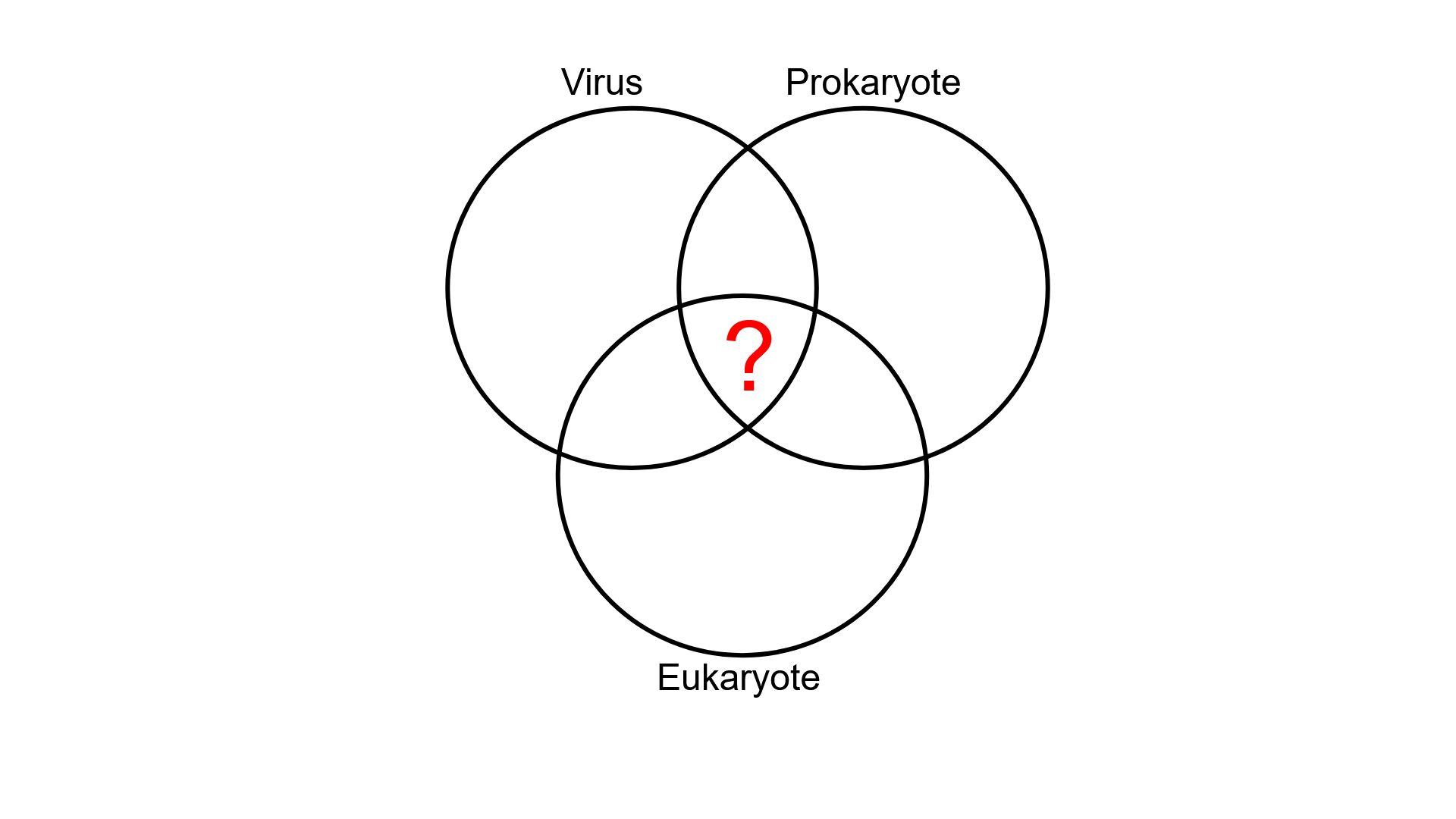
The Venn diagram below shows similarities and differences between viruses and cells. Which features go in each section?

Mmuae Afoforo a Wobɛpaw:
Have DNA
Needs a host cell to replicate
Have no DNA
Can replicate independently
Asemmisa {{asɛmmisaAhyɛnsode}}
10.

A researcher is comparing the DNA in prokaryotic and eukaryotic cells. Which statement accurately describes the difference?

Asemmisa {{asɛmmisaAhyɛnsode}}
11.

Using four microscopes, scientists observe and document cell characteristics in a table. From the observations, identify the type of cell shown on each slide

Mmuae Afoforo a Wobɛpaw:
Prokaryote
Eukaryote
Both
Asemmisa {{asɛmmisaAhyɛnsode}}
12.

Steven finished with his Tiger Tutorials and heads to the cafeteria for his lunch. Once he eats, his body will digest his quick carbohydrates!

Which organelle will help Steven produce energy?

Asemmisa {{asɛmmisaAhyɛnsode}}
13.

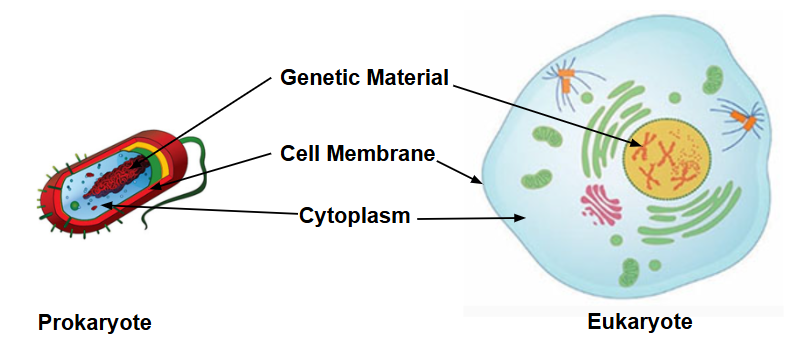
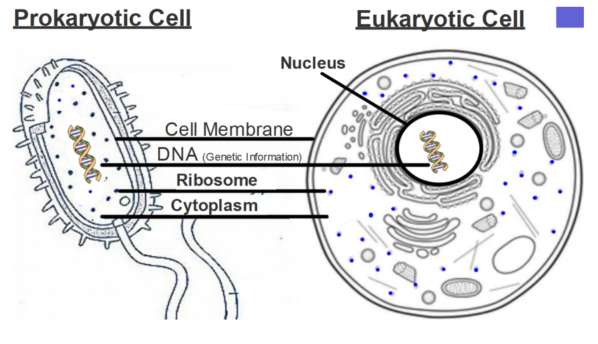
A prokaryotic and a eukaryotic cell are shown below.

One similarity between a prokaryote and a eukaryote is .

Asemmisa {{asɛmmisaAhyɛnsode}}
14.

Two students were observing an organism under a microscope and he noticed that it had the following characteristics:

  • Cytoplasm

  • DNA protected by a nucleus

  • Ribosomes

  • Cell Wall

  • Large Central Vacuole

  • Mitochondria

Student A claims that the organism is a plant cell, and Student B claims that the organism is an animal cell.

Which student is correct AND why? (2 points)

Think about this information carefully, and enter your response in the space provided below.

Asemmisa {{asɛmmisaAhyɛnsode}}
15.

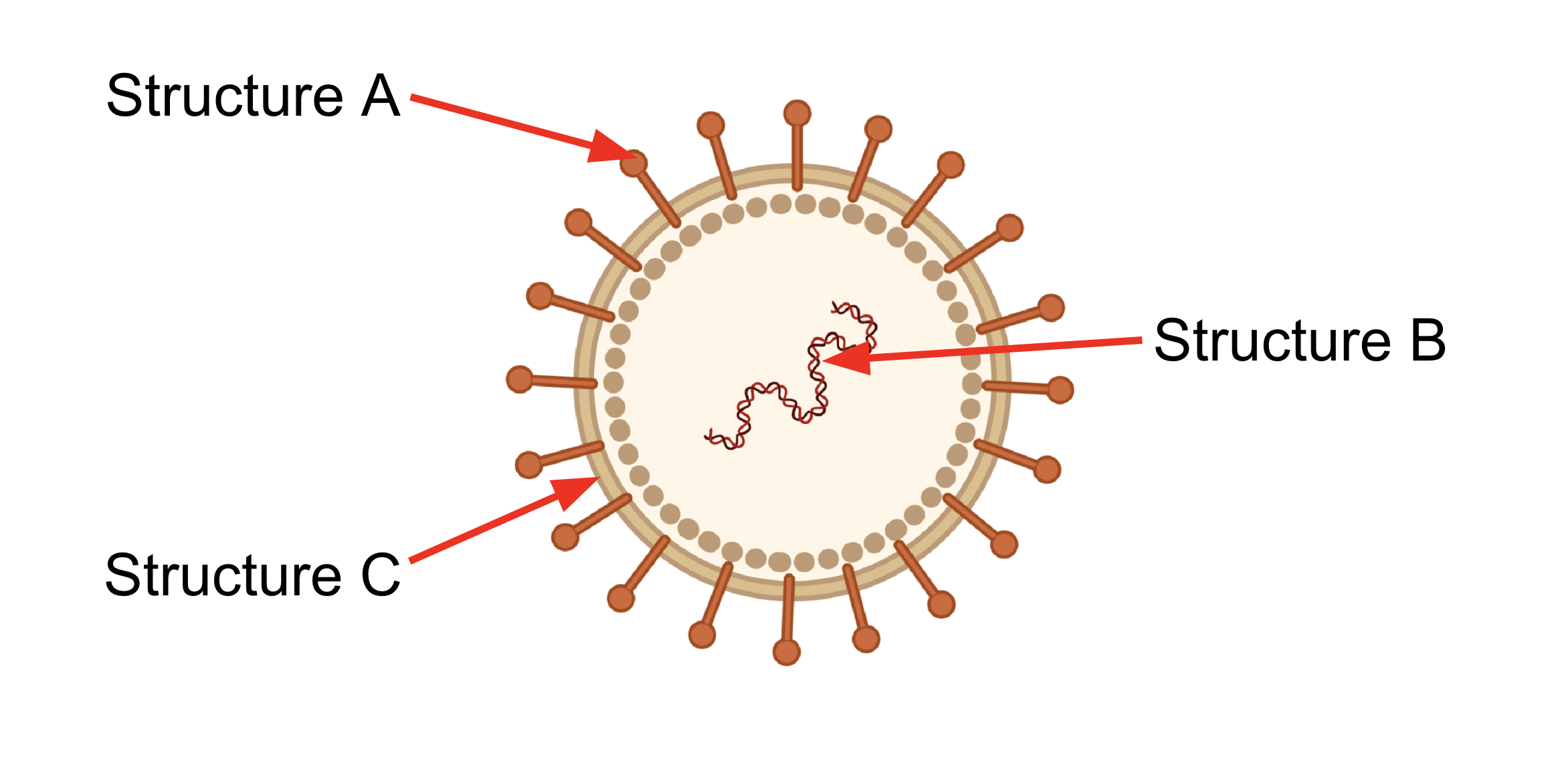
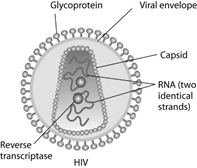
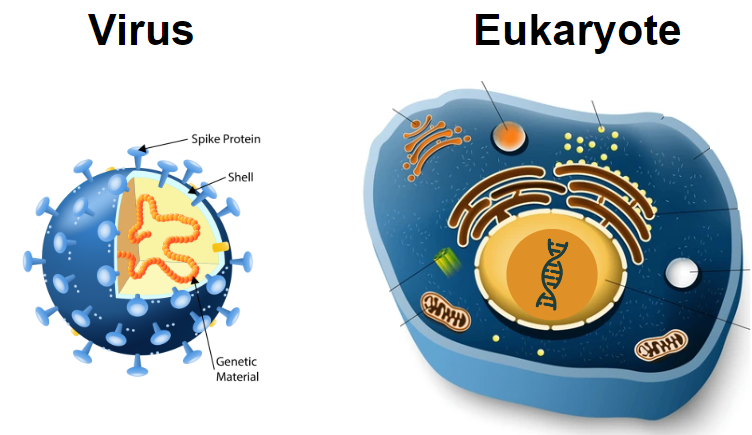
Below is a picture of SARS-CoV-2, the virus that causes COVID-19.

Match each structure to its name.

Draggable itemarrow_right_altCorresponding Item

Protein Capsid

arrow_right_alt

Structure A

Glycoprotein Markers

arrow_right_alt

Structure B

Genetic Material (DNA/RNA)

arrow_right_alt

Structure C

Asemmisa {{asɛmmisaAhyɛnsode}}
16.

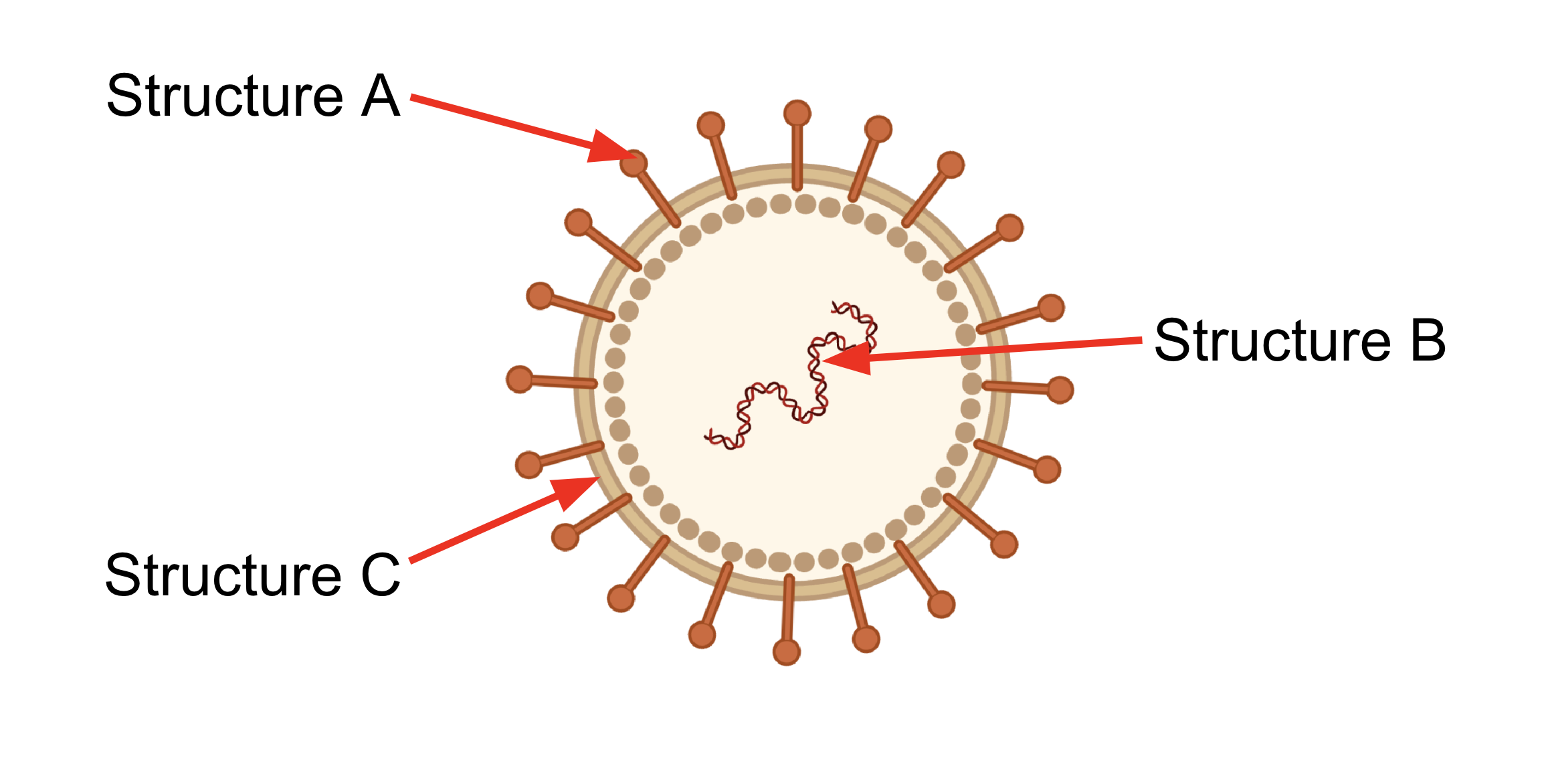
Below is a picture of SARS-CoV-2, the virus that causes COVID-19.

Match each structure with its function (job).

Draggable itemarrow_right_altCorresponding Item

Protects the genetic material

arrow_right_alt

Structure A

Attachment and entry into host cell

arrow_right_alt

Structure B

Information for making viral proteins

arrow_right_alt

Structure C

Asemmisa {{asɛmmisaAhyɛnsode}}
17.

One thing bacteria and viruses both have in common is while a bacteria .

Sample 2 contains a pathogen that is .

Asemmisa {{asɛmmisaAhyɛnsode}}
19.

Viruses can be transmitted through air, water, food, insect bites, and direct skin contact. Once a virus gains entry to the body, it invades a .

Asemmisa {{asɛmmisaAhyɛnsode}}
20.

Avian influenza is a highly infectious virus that affects birds. Between April and July of 2024, the United States Department of Agriculture (USDA) and the Food and Drug Administration (FDA) reported a total of 18.37 million bird deaths and 0 human deaths.

Which of the following best explains why avian influenza affects birds but not humans?

Asemmisa {{asɛmmisaAhyɛnsode}}
21.

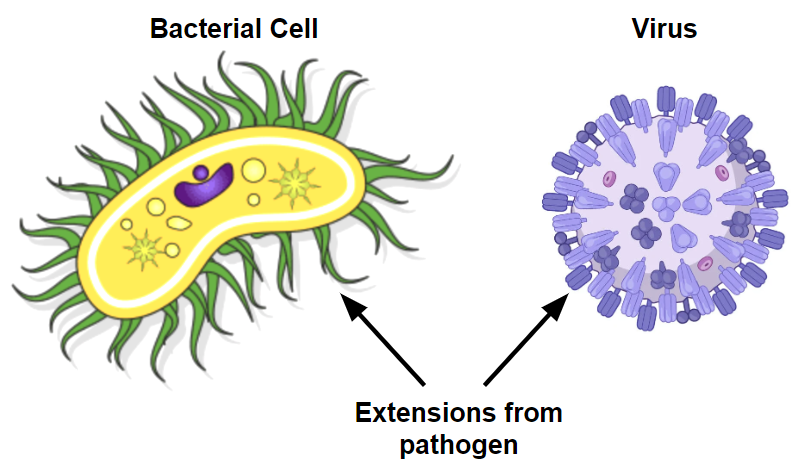
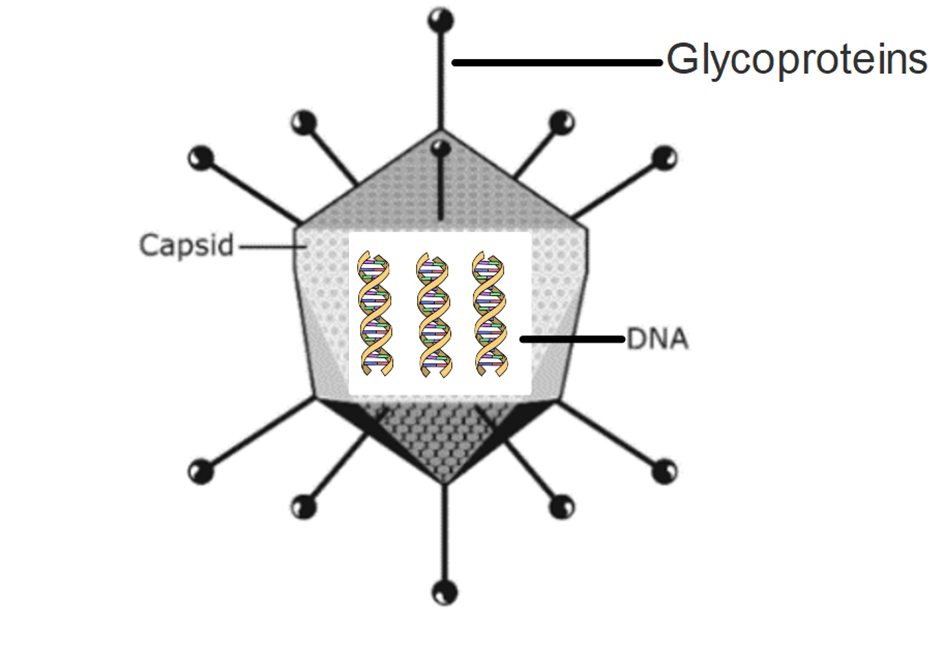
Pathogens such as bacteria and viruses have extensions as shown in the diagrams below.

In bacterial cells, these extensions are used for motion. What are the extensions from a pathogenic virus used for?

Asemmisa {{asɛmmisaAhyɛnsode}}
22.

A typical virus consists of glycoproteins on the outside (keys) that match receptor proteins (locks) on host cells.

The role of these glycoproteins is to…

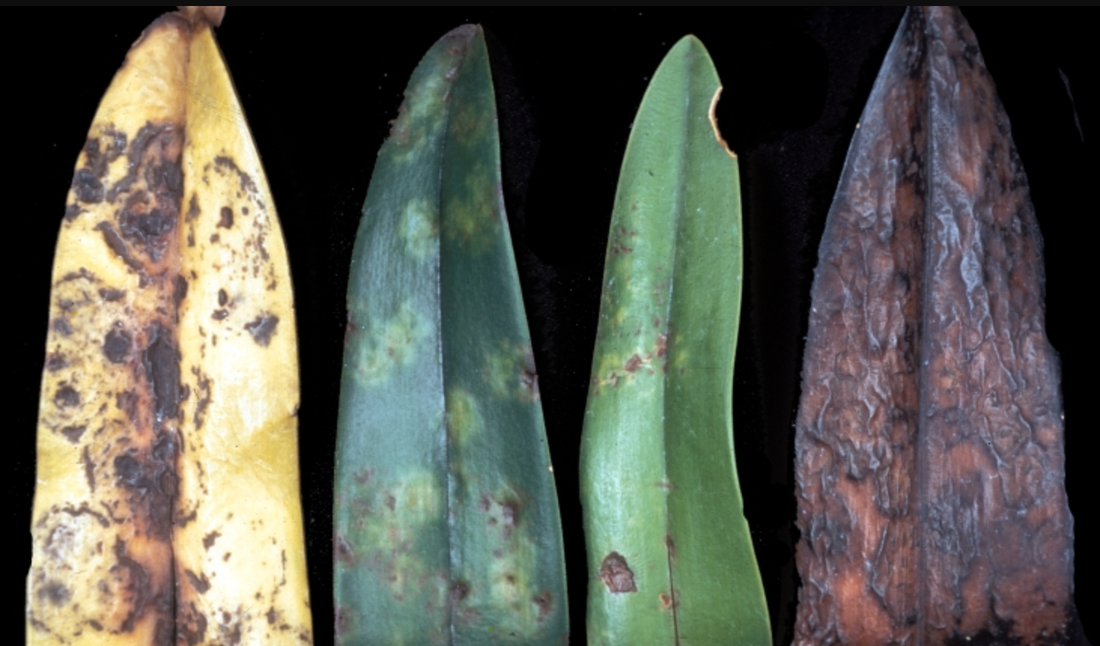
Tobacco Mosaic Virus (TMV) is a highly contagious plant virus that infects over 350 species of plants such as tobacco, tomatoes, peppers, and cucumbers. Plants infected with TMV have discolored leaves, uneven ripening, malformed fruits, and off flavor.

1
Asemmisa {{asɛmmisaAhyɛnsode}}
23.

In order to spread, Tobacco Mosaic Virus (TMV) must infect healthy plant cells. Which statement below is true?

1
Asemmisa {{asɛmmisaAhyɛnsode}}
25.

What does a virus need from the host cell in order to reproduce?

Select TWO correct answers.

Asemmisa {{asɛmmisaAhyɛnsode}}
26.

Which of the following best describes what happens once a virus enters the host cell?

Asemmisa {{asɛmmisaAhyɛnsode}}
27.

Which statement is true of both viruses and cells?

Asemmisa {{asɛmmisaAhyɛnsode}}
28.

A student is making a Venn diagram comparing eukaryotic cells, prokaryotic cells, and viruses

What will be in the middle of the venn diagram?

Asemmisa {{asɛmmisaAhyɛnsode}}
29.

Viruses have a capsid ("protein shell") which protects the of a eukaryotic cell.

Asemmisa {{asɛmmisaAhyɛnsode}}
30.

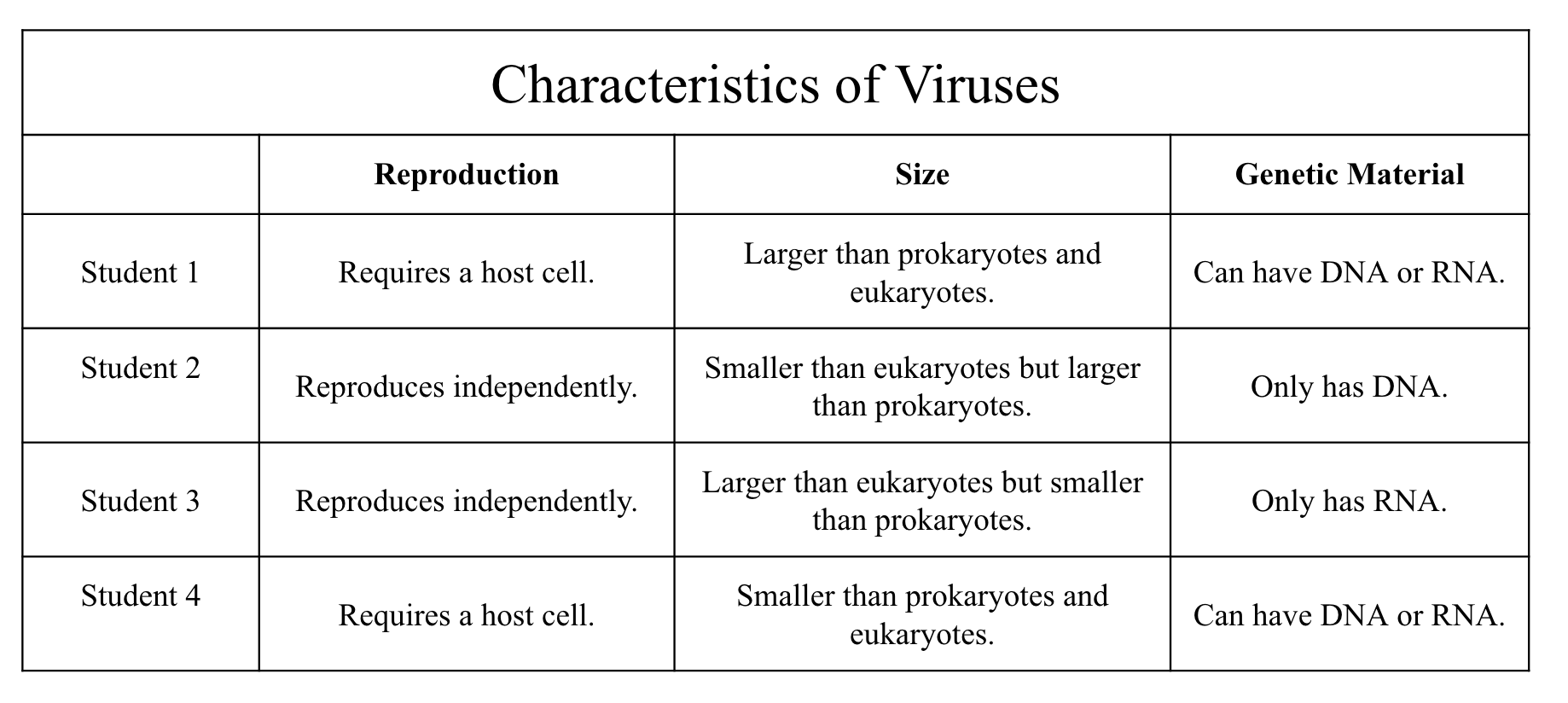
Four students responded to a question regarding characteristics of viruses. Their responses were recorded in the table below.

Based on their responses, which student correctly describes the characteristics of viruses?

Asemmisa {{asɛmmisaAhyɛnsode}}
24.

Which of the following best explains why plants can be affected by TMV while humans are unaffected?